
Mexico’s art world is going through one of the most intense media controversies in recent times due to the imminent departure of the Gelman collection, arguably the most important private collection of 20th-century art in the country.
The collection was originally assembled by Natasha and Jacques Gelman, a married couple of European descent who arrived in Mexico as Jewish refugees in the 1940s. Together, they became great patrons and collectors of modern Mexican art after making a fortune in the Mexican film industry following Jacques’ discovery of Cantinflas.
What is the Gelman collection?

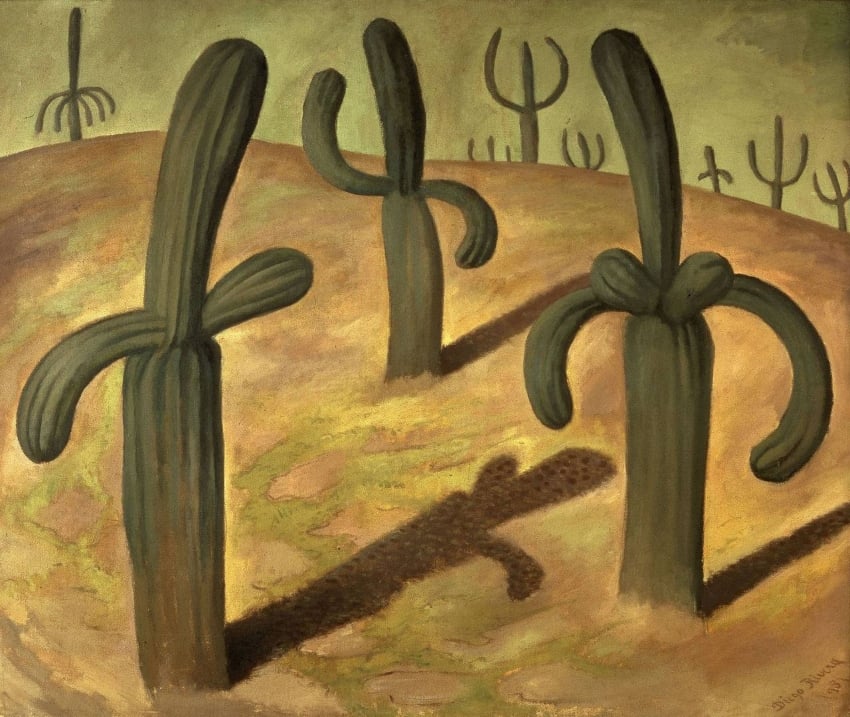
Boasting 160 works by some of Mexico’s most renowned artists, the collection includes pieces by Frida Kahlo, as well as several artworks by Diego Rivera, José Clemente Orozco, María Izquierdo and David Alfaro Quintero.
“The Gelman collection has the third most important collection of Frida Kahlo’s paintings in Mexico,” curator and cultural analyst Ximena Apisdorf told me. “That’s only one of the reasons why this case is so relevant.”
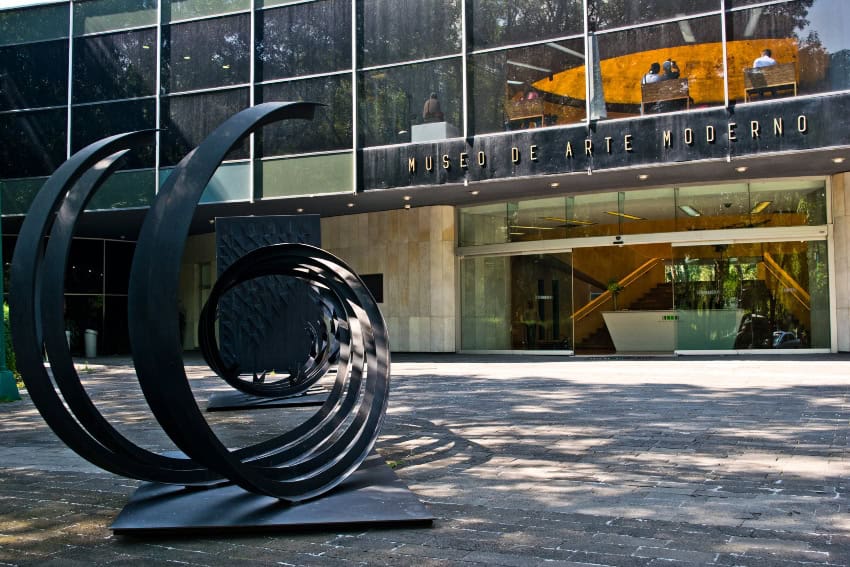
Currently exhibited at the Modern Art Museum in Mexico City, the collection is set to leave the country as part of an agreement between Marcelo Zambrano, who recently acquired part of the Gelman collection, Banco Santander and the National Institute of Fine Arts and Literature (INBAL).
The controversy surrounding its leaving the country
According to the agreement, the collection will now be called Colección Gelman Santander and will initially be exhibited over the summer at the upcoming Faro Santander Museum in Spain before traveling to museums around the world under the management of the Spanish bank.
Upon learning the news, Apisdorf — along with nearly 380 individuals from the artistic community — sent an open letter to Mexico’s government. In it, they expressed their concern about the departure of the collection, given that 30 pieces have been declared National Artistic Monuments and thus are subject to restrictions on export.

“No one doubts that the change of ownership is a matter that strictly concerns private individuals,” the open letter says. “However, the fate of the work protected by these decrees … concerns us all.”
According to Carlos Lara, an expert lawyer in cultural heritage issues, a National Artistic Monument decree sets limits to the property of an artwork, while granting two property dimensions: a symbolic and a legal one.
“The legal dimension means that the piece belongs to the owners,” Lara explained to me. “Meanwhile, the symbolic dimension is granted to Mexicans, meaning that while the legal ownership rests with the owners, the artwork is symbolically considered to belong to the people of Mexico.”
The legal issues involved
One of the limitations of an artistic monument is that the artwork cannot leave the country except under certain conditions that must be approved in advance by the INBAL. In the case of Kahlo’s work, her artwork must always return to the country.
Lara said that INBAL’s permission for the artwork to be displayed abroad is legal. However, the lack of transparency is a concern.
“It’s the usual lack of transparency surrounding the duration of travel permits and the issue of the works traveling to different venues that’s concerning,” he said, adding that INBAL itself acknowledges in the agreement the need to avoid, as far as possible, periodic and recurring travels as the handling and transporting of the pieces poses risks to the artworks’ integrity.
This lack of transparency adds to previous debates surrounding the opaque management of the collection following Natasha’s death.
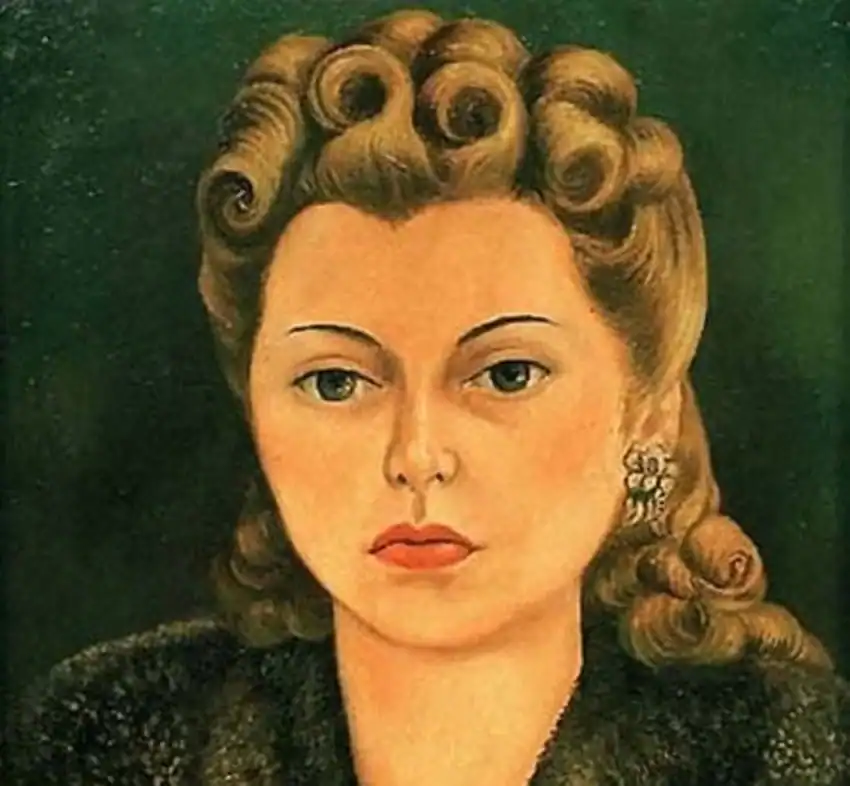
Since Natasha’s passing in 1998, the collection has been in a legal and narrative limbo marked by a rarely-seen will to which everyone refers and which reportedly said that it was Natasha’s will that the collection remain undivided in Mexico.
But after her death, Robert Littman — the Gelman’s art adviser — appeared as the will’s alleged executor and acted as the rightful owner managing the collection for years before selling it to Marcelo Zambrano in an operation lacking transparency and allegedly contravening Natasha’s will.
Will the collection return to Mexico?
Adding to the controversy, Apisdorf said it’s unclear whether Santander actually owns the collection or simply manages it, arguing it is suspicious that its name is now attached to the collection.
“It’s like a child. If you don’t plan to adopt the child, you don’t give him your last name,” Apisdorf said.
This debate has prompted President Claudia Sheinbaum to intervene, albeit in a critical tone.
“How many times do we have to tell you that the Culture Ministry is complying with the law?” she said.
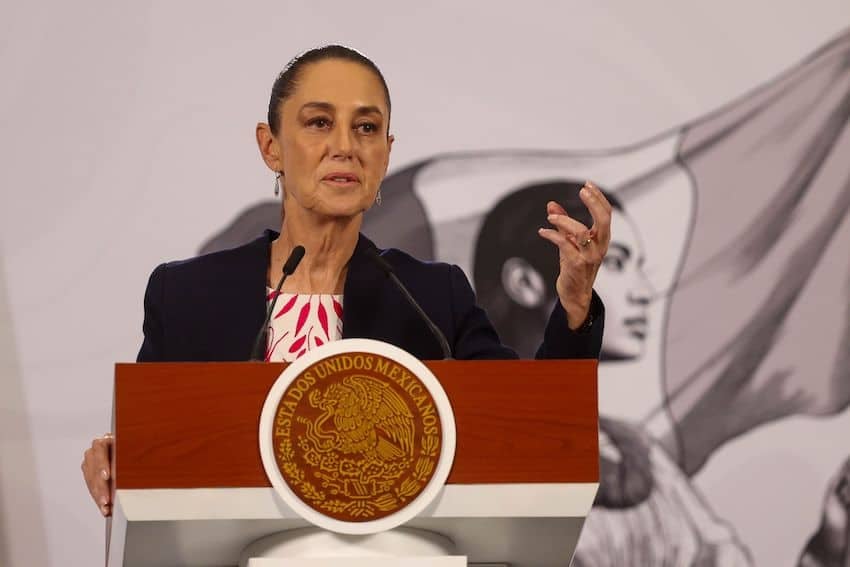
Culture Minister Claudia Curiel Icaza later clarified that the collection belongs to Mexican collectors and not to Santander; that the export permit is temporary and for five years; and that after its exhibition in Spain and other venues, the collection must return to Mexico.
Banco Santander and legal loopholes
Banco Santander has also addressed the issue and confirmed Curiel’s statement that the pieces will return to Mexico and that the owners are still Mexicans.
“We reiterate that no signed agreement foresees a change of ownership, nor the definitive transfer of the collection to any point outside of Mexico,” the Fundación Banco Santander said. “The agreement entails five years of collaboration with the current administration.”
However, the agreement — seen by newspaper Excelsior — says that the five-year term could be extended, meaning the collection could stay abroad for an indefinite period of time.
“As far as I know, this is not the first time a long-term authorization with periodic renewals has been signed,” Lara said. “Just look at the Tonalamatl Aubin Codex.”
This Codex of pre-Hispanic origin is currently exhibited at the National Museum of Anthropology and History, but legally — and paradoxically — belongs to France. Thanks to an agreement with periodic renewals between France and Mexico, the Codex has remained in Mexico.
“One of our fears in the artistic community is that eventually, Santander may decide that for the sake of preserving these works, they will no longer travel and will keep them permanently in Spain,” Apisdorf said.
“Ultimately, Gelman’s case is a very clear example of the problems that arise when a cultural piece is viewed as a financial asset,” she emphasized. “But in any case, we will not stop defending the collection.”
Gabriela Solis is a Mexican lawyer turned full-time writer. She was born and raised in Guadalajara and covers business, culture, lifestyle and travel for Mexico News Daily. You can follow her lifestyle blog Dunas y Palmeras.