In our everyday Mexican lives, many of the words we use stem from the Indigenous languages that were once spoken here, before the arrival of the Spanish. From aguacate (the delicious avocado fruit from which guacamole is made) to tlapalería (the place to find screws, lightbulbs and even paint), Spanish is filled with words that come directly from Náhuatl. This is no surprise, as the Mexica Empire was one of the strongest powers at the time of the conquest — perhaps the greatest on the continent.
But before the interaction between Spanish and Náhuatl, other languages influenced daily conversation and added new words to our dictionaries. The most significant of these was Arabic.
A history lesson
The cultures of Spain and the Arab world have been in a fascinating dialogue for centuries. This dates back to 711, when Muslims began to populate the territory that is now known as Spain (Al-Ándalus). Despite the initial invasion, the resulting coexistence of cultures enriched art, gastronomy, architecture and, of course, language. Today, there are approximately 4,000 Spanish words of Arabic origin, or nearly 8% of our vocabulary.
Ojalá
Few words depict the presence of Arabic culture as clearly as ojalá. This expression is used when wishing for something to happen, either for yourself or for someone else. Although it translates to “hopefully,” that translation strips away its deep cultural background.
According to the Real Academia Española, ojalá comes from the Hispanic-Arabic šá lláh, which evolved from the Classical Arabic in šāʾ Allāh — meaning “if God wills.” When analyzing the origin of the word, we cannot ignore that, in Arabic culture, naming God (Allah) brings his presence into our lives. Even today, when non-Muslim Mexicans say ojalá, we are inadvertently invoking a deity from a heritage that feels distant, yet remains on the tip of our tongues.
Guadalupe
It is fascinating to find that the name of Mexico’s most beloved religious figure, La Virgen de Guadalupe, has neither a Spanish nor an Indigenous origin, but an Arabic one. The devotion to our Lady of Guadalupe was brought by Hernán Cortés himself. Although the Arab occupation of Spain had ended by the time he left for the Americas, it left deep remnants in his home region of Extremadura.
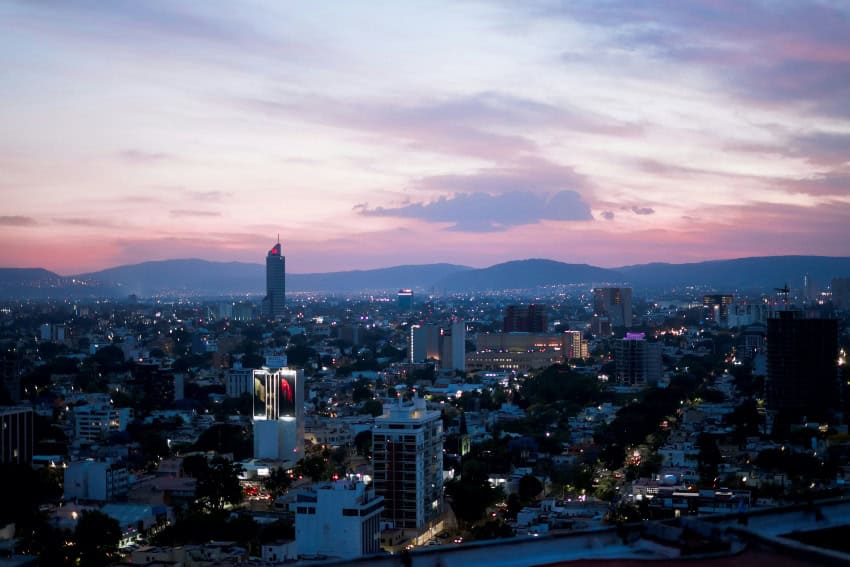
While there are many hypotheses about the word’s second half, the first is a clear Arabism: wadi (river), which became the Spanish guada. One of the strongest proposals for the suffix is the Latin lupus (wolf). In that case, Guadalupe would mean “the river of the wolves.” A similar example is Guadalajara, from wadi al-hijarah, meaning “stony river” or “river of stones.”

The everyday stuff: almohadas, azúcar, and alcohol
Aside from religious words, Arab culture is present in our everyday moments too. The classic request, “¿Me regalas una tacita de azúcar?” reflects the immense commercial and cultural influence of Arabic-speaking civilizations (with the word for sugar, azúcar, coming from the Arabic sukkar). While the later Ottoman Empire (which was Turkic, not Arab) inherited these territories, it was the earlier Caliphates that established Arabic as a lingua franca — a language used to communicate across different cultures and ethnicities from the borders of China to the Iberian Peninsula.
Arabic did more than facilitate communication; it named the very innovations that transformed daily life. From the almohada we sleep on to the alcohol we use for medicine or celebration, these terms reflect a legacy of comfort and science.
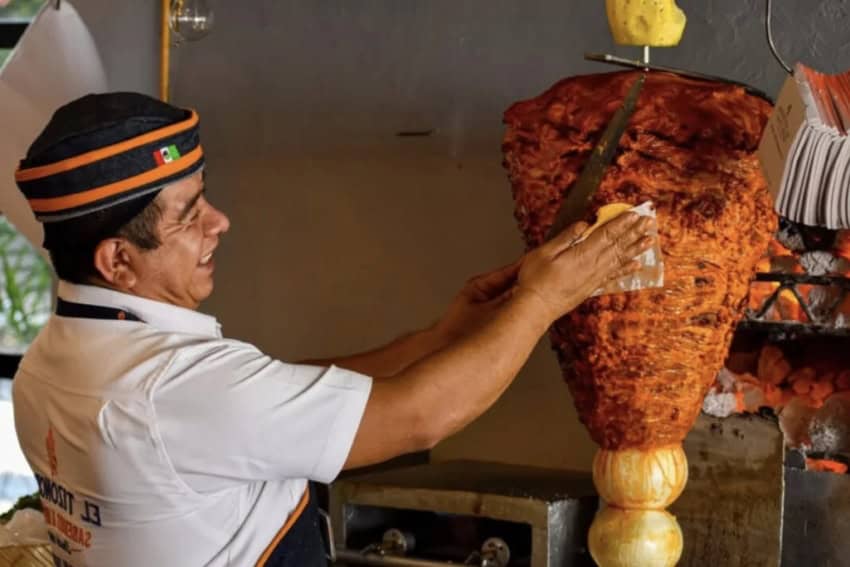
Last but not least, the food! Maybe the clearest example of this cultural continuity is the taco al pastor. While many associate it solely with Mexican identity, its origins are undeniably Middle Eastern. In the early 20th century, a significant wave of Lebanese and Syrian immigrants arrived in states like Puebla and Mexico City. They brought with them the shawarma, a method of roasting seasoned lamb on a vertical spit.
Over time, Mexican cooks adapted this technique: lamb was replaced with pork, pita bread with corn tortillas, and Middle Eastern spices with achiote and chilies.
Natural resources and architecture
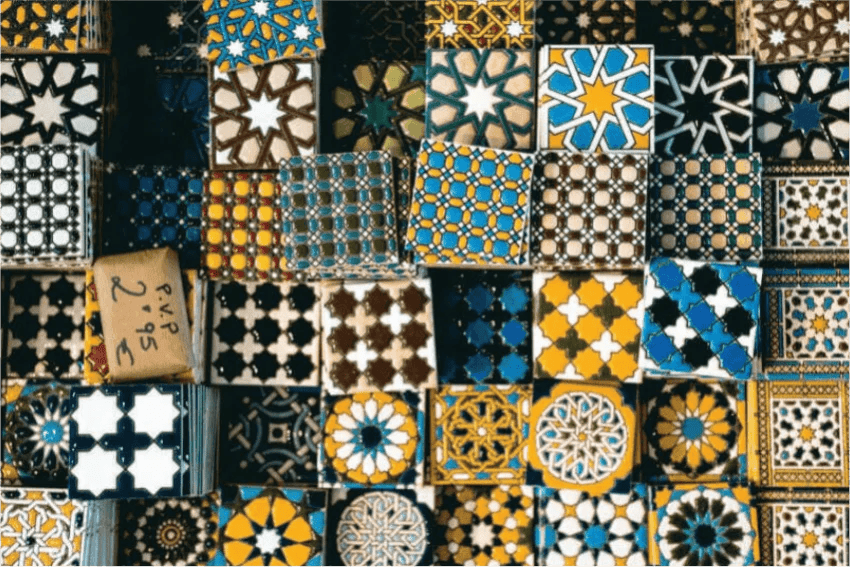
Even the way we describe our natural resources is flavored by this heritage. The word aceite (oil) comes from az-zayt, the juice of the olive. Azafrán (saffron) and arroz (rice) changed our palates forever. Furthermore, the visual landscape of Mexico — from the colorful azulejos (tiles) in Puebla to the intricate cúpulas of our colonial churches — stems from the Mudéjar architectural style, a synthesis of Muslim and Christian techniques.
Follow the clue
As in most stories of emigration, contact between Spanish and Arab cultures resulted in a mix in which the lines between the two became increasingly blurred. During the centuries of coexistence in the Iberian Peninsula, the people didn’t just speak “pure” Arabic or “pure” Latin. They spoke a cluster of Romance dialects infused with Arabic structures. This was the true laboratory of the Spanish language.
If you want to spot Arabic words, use the “article rule.” Alacena (pantry), alberca (pool), algodón (cotton), almohada (pillow) and albahaca (basil) all have the same article at the beginning: al. This Arabic prefix means “the” and helps us spot words that may have a Middle Eastern origin. It has also become redundant, since in Spanish we add el or la next to it, making phrases like el algodón literally mean “the the cotton.”
Lydia Leija is a linguist, journalist and visual storyteller. She has directed three feature films, and her audiovisual work has been featured in national and international media. She’s been part of National Geographic, Muy Interesante and Cosmopolitan.