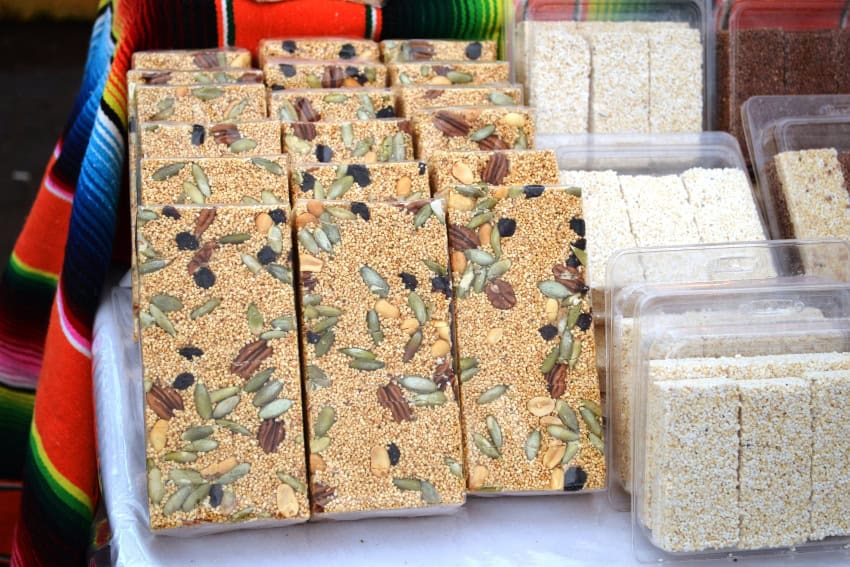
Who hasn’t eaten an alegría bar at a market, a town fair or at the candy stalls outside a church?
We Mexicans eat these sweet, nutritious, crunchy bars made with amaranth seeds, called alegría, or joy in English. But what is amaranth, and why is it so important?
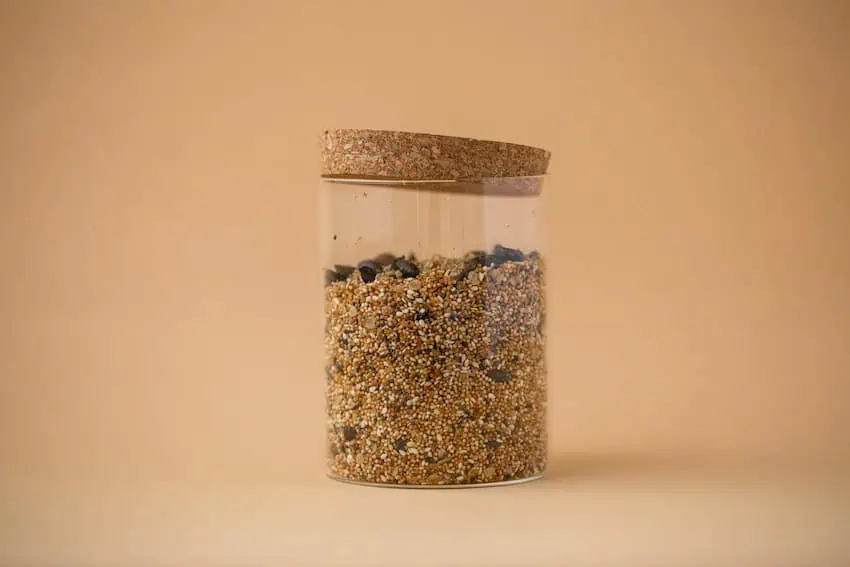
Amaranth is a seed from the plant of the same name, and it’s used similarly to some cereals, which is why it is called a pseudo-grain, meaning we use it like a grain, but it’s not from the grass family like wheat, oats, barley or rice. Buckwheat and quinoa fall into this same pseudo-grain category.
A native Mexican nutritional powerhouse
Mexico, one of the places where amaranth originated, is the main producer and consumer of this plant.
Considered one of the most complete foods on the planet, amaranth’s protein value is comparable to that of meat, and it has more protein than corn, wheat or rice.
Amaranth contains vitamins A, B, B1, B2, B3, and C. The B complex is found in a few foods, making alegrias one of the tastiest ways to obtain B complex vitamins in your diet. These nutritious plants also provide minerals, the amino acid lysine, folic acid, niacin, calcium, iron and phosphorus. It also contains polyunsaturated fats, i.e., the good ones, omega-3 and omega-6.
Amaranth’s high fiber content makes it highly recommended for regulating digestion. It’s also gluten-free, making it ideal for people with celiac disease. Or for those who are lactose intolerant, blended with water, it becomes a milk substitute.

In 1975, after multiple studies conducted by the U.S. National Academy of Sciences, amaranth was recognized as one of the world’s most highly nutritious plant-based foods. In the fields of nutrition science and public health policy, researchers around the world see promise in amaranth as one of the highly nutritious plant-based food sources that not only can keep up with meat in terms of caloric and protein content but is also a more sustainable protein source to farm than animals.
Amaranth’s history
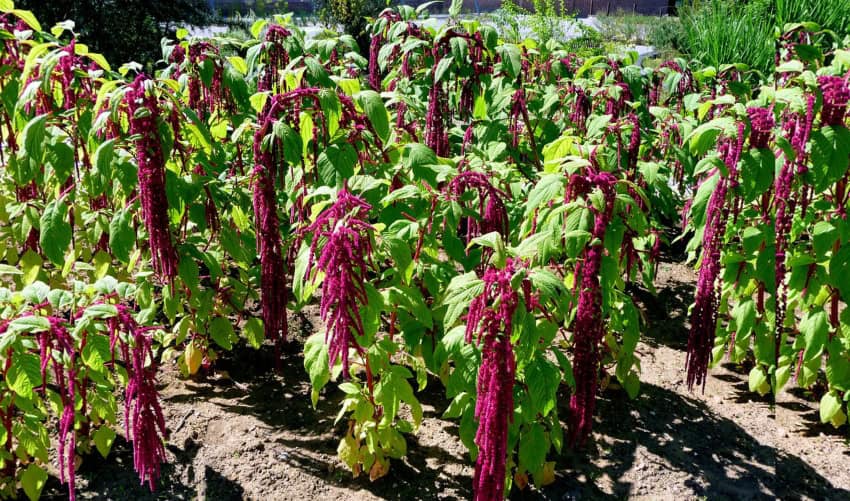
The amaranth plant is endemic to the Americas, but its name comes from the Greek amaranthus, meaning “immortal,” because it blooms year-round. The Aztecs called it huauhtli, and in South America, it’s kiwicha in the Guarani language.
Although it was known and consumed throughout much of the Americas, it is in south-central Mexico where there are more references to its use, as well as records of its existence dating back approximately 8,000 years. For special occasions, various Indigenous peoples of Mexico made figurines of gods, humans, or animals from amaranth grains bathed in maguey honey. They were consumed on dates similar to the modern-day celebrations of Day of the Dead.
Amaranth today
Currently, Puebla state is Mexico’s main amaranth producer, followed by Tlaxcala, Morelos, parts of southern Mexico City and Oaxaca.
The United States, China and India all cultivate amaranth and scientists continue to research its properties.
The grains are roasted whole and used to make sweets or coat meat or vegetables, sprinkle on salads, or accompany other dishes. It is often mixed with other cereals and nuts and eaten with milk. Amaranth can also be used in sauces, adding texture and nutritional value to dishes.
It can be processed into a flour, a lifesaver for the gluten-intolerant.
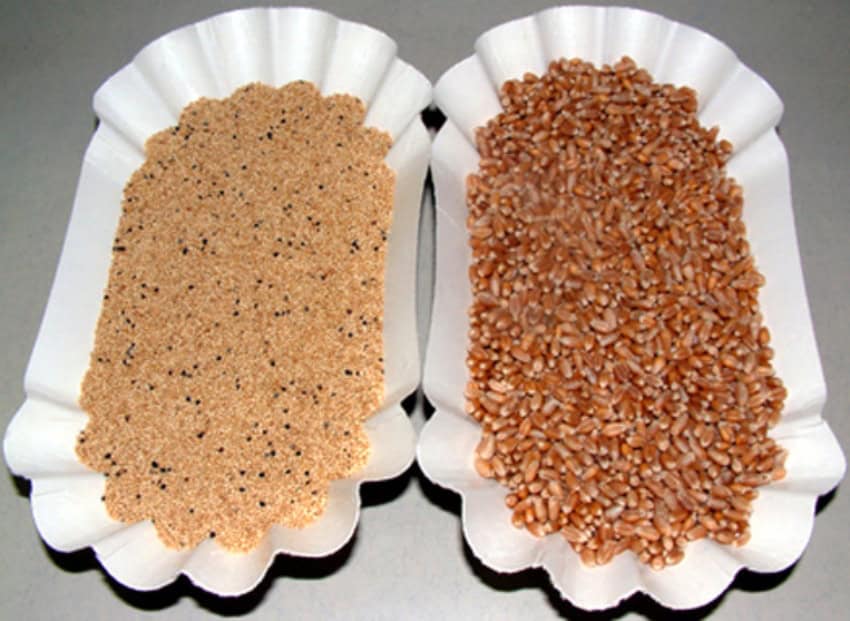
It is also made into sweet and savory snacks. Alegrias, for example — the iconic Mexican sweet treat — can be found year-round here. Reminiscent of granola bars, these are bars made of puffed amaranth seeds covered in a sweet syrup to hold everything together. Often, peanuts, walnuts, pepitas and raisins are included.
Engineer Rodolfo Neri, remembered for being the first Mexican to travel into space, was authorized to take amaranth with him after several studies of the grain were endorsed by NASA and several universities. During the trip, it was not only part of his diet, but research was also conducted on its cultivation in space.
Amaranth’s resistance to drought and ability to grow in arid soils has allowed this plant to continue to provide us for more than 8,000 years with such a complete food.
Diana Serratos studied at Universidad Nacional Autónoma de México (UNAM) and UNCUYO in Mendoza, Argentina, where she lived for over 15 years. She specializes in wines and beverages, teaching aspiring sommeliers at several universities. She conducts courses, tastings and specialized training.