Amigos, in Mexican pantries, there are brands whose presence has been passed down
from generation to generation. These labels are not only a guarantee of quality, but also for
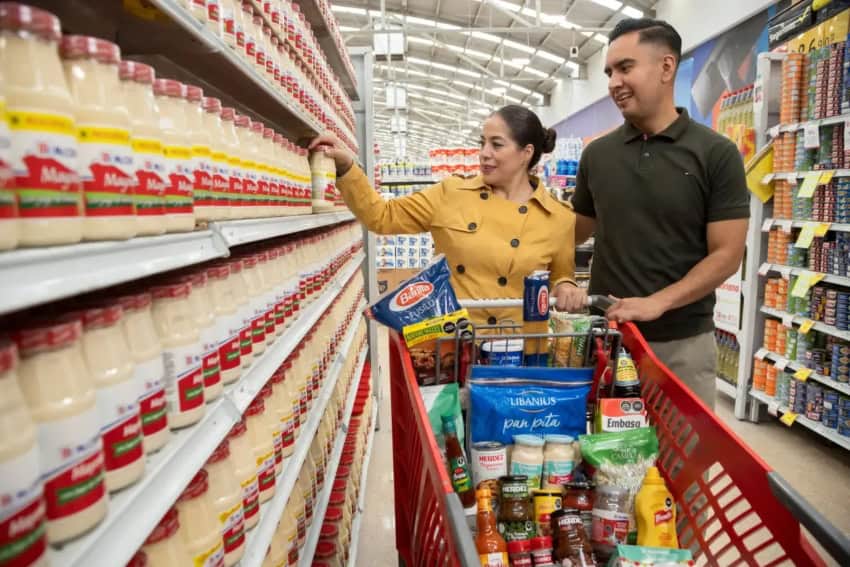
many of us, they carry an emotional charge: “this is the mayonnaise we had at my
grandmother’s house,” “this is the honey my mom buys,” “this is the mole that got us
through busy weeknights” and “this is the can of vegetables we’ve always bought.”
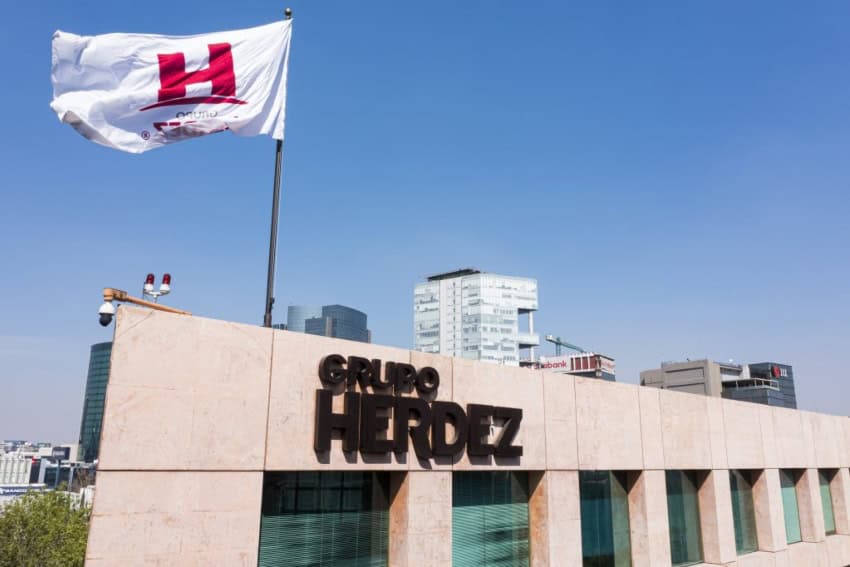
Grupo Herdez is a holding company founded in 1914 that today oversees a portfolio of
more than 1,500 products and multiple brands in Mexico and abroad. That
omnipresence in Mexican households is not just a business fact; it’s a cultural trace of
how Mexico has organized, standardized and narrated its way of eating over the last
century.
From trading company to architect of the pantry
The story of Grupo Herdez does not begin in the kitchen, but in commerce. In 1914,
Compañía Comercial Herdez was founded in Monterrey, Nuevo León, as a distributor of
toiletries and personal care items, in a country that was only just beginning to urbanize.
In 1929, Don Ignacio Hernández del Castillo joined as sales manager, in charge of
importing products and maintaining relationships with suppliers, and in 1933, he became the owner of the company, marking the start of a more ambitious growth strategy. Marketing was central to that plan: the company understood that, to gain an edge over its competitors, it needed catchy slogans and a reputation grounded in product quality.
In the 1940s and 1950s, his sons Enrique and Ignacio Hernández-Pons joined the
business, taking charge of sales, production and warehousing, and professionalizing
operations in a period of rapid industrialization and domestic market expansion. After
World War II, the Mexican market was also changing, and many products that had
previously been imported now needed to be manufactured on Mexican soil.
In that window of opportunity, the company stopped being just a distributor and began to build its own line of canned foods, in step with the transition from traditional markets to self-service stores and with the rise of an urban middle class that needed more stable, predictable pantry solutions.
Canned modernity: domesticating culinary time
From the mid-20th century onward, Herdez launched lines of canned foods and
preserves — mushrooms, peas, vegetables, tomato purée and seafood — that transformed the relationship between time and cooking. Canning technology ceased to be simply a way to extend shelf life in times of scarcity and became a quiet infrastructure of domestic modernity: it made it possible to have the base for a stew, a soup, or a sauce “ready” without going through all the steps traditional cooking required.

As cities grew and women entered the paid workforce en masse, the time available for
cooking shrank. In this context, the Herdez brand positioned itself as the legitimate shortcut: ready-made sauces, standardized tomato purée, canned vegetables and beans that allowed families to “cook from scratch” without truly starting from scratch.

What you open is not just a can, but a cultural agreement: an acceptance that Mexican
cooking can be translated into the language of jars and preserves without entirely losing
its aura of home-cooked food. Herdez helped cement an aesthetic of the neatly ordered
pantry — rows of aligned cans, recognizable labels — that became synonymous with
preparedness, quality, stability and belonging to a certain middle-class modernity.
From the familiar jar to the holding company
Over time, this everyday process evolved into a complex corporate structure. Today,
Grupo Herdez presents itself as one of the leading companies in the processed foods
sector in Mexico, with a diversified portfolio of more than 1,500 products that promise
solutions for consumers’ daily lives. These products span categories such as sauces
and chiles, canned vegetables, jams and honeys, tuna and other proteins, teas, dry
pasta, moles, guacamole, ice cream, snacks and an array of health- and wellness-
oriented items.
The logic of the holding becomes clearer if we read its acquisitions and alliances as a
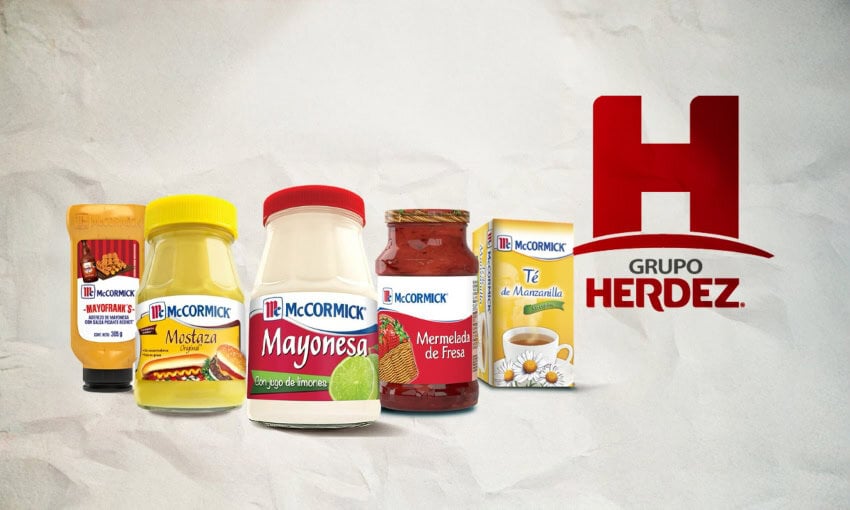
map of consumption moments. The group participates in McCormick de México
(condiments and mayonnaise), controls emblematic brands such as Doña María
(moles), Búfalo (hot sauces) and Del Fuerte (tomatoes and purées), and has built a
strong presence in ice cream and frozen yogurt through Nutrisa and Helados Nestlé
México. Each of these brands inhabits a different moment in the day: everyday meals,
snacks, sweet cravings, breakfast and quick dinners. More than a simple conglomerate,
Grupo Herdez becomes a corporate map of the Mexican eating day.
Through its alliances and distribution channels, products from the Herdez
portfolio — especially sauces, chiles, guacamole and moles — have gained a foothold in
supermarkets in the United States and other markets, where they serve as emblems of
“authentic Mexican food.” What a consumer in Chicago or Madrid experiences as the
“real” flavor of a Mexican salsa is often the outcome of technical, commercial and
marketing decisions made in product development offices in Mexico. In that sense, the
brand does not just reflect Mexican cuisine: it selects it, edits it and packages it for
circulation around the world.
Herdez as a record of Mexican cuisine
Seen from the perspective of cultural history, Grupo Herdez is an archive of
standardized Mexican cuisine—and the company is fully aware of that role. Each sauce,
each mole, each bottled or canned purée condenses a choice about which flavor will be
treated as the norm in a culinary landscape that is, in reality, deeply diverse and
regional.
Since 1988, Fundación Herdez has operated as the group’s cultural and philanthropic
arm, focusing on the research, preservation and dissemination of Mexican gastronomy.
Through its specialized library, documentary archive and editorial projects, the
foundation rescues historical cookbooks, costumbrista texts and other sources that
help reconstruct how people in Mexico have eaten in different periods. That work of
memory speaks directly to the industrial dimension of the holding: while the company
fixes flavors in jars and cans, the foundation is devoted to preserving the stories,
practices and culinary knowledge that often remain outside the supermarket shelf.

This dual strategy — cultural archive on one side, mass production on the other — shows how far Grupo Herdez goes in trying to position itself not only as a food supplier, but also as an actor in the construction and preservation of Mexico’s gastronomic heritage.
The business behind domestic intimacy
This entire cultural landscape rests on a finely tuned business logic. According to recent
financial reports, Grupo Herdez reached record net sales in 2025, with double-digit
growth compared to previous years and solid profitability margins. The company reports
annual revenues in the tens of billions of pesos, with Earnings Before Interest, Taxes, Depreciation and Amortization (EBITDA) margins around 17% for the 2023–2025 period and a net margin that has been trending upward.
These figures point to a business model that successfully converts domestic familiarity into strong cash flows and shareholder value. The penetration of Grupo Herdez in Mexican households — though it varies by category — is significant in segments such as sauces, canned chiles, tomato purée, canned tuna and moles, where it holds leading market shares.
Layered onto this is a multichannel distribution strategy that includes national supermarket chains, convenience stores, traditional mom-and-pop shops and, in recent years, e-commerce platforms. The diversification of its portfolio responds to very concrete shifts in consumption habits: more meals away from home, smaller families, a greater appetite for ready-to-eat or semi-prepared products and a growing concern with health, wellness and the origin of ingredients.
Sustainability, reputation, and what gets remembered
In recent decades, Grupo Herdez has woven a language of social responsibility and
sustainability into its corporate identity. In its public communications, the group
emphasizes a social responsibility plan built on three pillars — people, community and
planet — that includes food and education support programs, investments in energy
efficiency, recycling efforts, and projects to protect the environments where it operates.
The company has appeared in environmental, social and governance (ESG) rankings,
which helps cement its image as a major economic player and, at the same time, as a
carrier of a certain ideal of responsible Mexican identity.
That narrative coexists with a tension that is hard to ignore: the more successful the
holding’s standardization model becomes — with reproducible flavors, predictable
formats and permanent availability — the more urgent it is to ask about the culinary
diversity that remains outside the jar. As a holding company, Grupo Herdez maintains a
very specific memory of what Mexico has deemed worthy of preserving, reproducing
and exporting as an industrial food product. Its history is at once a mirror of how people
in Mexico eat, a guide to how they might like to eat and an invitation to look again at the
other flavors — less visible on the shelf — that still sustain the richness of Mexican cuisine
beyond the label.
Amigos, what brands live in your pantries and what do they say about your own culinary
history?
Maria Meléndez writes for Mexico News Daily in Mexico City.