Among the ancient stones of Chichén Itzá, the world-famous archaeological site in the state of Yucatán, is a unique group of guardians prowling the ruins — not human, but canine.
At the center of this story is Osita (little bear), a loyal dog whose image gazing at the moon atop the Temple of Kukulcán has captivated thousands online and in person.
LOS GUARDIANES DE #CHICHENITZÁ
En estos días han estado circulando en redes sociales, imágenes sobre perritos que se encuentra dentro de la zona arqueológica de Chichen-Itzá. Montando guardia y sobre todo apreciando el paisaje.
Los han llamado: “los guardianes de Chichen” pic.twitter.com/IMTEKFakaB— Kaiser Von Löwe (@KaiserVonLowe) June 5, 2025
In a photograph taken by night watchman José Keb, Osita “was captured enjoying the night sky, as if she were also taking care of the stars,” according to DiloConPerritos on the social media site X.
The post also noted that additional online pictures and videos of Osita — including this one on Facebook titled “Osita, la guardiana canina de Chichén Itzá” — have “touched the hearts of many.”
Indeed, Osita’s contemplative moments, captured mostly by Keb, have resonated deeply with animal lovers and tourists alike, who see in her a blend of tenderness and steadfastness.

“The true guardians of Chichén Itzá don’t just walk on ancient stones; they also have four legs and a big heart,” wrote another social media user, echoing the sentiments of many who have encountered Osita and her companions, Cachimba and Pintorín.
The dogs freely roam the site, patrolling its corridors, greeting visitors with wagging tails and climbing the majestic Temple of Kukulcán, also known as the “El Castillo” pyramid — a unique privilege no longer granted to human visitors (although every once in a while some scofflaw attempts it).
The dogs have been adopted by Keb, who provides them with food, water and companionship. In return, they offer him company and protection during long, solitary nights.
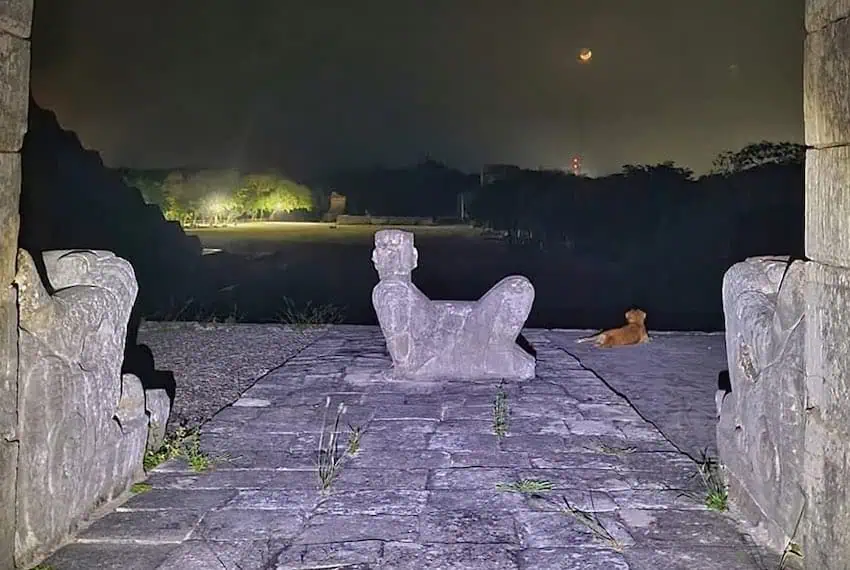
The dogs have also become ambassadors for the harmonious relationship between Chichén Itzá’s cultural heritage and its resident wildlife. They are often seen “appreciating the landscape,” as someone posted on X.
Osita, Cachimba and Pintorín are known as the “sacred dogs of Kukulcán” among site workers and custodians.
When they do climb the steps of the iconic Temple of Kukulcán, they often rest in the shade of its ancient walls or sometimes watch the sunrise from its heights.
“A puppy who has conquered the heart of social media networks,” is how Osita was described in a recent post on Instagram. “She has been seen sunbathing or admiring the stars at the highest point of Kukulcán.”
Osita’s story “reminds us that the guardians of history can walk on four legs and have a pure and sincere heart,” the post concluded.
With reports from Excélsior, W Radio, El Universal and MSN