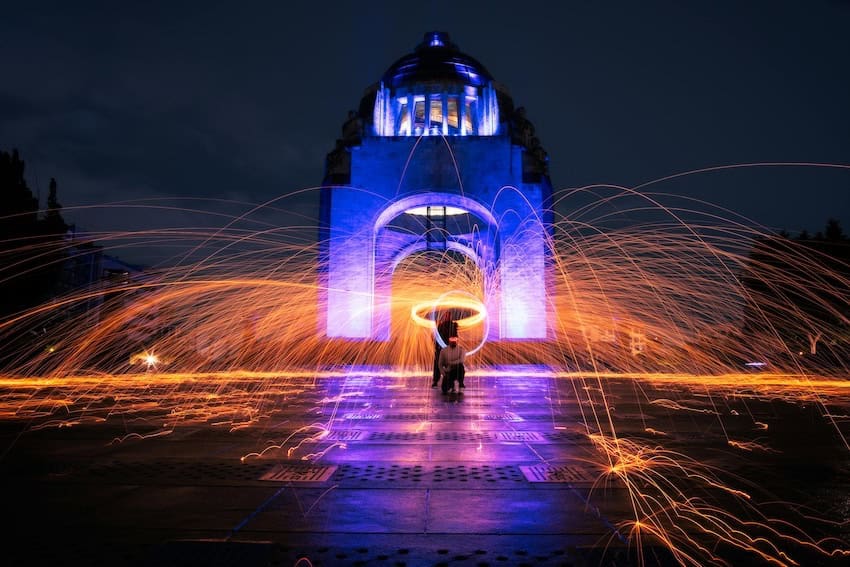
For researcher Omar López-Cruz, Mexico City “is a peculiar place.” As an astronomer dedicated to observing the celestial vault, the Mexican capital “is completely off the radar,” because it’s impossible to view the night sky as it originally appeared. Light pollution makes it impossible. This is one reason why the stars cannot be seen in Mexico City.
The researcher insists that “there is so much artificial light” that even astronomical research cannot be carried out properly. It seems that billboards, corporate buildings and other luminous elements have suffocated the stars. And, although it may not seem like it, this is terrible news for the capital’s residents. In an interview with Mexico News Daily, López-Cruz explained why.
Mexico City drowned her stars in the night sky
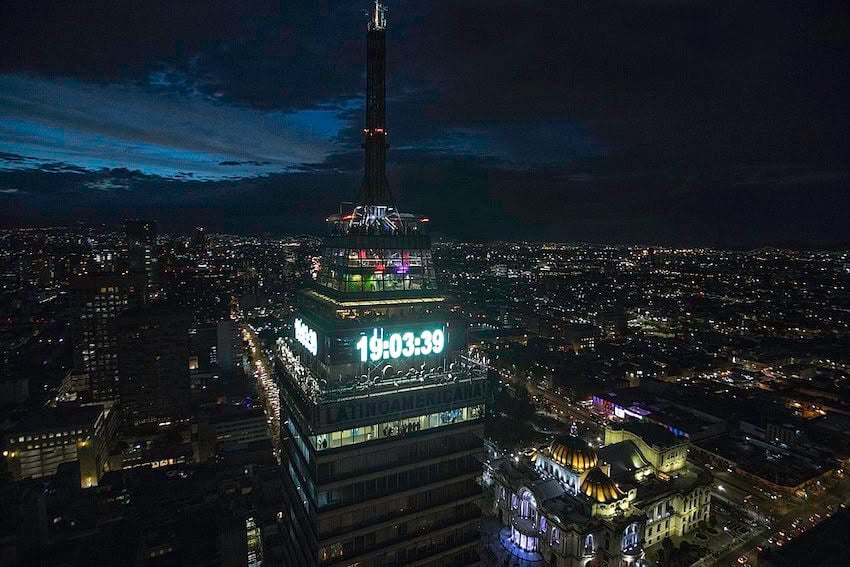
Regarding why the stars cannot be seen in Mexico City, López-Cruz has a clear answer. Capital dwellers cannot see the Milky Way “due to the enormous amount of lights in Mexico City.” This phenomenon is known as light pollution, the result of the excessive and inefficient use of electricity to artificially light up the capital.
“It is only natural that we’re afraid of the night,” he explained. Evolutionarily, humans had to face their predators in the dark millions of years ago. Although “no one hunts us anymore,” the Mexican astronomer added, the fear of the dark still haunts us. “That’s why we get rid of the night.”
As a mathematical physicist who graduated from the National Polytechnic Institute (IPN) in Mexico, López-Cruz earned his doctorate in astronomy from the University of Toronto (Canada). To explain the phenomenon of light pollution, he draws an analogy with the Sun. “When you go out during the day, you see that the Sun is illuminating the atmosphere.” Because the Sun’s intensity is so great, it’s impossible to see the stars during the day.
In Mexico City, in addition to an excess of suspended particles, “the sky lights up too much [at night].” This has made it impossible to see the stars as they naturally appeared in Mexico City. However, this isn’t the only place where this happens: the world’s major capitals also suffer from this problem. Those who live there are missing out on the natural brilliance of the celestial vault — and perhaps aren’t even aware of it.
Light pollution is a political issue in Mexico City
In April 2022, the Mexico City Congress approved the initiative to reform the Environmental Law for the Protection of the Earth in Mexico City. Specifically, according to an official statement, “on the matter of light pollution, proposed by legislator Jesús Sesma Suárez.” Mainly due to the environmental impacts it is causing in the Mexican capital:

- It compromises bird migration
- It disrupts the circadian cycle of the species that inhabit the city
- It inhibits deep sleep for the capital’s residents
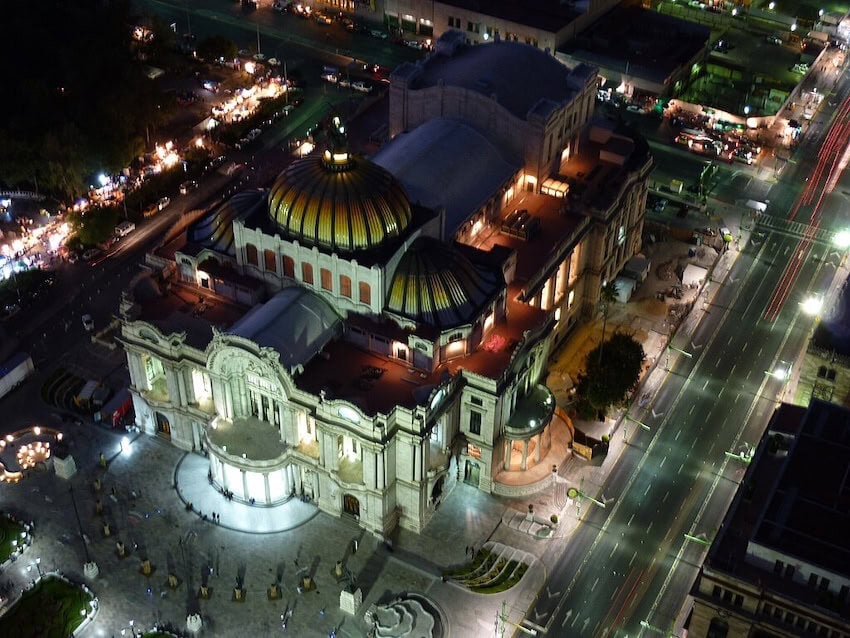
Since then, restoring natural darkness in the Mexican capital has become a legal issue. As if the inherent well-being that the natural night brings to human beings — and any living being that inhabits Mexico City — were not enough of an argument, the issue was raised before Congress as a political matter.
To support the initiative, a year after its publication, Sesma Suárez pointed out that light pollution in Mexico City prevents astronomical observation for scientific research. Furthermore, he noted that “energy expenditure” is inefficient, since “up to 50% of lighting is used in unwanted or unnecessary areas.” So far, no more recent updates have been made to this reform.
“You have never seen the Milky Way.”
“You belong to a generation,” López-Cruz laments, “that hasn’t seen the Milky Way.” Despite the celestial bodies being there, light pollution caused by humans has created an impenetrable veil, preventing us from seeing them in all their natural splendor.
Although the evolutionary path of our species has encouraged us to follow the cycle of night and day, the alterations we have made to the ecosystem have caused the natural darkness to disappear. Now, “there are people who haven’t experienced dark skies from childhood to adulthood,” the specialist notes. “Now, we have to travel very far to experience them.”
In Mexico, some uninhabited areas of the northern states of Baja California Sur, Coahuila and Chihuahua, the researcher shares, have become dark sky sanctuaries. Devoid of public lighting and population, they are the ideal place for unobstructed astronomical observation. Considering the heavy light pollution that haunts my convoluted hometown, Mexico City will perhaps continue to be blind to the Milky Way, its stars and the cosmos.
Andrea Fischer contributes to the features desk at Mexico News Daily. She has edited and written for National Geographic en Español and Muy Interesante México, and continues to be an advocate for anything that screams science. Or yoga. Or both.