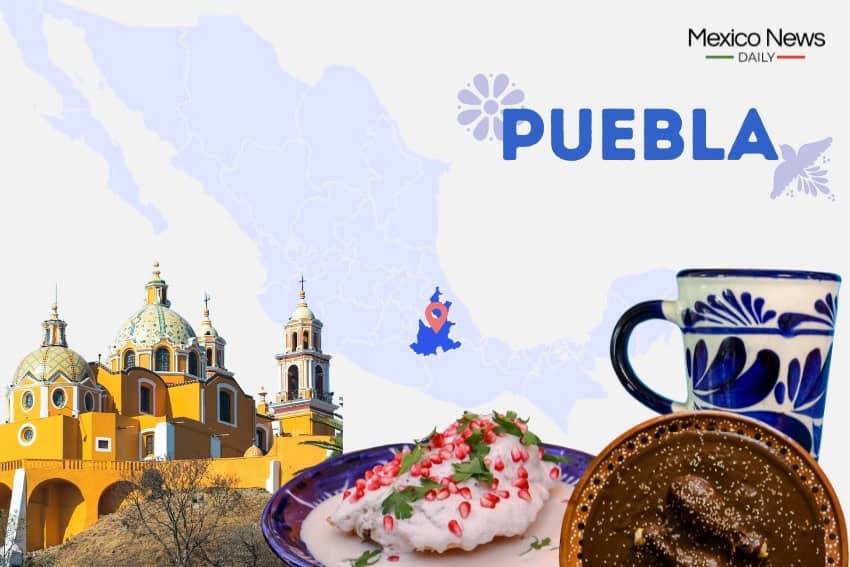
Puebla is for you if you like: Colonial history, sweeping mountains, racing while holding tortillas
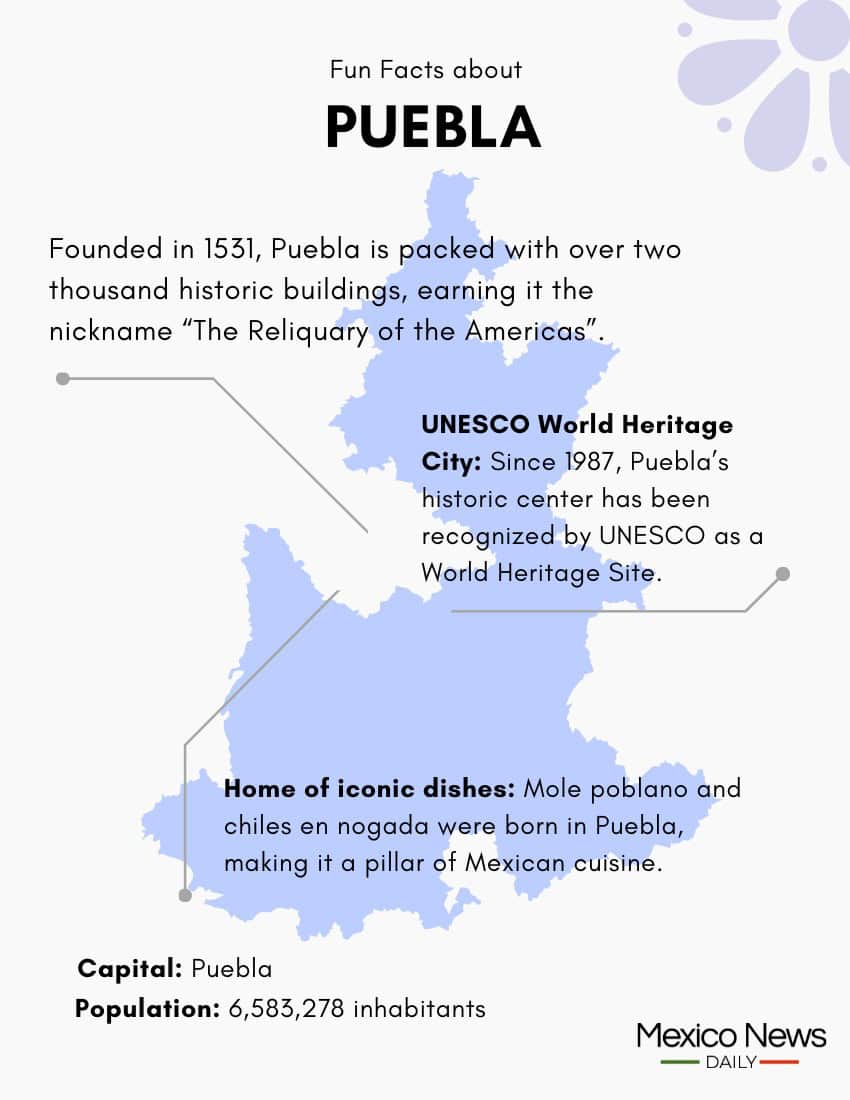
Mexico’s fourth-largest city, Puebla, has more going on beneath its colonial facades than most visitors realize. Its historic center, a UNESCO World Heritage Site since 1987, holds 2,619 monuments — more than any other city in the Americas — plus the tallest cathedral bell towers in the country. The city’s well-preserved architecture has also made it a go-to filming location, standing in for 18th- and 19th-century Mexico and Spain in productions including “Frida” and “Man on Fire.”
All of this is before you get out into the wider state, where sweeping mountain ranges, active volcanoes and enormous cacti dot the landscape. The state is one of the last stops in southern Mexico before the jungle claims the country. We’ve collected some of our best pieces from the last few years, to help you experience one of Mexico’s most genuine — and stunning — regions.

Puebla’s capital — also, conveniently, called Puebla — is filled with the sort of magic that only Mexico’s oldest cities can really offer. Many of the nation’s most definining moments and people have filled these streets (and the tunnels underneath them).
Puebla’s identity is tied up in origin stories, although some more verifiable than others. Its early name, Puebla de los Ángeles, traces to a 1531 account of a bishop’s vision guiding Spanish settlers to the site. Its signature dish, mole poblano, is said to have been improvised by nuns at the Convent of Santa Rosa in 1680 when an archbishop arrived unannounced and the kitchen had little to offer but chilis, chocolate, nuts and stale bread. And on Nov. 18, 1910, the Serdán family home became the site of the first armed clash of the Mexican Revolution, two days before Francisco Madero formally launched the uprising; the bullet-scarred house is now a museum.
While its days of defining Mexico’s future are probably behind it, Puebla remains a fascinating destination for anyone who wants to understand how the modern country truly came to be.
While Oaxaca, Sonora and Yucatán often vie for the title of Mexico’s gastronomic heart, it’s really Puebla that deserves the credit for much of the nation’s great cuisine.
Puebla’s culinary reputation rests on three dishes with stories as rich as their flavors. Mole poblano, which rumour claims is a single flash of nun-driven inspiration, remains the most famous of Mexico’s 300-plus regional moles. Chiles en nogada, with its patriotic red, white and green color scheme, traces back to a 1821 feast honoring independence figure Agustín de Iturbide. Tacos árabes, born from Middle Eastern shawarma techniques brought by 1930s immigrants, is the progenitor of the iconic pastor.
The state is quite a bit more than just colonial architecture and great food, though. Just outside Tehuacán, Puebla’s second-largest city, sits a landscape that looks like it belongs on another planet.
The Tehuacán-Cuicatlán Biosphere sprawls across 145,255 hectares of protected desert, home to more than 2,500 species of cacti — tall and candle-thin, round as beach balls, or shaped like something out of a sci-fi set. A day inside it turns into a full sensory tour of the region: 2,000-year-old salt flats still worked by hand at Zapotitlán Salinas, a lunch built around cactus flowers and hibiscus water (with insects on offer for the adventurous) and a pottery workshop in Los Reyes Metzontla where clay deposits — leftovers from an ancient sea — get shaped into earthy, hand-thrown crockery.
Photo essay: in this Puebla factory, Christmas magic is made
In a small Puebla town two hours north of the city, an entire industry is built on Christmas spirit. Chignahuapan produces an estimated 70 million hand-blown ornaments a year, and inside the country’s largest esfera factory, the process starts with nothing more than a glowing-hot glass tube and a steady breath. From there, silver coatings, hand-mixed paint and careful dabs of glitter transform each piece into something ready for the tree — some ornaments even take a year to master.
Step inside the traditional workshop where trompos, Nativity scenes and piñata-shaped baubles come to life, one painstaking layer at a time.
Puebla town’s unique Day of the Dead tradition: an altar swap meet
In the days before Day of the Dead, the Puebla town of Huaquechula holds a tradition unlike anywhere else: the trueque, an ancient barter market where locals swap goods — peanuts, sugar cane, homemade bread — for everything needed to build their altars. Families trade for marigolds and cockscomb flowers, while vendors carry stacks of pan de muerto in its many forms, from bone-topped loaves to body-shaped muertitos dusted in red sugar.
Beyond the market, the town runs on hospitality: cooks prepare meals for hundreds of festival participants around the clock, and visitors are waved into strangers’ homes to see their altars up close. Huaquechula offers a rare, local variation on Mexico’s most iconic holiday — equal parts market day, family reunion and open-door celebration of the dead.
Our glimpse into Puebla ends on a unique note. The annual Carrera de la Tortilla, a 5-km race through Tehuacán that retraces the daily walk local women make to market, tortillas and all. Most runners came from Santa María Coapan, the self-proclaimed “Tortilla Capital” of Mexico, who run decked out in traditional Mixtec dress.
Part sporting event, part tribute to the women who keep the tradition alive, it’s one of Puebla’s more charming annual customs.

How to get there
When it comes to arriving in Puebla, it really only makes sense to arrive from Mexico City.
By air
Puebla International Airport: 45 minutes from the city center, the airport offers connections to almost every major Mexican destination, plus Newark, Houston and Los Angeles.
Mexico City Benito Juarez (AICM): The big one. About 2 hours (traffic permitting) from central Puebal. Available from everywhere in Mexico, and almost every major global airport besides.
Felipe Ángeles International Airport (AIFA): The eternally troubled AIFA is finally beginning to come into it’s own. 2.5 hours away, it offers similar domestic connectivity to AICM and flights in from Colombia, Venezuela, the Dominican Republic and Cuba.
By road
Mexico City: 135km (83 miles) somewhere between 90 minutes and 3 hours, depending on when you travel. National holidays often lead to enormous tailbacks, but tackling the drive early on a weekday often means you can get there in less than two hours.