
The first time I walked into a Mexican pharmacy, I stood still in the doorway for a few beats.
Why was it so small? Where was everything? No candy aisle, no greeting card aisle, no sexual health or feminine hygiene products aisle. In fact, there was nothing that could even be called “an aisle.”
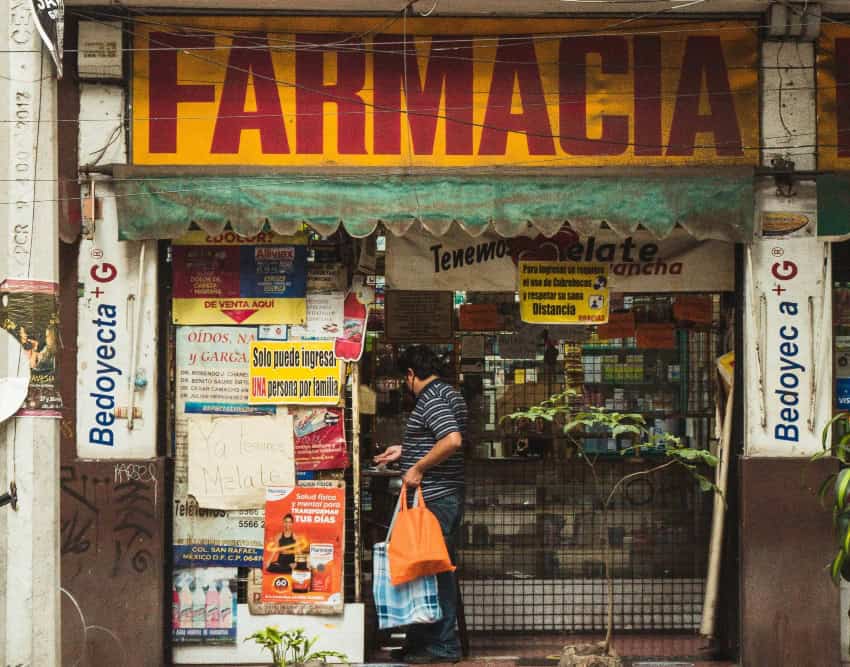
For such a cramped space, it was incredibly confusing.
I soon learned the ropes, and now, my fine readers, it is time to pass that knowledge on to you. Here’s what to remember when it’s time to go to the pharmacy in Mexico.
Not all pharmacies are created equal
In my neck of the woods, we can divide pharmacies into three tiers. When I say “tiers,” by the way, I’m not necessarily referring to quality but to familiarity for those of us from the United States who are used to stores like Walgreens and CVS.
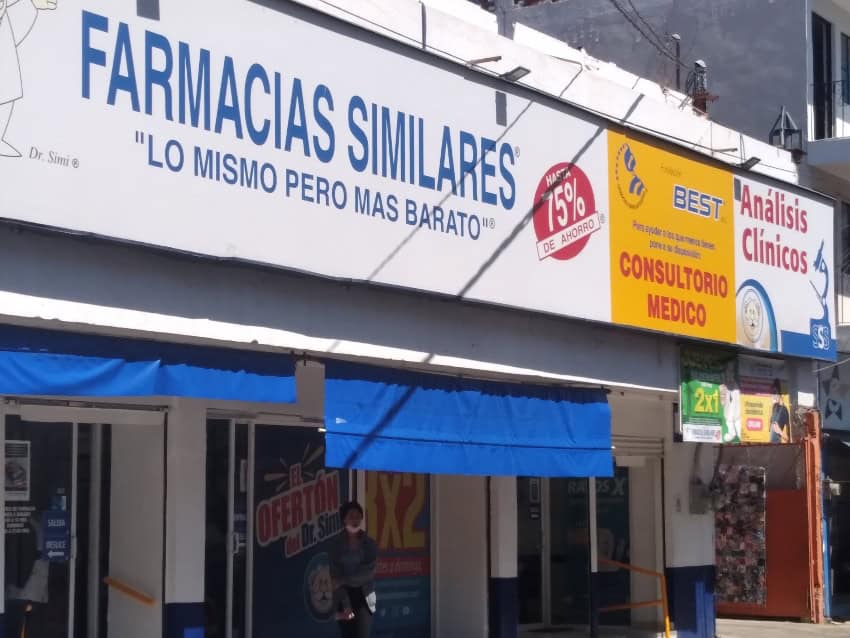
At the bottom is Farmacias Similares, which is a regional low-cost pharmacy chain stocked with cheap generic versions of many medicines. Many of these pharmacies also come with an attached consultorio (doctor’s office), where one can see a general doctor for minor illnesses like digestive or respiratory infections. The doctor will write you a prescription if one is warranted and recommend other medicines for your symptoms, which you can, of course, buy at the pharmacy.
The fee for seeing the doctor is symbolic (about 50 pesos, or close to US $3), and in most places, the pharmacy itself is countertop-style and pretty no-frills — meaning, there’s no “store” to walk into. You don’t browse the shelves; you ask an attendant to fetch the medicines you need. The supply of basic toiletries is fairly limited.
Farmacias Similares, by the way, is where you might find someone dressed up in a Dr. Simi mascot costume, a staple of modern Mexican culture. As far as I’m concerned, their medicines are just as good as any others, though I have had doctors tell me not to buy certain medicines there, so apparently, there are medical professionals out there who have their doubts, valid or not.

More pharmacy tiers
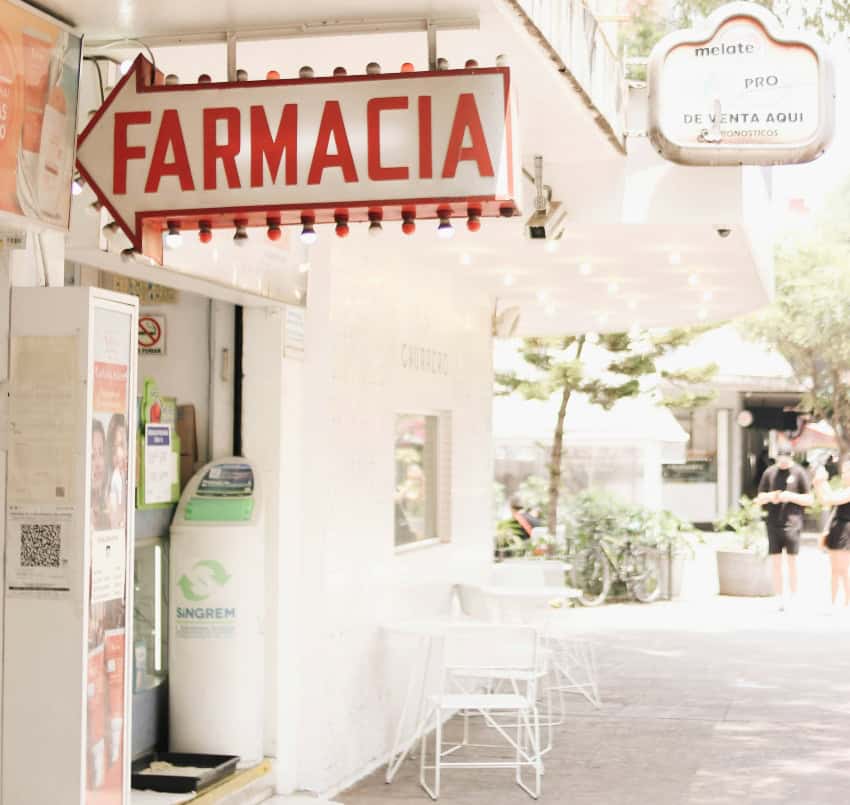
The next tier would include chains like Farmacias del Ahorro and Yza, which may or may not come with an attached consultorio — Farmacias del Ahorro usually does, and theirs is free. At these pharmacies, there is a little “store” area with items you can pick up and examine, though these are restricted to a fairly small variety of toiletries and over-the-counter medicines.
Condoms are mercifully available in this area now as well (you had to ask for them at the counter when I first arrived in Mexico). On the shelves, you can also find things like nail clippers and lip balm, and maybe a few snacks and refrigerated drinks. A few different brands of baby formula and diapers are available behind the counter. Most independent pharmacies are similarly stocked.
Finally, there are the larger pharmacies like Farmacias Guadalajara and Farmacias San Pablo, which are the most similar in terms of selection to a place like CVS, though without as much variety; I’d include grocery store pharmacy sections in this tier as well. Medicines tend to be a little pricier, but if you need more specific toiletries or other things on the same trip that you might normally look for in a tiendita or grocery store, these pharmacies can be very convenient.
Lastly, homeopathic pharmacies are in their own class, and there’s usually a homeopathic doctor available if you choose to go that route.
You don’t need a prescription for everything
When I first arrived, you could ask for pretty much any kind of medication in pharmacies — including antibiotics — and staff would just sell it to you. That’s no longer true for antibiotics nor for stronger pain medications — more on that below.
One notable area on this subject is birth control: In Mexico, you can simply ask a pharmacy for birth control pills (by brand, as there are many), as well as the morning-after pill, both without a prescription. While abortion before 12 weeks of gestation is now officially legal at the federal level in Mexico, asking for the abortion pill (Mifepristone) may yield success on a case-by-case basis, depending on the pharmacist you are dealing with. A quick online search of local pharmacies makes it appear that this is completely possible, but seek the advice of a medical professional.
What’s available and what’s not
Other medicines you might be surprised to learn you don’t need a prescription for are psychiatric, like many SSRIs, a class of antidepressants used to treat depression and anxiety. Medicines that are known to be addictive, like stimulants, for example, are more tightly controlled and can still only be bought with a prescription. They are also often subject to shortages, so you may have to visit multiple pharmacy chains to find the one that currently has it in stock. Weight-loss wonder drugs like Ozempic are available over the counter across all of Mexico.
Part of the confusion customers sometimes experience at Mexican pharmacies comes from the fact that certain brand-name over-the-counter medicines haven’t expanded into Mexico yet. (Luckily, Excedrin Migraine finally has. Now if I could only get a hold of some Tylenol Sinus!) The lesson? If you have a go-to over-the-counter medication that works for you, you might want to stock up during trips back home.
And if you’re looking for something particularly strong, such as opioids, you’re likely not going to find them anywhere outside a hospital. If you do happen to find them, I’d advise you to be incredibly suspicious of their origin and authenticity. That level of pain medication in Mexico is typically reserved for palliative care. My mother couldn’t even access them after having surgery here.
Since certain pharmacies in tourist and border areas have been found to sell counterfeit medications containing fentanyl — those that do typically advertise these drugs heavily to foreigners, another telltale sign worthy of suspicion and avoidance — it’s best to stay far away from such purchases.
As with many things in Mexico, a trip to the pharmacy will be a different experience than you’re probably used to, one in which you’ll need to interact with the people who work there to get what you need. Thankfully, you’ll likely find people to be as helpful and accommodating as they are elsewhere. Happy shopping, and get better soon!
Sarah DeVries is a writer and translator based in Xalapa, Veracruz. She can be reached through her website, sarahedevries.substack.com.
This article was first published in April 2024.