Artificial intelligence is increasingly ubiquitous, touching nearly every industry and country around the world — and begging the question of how governments can prevent the powerful new technology from being misused. Now, while the United States takes a piecemeal approach to regulation, Mexico is preparing a sweeping federal law to regulate AI, including new regulatory institutions and fines or prison sentences for misuse.
The bill seeks to prevent sexual deepfakes, electoral manipulation and lethal AI-based systems that work without human input.
The current proposal prohibits the creation and dissemination of sexually explicit deepfakes without consent, especially when they involve minors, in which case no authorization, even if explicit, would be valid.
Similarly, it prohibits “the manipulation of images, audio, or video for the purpose of humiliating, harassing, extorting, or perpetrating violence against a woman; the deliberate automation of hate campaigns, defamation, smear campaigns, or gender-based attacks; as well as the design or use of artificial intelligence systems primarily intended to facilitate cyberbullying, harassment, or digital persecution.”
To promote innovation and ensure technical and ethical compliances, the bill proposes a national artificial intelligence strategy, an AI development fund and a federal certification system.
Since it is often unclear online whether content has been manipulated using AI, the bill also seeks to establish basic rules of transparency.
Fake fires, real fear: Debunking the lies that went viral after ‘El Mencho’ fell

Experts in the field have warned that the bill could affect freedom of speech, political debate and technological innovation due to the vagueness of some concepts such as “cognitive manipulation” and “information risks.”
“Without precise definitions, these terms can be open to broad interpretations by the authorities,” Víctor Ruiz, CEO of the cybersecurity firm SILIKN told Expansión magazine.
Created by the Senate’s specialized committee on AI, the bill has seen participation from all political parties represented in the federal Congress.
Senator Rolando Zapata, who chairs the committee, said that the project is the result of 16 months of work and dialogue sessions that involved 72 specialists from different sectors, including academia, the private sector, representatives of the public sector and human rights organizations.
Zapata argued that the bill “does not censor opinions or criticism” and that it does not penalize political communication made in accordance with the law and democratic principles.
“This project in no way limits or restricts freedom of expression or political debate. It does not censor opinions or criticism, nor does it establish penalties for expressing oneself,” Zapata wrote on his official X account.
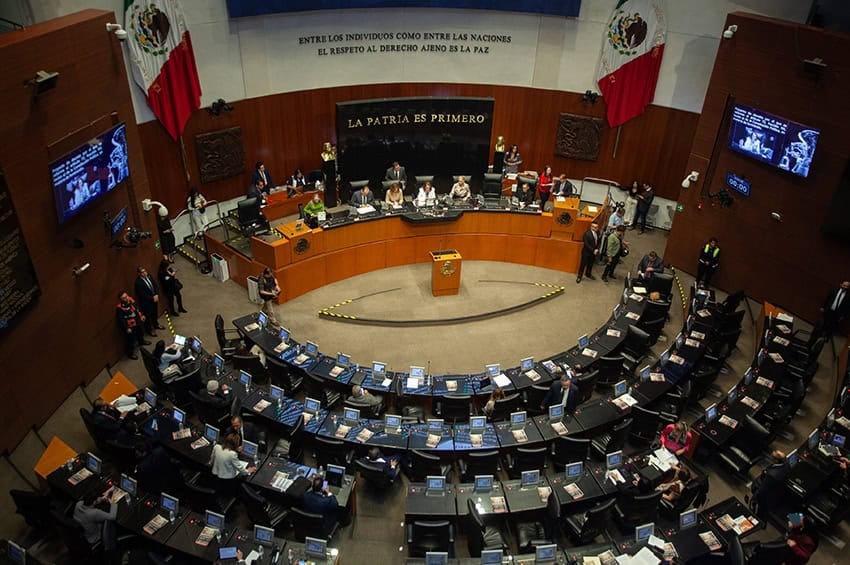
After the initial discussion phase, the bill will be presented and debated in the Senate.
With reports from Wired en Español, Expansión and Infobae