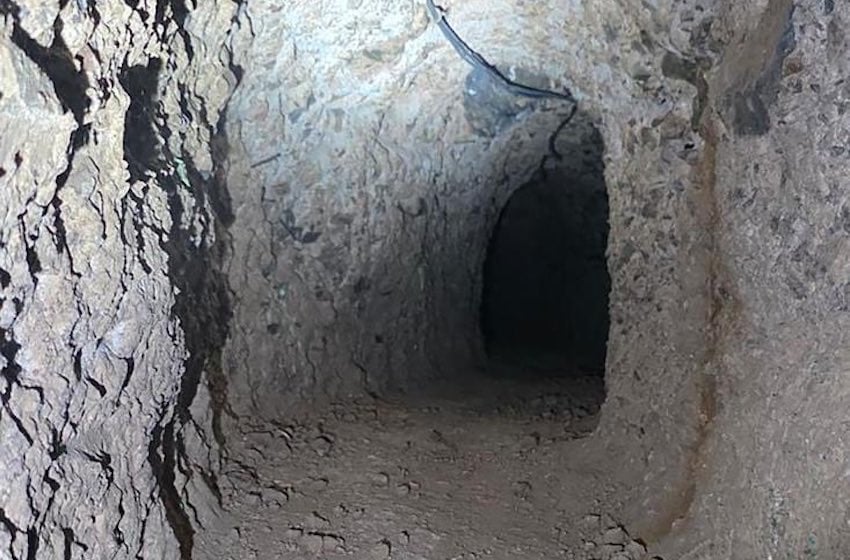
Authorities credited recently increased federal security operations in Sonora and neighboring states, as well as smoothly coordinated intelligence collection, for their ability to discover and seal off a tunnel in Nogales leading into Arizona.
One individual was arrested during last week’s operation, according to a joint statement from the Navy, Security and Defense Ministries that attributed their success to inter-agency cooperation with assistance from the Federal Attorney General’s Office (FGR) and the Sonora Security Ministry.
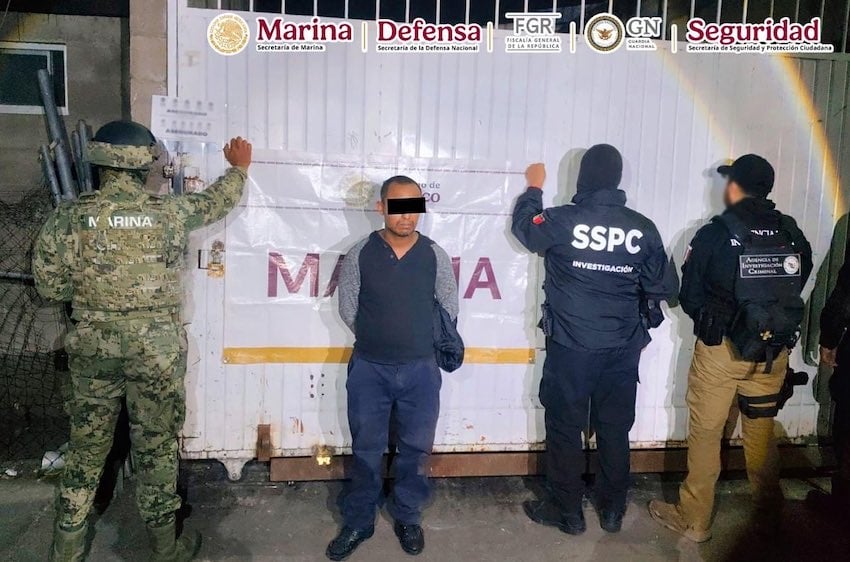
As a result of investigations conducted in the office and in the field, a property in the Centro neighborhood of Nogales was linked to a criminal group. After fixed and mobile surveillance provided solid evidence of the suspicion, a search warrant was granted by the local presiding judge.
Upon entering the property, agents located a rudimentary excavation 4.5 meters deep and 79 meters long, leading toward the U.S. border though with no apparent exit. The property was sealed and remains under police custody.
Along with the detained suspect, 21 live rounds of ammunition were seized.
The suspect — identified as Luis Fernando Garduño — was turned over to the FGR and faces charges of illegal surveillance, smuggling and human trafficking. He is said to be a member of the “Los Salazar” criminal group, which is known to engage in illegal operations in the region.
The online newspaper Infobae reported that the tunnel was allegedly intended for the illegal crossing of migrants into the United States, though it had not yet been completed.

In a social media post, U.S. Ambassador to Mexico Ronald Johnson praised the Mexican government for its commitment to keeping border communities safe.
“This action by the Mexican authorities demonstrates that our countries offer no respite to criminal networks,” he said.
This is the second border tunnel discovered in the past 15 months.
On Jan. 16, 2025, U.S. authorities closed a clandestine tunnel discovered under the bed of the Rio Bravo, on the border between Ciudad Juárez, Chihuahua, and El Paso, Texas.
The underpass — attributed to the crime gang known as “La Línea” — was approximately 40 meters long, featured ventilation and lighting and was connected to El Paso drainage systems. It was sealed shut with concrete on the U.S. side.
With reports from Infobae, El Universal and Dossier Politico