A so-called religious event in the state of Jalisco being promoted as an opportunity to address men’s mental health is attracting criticism for advocating traditional gender roles and discourses associated with the “manosphere.”
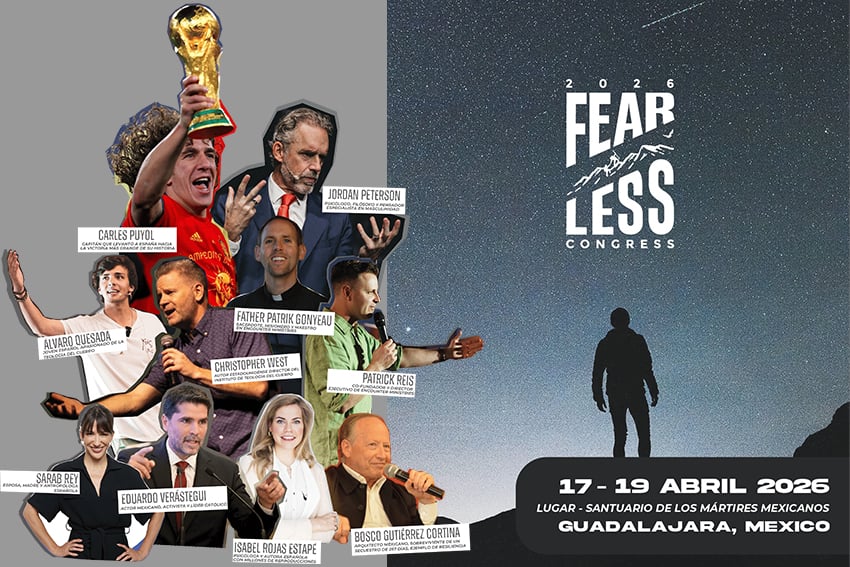
Set for April 17-19 at the Sanctuary of the Martyrs in Tlaquepaque, Jalisco (a suburb of Guadalajara), the Fearless Congress 2026 is being billed as “the largest masculinity congress in Latin America.”
Among the sponsors of the congress are the state government of Jalisco and the municipal governments of Guadalajara and Zapopan, all headed by members of the Citizens’ Movement party (MC).
Although MC is classified as a center-left, social-democratic and progressive party, Jalisco has long been considered a socially conservative state, featuring deeply rooted Catholic and traditional values.
The speakers range from entertainers like Eduardo Verástegui (an ultra-conservative actor/singer/producer who actively supports U.S. President Donald Trump) to footballers like Carles Puyol (former Spain and Barcelona captain), Canadian psychologist Jordan Peterson and Spanish psychologist Isabel Rojas Estapé.
“We are living through a silent crisis: men confused, empty and disconnected from their purpose,” reads the website of event organizers Fearless. “Masculine identity has weakened, leaving profound questions: Am I enough? Do I have what it takes?”

Tickets for the three days of the congress cost between 7,490 (US $422) and 1,450 pesos (US $82) and attendance is expected to surpass 10,000.
Andrés Villaseñor, the event organizer, says the project arose in response to a “crisis of male identity.”
In a message widely disseminated on social media, he asserts that “men have lost their way,” and face problems with depression, addiction and a lack of purpose. Villaseñor insists that men should “return to the original plan” to become “defenders, protectors and providers.”
Critics suggest that such statements reinforce traditional gender stereotypes and reduce the complexity of male issues to a conservative vision with a strong religious component.
The manosphere is described as a growing network of online communities that promotes masculinity and spreads misogyny and hate by trivializing gender-based violence and reinforcing discriminatory stereotypes, while suggesting that men are victims of the modern world.
The United Nations has labeled the manosphere a serious threat to gender equality.
Complaints have also arisen about the promotion the congress has received from channels linked to government agencies in Jalisco, Guadalajara and Zapopan, prompting debate about the use of public platforms to promote events with a specific ideological and religious focus.
With reports from La Jornada, El Sol de México, El Occidental, Debate and Espejo magazine