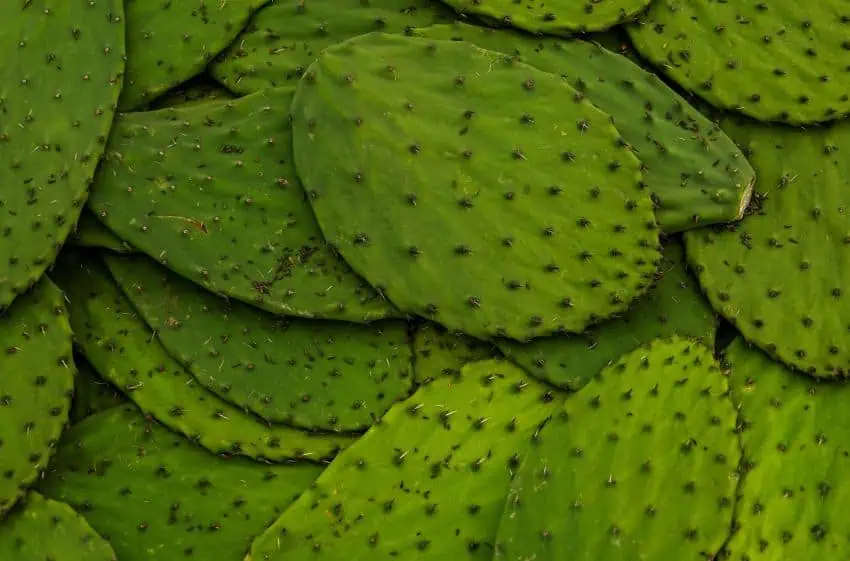
As drought conditions persist in northern Mexico, agricultural authorities and livestock producers are turning to nopal — the prickly pear cactus, and specifically its edible pads — as a sustainable, affordable solution for livestock feed.
In the northeastern border state of Tamaulipas, officials last month hosted a workshop titled “Nopal Protein Feed for Livestock: An Affordable, Drought-Resilient Solution” in the municipalities of Llera and Tula, aiming to equip farmers with technical knowledge on cactus-based feeding strategies.
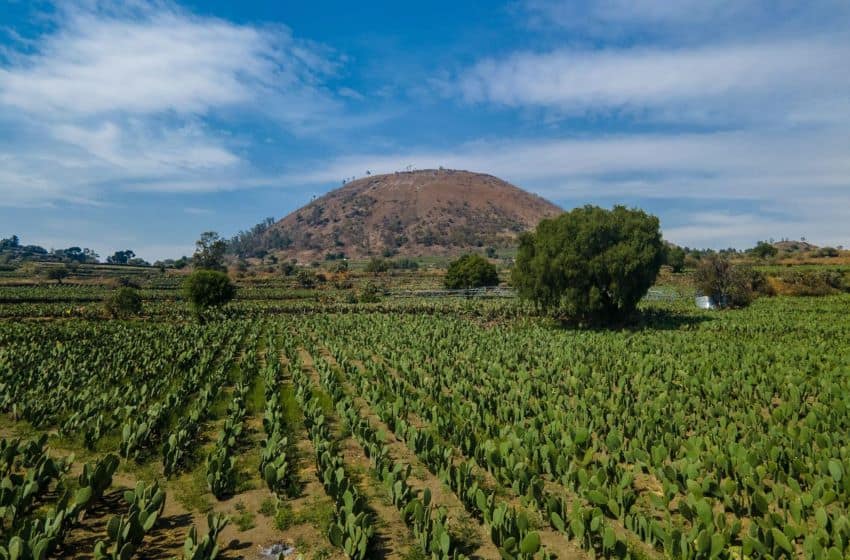
The benefits of nopal — including its inherent drought resistance and its ability to thrive in harsh conditions — make it an attractive and economical option for livestock feed.
“We know that the cactus is an alternative food for livestock, especially due to its protein content,” said René Lara Cisneros, mayor of Tula. “We live in times when the countryside demands innovation, efficiency and sustainability, and the cactus is a noble, resilient plant with a long tradition.”
The initiative, led by the state’s Department of Rural Development, Fisheries and Aquaculture, includes a commitment to providing practical tools to bolster rural productivity.
Two of the main speakers were Francisco Javier Macías Rodríguez, an agronomist at Chapingo Autonomous University (UACh) in México state, and Santiago de Jesús Méndez Gallegos, a specialist on goat farming and forage management.
The benefits they spoke of extend beyond Tamaulipas.

In the northwestern border state of Sonora, the Navojoa Livestock Association has held similar workshops in conjunction with national agencies — including a 2021 project addressing the demands of livestock farmers in the face of water scarcity.
Jorge Luis García Rodríguez, regional director for the National Commission for Arid Zones, explained: “We seek to reduce water consumption in forage production and are turning to [UACh] to strengthen the cultivation of forage cactus, which uses only a quarter of the water required by forage corn or alfalfa.”
Advances from research have boosted the protein content of cactus forage to commercial levels as high as 36% to 42%, and producers report significant savings on fodder purchases.
However, promoting its adoption requires robust technical support for producers in states and regions where drought has intensified the forage crisis.
Although much of Mexico has seen drought conditions ease since June, northern states such as Sonora, Chihuahua, Coahuila and Baja California still face extreme or exceptional drought, according to government data as of July 15.
Many areas are hoping for some relief when the rains come, but for a growing number of farmers, resilience means embracing drought-tolerant alternatives like nopal.
With reports from En Círculos, El Imparcial, El Debate, El Financiero and Meteored