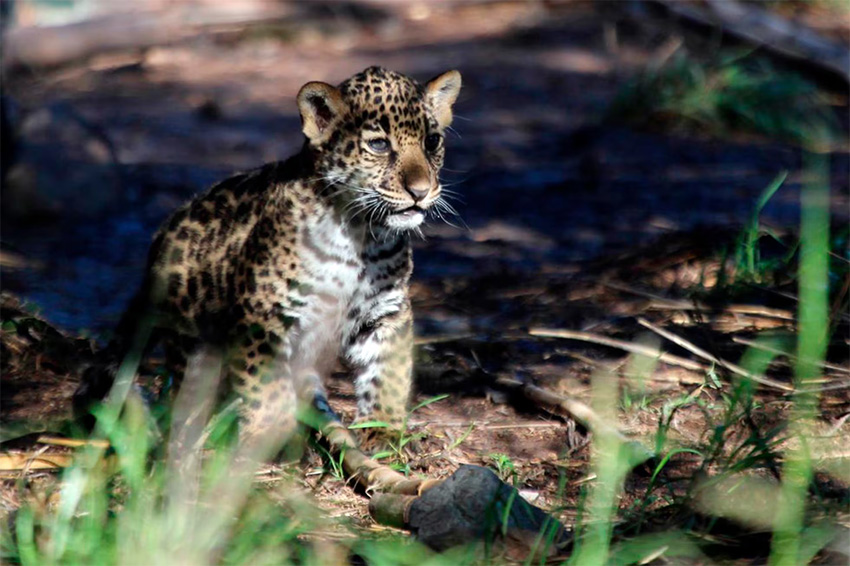
Yazu, a female jaguar cub, is being hailed as the possible savior of her species, the Mexican jaguar, or Panthera onca.
That’s a lot of pressure on a one-month-old kitten, but geneticists at the Yagul Jaguar Sanctuary in Oaxaca hope her birth is key to protecting the species, which is threatened by illegal hunting, habitat destruction and the effects of natural disasters.
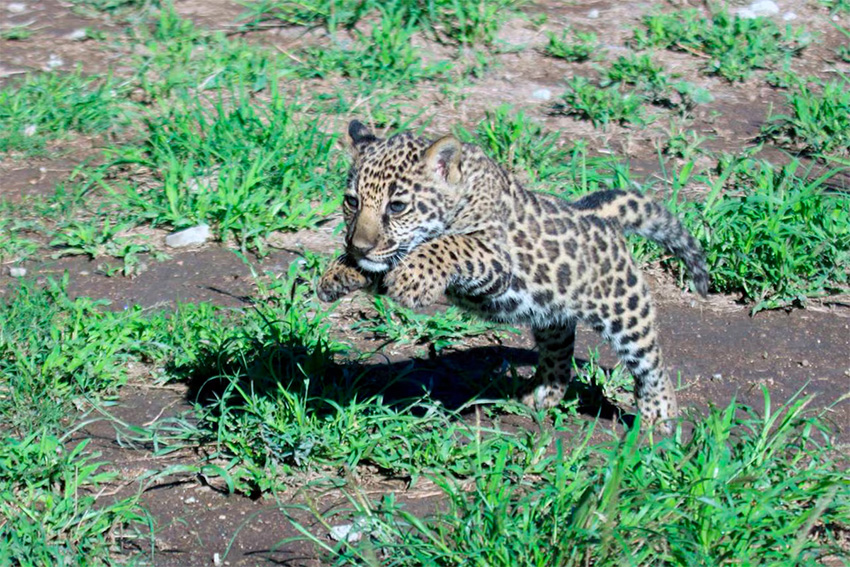
Yazu’s birth was the first produced via the Jaguar Genetic Bank project, through which experts seek to ensure the continued existence of this species.
The project’s long-term goal is to rescue and care for these felines, study their lineage, incorporate them into the wild and safeguard their genetic material.
The newspaper El País, which broke the story of Yazu’s birth, said that in addition to analyzing and preserving genetic material from Mexican jaguars, the project aims to breed the species to strengthen populations in priority areas for their recovery.
José Eduardo Ponce, the director of the sanctuary, told El País that in addition to the gene bank, the center also focuses on rescue, rewilding, care for abused animals and providing conservation support and territorial defense strategies to rural communities.
The breeding that produced Yazu was made possible through studies conducted on jaguars rescued by Mexican wildlife conservation authorities, including Balam — a male Panthera onca from San Miguel Chimalapas, Oaxaca — and a female recovered in Campeche, Yazu’s parents. Neither of the animals would have survived if returned to the wild, Ponce said.

The sanctuary originally began as a zoo, but in 2014 a move to a new location prompted a paradigm shift, according to El País.
Relocated to the Yagul Natural Monument Protected Area — where domesticated plants dating back more than 10,000 years were found — the Jaguar Sanctuary now focuses on conserving Mexico’s biological diversity.
Yazu will soon begin training in the sanctuary’s “wilding” program, which seeks to rescue and reintroduce into the wild young felines whose mothers either died due to poaching or in natural disasters.
Currently, three pumas found in the state of Hidalgo in 2022 when they were barely three months old can be found in the sanctuary’s wildlife simulator. Constantly monitored by cameras, they are in the process of developing “natural skills and instincts” in a hectare of land with no human contact.
The hope is that the pumas soon meet the challenges in the wildlife simulator — climbing, sniffing, marking territory and, above all, hunting — so they can be released into the wild before the end of this year.
El País cited one of the sanctuary’s success stories: two female jaguars barely three months old who were separated from their mother in 2016 due to poaching in the state of Campeche. After three years of intense training in the simulator, they were reintroduced into the jungle in 2020.
The Yagul sanctuary has a population of 50 animals, including jaguars, ocelots, lions, tigers, crocodiles, spider monkeys, peccaries and even a Burmese python. However, Ponce insists, the focus is on Mexican felines.
With reports from El País, Milenio and Prensa Libre