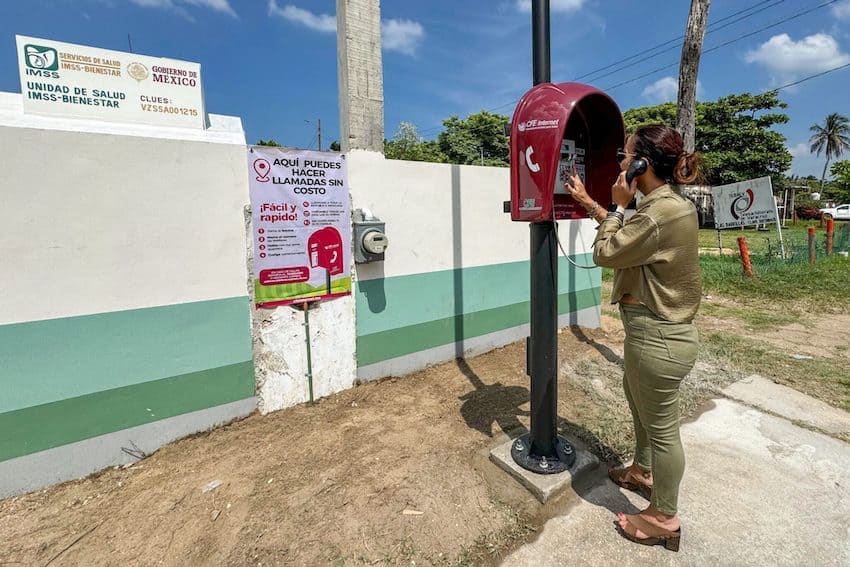
In a move that blends nostalgia with social policy, CFE Telecomunicaciones is reinstalling public telephone booths across Mexico — a technology many thought extinct in the age of cell phones and WhatsApp.
The state-run company — a somewhat new subsidiary of the nation’s Federal Electricity Commission (CFE) that began offering mobile and internet services in 2022 — has launched a program it says will “guarantee connectivity for the population that, due to the generational or digital divide, may have their communication with loved ones affected.”
Avanza la instalación de cabinas telefónicas GRATUITAS de CFE, la instalación se realiza en localidades rurales que tengan menos de 2,500 habitantes. ❤️ pic.twitter.com/3ey4xgdmeh
— TORI Noticias (@tori_noticias) March 18, 2024
One year into the program, which operates through agreements with municipal governments, CFE Telecomunicaciones has installed 848 phone booths.
Most of them are in the states of Veracruz, Oaxaca and Chiapas in communities with little or no connectivity, which are usually localities with fewer than 2,500 inhabitants.
Calls are free, and in rural communities they can even reach the United States and Canada without charge, according to the newspaper Récord.

The phones operate on simple analog charm: Simply lift the handset, dial, talk and hang up.
The initiative revives a service once vital to daily life. In the 1990s and into the early 2000s, millions of Mexicans relied on phone cards — starting at 30 pesos — for national and international calls.
But mobile phones and instant messaging apps rapidly rendered payphones obsolete.
By 2010, Mexico had approximately 80 mobile phone subscriptions per 100 people, a figure that rose to 90 out of 100 by 2016, according to World Bank/ITU and regulatory-based sources.
According to the Federal Telecommunications Institute (IFT), Mexico still had 580,199 public pay telephones as of December 2024, a 10.6% drop from 649,177 such phones in 2019.
Telmex controls 97.5% of the market, while BBG Comunicación holds the rest — but vandalism and other damage have left many of these “phone booths” nonfunctional, especially in urban areas.
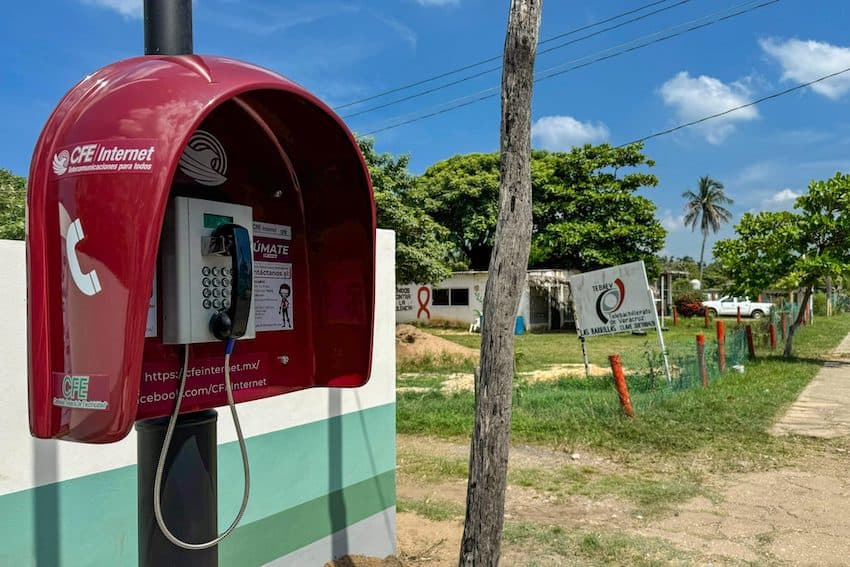
Critics argue that spending public resources on new phone booths would be better spent expanding digital infrastructure.
“There are no clear criteria for the installation of these booths,” said Jorge Bravo, president of the Mexican Association for the Right to Information (Amedi). “Although I have seen some in good condition, I have never seen anyone using the service.”
Apparently, there is no public data on actual usage minutes or cost of the new program, which critics say makes its effectiveness hard to assess.
Analysts told Expansión that the booths could eventually evolve into Wi-Fi hotspots for remote communities.
CFE Telecomunicaciones e Internet para Todos (CFE-TEIT) is a CFE subsidiary created in 2019 to run the program “Internet para Todos” (Internet for All).
Its role includes installing public internet access points, building telecom towers and selling low‑cost mobile/data plans in addition to running the phone booth program.
With reports from Expansión, Grupo Zócalo and Récord