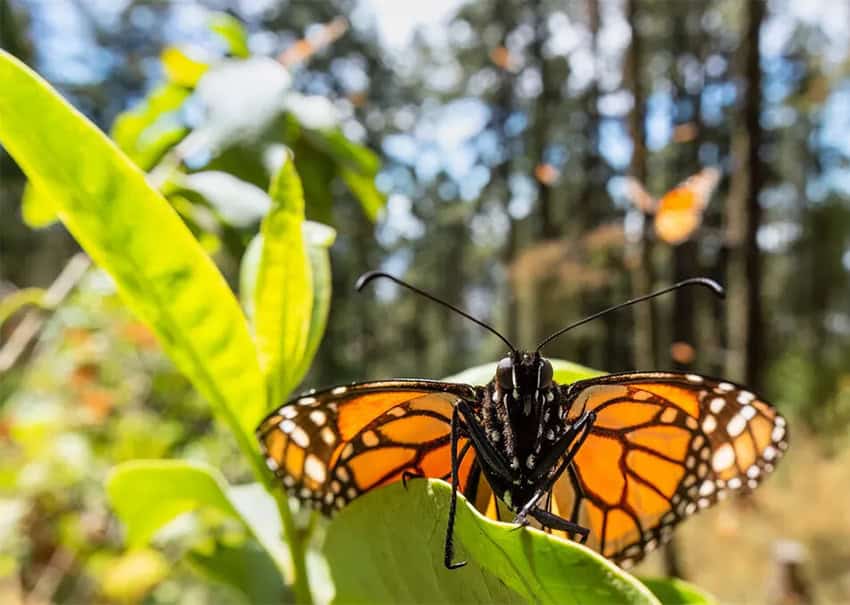
The monarch butterflies that winter in Mexico’s high‑elevation forests are getting a reprieve — but not yet a rescue — as Mexico, the United States and Canada step up joint efforts to keep its famed migration from collapsing.
New figures released this week by Mexico’s Ministry of Environment and Natural Resources (Semarnat) and the World Wildlife Fund (WWF) show monarch colonies covered 2.93 hectares of oyamel fir forest in central Mexico this winter, up from 1.79 hectares in 2024-25 — a 64% increase.
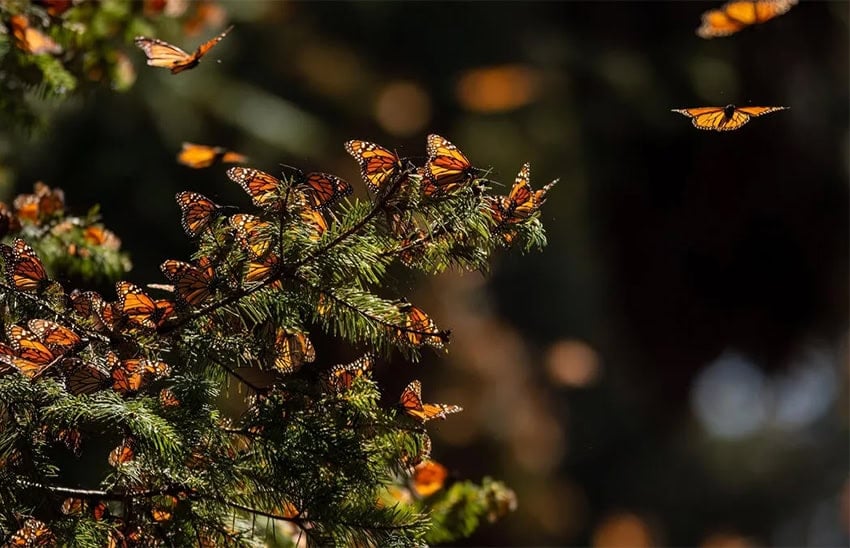
This winter’s 2.93 hectares of trees blanketed in butterflies compares with 1.79 hectares a year earlier and just 0.9 hectares the winter before.
However, while encouraging, the gains leave the eastern monarch population still down by more than 80%–90% since the 1990s.
Several conservation groups warn the population still remains at risk of extinction, with a model from the U.S. Fish and Wildlife Service pointing to a 56-74% possibility of extinction by 2080.
Research cited by the Center for Biological Diversity and U.S. government scientists indicates the population needs to occupy at least 6 hectares (roughly 15 acres) of winter habitat to remain above the risks of migratory collapse.
Even after this year’s bump, the monarchs who arrived five months ago (some equipped with solar-powered tracking tags) occupied less than half that amount.

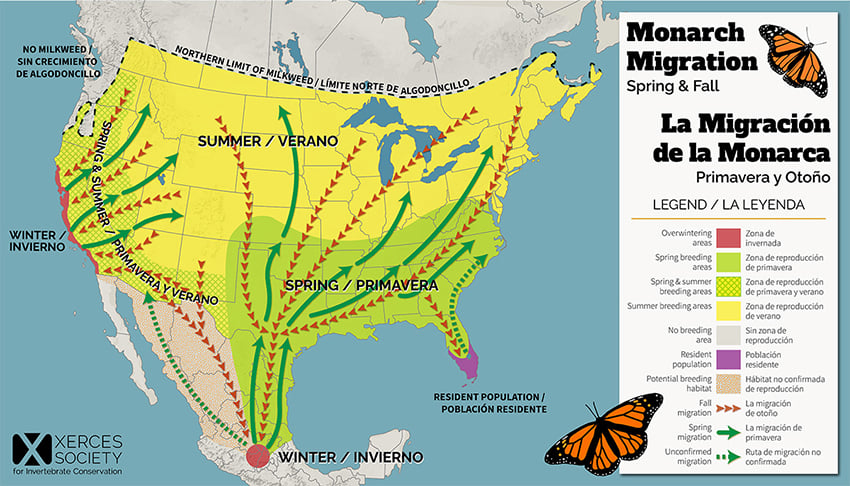
Long-term trends underscore the gap. In the record 1996-97 season, monarchs in Mexico covered about 18.19 hectares, more than 44 acres. They cluster from roughly early November to March, when they depart and begin laying eggs as they move into the southern U.S.
Today’s 2.93 hectares represents a fraction of those historic numbers, even as citizen groups, schools and farmers across the U.S. and Canada seed milkweed and nectar plants along the flyway.
Monitoring data attribute this winter’s larger colonies to more eggs and larvae surviving during a less-dry U.S. spring and summer, along with fewer drought impacts along the southbound route into Mexico.
Meanwhile, in Mexico, communities have been reforesting hillsides, patrolling the reserves to reduce illegal logging and building monarch‑based ecotourism, with help from the National Commission of Natural Protected Areas (Conanp) and the WWF.
Mexican officials say those measures, and the weather in the United States, helped drive this year’s rebound.
Also, there is new data showing some pressure easing on the wintering grounds themselves.
A joint WWF–Mexico report found 2.55 hectares of forest degraded in the core of the Monarch Butterfly Biosphere Reserve between February 2024 and February 2025, down from 3.73 hectares the previous year, with most loss driven by illegal logging and smaller amounts by fire and drought.
Other threats to monarch populations include widely used insecticides and herbicides in North America, climate change and extreme weather.
The Monarch Butterfly Biosphere Reserve — in the mountains of central Mexico in the states of Michoacán and México — included nine major butterfly colonies this winter. The five sanctuaries generally open to the public are Sierra Chincua, El Rosario, La Mesa, Piedra Herrada and El Capulín.
President Claudia Sheinbaum said this week her government is using this window of opportunity to push trilateral action.
“Yes, there are talks between Semarnat, both with Canada and the United States, and [Conanp] is also strengthening its support,” Sheinbaum said.
Sheinbaum said the greatest challenge now lies along the U.S. leg of the route, where monarchs need pesticide‑safe milkweed and nectar-rich habitat as they move north out of Mexico and back toward Canada.
With reports from Milenio, El Financiero, La Jornada, WWF, Panda.org and Border Report