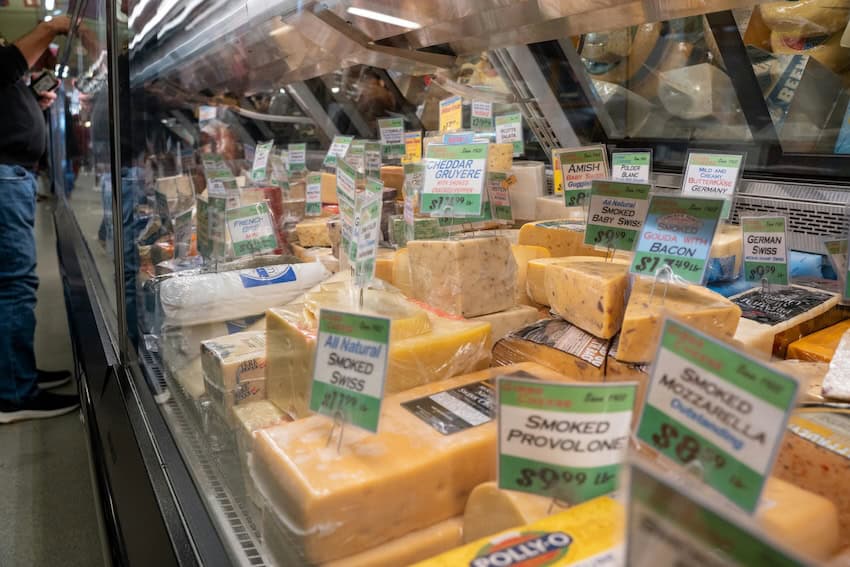
Mexico-U.S. trade talks have hit a snag over cheese, with the sticking point going back to the trade agreement Mexico signed with the European Union (EU) in May.
The Mexico-EU accord grants special protections to hundreds of European products whose names are linked to specific regions, including Parmigiano Reggiano, Feta and Manchego cheese. It also provides the EU with legal recourse against violations.
U.S. officials say the protections could restrict future sales by U.S. producers to Mexico under names like parmesan and feta, forcing them to use descriptions with labels such as “imitation” or “style.”
The U.S. government’s stance is that these names are generic, while the EU insists they ought to be reserved for products produced in the region for which they are named.
“What Mexico did was completely wrong,” said Jaime Castañeda, executive vice president of the U.S. Dairy Export Council. “The Mexican government must guarantee that both the United States and Mexican manufacturers of common cheese brands can continue operating in the market.”
While U.S. negotiators are pressuring Mexico to amend its deal with the EU (it has yet to be approved by the Senate), the European Commission insists it is not possible to modify the terms of the agreement.
Mexico — among the world’s top consumers of cheese — imports approximately US $1 billion worth of cheese annually from the U.S, while total EU dairy exports to Mexico amount to only US $200 million.

The Washington, D.C.-based International Dairy Foods Association (IDFA) is on record describing the U.S.-Mexico-Canada trade deal (USMCA) as dairy’s most important trade agreement.
The IDFA says the U.S. dairy industry, which supports more than 3 million jobs and contributes US $779 billion to the U.S. economy, depends on access to global markets to sustain growth and create new opportunities for farmers and processors.
U.S. negotiators are using the USMCA as leverage in hopes of forcing Mexico to accede to their demands, but critics say that in addition to the conflict with the EU accord, lower-quality U.S. cheeses are undercutting local production.
With reports from Reuters, CEO, The Independent and Fox 10 Phoenix