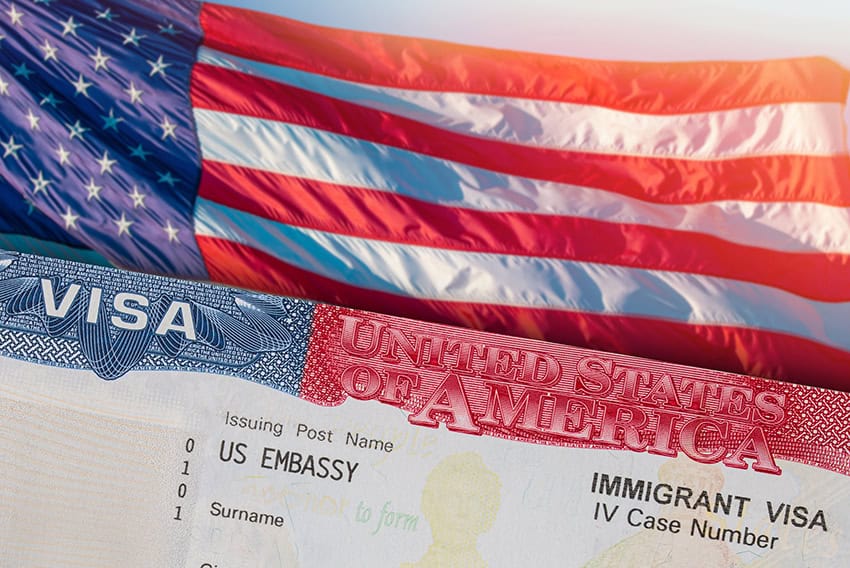
The Trump administration has begun revoking U.S. visas for Mexican politicians it believes are linked to the drug trade, including high-profile members of President Claudia Sheinbaum’s ruling Morena party, according to a new ProPublica investigation.
The list of targets includes Mexican state governors and allies of former President Andrés Manuel López Obrador, signaling a sharp escalation in bilateral tensions.
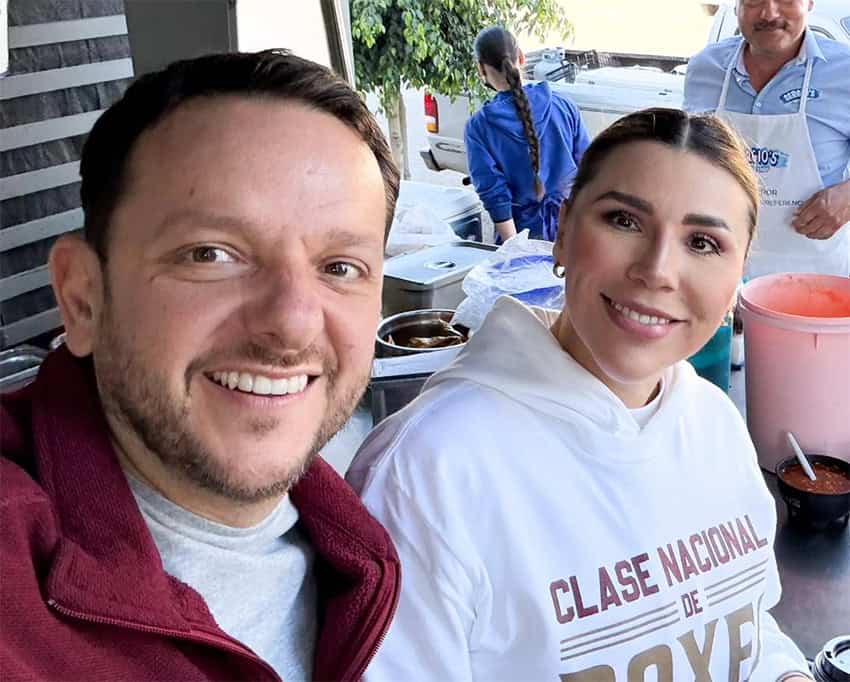
Last weekend, Baja California Governor Marina del Pilar Ávila revealed her visa was canceled in recent weeks, as was the visa of her husband, Carlos Torres Torres, a member of Mexico’s lower house of Congress, the Chamber of Deputies, from 2006 to 2009.
According to longtime journalist Adela Navarro, editor-in-chief of Tijuana’s Zeta Weekly, the governor is “collateral damage” in a U.S. probe targeting her husband and her brother-in-law, Luis Alfonso Torres.
Navarro said in an interview on Radio Fórmula the two brothers are under investigation for their potential involvement in a case of stolen fuel that reportedly entered Mexico illegally from Texas.
“What we were told [by unnamed sources inside] the State Department was that she would be collateral damage. In the United States, they often do this by disabling the inner circle of the person of interest,” the journalist said. “The ones they are investigating are Carlos Torres and his brother.”
The question that persists in Mexico, “particularly among the overwhelming Morena wing,” Navarro wrote in a piece for Zeta Weekly, “is whether President Sheinbaum will save the reputation of [Governor Ávila] by interceding with the U.S. government to have her B1/B2 tourist visa reactivated.”

Torres’ visa was revoked at the Tijuana border crossing about three weeks ago, according to Zeta Weekly, with the governor notified later “via consular service” that hers was being revoked, too.
The ProPublica report, published Thursday, said the “Trump administration has begun to impose travel restrictions and other sanctions on prominent Mexican politicians whom it believes are linked to drug corruption,” information the report attributed to U.S. officials.
The report added: “U.S. officials said they expect more Mexicans to be targeted as the administration works through a list of several dozen political figures who have been identified by law enforcement and intelligence agencies as having ties to the drug trade.”
All of this coincides with a report released Thursday by the U.S. Drug Enforcement Administration (DEA) in which an entity codenamed Operation Top Fuel (Liquid Death) links Mexican cartels to a multibillion-dollar fuel theft ring.
The 2025 National Drug Threat Assessment notes that criminal organizations like the Jalisco New Generation Cartel and the Sinaloa Cartel smuggle stolen Pemex fuel to finance narcotics operations.

“This black-market petroleum smuggling operation is the primary means by which the Transnational Criminal Organization (TCO) finances its networks,” the DEA wrote.
According to ProPublica, the operation that snagged Ávila and Torres revives a 2019 DEA list of “several dozen” Mexican officials compiled after López Obrador began shutting down Mexico’s cooperation with the U.S. in counterdrug programs.
Seeking to “identify Mexican government figures who could be criminally prosecuted for aiding drug traffickers,” the earlier effort led to the 2019 indictment and 2024 conviction of ex-Security Chief Genaro García Luna.
As for Ávila, opposition lawmakers such as National Action Party (PAN) Deputy Federico Döring have urged her to “step down” and “use that time to clarify what she needs to clarify with U.S. authorities.”
“Why? What argument do you have?” Sheinbaum countered.
Ávila denied having foreign bank accounts — “they don’t exist,” she said — but remained silent on her husband’s finances. The U.S. Embassy declined to comment, citing visa privacy rules.
The White House initiative invokes Section 212 of the Immigration and Nationality Act, allowing visa bans for suspected drug collaborators. ProPublica reported Treasury sanctions freezing U.S. assets could follow.
The operation is being overseen by White House Deputy Chief of Staff for Policy Stephen Miller and Deputy Homeland Security Adviser Anthony Salisbury, noted ProPublica.
Former Mexican Ambassador Arturo Sarukhaan warned in the ProPublica report that the crackdown risks inflaming tensions.
“It gives [Sheinbaum] — a nationalistic president with a very chauvinistic party behind her — a perfect excuse to say that everything bad that’s happening in Mexico … is because of U.S. imperialism,” he said.
With reports from Proceso, El Sol de México, LatinUS, Radio Fórmula and Zeta Tijuana