Mexico’s Health Ministry officially confirmed six cases of parasitic infestation caused by screwworm in southern Mexico. Five patients have been treated and released, while one remains hospitalized.
Five of the cases — which include myiasis (embedded larvae) in the heads of four patients — are located in the state of Chiapas; the sixth is in Campeche.
¿Has escuchado hablar de la miasis? 🤔
Es una enfermedad causada por el #GusanoBarrenador, que puede afectar al ganado y al ser humano. 🐛
Evitemos su propagación y cuidemos a nuestros animales. #SomosNaturaleza #GuardianesDeLaNaturaleza 🪰❌🐄🐂 pic.twitter.com/JjZQoCF8Up
— CONANP (@CONANP_mx) May 26, 2025

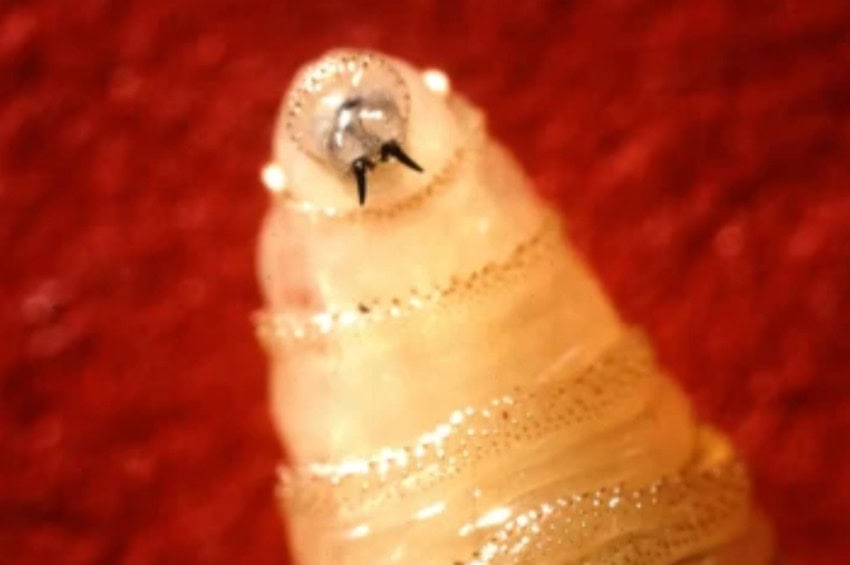
Screwworm larvae can enter animals and humans through open wounds and feed on living tissue. The disease can be fatal for livestock, and while cases in humans are rare, they can be serious if left untreated.
More than 800 cases of screwworm have been detected in animals in southern and southeastern Mexico since November, prompting the U.S. Agriculture Department to suspend imports of livestock from Mexico on May 11.
The Health Ministry reported the first of these six cases in Chiapas in mid-April. A local doctor made the diagnosis in a 77-year-old woman and contacted the Health Ministry., An epidemiological alert was issued a week later.
Shortly after, similar symptoms were identified in a 50-year-old Chiapas man after he had been bitten by a dog.
Just over a week ago, three more Chiapas residents were diagnosed with parasitic infections, including a 74-year-old man who remains hospitalized. At the same time, an 86-year-old Campeche resident was treated for screwworm infestation.
El Universal newspaper reported a possible seventh case of parasitic infection in Chiapas that had not been registered by the Health Ministry.
Though the risk of human infection is low, myiasis is more likely in rural areas where people might come into contact with infected animals. Myiasis is not spread from human to human.
Public health officials urge rural residents to maintain personal and animal hygiene, avoid contact with animals with open wounds or signs of infection. If you suffer a wound or a cut, officials recommend treating it immediately to prevent the Cochliomyia hominivorax, or screwworm, fly from laying its eggs.
President Claudia Sheinbaum said Tuesday that the U.S. and Mexico are continuing their joint efforts to eradicate screwworm infestations, an agreement that was announced in April.
A day earlier, Sheinbaum said Mexico’s Agriculture Minister Julio Berdegué is engaged in “permanent talks” with United States officials in hopes of convincing the U.S. to reopen its southern border to Mexican livestock.
The screwworm infestation and the suspension of imports have been a disaster for Mexico’s livestock industry. Exports from January through April this year are down 60% compared to the same period last year, La Jornada reported.
While the border was open during the first quarter of the year, Mexico exported 202,000 head of cattle, whereas Mexico had shipped 504,000 head across the border during Q1 2024.
With reports from El Universal, El País and La Jornada