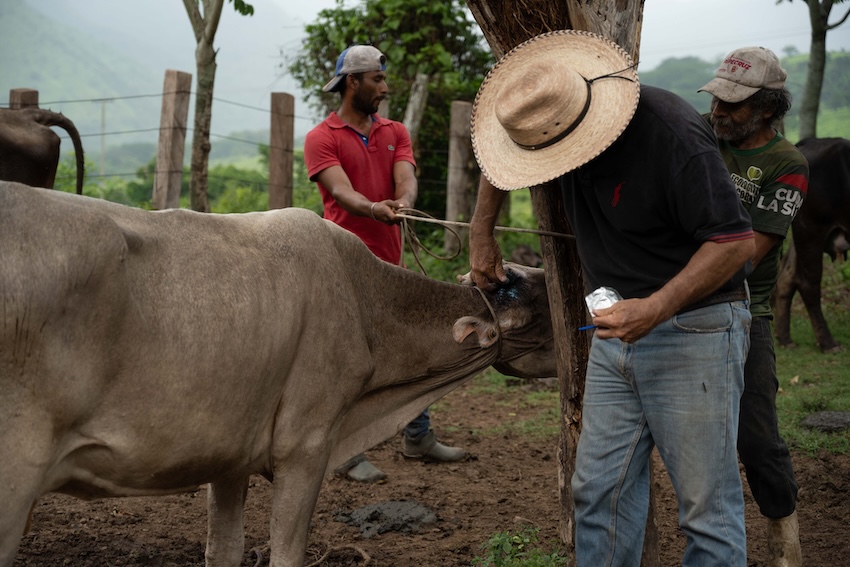
There is a glimmer of hope for Mexican livestock farmers plagued by the parasitic New World screwworm (NWS) as researchers at the Autonomous University of Querétaro (UAQ) are reporting promising developments in their efforts to produce a pioneering vaccine.
The NWS — a species of blood-sucking blowfly whose larvae eat the living tissue of warm-blooded animals — has been steadily moving through Mexico from Central America since last year. The northward advancement of the pest has the U.S. cattle industry on alert and, since November last, U.S. authorities have twice suspended cattle imports from Mexico.
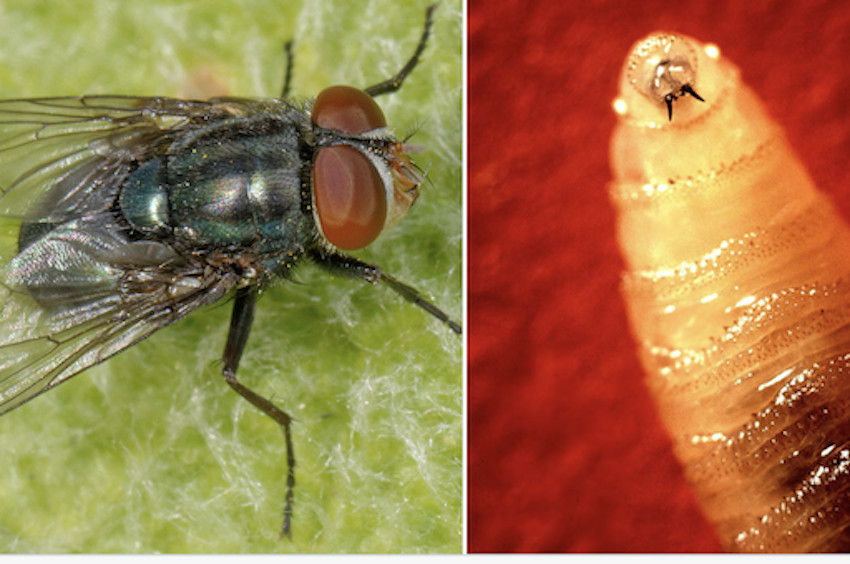
As there is presently no vaccine for screwworm, the battle against the pest involves a multi-pronged strategy of sterile insect technique, epidemiological surveillance, pesticide application, border control and immediate treatment of infected animals and humans.
So the news emerging from last week’s 33rd Annual Meeting of the National Technical Advisory Council on Animal Health is cause for optimism.
Dr. Juan Joel Mosqueda, a researcher at the UAQ School of Natural Sciences, told El Heraldo de Chihuahua that the project is using reverse immunology to create a multi-epitope vaccine.
Reverse immunology relies on computational methods to identify potential immune targets, such as antigens or antibodies, rather than traditional methods of isolating them from a live subject. A multi-epitope vaccine is a type of a molecular vaccine that simultaneously encodes multiple target antigens and auxiliary antigens.
“With an effective vaccine, producers would not have to continually invest in chemical treatments,” he said, adding that a new vaccine could reduce the use of fly killers, products that are expensive and pose an environmental risk by harming beneficial insects.

The project is still in the genetic analysis phase as researchers identify antigens that could be incorporated into the vaccine.
“We began working on this idea a little over a year ago as the screwworm advanced from Central America to Mexico,” Mosqueda said. “Just as vaccines have been developed against ticks, we thought we could apply a similar strategy to this larva.”
Advancing to the biological stage to evaluate the first vaccine candidates produced will require initial funding of 1.5 million pesos (US $81,500). Additional funding would be required for challenge trials and to corroborate the vaccine’s effectiveness.
With the necessary resources, Mosqueda estimated that preliminary results on the efficacy of the vaccine candidates could be obtained within a year.
With reports from El Heraldo de Chihuahua and El Orbe