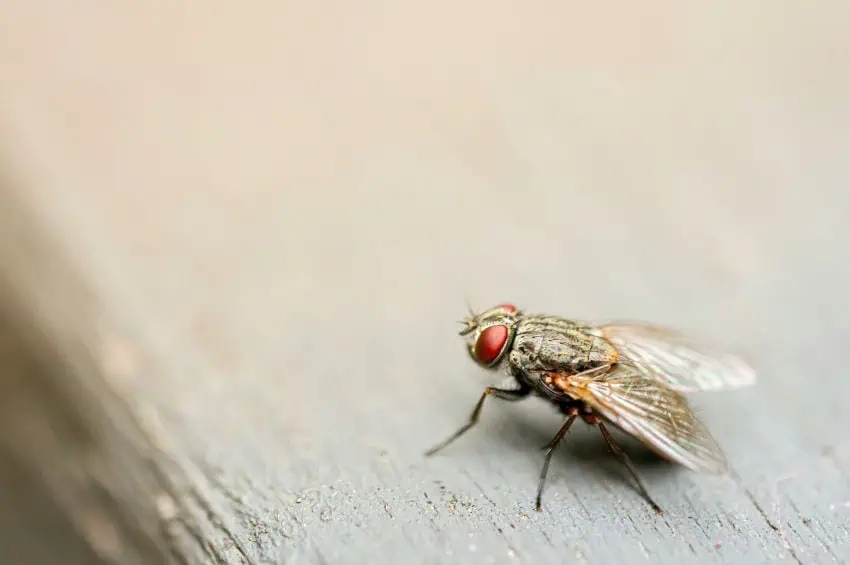
The United States has announced the reopening and modernization of the sterile fly production plant in the southern Mexican state of Chiapas as part of a joint strategy with Mexico to combat cattle screwworm (Cochliomyia hominivorax), a pest that affects livestock and recently led to the temporary suspension of Mexican cattle imports by the U.S.
Screwworm flies afflict livestock and other animals — including humans — by laying their larvae in open wounds. The resulting infestations can be fatal without treatment.
Mexican’s Agriculture Ministry Julio Berdegué, confirmed Wednesday that his U.S. counterpart, Brooke Rollins, has allocated a US $21 million investment to renovate the sterile fly manufacturing plant. The goal is to generate approximately 100 million sterile flies each week, in addition to those produced at another plant in Panama, which, until now, has been operating at maximum capacity to ship the insect to Mexico.
“We believe this is a positive step that, in several ways, will strengthen joint Mexico-US efforts,” Berdegué said on his official X account.
The sterile flies are key to sterile insect technique, a biological control method that floods an area with sterile screwworm flies and makes it more difficult for fertile flies to find each other, thus disrupting the reproductive cycle.
The sterile insect technique is not new to Mexico. In 1972, Mexico and the U.S. adopted a joint strategy to eradicate the screwworm, leading to the opening of the plant in Tuxtla Gutiérrez, Chiapas, in 1976. The formal eradication campaign began in 1981, and by 1991, the states of Tabasco, Campeche, Quintana Roo, and Yucatán were declared pest-free. In 2003, Chiapas also achieved this status, marking the elimination of the screwworm throughout Mexico.
La secretaria @USDA @SecRollins acaba de anunciar un plan para reforzar el combate al gusano barrenador del ganado. Nos parece un paso positivo que, en distintos aspectos, fortalecerá el trabajo conjunto México-EUA. Por ejemplo:…
Abro 🧵— Julio Berdegué (@JulioBerdegue) June 18, 2025

The reopening of the Chiapas plant seeks not only to control the current health emergency, but also to ensure the resumption of livestock trade between the two countries.
On May 11, the U.S. Department of Agriculture announced the suspension of live cattle, bison, and horse imports from Mexico due to the spread of the screwworm. Initially, the suspension was set to last from May 11 to May 25, but because the pest issue has persisted, the suspension remains in effect.
The outbreak of screwworm represents a serious risk to animal health and Mexico’s livestock economy. Mexico’s National Agricultural Council (CNA) said the United States’ decision to halt imports of cattle, horses, and bison from Mexico due to new outbreaks of the screwworm could mean losses of US $11.4 million per day for the country while the trade ban remains in effect.
In a statement on his official X account, Berdegué said following Rollins announcement that thanks to the “spirit of cooperation” shown by U.S. officials, he hopes Mexico “can resume the export of our cattle as soon as possible.”
Meanwhile, Rollins said the U.S. has “entered a new era of productive partnership, perhaps better than ever before, with our Mexican counterparts.”
In addition to reopening the Chiapas plant, Rollins revealed their strategy includes opening a new sterile fly dispersal plant in Texas, strengthening surveillance measures in the Mexico-U.S. border to prevent entry of the pest and conducting audits in Mexico, among other measures.
With reports from EFE, El Universal and El País