The Mexican Navy sank a donated Japanese ship off the coast of Tamaulipas this week, expanding a growing artificial reef system in the Gulf of Mexico that officials say will boost marine life, fishing and tourism.
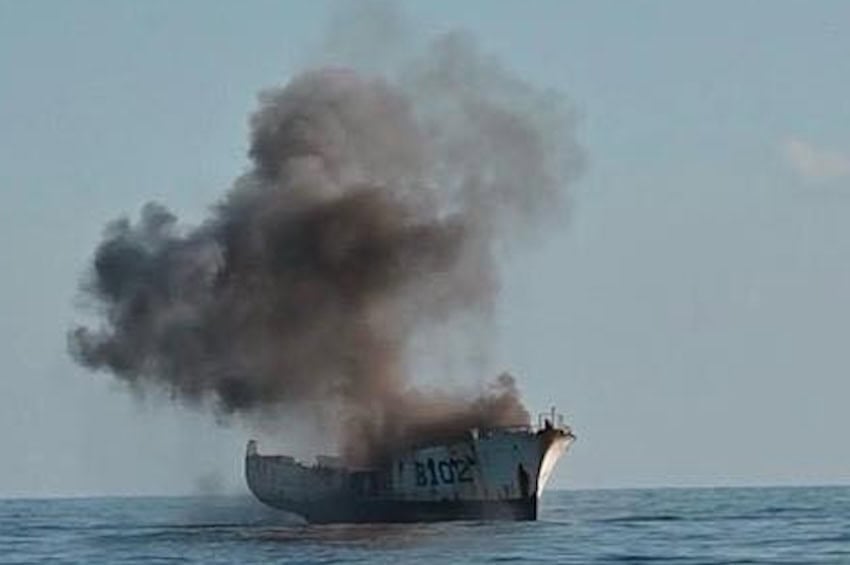
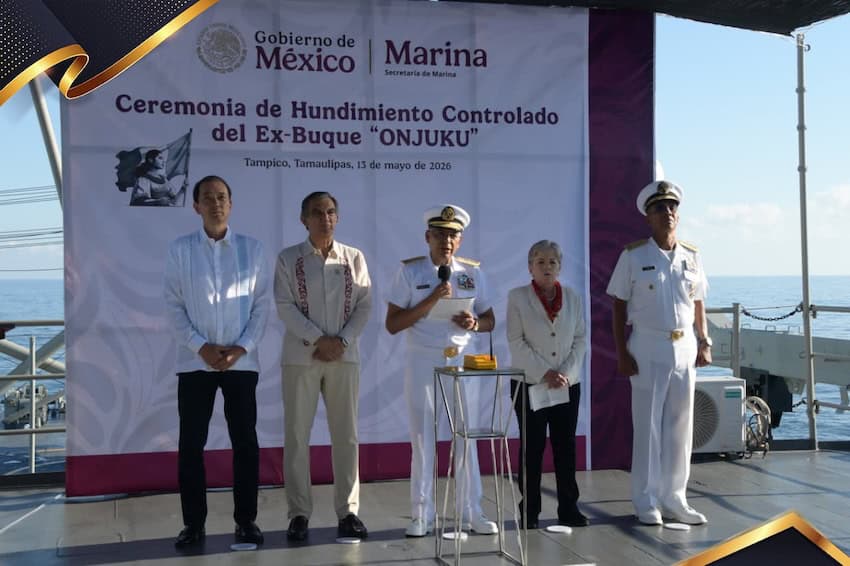
The former oceanographic research vessel Onjuku, donated by Japan in the late 1970s and used for more than four decades by Mexico’s navy, was sunk Tuesday in a controlled operation about 15 nautical miles (27.8 kilometers) off the coast.
After holes were cut in the ship’s hull, small explosive charges were applied. The sinking was also shown during President Claudia Sheinbaum’s Tuesday morning press conference.
Admiral Raymundo Pedro Morales Ángeles described the broader initiative as “the vision of a country that transforms steel into life.”
An artificial reef is a human-made structure placed on the seafloor to mimic some functions of a natural reef — giving fish, various types of coral and other organisms hard surfaces to colonize where the bottom was previously flat or barren, according to marine agencies.
Around the world, decommissioned ships have been sunk — such as this one in Florida — to enhance fish habitat, support wreck diving and ease pressure on natural reefs.

In Mexico, the Navy has used obsolete vessels to form artificial reef systems off both the Pacific and Gulf coasts, including projects in the states of Sonora, Michoacán and Colima.
This national artificial reef program has been promoted as a way to restore marine ecosystems, foster biodiversity, support sustainable fishing and draw eco-tourism.
The Onjuku is the second of at least nine navy ships slated for sinking off the Tamaulipas coast, following last year’s sinking of the former coastal patrol vessel ARM Huracán.
Both were sunk east of El Mezquital, a fishing area on the state’s long, narrow strip of coastline that separates the Laguna Madre from the gulf.
Tamaulipas also hosts the wreck of a former U.S. Navy destroyer that was later commissioned as the Mexican destroyer Usumacinta E-20. Now considered a mature reef structure, it was sunk in 2004 off Altamira, a port city in the Tampico metro area.
Authorities say the new reefs offer refuge for species such as pompano, wahoo, Spanish mackerel and dogfish in a strategic area where the Laguna Madre meets the Gulf of Mexico, while also helping deter illegal and unreported fishing.
The latest sinking is also part of an “underwater museum” concept that aims to create living reefs for divers and researchers.
Some environmental groups have criticized such projects, warning that old hulls can leach toxins or that governments use reefing as a cheap way to dump scrap. They argue that badly prepared vessels risk releasing fuel residues, asbestos or other contaminants into the food chain and that some historic ships would be better recycled or preserved on land.
Artificial reef supporters say that when a ship is thoroughly stripped and cleaned before sinking, what is left is mostly bare steel that quickly attracts corals, sponges and fish. Mexican officials say the Onjuku was stripped of its equipment and decontaminated before it went down, including the removal of fuels, oils, wiring, plastics and other hazardous materials.
With reports from El Sol de Tampico and El Heraldo de México