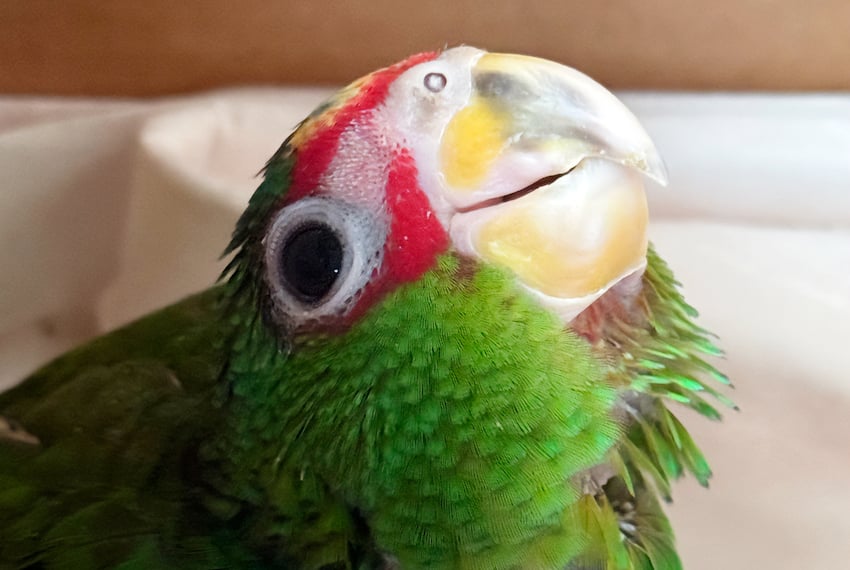
Eleven white-fronted parrots seized at the U.S.-Mexico border last week have been returned to Mexico’s Federal Attorney for Environmental Protection (Profepa).
The action spotlights the ongoing cross-border efforts to curb wildlife trafficking, such as when a man was caught recently trying to smuggle two parakeets into the United States in his pants.
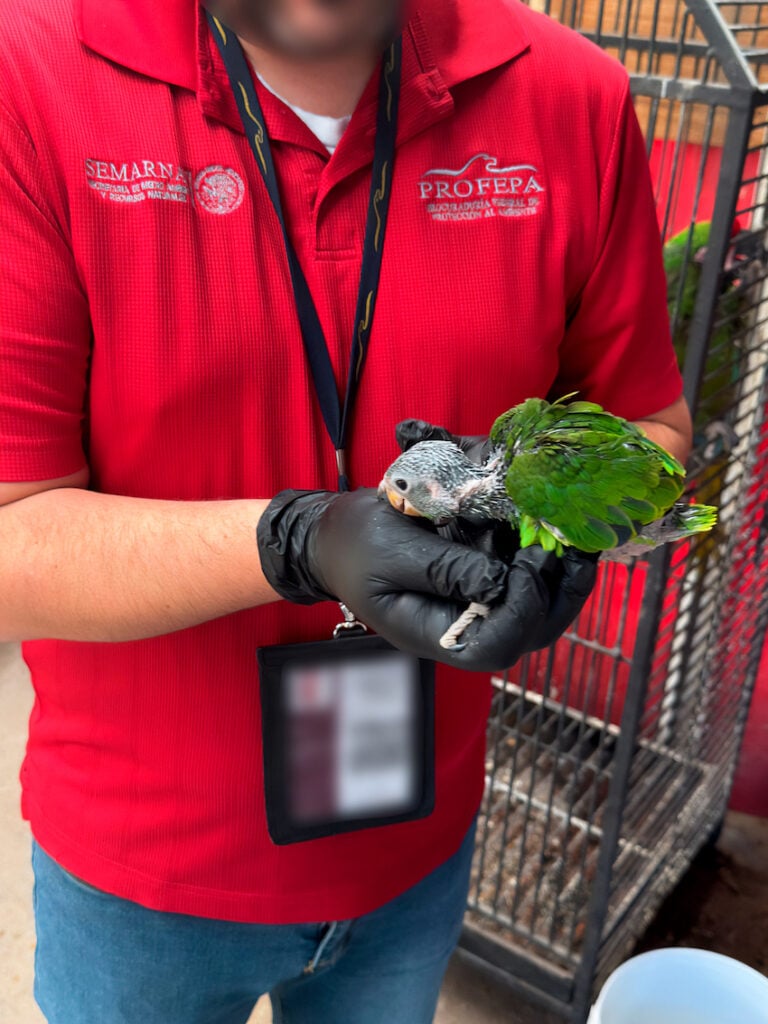
In the latest incident, Profepa said it received the 11 pericos (small parrots) after the U.S. Fish and Wildlife Service seized the birds at inspection and arrested a U.S. citizen on Feb. 10.
The man allegedly tried to drive the birds into the U.S. in a private vehicle using the Córdova–Las Américas International Bridge, also known as the Bridge of the Americas, near Ciudad Juárez, Chihuahua.
U.S. authorities initially said the parrots presumably came from Ciudad Juárez, although the investigation was ongoing.
Profepa said a medical evaluation determined the birds are chicks roughly 2 to 6 weeks old. Five have respiratory and digestive problems and were placed under veterinary care. Officials said the parrots’ final destination will be decided in line with wildlife laws once they recover.
The white-fronted parrot (Amazona albifrons) is a small Central American parrot with a bright white forehead patch, red around the eyes and mostly green plumage.

It is considered of “least concern” globally while still facing pressure from habitat loss and the pet trade.
Its closely related cousin, the red-crowned Amazon (Amazona viridigenalis) of Mexico, is listed as “endangered” globally, with severe habitat loss and historic heavy capture for the pet trade.
Protections in Mexico go further for parrots and related birds, such as macaws, cockatoos, amazons and lovebirds. The General Wildlife Law states that “no bird specimen corresponding to the Psittacidae family or psittacid [parrots and parakeets], whose natural distribution is within the national territory, may be subject to extractive exploitation for subsistence or commercial purposes.”
It also bans the import, export and reexport of such birds except for conservation or scientific research.
Profepa, headed by Mariana Boy Tamborrell, said it will continue coordinating with U.S. agencies to combat illegal trafficking of protected species and reduce harm to biodiversity.
With reports from El Universal, 88.9 Noticias, Infobae, Mexico Business News and La Jornada