The World Bank raised Mexico’s economic growth forecast from 0.2% in June to 0.5%, but the figure still lags behind the 2.5% GDP the bank predicts for Latin America as a whole.
In its report released Tuesday on the economies of Latin America and the Caribbean (LAC), the World Bank’s forecast of 2.5% growth for the region in 2025 is up from the 2.4% forecast in June, marking an improvement from last year’s 2.2% economic growth.
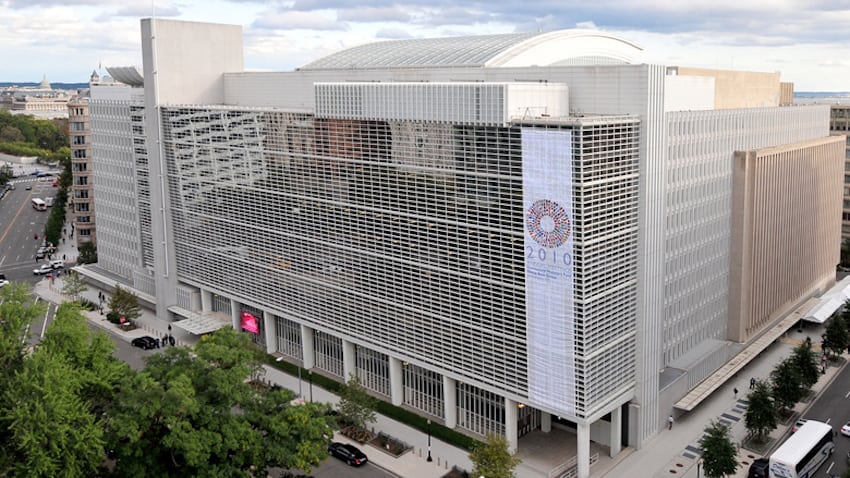
On the other hand, Mexico’s predicted 2025 growth of 0.5%, though up from June, is far below the 1.5% growth estimated at the beginning of the year. As for 2026, the World Bank anticipates Mexico’s economy to grow by 1.4%.
As reasons for the overall slow growth in LAC, the agency cited a decline in public investment, alongside new tariffs introduced by the United States, as having “a significant drag on the external sector.”
“The upcoming revision of the United States-Mexico-Canada Agreement (USMCA) in 2026 comes at a crucial moment for North American trade relations, with the first signs suggesting both strategic opportunities and negotiation challenges that could shape investor confidence and the dynamics of regional integration,” the World Bank stated.
The slightly improved economic outlook followed an upward revision of Mexico’s projected GDP growth this year by the Organization for Economic Cooperation and Development (OECD) in September, from 0.4% to 0.8%; and by the International Monetary Fund (IMF), from -0.3% to 1.0%. The OECD projected 1.3% growth for Mexico’s economy in 2026.
Elsewhere in the region, the World Bank maintained Brazil’s 2025 forecast of 2.4%, while it significantly decreased Argentina’s growth outlook from 5.5% to 4.6%.

Latin America and the Caribbean will remain the world’s slowest-growing regional economy due to ongoing inflation, high debt and rising uncertainties stemming from U.S. tariff policies, according to the World Bank.
But the region was praised for maintaining a certain amount of stability.
“Governments in the region have steered their economies through repeated shocks while preserving stability,” said the World Bank’s regional vice president, Susana Cordeiro Guerra. “Now is the time to continue building on that foundation — accelerating reforms to improve the business climate, invest in enabling infrastructure and mobilize private capital.”
Still, while stable prices are likely, inflation targets have become harder to meet, and interest rates are falling at a slower rate, according to the World Bank. In addition, uncertainty over global trade policies has hampered investment.
The new LAC outlook mentioned that familiar barriers, such as weak infrastructure, a bias in favor of established companies and poor education at all levels, were hindering entrepreneurship and the growth of big companies.
“Firms want to hire more people, but they cannot get the workers,” said the World Bank’s chief economist for Latin America and the Caribbean, William Maloney.
With reports from Expansión, El Economista and Reuters