Home Blog Page 1056

US senators call for stronger response to Mexico’s energy policies, electricity reform

0
Four Democratic Party senators, including Senate Foreign Relations Committee chairman Bob Menendez, wrote an open letter to express their concerns about Mexico's proposed energy reforms.

Four United States senators have raised concerns about energy policy in Mexico, calling on the U.S. government to speak out “more forcefully” in favor of renewable energy generation.

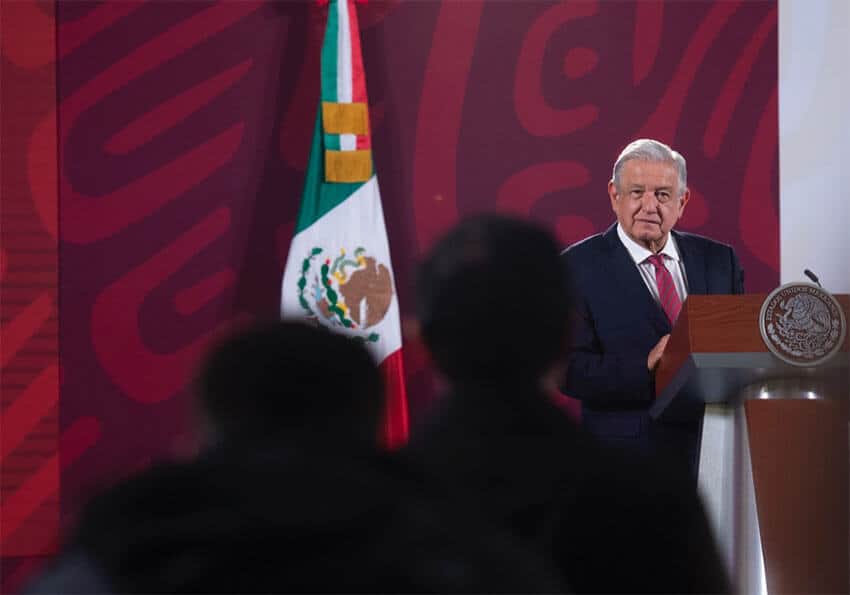
In a letter to U.S. Secretary of State Antony Blinken and Secretary of Energy Jennifer Granholm on Tuesday, a group of Democratic Party senators including Senate Foreign Relations Committee chairman Bob Menendez expressed concerns about President López Obrador’s “actions to subvert private-sector renewable energy development efforts in Mexico in favor of state-owned fossil fuel industries.”

Menendez, Brian Schatz, Tim Kaine and Jeff Merkley also urged the Biden administration to “more forcefully speak out in support of renewable energy production that will benefit both of our countries.”

Their appeal came ahead of Granholm’s visit to Mexico this week, during which she will meet with López Obrador, Energy Minister Rocío Nahle and other officials.

The senators asserted that Mexico last month submitted a “woefully underachieving” contribution to the Paris Agreement, noting that it has only committed to reducing emissions by 22% and black carbon emissions by 51% by 2030.

U.S. Secretary of Energy Jennifer Granholm will visit Mexico and meet with President López Obrador this week.
U.S. Energy Secretary Jennifer Granholm will visit Mexico and meet with President López Obrador on Thursday.

“Furthermore, Mexico’s Chamber of Deputies is likely to vote in mid-April on a bill that would roll back the 2014 energy reform law that allowed private and foreign investment in Mexico’s energy sector and restore the dominance of the state-owned Federal Electricity Commission (CFE) over the energy sector,” they wrote.

Approval of the bill – which has been widely criticized inside and outside Mexico – is far from guaranteed as two-thirds congressional support is required and the ruling Morena party doesn’t have a supermajority in the upper or lower house.

But the U.S. senators nevertheless warned of numerous adverse consequences if it does get through Congress.

If enacted, their letter said, the Mexican government would cancel renewable energy permits, contracts, and certificates; eliminate federal energy regulatory agencies that provide checks and balances on state energy companies; guarantee that CFE controls at least 54% of the electricity market; reshuffle private and state-owned energy production quotas to favor fossil fuel production; and establish the state as the sole implementer of Mexico’s clean energy transition.

“Perhaps more detrimental to the Biden administration’s priorities, this legislation would prohibit concessions to mine strategic minerals like lithium and copper,” the senators added.

“This policy would contradict the USMCA’s prohibition of new investment restrictions and exacerbate national security concerns related to critical mineral scarcity. It would also threaten at least [US] $44 billion in private investment in Mexico’s energy sector, will negatively impact U.S. private sector investment in Mexico, and is antithetical to the historically strong U.S.-Mexico economic relationship,” they said.

“We appreciate Ambassador Salazar’s public expression of concern and engagement on this issue and urge the Biden administration to more forcefully express concerns about President López Obrador’s detrimental fossil fuel agenda,” the Democrats said.

“Public reporting indicates that President López Obrador interprets the Biden administration’s relative public silence on this issue as indifference or tacit approval for his government’s decision to prioritize fossil fuel development over renewable energy,” they said.

“… We strongly encourage you both to make this issue a priority topic for discussion during this important year for climate action, and we especially urge Energy Secretary Granholm to raise this matter with Mexican government counterparts during her January visit to Mexico.”

Granholm is scheduled to meet with López Obrador at 6 p.m. Thursday and will participate Friday in a roundtable discussion at which Minister Nahle, Deputy Foreign Trade Minister Luz María de la Mora and Mexico City Mayor Claudia Sheinbaum will be present.

López Obrador has indicated that he is willing to discuss any issues the U.S. energy secretary brings up, including his proposed electricity reform.

He said Thursday that he would explain why is he is pursuing the reform, and thank the U.S. government for being respectful of Mexico’s independent energy policy and approving Pemex’s purchase of Shell Oil Company’s share of the jointly-owned Deer Park oil refinery near Houston, Texas.

With reports from El Universal 

Lack of COVID restrictions makes Tulum paradise for international visitors

0
Festival-goers gather around a DJ at the Day Zero Festival in Tulum earlier this month.

The hip beach town of Tulum, 130 kilometers south of Cancún, continues to attract large numbers of young foreign tourists amid the ongoing pandemic, many of whom don’t comply with basic virus mitigation measures such as mask wearing.

A range of COVID restrictions are in place in the Caribbean coast state of Quintana Roo, where Tulum is located, but enforcement is lax or non-existent in many establishments frequented by tourists, leaving some visitors with the impression that there are few rules they have to follow.

“That’s why we came here, because we knew there were fewer restrictions here … it’s terrible in Europe, you can’t do anything,” a young Spanish woman identified only as Ali told the newspaper Milenio in the beachfront hotel zone.

Her friend Isa agreed with the assessment, describing COVID restrictions in Spain as “awful.”

“[Wearing a face mask] is obligatory, … [Spain] is turning into a dictatorship and we’re not even realizing; well, some of us are realizing,” she said. “… It’s a lot better here, it’s a paradise for us here,” Isa declared.

Milenio spoke with several other young international tourists who expressed little concern about the risk of contracting COVID, despite the surge in case numbers due to the rapid spread of the omicron variant.

“I have to use a mask?” a Russian woman asked incredulously when questioned as to why she wasn’t wearing one.

“Yeah, I just forgot because it’s my vacation and I forgot about mask, about coronavirus; I’m just drinking margaritas everywhere,” Olga said, laughing as she sipped a frozen alcoholic beverage in the street.

“I think it’s not necessary because of the hot weather,” said a Greek woman when asked why she wasn’t wearing a mask.

“I work in Santorini in the summer time so you don’t use a mask so much because the weather is good. I think the COVID is not a big problem,” she said.

“… We go to a party and we want to dance; most of the places here are open so I don’t feel scared. … It is OK for me,” said the woman, who revealed she hadn’t been vaccinated. “… I think we shouldn’t feel afraid or panic. Be careful and that’s that.”

Young people flock to Tulum in January due to the large number of open-air dance parties held in and around the coastal town, including in the Sian Ka’an Biosphere Reserve.

A state government rule stipulates that the presentation of a vaccination certificate or negative COVID test result is required to attend large events, but it isn’t always enforced in Tulum.

Ali, who had been in Tulum for two weeks when she spoke with Milenio, said those documents are never requested in the hotel zone. At the Day Zero electronic music festival held earlier this month the payment of US $50 enabled attendees to avoid the vaccination/testing requirement, she said.

Tulum tourism official Frank Soto acknowledged that a lot of large parties are held in Tulum in late December and the first half of January. Most attendees are young and “have enough energy to overcome” COVID if they contract the disease, he said.

Soto also said that many young international tourists assert that they don’t need to wear face masks because they are fully vaccinated. “We explain to them that they can still be transmitters [of the virus],” he said.

“I think we’re young and we have to live, enjoy ourselves. Everyone has to be responsible for their actions. You have to decide if you want to wear it [a mask] or not, nobody can force you,” countered Ali, the Spanish tourist. “I respect people who wear it and people who don’t. We must never forget our freedom.”

With reports from Milenio

Lowering working age from 18 to 16 garners support

0
kids in school in Mexico
If the proposal passes, school-aged kids could take up low risk work in agriculture.

A legal proposal to lower the minimum working age from 18 to 16 has won the support of politicians and business representatives.

The initiative targets rural areas where teenagers could take up low risk work in agriculture to reduce the attraction of organized crime.

The lower house of Congress already approved an initiative for the age change, which has passed to the upper house.

The president of the National Agricultural Council (CNA), Juan Cortina Gallardo, said that putting teenagers in low risk jobs would limit the temptations of criminal work. “We are in favor of legislating on the matter … allowing these young people to work in the sector, obviously delimiting their work to activities that do not represent a danger. Unfortunately, young people look to illicit activities for sources of income to get ahead,” he said.

Senator Ricardo Monreal said barring access to work opportunities was causing damage.

“We have to amend this law so that young people can be employed … before the age of 18, which is currently forbidden … It is an inadequate law, it is out of place and it pushes young people to, unfortunately, be employed in criminal activities because they do not have access to the labor market. It is a big problem,” he said.

Economy Minister Tatiana Clouthier said that the change would bring economic benefits.

“We have [challenges] in front of us in terms of inflation, in terms of the need for the agricultural sector to continue strengthening and to continue creating better working conditions because the labor force is what gives fundamental importance to the countryside,” she said.

Clouthier added that lowering the age to 16 would see Mexico comply with international labor laws: “it’s not only because we believe in the legislation and respect it, but also to be able to assume international commitments and be able to take care of our population,” she said.

With reports from Milenio

Story of Mixtec princess is Oaxaca filmmaker’s new project

0
filmmaker Itandehui Jansen
Jensen on the set of her previous film, In Times of Rain.

A 12th century Mixtec princess will be the protagonist of a new film to be made by an indigenous director originally from Oaxaca.

Itandehui Jansen, who also works as a film lecturer at the University of Edinburgh in Scotland, is currently in the early stages of making a movie that will be called Ciudad de pedernales (Flint City)

“It will be completely in Mixtec, although in this initial stage I’m developing it in Spanish,” she told the newspaper Milenio. “It’s about a Mixtec princess in the 12th century who’s trying to solve a murder,” Jansen said.

She said the development of the script has been supported by imagineNATIVE, a Canadian organization that describes itself as the world’s largest presenter of indigenous screen content.

“It’s an ambitious and complicated project, and very different at the same time,” Jansen said. “The protagonist is a woman and her role is almost one of a detective.”

filmmaker Itandehui Jansen
Itandehui Jansen, who is indigenous and originally from Oaxaca, works as a film lecturer at the University of Edinburgh in Scotland.

The filmmaker, a graduate of the Netherlands Film Academy, said the film will be more of a “traditional drama” than a visually striking movie that depicts “the great battles of the time.”

“… [It will be] more intimate,” she said. As there is scant information about some aspects of 12th century Mixtec life, such as clothing and housing, Jansen is making use of artistic license to develop the story and the main character, who is loosely based on a Mixtec warrior woman.

She said she is seeking to balance fictitious elements of the story with “the historical truth.”

“I’m giving myself some freedom to create a strong woman who’s starting to understand her relationship to power and her role as a ruler. There are Mixtec codices from that time that explain that they ruled in pairs; it’s not said there were no women rulers,” Jansen said.

One codex that informs her story is the Codex Zouche-Nuttall, also known as the Tondinye Codex, a document of Mixtec pictography held at the British Museum.

“I feel that [Mexican] historical films are about the [Spanish] colony, the conquest or the arrival of Columbus, but we have a history prior to that. These pre-colonial codices tell us older stories,” Jansen said.

filmmaker Itandehui Jansen
Jansen says she is committed to having the Mixtec language in the film.

“My father is a historian, and we’ve wanted to work together for a long time. … This project is the perfect idea to do it. He’s providing me with the academic information and I’m developing a story,” she said.

Jansen said she is committed to having Mixtec dialogue in the film and noted that she will have the support of her husband, who speaks the language.

“I don’t speak it. My parents migrated to Holland when I was little, they maintained Spanish but when my mom wanted to teach me Mixtec I wasn’t interested,” she said.

“When I wanted to learn it was already very complicated [to do so]. Because of that frustration of having lost the language, I’ve done projects in Mixtec,” said the director, whose first feature, Tiempo de Lluvia/In Times of Rain, has dialogue in Spanish and Mixtec.

With reports from Milenio

The biggest threat to Mexico’s monarch butterflies: human indifference

0
monarch butterfly
According to the writer, attention to Mexico's monarch butterflies and their habitats has significantly decreased of late. Omar vidal

One early morning in April, thousands of butterflies rose in front of me like a frenetic whirlwind — a dark mix of heads, thoraxes, legs and orange wings gracefully irrigated by rivers of black veins framed by tiny white speckles.

In unison, the fifth generation of monarch butterflies — the long-lived ones, the Methuselahs, the migrants without visas — began their voyage back north after having taken winter refuge among the oyamel fir, pine and oak forests of Mexico’s mighty Sierra Madre Oriental.

At 3,172 meters above sea level, I ecstatically contemplated how those colorful tiny bodies, each weighing less than a gram, raised into the sky with the same resolve with which — chased away by the winter cold and in search of a warmer home — they flew 4,000 kilometers from Canada and the United States to the forests in Llano de las Papas, Michoacán, where I stood that day in awe.

In that sanctuary, the butterflies rose into the air like colorful clouds.  Their wings moved like those of fragile, little birds, and backlit by a blinding sun, they blurred in front of my eyes and disappeared into the blue.

Those were only a few of the hundreds of thousands of males who fell in love that day, grabbing the hindwings of females trying to fly while the two wrestled and did their part in an orgy of epic proportions — just as they have done every year since the beginning of time as part of the most sensual nuptial flight I know of.

Monarch Butterfly Biosphere Reserve, Mexico
Monarchs fly here to take winter refuge in the oyamel fir, pine and oak forests of Michoacán and México state. Eduardo Rendon/WWF

These tiny insects are determined to recolonize the reproductive areas of their grandparents and great-great-grandparents in the United States at any cost before they die because these butterflies know what is at stake: the survival of the most sublime migration in the entire animal kingdom.

A migration that, sadly, today is vanishing, bit by bit, monarch by monarch, in front of our eyes.

Once, twice or even three times between December and April, year after year for the past two decades, I have traveled from Mexico City to the monarch butterfly’s hibernation sanctuaries in Michoacán and México state. It became a family peregrination.

I spent many visits in monarch territory accompanied by ejidatarios (communal landowners) and indigenous communities — the legitimate owners of the land where the monarch colonies rest during the winter.

And, of course, I also visited with scientists, environmentalists, musicians, journalists, philosophers, businesspeople, philanthropists, lawyers, presidents, state governors, government ministers, diplomats and politicians of all stripes. Many times, I was with my family; sometimes their families also joined us.

After hiking the monarch mountains over the years with these many companions, I came to understand what Henry David Thoreau meant 168 years ago when he wrote in Walden: “We need the tonic of wildness … We can never have enough of nature.”

monarch butterfly sanctuary
Do not our children and grandchildren deserve the magic of this sort of moment? Omar Vidal

I reached this understanding while breathing heavily at thousands of meters above sea level, while silently watching my fellow walkers contemplate — with humility and fascination — the orange mantle formed by fluttering butterflies or an old oyamel fir-covered from root to top by semi-dormant butterflies or that solitary butterfly flapping downward to gently settle on the nearest pine branch.

But what is important isn’t who I went to monarch territory with. What was truly significant was having proved to myself that no matter who we are or where we come from or how we earn a living or what we believe in or what we possess — or even if we are good or bad — we all share that atavistic, urgent need to connect, rejoice and heal in, and with, nature. Even if only for a moment.

Today, I’m convinced that nobody, absolutely nobody who has had the opportunity to discover the miracle of clouds of monarch butterflies in the wild will ever again be the same person. After watching las mariposas, one feels that, after all, life is worth living simply because all human beings are connected by an ancestral passion to loving and caressing nature.

All of my visits with the monarchs have been memorable. Each has been unique, and each has left a stamp on my soul. But perhaps the most endearing was 15 years ago.

So long as I live, I will never forget the emotions that washed over me as those streams of liquid butterflies, like rivers of gold, descended from the sky to quench their thirst with morning dewdrops gifted by the dawn. My daughter — just four years old at the time — and I, with eyes closed, hugged each other, curled up among oyamel firs and oaks as we waited for those orange-black wingbeats to vanish from the morning puddles.

Nor will I forget my haunting visit following the Day of the Dead, when the souls of our ancestors were returning, grafted into colorful butterflies. It was in Sierra Chincua, and I was with a Mexican biologist who has spent far more time than me studying monarchs and with a Protestant Dutch philosopher — El Holandés (the Dutchman) — who became an agnostic.

Monarch Butterfly Biosphere Reserve, Mexico
A quiet moment in the Monarch Butterfly Biosphere Reserve. Eduardo Rendon/WWF

Searching for the brides of the sun, we climbed “El Candelabro,” an old, giant oyamel fir from which some heartless person had hacked off the trunk when the tree was young. Refusing to die, the tree responded by building 13 new trunks growing side-by-side like giant living Roman columns. I now believe that El Candelabro is the tree that inspired the walking trees of J.R.R. Tolkien’s The Lord of the Rings. I cannot prove that — not yet anyway.

Nor will I forget the visit in 2019, when one of the fiercest defenders of the monarchs proudly guided us as we all waded through rivers of butterflies flowing in and out of El Rosario in Michoacán, the largest and best-protected monarch sanctuary. He was the same local political activist who eventually became a stubborn environmentalist — and whose dead body was left in a muddy pond by his assassins a year later. He was just one of the 76 environmental defenders killed in Mexico between 2019 and 2021, making my country one of the world’s most dangerous for environmentalists.

In February 2020, before the pandemic shook the world, I came back to El Rosario, accompanied by my beloved Mexican butterfly — and romantic partner of the last 35 years. Crouching among the dwarf pines, we suddenly heard in the distance the voice of a noble and luminous Canadian butterfly humming a tune she composed for the occasion. She was accompanied by a gifted lepidopteran guitarist who, open-mouthed, gazed at her with love.

I told myself: here we are with dos mariposas (two butterflies) representing Mexico and Canada — the end and the beginning of the monarch’s long and winding journey.

I still ask myself if all this was true or if was just a dream induced by the images of those fluttering butterflies that we had seen just minutes before against the light, after they were awakened from their winter lethargy by the sun’s warm heart.

For many years, I believed that the chemical glyphosate, habitat destruction and global warming would annihilate the monarch butterfly’s migration. How wrong I was. I am now convinced that the main threat is simply the indifference of human beings.

Monarch Butterfly Biosphere Reserve, Mexico
Many of the guardians of monarch butterfly habitats are some of Mexico’s poorest, who live on or around the land where the insects overwinter. Eduardo Rendon/WWF

This mighty migration is endangered mainly by our inability to tackle poverty and the social inequalities that haunt the life of the legitimate owners of the monarch’s hibernation sites.

I’m talking about the tens of thousands of Mexicans — many of them belonging to Mexico’s Mazahua and Otomí ethnic minorities — who, without access to proper education, health services, potable water, electricity and employment, live in agrarian communities within the 56,259 hectares that comprise the Monarch Butterfly Biosphere Reserve.

Historically dependent on mining and logging, the region’s precarious economy forced many to migrate to the United States while others who chose not to leave their homeland became overwhelmed by the despair brought about by poverty and the violence driven by criminal organizations in the absence of the State’s rule or leadership.

Sure, during these times of cholera, paraphrasing Gabriel García Márquez, we no longer fancy investing money nor political capital in protecting the environment. Most unfortunately, the government and most companies, philanthropists and international organizations have all but abandoned the monarch butterfly and the small mountain communities that protect the monarchs’ forests. Will they raise their voices again and open their pockets in these times of need?

This essay is a call for help to all those whom nature has blessed and given a chance to visit the monarch butterfly colonies. It is a call to those who haven’t yet done so to visit them immediately and to economically and emotionally support the local communities within and around these colonies.

It is call to all of us to work together, hand in hand, with the landowners and guardians of the forests and the butterflies. A call to not steal from our children, grandchildren and great-great-grandchildren the joy of being connected with their local communities and the butterflies. A call to protect the daughters, granddaughters and great-great-granddaughters of Danaus plexippus, the winged brides of the sun and sisters of the moon.

Monarch Butterfly Biosphere Reserve, Mexico
The writer promises that you won’t regret visiting one of Mexico’s monarch butterfly reserve areas. Eduardo Rendon/WWF

Let us not miss the chance to make peace with ourselves and with all whom we love and with Mother Nature. It might be one of the last chances we have to save the monarch migration, their forests and the communities with whom they share the land.

Let us not fool ourselves, nor try to fool the next generations either. In this new year just beginning, we cannot miss our chance for reconciling with nature. I dare you to escape for a few days, alone or with your family, to visit any of the 12 community monarch butterfly sanctuaries. You will never regret it, I promise.

To my amigo, Rick Brusca, a.k.a. Dr. Odel Bernini, with thanks.

Omar Vidal, a scientist, was a university professor in Mexico, is a former senior officer at the UN Environment Program and the former director-general of the World Wildlife Fund-Mexico.

Opposition coalition denounces ‘narco-election’ of 2021

0
A campaign vehicle in Michoacán that was attacked a month before the June elections.

Mexico’s three-party opposition coalition has submitted a document to two international organizations claiming narco infiltration of the 2021 election process.

Filed with the Organization of American States (OAS) and the Inter-American Commission on Human Rights (IACHR), the document says organized crime fiddled ballot boxes, chose candidates and murdered and threatened others and that investigations into candidates with criminal links were botched.

“Armed groups kidnapped and immobilized entire campaign teams, seized polling stations and forced citizens to cast their votes publicly,” the National Action Party (PAN), the Institutional Revolutionary Party (PRI) and the Democratic Revolution Party (PRD) claimed. The three parties competed under the Va por México (Go for Mexico) banner in the June 6 election.

The coalition pointed to a concentration of violence in Sinaloa, México state, Veracruz, San Luis Potosí, Michoacán, Guerrero and Guanajuato and called into question the votes in seven states. The accusations are based on the testimonies of hundreds of party members and workers.

The document details the kidnapping of a candidate in Culiacán, Sinaloa, who was taken to a probable gang leader. In the same city, PRI party workers were kidnapped and officials at polling stations were forced to fill ballot boxes with Morena votes at gunpoint, it alleges.

It also mentions human heads found in a ballot box in Tijuana, Baja California.

Twenty-seven candidates died in the electoral process and threats continued after June 6: “The threats were extended to the post-election [period] through an imposed law of silence on everything that had happened.”

It complains that President López Obrador ignored the spate of violence. “Despite what is stated here, on Monday, June 7, President López Obrador said that ‘the people behaved very well, those who belong to organized crime in general as well, there were very few acts of violence by these groups.'”

The electoral season for the June 6 vote was the most violent on record. Risk analysis firm Etellekt, which tracks election campaign violence, said that there were 1,066 acts of aggression against politicians and candidates between September 7, 2020 and June 6, a 38% increase compared to the 2017–2018 electoral season, when a total of 774 such incidents were recorded. One-hundred and two of the incidents were homicides and 36 of those victims were aspiring candidates.

Noting Morena’s strong performance at the election in Pacific coast states, opposition parties and some media commentators have suggested that the ruling party had struck a deal with organized crime groups to win power there.

With reports from Reforma

COVID roundup: almost 60,000 new cases reported Wednesday, a new record

0
A healthcare worker conducts a rapid test.
A healthcare worker conducts a rapid test. The health regulator has warned that unapproved test kits are being sold via social media.

A new single-day record of 60,552 confirmed coronavirus cases was reported Wednesday, lifting the estimated active case count to more than 325,000 after almost 50,000 new cases were reported on Tuesday.

Mexico City has more than 66,000 active cases, neighboring México state has almost 22,000 and Nuevo León has over 17,000.

Each of Coahuila, Guanajuato, Jalisco, San Luis Potosí and Tabasco has more than 10,000 infections.

On a per capita basis, Baja California Sur has the highest number of active cases with 900 per 100,000 people.

The Health Ministry also reported that the occupancy rate for general care hospital beds in COVID wards had increased three points in 24 hours to 34%. The occupancy rate for beds with ventilators rose two points to 19%.

The federal government is currently administering booster shots to people aged 60 and over, health workers and teachers, as well as first and second shots to adolescents aged 15 to 17 and adults who weren’t inoculated when vaccines were made available to them last year.

More than 82.9 million people have been vaccinated in Mexico, and 92% of that number are fully vaccinated.

In other COVID-19 news:

• Rapid COVID tests that are not approved by health regulator Cofepris are being sold in Ciudad Juárez, Chihuahua, the newspaper Milenio reported. The tests are advertised and sold on social media, the newspaper said.

The chief of Cofepris in Chihuahua said the online sale of rapid antigen tests is out of control. Citing the risk they will return false negative results, Alejandro Torres called on citizens not to buy them.

Several brands of antigen tests are being sold in Juárez for 280-500 pesos (US $14-$24) each. One vendor told Milenio that he personally imports the tests from China.

• The Mexico City Health Ministry has detected that some non-government testing stations in the capital are using Chinese-made rapid tests that are not approved by Cofepris. Non-authorized rapid tests can also be bought online in Mexico City and in stores in the capital’s historic center.

Mexico City authorities last week set up 11 “macro-kiosks” where residents can access rapid antigen testing free of charge. However, tests are limited and some people have complained of missing out.

UPDATED: This story has been updated with new information reflecting the new case numbers reported Wednesday.

With reports from Milenio, Televisa and El Universal 

Impatient candidate for vaccination attempts to jump the queue

0
Tampico vaccination crash
The man used his SUV to crash through a fence and push a pickup truck out of his way.

An elderly man was arrested in Tamaulipas on Tuesday for trying to skip the line for a COVID-19 shot, colliding with at least one vehicle and a fence in the process.

The man arrived in a white sport utility vehicle at the drive-through vaccination center in Tampico at a campus of the Autonomous University of Tamaulipas. He drove into a steel gate at an entrance to the campus before accelerating and crashing into a pickup truck belonging to the university.

In a video, he is seen accelerating into the university vehicle — which spins around 180 degrees — forcing his way past it before driving on. “He might run someone over up there,” someone can be heard saying.

The unidentified suspect was stopped some 100 meters farther down the road by National Guardsmen and university security guards.

After being instructed to leave his vehicle by officers, he refused to do so, arguing that he had symptoms of COVID-19 and could be contagious, the newspaper El Universal reported.

Abuelito no quería hacer fila y tumba puerta de módulo de vacunación en Tampico
A news report with footage of the incident.


The man can be heard screaming in another video as he is detained by force by three people. Meanwhile, his pickup was removed by a tow truck.

With reports from Milenio and El Universal

Feminists challenge diplomatic appointment of professor accused of sexual harassment

0
pedro salmeron
Salmerón: 'Multiple harassment complaints.'

The diplomatic appointment of an academic accused of sexual harassment has been slammed by feminist collectives.

The Ministry of Foreign Affairs on Monday announced the appointment of 16 diplomats to Mexican embassies and consulates.

Pedro Agustín Salmerón, a National Autonomous University-trained historian, was named as the new ambassador to Panama.

The 50-year-old, a Mexican history expert and prominent ally of President López Obrador with no previous diplomatic experience, has been formally accused of sexual harassment by at least one person, while several other women have denounced him anonymously.

Salmerón resigned from his position at the Autonomous Technical Institute of Mexico (ITAM), a private university, in 2019 after an internal harassment complaint was filed against him at a time when the feminist #MeToo movement was gaining strength in Mexico.

ITAM acknowledged that there was evidence that he had harassed at least one female student in his Mexican history class.

Salmerón has denied the accusations, and took to Twitter to declare his innocence once again on Tuesday. His account later disappeared from the social media site.

The announcement of his appointment as ambassador to Panama, which must be ratified by the Senate, triggered an avalanche of criticism on social media. The ITAM feminist group Cuarta Ola was among the organizations that slammed the move.

Under the hashtag #UnAcosadorNoDebeSerEmbajador (A harasser mustn’t be an ambassador), the group published a statement on Twitter that called on the government to reconsider the appointment.

In light of Salmerón’s appointment “we want to express our indignation and concern over the multiple harassment complaints against him that are being ignored,” Cuarta Ola said.

“During his years as a professor at ITAM, Pedro Salmerón took advantage of his position of authority to sexually harass his female students,” the group said, noting that a university investigation was initiated as a result of his conduct.

President López Obrador has drawn criticism for defending Salmerón, left.

Cuarto Ola acknowledged that Salmerón denies the harassment accusations but noted that ITAM directors have accepted there is evidence to support them.

“This situation is repetitive and systematic,” it said, adding that complaints have been made against him via the MeTooAcádemicosMX Twitter account and at the National Autonomous University, where Salmerón studied for years. Eight female members of the ruling Morena party have also accused the academic of harassment, Cuarto Ola said.

“… His appointment as ambassador is of great concern given that he has shown he is a person who abuses his position of power to harass women. With his appointment hundreds of women are placed at risk of suffering gender violence. This decision shows a lack of respect for victims and strengthens the system of impunity in which we live. … We hope that his appointment is reconsidered and justice for victims is served,” the feminist group said.

Former students of Salmerón who spoke with the newspaper El País called on the Senate to block his appointment.

Karla Torres, a classmate of the student who filed a complaint at ITAM, described Salmerón as a “constant harasser in all the universities” at which he has worked. His appointment as an ambassador is “very painful” for his victims, she said.

Another student who preferred to remain anonymous told El País that Salmerón would hit on young female students during drinking sessions at cantinas that took place at the conclusion of class trips to the historic center of Mexico City, where Mexico’s pre-Hispanic and colonial pasts, and independent present, intersect.

López Obrador on Tuesday defended Salmerón’s appointment, saying that he wasn’t aware of any “formal and legal complaint” against him.

The president was previously criticized for supporting Senator Félix Salgado, an accused rapist, when he was campaigning for the governorship of Guerrero. Salgado was replaced by his daughter, Governor Evelyn Salgado, as the Morena party candidate, but only after the National Electoral Institute disqualified him for failing to submit a report detailing his pre-campaign expenses.

Martha Tagle, a former federal deputy for the Citizens Movement party and member of the Rebeldes con Causa feminist collective, said López Obrador’s support for Salmerón was regrettable.

“It’s not the first time that he has covered up for a person accused of sexual violence. He doesn’t believe what women say and despite the accusations [against Salmerón] he nominated him [as ambassador to Panama],” she said.

“The underlying problem we have is that the president doesn’t acknowledge the issue of violence against women; that’s why he asks for evidence, criminal processes [against alleged perpetrators] without understanding that neither laws nor the criminal system guarantee us justice,” Tagle said.

With reports from El País 

Students clash with police after attempting to block Michoacán highway

0
Police fire tear gas at protesting students.

Protesting student teachers from a rural training college in Michoacán clashed with state police officers on Monday.

The students tried to stop trucks and buses on the Siglo 21 highway near Tiripetío, 25 kilometers southwest of Morelia, in order to block traffic.

When state police arrived, the protesters fired rockets and threw stones at them.

In response, the officers fired tear gas at the students, who fled to their nearby school.

In a video published by the news website La Silla Rota, some 100 protesters are seen on both sides of the highway with a large cloud of gas spreading across it.

The Public Security Ministry said that there were no injuries.

The students were demanding that jobs be automatically awarded to teachers who have completed their training, without fulfilling the legally required accreditation process. It is a perennial demand by students and the dissident CNTE teachers union.

Blockades are a common tactic for dissatisfied teachers and teachers-to-be in Michoacán and other states: members of the CNTE blocked tracks for 91 days last year, costing businesses an estimated 50 million pesos per day (US $2.5 million at the exchange rate at the time).

With reports from Milenio and La Silla Rota