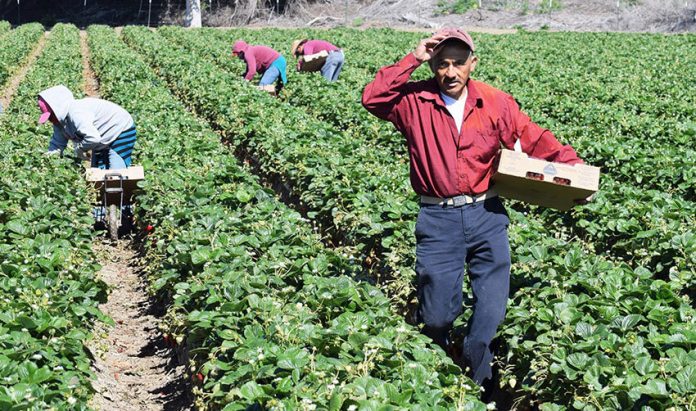
Migrants continue to support relatives back home. David A Litman / Shutterstock.com
Remittance payments topped US $4.6 billion in November, representing annual growth of 37.7%, down slightly on the October total of more than $4.8 billion, reported the Bank of México.
The value of remittances for January through November was $46.83 billion, up from $36.954 billion over the same period in 2020: an annual increase of 26.7%.
The 12-month total, from December 2020 through November, topped the $50 billion mark.
The average remittance payment was up in November compared to October, rising from $384 to $401. Fewer payments were made in November.
President López Obrador said at his morning news conference on Monday that the total for 2021 would be above $50 billion when the figures are added for December. “There’s another record that is going to be announced soon. We are going to reach $50 billion of remittances in 2021, like never before. That’s why our economy is in recovery and is growing,” he said.
Remittance experts Jesús Cervantes, Denisse Jiménez and Cindy Sánchez said in a report that higher salaries and the recovery in employment in the United States had contributed to the high levels of remittances in 2021.
Manure from poultry farms is attracting hordes of flies.
A composting plant in San Luis Potosí has created a plague of flies for villages within its 30-kilometer radius.
To create organic compost, chicken manure is left outside for exposure to the air and sun, but the process has attracted flies in the semi-arid San Luis Potosí desert, where egg producer Proan installed three poultry farms in the towns of Vanegas and Catorce, about 250 kilometers north of San Luis Potosí city.
Proan sells the manure of millions of hens to the company Nuevas Tecnologías Agropecuarias (NTA), which gathers some 200 tonnes from the farms every day, and spreads the manure on a 20-hectare surface a few kilometers away to transform it into compost for sustainable farming. Local people said that one farm alone has some 6 million hens and 25,000 pigs.
NTA produces 80 tonnes of compost a day, which goes to farmers in Michoacán, México state, Querétaro, Hidalgo and San Luis Potosí. The compost is significantly cheaper than its competing alternatives.
Rancher Agustín Villanueva said the flies were making life miserable. “Instead of eating food, you are eating flies … you go out and you are batting away so many insects. Not to mention the smell,” he said.
Villanueva’s daughter, Elpidia, said the affliction was affecting humans and animals alike. “It has been very ugly, very sad because there are many insects and it has been like three years that we have had the flies, battling and fighting them. It affects the animals … they are bitten, and they bleed where they are bitten,” she said.
Local people are using a diluted toxic powder as a spray to deter the flies, but that is causing nausea, vomiting and headaches.
However, one resident, who remained anonymous, said local people were not enemies of the companies involved. “We are not against the production, what we ask for is that they properly handle all the excrement,” he said.
NTA’s legal representative, René López Ruelas, said the company took responsibility. “It is clear to us that the people come first. That’s why we are here to offer an apology, and if it is necessary to leave, we will leave, but we have the municipal license that was granted to us, we have the lease,” he said.
He added that the lower price of its product was good for the market. “We are receiving about 200 tonnes of manure a day. We need the organic fertilizer … because chemical fertilizers, in addition to degrading the soils, … are too expensive.”
Proan promised to fumigate the affected communities and to improve its composting process. If they do not reach an agreement with those affected, they will abandon the project, the newspaper Milenio reported.
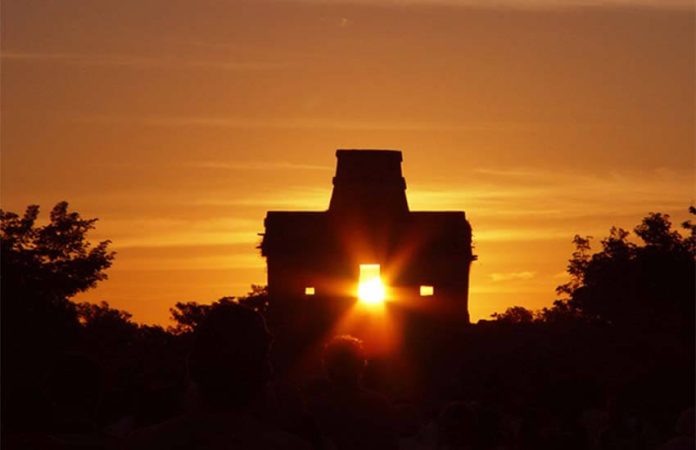
The equinox effect of the sun on Dzibilchaltún's Temple of the Seven Dolls. Government of Yucatán
Conveniently located around 15 kilometers north of Mérida, the ruins of Dzibilchaltún are thought to be one of the earliest Maya settlements and a popular destination during the spring and autumn equinoxes, when visitors can observe the sunrise’s beautiful effects on one of its temples.
Dzibilchaltún is Mayan for “place where there is writing on the flat stones.” It is thought to be related to the many stelae — stone slabs with inscriptions or reliefs — found on the site.
The first occupation of Dzibilchaltún probably dates as far back as 600–300 B.C., and it was occupied for around 2,000 years until the Spanish arrived in the 16th century. Dzibilchaltún had extended to around 19 square kilometers, and its peak population is speculated to have reached as high as 40,000 people.
According to the National Institute of Anthropology and History (INAH), the city took regional control of the northwestern Yucatán Peninsula toward the conclusion of the Classic period (around A.D. 200–900) from the previously dominant city, Komchén, which is located to the northwest of Dzibilchaltún. Situated close to the coast, the city’s economic activities, in addition to agriculture, had included salt production and manufacturing products using objects derived from the sea.
You can explore the ruins within a few hours at most, but prepare for some walking.
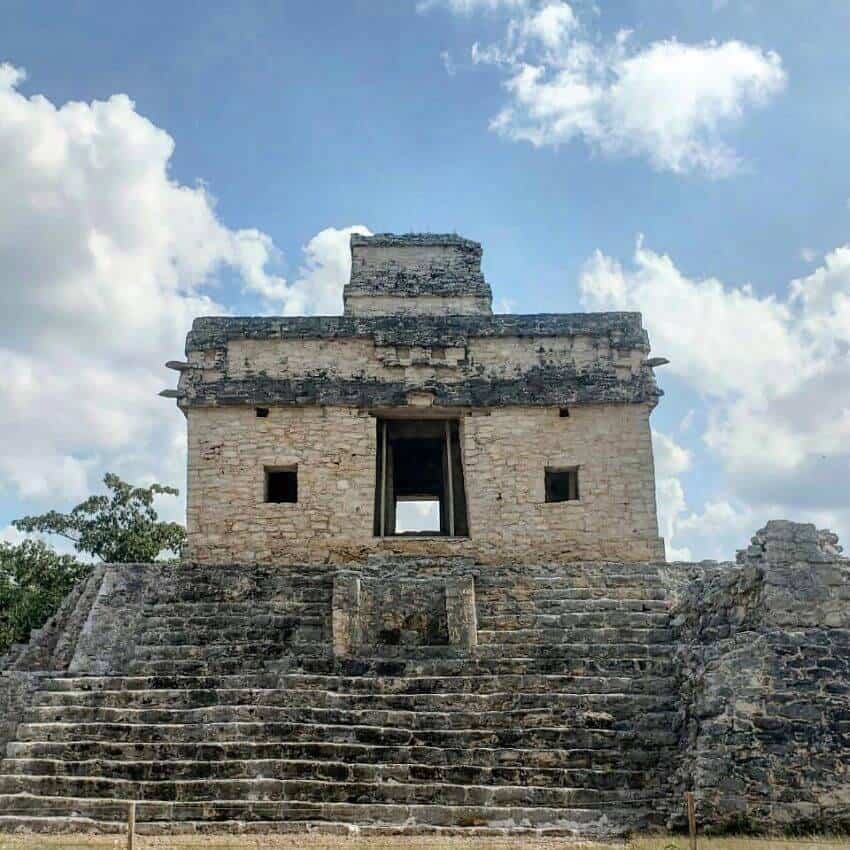
The Temple of the Seven Dolls is named after an offering of seven ceramic dolls discovered there.
The entrance to the site is from the north. Onsite, near the entrance, is the Museum of the Mayan People, whose mission is to share a general idea of Mayan culture throughout history. Unfortunately, the indoor area of the museum was closed during our recent visit. However, visitors can still enjoy the beautiful outdoor display area of stone sculptures from the Yucatán Peninsula, including zoo-anthropomorphic figures — a mix of animal and human shapes such as animal heads over human bodies.
Twelve white raised roads built by the ancient Maya are identified on the site. East of the site, at the end of a notable white road, is the famous Temple of the Seven Dolls, named after an offering of seven ceramic dolls, identified as human figures, that were discovered there. It is also called the Temple of the Sun.
According to INAH, this temple is almost aligned with the four cardinal points. It is thought to have had an astronomical function. At one time, a larger building existed over this temple, and you can see its remains.
Built on a quadrangular base with stairways and doorways on all four sides, the Temple of the Seven Dolls has two windows each on the east and west facades. There is an interesting structure on the temple’s roof that looks like a small tower. The temple’s frieze has masks believed to be of the Maya rain god Chaac, and it had also been decorated with stucco elements, including animal figures. Unfortunately, accessing this temple is not allowed.
During the solar equinox days in March and September, visitors can observe the effects of the sunrise on the west facade of the Temple of the Seven Dolls. The rising sun is seen through the temple’s eastern and western doors, and the sun centers itself in the doors briefly while producing a spectacular display of sunlight and shadows. On the equinox days, the archaeological site usually opens well ahead of sunrise.
In ancient times, the spring equinox marked the start of planting, while the autumn equinox marked the start of harvesting.
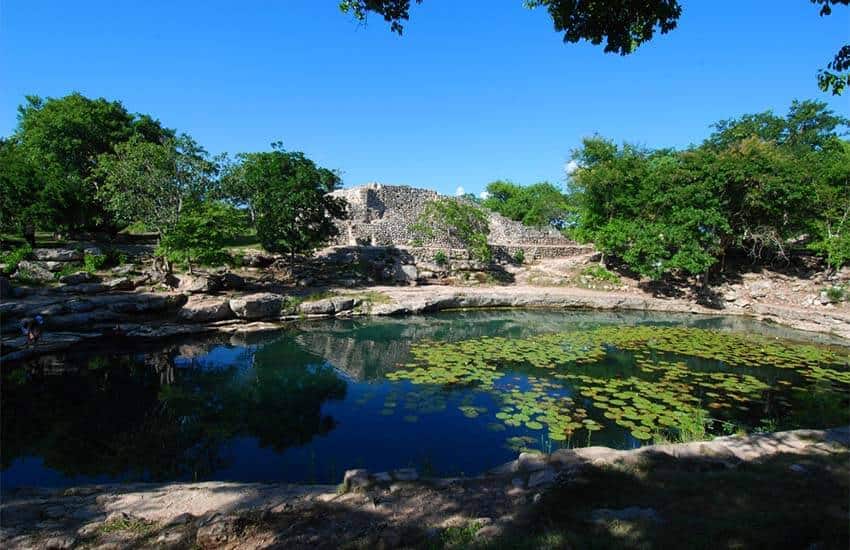
The Xlacah cenote, west of Dzibilchaltún’s central plaza. INAH
West of the temple along the white road that goes to the central plaza is a stela built on a quadrangular platform with stairs on each side. It is speculated that this stela once had stucco decorations.
En route to the plaza on the white road, remember to look for an interesting section to the south with three stelae, each built on a platform.
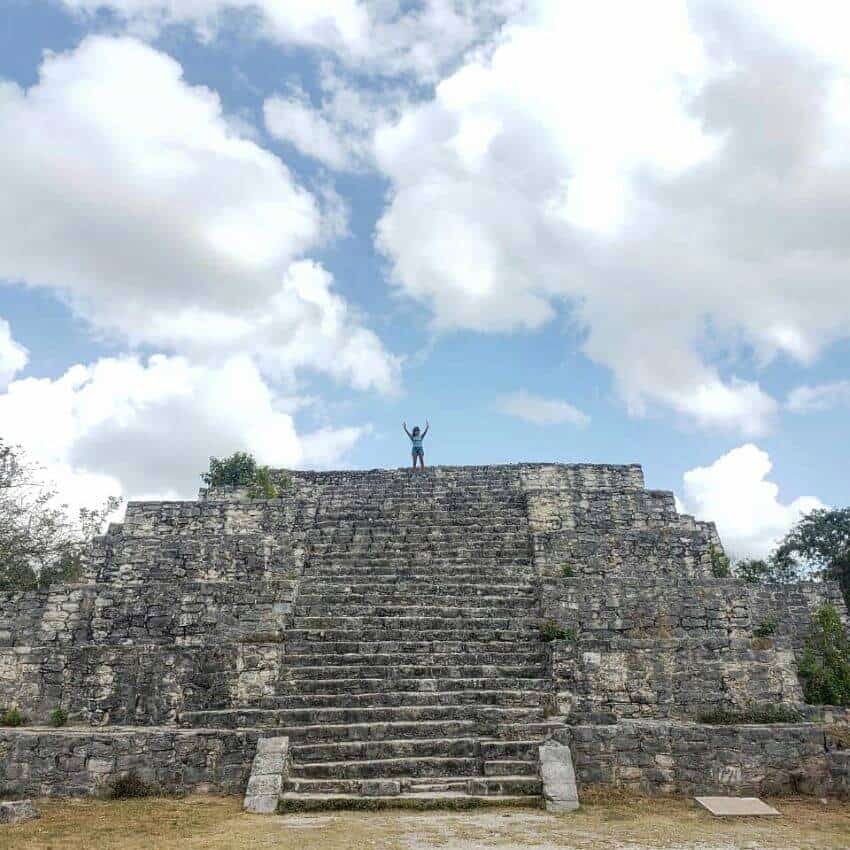
Next to the stelae section is the central plaza’s large square. Make time to explore this plaza, whose floor had been previously covered with stucco. Visitors can imagine how magnificent this square once was. Northeast of the plaza is a pyramid structure believed to have had a ceremonial purpose. It has a wide stairway in front; a temple that no longer exists was once on top of the pyramid.
Parts of broken stelae were discovered at the pyramid’s base, including the impressive Stela 19 that is displayed at the site museum. According to INAH, Stela 19 depicts the ruler K’alom ‘Uk’Uw Chan Chak, and its glyphs include the name of the site — Ch’iy Chan Ti’Ho’ — which is considered the site’s original name.
East of the plaza is a building identified as an elite residence. It has a long platform with room structures on top. The important tomb of K’alom ‘Uk’Uw Chan Chak depicted on Stela 19 was discovered here.
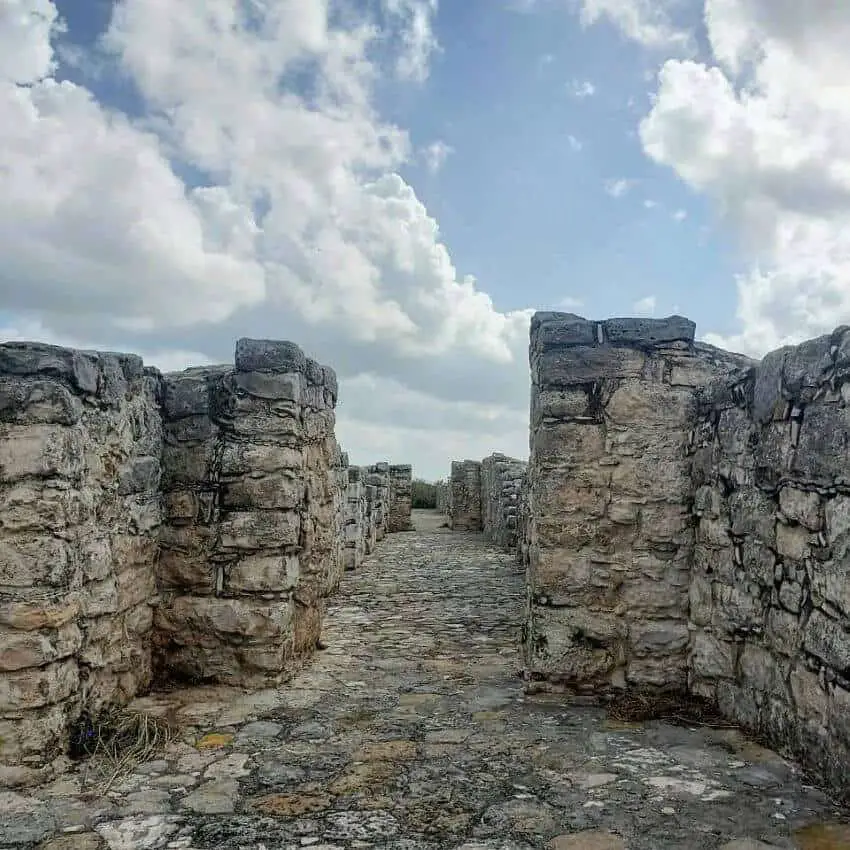
But a must-see in the central plaza is the magnificent Structure 44, located to the south. Measuring around 130 meters in length, it has a stairway that appears to run the length of the building. A purpose of Structure 44 is thought to be administrative.
The top of Structure 44, which features a stairway that appears to run the length of the building.
Toward the center of the plaza is the Open Chapel, built by the Spanish in the 16th century. Its features include a semicircular arch and an altar. The building also includes a room-like structure to the north, identified as the house of the friars, who taught the Christian religion to the Mayans of Dzibilchaltún, who were considered pagans.
West of the plaza is a beautiful cenote with clear water, which was a water source for the site. Despite a shallow area, it also has a point reaching around 44 meters in depth. Its name, Xlacah, is Mayan for “old town.”
Many objects were discovered from this cenote, including pieces of vessels and human bones. According to INAH, ancient Mayas believed cenotes were entrances to the underworld, and therefore objects used in self-sacrifice rituals were discovered here.
Swimming in this cenote was permitted during our previous visit, but it has since unfortunately been cordoned off to visitors after the pandemic.
A white road goes west from the central plaza to an interesting temple called the Standing Temple. Unfortunately, this section was overgrown and not accessible. The site also has a ball court toward the south, but the path to that area was cordoned off.
North of the plaza is another square with a few buildings that are worth seeing. The most notable structure here is a beautiful single-room temple.
This pyramid, to the northeast of the central plaza, is thought to have had a ceremonial purpose.
There are other structures to explore on the site, and many buildings of Dzibilchaltún are yet to be excavated. If you have spare time after exploring this site, visit the Maya site of Xcambó, around an hour’s drive away.
Thilini Wijesinhe, a financial professional turned writer and entrepreneur, moved to Mexico in 2019 from Australia. She writes from Mérida, Yucatán. Her website can be found at https://momentsing.com/
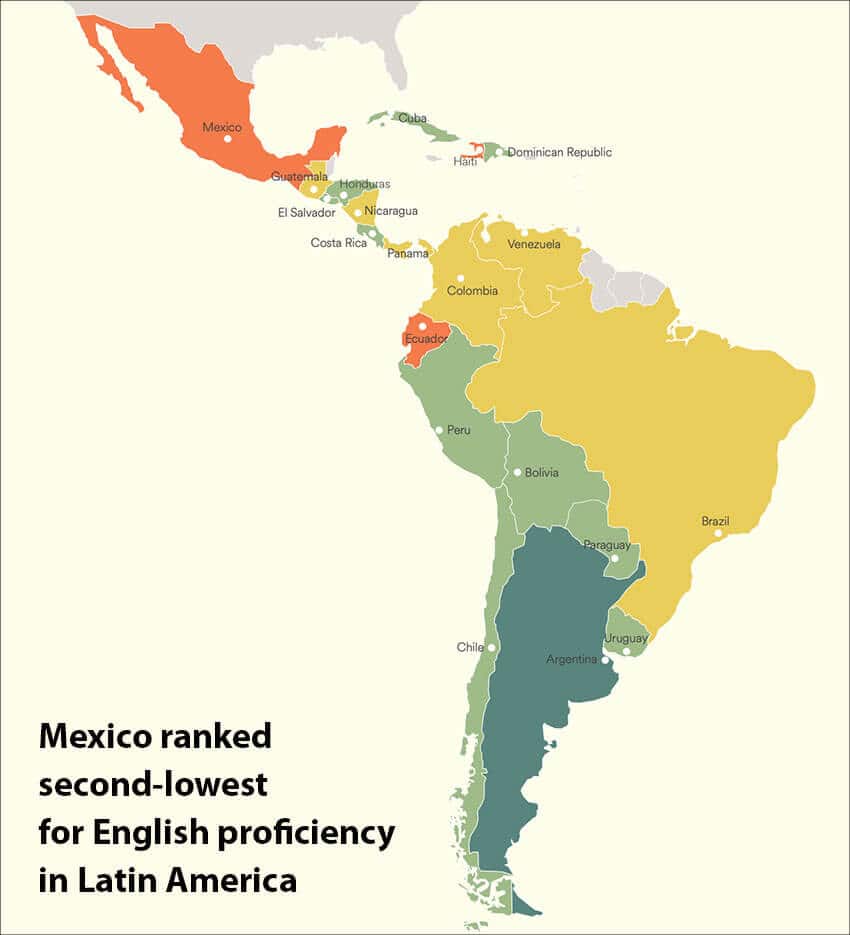
Mexico is one of 26 countries where English proficiency was found to be very low. Among the others are Afghanistan, Cambodia, Sudan, Haiti and Yemen, which ranked last.
Mexico’s ranking dropped 10 places compared to its position on the 2020 EPI, which included 100 countries and regions.
The rankings are based on the results of Education First English language tests taken by more than 2 million adults across the 112 territories.
Although it neighbors two countries where English is the dominant and/or official language – the United States and Belize –Mexico has the second lowest ranking in Latin America after Haiti.
The states where English proficiency is highest are Jalisco, Querétaro, Baja California Sur and Nuevo León. Residents of Guadalajara, Mexico’s second largest city, generally have a better knowledge of English than people who live in Mexico City, Education First found.
The Netherlands ranked first on the EPI followed by Austria, Denmark, Singapore, Norway, Belgium, Portugal, Sweden, Finland and Croatia. In 30th place, the highest ranking Latin American country is Argentina, where English proficiency is described as high.
Education First, an international company that specializes in language training, said in its EPI report that almost all countries in Latin America have improved their adult English proficiency over the past decade, but in Mexico it has consistently declined.
According to The World Factbook, a reference resource produced by the CIA, over 90% of Mexicans only speak Spanish competently.
A Mexico-based Education First marketing director told the news website Expansión that Mexican students need “true immersion” in English in order to improve their proficiency.
Students cannot become bilingual through dedicated English classes alone, said Tannia Domenzain, who advocated curriculum-wide learning in English.
She also said that participating in conversation clubs, reading in English, watching movies in English and studying can help people improve their English language skills.
A pregnant Tamaulipas woman was one victim of stray New Year's bullets.
A man in Querétaro died from a stray bullet during New Year’s celebrations, but he wasn’t without blame: he was the one who fired the gun.
The man, both perpetrator and victim, was firing into the air on his property in San Juan del Río, about 50 kilometers southeast of Querétaro city, when one bullet came back. His girlfriend phoned emergency services but he was pronounced dead by paramedics.
In Querétaro firing a weapon into the air is not a crime, unlike in some other states, but there are sanctions for carrying a weapon, the newspaper El Diario de Querétaro reported.
Injuries from stray bullets are a problem in Mexico, where firing a weapon skyward is a well known gesture of celebration. It caused injury and danger in many parts of the country during New Year’s celebrations.
In Matamoros, Tamaulipas, a three-month pregnant woman’s life was endangered on January 1 after a stray bullet fell through her roof and hit her in the stomach. The 27-year-old was resting in her bed when she was hit.
Families in Culiacán, Sinaloa, had to take refuge in their homes for about 10 minutes to avoid getting hit during celebrations, despite a heavy police presence and pleas from Governor Rubén Rocha Moya to act responsibly, the newspaper El Universal reported.
However, security forces are not always the best antidote to the indiscriminate firing of weapons. In México state, a municipal police officer’s weapon was confiscated after photos spread of him shooting out of a window with his girlfriend to usher in the New Year.
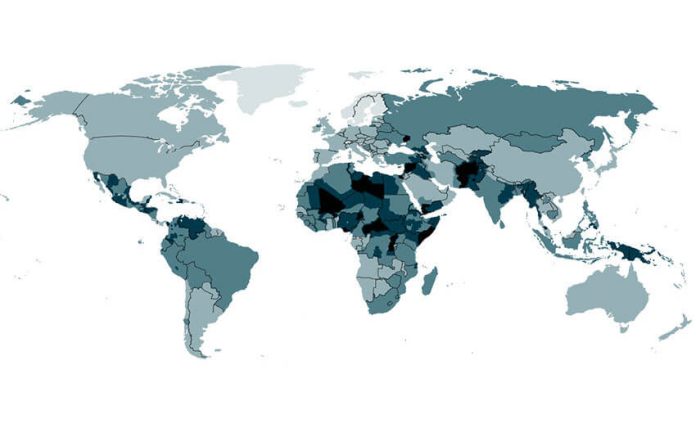
Control Risks' security risk map. The darker the color, the higher the risk.
The security risk for business is high in 16 of Mexico’s 32 states, according to a global risk and strategic consulting firm.
Baja California, Chihuahua, Colima, Guanajuato, Guerrero, Jalisco, México state, Michoacán, Morelos, Quintana Roo, Sinaloa, Sonora, Tamaulipas, Tabasco, Veracruz and Zacatecas are rated as high risk on Control Risks’ RiskMap 2022. The map also shows there is a heightened maritime risk off Mexico’s southeastern coast, where pirates have targeted oil platforms.
The firm’s security risk assessment evaluates threats to the financial, physical and human assets of a business, as well as the willingness and capability of public security forces to protect corporate assets and personnel.
It assesses risk factors including military conflict, insurgency, terrorist attacks, strikes and riots, vandalism, kidnapping, and violent and acquisitive crime. The high risk rating is the second highest on the RiskMap after extreme.
A high risk means “the security environment presents persistent and serious challenges for business,” Control Risks said, adding that routine business activities generally require enhanced or specialized security.
The security risk in five states – Aguascalientes, Baja California Sur, Campeche, Querétaro and Yucatán – is considered “low,” meaning that security conditions do not impede normal business. The risk is medium in Mexico’s 11 other states, including Mexico City.
The 16 high risk states include the six most violent, where 50% of all homicides occurred in the first 11 months of last year. They are, in order, Guanajuato, Baja California, Michoacán, México state, Jalisco and Chihuahua. Organized crime groups have a significant presence in all those states, and many others.
Among other countries considered high risk for security are Venezuela, Nigeria, Iraq, Pakistan and Papua New Guinea.
Control Risks’ RiskMap also includes country assessments for political, terrorism, cyber and operational risks.
Political risk in Mexico is medium, meaning that “the political and policy environments are periodically challenging for business.”
Changes and proposed changes to energy sector rules have particularly upset foreign and private companies, especially those that have invested in the generation of renewable energy in Mexico. The federal government’s proposed electricity reform, which would favor the state-owned Federal Electricity Commission over private companies, is creating uncertainty and halting new investment, the European Union’s ambassador to Mexico said last month.
The risk of terrorism in Mexico is low, while the cyber risk for companies is high, meaning that “cyber threats pose persistent and serious challenges for business,” Control Risks said.
The fifth and final risk assessed by Control Risks is operational. To calculate it, the firm evaluated the influence of societal and structural factors that either facilitate or impede efficient business operations. Factors assessed include infrastructure; ease of establishing and maintaining a functioning business; ease of recruiting and retaining skilled workers; bureaucratic and business culture; and resilience to natural disasters.
Control Risks concluded that the operational risk in Mexico is medium, meaning that business faces regular operational difficulties, which “occasionally may be serious.”
The firm also looked at the state of democracy in Mexico and the region of which it is part.
In a RiskMap 2022 supplementary article entitled “Democracy is being destroyed in Latin America,” Control Risks said the region is experiencing a wave of authoritarianism and populism that is “eroding and, in some cases, destroying democracy.”
“This will continue in 2022. Companies and investors should plan accordingly,” it said.
“… During the first half of his six-year presidential term, ending in 2024, popular Mexican President Andrés Manuel López Obrador (AMLO) displayed marked authoritarian tendencies. These included concentrating power in the executive (or, more precisely, himself), blatantly disregarding nominally independent regulatory institutions and excessively relying on the military, including beyond its traditional role,” Control Risks said.
“AMLO has hailed his term in office as the ‘Fourth Transformation’. This is his much-vaunted – or much-maligned, depending on whom you ask – transformative project aimed primarily at shaking up the political and business establishment with the laudable if quixotic aim of creating a more equitable society. AMLO will deepen the transformation in 2022 and over the remainder of his term.”
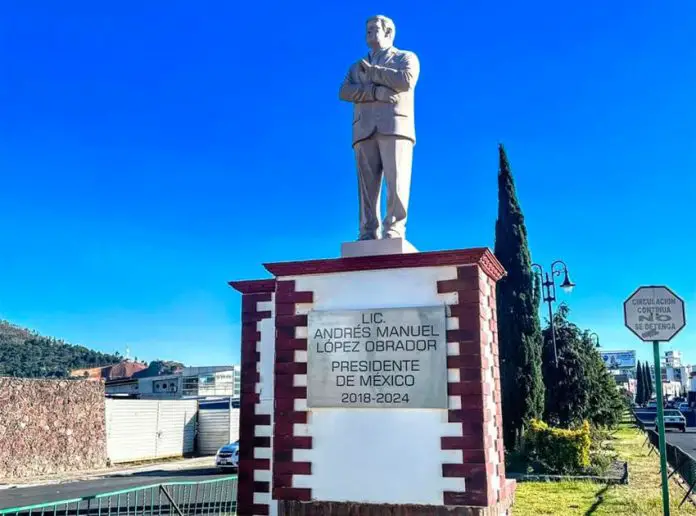
The president's statue in Atlacomulco before it was taken down January 1.
A statue of President López Obrador was destroyed just three days after it was erected in a town in México state.
The 1.8 meter effigy in Atlacomulco, 66 kilometers north of Toluca, was unveiled near the local bus station by outgoing Morena party mayor Roberto Téllez Monroy on December 29.
However, by the early morning of January 1, the statue was on the ground in pieces without its head or legs. It had been fixed on a concrete base with a plaque reading “Lic. Andrés Manuel López Obrador. President of Mexico 2018-2024.”
Téllez said it was placed “to break the stigmas and paradigms and make people recognize what had been done” by the president.
The New Year saw a coalition of the Institutional Revolutionary Party (PRI), the National Action Party (PAN) and the Democratic Revolutionary Party (PAN) come to power in the town.
Atlacomulco is a traditional stronghold for the PRI: the outgoing mayor Téllez was the first mayor not from that party, and the new mayor, Marisol Arias, is a PRI party member, the newspaper Reforma reported.
Arias said in a statement that she strongly condemned the removal of the statue.
About 20 people protested its removal on January 2, shouting their support for the president and placing a photo of him on the plaque where the statue had stood.
The effigy cost 58,000 pesos (about US $2,400) to produce and was created by artisans from the neighboring municipality of Tlalpujahua, Michoacán, with pink granite from the region.
The president has said that he is against statues or other tributes to leaders. “About the statues … it is no longer the time to worship personalities … in my case, I have written in my will that I don’t want my name to be used to name any street, I don’t want statues, I don’t want them to use my name to name a school, a hospital, absolutely nothing,” he said at a morning news conference in September.
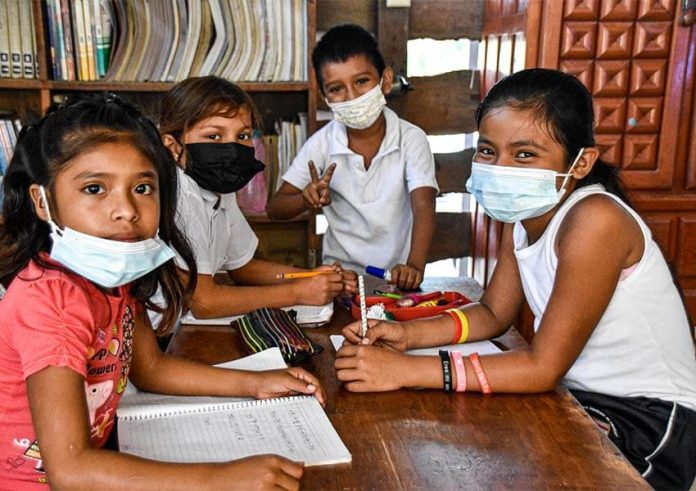
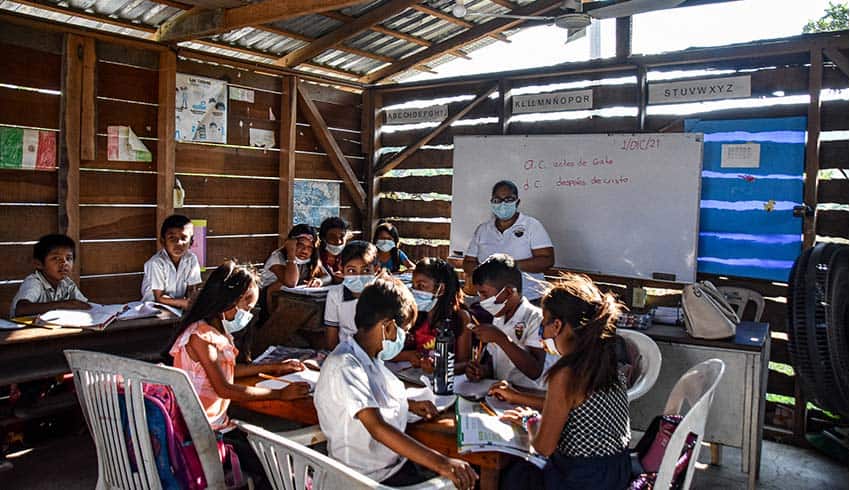
These children are not only getting education but books, supplies, and meals every day.
It is a given that everyone deserves an education, but the reality in Mexico is that not everyone truly has access to public education. That was the case of a community of people who work and live at the Zihuatanejo city dump, people who live hidden away from the rest of the world.
Families who live at the landfill exist among piles of trash, eking out a living selling things they find there or redeeming recyclable bottles. As a result, education for the children there was nonexistent for years. That might still be the case today if it were not for the intervention of a group of people who decided to improve the children’s lives.
It all began in 2011 when a tourist from Chicago, David Lemon, booked a vacation at the Azul Ixtapa hotel. As many tourists do, he brought along a suitcase of clothes he and his family had outgrown with the idea to donate them to a worthy cause.
Gladys Acosta, who worked at the hotel, took him up a dirt road that led to the dump, where 45 to 50 families lived at the time. Lemon was shocked to find that none of the children there went to school, and he wanted to help.
He started by asking the hotel to pour a concrete slab, which personnel there arranged, and he sent money to construct the first building for the school, which the hotel also agreed to do. However, no students enrolled at first, so Acosta approached an employee’s wife, who was a retired nurse, Olga Sandoval, to help.
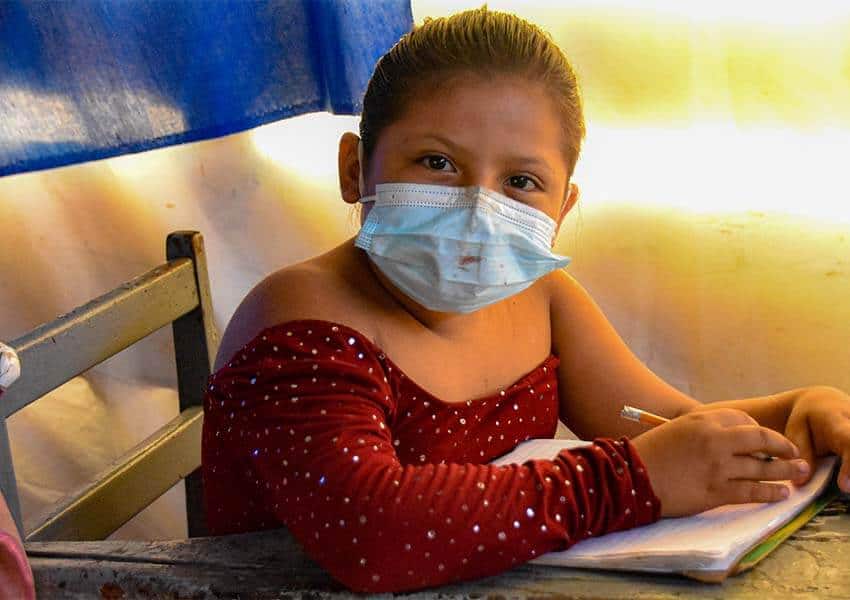
A student working hard at Escuela Nueva Manitoba.
Sandoval agreed to donate her time because she knew that the children were a source of income for their families as scavengers and that unless they had an education, in all likelihood, adult life in the landfill would be their destiny if someone didn’t step in.
Sandoval opened the city dump’s first school with books and materials she already had and only five initial enrollees. She quickly realized she might attract more students if she had a lunch program. This decision swelled her numbers to almost 20.
Each day, she hauled food cooked in her kitchen down the long, dusty road between her house and the dump and taught as many students as happened to show up that day. Still, she needed help.
So Sandoval approached the Fort Garry Evangelical Mennonite church in Winnipeg, Manitoba, and asked them to build her a kitchen at the site so that she would no longer have to haul the food every day. The group had finished a project at a senior home outside of El Coacoyul, a community in the municipality of Zihuatanejo, and were looking for another one, so the group’s leader Sid Reimer told Sandoval that they were interested would look at the idea after returning the next year.
Impressed by what Sandoval had accomplished by the time the group was back in town, it decided to build her the kitchen — and stocked it too.
Each year afterward, they built more: a classroom, four buildings, one kitchen, an administrative office/library, a bathroom for the smaller children and one for the older kids. In appreciation to the Canadian group for making their dream a reality, Sandoval named the school Escuela Nueva Manitoba en México (the New Manitoba School in Mexico).
Eventually, Sandoval was forced to retire due to ill health, brought on by a massive fire at the dump that burned for nearly two years and created toxic fumes affecting her lungs. Over the last nine to 10 years, many others have gotten involved to lighten the load and improve conditions and the quality of education offered.
People like John McKay and his late wife Joan, as well as Gladys Acosta, who represents the Azul Ixtapa, each pay for a teacher’s salary and provide a meal once a month. Others purchase items like school uniforms, socks and shoes for each child. In addition, area church organizations lend their support and raise much-needed funds to keep the school operational as enrollment fluctuates between 80 to 100 students.
According to McKay, Ontoniel Peñaloza López, a new administrator hired this past month, and his wife, Sarai Santana, who teaches around 20 students in pre-kindergarten and kindergarten, have made tremendous improvements. In addition, the staff has acquired two other teachers: Violet for grades 1, 2 and 3 and Bernice with grades 4, 5 and 6.
We toured the dark but extremely well-built wood classrooms for the next half hour or so, and the attentive, orderly behavior of the students impressed me. Each teacher seemed to have their classrooms engaged. And, of course, most were eager to pose for pictures, although we tried to disrupt the class as little as possible.
Next we saw the kitchen, well-stocked and bustling with several cheerfully industrious volunteer moms who made sure food was prepared and ready on time. And then, as we were leaving, two cars pulled up the road and unloaded what appeared to be a group of tourists but was a cohort of dentists and assistants from Olympia, Washington.
The group has volunteered its time for many years, giving free dental care to the children of Ixtapa-Zihuatanejo and in outlying areas. Led by local dentist Dr. Cecelia Villavicencio and John Diviny, the group was a welcome sight for the school. Villavicencio informed me that to date, she and the team had seen over 80 children at the school and more from another.
The school currently only provides schooling to grade six but is taking steps to provide higher education.
One of the biggest hurdles the school has faced, in addition to the constant search for funds, is that it is not accredited by the state and thus receives no financial aid. However, the staff hopes to hire two more fully certified teachers to fill their growing need to achieve accreditation. Without accreditation, they will need to pay the new teachers with only the money they can raise themselves.
Zihuatanejo Mayor Jorge Sánchez’s government has assisted the school, and his family, which owns a cement business, has generously provided materials at a great discount. Also, to lighten the ongoing fundraising burden, some local businesses have been generous in hosting over the years.
The second hurdle is expanding the school to beyond grade six. In the past, very few students attempted to further their education at schools in Ixtapa or Zihuatanejo. For children never exposed to the outside world — even though it is just a few miles away — the transition was difficult, some of it due to bullying and generally the inability to fit in. All of them returned to their community within the year.
Thankfully, another school in La Puerta now has 16 students in higher grades who have graduated from Escuela Nueva Manitoba, but the goal is to have many more.
For that, they need sponsors.
Want to help? Sponsoring a student will cost you around US $350 per year for primary schooling. After that, the price goes to $575 for university tuition. It does not include books, living expenses, transportation, and other things. Often several families will sponsor one child.
If you can’t commit to that? “Financial donations are best,” McKay says, adding that donating books and supplies, while great, can be a burden too.
“Where to put it all is the main issue,” he says. “Sometimes we give things away that we can’t use ourselves. Money allows us to put the [donation] toward our needs at the time — our monthly food bill, for example, [which] is at 8,000 pesos and counting.”
Don't hold your breath waiting for legislation to be approved.
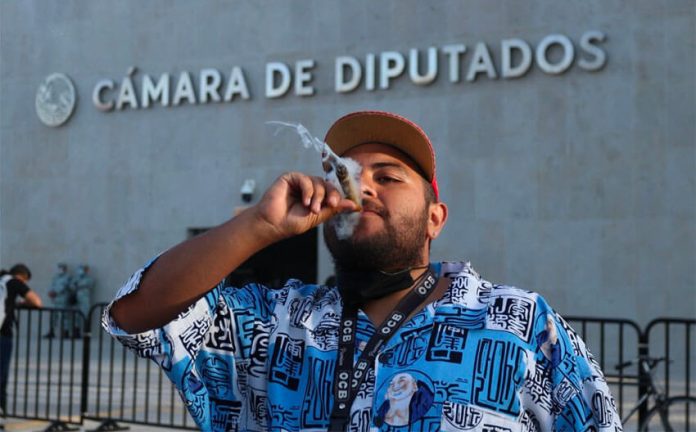
Lighting up a marijuana cigarette for recreational purposes or taking a hit from a bong should be legal in Mexico by now, but the last congressional period of 2021 ended without the Senate passing a cannabis regulation law that was approved by the lower house last March.
Senators didn’t vote on the Federal Law for the Regulation of Cannabis in the sitting period that ended December 15 because a Senate analysis concluded there are at least 17 “inconsistencies” in it.
Among them: an alleged loophole that would allow marijuana to be sold in unlimited quantities and problems related to the National Commission Against Addictions’ regulation of the legal pot market.
“We’re concerned about the substitution of the Mexican Cannabis Institute by the National Commission Against Addictions [Conadic],” said Institutional Revolutionary Party Senator Claudia Ruiz Massieu.
“… You can’t give regulation powers to a body that is in charge of combatting addictions because that transgresses the right to [free] development of personality and promotes the stigmatization of cannabis users,” she said.
The Supreme Court (SCJN) ruled in 2019 that prohibition of marijuana was unconstitutional because criminalization violates the right to free development of personality.
The news agency Europa Press reported that Conadic could block people aged between 18 and 25 from purchasing and possessing marijuana as a health protection measure. According to the Senate, such a move would be unconstitutional because it would violate the right to equality and non-discrimination.
Zara Snapp, a pro-pot activist, said it was disappointing that the Senate had failed to act to legalize recreational marijuana.
“Once again we see that political calculations, or a lack of capacity [on the part of senators], are stopping the law from coming out,” she said.
The court’s ruling – a “general declaration of unconstitutionality” with regard to laws banning recreational marijuana – ordered the federal Health Ministry to issue permits to adults who ask to be allowed to use and grow cannabis. However, it remained illegal to possess more than five grams of marijuana and sell the drug.
“There are a lot of young people in jail because they had a little more than five grams,” said Fernando Belaunzarán, a former federal deputy who has long advocated the legalization of marijuana. “I regret the delay and the irresponsibility of the Mexican Congress,” he said.
The Senate won’t sit again until February, meaning that the use of marijuana for recreational purposes by adults without Health Ministry permits will not be legal until the second month of 2022 at the earliest, provided the “inconsistencies” can be ironed out and the proposed law is put to a vote. Given the delays to date, pot smokers would be best advised not to hold their breath.
Nevertheless, the SCJN’s directive for marijuana to be legalized means that the legislation’s eventual passage through Congress is all but assured.
The legislation legalizes possession of up to 28 grams of marijuana for personal use and the cultivation of up to six plants in one’s home. Bricks and mortar stores with the appropriate licenses would be permitted to sell marijuana for recreational purposes, but the sale via vending machines, over the phone, online, or in any other way that is not face-to-face would be prohibited.
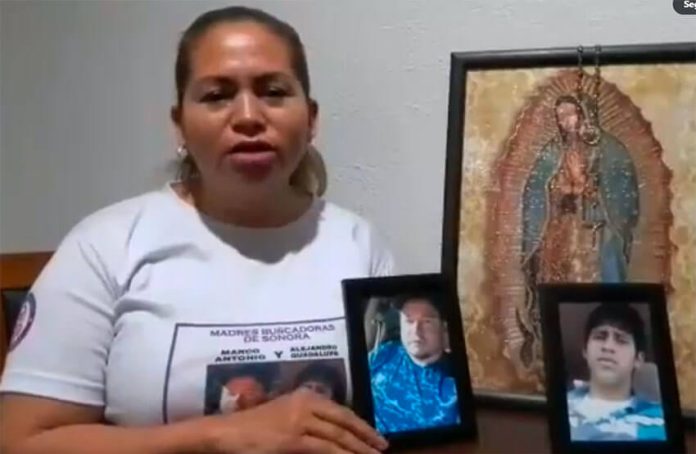
Cecilia Flores, founder of the search collective Searching Mothers of Sonora, displays a picture of her missing son.
The leader of a group of mothers searching for their missing children in Sonora has issued a plea to cartels that operate in the northern border state: “Let us continue looking for our kids.”
In a video message posted to the group’s Twitter account on Sunday, the leader and founder of Madres Buscadoras de Sonora (Searching Mothers of Sonora) appealed to the leaders of Los Salazar – a criminal group affiliated with the Sinaloa Cartel, Rafael Caro Quintero – a notorious drug lord who founded the Guadalajara Cartel and now allegedly leads the Caborca Cartel, and other gang leaders.
“Don’t kill us, don’t abduct us, don’t threaten us and let us continue looking for our kids,” said Cecilia Patricia Flores Armenta, who is searching for her two missing sons.
She said the mothers who belong to her group are not looking for those responsible for the disappearance of their children or justice.
“The only thing we want is to bring them home,” said Flores, who revealed that she has been threatened, displaced from Sonora and is currently receiving government protection through a program designed to keep journalists and human rights defenders out of harm’s way.
“We need to bring them home because whether they’re good or bad people, guilty or innocent, for us [our missing children] are our whole life,” she said.
“… Please, in the name of all the mothers, I ask you and I beg you … not to take from us the possibility of finding our missing loved ones, to help us find them by letting us search for them. … We’re only looking for peace [of mind] – peace that … left with them,” Flores said.
Another woman searching for her son and partner was kidnapped in Hermosillo last October and beaten before she was released. The aggressors told her to give up the search for them, but she ignored them.
The bulk of the responsibility for looking for the nation’s desaparecidos falls with family members, search groups and non-governmental organizations.
After a 12-day visit to Mexico in November, the United Nations Committee on Enforced Disappearances said that an inadequate security strategy, poor investigations into missing person cases and impunity were key factors in the persistence of abductions.