Home Blog Page 1085

AMLO’s universities entail big expenditures but attract few students

0
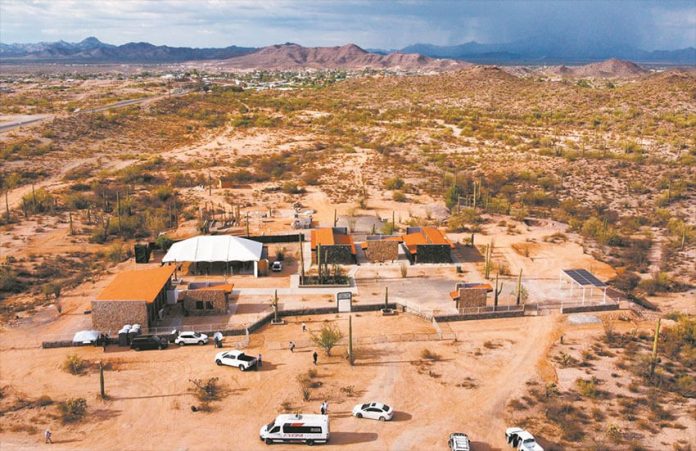
The Sonoyta, Sonora campus of the Benito Juárez García Universities for Well-Being (UBBJ) opened in July of last year.
The Sonoyta, Sonora, campus of the Benito Juárez García Universities for Well-Being opened in July of last year. Presidencia de la República

The 140 “well-being” universities opened by the current federal government have struggled to attract students, but despite their low enrollments their funding will be nearly 1.1 billion pesos — close to US $54 million — in 2022.

President López Obrador signed a decree in 2019 to create new public higher learning institutes across the country.

The institutes, most of which are located in towns where there are no other tertiary education options, are collectively called the Benito Juárez García Universities for Well-Being (UBBJ).

Official UBBJ data cited by the newspaper El Universal shows that 28,087 students were enrolled at the universities in the first quarter of 2021 for an average of just 200 students per school. However, 50 of the universities have fewer than 100 students and some have fewer than 20.

In the latter category are the well-being university in Yuahualica, Hidalgo, which had just 13 students early last year, and that in Las Margaritas, Chiapas, which had 20.
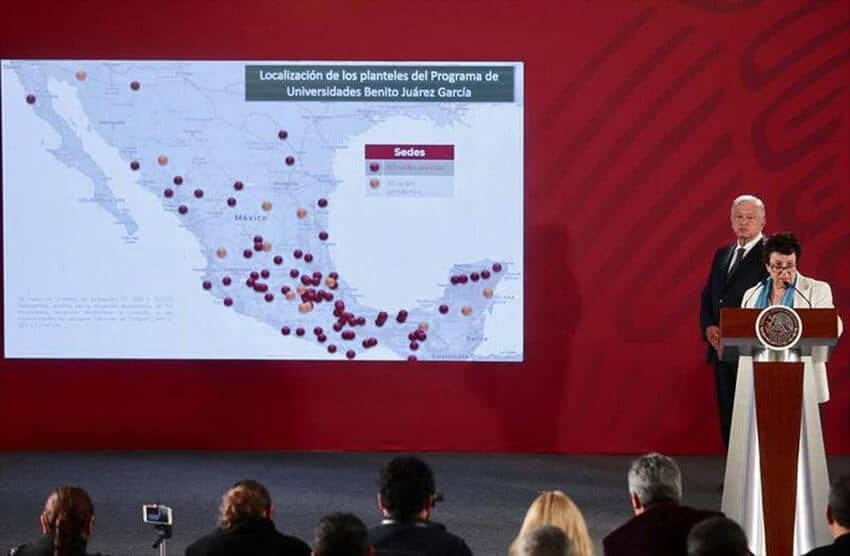
President López Obrador announced the creation of the UBBJ university system in 2019.

The government hoped that student numbers would grow over time, but they have in fact declined. The total enrollment in the first quarter of 2021 was 28.3% lower than that in late 2019. In terms of student numbers, the reduction in just over a year was more than 11,000, although the government’s claim that more than 39,000 students were enrolled in 2019 has been called into doubt.

The government set a goal of reaching an enrollment of 256,000 students by the end of its six-year term in 2024, but appears to have no chance of achieving it.

Despite the decline in student numbers, funding for the schools is trending upwards. They received 987.4 million pesos last year and have a combined budget of almost 1.1 billion pesos this year, an increase of about 10%.

The government will transfer hundreds of millions of additional pesos to UBBJ students, each of whom receives a monthly scholarship of 2,600 pesos (about US $125). A total of 36 programs are taught across the 140 universities, including degrees in law, engineering, medicine and community health, tourism, social studies, forestry, food processes, sustainable development and accounting. However, each university only offers one degree program.

The quality of the education on offer was called into question in a 2020 report published by Mexicans Against Corruption and Impunity (MCCI), a civil society organization. In its report Universities in Limbo, MCCI said that none of the 30 UBBJ it visited in 14 states was able to award degrees to students because they were not certified by the Ministry of Public Education to do so.

Carlos Ornelas, an academic at Mexico City’s Metropolitan Autonomous University who has a doctorate in education from Stanford University, said the 140 universities constitute “a project that emerged from the imagination of the president with the intention of accommodating” poor students who were rejected by other higher learning institutes.

He predicted that enrollments won’t grow because the programs on offer at many of the universities are not attractive to potential students. In an interview with El Universal, Ornelas was also critical of the government’s spending given their low student numbers.

López Obrador’s “eagerness” to provide university places for everyone entails “too high a cost, especially considering there are campuses with 13 or 20 students,” he said.

The academic also said the government hasn’t been fully transparent with regard to enrollments.

“When this opacity ends and we start to see the data we’ll find out how many of those who enroll in these schools [actually] finish a degree,” Ornelas said.

In comparison with other public education institutions, the UBBJ are receiving preferential treatment from the government, he claimed.

“The president doesn’t like people who think,” he asserted. “That’s why there are these attacks against UNAM [the National Autonomous University] and CIDE [the Center for Research and Teaching in Economics]. This is a symptom of wanting to have everyone aligned to a single way of thinking, which is feasible with the well-being universities,” Ornelas said.

Ángel Díaz Barriga, an education expert with a doctorate in pedagogy from UNAM, said that the idea of taking higher education to isolated, marginalized parts of the country is not bad in itself but he, like MCCI, questioned the quality of instruction on offer.

The government’s mistake is focusing on increasing student numbers rather than improving the quality of the education, he said. Díaz asserted that the universities need a “complete overhaul,” as occurred with the nation’s indigenous and intercultural universities, which were given “a solid structure that allows them to function.”

Mario Lagunes, an academic at UNAM’s Social Research Institute, was also critical of the quality of education on offer at the well-being universities. He charged that the government failed to plan properly for their establishment and that the institutes don’t deserve the title of university.

“You can’t build more than 100 universities out of nothing. … You can’t talk about universities when we know that the students occupy spaces in sports centers, commercial premises, houses, vacant lots and community centers,” Lagunes said.

With reports from El Universal 
How a tiny Mexican port named Bagdad became a battleground in 2 wars

0
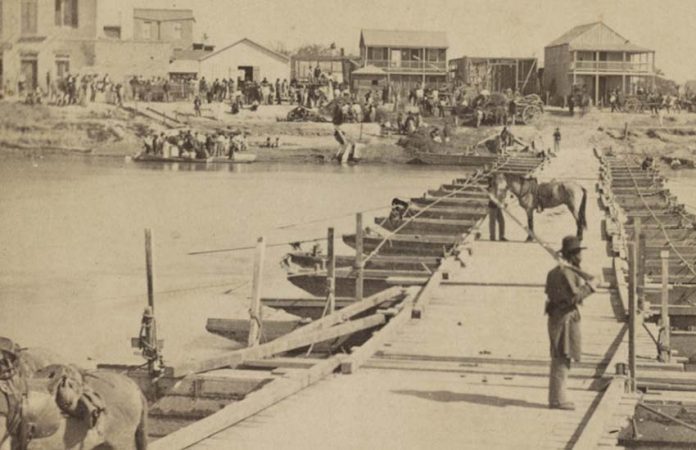
Just across the border from Bagdad on the American side of the Río Grande during the 1800s.

As the American Civil War began in 1861, Mexico was beginning its own battles, as President Benito Juárez began a fight against the French intervention in Mexico. A little-known fact is that the conflicts coalesced on a single spot that doesn’t exist anymore today: the Mexican port of Bagdad, Tamaulipas, located on the Rio Grande, on the United States-Mexico border.

Now vanished as a result of hurricanes, the memorably named port became a boomtown for a brief moment during the Civil War, making it a prize target for both Mexico’s French-backed imperialistas, who wished to restore a monarchy in Mexico, and the forces of the Mexican Republic.

Bagdad achieved prominence because of a loophole in Union policy at the outset of the Civil War. Although President Abraham Lincoln had declared a blockade of southern Confederate ports in order to block the seceded Confederacy’s access to resources, it did not apply to the international waters of the Rio Grande, leaving Bagdad open to trade with the Confederate states. It helped that Juárez’s government had declared neutrality in the Civil War, allowing Confederate states to get their prize cotton crops to international markets.

“Suddenly, there was great interest in the one little square point that would get you around the Union blockade,” said Richard B. McCaslin, the TSHA Professor of Texas History at the University of North Texas.

“It was the only port [where] Lincoln could not block cotton,” said Teresa Van Hoy, a professor of history at St. Mary’s University. “The lifeline of the Confederacy went through the Port of Bagdad.”

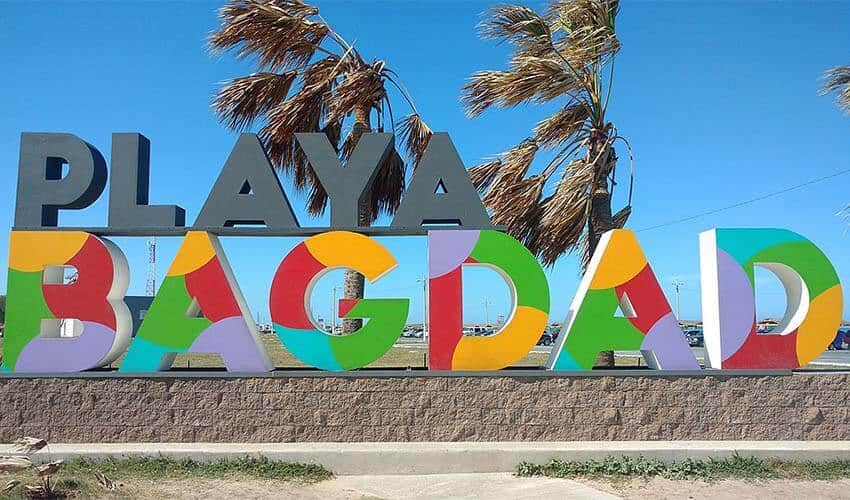
Playa Bagdad
Bagdad ceased to exist in the 1880s after several hurricanes. All that remains is Playa Bagdad beach, part of the Matamoros municipality.

Located tantalizingly close to south Texas, Bagdad saw its population increase dramatically. A wide variety of establishments sprang up, including gambling houses and brothels.

Asked about the origins of its name, historians were unsure.

“I don’t know,” Van Hoy said. “It was at the bottom of the river, the mouth of the river. It was not spelled like Baghdad in Iraq, there was no ‘h’.”

“I have no idea,” McCaslin said. “It could be because of the wild nature, the exotic nature, of the place.”

Confederates sent cotton through Texas to Bagdad, where it was loaded onto ships and sent across the world. Meanwhile, supplies arrived in Bagdad for the South, including guns, ammunition, clothing and medicine. Goods were unloaded and brought upriver to Matamoros, then transported across the border to Brownsville, Texas.

“Since Matamoros did not have an outlet to the sea, one was improvised – Bagdad,” said Miguel Ángel González-Quiroga, an affiliated researcher in Mexican history and borderlands studies at the University of Texas at San Antonio. “Many [people] became fabulously rich building their opportunities through Bagdad. It became a really fast boomtown, with maybe 10,000, 15,000, 20,000 people overnight, to take advantage of the Civil War trade.”

The trade there attracted interest not only from the South but also from Mexico and France – and even in the northern U.S., officially at war with the Confederacy.

“Lincoln couldn’t stop New York textile manufacturers from importing cotton,” Van Hoy said. “He dared not upset the flow of cotton supplies … It was a very delicate balancing act. One bale was worth US $10,000.”

“The number one product of the U.S. was cotton from the South,” McCaslin said. “The number one export from Texas was cotton. It was how you made serious money.”

When the French army of Napoleon III invaded Mexico and chased Juárez northward, the Mexican president hung on to Bagdad, where he got crucial financial support.

“[Bagdad] also becomes a lifeline for the Juaristas (partisans of Benito Juárez,” Van Hoy noted. “It’s the only source Juárez has of revenue throughout his resistance [in] Mexico to the French intervention — customs duties. He had no other source of revenue. The French blockaded the major ports — Veracruz and Acapulco.”

Yet, McCaslin said, “I’m not sure [Bagdad] helped Juárez much.”

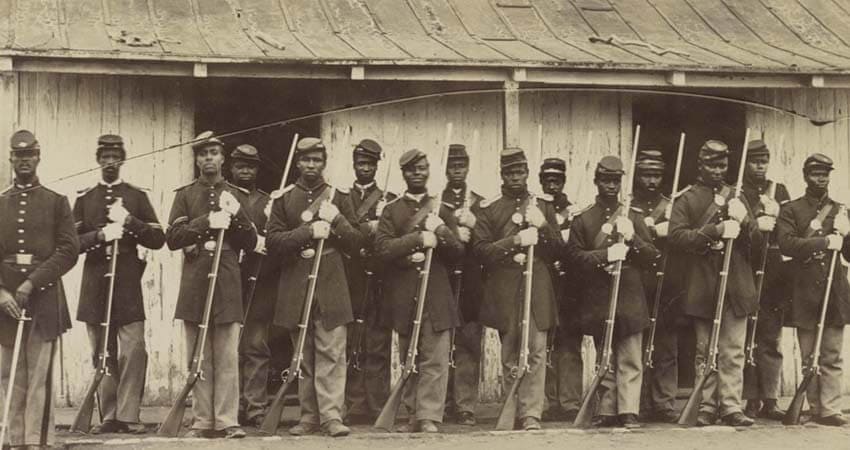
The infantry of free Black men that fought for the Union forces in the American Civil War. Library of Congress

There was a lot of money for locals, McCaslin said. “How far it got into Mexico, I’m not sure,” he added. “It was so balkanized along the borderlands. To get money to trickle down into central Mexico … I’m not sure. How much Juárez [received], I’m not sure.”

Bagdad found itself in the center of a cross-border controversy, one that made Juárez consider cutting off his Bagdad lifeline.

A Confederate force crossed into Bagdad to capture two Union sympathizers – future Texas governor Edmund Davis and William Montgomery. The pair was brought to Texas, where Montgomery was lynched from a mesquite tree on March 10, 1863.

“This particular atrocity becomes a major international uproar,” Van Hoy said. “Mexico protested the armed invasion, the kidnapping, the lynching. They threatened to close Bagdad to all Confederate exports and imports.”

Although the Confederates mollified Juárez by releasing Edmund Davis, opportunities in Bagdad decreased due to the South’s worsening situation. Union General Ulysses S. Grant’s triumph in the Siege of Vicksburg on July 4, 1863, split the Confederacy in two.

After Vicksburg, supplies from Bagdad could only support Confederate areas west of the Mississippi River. From late 1863 to early 1864, Union forces occupied the Rio Grande and shut off Bagdad entirely to the South before withdrawing for another campaign along Louisiana’s Red River.

In a further complication, the French finally captured Bagdad on Aug. 22, 1864. That spring, France had installed Archduke Maximilian of Austria on the throne of the Second Mexican Empire.

“[The French] established good relations with the Confederates across the river,” Van Hoy said. “Now the imperialistas occupied the south side of the river. The Confederates controlled the north [side].”

McCaslin said that “some of the local [Confederate] commanders … had very good working relationships with [imperialista general] Tomás Mejía and Maximilian’s army.”

In the wider sphere, he said, “The French looked to gain Confederate support. They courted [the South] a little bit … Lincoln made a deal with the French: If you don’t interfere with the Confederacy, if there’s no overt recognition, no negotiating, then I won’t interfere in Mexico.”

After the Civil War, however, Union forces occupied Texas. These forces – including free Black soldiers – ended up pressuring the French to leave Mexico.

“There were a lot of Black troops in Texas,” Van Hoy said. “It was already a tense situation: the Texans are furious with the 33rd Regiment [of Black troops in the Union army]. The last enslaved people to be freed in the U.S. are Texan… It made things very volatile in Bagdad.”

Bagdad, Tamaulipas
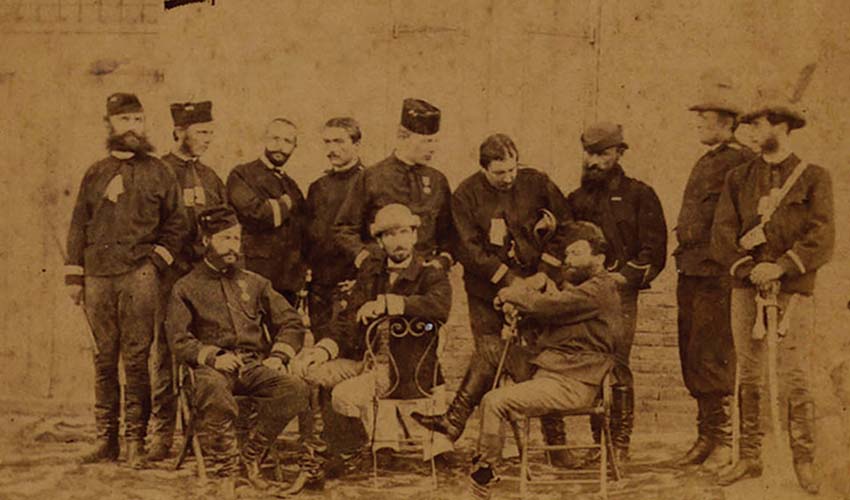
Austrian troops brought in by the imperalist forces fighting for a monarchy in Mexico.

Some of the Black soldiers fought with the Juaristas in their victory over the imperialistas in the Battle of Bagdad on Jan. 4, 1866. However, the imperialistas reoccupied the port 20 days later with the help of 650 Austrian reinforcements. Bagdad fell to the Juaristas for the second and final time in June 1866, when it was surrendered and evacuated by Mejía, who also relinquished Matamoros.

“It was a turning point, the beginning of the end of the empire,” Van Hoy said.

Following the defeats of the Confederacy and the French, Bagdad shrank in importance and was eventually destroyed by hurricanes.

“Bagdad’s history itself is not very long,” Gonzalez-Quiroga said. “It only lasted 30 to 40 years.”

Yet its heyday blazed with intensity.

“Bagdad was a very huge hot spot,” Van Hoy said. “It was probably the hottest spot in all of Mexico, with Matamoros, for a few months.”

Rich Tenorio is a frequent contributor to Mexico News Daily.

Campeche passenger train studied by federal government

0
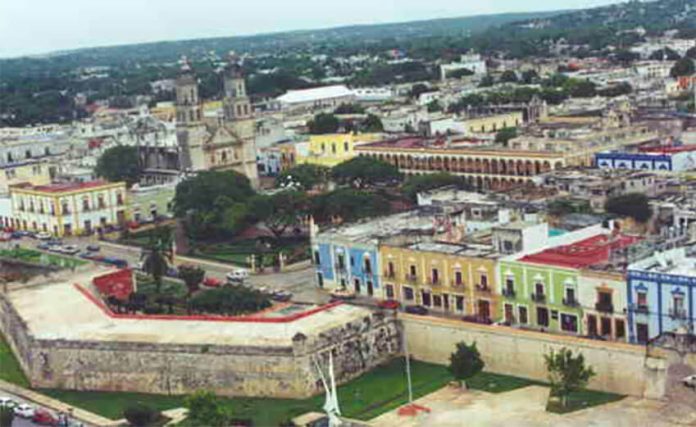
Campeche city.
Light rail system is under consideration for Campeche city.

The federal government intends to undertake studies to assess the viability of a light rail system in Campeche city.

The Ministry of Infrastructure, Communications and Transportation (SICT) has asked the Finance Ministry (SHCP) for 29.9 million pesos (US $1.45 million) to carry out a range of pre-investment studies as well as a cost-benefit analysis.

A private company with experience in planning and building rail projects would be contracted to provide additional technical advice, the ministry said.

The light rail system would make use of just over 20 kilometers of existing, unused tracks, according to the SICT. The ministry is proposing that the system be established with resources from the National Infrastructure Fund but hasn’t disclosed a projected cost.

In a funding application submitted to the SHCP, the SICT said that vehicular traffic is one of the main problems in the municipality of Campeche, which has a population of about 300,000. The operation of a light rail system would help alleviate that problem, it said.

The SICT is planning to carry out pre-investment studies this year for five other proposed rail projects. Those projects are the Derramadero-Ramos Arizpe suburban train in the metropolitan area of Saltillo, Coahuila; the Colima-Manzanillo regional train; the Monterrey-Saltillo inter-urban train; the Monterrey-Nuevo Laredo inter-urban train; and the Morelia light rail system in Michoacán.

The federal government is already building the 1,500-kilometer Maya Train railroad in the country’s southeast, and intends to finish the Mexico City-Toluca passenger train line, which its predecessor began but failed to finish. It is also extending the Mexico City suburban train line so that it reaches the capital’s new airport in neighboring México state.

With reports from El Economista

Protected areas commission funding slashed 51% since 2014

0
The Nexapa expoforest
The Nexapa expoforest in Puebla and Hidalgo, one of Mexico's protected areas.

Funding for Mexico’s natural protected areas (ANPs) has declined by more than 50% since 2014, according to a Mexico City think tank.

The Center of Economic and Budget Research (CIEP) said in a report that the National Commission for Natural Protected Areas (Conanp) has suffered budget cuts since 2017, including large double-digit cuts in 2019 and 2020.

Its 2022 allocation of 887 million pesos is 51% lower than what it received in 2014, the think tank said. The amalgamation of Conanp programs is a major reason for the funding decline.

CIEP said that several ecosystem and animal protection programs managed by Conanp in the early years of the 2012-18 government led by former president Enrique Peña Nieto were merged into two larger programs between 2016 and 2018.

The incorporation of the smaller programs into the larger ones resulted in less funding for Conanp, which has responsibility for almost 200 ANPs.

The two large programs – called “Recovery and Repopulation of Species at Risk” and “Management of Natural Protected Areas” – had a combined budget of 664 million pesos (US $32.4 million at today’s exchange rate) in 2018, but they were amalgamated into one program in 2019 and funding was slashed to 183 million pesos, a 72% cut.

Funding for the program – called “Program for the Protection and Restoration of Ecosystems and Priority Species” – was cut again in 2020, when it dipped below 160 million pesos, before recovering to just over 180 million pesos last year.

The program’s 2022 funding is 322 million pesos, a significant increase compared to the past three years, but less than half the amount its two predecessors received in 2018.

CIEP questioned why funding for ANPs has been cut when such areas “provide a variety of ecosystem services that are important for sustainable development.”

Among them: “the supply of raw materials, carbon storage, soil erosion control, pollination and the provision, filtration and regulation of water resources.”

With reports from Reforma 

Fake vaccination certificates go for 3,500 pesos in Mexico City

0
Santo Domingo Square
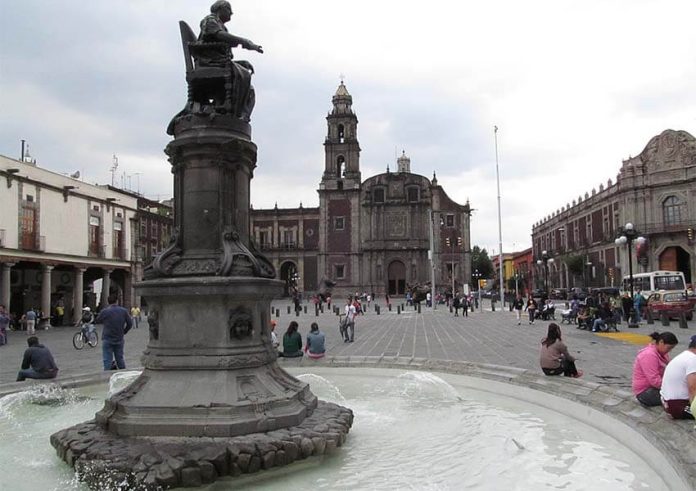
Santo Domingo square, long known for a black market in all sorts of fake documents, has expanded its offering to illicit COVID-19 vaccination certificates.Omarem/Creative Commons

Getting a fake vaccination certificate in Mexico City’s historic center is a simple two-hour process that costs as little as 3,500 pesos (US $170), reported the newspaper Milenio

Black market buyers need only provide their name and date of birth and can choose between AstraZeneca or Pfizer/BioNtech certificates to use as evidence of their first or second dose. 

Demand for the falsified documents has increased since the United States borders reopened to fully vaccinated travelers with a World Health Organization (WHO)-approved vaccine. That WHO specification effectively barred recipients of China’s CanSino and Russia’s Sputnik vaccines, which were both widely administered in Mexico. It is unclear if those who received CanSino or Sputnik shots have any way to get a WHO-approved vaccine.

Forged birth certificates, voter cards, university certificates and receipts have been available for decades in Santo Domingo square, located in Mexico City’s borough of Cuauhtémoc, just three blocks from the main square, but the vendors installed there have recently expanded their illicit offerings to include proof of vaccination.

A Milenio reporter who approached one of the vendors that operate from small stores or stalls in the square was told that the certificate would come with a requisite QR code, which if scanned, presents the correct data — including the individual’s personal information, the vaccine name and the date it was supposedly applied. 

Another counterfeiter told buyers to watch out for the police due to CCTV cameras in the area and implied they were aware of the criminal activity. “Remember that they [the police] know us, but they hunt for the customers after.”

Purchasers receive a draft of the certificate before it’s printed and can scan the QR code before they leave to verify its effectiveness.

With reports from Milenio 

Government bows to pressure, will reroute Maya Train in Playa del Carmen

0
maya train playa de carmen
The train station planned for Playa del Carmen.

The Maya Train railroad route will be modified in the Riviera Maya region of Quintana Roo, President López Obrador announced Wednesday.

Hoteliers and members of the broader business community in the Riviera Maya, a coastal region in the state’s north, have been calling for a change to the route running through the resort city of Playa del Carmen, but Quintana Roo Governor Carlos Joaquín said last month that López Obrador had told him that construction of the railroad parallel to Federal Highway 307 would continue.

The president changed his tune on Wednesday morning, telling reporters that the railroad – one of the federal government’s signature infrastructure projects – would be rerouted.

Playa del Carmen hoteliers, business groups, unions and others objected to construction of the railroad parallel to Highway 307, arguing that the new elevated tracks would effectively divide the city in two, exacerbating inequalities between the coastal tourist zone and poor inland neighborhoods. They also said the railroad would have an adverse impact on the highway and the vehicles that use it.

López Obrador directly addressed the hoteliers at his regular news conference.

“I’ll take the opportunity to send a message to the hoteliers of the Riviera Maya, [to ask them] to help us because a new route for the Maya Train is being determined and hopefully they will cooperate. It won’t affect their land,” López Obrador said.

“A line will be built behind their land, not on the seashore but … behind [beachfront hotels],” he said without specifying whether it will be elevated or at ground level.

AMLO said he had asked Interior Minister Adán Augusto López to work on the rerouting project and engage with hoteliers.

“We’re running out of time and we can’t stop; these are works that we’re going to finish at the end of next year, so the sooner the [new] line is built the better,” he said. “So … [the interior minister] has this task and others.”

Construction of tracks between northbound and southbound lanes of Highway 307 began in Playa del Carmen last month and significant progress had been made. A consortium made up of Grupo México and Spanish firm Acciona won a 17.8-billion-peso (US $864.7 million) contract to build the southern portion of section 5 of the train, which will run between Playa del Carmen and Tulum.

The army will build the northern portion of the section, which will run between Cancún and Playa del Carmen. The station in Playa del Carmen is slated to be in the city center, making a rerouting through its outskirts – as hoteliers advocated – unviable.

The US $8 billion Maya Train will connect cities and towns in Quintana Roo, Yucatán, Campeche, Tabasco and Chiapas. López Obrador says the construction and operation of the railroad will spur economic development in Mexico’s long neglected southeast.

With reports from El Economista and Reforma 

Russian tourist attacked in Chiapas after refusing to pay toll

0
attack on a tourist in Chiapas.
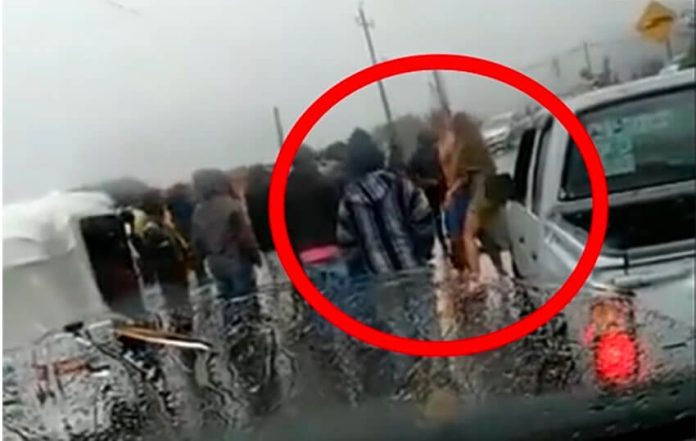
Frame from a video of the attack on a tourist in Chiapas.

A Russian tourist was attacked on a highway in Chiapas by a group of protesters on Monday after she refused to pay them a toll, the state Attorney General’s Office said in a statement.  

The visitor, identified only as Denis, was driving on the Ocosingo-San Cristóbal de las Casas highway with Quintana Roo license plates when she came upon the protesters in the municipality of Oxchuc, 107 kilometers east of Tuxtla Gutiérrez, the statement said. 

The assailants forced her out of her vehicle when she refused to pay an unofficial toll charge, before they vandalized the car and assaulted her. However, she managed to escape, the statement added. 

In a video posted on Twitter on Tuesday and published by the newspaper Milenio, a group of some 20 men can be seen striking a pickup truck with large sticks. They appear to grab hold of a man who tries to fend off their blows.

Improvised roadblocks are common in Chiapas as a form of political demonstration and protesters take advantage of speed bumps on the highways to install unofficial tolls.

Demonstrators force vehicles to stop and pay fees equivalent to about US $1 per passenger, the newspaper reported.

With reports from Milenio

Morelos governor denies relationship with narcos after damning photo appears

0
Governor Cuauhtemoc Blanco with narcos
Governor Cuauhtémoc Blanco, second from right, denies knowing the men in the photo with him.

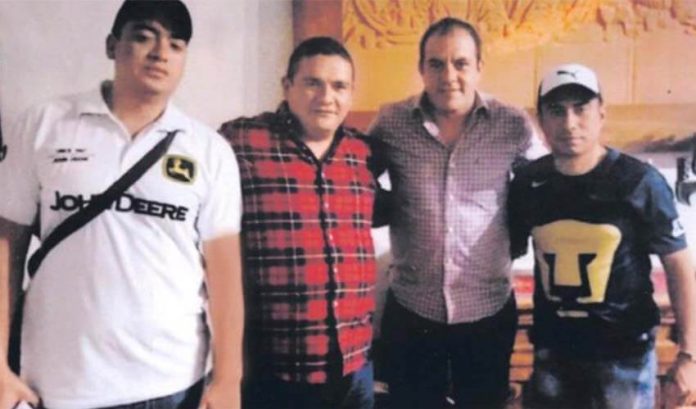
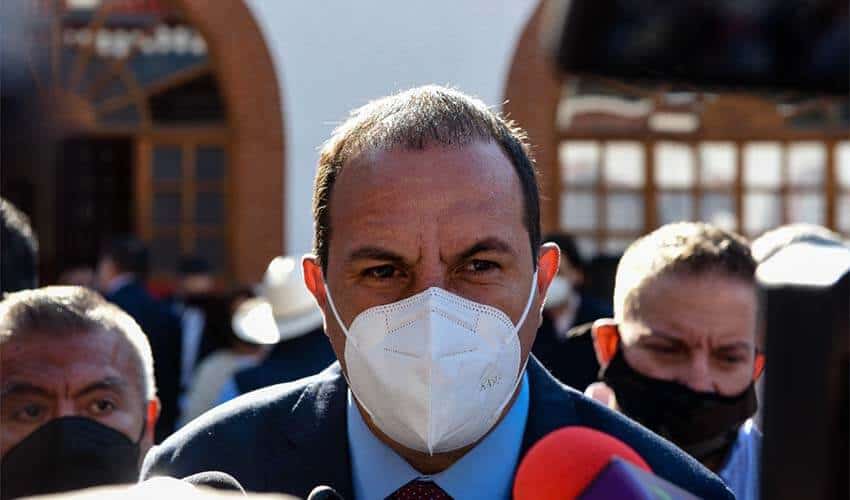
Morelos Governor Cuauhtémoc Blanco has gone into damage control mode after a photograph in which he appears with three alleged narcos surfaced Tuesday.

Published first by the newspaper El Sol de México, the three-year-old photo shows Blanco, a former soccer star, with Irving Solano – a suspected Guerreros Unidos leader and a Jalisco New Generation Cartel (CJNG) plaza chief in Morelos; Raymundo Castro – alleged former leader of the CJNG in Morelos; and Homero Figueroa – the presumed leader of a criminal group called Comando Tlahuica.

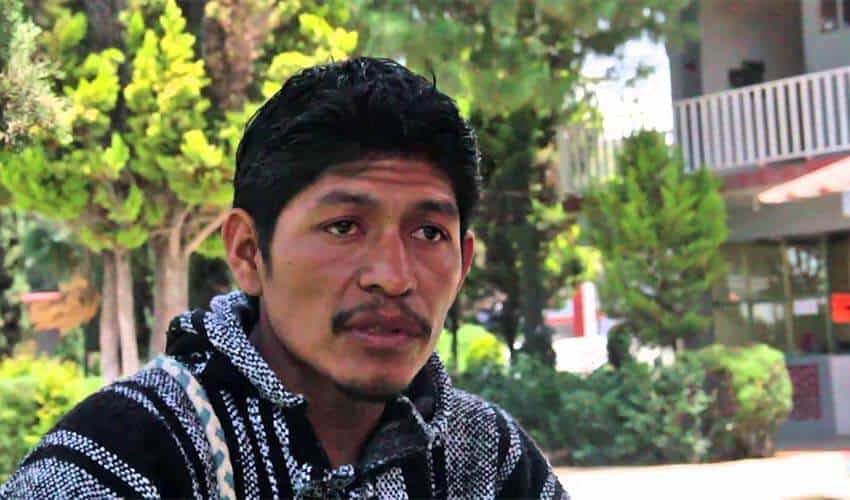
Solano is currently in jail after being arrested in February 2021, while Castro was killed during a prison brawl in late 2019. Figueroa, who has been linked to the 2019 murder of indigenous activist Samir Flores, remains at large.

The Guerreros Unidos is a Guerrero-based criminal organization suspected of killing 43 students in 2014. The CJNG is generally considered Mexico’s most powerful criminal organization.

Blanco, governor since October 2018 and mayor of Cuernavaca before that, told reporters Tuesday that he didn’t know the identity of the men with whom he posed for the photo. He said that he appears in thousands of photos and couldn’t be expected to ask every person who they are and what they did for a living.

Governor Cuauhtemoc Blanco
Blanco said the photo’s publication is part of a dirty war against him by “narco politicians.”

The photo – reportedly found on the cell phone of a presumed Guerreros Unidos leader who was arrested last November – was allegedly taken at Blanco’s Cuernavaca home in early 2019, but the governor denied that was the case.

He charged that the publication of the photo was part of a dirty war against him waged by “narco politicians” who are under investigation by federal authorities.

“I’m not a criminal nor do I make pacts with criminals,” said Blanco, who obtained the governorship after winning the 2018 election as a candidate for a small religious party that is allied with Mexico’s ruling Morena party.

“I’m going to keep working to bring peace to the state. … I have nothing to hide,” he said, adding that he was willing to be subjected to a thorough investigation.

“… I’ve already passed on information to the federal Attorney General’s Office about all the people involved in drug trafficking in Morelos, … the narco politicians. [The ball] is no longer in my hands or my court…” said Blanco, who has also faced criticism for taking a two-week holiday to Brazil last month.

J. Jesús Lemus, an investigative journalist, author and expert on organized crime, claimed that the Comando Tlahuica provided significant funding for candidates that stood at elections in Morelos in 2018 and that Blanco, as governor, has given “free rein” to the criminal group.

activist Samir Flores
An anonymous source who spoke with the newspaper El Sol de México said that Blanco also conspired in the 2019 killing of Morelos activist Samir Flores.

He told El Sol de México that the gang, also known as Los Tlahuicas, is the dominant criminal organization in Morelos.

“It’s a splinter group of the Beltrán Leyva cartel, and from the beginning, it has been led by Homero Figueroa,” Lemus said.

Another journalist who spoke to El Sol de México on the condition of anonymity said that Blanco had a cozy relationship with Figueroa when he was mayor of Cuernavaca between 2016 and 2018. However, there was a subsequent “distancing” between the two men, the person said.

The journalist, who writes about security issues and drug trafficking in Morelos, said the ex-mayor gave the criminal leader control of the municipal water utility in Cuernavaca, which has been plagued by water supply problems.

The reporter also said that Figueroa had threatened to leak compromising photographs and audio if Blanco didn’t comply with agreements they reached. “He invested a lot [of money] in … [Blanco’s 2018] campaign,” the journalist added.

The same source told El Sol de México that the Morelos prison chief, Jorge Israel Ponce de León, is believed to be an intermediary between the governor and drug traffickers that operate in the small central Mexico state. The journalist claimed that the prison chief transfers hundreds of thousands of pesos to Blanco every month.

The source said that 25 prisoners, including Raymundo Castro, have died in prison brawls since Blanco took office, yet Ponce de León has not lost his job. “In other words, he’s immovable,” the journalist said.

Another anonymous source linked the governor to the 2019 murder of activist Samir Flores, who opposed the opening of a thermal power plant in Morelos. The source, a leader of an environmental activist group, told El Sol de México that it is known that Blanco met with a federal government delegate in January 2019. The source claimed that Blanco and the delegate reached an agreement to ask Figueroa to kill Flores.

“There was an agreement at that meeting that the leader of … Los Tlahuicas would pay a favor to the new governor. Cuauhtémoc wanted to get along with the president [who supported the power plant] on the thermoelectric issue, and the decision was to … [kill] Samir,” the source said.

Lemus, the investigative journalist, agreed that the Comando Tlahuica killed Flores but claimed that the order to kill Flores – murdered just before a referendum on the power plant –  came from within the Federal Electricity Commission.

With reports from El País, El Sol de México and El Universal 

COVID testing centers overwhelmed in 13 states as active case numbers soar

0
COVID testing center
COVID testing centers have seen long lineups.

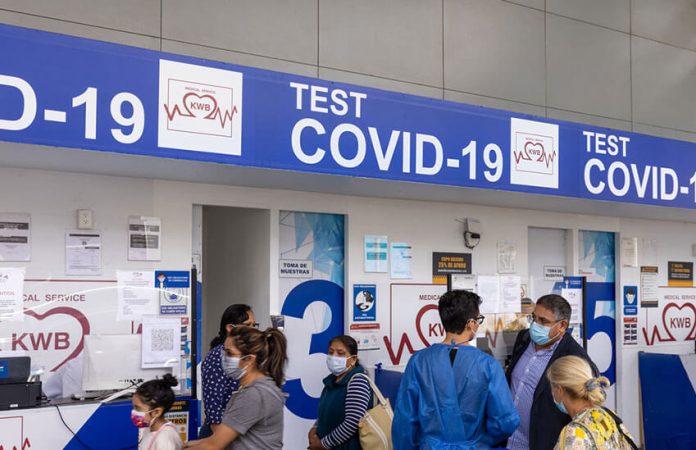
Demand for COVID-19 tests has increased in numerous states as the number of active cases across the country continues to climb rapidly.

The newspaper Reforma reported Tuesday that people have flocked to testing centers in Sonora, Nuevo León, Guanajuato, Baja California, Chihuahua, Zacatecas, Tabasco, Coahuila, Yucatán, Aguascalientes, Quintana Roo, Querétaro, Jalisco, Veracruz and Mexico City.

The increased demand for testing came as the Health Ministry reported the highest number of daily cases since September 8 on Tuesday. An additional 15,184 infections were reported, lifting Mexico’s accumulated case tally above 4 million.

There are an estimated 61,477 active cases across Mexico, an increase of 170% compared to a week ago. The official COVID-19 death toll increased by 130 on Tuesday to 299,711.

Several experts warned that case numbers would spike this month due to increased mobility and large gatherings over the Christmas-New Year period. Unsurprisingly, demand for testing services has also risen.

Long lines were reported at testing centers in many cities including Aguascalientes, Monterrey, Guadalajara, Veracruz and Mexico City. Demand for testing has increased not only at government run-vaccination centers but also at pharmacies and private health care facilities.

Patricia Mejía Morales, a Mexico City resident, queued for 1 1/2 hours at a rapid testing station in the capital on Tuesday but didn’t reach the front of the line. She and many other people decided to leave the lineups without finding out whether they had COVID or not, Reforma reported.

Alejandra González, who went to a testing station at the Forum Buenavista shopping center with her two daughters, was unable to access testing after waiting for over an hour. She and her daughters were ill, and one of the girls had an oxygen saturation level below 85%, Reforma said.

González said they had attempted to get tested at other locations in the capital but had no luck. She said she couldn’t afford to pay for tests at a private clinic.

In light of the increased demand for testing, the Mexico City Health Ministry said that additional rapid tests will be sent to testing stations.

Mexico City currently has more than 16,500 active cases, more than any other state. However, on a per capita basis, Baja California Sur remains the country’s coronavirus epicenter with almost 600 current infections per 100,000 people.

Mexico City ranks second with almost 200 active cases per 100,000 people followed by Quintana Roo, where there are about 170.

No other state has more than 100, but the situation could change quickly as the highly contagious omicron strain continues to spread.

With reports from Reforma 

Red Rocker Sammy Hagar to be named Los Cabos tourism ambassador

0
Ambassador Sammy Hagar
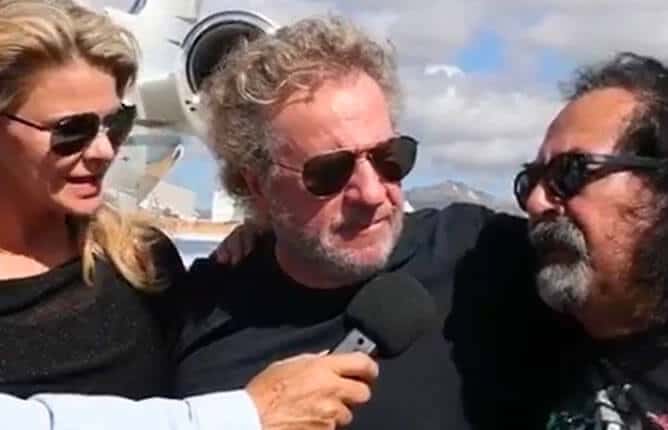
Ambassador Sammy Hagar of Montrose and Van Halen fame.

American musician and entrepreneur Sammy Hagar is set to be named a tourism ambassador for Los Cabos, Baja California Sur, on Wednesday. 

Known by fans as the Red Rocker, the 74-year-old singer came to prominence in the 1980s with the solo hits I Can’t Drive 55 and Give to Live before he joined the rock group Van Halen. 

Hagar owns the nightclub and restaurant Cabo Wabo Cantina in Cabo San Lucas and is part owner of the Cabo Wabo Tequila brand, having sold 80% of the company for US $80 million in 2007.   

He will be appointed in a small ceremony in Antonio Mijares square in San José del Cabo on Wednesday at around 12 p.m. Governor Víctor Manuel Castro Cosio and Mayor Óscar Leggs Castro will both be in attendance.  

The Red Rocker wrote on Instagram to reveal the news and to say how he planned to celebrate. “What a way to ring in the New Year! Got news that I’m being honored as ambassador of tourism for Los Cabos, something I’ve been waiting for since 1981! Such an honor for my home away from home … we’re gonna throw a concert at the Cabo Wabo, first come first serve, old style!”

With reports from El Sudcaliforniano