Home Blog Page 110

Sheinbaum, Castro recommit to job programs targeting migration from Honduras

0
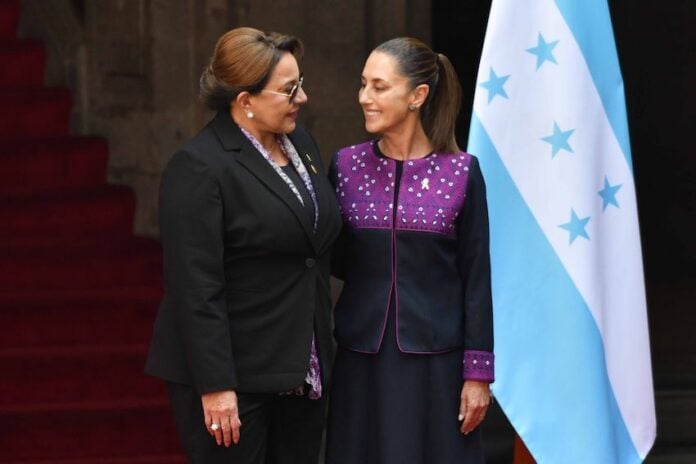
Sheinbaum and Castro
Sheinbaum and Castro "agreed that cooperation is key to addressing the structural causes of migration and promoting well-being in [people's] places of origin," according to the statement from the president's office. (Mario Jasso/Cuartoscuro)

The Mexican government’s flagship employment programs will continue to provide work and training opportunities to people in Honduras, one of the poorest countries in the Americas.

The commencement of a second stage of the extension of the Sowing Life reforestation program and the Youths Building the Future apprenticeship scheme to the Central American country was the most significant news out of a meeting in Mexico City on Tuesday between President Claudia Sheinbaum and President Xiomara Castro of Honduras.

During their meeting at the National Palace, the two presidents “celebrated the results” of the implementation of the two “social programs” in Honduras, according to a statement issued by Sheinbaum’s office.

“In the first stage, more than 20,000 people benefited,” the statement said.

“In light of this, [Sheinbaum and Castro] announced the launch of the second stage, which will provide more opportunities for job training for young people [in Honduras] and favor sustainable development for agricultural communities.”

The Sowing Life and Youths Building the Future programs were created by the government of former president Andrés Manuel López Obrador, and, starting in 2019, were rolled out in Honduras, Guatemala and El Salvador as part of efforts to provide employment opportunities to citizens of those countries and thus deter migration to the United States via Mexico.

On Tuesday, Sheinbaum and Castro “agreed that cooperation is key to addressing the structural causes of migration and promoting well-being in [people’s] places of origin,” according to the statement from the president’s office.

The United States government supported the Central American rollout of the two employment programs, which pay participants a monthly wage of approximately US $350-$450.

Both Sowing Life and Youths Building the Future were tainted by corruption scandals during López Obrador’s 2018-24 presidency, but Sheinbaum has remained committed to the programs.

In Mexico, the Youths Building the Future scheme constitutes part of the government’s efforts to address the root causes of crime, including poverty and lack of opportunity. In some cases, the program could help steer young people away from joining criminal groups, which are known for recruiting wayward youth.
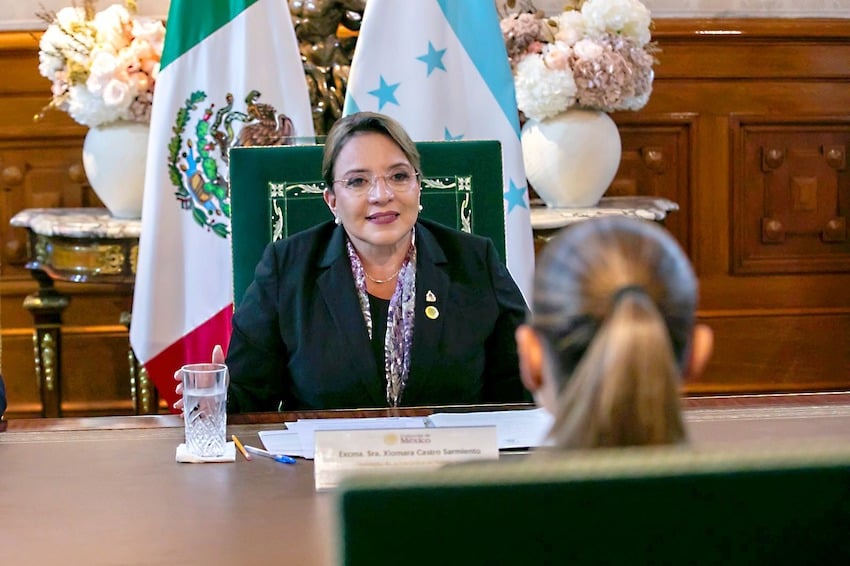
Xiomara Castro, the wife of former Honduran president Manuel Zelaya, is one of three women leaders currently in office in Latin American countries. (@sedhHonduras/X)

Castro’s administration is a ‘good government,’ says Sheinbaum

At her Wednesday morning press conference, Sheinbaum said that Castro had expressed gratitude for the support Mexico provided to Honduras during her government, which took office in early 2022.

“[Castro’s administration] is a good government, she reduced extreme poverty and reduced poverty with programs similar to ours,” she said, adding that the minimum wage increased in Honduras during Castro’s presidency and “a lot of social infrastructure projects” were built.

“From my point of view, it has been a good government, and we always respect all the people and governments of Latin America, particularly a progressive government such as that which governs Honduras today,” Sheinbaum said.

Bilateral meeting took place on International Day for the Elimination of Violence against Women

Sheinbaum’s meeting with Castro coincided with the International Day for the Elimination of Violence against Women, which the Mexican government marked with the announcement of an initiative called “16 Days of Activism Against Violence Toward Women.”

According to the statement issued by Sheinbaum’s office on Tuesday, “on this emblematic date, the two Latin American leaders reaffirmed their governments’ commitment to eliminating violence against women, as well as their determination to promote public policies that guarantee women’s full development and substantive equality.”

“Both heads of state confirmed the excellent state of the bilateral relationship and the historic importance of being the first women presidents in their respective nations,” the statement added.

Sheinbaum and Castro, the wife of former Honduran president Manuel Zelaya, are two of three women leaders currently in office in Latin American countries. The other is Rosario Murillo, who is a co-president of Nicaragua along with her husband Daniel Ortega.

Sheinbaum and Castro agree to follow up on outcomes of 2023 Palenque summit  

The statement issued by Sheinbaum’s office also said that the Mexican and Honduran presidents “agreed to follow up on the conclusions derived from two initiatives convened by Mexico,” namely a regional migration summit held in Palenque, Chiapas, in October 2023, and a meeting in Mexico City in January on “human mobility along the northern migration corridor.”

At the Palenque summit, the first and most elaborate point of 14 that were agreed to by the 10 countries present was to draw up “an action plan for development … to attend to the structural causes of irregular migration in the region.”

Key takeaways from the Latin American migration summit in Palenque

According to Mexico’s Foreign Affairs Ministry, in Mexico City in January, officials from countries including Mexico, Honduras, Brazil, Colombia, Cuba and Venezuela engaged in dialogue and coordinated actions aimed at:

  • Protecting the human rights of migrants and preventing their abuse and mistreatment.
  • Managing migration through a humanitarian approach that ensures regular, safe, and orderly movement while supporting migrant integration.
  • Strengthening international cooperation to address both the structural and immediate causes of migration and the complete migration cycle — origin, transit, destination, and return.

On Tuesday, Sheinbaum and Castro also spoke about energy cooperation.

The two leaders “highlighted the importance advances in energy cooperation thanks to agreements signed between the government of Honduras and Mexican institutions such as Pemex, the Mexican Petroleum Institute, the Federal Electricity Commission and the National Commission for the Efficient Use of Energy,” said Mexico’s statement.

“They expressed the importance of continuing this collaboration through the exchange of experiences, the development of technical capacities, and the transfer of technology to promote more efficient, modern, and sustainable energy systems,” the statement said.

On social media, Sheinbaum noted that Castro is close to completing her four-year term as president and thanked her for her friendship and the “good bilateral relationship” between Mexico and Honduras.

General elections will be held in Honduras this Sunday, with three main candidates vying to replace Castro as president.

By Mexico News Daily chief staff writer Peter Davies (peter.davies@mexiconewsdaily.com)
Made in Mexico: Lola and Manuel Álvarez Bravo

8
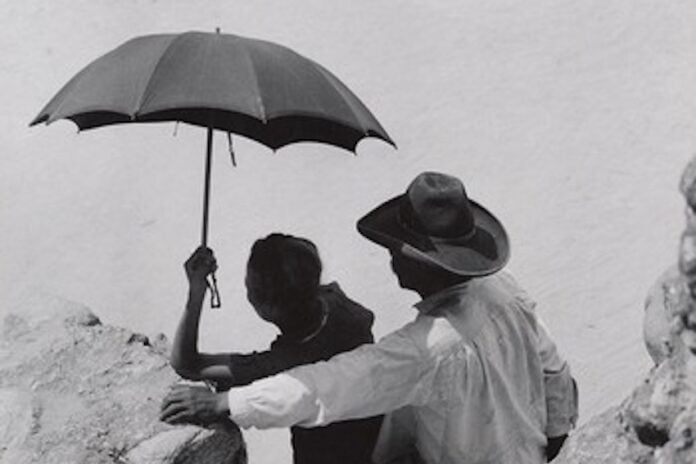
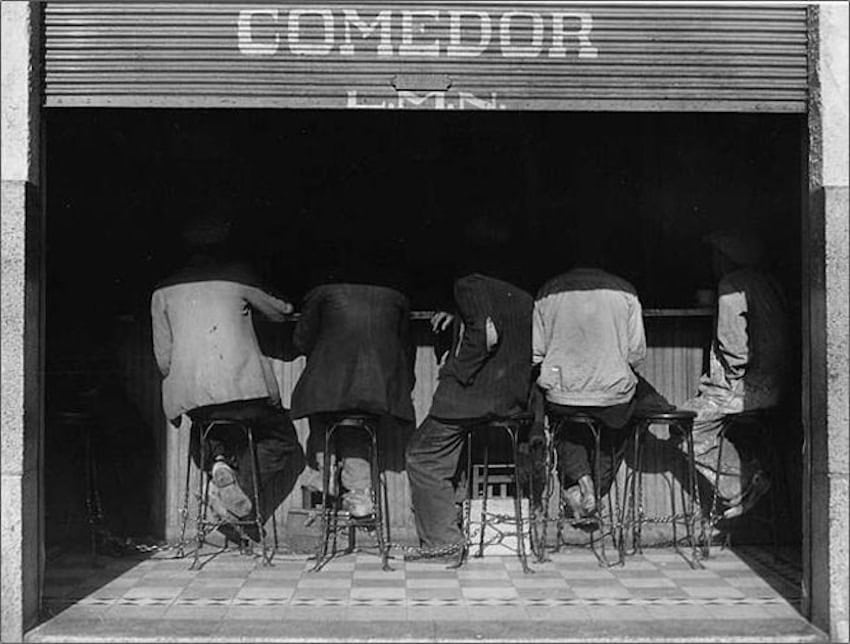
Lola and Manuel Álvarez Bravo saw early 20th century Mexico for what it really was, and shared that vision with the wider world. (Lola Álvarez Bravo)

At nineteen, I made the decision to become a professional photographer. This wasn’t a romantic whim born from Instagram aesthetics, but something that flourished while studying the work of Mexican and foreign photographers whose lenses transformed the faces, streets, and landscapes of Mexico into masterpieces.

Each photographer held up a different mirror to Mexico. Sometimes it was almost dreamlike and poetic, as in the case of Manuel Álvarez Bravo’s particular gift. Other times, it was violently confrontational, the way Enrique Metinides trained his camera on the city’s margins. Juan Rulfo offered us nostalgia. Tina Modotti and Gabriel Figueroa infused their frames with nationalist fervor and revolutionary spirit. And Lola Álvarez Bravo, the first woman photographer in México, blended art and beauty with documentation and anthropology.

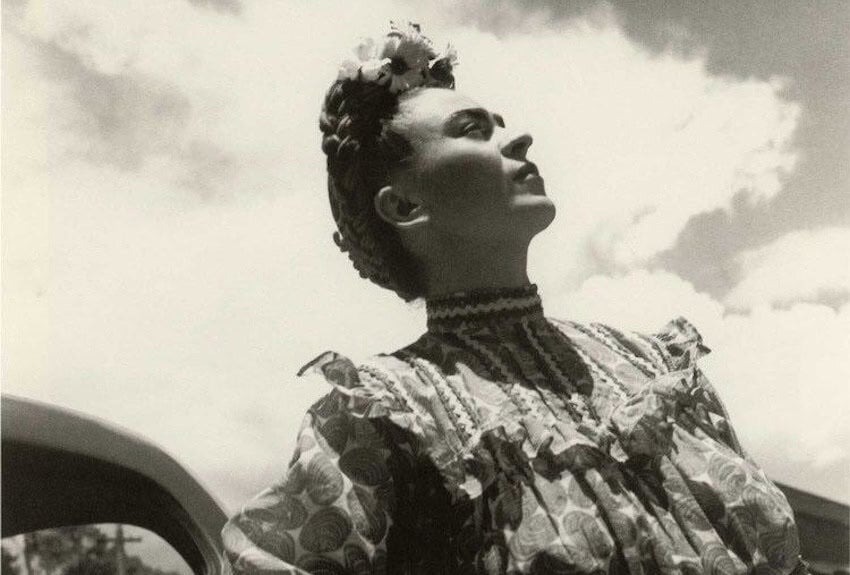
The photography of Lola Álvarez Bravo defined an early 20th century Mexico in a way that the country had never been seen before. (Lola Álvarez Bravo)

Today, I want to tell you about Lola and Manuel Álvarez Bravo because they were architects of how Mexico would come to understand itself, and their work was intimately bound up with the muralistas and the grand project of constructing a national identity after revolution.

Two lives

The photographs they took together and apart tell the story of a nation in reconstruction, oscillating between the authentically Mexican and the strikingly modern. Their own history reads like cinema — which is fitting, given how much of it remains mysterious. Different sources place their first meeting at different moments: as children, they say, because they were neighbors; or years later, when both were high school students. What matters is that it began.

Manuel Álvarez Bravo was born in Mexico City on February 4, 1902, into a family where art wasn’t a career choice, but as essential as oxygen. His grandfather was a painter; his father was a schoolteacher and amateur photographer. They taught him to see composition before he understood technique, to frame a shot before he held a camera. The camera, a daguerreotype, came as a gift from his best friend’s father, an object that must have felt like magic in the hands of a young man hungry to capture the world.

When his father died, when Manuel was barely twelve, everything shifted. Economic necessity pushed him toward work in a textile factory, then into a position at the National Treasury. But photography never released its hold on him. It lived beneath the surface of his ordinary life, waiting. Later, when he attended the San Carlos Academy, he thought briefly that he might become a painter. He was learning, always learning, waiting for clarity.

Dolores Martínez de Anda, known as Lola, was born in Lagos de Moreno, Jalisco, on April 3, 1903. Her early life held a different kind of luxury — her father was an importer, and the family lived comfortably. But comfort is fragile. Her mother abandoned them and the family moved to Mexico City while Lola was still a child. She lost her father soon after, and her stepbrother, who claimed he couldn’t afford to keep her, sent her to an orphanage.

Made in Mexico: Lola and Manuel Álvarez Bravo

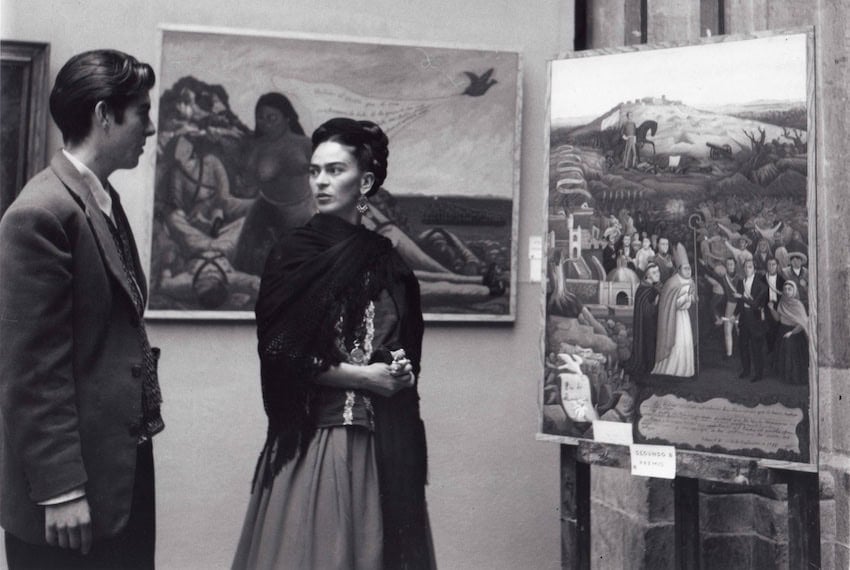
In 1922, at the National Preparatory School, Lola found what institutions and family had failed to provide: kinship. She met Frida Kahlo and they soon became inseparable. Around the same time, she reconnected with Manuel. What had been childhood familiarity became something else entirely. They married in 1925.

The marriage transformed Lola into a photographer, despite Manuel’s desire. In the darkroom, watching Manuel work, she discovered something she didn’t know she was looking for. While her husband composed his shots with the precision of a trained eye, she found herself drawn to the medium with the intensity of discovery. At the same time, the young couple found themselves at the center of Mexico City’s artistic ferment. They knew the painters, the intellectuals, the people who were consciously building a new Mexico from the wreckage of revolution.

The foreigners who became midwives for Mexican culture

Then came Edward Weston and Tina Modotti. The American and the Italian arrived in Mexico in 1923, intending to stay briefly, instead finding themselves enraptured by the country’s artistic potential. They remained. They worked. They connected with everyone who mattered and were actively imagining what Mexico could become.

Weston eventually returned to the United States in 1927, but Tina Modotti stayed until her political activism became impossible to ignore. In 1930, she was imprisoned on accusations of participating in an assassination attempt against President Pascual Ortiz Rubio and subsequently expelled from Mexico. But in those years, Modotti became something closer to a midwife of the Mexican photographic imagination. She collaborated with Anita Brenner on “Idols Behind Altars,” a landmark text on pre-Hispanic Mexican culture. More immediately, she worked with Mexican Folkways, the cultural journal created by Frances Toor — the Mexico News Daily of the 1920s and 1930s — where anthropologists, archaeologists, architects, artists, and historians gathered to interpret Mexican culture to an international audience.

For Manuel and Lola, Modotti was instrumental to their artistic trajectories. She gave Manuel her position at Mexican Folkways when she left Mexico in 1930. For Lola, she did something more intimate: needing money to survive abroad, Modotti sold her first camera to her younger colleague. A camera purchased under necessity became the tool that would launch a career.

A young Manuel Álvarez Bravo and Frida Kahlo. (Animalia)

Two different angles

Influenced by the aesthetic sophistication of both Modotti and Weston, Manuel Álvarez Bravo developed his own distinctive vision, one that drew back from explicit politics. This choice haunts his legacy. Critics have argued that by stepping away from the activist dimension of photography, by becoming instead almost a voyeur of Mexican daily life, he retreated from art’s political responsibility. But such criticism misses something essential about his gift.

Manuel gave us two Mexicos. The first is intimate and hidden in the theaters of ordinary life. The other is a poetic view of what Mexico could look like beyond partisan ideology. He didn’t want to lead viewers to conclusions about what Mexico should be; he wanted to portray Mexico’s cultural richness, whether capturing a fleeting moment or constructing a carefully composed visual poem. His photographs became a meditation on Mexican identity without descending into propaganda or stereotype.

Manuel proved that the medium was capable of something beyond documentation, that it could carry aesthetic intention and formal mastery, that a photograph could be a complete work of art in itself. He became one of the founding fathers of artistic photography in the Western hemisphere. His work was recognized by UNESCO in 2017, when his archive of negatives, documents, and photographs was added to the Memory of the World program — an honor befitting the depth of his contribution to global visual culture.

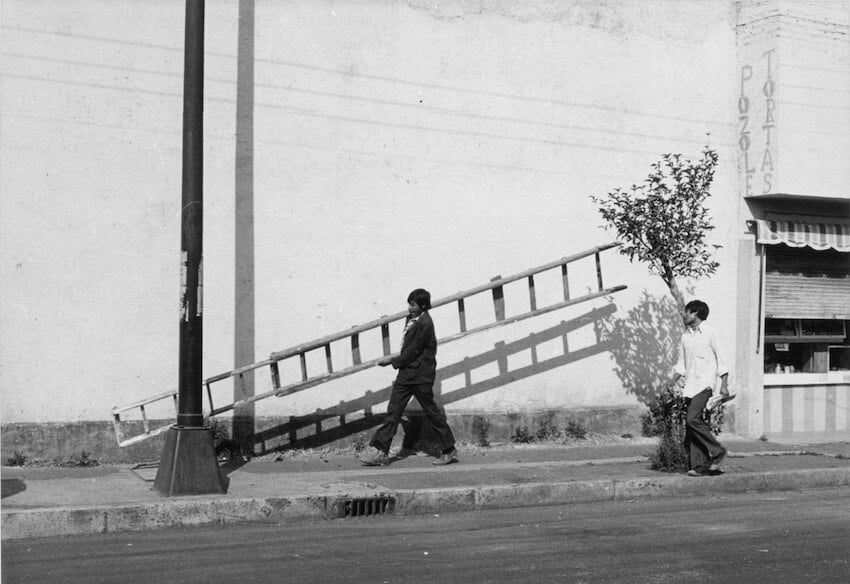
Lola’s path diverged significantly. As Mexico’s first major female photographer, she refused false choices. Where Manuel privileged the poetic and intimate, Lola synthesized the political urgency of Modotti with Manuel’s aesthetic refinement. The result was something distinct: photographs that read as almost ethnographic in their attention to detail and context, yet suffused with a sensitivity, a recognition of dignity in her subjects, that revealed dimensions her husband’s work did not fully explore. She photographed indigenous and peasant populations with what one historian called “empathetic archaeology” — a phrase that captures how she blended documentary rigor with profound compassion.

Lola photographed Mexico’s artistic scene who happened to be friends with, the muralistas, painters, musicians and writers, as casually as we take snaps of our friends. But her career truly accelerated only after their separation. There is a mystery here: she kept Manuel’s surname, though their intimacy seems to have ended. The records suggest they grew distant, almost strangers sharing a name. Perhaps this is why her work could finally flower.

Lola’s photography immortalized many of the great Mexicans of the era. (Alchetron)

The second act

After the separation in 1934 (though they formally divorce until 1949), Lola became a photographer in the most complete sense, but more than that, she became a cultural force. She directed the photography department of the National Institute of Fine Arts. She organized exhibitions of Mexican art for the national museum. She opened her own gallery — the Gallery of Contemporary Art, known today as “La GAM,” which continues to operate today. In 1953, her gallery presented Frida Kahlo’s only solo exhibition in Mexico during Kahlo’s lifetime, a singular honor that speaks to both women’s importance in Mexican artistic history. She not only participated as an artist but shaped the infrastructure of Mexican culture itself.

While Lola’s photography career ascended, Manuel found refuge in film work, where the act of composing and manipulating images carried no stigma, where the reshaping of reality was understood as art rather than deception. From 1943 to 1959, he worked on film productions, including as a cameraman on Sergey Eisenstein’s “¡Que viva Mexico!.”

Lola often remarked that she was the only woman in a world dominated entirely by men. Rather than intimidating her, this circumstance seemed to embolden her. “In my photographs, there are things about Mexico that no longer exist,” she would later say, speaking about her archive. “If I was fortunate enough to find and capture these images, they can serve later as testimony to how life has passed and transformed.” She received the José Clemente Orozco Prize in 1964 from the State of Jalisco, a recognition of her contributions to photography and her efforts to preserve Mexican culture.

An enduring impact

Her work functions as something like an empathetic archaeology of Mexico itself — of its cities and countryside, its people and their transformations over time. It is careful observation married to profound feeling. Manuel’s photographs, by contrast, capture what Mexicans imagined for themselves: their aspirations, their dreams, their attempts to reconcile tradition with modernity. His aesthetic, both classical and modern, was nourished by the cultural expressions of his native Mexico and influenced by cubism and the possibilities of abstract art.

We perhaps owe much of our visual understanding of post-revolutionary Mexico to the work of the Álvarez Bravos. (Inbal)

Together, they created a visual narrative of post-revolutionary Mexico and its ongoing evolution. For amateur photographers like myself, their work remains endlessly instructive — not as something to copy, but as proof that the medium can hold depths we haven’t yet discovered. For Mexican women, Lola did something perhaps more important: she proved that a woman could not only participate in art, which was difficult enough in her era, but that they could direct it, promote it and reshape it according to their own vision. She was a photographer, curator, gallery owner, cultural ambassador,and educator. She worked until 1980, when failing eyesight forced her to stop. She died on July 31, 1993, at the age of ninety.

Manuel lived longer — to one hundred years old, passing away on October 19, 2002. Today his archive, scattered between his foundation and the National Institute of Fine Arts, carries a designation befitting his influence: in 2017, his negatives, documents, and photographs were added to UNESCO’s Memory of the World program. He is recognized as one of the founding fathers of modern photography and considered the greatest representative of twentieth-century Latin American photography.

Why they matter today

Today, when everyone is a photographer with their cellphones, their artwork stands as a reference point for what it means to capture something fleeting — a society strongly rooted in its heritage while rapidly adapting to new circumstances. They taught Mexico to photograph itself with dignity and complexity. They taught the world what a post-revolutionary nation looked like when it paused to truly see itself.

More than that, they demonstrated that photography, in the hands of artists with something to say, could be as essential to nation-building as the muralists’ brushstrokes or the writers’ words. In an age of visual oversaturation, their measured, intentional, deeply human images remind us truly seeing one’s own country, one’s own moment — is not passive. It is an act of love, of witness, of responsibility. And they show us that such seeing, when it is genuine, becomes history.

Maria Meléndez is an influencer with half a degree in journalism

Los Tucanes de Tijuana take norteño music to Fortnite’s virtual stages

1
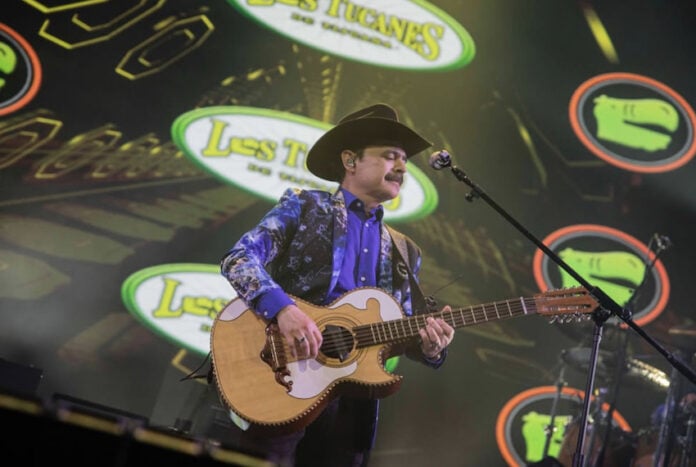
Mario Quintero Lara leads the band Los Tucanes de Tijuana.
Mario Quintero Lara leads the band Los Tucanes de Tijuana. (Instagram)

The Mexican band Los Tucanes de Tijuana has entered a universe that is not typically associated with the norteño genre: the gaming universe. 

Los Tucanes’ iconic hit “La Chona” was recently incorporated into Fortnite’s festival music mode, marking a milestone for Mexican regional music by bringing it to the video game’s global player base.


View this post on Instagram


A post shared by La Mejor FM (@lamejoroficial)

Fortnite Festival, released in 2023, is an interactive mode of Fortnite that turns the survival game into a virtual stage where users can play digital instruments and compete in rhythmic challenges. Fortnite’s catalog includes global hits from various artists and genres, including recent additions like Simple Plan, Elton John, Fall Out Boy and Olivia Rodrigo, among others.

“La Chona” has been added as a Jam Track that users are now able to purchase and play on different virtual stages. This integration does not include skins (outfits) or a special visual package for the band, focusing the experience exclusively on the music and the challenge of playing the piece.

Since “La Chona” was released in 1995, it has become a staple at Mexican parties. However, it was recently reborn as a viral phenomenon thanks to choreographies, dance challenges and TikTok videos that accumulate millions of reactions.

A notable example of this is a Mandarin cover by the Asian TikToker DingDeDingDong, who garnered hundreds of thousands of views and global comments within just 24 hours.

Los Tucanes’ collaboration with Epic Games marks a new chapter in the career of the band led by Mario Quintero Lara, as they reach younger, international audiences who are discovering the genre in unexpected ways. 

This isn’t the first time Los Tucanes de Tijuana have stepped out onto the world stage, however. In 2019, the band performed at the popular Coachella Music Festival, making history as the first norteño group to perform there.

La Chona (Live at Coachella - Weekend 1) - Los Tucanes de Tijuana

In May this year, Los Tigres del Norte, another Mexican regional music band, also made international headlines after a street in New York City was named after them, highlighting the group’s influence on Latino culture in the United States.

With reports from El País, Infobae and LA Times

UNESCO: Mexico has lost 80% of its glacial cover

1
Ayoloco
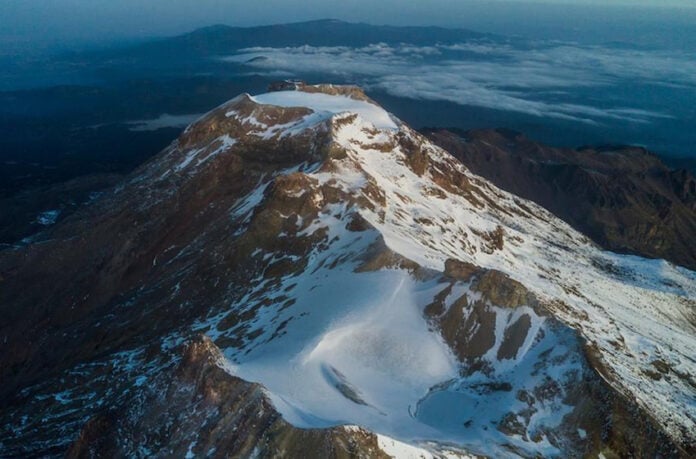
Mexico's Ayoloco Glacier, which disappeared in 2021. (dgcs.unam)

Mexico has lost about 80% of its glacial cover since the 1960s, according to a study conducted by UNESCO.  

The news was revealed during the presentation of the 2025 edition of the United Nations World Water Development Report. During the event, Laura Verónica Imburguia, member of the UNESCO World Water Assessment Programme (WWAP), said that Mexico’s situation is “alarming” due to its direct impact on water supply and ecosystem stability. 

“Mountains and glaciers are the world’s water towers, sustaining the lives of a billion people downstream,” she said, adding that the situation is concerning in all of Latin America, a region that generates more water per unit area than any other in the world. 

Imburguia said that many glaciers have disappeared or are in the process of disappearing, which is already affecting high-value agricultural production like coffee and cocoa, and hydroelectric power generation.

Which mountains have glaciers in Mexico?

These are the mountains in Mexico that have – or used to have – glaciers. 

Pico de Orizaba (Citlaltépetl), at 5,636 meters between the states of Veracruz and Puebla, is the mountain with the greatest number of glaciers in Mexico. However, it has lost nearly 80% of its glaciers: it used to have 204 glaciers, and now only 37 remain. 

Iztaccíhuatl, located at an elevation of 5,230 meters between the states of Puebla and Mexico, once had 12 permanent ice masses that covered approximately 120 hectares. Currently, it has only about 10% of its original glaciers and is at risk of losing the remaining ice within a few years.

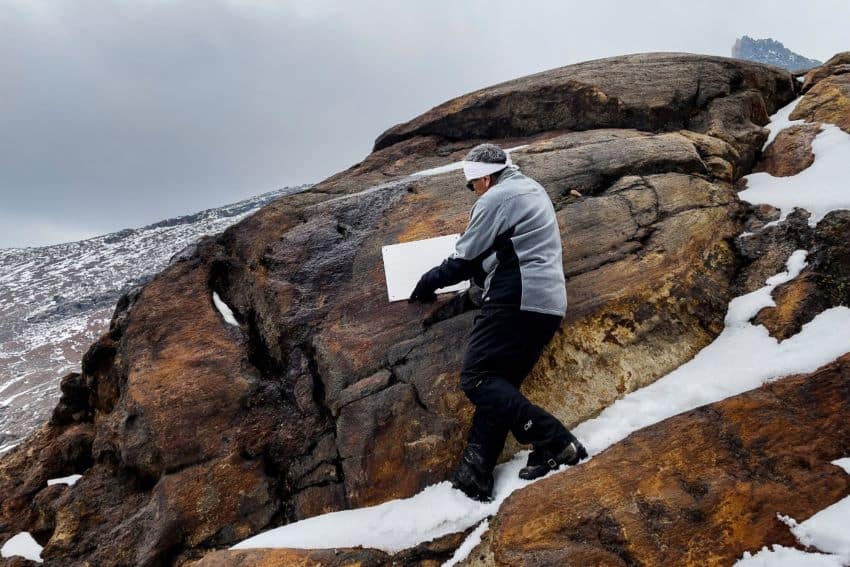
A warmly dressed man places a plaque on a rock where a mountain glacier used to be
In 2021, researchers placed a plaque commemorating the now-extinct Ayoloco Glacier on the face of the Iztaccíhuatl volcano. (UNAM/Cuartoscuro)

Popocatépetl, located at just over 5,400 meters between the states of Morelos, Puebla and México state, has lost all its glaciers due to global warming and volcanic activity.

Currently, the lower limit of glacial ice in Mexico is around 5,100 meters. For reference, 65 years ago, it was between 4,600 and 4,700 meters. This means that, previously, a hiker could find glaciers at lower altitudes, whereas now they must climb much higher to reach them.

The National Autonomous University of Mexico (UNAM) has said that the remaining glaciers could completely disappear within the next five years.  

How does the disappearance of glaciers affect Mexico? 

While Mexico’s glaciers are small compared to other regions, their disappearance could have serious consequences for the local environment.

Communities near these mountains depend on seasonal snowmelt to feed rivers, streams and springs. As these sources dwindle, pressure increases on other water reserves, such as reservoirs and aquifers, many of which are already overexploited. 

Furthermore, glaciers play a vital ecological role: they regulate the temperature and humidity of high-mountain ecosystems and stabilize watersheds. Their disappearance disrupts these dynamics and endangers endemic species that depend on these conditions.

Environmental experts at UNAM have said that halting global warming is the only effective strategy to prevent the complete disappearance of Mexican glaciers. This can be achieved by reducing greenhouse gas emissions, legally protecting natural areas in high mountains and boosting environmental education. 

With reports from Excelsior

MND Local: Puerto Vallarta news

0
Puerto Vallarta
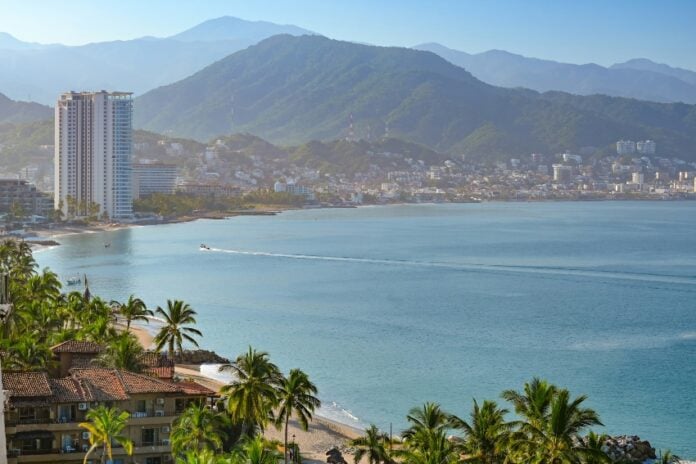
There's plenty of news to report on in Puerto Vallarta this December. (Unsplash/Ondrej Bocek)

Puerto Vallarta is experiencing a week of developments spanning tourism, infrastructure and public safety. New international air service is expanding travel options to the Pacific Coast destination at the start of the winter season, while city officials have approved long-term investment in sustainable mobility through a permanent bike lane maintenance program. The community is also reacting to the killing of a well-known Malecón street performer, an incident that has drawn widespread attention from residents and visitors. Meanwhile, the hospitality sector continues to evolve, with a major beachfront resort announcing plans to convert to an all-inclusive model by 2026.

Porter Airlines launches Toronto–Puerto Vallarta service, expands winter schedule in Mexico

Porter Airlines has launched round-trip service between Toronto Pearson International Airport (YYZ) and Puerto Vallarta’s Licenciado Gustavo Díaz Ordaz International Airport (PVR). The route, which began operating on Nov. 14, adds another Canadian gateway to the Pacific coast destination as winter travel demand increases.

Porter Airlines jet on the tarmac
Porter Airlines, a Canadian carrier headquartered in Toronto, is offering flights to Puerto Vallarta for the first time. (Porter Airlines)

The airline plans to expand the frequency of the Toronto–Puerto Vallarta route to five weekly round-trip flights beginning Dec. 14, up from three per week. In December, Porter will also introduce nonstop seasonal service to Puerto Vallarta from Hamilton and Ottawa, broadening access to Mexican beach destinations for travelers across Ontario.

Flights on all routes will be operated with the Embraer E195-E2 aircraft, configured with 132 seats in a two-by-two layout, eliminating middle seats. Porter markets the aircraft as offering an elevated economy experience, including complimentary Wi-Fi, beer and wine served in glassware, and snack options.

The new routes form part of Porter’s expanded winter schedule, which includes destinations in Mexico, the Caribbean, Costa Rica, the United States, and connections through Air Transat.

Puerto Vallarta approves permanent maintenance program for city bike lanes

Puerto Vallarta’s City Council has approved a permanent rehabilitation and maintenance program for the municipality’s bike lanes, aiming to improve safety and support sustainable mobility for residents. The initiative, presented by Councilwoman Erika Yesenia García Rubio, is expected to benefit more than 6,000 cyclists who regularly use the network.

The plan authorizes the restoration of 14 sections of bike paths spanning a combined 734,721 meters and linking 30 neighborhoods across Puerto Vallarta. City officials say the effort is intended to maintain cycling infrastructure in safe and functional condition while encouraging alternative forms of transportation.

Under the program, multiple municipal departments will coordinate responsibilities, including the Directorate of Infrastructure and Public Works, Public Safety, Territorial Planning and Urban Development and the Municipal Treasury. The city noted that collaboration with civil associations, cycling collectives and neighborhood groups will be important in implementing the initiative.

Puerto Vallarta bike tours
Municipal officials are restoring over 700,000 meters of bike lanes in Puerto Vallarta to benefit local cyclists. (Vallarta Magico)

During the council session, García emphasized the importance of shared responsibility in caring for public spaces, and Mayor Luis Munguía reiterated the administration’s focus on environmental improvement and mobility planning.

Local cycling advocates welcomed the decision. Representatives from the Movci and Bocion collectives said the effort responds to long-standing requests for safer and continuous bike routes throughout the city.

Street performer known as Puerto Vallarta’s ‘Sand Man’ found shot dead

A well-known street performer on Puerto Vallarta’s Malecón was found shot dead early Friday morning (Nov. 14) in the López Mateos neighborhood, a few minutes inland from the waterfront.

According to Puerto Vallarta News, authorities received a report shortly before 1 a.m. and arrived to find a gray Volkswagen Vento parked with its doors open near the intersection of Río Danubio and Río Grijalva. A man in the driver’s seat had a gunshot wound to the head and was pronounced dead at the scene. Police secured the area while forensic teams collected evidence from the vehicle and the surrounding streets. 

Local media have since identified the victim as Ángel Silva Morán, widely recognized as “El Hombre de Arena,” a performer who for nearly two decades appeared on the Malecón covered in sand-colored makeup and clothing, posing motionless at a chess table as part of a living-statue act.

The killing has prompted an outpouring of messages on social media from residents and visitors who shared photos and memories of interactions with him on the boardwalk. No information has been released regarding possible suspects or motive.

Westin Puerto Vallarta to convert to all-inclusive resort by 2026

Westin Resort & Spa Puerto Vallarta
The Westin Resort & Spa Puerto Vallarta will have a new name and be fully all-inclusive by summer 2026. (Marriott International)

The Westin Resort & Spa Puerto Vallarta has announced a full conversion to an all-inclusive model, with completion expected by May 2026. The property will be rebranded as The Westin Playa Vallarta, an All-Inclusive Resort, becoming the first Westin-branded all-inclusive in Mexico.

The transformation is part of a multi-million-dollar renovation project that began last year and will reconfigure guest rooms, public areas and recreational spaces. The resort, located near Marina Vallarta and minutes from Puerto Vallarta International Airport, occupies 14 acres of beachfront land and currently remains open to guests during the renovation period.

According to the announcement, the updated resort will feature 281 remodeled suites, including plunge-pool and swim-up room categories, along with 10 dining and entertainment venues. Planned additions include renovated pools, pickleball and padel courts, a WestinWORKOUT fitness studio and redesigned spa facilities. The property will include adults-only and family-friendly zones.

Meagan Drillinger is a New York native who has spent the past 15 years traveling around and writing about Mexico. While she’s on the road for assignments most of the time, Puerto Vallarta is her home base. Follow her travels on Instagram at @drillinjourneys or through her blog at drillinjourneys.com.

MND Local: World-class performers shine a light on Baja California

0
Ensenada
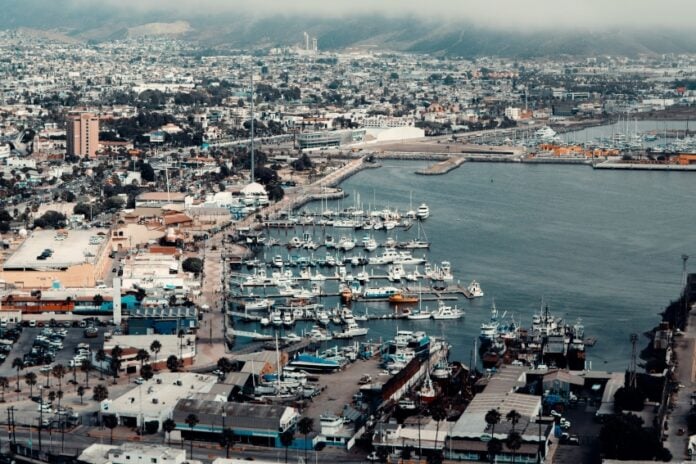
Ensenada has been at the center of two world-class achievements this year. (Unsplash/Yitzhak Rodriguez)

Baja California is famed more for its destinations than its residents, although some of the latter have achieved worldwide recognition. For the most part, these have been boxers, with several world title holders having hailed from the state’s most populous city, Tijuana, including Erik “El Terrible” Morales, Antonio “El Tornado de Tijuana” Margarito,  Jackie “Aztec Princess” Nava, and Jaime Munguía. 

In 2025, however, two new stars have arisen to represent Baja California, and neither is a boxer.

Isaac del Toro is amazing and he’s just getting started

Isaac del Toro
Isaac del Toro emerged as a star of European and world cycling in 2025. (Instagram/Isaac del Toro Romero)

At 64 kilograms, Isaac del Toro Romero is hardly a giant. But by the time his career is over, the cycling world may well see him as one. The Ensenada native won 16 times in his second European season cycling for UAE Team Emirates XRG on the UCI WorldTour, and as a result has risen to third in the world rankings

He’s already been nominated for the Vélo d’Or 2025 (Golden Bicycle Award), presented by France’s Vélo Magazine to the world’s best cyclist of the year, and topped the list of those receiving the annual National Sports Award — the highest athletic honor bestowed by Mexico’s government. The award will be presented by President Claudia Sheinbaum in a ceremony this month, and includes not only a gold medal but a cash prize of 796,000 pesos (US $43,000).

How he pedaled his way to the top

It’s a remarkable story, given what Del Toro had to overcome to reach the heights of his sport and receive the plaudits that go hand-in-hand with sporting trophies. Born in Ensenada in 2003 to a cycling family, the sport seemed to be in his blood. However, from the beginning, it was also a challenge, not only due to the training, but also because of the cost and the health issues he had to overcome. 

“We had to spend so much money on doctors, medication, supplements, lab work (for osteoporosis, tumors and other health difficulties) … Isaac always dreamed of representing his flag, and I’m proud too — but it hurts to hear these things,” his father, José del Toro, said of claims Isaac received support from Mexican Cycling early in his career. “It’s outrageous, unbelievable … and it’s expensive, very expensive. You pay a high price to do this.

“They always talk about millions and millions being invested, but I don’t know a single cyclist who gets their travel paid, or their entry fees, or even their meals. I struggled so much with my kids and never got a single bit of help,” he told CyclingUpToDate.

Climbing the hill

Despite these early difficulties, Del Toro became a complete cyclist, adept in mountain, cross and road forms of competition, while honing his climbing skills on the 4,631-meter Nevado de Toluca, Mexico’s fourth-highest peak. By the time he was a teenager, he had joined A.R. Monex, a professional cycling team based in Italy, but made up exclusively of Mexican riders. 

Isaac del Toro
Del Toro raises his hands in triumph after winning in Ensenada in October 2025. (Instagram/Isaac del Toro Romero)

His ascent through the ranks was slowed by the coronavirus pandemic in 2020, but his big breakthrough finally came in 2023 when he won the Tour de l’Avenir in France, becoming the first cyclist from Latin America ever to do so. The event is a benchmark of under-23 cycling and harbinger of future Grand Tour success that has been won over the years by a who’s who of cycling greats, from Greg LeMond to his current teammate and Vélo d’Or nominee, Tadej Pogačar.

Del Toro’s performance in the Tour de l’Avenir marked him as a rising star in the sport and earned him a contract with one of the world’s best teams, UAE Team Emirates XRG. It also set the stage for his incredible 2025 season, with his 16 victories across Europe. 

A series of spectacular finishes

In October, Del Toro returned home to compete in the National Road Cycling Championship of Mexico, held in 2025 in Valle de Guadalupe, near his hometown of Ensenada. The European season was over, and following his string of winning results, he was able for the first time in years to compete in front of a home crowd. Certainly, they had plenty to cheer for, as he surged into the lead by the end of the first lap and never relented, earning both time trial and road race titles for a rare double. 

“Sometimes I don’t feel like this person, I feel like they’re exaggerating, but it feels very nice, honestly,” he admitted to La Jornada after triumphing in the 160-kilometer road race course, and edging out yet another Baja California rider,  Éder Frayre, who finished second.

It’s been quite a year for Del Toro, especially considering he still hasn’t turned 22 years old yet. 

The world’s best wine guide was written about Baja California

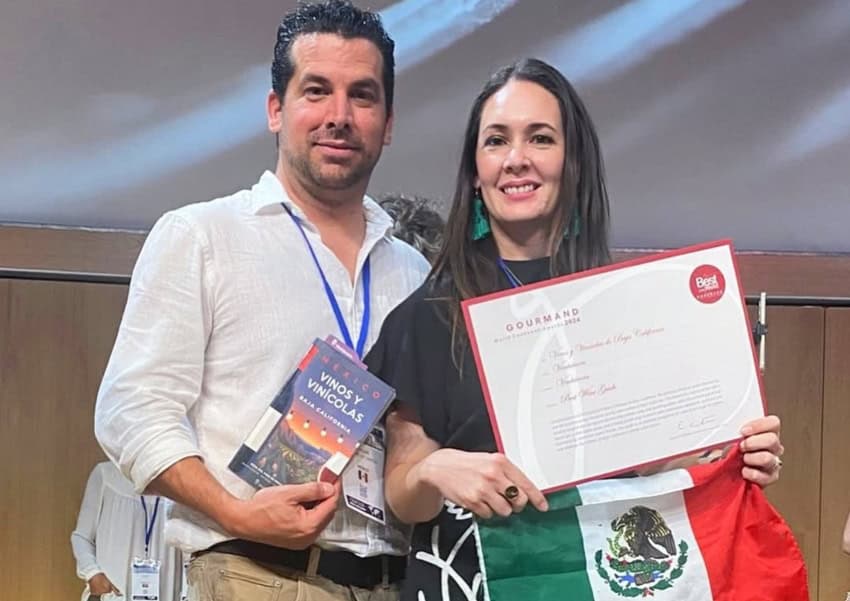
Isaac del Toro isn’t the only one spreading the fame of Baja around the globe this year. Two wine writers accomplished the same feat when their guide to Baja California wines was named the world’s best wine guide, beating out 60 entrants from other countries at the 2025 Gourmand Awards in Portugal in July. 

Gourmand Awards wine guide
Fabián Jáuregui and Lorena Hernández wrote the world’s best wine guide in 2025, per the Gourmand Awards. (Instagram/Vinitácora)

Husband-and-wife team Lorena Hernández and Fabián Jáuregui wrote “Vinitácora: Wines and Wineries of Baja California,” the winning guide that featured information on more than 80 wineries, 900 labels, and the seven wine valleys that are responsible for nearly 70% of all wines produced in Mexico. Both are from Jalisco originally, with Hernández noted as a sommelier and an illustrator under the name Vionda, while Jáuregui has a background in business.

“This recognition is not only ours; it represents the work of many people who have believed in Mexican wine. We are proud to put Mexico on a high note and to celebrate this achievement just as Vinitácora turns 10 years old,” Jáuregui said.

After founding Vinitácora as a publishing company a decade ago, they’ve achieved international success with their current Baja California guide, available as a book or digital edition and bilingual in English and Spanish. However, it’s not their only one: another can be purchased for the wines of Querétaro

Chris Sands is the former Cabo San Lucas local expert for the USA Today travel website 10 Best and writer of Fodor’s Los Cabos travel guidebook. He’s also a contributor to numerous websites and publications, including Tasting Table, Marriott Bonvoy Traveler, Forbes Travel Guide, Porthole Cruise, Cabo Living and Mexico News Daily.

‘We want there to be zero robberies on Mexico’s highways’: Tuesday’s mañanera recapped

5
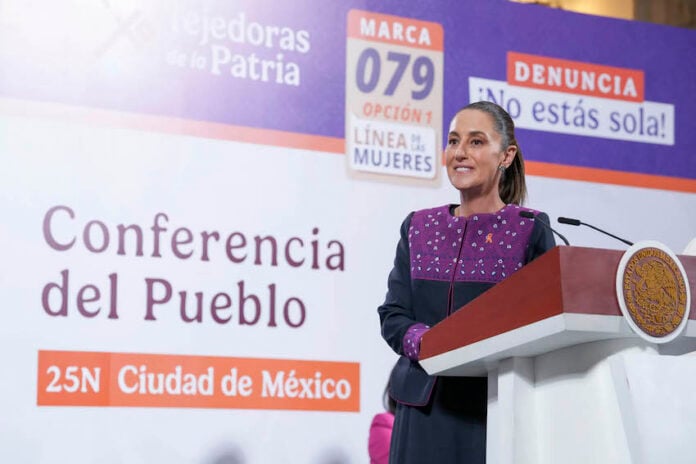
On International Day for the Elimination of Violence against Women, much of President Claudia Sheinbaum's morning press conference focused on the actions her government is taking to protect women.
On International Day for the Elimination of Violence against Women, much of President Claudia Sheinbaum's morning press conference focused on the actions her government is taking to protect women. (Hazel Cárdenas/Presidencia)

On International Day for the Elimination of Violence against Women, much of President Claudia Sheinbaum’s morning press conference focused on women’s rights and the actions the federal government is taking to improve the lives of Mexican women.

“There are several policies of support for women,” noted Minister for Women Citlalli Hernández, who cited the pension program for women aged 63 and 64 and “support for working mothers,” among other initiatives.

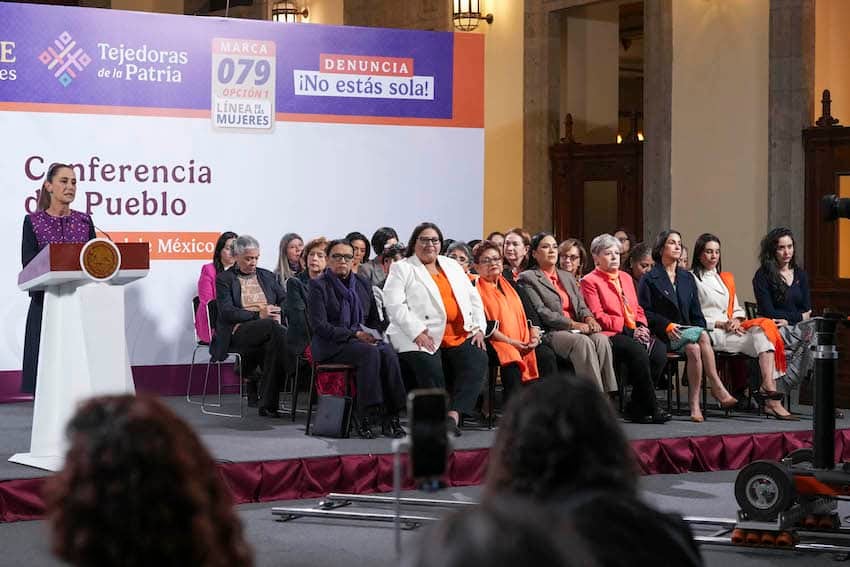
President Sheinbaum invited the top-ranking women of her administration to join her press conference on Nov. 25, International Day for the Elimination of Violence Against Women.
President Sheinbaum invited the top-ranking women of her administration to join her press conference on Nov. 25, International Day for the Elimination of Violence Against Women. (Hazel Cárdenas/Presidencia)

Deputy Minister for Women Ingrid Gómez spoke about the government initiative called “16 Days of Activism Against Violence Toward Women,” part of the United Nations’ “UNITE to End Violence Against Women Campaign.” (Read MND’s story on the initiative here.)

Later in the press conference, Sheinbaum spoke about the so-called megabloqueo (mega-bloackade) — the highway blockades set up across Mexico on Monday by truckers and farmers, who called on the federal government to combat insecurity and extortion and provide more support for producers of crops such as corn and beans.

Sheinbaum: ‘We don’t prosecute anyone for protesting’

Sheinbaum asserted that none of the organizers of the highway blockades that were set up across Mexico on Monday is subject to an active criminal investigation, even though Federal Interior Minister Rosa Icela Rodríguez said on Monday that “many” of them are.

“The minister was asked if it was a crime to shut down highways, and it is a crime, but that doesn’t mean that we’re going to prosecute people for protesting — no,” she said.

“… Perhaps it was misunderstood, but Rosa Icela never raised that issue,” Sheinbaum said.

However, Rodríguez did indeed say that “many of these [protest] leaders have, for many years, had open [criminal investigation] files … for the obstruction of main roads.”

“Some of them have even been detained, not in our administration, but they have a whole history of blocking highways, taking over toll booths, etcetera. … We weren’t born yesterday,” she said.

Farmers occupy Ciudad Juárez customs facility, halting border trade in protest of water law

On Tuesday morning, Sheinbaum reiterated that blocking a highway — as occurred in a majority of Mexican states on Monday — is a crime, before declaring:

“When there is a protest that has to do with political or social matters, with demands, we don’t prosecute anyone for protesting. That is important.”

Sheinbaum presents statistics showing a decline in reported robberies of freight trucks 

Sheinbaum asserted that truckers had no reason to protest against insecurity on the nation’s highways on Monday because the federal government is already engaging with them on the issue.

“They’re talking about security. The door is permanently open [to discuss] security issues on highways with the National Guard, with the Interior Ministry, with the Security Ministry,” she said.

“In other words, they shouldn’t have protested because there is a permanent working group on all issues, dialogue is open,” Sheinbaum said

“… So why shut down highways if there is a table of dialogue?”

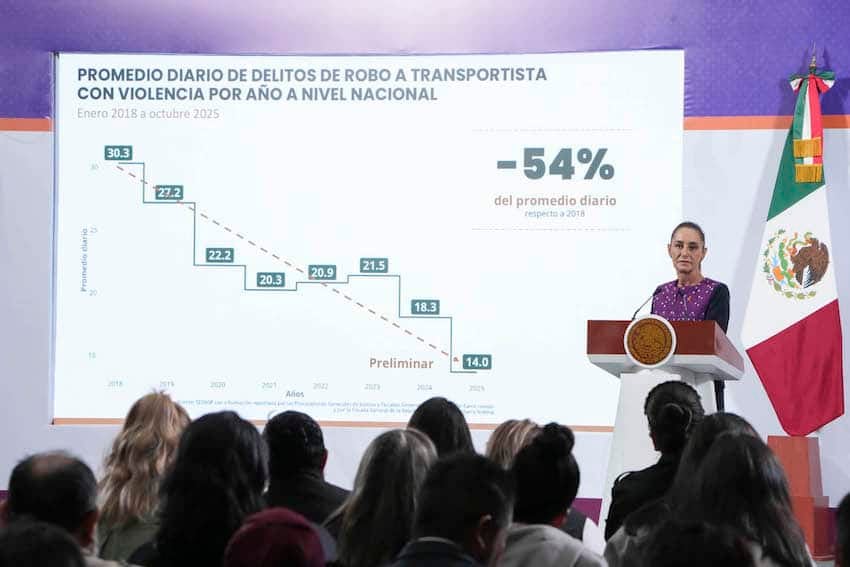
Sheinbaum also presented statistics that showed that the daily average of reported violent robberies of freight trucks is down 54% in 2025 compared to 2018, a year in which former president Enrique Peña Nieto was in office for the first 11 months.

An average of 14 violent robberies of trucks was reported per day in the first 10 months of 2025, compared to a daily average of 30.3 in 2018, according to the data the president presented.

The president’s figure of 14 truck robberies per day is quite different from the ANTAC truckers’ association’s estimate of 54-70. (Hazel Cárdenas/Presidencia)

For his part, the president of the ANTAC truckers’ association, David Estévez, said this week that insecurity on Mexico’s highways “has increased since the past six-year term of government and shows no sign of stopping.”

He said that between 54 and 70 trucks are targeted in robberies on a daily basis. The discrepancy between the figures he cited and those presented by Sheinbaum may lie in the difference between reported robberies and actual robberies. Many crimes go unreported in Mexico for reasons that include a lack of confidence that authorities will, in fact, investigate.

In an opinion article published by The Hill on Sunday, Mark Vickers, an executive vice president and head of international logistics at the U.S.-based transportation insurance company Reliance Partners, wrote that “organized crime groups in Mexico are now threatening U.S. companies and their employees.”

“I have been working in cross-border logistics for over a decade and a half and I think that the security environment for companies operating in Mexico has never been more complicated than it is right now,” Vickers wrote.

“I frequently talk to executives at companies in Mexico. One manager recently told me a story about a truck driver who was kidnapped and threatened by hijackers. The driver resigned from the company out of fear of being targeted and attacked again in the future. This isn’t an isolated incident.”

Sheinbaum acknowledged that her government needs to “continue working” to combat insecurity on highways.

“And that’s why the door is open with the National Guard, which looks after the highways,” she said.

“… We have to keep working because we want there to be zero robberies on all of Mexico’s highways,” Sheinbaum said.

By Mexico News Daily chief staff writer Peter Davies (peter.davies@mexiconewsdaily.com)
Construction sector’s ongoing decline alarms industry leaders who had called for more public investment

0
constrction site CDMX
The 17-month-long construction industry freefall prompted industry leaders to urge a huge injection of public investment, but it hasn't happened. (istockphoto.com)

The construction industry in Mexico has been in freefall for 17 months, alarming industry leaders who had called earlier for a doubling of public investment in infrastructure.

The September survey of construction companies, carried out by the national statistics agency INEGI and released Monday, found that the downward trend identified since April 2024 has intensified.

Industry performance as measured by the value of construction output reached 48.86 billion pesos (US $2.65 million) in September, a slump of -15.4% compared to September 2024. The month-to-month performance also slipped for a third consecutive month, coming in at -1.5% compared to August 2025.

The drags on the month-to-month indicator were the oil and petrochemical sector at         -13.8% and the transport and urbanization subsectors (-4.0%).

Annualized performance metrics slipped close to levels seen in 2021 before the construction boom prompted by the flagship works of the previous administration.

The INEGI survey found that civil engineering continued to show the greatest weakness, with a year-on-year decline of -29.1%. Building construction showed year-on-year growth of 1%, although the monthly figures registered three consecutive declines, with September’s decline hitting -1.5%.

The slowdown has also sent construction workers to the unemployment line.

On an annual basis, in September 2025, the total employed personnel showed a reduction of 9.9% and hours worked in construction companies fell 0.1% compared to the previous month and decreased 11.2% year-on-year.

As the federal government prepared its 2026 budget package earlier this summer, industry leaders pleaded for public investment in light of the challenges ahead of next year’s World Cup, which is expected to attract 5 million visitors to Mexico.

Finance Ministry unveils 10 trillion-peso budget with 18% increase to welfare spending

Pointing to the downward trend in the sector, CMIC president Luis Méndez said the lack of resources is a major contributor to the decline in an industry that contributes 7% to national GDP and generates roughly 4.7 million jobs.

The government’s decision earlier this year to approach debt reduction by shrinking public investment (rather than welfare programs) has drawn criticism from other quarters, as well

The National Bank of Public Works and Services (Banobras) projected that 2.67 trillion pesos (US $144.7 billion) is needed to close infrastructure gaps, trigger economic growth and promote regional connectivity. 

Méndez said the World Cup afforded the perfect opportunity to increase infrastructure spending, citing shortcomings in tourist infrastructure in the three cities where games will be played: Mexico City, Guadalajara and Monterrey.

The CMIC emphasized a willingness to collaborate with the federal and state governments to define investment mechanisms that combine public and private resources.

With reports from La Jornada, El Economista, Ámbito Financiero and El Universal

Scientists from Mexico and US create joint water management portal

1
Mexico and the United States share water from the two main rivers in the southwestern United States and northern Mexico, with the allocation of resources having been outlined in the 1944 Treaty on Utilization of Waters. (Remexcu)

Mexico’s national university and a U.S. NGO comprising water management experts have agreed to jointly develop a digital platform with information on the water resources that the two neighboring countries share.

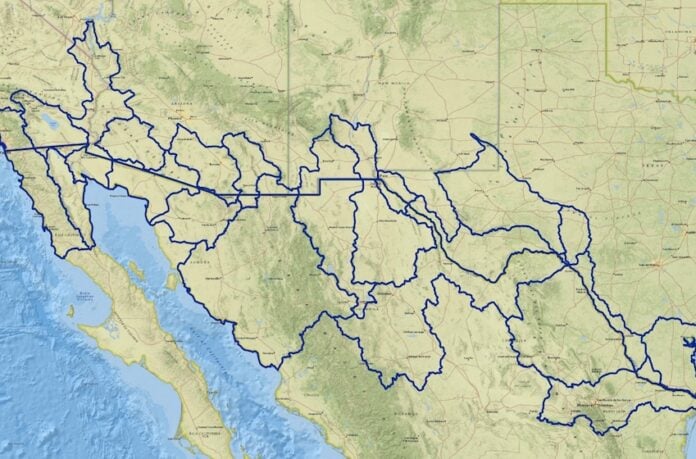
The National Autonomous University of Mexico (UNAM)’s Institute of Geography will work with the Permanent Forum on Binational Waters (PFBW) to create and run the platform that will include scientific data, maps and other key information in Spanish and English about the shared water sources in the border region, most prominently the Río Bravo (Rio Grande on the U.S. side), the Colorado River and the Tijuana River basin. 

The policy of the PFBW, one of the participants in the joint portal, is that water systems, major and minor, do not respect international boundaries, meaning not only nations but also cross-border communities need to act cooperatively. (PFBW)

The aim is to provide access to reliable information on transboundary water resources to governments and universities in both countries, as well as the general public, in order to support integrated water management for long-term planning and for drought and flood response.

The UNAM Institute of Geography’s International Laboratory for Space Technology and Research (iSTAR) will develop the binational geoportal, while the PFBW will support research and development. 

“This agreement strengthens scientific cooperation between Mexico and the United States and allows initiatives such as the data platform of the One Coast, One Community project to be hosted within this infrastructure,” said PFBW’s director, Rosario Sánchez. “We are laying the foundations for open, sustainable, useful and accessible science for all.”

The agreement spans five years, with the potential for renewal, and includes joint actions in research, technological development, specialist training and public dissemination of data on water and the environment. 

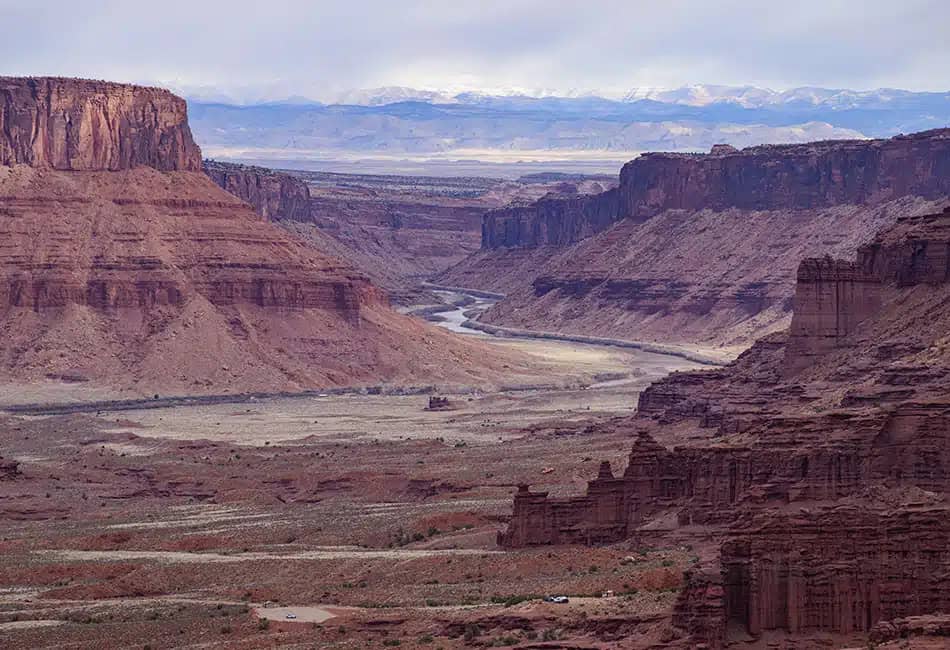
Mexico and the United States share water from the two main rivers in the southwestern United States and northern Mexico, with the allocation of resources having been outlined in the 1944 Treaty on Utilization of Waters.

After eight decades of cooperation, the accord turned rocky this year. In March, for the first time since the treaty was signed, the U.S. denied a request by Mexico for water delivery, blaming recent shortfalls in Mexico’s water deliveries.

The hope is that establishing a jointly run platform with up-to-date information about the shared water sources will support better resource management and cooperation moving forward. 

Mexico News Daily

Farmers occupy Ciudad Juárez customs facility, halting border trade in protest of water law

13
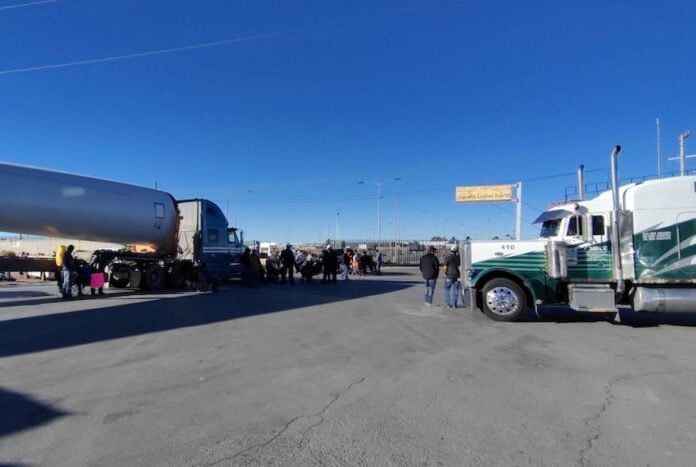
Some 1,500 U.S.-bound tractor-trailers were left stranded due to the blockades.
Some 1,500 U.S.-bound tractor-trailers were left stranded due to the blockades. (Manuel Sánchez/Cuartoscuro)

As part of a nationwide protest against low purchase prices for crops and proposed changes to the National Water Law, farmers in the northern border state of Chihuahua broke into the customs office at the Córdova-Las Americas International Bridge in Ciudad Juárez on Monday.

Disgruntled farmers also blocked access to border crossings between Ciudad Juárez and El Paso, Texas, preventing large quantities of goods from reaching the United States, the main destination for Mexican exports.

The actions were part of the megabloqueo, or mega-blockade, in which truckers and farmers shut down highways in more than half of Mexico’s 32 federal entities on Monday. Some other border crossings to the U.S. were also blocked.

While farmers want greater support from the federal government and are not happy with proposed changes to the National Water Law, truckers want greater action to combat insecurity and extortion on the nation’s highways, on which trucks are frequently targeted in robberies.

Farmers’ forced entry into the customs office at the Córdova-Las Americas International Bridge occurred at around 9 a.m. Monday. They were led by Eraclio Rodríguez, a leader of the National Front for the Rescue of the Countryside (FNRCM).

“You’re not going to arrest us, it’s a protest. We’re not criminals, you have no reason to have the damn doors closed,” Rodríguez told security personnel in an encounter captured on film.

“Here we are and we’re not going to leave until the employees vacate,” said another FNRCM leader.

The newspaper La Jornada reported that the farmers “forced the workers to vacate” the customs office.

“We’re not going to allow customs procedures to be carried out in order to slow down trade between Mexico and the United States a little,” Rodríguez told La Jornada.

The blockades of the Córdova-Las Americas International Bridge and the Ysleta–Zaragoza International Bridge between Ciudad Juárez and El Paso, as well as the nearby Santa Teresa Port of Entry between San Jerónimo, Chihuahua, and Santa Teresa, New Mexico, continued into the night on Monday. In the case of the Córdova-Las Americas International Bridge, the blockade and protest continued on Tuesday afternoon, according to the Reforma newspaper, which reported that the occupation of the customs office had surpassed 24 hours.

Some 1,500 U.S.-bound tractor-trailers were left stranded due to the blockades, La Jornada reported. Private light vehicles were allowed to pass through the roadblocks and pedestrians were able to cross into the U.S. as well, according to media reports.

On Tuesday morning, the Ministry of Infrastructure, Communications and Transport reported that trucks were still being prevented from passing blockades on four highways in Chihuahua, including that between the state capital, Chihuahua city, and Ciudad Juárez.

Farmers from municipalities in southern Chihuahua also blocked the railroad that runs between Mexico City and Ciudad Juárez.

‘Total rejection of the new water law’

In an interview with La Jornada, Rodríguez, the FNRCM leader, complained that corn buyers, including large corn flour and tortilla companies, aren’t complying with agreed per-kilogram prices. He also said that farmers maintain their demand for a federal government guaranteed purchase price of 7,200 pesos (US $390) per tonne of corn.

Farmers protesting the new water law claim that the wording of the legislation does not allow agricultural water concessions to be transferred or inherited, saying “we will no longer be able to do what our fathers and grandfathers did.” (Manuel Sánchez/Cuartoscuro)

Rodríguez added that farmers are opposed to the government’s proposed National Water Law modifications, which he described as having a “punitive spirit.”

Gerardo Fierro, one of the farmers protesting at the Córdova-Las Americas International Bridge on Monday, told the EFE news agency that approval of the water law reforms would leave farmers without the right to extract water from wells.

“The government says that the water belongs to the people, and that’s why we’re defending it,” he said.

“… We don’t want [the government] to monopolize water and to do whatever they want with [water] permits,” Fierro said.

Fidel Mendoza Hernández, a farmer and representative of a Plant Health Local Board in Chihuahua, told EFE that the new water law “would strangle” the Mexican countryside.

“They would make us criminals when they cancel our water well titles. We will no longer be able to do what our fathers and grandfathers did,” he said.

Ricardo Monreal, the Morena party’s leader in the lower house of Congress, said Monday that the proposed new water law, as it is currently worded, will be modified to allow agricultural water concessions to be transferred or inherited in their current form.

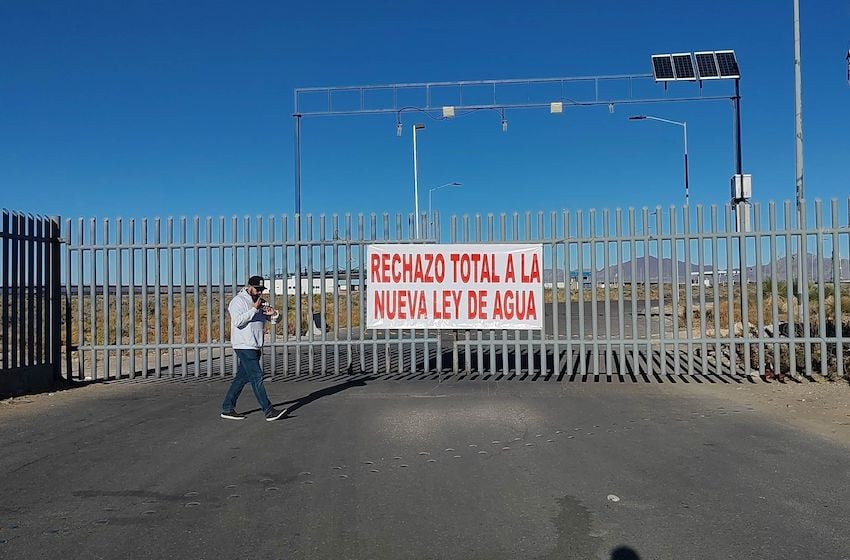
However, in Ciudad Juárez on Monday, farmers made their view clear by hanging a banner on the Ysleta–Zaragoza International Bridge that read: “Total rejection of the new water law.”

Farmers also complained about high prices for diesel in Mexico.

“In the United States, a farmer buys diesel for 14 or 13 pesos [per liter]. We’re buying [a liter] at 24 pesos. We can’t compete,” said Fierro.

Mendoza complained that farmers don’t receive any assistance to help cover the costs of buying diesel and other essential inputs. “It’s now very difficult to produce in Mexico,” he said.

Farmers in Ciudad Juárez called for “real” negotiations with the federal government, discussions in which their views and demands are genuinely listened to and taken into account.

Rodríguez said that the government needs to recognize the FNRCM as an “interlocutor” in the negotiations before the organization will engage in dialogue with the federal Interior Ministry.

Government reports highway blockades in 17 states

The federal Interior Ministry (Segob) said in a statement that truckers and farmers blocked highways in 17 of Mexico’s 32 states on Monday, causing a range of impacts on citizens as they sought to go about their everyday activities.

“In total, 29 blockades were reported, 17 of which occurred on federal highways and the rest on state highways. Of these, 17 were full closures and the rest partial,” Segob said, adding that protests were also held at three toll booths and one customs office — that in Ciudad Juárez.

Blockades were still in place in highways in various states on Tuesday, including Guanajuato, Michoacán, Jalisco, Puebla, Tlaxcala, Hidalgo, Sinaloa, Sonora, Durango, Tamaulipas and Chihuahua, according to the newspaper Reforma.

Segob asserted that there was no reason for the blockades to take place, saying that the federal government is “always” ready to listen to “social demands.”

“During the past weeks, more than 200 meetings have been held between federal authorities and farmers to address concerns and make progress on agreements,” the Interior Ministry said.

“In addition, for months there have been working tables with the National Guard and the Ministry of Infrastructure, Communications, and Transport [aimed at] guaranteeing the safety of highway operators, as well as the protection of their routes and goods. For that reason, only one transport group protested, while the rest of the organizations, which are in talks, distanced themselves from the mobilizations,” Segob said.

The ANTAC truckers’ group was one of the main organizers of the megabloqueo.

Interior minister claims that protesting agricultural leaders belong to opposition parties

At a press conference on Monday, federal Interior Minister Rosa Icela Rodríguez asserted that “apart from being leaders of the countryside,” protesters from groups such as the FNRCM and Movimiento Agrícola Campesino farmers’ group “belong to political parties.”

“They belong to the PRI, they belong to the PAN and they belong to the PRD,” she said, referring to Mexican opposition parties.

“It’s not that I say it, they have a political history,” Rodríguez said.

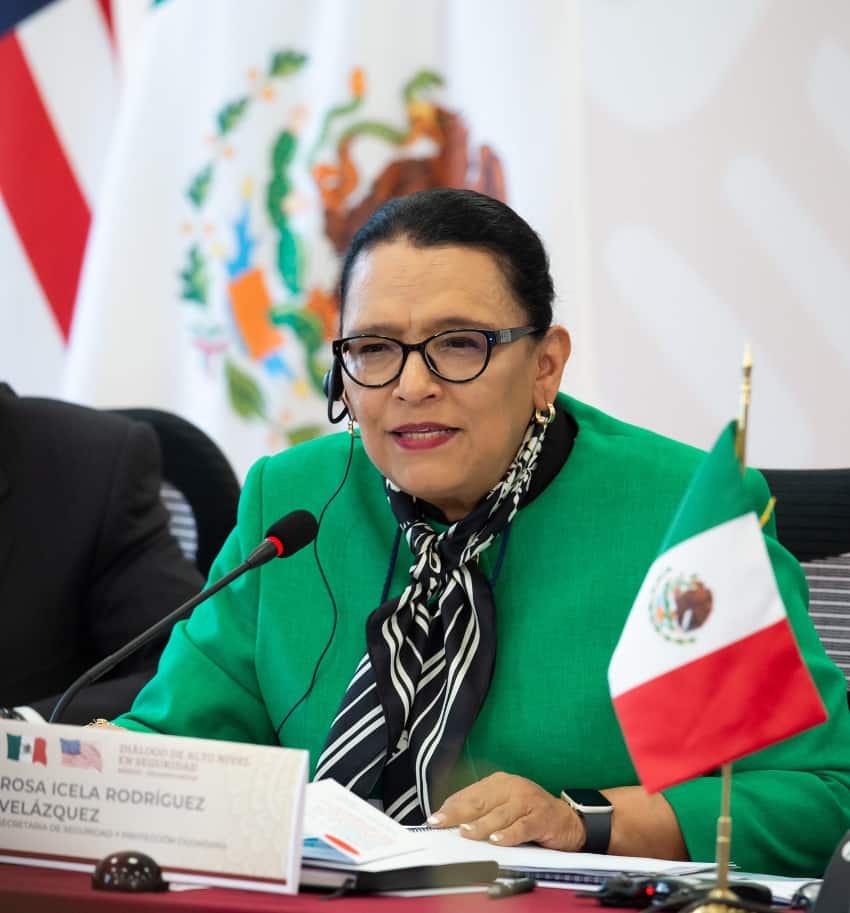
Rosa Icela Rodríguez
Federal Interior Minister Rosa Icela Rodríguez said that protesters from groups such as the FNRCM and Movimiento Agrícola Campesino “belong to the PRI, they belong to the PAN and they belong to the PRD.” (Rosa Icela Rodríguez/X)

The federal government also accused opposition parties of involvement in the so-called “Generation Z” protests that took place in cities across Mexico on Nov. 15.

The national president of the National Action Party (PAN) said it was “ridiculous” to link his party to the protests on Monday.

“If thousands of truckers [and farmers] are willing to close highways, it’s not for pleasure, it’s out of desperation,” Jorge Romero said.

Institutional Revolutionary Party politicians also rejected the claim that PRI members were involved in organizing the megabloqueo.

In a statement, the PRI’s leader in the lower house of Congress, Rubén Moreira, said that Mexico today is hearing “two chimes that cannot be ignored: that of the truckers who demand safe routes and that of farmers who defend their right to water and complain about the neglect of the government.”

“They’re not isolated protests. They’re alerts from the real country that sustains our daily life, because when the road becomes a territory of risk and when water is administered without justice, what’s at stake is not a sector, but rather the very productive life of the country,” Moreira said.

With reports from La Jornada, Reforma, EFE, Noroeste, El Heraldo de Chihuahua and DW