Though the CanSino and Sputnik V vaccines were given to many people in Mexico, they are not World Health Organization-approved.
COVID-19 deaths among Mexicans aged under 60 exceeded those among people above that age in the first half of 2021, according to data cited by the Pan American Health Organization and the United Nations Economic Commission for Latin America and the Caribbean.
“During the new wave of the disease in 2021, the increased transmissibility and consequent rise in severe cases resulted in deaths among individuals who were not originally considered at risk of dying, since they did not have co-morbidities or pre-existing chronic diseases, nor were they in the age group initially thought to be at risk,” the two organizations said in a joint report published Thursday.
A graph published in the report showed that deaths among people aged below 60 made up about 40% or less of total COVID deaths in Mexico during most of last year and the first three months of 2021. However, deaths among younger people as a percentage of total COVID fatalities began to rise in April before reaching about 50% in May and almost 60% in June.
Deaths among people aged below 60 as a percentage of total fatalities also rose in other Latin American countries this year but the only one with a higher percentage of deaths among that cohort than Mexico was Costa Rica.
“This pattern may have been generated not only by the emergence of new variants, but also by the fact that older people were vaccinated before younger ones. Consequently, experts have called for increased vaccination rates in developing countries and vaccination at younger ages,” the report said.
In other COVID-19 news:
• Two Mexican doctors have warned against the practice of mixing and matching COVID-19 vaccines.
Some Mexicans vaccinated with the Sputnik V and CanSino vaccines are considering getting, or have already gotten, another jab made by a different manufacturer so they don’t fall foul of United States rules that will require incoming travelers to be fully vaccinated with World Health Organization-approved shots.
Andreu Comas, a virologist, told the newspaper Reforma that it’s not yet known whether mixing and maxing vaccines is safe, although a United States National Institutes of Health study, which hasn’t yet been peer reviewed, found that combinations of Pfizer, Moderna and Johnson & Johnson shots are safe and effective.
A former president of the Mexican Society of Public Health, warned people vaccinated with either Sputnik or CanSino not to get another shot made by a different manufacturer.
“The risk could be a reaction or serious adverse event,” Miguel Betancourt said.
• More than 109.8 million vaccine doses have been administered in Mexico after more than 857,000 shots were given Wednesday. About three-quarters of Mexican adults have had at least one shot, and 75% of those who have had one dose have had a second shot.
• Mexico’s accumulated case tally rose to just under 3.74 million on Wednesday with 6,320 new infections reported while the official COVID-19 death toll increased by 420 to 283,193. There are just over 40,000 estimated active cases.
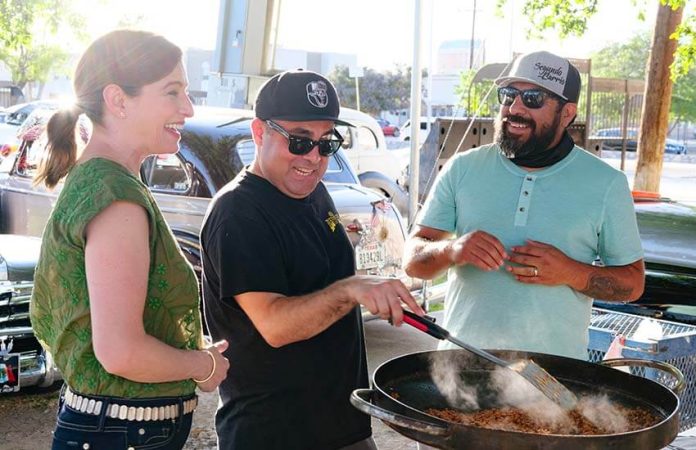
Jinich learns about border life and border cooking from a lowrider aficionados group in El Paso with both Mexican and US members. Photos courtesy of Pati Jinich
Acclaimed chef Pati Jinich remembers the distinctive menudo she tried on both sides of the Mexico-United States border, in Ciudad Juárez, Chihuahua, and El Paso, Texas. In both cities, it is eaten with hominy and served with bread — not with corn tortillas, as is the case elsewhere in Mexico.
“Mexican cuisine continues to evolve and thrive north of the border,” Jinich noted. And, she said, “there are nuances you find in the foods on one side and the other.”
That’s true of life along the border in general, Jinich has found, in contrast to the narrative of a region dominated by immigration and crime. She explores these complexities in a new two-part TV series, La Frontera with Pati Jinich, which debuts on PBS on October 15.
“I am so excited about the premiere of episode one,” she said. “It’s really been a long time in the making. I loved every person we met, every story they were helping to share. I can’t wait for people to see it.”
It’s the first-ever PBS special for Jinich, who is also the host of the network’s long-running, award-winning program, Pati’s Mexican Table, which explores her homeland through food. The show is on PBS in the United States and is streamed worldwide on Amazon Prime.
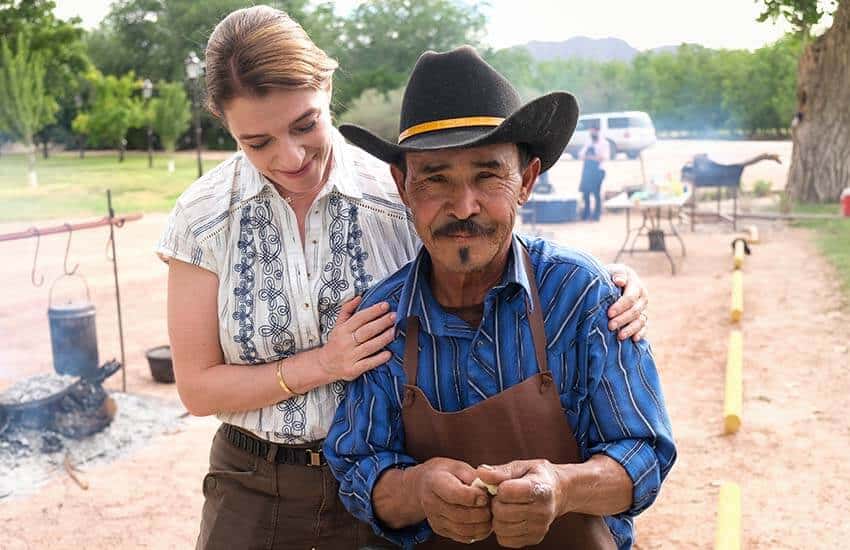
Jinich in Ciudad Juárez, Chihuahua.
Jinich was born and raised in Mexico City. Currently based in Washington, D.C., with her family, she said that as she explored more of Mexico through her current show, she got the idea for a special about the border.
“I became very, very attracted to the border, that world of two countries, two countries I love,” she said. “I did so much research. Finally, I was able to go to the border.”
There were challenges during filming due to the COVID-19 pandemic, which closed many points of entry. In general, she said, migration between Mexico and the United States is “always complicated and evolving.”
The series addresses many other topics as it journeys eastward along the Rio Grande.
“I hope people realize the border is much more than a fence,” Jinich said. “Through the region, between the U.S. and Mexico, it changes at every kilometer. In Marfa [in Texas], there is a thriving culture and art scene … At the end of Brownsville, they have SpaceX, where Elon Musk is trying to launch humans to Mars. There are so many more things happening at the border than people know or read about.”
Episode two will include a visit to Laredo, Texas, and Nuevo Laredo, Tamaulipas, with a stop at the main truck port along the entire border and a look at the Tecos — a minor-league baseball team that is the only binational baseball squad in existence, according to the show.
Jinich learns to make burritos from La Colonial restaurant in El Paso.
“The landscape changes incredibly as you move from El Paso to Laredo. Big Bend [National Park] has such a natural beauty,” Jinich said. “You don’t think about the stunning nature until you get to Laredo and Nuevo Laredo.”
She also mentioned the Rio Grande Valley as well as the eastward points of Brownsville, Texas; Matamoros, Tamaulipas; and McAllen, Texas. And, she said, “You have a jungle, the Sabal palm tree sanctuary.”
“People don’t know about these places at the border where they’re trying to protect natural resources, animals that are kind of unique, plants that are extraordinary,” she said. “All these affect the border today.”
In addition to getting ready for the new special, hosting her current program and being the resident chef at the Mexican Cultural Institute in Washington, D.C., Jinich is preparing for the launch of her third cookbook, Treasures of the Mexican Table, in November.
The book goes beyond well-known Mexican foods like carnitas and birria to explore 150 recipes that Jinich describes as classics of her country that Americans may not be familiar with.
“They are delicious and accessible, ready to enter readers’ kitchens and homes,” she said.
The Mariachi Femenil Flores Mexicanas, an all-female mariachi band in El Paso.
Accessibility was also something Jinich noticed while traveling along the border for La Frontera. “People at the border are incredibly accessible,” she said, adding that they are also “resilient.”
“They can navigate two countries, two cultures, two languages in an environment that is not one country but two at the same time. They are never given any credit.”
In episode one, Jinich’s interviewees include Oscar Herrera, who runs restaurants on both sides of the border; journalist Alfredo Corchado, whose regular beat includes crime and drug cartels but who also has a love of food steeped in his family narrative; and the Mariachi Femenil Flores Mexicanas, an all-female mariachi band.
“You find at the border a place where traditions are held onto so tightly,” Jinich said. “At the same time, it’s a place of opportunity where new things can happen. I don’t think you would ever find a female mariachi band at the heart of Mexico. It can only happen at the border.”
“It’s a fascinating place,” she reflected. “There are possibilities that only exist there. The two countries have something kind of magical happening.”
Some of the magic has to do with cuisine.
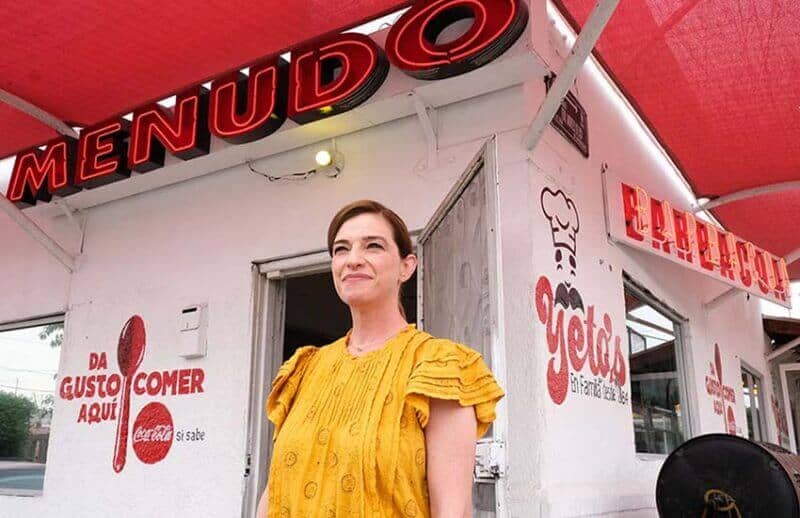
Visiting Yeto’s restaurant in Ciudad Juárez.
Thanks to Herrera, she said, she had a “chance to eat burritos on both sides of the border,” in Juárez and El Paso. In both locations, she said the burritos were extraordinary, including those with brisket in El Paso and with rice in Juárez.
Throughout the special, Jinich notices connections between both sides of the border as well as differences. “So many businesses depend on each other on both sides,” she said. “So many families live and thrive on both sides.”
“So many restaurants in El Paso depend on getting produce from Mexico,” she added. “… So many businesses in Mexico depend on technology, parts, appliances from the U.S.”
There’s even a moment in the special that spotlights cattle connections between the two nations. As the show explains, cattle with both Mexican and American roots are raised in Mexico before coming across the border to mature in the States — and ending up on American tables.
Jinich recognizes the continuing challenges facing the borderlands. In episode one, she shows the border wall and speaks with Corchado about the issues he covers as a journalist.
“Alfredo Corchado is a dear friend,” Jinich said. “He specializes in going to investigate all these hard topics — crime, drug cartels et cetera.”
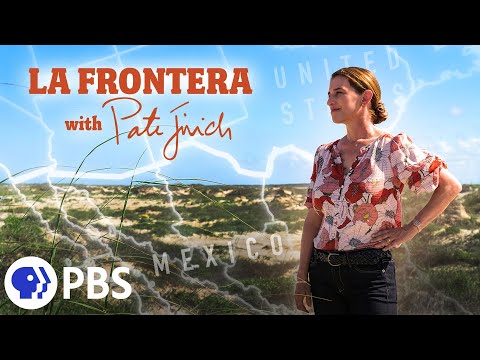
First Look: La Frontera with Pati Jinich
Yet, he also shares a more personal family story about his parents’ journey from Mexico to the U.S. According to Jinich, meeting Corchado’s mother was one of her best experiences on the show.
“She told me he has to focus on these things that are so hard and difficult,” Jinich said. “At the same time, they shared beautiful things along the border. His mother and father were migrant farmers who opened up a restaurant in El Paso that enriches the lives of people in America.”
As Jinich said about her border experiences, “Every single story is an incredible story.”
Rich Tenorio is a frequent contributor to Mexico News Daily.
Mexico scored relatively highly in the 'open government' factor but lost points for corruption.
Mexico fell nine places on the latest edition of an index that measures the rule of law in more than 100 countries.
Mexico’s score on the World Justice Project (WJP) Rule of Law Index 2021 declined 0.01 points and its ranking fell from 104th to 113th, mainly because it was competing against a larger group of countries. The index uses a scale from 0 to 1, with 1 indicating the strongest adherence to the rule of law.
Using data derived from 138,000 household surveys and 4,200 legal practitioner and expert surveys, the WJP – an independent organization dedicated to the advance of the rule of law around the world – measured 139 countries and jurisdictions, an increase of 11 compared to 2020.
In Latin America and the Caribbean, Mexico ranked 27th out of 32 countries, ahead of only Honduras, Bolivia, Nicaragua, Haiti and Venezuela.
The WJP considered eight factors made up of 44 sub-factors to determine each country’s Rule of Law Index score.
Mexico achieved its best score and ranking on the “open government” factor, which considered the sub-factors of publicized laws and government data; the right to information; civic participation; and complaint mechanisms. Mexico’s score on that factor was 0.6, and its ranking among the 139 countries was 43rd.
Mexico performed worst on the “absence of corruption” factor, which considered corruption in the executive branch of government, the judiciary, the police and military as well as in the legislature. Mexico’s score was just 0.26, and it ranked 135th in the world and last in Latin America and the Caribbean.
President López Obrador claims to have made great progress in stamping out government corruption, yet Mexico’s score on the absence of corruption “in the executive” sub-factor – which essentially looks at how corrupt the president is – was 0.31.
Lawmakers are seen as even more corrupt: Mexico’s score on the absence of corruption “in the legislature” sub-factor was 0.1.
Mexico’s scores and global rankings on the other six factors were 0.53 and 130th on order and security, 0.49 and 91st on fundamental rights, 0.45 and 102nd on constraints on government powers, 0.44 and 105th on regulatory enforcement, 0.37 and 131st on civil justice and 0.29 and 129th on criminal justice.
Mexico’s order and security score was bolstered by the “absence of civil conflict” sub-factor, on which it scored a perfect 1. However, its scores for “absence of crime” and “absence of violent redress” — which measures whether people resort to intimidation or violence to resolve civil disputes among themselves and whether people are free from mob violence — were just 0.37 and 0.23, respectively.
Lynchings are relatively frequent in some parts of Mexico, especially in the states of Puebla and Oaxaca.
Mexico’s worst score among the seven “criminal justice” sub-factors – 0.19 – was on “effective investigations.” Impunity is rife in Mexico and a major reason for that is the lack of thorough criminal investigations.
At 0.43, Mexico’s overall rule of law score is 0.13 points below the global average of 0.56 and 0.09 below the regional average of 0.52.
Denmark, Norway, Finland, Sweden and Germany were, in that order, the best-assessed countries in terms of rule of law, while Venezuela, Cambodia, the Democratic Republic of Congo, Egypt and Cameroon were the worst.
Mexico’s North American trade partners, the United States and Canada, ranked 27th and 12th, respectively.
According to the WJP, the Rule of Law Index is the world’s most comprehensive dataset of its kind and the only one to rely principally on primary data, including the perspectives and experiences of ordinary people.
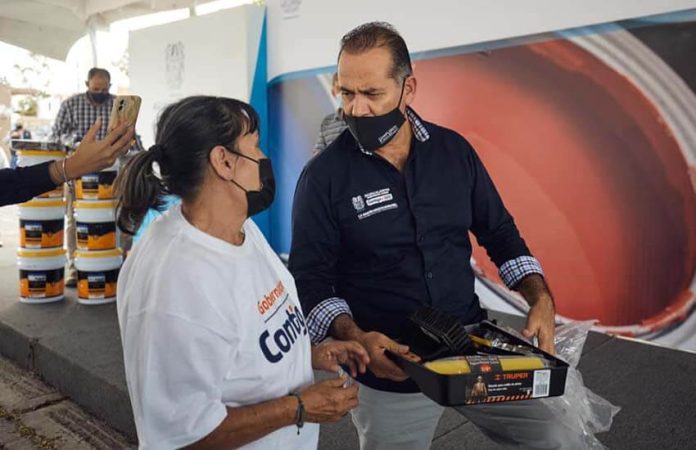
Aguascalientes Governor Martín Orozco Sandoval launching a home facade painting aid program in Aguascalientes city's Pirules neighborhood. Facebook
A new community program aims to help owners paint the facades of 5,000 houses across the state of Aguascalientes.
The Contigo Pintamos (We Paint With You) program kicked off in the Pirules neighborhood in Aguascalientes city, where Governor Martín Orozco Sandoval ceremonially handed out 10 vouchers for painting supplies.
The governor said that the simple change could make a real difference in a neighborhood’s social dynamic and that the task contributes to community collaboration and care for the environment because when a neighborhood looks better, the residents take better care of it.
“A decent house always positively influences the development of a home. In #Aguascalientes, we are working so that more families have the conditions necessary to have a better quality of life,” Orozco wrote on social media.
The Social Development Ministry (Sedeso) is coordinating the project and will supply the materials to beneficiaries, who are expected to provide the labor themselves.
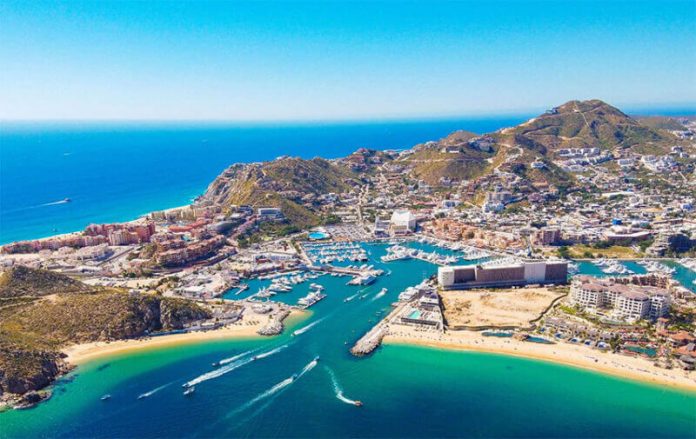
Canadian tourists will flock to Los Cabos, Baja California Sur, in the final months of 2021, according to the head of the resort city’s tourism board.
Rodrigo Esponda Cascajeres, general director of the Los Cabos Tourism Trust (Fiturca), said Tuesday that 150,000 Canadians are expected to visit between October and the end of the year.
“The high season for Canadian tourists in Los Cabos begins in October,” he said, adding that the frequency of flights from Vancouver and Calgary will increase to daily this month.
Esponda said those two cities are the biggest sources of Canadian visitors. He added that the frequency of flights from Toronto, which he described as another key source, will increase in November.
The tourism official also said that Canadian tourist numbers could match 2019 numbers this year.
“In comparison with 2019 we’re only down 15% in [airplane] seat numbers, we’ve reactivated 85% of the Canadian market but we think we could end the year with 100% of that market,” Esponda said.
The Fiturca chief said earlier this year that 10% of international tourists to Los Cabos are Canadians, adding that they tend to stay longer – 11 days on average – than United States and Mexican visitors.
On the Canadian government’s request, four Canadian airlines suspended flights to Mexico for much of the first half of the year as part of measures to stop the spread of the coronavirus. But flights slowly resumed in June and their frequency has increased in the second half of the year.
Automotive industry representatives are speaking out against the president's plan to legalize 'chocolate cars.'
President López Obrador’s plan to regularize illegally imported cars will only reward the criminal groups that bring them into the country, according to the Mexican Association of Automotive Distributors (AMDA).
López Obrador announced Wednesday that an amnesty agreement to regularize such cars – the vast majority of which come from the United States – would be signed this Saturday. He said that registration would be low in cost, given that many of the owners of illegal vehicles have low incomes.
The AMDA said in a statement that the legalization of so-called autos chocolate (chocolate cars) “will represent a prize for the mafias that get rich with the smuggling of these kinds of vehicles.”
It also said that regularization will hurt sales in the formal automotive sector, which creates jobs and pays taxes.
“… The proposal to regularize illegal vehicles … will not be limited to … border states but will extend throughout the country, [creating a] situation that far from limiting the problem will make it bigger,” the AMDA said.
The association said it has been seeking a meeting with the president since late June after he announced his intention to regularize the vehicles during a visit to Baja California.
AMDA president Guillermo Rosales told the newspaper El Financiero that López Obrador offered to meet with the association to discuss “the best regulatory practices” for the used vehicle sector but the meeting never occurred.
“We weren’t summoned to collaborate or give an opinion,” he said.
The AMDA said in its statement that the illegal importation of used cars has increased since the president first indicated he was willing to allow the regularization of autos chocolate, which were formerly called autos chuecos, or crooked cars, in the northern border region until chueco morphed into choco and choco became chocolate.
“… During July and August the legal importation of used vehicles grew 69.8% and 84.9%, or 5,655 and 6,493 additional units, respectively, while the illegal entry [of vehicles] grew by the same or greater percentages due to the expectation of being able to regularize them shortly,” it said.
“… The upcoming legalization will cause a drop in value of up to 20% for national vehicles of the same year and model due to the oversupply it will cause,” the AMDA said.
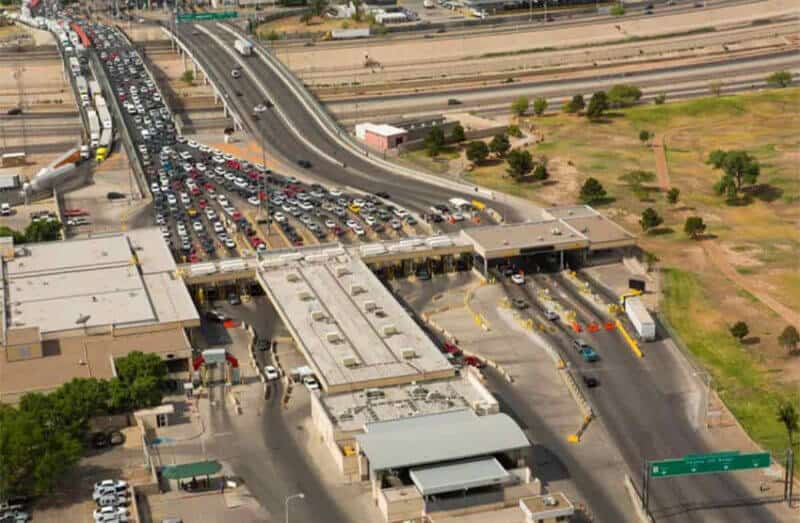
Many ‘chocolate cars’ are illegally brought into the country at border crossings like this one between Ciudad Juárez and El Paso, Texas.
“We’re against the legalization of contraband,” Rosales told El Financiero, reiterating that the move “will only benefit the mafias that benefit from this crime.”
The AMDA chief said he will wait to see the details of the amnesty agreement before looking at the legal options the association has to defend the formal automotive sector.
“… If this decree is signed, the entry of these vehicles, many of them junk, will increase and it could cause damage to the economy as occurred when [former president] Vicente Fox signed [a similar] decree in 2006,” Rosales said.
The Mexican Employers Federation (Coparmex) also criticized López Obrador’s plan, saying it represents a “severe blow to one of the industries that creates the most jobs in the country.”
“… The regularization of autos chocolate seriously threatens the recovery of a key sector … as according to estimates of the Mexican Association of Automotive Distributors, this action could cause a 39% decline in domestic market sales,” Coparmex said in a statement.
“… For Coparmex, the regularization of autos chocolate announced by the president means rewarding illegality. It’s an attack on companies and jobs in Mexico,” the organization said, adding that López Obrador’s plan is motivated by a desire to garner more support for his government.
The Associated Press reported that some estimates place the number of autos chocolate in the country as high as 18 million, a figure equivalent to about one-quarter of all cars and pickups in Mexico.
Broadcaster Televisa reported that such vehicles face few impediments to entering Mexico from the United States, even though some may have been stolen. It broadcast footage of several used cars entering Mexico at the border crossing between San Luis Río Colorado, Sonora, and San Luis, Arizona.
Televisa said that Mexican laws stipulate that imported used cars must enter the country “by their own momentum” but footage showed manybeing towed into Mexico. A San Luis Río Colorado customs agent said that 35 to 40 autos chocolate come into Mexico via that city on a daily basis.
Some are sold in the Sonora border city while many others are transported about 70 kilometers to Mexicali, Baja California, “without municipal, state and federal police inspecting them,” Televisa said. According to the AMDA, used cars are also brought into Mexico via other border cities, including Mexicali, Ciudad Juárez and Nuevo Laredo.
The Televisa report indicated that customs officials are colluding with such companies to allow used cars to enter the country illegally, sharing bribes that run into hundreds of dollars per vehicle.
Yucatán Governor Mauricio Vila Dosal, right front, meets with Fincantieri officials at their shipyard in Monfalcone, Italy. yucatan.gob.mx
An Italian shipbuilder has announced a US $150-million investment for a shipyard in Yucatán as part of the expansion and modernization of the port of Progreso.
The new shipyard will be built by Fincantieri, a multinational company with holdings in Europe, Latin America, the United States and Asia, and will serve as a base for the repair, remodeling and maintenance of large ships.
The project includes a plan to build two enormous masonry docks, which would be the largest in Latin America, the newspaper El Universal reported.
Fincantieri company executives confirmed the plan as Yucatán Governor Mauricio Vila Dosal toured some of their existing shipyards in Monfalcone, Italy.
The governor is currently on an economic promotional tour of Europe that aims to attract investment to the state and reactivate the economy.
Work on a ship by Fincantieri at its shipyard in Castellammare di Stabia, Italy. Fincantieri
Vila also met with and toured other marine industry companies, including ANPA and Marine Interiors, which both manufacture materials and parts used in ship construction and could have a presence in Progreso.
Marine Interiors is one of the leading manufacturers of cabins and bathrooms for cruise ships.
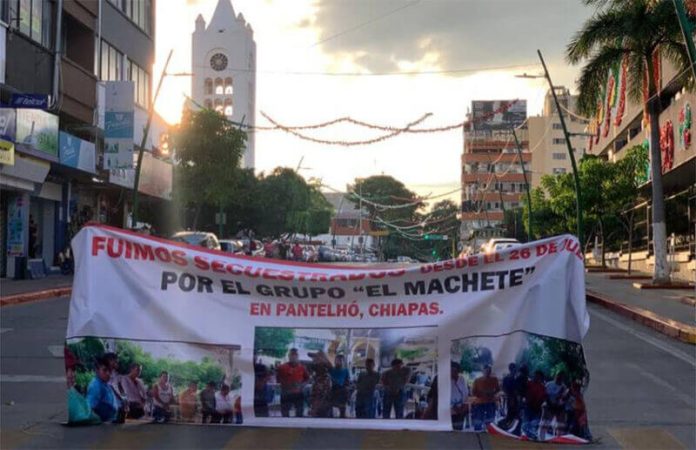
Family members of the kidnapped men protest outside the government palace in the Chiapas state capital in September.
The whereabouts of 21 men detained by a self-defense force in Chiapas in late July are unknown, according to their relatives.
On July 26, members of the “El Machete” self-defense force carried out raids in the town of Pantelhó during which they set houses and vehicles alight and detained 21 men they accused of being members of Los Herrera, a criminal group that allegedly has links to the municipal government.
More than two months later, those detained have still not returned to their homes. Their relatives reject the self-defense group’s claim they are criminals, asserting that they are ordinary citizens who work as shopkeepers or in other legitimate businesses.
Jorge Aguilar Morales, whose brother, nephew and godson are among those missing, told the newspaper Milenio that neither the Chiapas government nor the southern state’s Attorney General’s Office have been able to determine whether the 21 men are dead or alive.
“They supposedly said they’ve already been murdered and buried at the Las Pelonas hill. The truth is we’re afraid. All we’re asking is they return our family members. They were taken alive, we want them back alive, not like what happened with [the 43] Ayotzinapa [students],” he said.
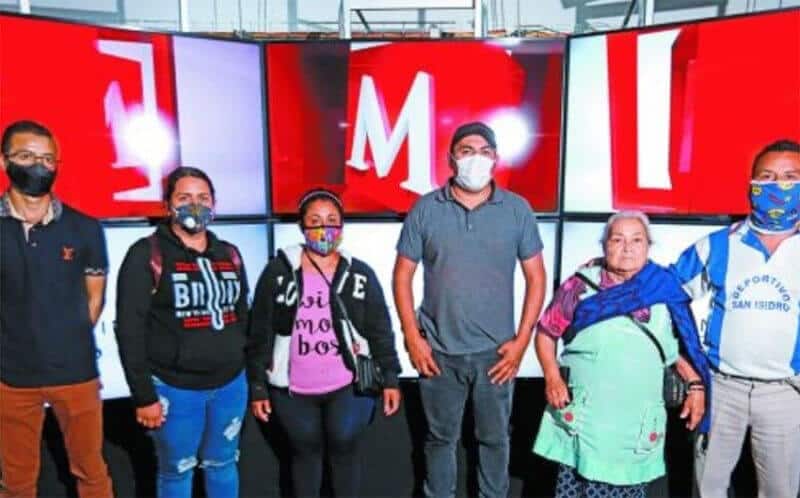
Some of the kidnapped men’s family members appeared on Milenio TV on Wednesday to push for action on the case.
Aguilar, one of several relatives of the missing men who spoke to Milenio in Mexico City, said members of “El Machete,” which formed in Pantelhó in July, have threatened to kill them if they file a complaint with federal authorities.
“But we really don’t care because all we’re asking for is for them to release our family members,” he said.
Aguilar accused the National Guard of doing nothing to stop the abduction of the 21 men. “… They were afraid because these ‘El Machete’ assholes told them to leave if they didn’t want deaths. … The [National] Guard didn’t intervene. When they see a defenseless person they’re very cocky, very confident, but with the Machetes they were afraid,” he said.
Francisca Morales, whose son, grandson and nephew are missing, said she appealed to President López Obrador for his help to find the kidnapped men. She said she approached the president during his visit to San Cristóbal de las Casas in late August and he assured her he would help. But the families of the missing men haven’t heard anything from federal authorities since, Morales said.
“The president should go to Pantelhó to see how things are, to see how they left Pantelhó. They burned houses, stole things. They took everything, all my possessions were taken,” she said.
Fanny Urbina, whose husband was detained on July 26, said that she and her 10-year-old daughter have been left helpless.
“I depend on him; I have a daughter with hydrocephalus and she gets sick a lot. I’m asking that they return him because what am I going to do on my own? I don’t have help from anyone, except him,” she said.
Giovanni Aguilar, whose brother is missing, said it was incredible that state authorities haven’t taken action against “El Machete” in light of their actions in late July.
“There are videos and proof of everything they did, there are names of those who took them,” he said. “In the videos you can see who took them. We spoke to the president when he went to … San Cristóbal but where is he? [There’s been] no progress, … nothing.”
Giovanni Aguilar also said that more than 3,000 residents of Pantelhó have been forced to take refuge in San Cristóbal due to violence in their home town and surrounding areas.
The family members currently in Mexico City said they will present themselves Thursday at the federal Interior Ministry, where they hope to meet with Deputy Interior Minister for Human Rights Alejandro Encinas.
López Obrador said earlier this year that self-defense groups are used to hide or shelter criminals. “They disguise themselves as people fed up with violence,” he said.
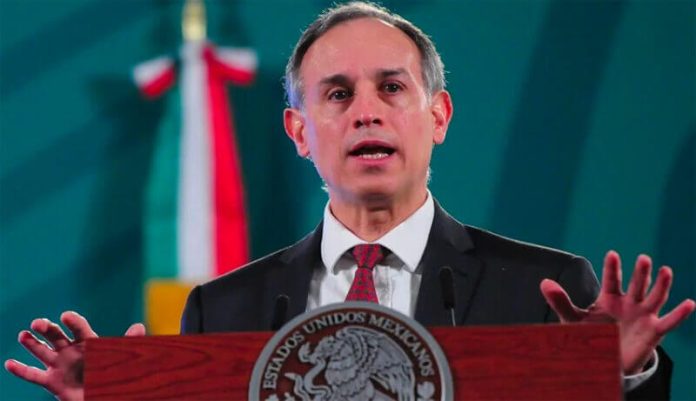
López-Gatell: advertising, promotion and sponsorship should be prohibited.
Deputy Health Minister Hugo López-Gatell proposed an outright ban on tobacco advertising Wednesday during a Senate forum on smoking addiction.
“Something that hurts us a lot is advertising because it perverts the government’s responsible actions … That is why it is important to completely close the door to advertising, promotion and sponsorship,” he said.
López-Gatell added that guarding against conflicts of interest in political circles was part of the solution. “It is not only undesirable, but also illegal in the strict sense, that the tobacco industry can approach public officials of any of the powers of the union to have a dialogue or proposal, let alone to lobby their products. That lobbying in many cases is surreptitious, hidden and with various intermediaries,” he said.
Separately, he called on senators to reject a bill on the legalization of vapers and electronic cigarettes, and claimed that tobacco companies were deliberately obfuscating the issue. “If we go with this fallacy that the tobacco industry has put to us, that vapers are the alternative solution to the tobacco problem, we will once again be making a mistake because vapers and heated tobacco products are not an alternative to harm reduction,” he said.
“The industry is always a few steps ahead in its capacity to distort. What they want is to gain space and time with the fallacy that [vapers and electronic cigarettes] are products to get out of the tobacco epidemic,” he said.
López-Gatell is deputy minister of prevention and health promotion and has been the government’s point man for the coronavirus pandemic since it began early last year.
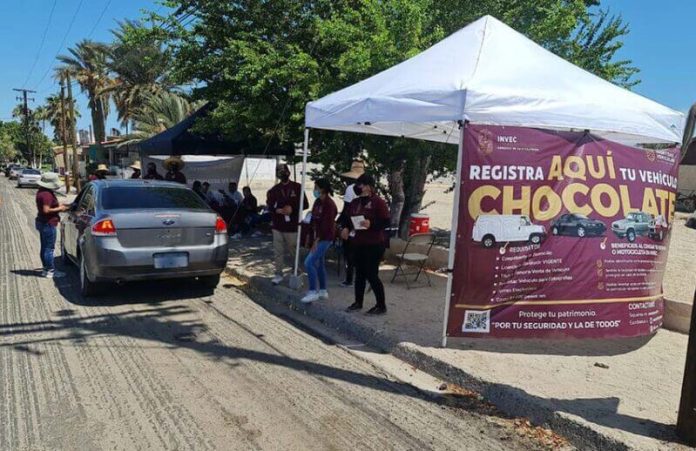
In Baja California, the state has already begun an amnesty program to register such vehicles in September. Government of Baja California
President López Obrador announced Wednesday that illegally imported cars would be regularized.
An amnesty agreement would be signed this weekend, he confirmed at his morning news conference.
The president said crime prevention was a key motive for the amnesty. “[The cars] are going to be regularized because they are sometimes used to commit crimes, and they are not registered. We are going to regularize all of them, a permit will be given, possession will be recognized,” he said.
López Obrador added that the registration of such vehicles would be low in cost, given that many of the owners of illegal vehicles have low incomes and bought those cars due to the lower price tag. “They are going to pay a fair amount … They are going to pay a fee, a contribution,” he said, before adding that the money would go toward a national program to reduce potholes.
The president apparently got the idea for the program from officials in Tijuana. In June, on a tour of Baja California, he mentioned to reporters that before the election officials had requested such a program.
Currently, Baja California is running an amnesty program, which it started in September. It ends October 31.
Other border states will be among the first to implement similar amnesty programs, the president said Wednesday. Once those programs are concluded, other states would follow suit, López Obrador said.
However, some in the automotive industry have voiced their skepticism.
The Mexican Association of Automotive Distributors (AMDA) called the president’s plan “a blow to the automotive trade” and that it motivated the wrong behaviors. “As long as the regularizations are given periodically, the illegal importation and the corruption that we continue to see for the customs sectors is encouraged,” it said in a statement.
Illegal cars are sold in car lots — mainly in central Mexico — for 15,000 pesos (about US $730) to 60,000 pesos (about $2,919), although most of their parts are difficult to find in Mexico, news site Infobae reported.