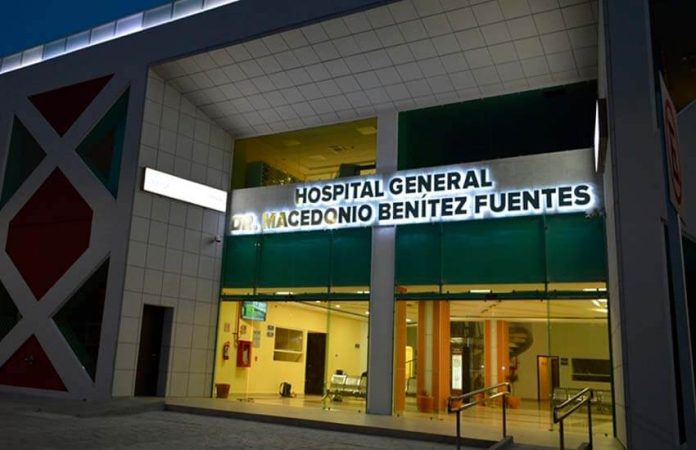
The hospital in Juchitan, Oaxaca, where the pregnant woman first ended up after 10 days of searching for a bed.
Two deaths in Oaxaca this week came as the state appears to be facing a labor shortage in the healthcare sector.
A pregnant woman in Oaxaca who contracted COVID-19 died after spending 10 days searching for a hospital bed.
The woman from the Zapotec city of Juchitán, in the Isthmus of Tehuantepec, tried to get help at a hospital for people not covered by social security and at other hospitals in Juchitán and in the nearby city of Ixtepec, but to no avail.
After 10 days of being turned away, she was admitted to the General Hospital of Juchitán. Due to her poor condition, she was transferred to the General Hospital of Ixtepec, where she was intubated, but could not be provided with an oxygen ventilator due to a shortage of supplies.
She was transferred again to a private clinic in Juchitán, where she died just an hour after being admitted.
Juchitán Mayor Emilio Montero did not name the woman, but expressed his dismay at the lack of staff and resources at hospitals, which he said did not have the capacity for another COVID-19 patient.
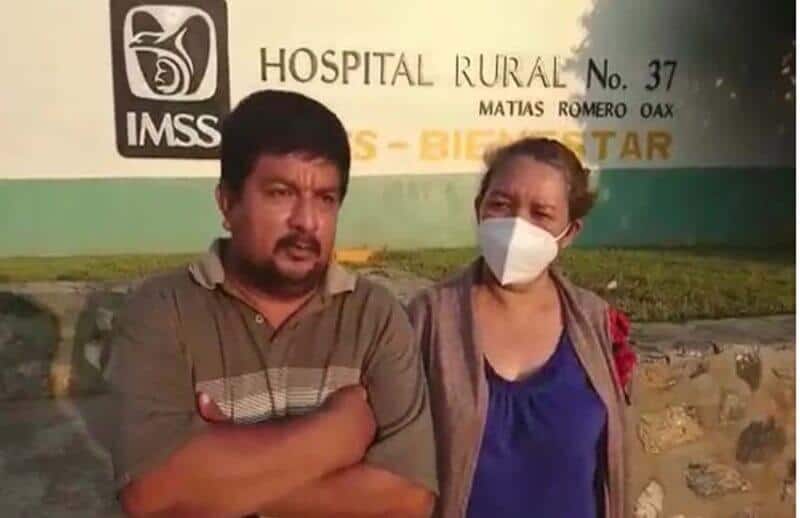
A couple who suffered a tragic loss due to a lack of hospital space were Mario Martínez and Eugenia Leandro Castelán, the parents of a deceased premature baby.
“The lack of hiring of almost 3,000 doctors and nurses in the state of Oaxaca is worsening the already difficult context that hospitals are operating in due to coronavirus infections,” he said.
In a forewarning, at the end of August, medical personnel from Juchitán protested in Mexico’s City’s central zócalo to demand indefinite contracts.
Meanwhile, a baby that was born prematurely in the Isthmus of Tehuantepec died after her mother was turned away by the Children’s Hospital in Oaxaca city. The social security hospital (IMSS) in the city of Matías Romero said the baby girl was born prematurely by cesarean section due to the mother’s high blood pressure which had put them both at risk.
The parents were informed of the need to transfer the newborn child to a neonatal intensive care unit, but they were told there was no availability.
The parents made a plea for support in a video Sunday after the Children’s Hospital said there was no room. Mario Martínez Cortés asked how it was possible that their baby should suffer the consequences of the government’s political problems.
The couple’s baby died the following day. “Unfortunately today, the newborn died of complications arising from her premature birth,” IMSS said.
Oaxaca’s health services agency dismissed 75 people — 30% of the workforce — at the Children’s Hospital, the newspaper El Universal reported last week. The agency said the employees had been contracted improperly and there wasn’t enough money in the budget to pay their salaries.
They were among at least 2,125 workers — 2,700 according to one report — laid off in Oaxaca since September 15.
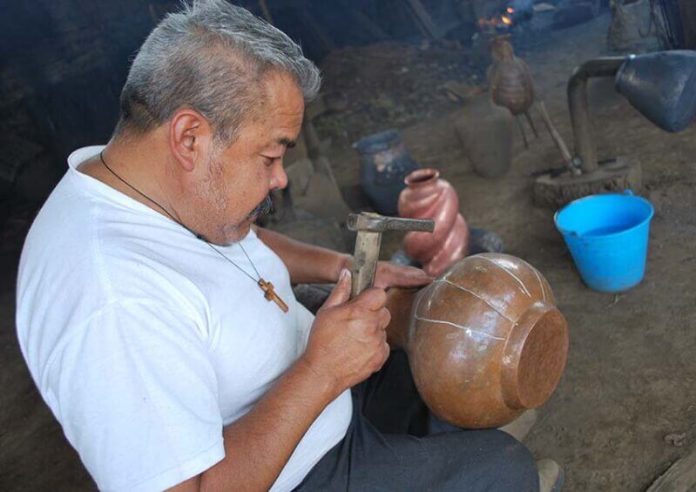
Santa Clara del Cobre artisan Abdón Punzó starts the decorative phase on a traditional copper vase at his family workshop in Santa Clara. Alejandro Linares García
On the surface, it is rather curious. By far, most Mexican copper is mined in the state of Sonora, and Mexico mines enough of it to be one of the top 10 sources in the world. But the small town of Santa Clara del Cobre in central Michoacán seems to be the only source of artisanal handcrafted copperware.
Or at least the only source with any kind of real reach.
Copper was once mined here, but those mines gave out long ago. Santa Clara craftsmen today have to rely on buying recycled metal, often from junkyards.
Like most things in Mexico, history explains the present. Copper was known in Mesoamerica and worked much the same as gold and silver. However, the skill needed to work this metal was mostly limited to the Purépecha Empire, the main rival to the Mexica, or Aztecs.
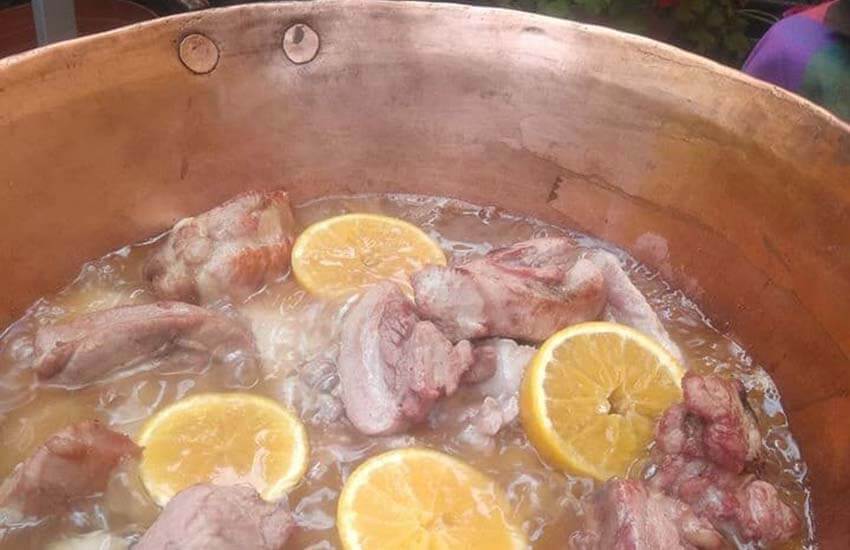
After the conquest, the Spanish took over copper in what is now Michoacán, but their interest in the metal was mostly utilitarian. The most important colonial-era products were cooking utensils, including the iconic cazo, a large open pot/pan combination still used today to cook one of Michoacán’s signature dishes, carnitas (a pork confit).
This piece by José Sergio Velázquez García won a first-prize Galardón Nacional award in August at Mexico’s National Copper Fair in August. Courtesy of the Michoacán Institute of the Artisan
As central Mexican mines gave out, copper extraction moved northward, but copper working did not. Northern Mexico had and has most of Mexico’s 1 million tons of remaining ore, but this region did not have the history of metalworking that central and southern Mexico had.
That history includes the influence of evangelist Vasco de Quiroga, the first bishop of Michoacán, who was tasked with restoring order in New Spain after a disastrous episode involving the Spanish conquistador and disgraced colonial administrator Nuño Beltrán de Guzmán. Perhaps de Quiroga’s most enduring legacy was creating a town-based system of production and trade in New Spain to give the Purhépecha reason to participate in the new colonial order.
Santa Clara del Cobre received the right to mine and work copper as it was near the mines. Eventually, it provided copper goods not only to all of New Galicia — an autonomous territory of New Spain located in the present-day states of Aguascalientes, Guanajuato, Colima, Jalisco, Nayarit and Zacatecas — but to most of New Spain as well.
Only two things could destroy Santa Clara’s established traditional livelihood: industrialization and the mines giving out. By the early 20th century, local mines ceased to be viable, while factories were producing cheaper pots and pans.
By 1967, copper artisan work was a dying art in Santa Clara: only 36 copper craftsmen remained. What saved it was tourism drawing upon Michoacán’s relatively well-preserved indigenous heritage and the natural beauty of Lake Pátzcuaro attracting visitors.
Tourists created a new market for old goods, as well as a demand for new items based on old techniques and motifs. Today, there are an estimated 800 copper artisans in 86 workshops in Santa Clara. The town is the home of the National Copper Museum and hosts the National Copper Fair each year.
Michoacán carnitas cooking on a huge copper cazo. La Casa del Colibrí
Although the fair has permitted the participation of copper workers from other parts of Mexico since 1981, in comparison, these craftsmen have significant disadvantages in history and experience, reputation and access to markets.
After Santa Clara, the next oldest copper working tradition is found in the tiny towns of Tlahuelompa and Tizapán, both in the state of Hidalgo near the Veracruz border. Local lore states that copper work began here about 150 years ago when an Italian craftsman, name now forgotten, taught locals what he knew.
Their techniques rely on the use of copper already processed into sheets, which attests to their craftsmanship being newer than the copper work in Santa Clara. Although artisans in both of these Hidalgo towns make both common and very fine goods, including church bells, their business is regional as there is no tourism in this highly isolated area.
Any copper work done elsewhere is highly spotty and very recent. Some tourist websites claim that copper is worked in Zacatecas, one place where the metal is indeed mined, but the store at the state’s Casa de Artesanías — government-run exhibition spaces meant to highlight local artisan work — says that it is not done there. It is a similar story for San Luis Potosí.
The only possible exception is Sonora. Copper mining started here in the late 19th century, and it is still big business in the Cananea area. Cananea is far from a tourist attraction, but the copper is now part of Sonora’s identity, and some artisans have picked up working with it.
One very recent example is the work of Édgar Zendejas, who lost his work as a stage designer because of the pandemic and looked for another way to make a living. He found it by twisting copper filigree into very sophisticated designs. In less than two years, his work has been featured in regional newspapers, and he now has clients in Mexico and abroad.
Collection of rings made by Sonoran artisan Édgar Zendejas. Édgar Zendejas Facebook page
However good the work done in Hidalgo and Sonora might be, many handcraft buyers are looking for an experience as well as something to take home. Its long history, preservation of old techniques and unique environment almost guarantees that Santa Clara del Cobre will remain the center of Mexico’s copper world for many years to come.
The town is quaint, just 15 minutes away from Pátzcuaro proper. In the center, there is a beautiful wooden church (unusual in Mexico but not for Michoacán) with copper chandeliers and other implements that give it a kind of warmth. Scattered throughout the town are family-owned workshops, often part of the home.
The most traditional of these have generations of knowledge passed down, but the resurgence of the craft means that former farmworkers are changing occupations. Even women are starting to work in the business, which before was purely men’s work.
The link to tourism means that Santa Clara receives state and federal support in training and promotion. There are even courses specifically to train those with no background in copper. But the best work is still done by older craftsmen.
Santa Clara’s reputation in copper is foundational. Not only is it part of the name (del Cobre means “of copper”), efforts to change the name in the last centuries were met with strong cultural resistance. Today, the official municipal name is Salvador Escalante, but no one uses that outside of government records, and I doubt anyone ever will.
Leigh Thelmadatter arrived in Mexico 18 years ago and fell in love with the land and the culture in particular its handcrafts and art. She is the author of Mexican Cartonería: Paper, Paste and Fiesta (Schiffer 2019). Her culture column appears regularly on Mexico News Daily.
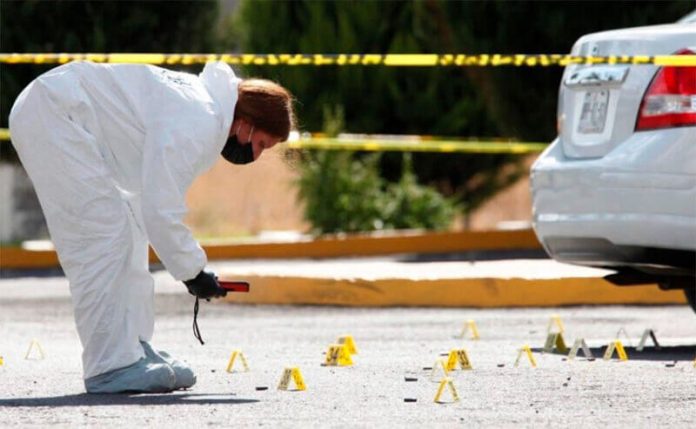
A forensic expert studies bullet casings at a Jalisco crime scene in 2020.
Homicides declined 3.9% in the first eight months of 2021, Security Minister Rosa Icela Rodríguez said Wednesday.
There were 22,611 homicides between January and August, according to data presented by Rodríguez at President López Obrador’s news conference, a decrease of more than 900 compared to the same period of 2020.
The security minister said that August – with 2,815 homicides – was the least violent eighth month of the year since the current government took office in late 2018.
She said 50.4% of all homicides in the first eight months occurred in just six states: Guanajuato, Baja California, Michoacán, México state, Chihuahua and Jalisco.
The first two both recorded more than 2,000 homicides while the other four states all recorded more than 1,600.
Yucatán was the least violent state in the period with just 32 homicides followed by Baja California Sur (38); Aguascalientes (57); Campeche (74); and Tlaxcala (80).
She said murders declined by 0.3% in those municipalities last month. Homicides rose in 25 of the municipalities compared to August last year, declined in 24 and remained the same in one. The security minister also presented data for a range of other crimes.
Among those that decreased in the first eight months of the year compared to the same period of 2020 were carjackings, cattle theft, business robberies, vehicle theft, home burglaries, kidnappings, domestic violence, tax crimes, organized crime offenses, drug trafficking and firearms offenses.
Among those that increased were robberies on public transit, muggings, extortion, rape, femicides. human trafficking and electoral offenses.
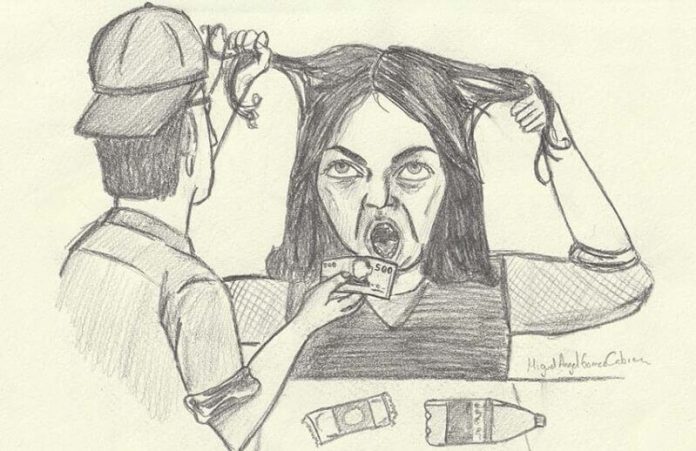
Don't even think about it. Miguel Ángel Gómez Cabrera
Mexican money is, of course, the peso. It comes in different colors — blue, pink, yellow and a couple of others I can’t quite describe — so it’s visually interesting. But what’s even more interesting is the game that’s played with this money.
Cajeros (ATMs) in Mexico disgorge bills that are of large denomination, mainly 500-peso notes (US $25). If you withdraw, say, 3,000 pesos, you’ll almost certainly get six 500-peso notes.
It´s very frustrating when this happens because it’s nearly impossible to spend these, especially in smaller pueblos, although I’ve found it challenging in Mexico City as well. So I’ve learned that when I make a withdrawal, I make sure to tack 400 pesos on to the amount I actually want.
This means that if I need 3,000 pesos, I’ll withdraw 3,400, or if I need 6,500 pesos, I’ll take out 6,900; you get the idea.
That way, I’m sure to get at least two 200-peso notes, and if the stars are properly aligned, a 200 peso-note and two 100-peso notes. These I can spend. When I get two 100-peso notes, I feel like I’ve hit the lottery.
So it takes a little bit of planning when withdrawing money. Then it takes even more planning to spend it.
See, no business wants to change large bills. Forget trying to spend a 500-peso note in a small village. It’s going to be damn near impossible.
When I have nothing but large bills, I go to a big store — say, a supermarket like a Chedruai, Mega or La Comer — and buy a few things. But not a lot. Buying a lot and then paying with cash defeats the purpose. I need change, so I’ll keep my purchases to around 200 pesos.
I pay with a 500-peso note and grab some change. Or I’ll use the 500-peso note at a restaurant when I head into Mexico City and order a modest meal. I may get a dirty look from the waiter, but I always leave a big tip, so all is forgiven.
Even a 200-peso note can present a challenge. A pound of coffee at my local cafe costs 125 pesos (about US $6). If I hand them a 200-peso note, I know I’m in for a long wait while someone runs from store to store seeking to change the bill. I’ve learned to have exact change.
Still, despite the reluctance of store owners to take larger denominations, it’s critical to pay with the largest small bill possible. If something costs 30 pesos, sure, you could pay with the exact amount or with a 50-peso note, but later on, you’re going to find yourself without any smaller bills.
In that case, it’s best to pay with a 100-peso note because somewhere down the road, you’re going to need those small bills. But even paying with a 100-peso note may cause problems, something that has happened to me more than a few times.
A few years ago, I was in a store in Mexico City and was trying to pay for something that cost 25 or 30 pesos with a 100-peso note. The store owner looked at me aghast and said she had no change. I told her I was sorry but didn’t have anything smaller. She paused, looked at the bill, frowned and then counted out my change.
But it’s important to play fair. Don’t go into a small tienda (store) to buy a bag of snacks and try to pay with a 500-peso note. You’ll give the owner a coronary, and you won’t be welcome there again. Plus, you almost certainly won’t get your snacks.
If you do want to buy a bag of snacks and absolutely have to pay with, say, a 100-peso note, be nice. Apologize. Say, “I’m sorry, this is all I have.” Shrug, look a little forlorn, maybe buy a couple of pieces of candy. The owner will usually commiserate, reluctantly count out your change and maybe even let you in their store in the future.
Follow these basic suggestions and you’ll have plenty of change.
Now, I realize that I could withdraw money from a cajero and simply walk into a bank and ask them to change some 500-peso bills. But where’s the fun in that?
Celular Milenium, a company owned by a Concanaco director, was paid to supply more than 15,000 tablets to small businesses, but the the tablets never appeared.
A leading business group embezzled almost 300 million pesos in public funds between 2014 and 2016, according to the Federal Auditor’s Office (ASF).
A forensic report completed by the ASF said the Confederation of Chambers of Commerce, Services and Tourism (Concanaco) diverted at least 291 million pesos (US $14.5 million at today’s exchange rate) in funding it received from the now-defunct National Institute for Entrepreneurs (Inadem).
The money ended up in bank accounts of Concanaco directors, the ASF found.
Of the total, 70 million pesos had been earmarked for the purchase of tablet computers which were to be supplied to small businesses so they could collect payments from customers via their bank cards. The remainder of the money was to be used to fund some 140 small business training projects.
The Business Coordinating Council (CCE), an umbrella organization of 12 business groups, was also indirectly involved in the alleged embezzlement. It acted as an intermediary, receiving funds for the tablets project from Inadem before passing them on to Concanaco.
The company Celular Milenium, owned by a Concanaco director, received two transfers totaling 45.5 million pesos. EMCO Soluciones de Software, another company owned by a Concanaco director, received one transfer of 2.6 million pesos. That company’s tax address is non-existent, according to the newspaper Milenio, which reported the findings of the ASF report.
Celular Milenium was supposed to supply more than 15,000 tablets to small businesses and set up internet connections, while EMCO was supposed to set up internet connections.
However, the ASF determined that 15,086 tablets that should have been supplied to businesses were in fact not. Concanaco was unable to supply any documentation proving their delivery, the auditor said.
Students from the National College of Professional Technical Education were supposed to provide training to business owners on the use of the tablets but that never occurred, the ASF concluded.
The tablets initiative was supposed to be partially funded with 17.5 million pesos of Concanaco’s own money but those funds were only shuffled between CCE and Concanaco accounts and were not used for their intended purpose, the ASF found.
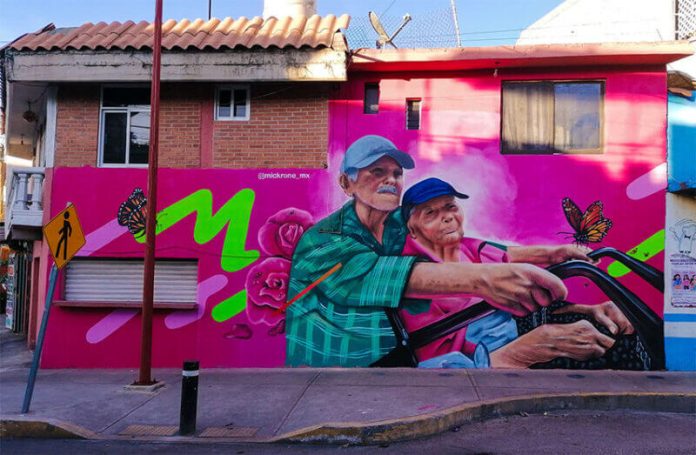
Raúl and Imelda inspired the artist Sr. Mickrone to create this mural near their home in Iztapalapa. Sr. Mickrone
A street artist looking for inspiration found it in the most humble of circumstances when he saw an older couple in a working class neighborhood of Mexico City showing affection and taking some sun.
Pedro Peña, better known by his artistic name Sr. Mickrone, was painting a mural as part of a municipal mural project in Iztapalapa when Raúl and his wife Imelda, who uses a wheelchair, caught his attention.
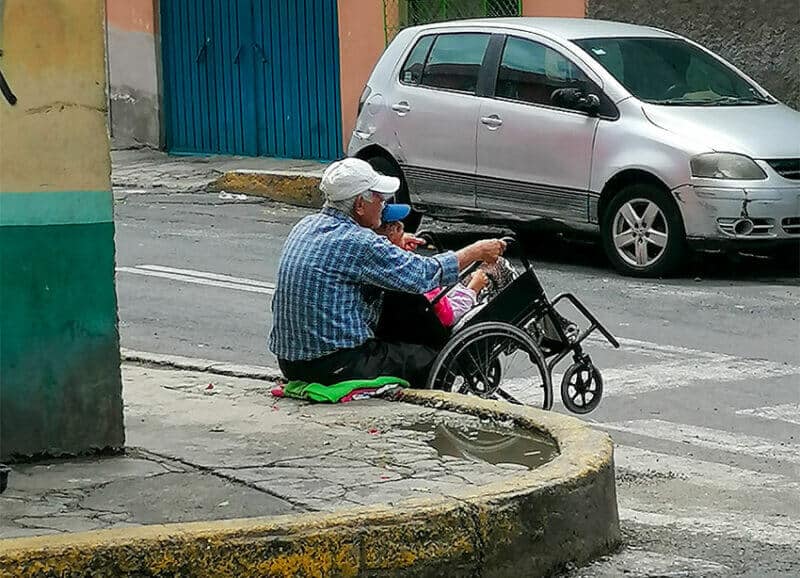
“I was painting … when I saw a couple from the neighborhood walking with a wheelchair. They sat down to catch the sun, and I noticed that he was being affectionate and took her head onto his chest. I dared to take a picture of them from behind and I asked my directors for permission to paint a mural …
“I talked to them and mentioned that I would like to create a mural near their house where they could see it,” Peña explained.
Once the mural was finished, the artist uploaded some photos to Facebook, where they went viral. “It was surprising, I didn’t expect a reaction like that … I think it touched some very important feelings to do with the pandemic. You can see that the people are adults, and they still love each other,” he added.
Raúl and Imelda on the sidewalk in Iztapalapa. pedro peña
Peña also revealed how the couple reacted to having their likeness on display. “She is an old lady, 83 years old, but her face was full of emotion, she looked shocked …” upon seeing the painting.
He said the couple go out every day and sit in the same spot to enjoy the sun, and that others have taken photos of them as well.
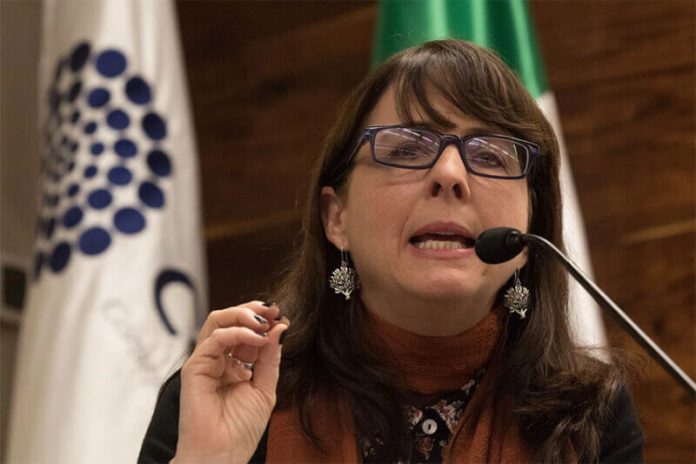
Conacyt director María Elena Álvarez-Buylla filed a criminal complaint against a group of scientists, sparking a conflict that has continued to escalate. Cuartoscuro
Mexico’s scientific community claims some of its members are being persecuted after the federal Attorney General’s Office (FGR) sought warrants for the arrest of 31 scientists for a range of crimes.
The FGR filed an application with a federal court for warrants for members of the Scientific and Technological Advisory Forum (FCCyT), a civil society organization. It alleges that 31 scientists embezzled public money, carried out operations with resources of illicit origin, engaged in organized crime and made illicit use of their positions, according to media reports.
The court at the Altiplano federal prison didn’t issue the arrest warrants sought but granted the FGR a period of 15 days to strengthen its case.
The FGR’s attempt to have the scientists arrested sparked a backlash.
One response was the creation of a petition on change.org that demands “an end to the persecution against members of the scientific community.”
The petition, which had attracted more than 12,400 signatures by 2:30 p.m. Wednesday, says the director of the National Council of Science and Technology (Conacyt), María Elena Álvarez-Buylla, filed a criminal complaint against the FCCyT for illegally receiving resources from the council during the 2012-18 administration of former president Enrique Peña Nieto.
But the Supreme Court ruled last month that Conacyt’s allocation of resources to the group was legal, the petition says. However, that ruling, the petition adds, was not a barrier to the FGR seeking warrants for the arrests of 31 FCCyT members.
It says the FGR’s interruption of the judicial process and applying for the warrants at a maximum security prison where the most dangerous criminals are incarcerated show that Attorney General Alejandro Gertz Manero “is trying to intimidate those from the scientific community who have publicly and openly expressed their differences with the current policies of Conacyt.”
“… We demand the end of persecution due to ideological and political positions against distinguished members of the Mexican scientific community,” the petition concludes.
President López Obrador vowed in 2019 that the FCCyT would be disbanded although it wasn’t clear why. A former coordinator said at the time there was a difference of opinion between Conacyt and the forum, which was created during the presidency of Vicente Fox in 2002. That, as with several other autonomous agencies established during previous administrations, would make it an adversary in the mind of López Obrador.
Meanwhile, a union that represents academics at Mexico City’s Autonomous Metropolitan University (UAM) and the academic community of the same university also issued statements in support of the FCCyT members.
Georgina Alenka Guzmán Chávez, an academic at UAM Iztapalapa who wrote one of the statements, slammed the FGR’s actions in an interview with the newspaper El Economista.
“How can we live in a country where we’re threatened for using our intelligence … and knowledge. This was seen in the Nazi and fascist governments, in dictatorships such as Nicaragua, where people are arrested for using their intelligence. We can’t live in a country like that,” she said.
Guzmán said it appeared that the government was in a war against education, adding that the scientific community deserves respect.
“They want to intimidate us but they’ve provoked great indignation and this is shared with the international community, because in the day to day of learning we’ve educated a lot of people who have left the country. That’s why this [war against education and the scientific community] will be known in the whole world,” she said.
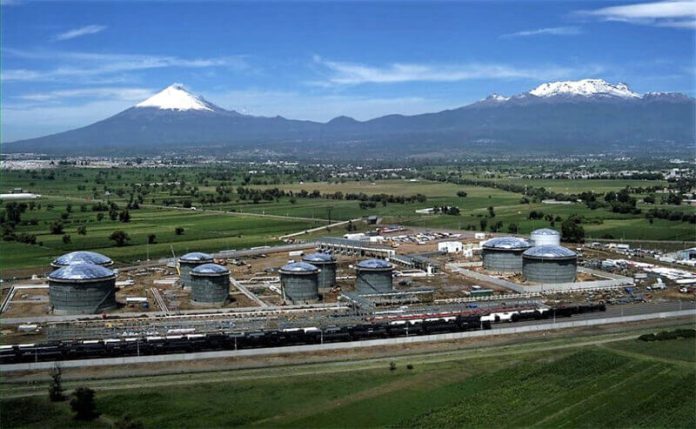
The IEnova terminal in Puebla is one of the storage facilities that the CRE has recently shuttered.
The federal government has dealt another blow to private companies in Mexico’s energy sector.
The Energy Regulatory Commission (CRE) has shut down three privately owned fuel storage terminals in the last month and a half, a move that will likely benefit the state oil company Pemex.
The terminals are used to import fuels such as gasoline and diesel and are located in Tuxpan, Veracruz, Puebla city and Hermosillo, Sonora.
Alejandro Montufar, CEO of the consultancy firm PetroIntelligence, said the reasons for the closures were not entirely clear.
However, unnamed energy sector sources cited by the newspaper Reforma claim that the government is seeking to link private companies to the distribution and sale of illegal fuel.
“The government wants to return to a gasoline monopoly,” the sources said, referring to the situation in Mexico before the 2013 energy reform.
The CRE temporarily closed the Monterra Energy terminal in Tuxpan on September 13, Reforma reported. Owned by the United States-based global investment firm KKR, the terminal imports fuel transported on ships owned by companies such as Total, Repsol and Marathon, which operate gas stations in Mexico.
The CRE, ostensibly an autonomous federal body, previously closed the IEnova terminal in Puebla, which supplies Valero gas stations, and a Bulkmatic terminal in Hermosillo, which supplies Valero and Marathon.
In addition to the closures, CRE personnel accompanied by the National Guard last week carried out an inspection of another private terminal in Tuxpan, where some 80% of gasoline consumed in Mexico enters the country.
The CRE officials temporarily prevented a ship from offloading fuel at the Invex terminal, Reforma said, adding that the vessel was placed under a closure order because it allegedly didn’t have the appropriate permits.
“… They put a closed seal on the boat but that boat was adhering to international legislation and it managed to unload in the end,” a source with knowledge of the matter told Reforma.
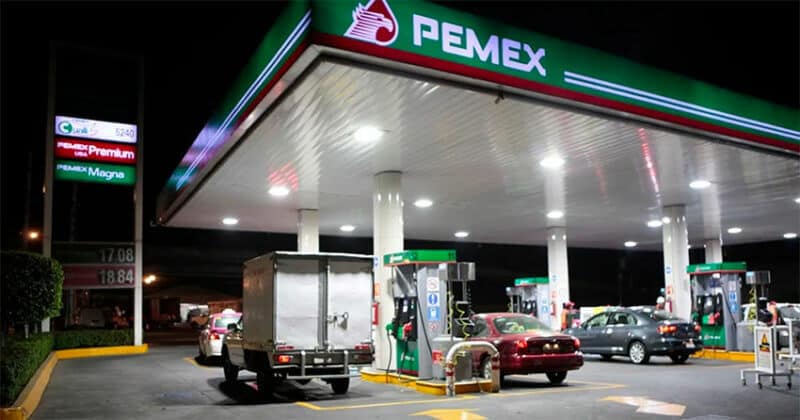
Pemex gas stations would benefit from a restriction on imports, but supplies might be a problem.
Pemex gas stations would benefit from a restriction on imports, but supplies might be a problem.However, the Energy Ministry subsequently canceled five import permits the ship had obtained to bring fuel such as diesel, gasoline and jet fuel into the country. The ship was allegedly conducting business with companies that don’t have the required permits to operate in Mexico’s energy industry.
Alicia Zazueta of the oil sector firm eServices described the government’s closure of terminals and the revocation of permits as discretional, suggesting that it is targeting private companies arbitrarily.
The cancellation of permits and the closure of terminals will limit fuel supply options and return control of the market to Pemex, she said.
Claudio Rodríguez, a lawyer with Holland & Knight who specializes in energy matters, said it was clear that the government is intent on returning the state oil company to a dominant position in the market, which was opened up to private and foreign companies by former president Enrique Peña Nieto.
However, there is a risk that Pemex won’t be able to satisfy market demand, he said.
“On the issue of medicines, a shortage was created by cutting private companies’ distribution networks … [because] the government didn’t have the capacity to supply the national market. There is an enormous risk of falling into the same situation with fuel … [because] Pemex doesn’t have the capacity to supply the market,” Rodríguez said.
“Dogmatism has dictated energy policies in Mexico for three years,” he added, referring roughly to the period President López Obrador – a staunch energy nationalist – has been in office.
“The fewer terminals there are, the less competition there is for Pemex. That’s a fact,” said Montufar of PetroIntelligence.
The CRE’s actions could lead to fewer privately owned gas stations in Mexico and higher fuel prices, he said.
“But that would be in a medium or long term scenario if we see the revocation of terminal permits,” Montafur said.
Since López Obrador – who has pledged to “rescue” Pemex and the state-owned Federal Electricity Commission from years of neglect – took office in late 2018, the government has enacted a range of policies designed to make the state a more prominent player in the energy sector.
Many have faced legal challenges from private companies, and some, including an Energy Ministry policy that imposed restrictive measures on the renewable sector, have been suspended by court order.
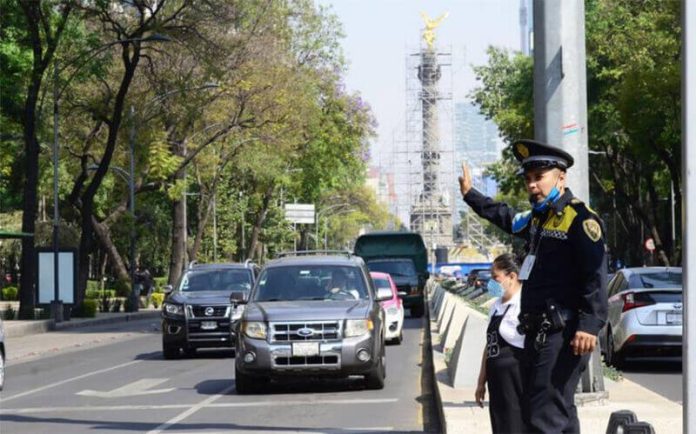
A transit police officer directs traffic at a Mexico City crosswalk.
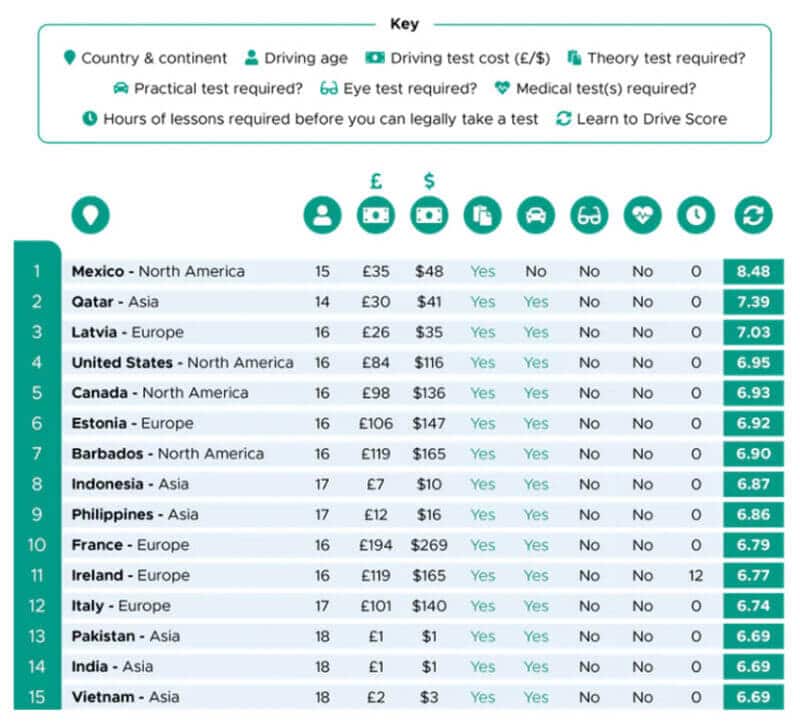
Mexico is by far the easiest country in the world to get a driver’s license and hit the road, according to a ranking published by the driving education platform Zutobi.
The country scored 8.48 out of 10 for the ease with which citizens can legally get behind the wheel. Aspiring drivers are helped by incredibly loose regulation, Zutobi explains: “… in a large portion of the country, you do not legally have to take a practical test to get a license, just a theory test and moreover, prior to 2018 there was no test at all. Another reason is that you can legally drive at 15 in Mexico which is younger than the majority of countries (who will not let you drive before 18).”
The granting of licenses is regulated at the state level, and so requirements can vary widely. Nonetheless, it is generally a simple procedure, according to the news website Alcaldes de México.
It reports that the general process to gain a license requires an official identification, proof of address, the payment of fees, and in some cases a theoretical exam. Some states go as far as to demand proof of a driver’s competence in a practical exam. However, in Mexico City, one of the cities with the highest density of traffic in the world, there is no examination process.
Gaining official permission is also cheap. In Morelos, the process can cost as little as 686 pesos (about US $34) for a five-year license. In Mexico City, 871 pesos (about $44) does the trick for a three-year license, without any demands of knowledge, experience or proficiency.
The top 15 countries where it is easiest to get a driver’s license. Zutobi
The second easiest country to gain a license is Qatar, where it is still significantly harder than in Mexico. According to the ranking, the nation on the Arabian peninsula scored a more modest 7.39/10.
Other countries that offer little obstruction to learners are Latvia, the United States and Canada. The most difficult countries to get qualified are Croatia, Brazil, Hungary, Bahrain and Montenegro.
Croatia, Zutobi informs “… is the toughest country to get behind the wheel due to their expensive and stringent driving tests that require a minimum amount of learning and monitoring to pass. Average Croatian driving lessons cover about 85 hours on average, and it is a legal requirement to have these lessons before you can even take a test. Croats also have to produce multiple medical clearances and spend around £930 to pass their test and obtain their license.”
The ranking was compiled based on seven indices: the age one can drive, the cost of an exam, whether a theory test is required, whether a practical test is required, whether an eye exam is required, whether a medical exam is required and the hours of mandatory lessons demanded.
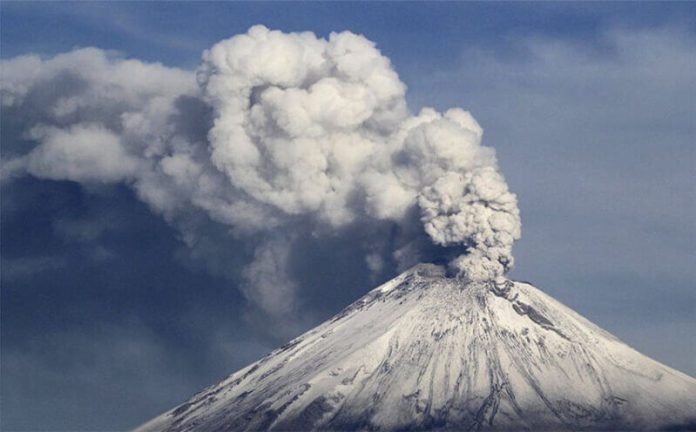
Though volcanic activity has remained light so far, Civil Protection has asked that the local population take precautions.
At least one México state municipality has set up shelters to receive potential evacuees as heightened activity continues at the Popocatépetl volcano.
There were 2,062 exhalations, 30 explosions, 13 volcano tectonic earthquakes and more than 6,000 minutes of tremors at El Popo during the first 21 days of September.
Activity at Don Goyo, as the stratovolcano is colloquially known, has increased in recent days, although the National Disaster Prevention Center (Cenapred) has not raised its alert from yellow Phase 2.
The yellow Phase 3 alert is the highest warning level before the red phase, in which people living near the volcano are advised to be ready to evacuate.
Even though the alert level is two notches below the red phase, authorities in Chalco, a municipality to the northwest of El Popo, have prepared seven shelters to receive residents who could be required to evacuate their homes.
Other municipalities in the southeast of México state, such as Amecameca, Ecatzingo and Ozumba, are on alert. A large eruption at Popocatépetl would also likely affect residents of Puebla and Morelos as the volcano straddles those two states and México state.
Cenapred has warned people not to go near the volcano, especially its crater due to the risk of further exhalations, explosions and other volcanic activity. A safety radius of 12 kilometers remains in effect around what is Mexico’s most active volcano.
Just over 100 exhalations of water vapor, gases and ash were recorded in the 24-hour period to late Tuesday. There were six explosions at the volcano last Friday, the highest number of any day this month, and small quantities of ash have reached several México state municipalities as well as some boroughs of Mexico City.
Authorities recommend that people in the vicinity of the volcano cover their nose and mouth with a face mask or handkerchief to avoid inhaling ash. They also advise residents to close the windows of their homes and stay inside as much as possible.
The Popocatépetl volcano, whose name comes from Náhuatl and means “smoking mountain,” woke up in December 1994 after 56 years of inactivity to blow ash over Puebla.