Home Blog Page 1156

Suspension of US trade embargo against Cuba is ‘urgent,’ Mexico tells United Nations

0
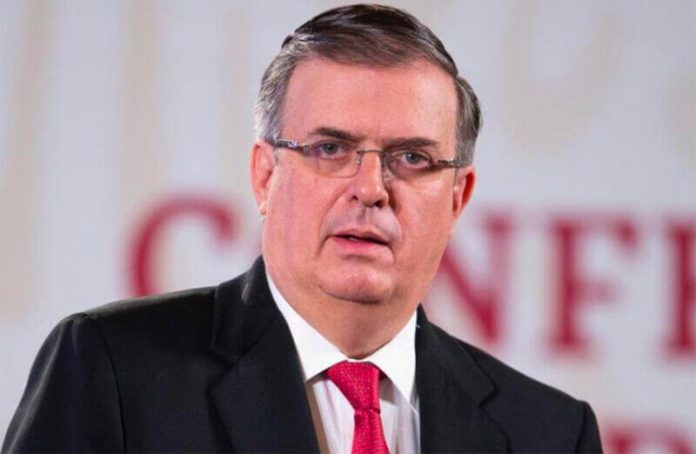
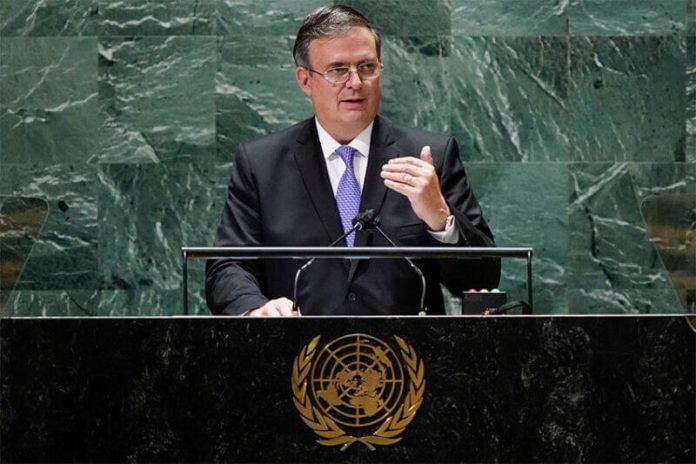
Ebrard spoke to the UN General Assembly on Thursday.

Mexico continues to apply pressure on the United States to change its policies regarding Cuba, declaring at the 76th session of the United Nations General Assembly Thursday that it was time to end its trade embargo.

“In the face of the severe economic and health crisis at a global level, putting an end to the economic blockade against Cuba is urgent,” Foreign Minister Marcelo Ebrard told the gathering in New York.

“Instead of unilateral measures we must put measures of solidarity and mutual support into operation to boost economic growth and development,” Ebrard said.

Mexico’s call at the United Nations comes after repeated appeals for its suspension by President López Obrador.

Just last week he declared that “no state has the right to subjugate another people, another country” and urged United States President Biden to use his “political sensitivity” and end the blockade.
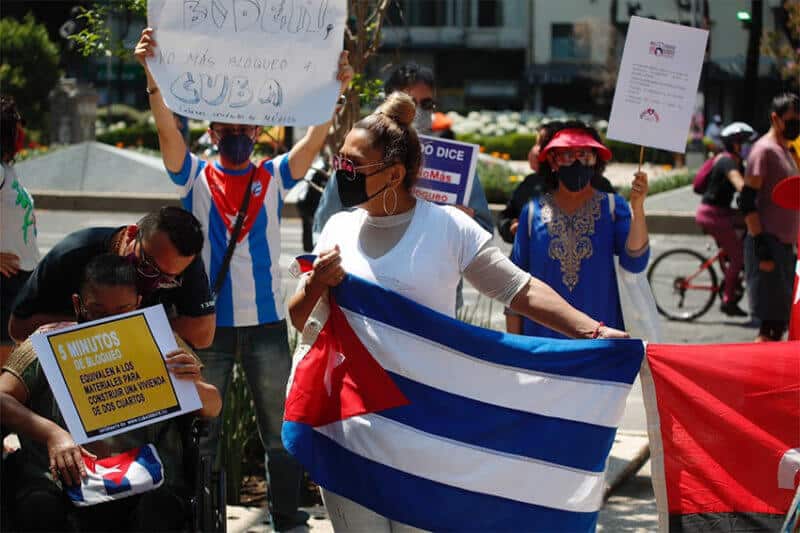
In May, Cubans in Mexico City protested against the US trade embargo against their home island.
In May, Cubans in Mexico City protested the US trade embargo against their home.

Mexico’s position has broad international support. A total of 184 countries voted in June in favor of a United Nations resolution to demand the end of the blockade. Only the United States and Israel voted against it. The resolution has been approved annually since 1992, the year the General Assembly began voting on the issue, with the exception of 2020 due to restrictions imposed by the coronavirus pandemic.

In a 15-minute address, Ebrard also touched on a range of other issues including COVID-19 vaccine equity, climate change, immigration and arms trafficking.

“Since the beginning [of the pandemic] Mexico has raised the necessity of guaranteeing equitable and universal access to medications, vaccines and other medical supplies. We do it again with a sense of urgency because while 33% of the global population in high-income countries has already had at least one dose of a [COVID-19] vaccine, only 1.4% of inhabitants of low-income countries have had access to vaccines,” he said, adding that vaccines need to be considered “global public assets.”

The foreign minister described climate change as “the other great challenge of these times” before noting that Mexico has reaffirmed its support for the Paris Agreement and maintains its interest in working with the international community to combat global warming.

“Mexico’s contribution doesn’t just have mitigation commitments, it also has a strong component of adaptation. This component acknowledges the country’s vulnerability to climate change impacts and the urgent need to build resilience against them,” Ebrard said.

“The Mexican adaptation measures include solutions based on nature, … for example the Sembrando Vida [Sowing Life] program, promoted by the government of Mexico, is one of the largest reforestation programs in the world; up until now 700 million trees have been planted, which doesn’t just allow environmental degradation to be combatted but also helps to create dignified work opportunities.”

With regard to immigration – currently a hot-button issue in Mexico due to the arrival of record numbers of migrants this year – Ebrard asserted that the phenomenon is not a “pernicious” one.

“On the contrary, all of our societies have benefited at certain times in their historical development because of the contribution of migrants,” he said.

He noted that Mexico has offered refuge to hundreds of Afghans, more than 18,000 Haitians and over 70,000 Central Americans since the current federal government took office in late 2018.

However, the government has also used force to detain migrants transiting Mexico and deported thousands to the countries from which they fled. The National Guard and immigration agents recently broke up four migrant caravans traveling through the country’s south.

A day after declaring that reducing violence in Mexico will be very difficult if the United States doesn’t do more to stop the illegal flow of weapons into the country, Ebrard told the General Assembly that the Mexican government will continue to be an advocate for the need to combat the sale of arms.

“We will continue to draw the attention of the international community to the irresponsible trade and trafficking of weapons,” he said.

“… We hope that the [Security] Council can implement measures so that there is stricter control of small and light weapons because they are the fuel that feeds the world’s conflicts.”
With reports from Milenio and El País 

Tourism minister knocking on US doors to promote opportunities in Mexico

0
Tourism Minister Miguel Torruco
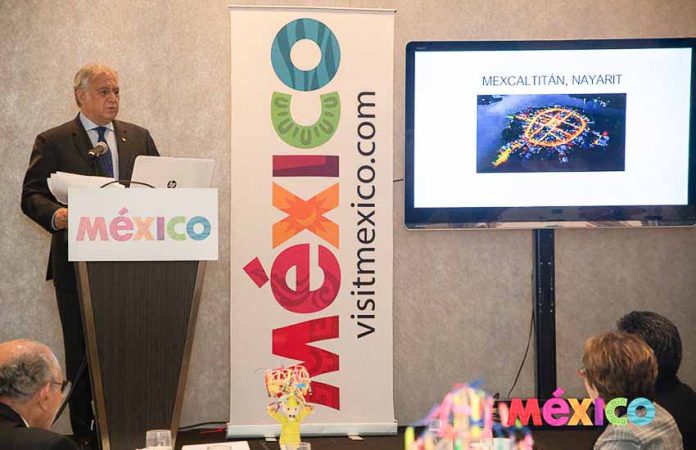
Tourism Minister Miguel Torruco promoted existing and up-and-coming destinations in Mexico to tourist-sector investors and businesspeople.

Tourism Minister Miguel Torruco traveled to the United States this week to promote the Mexican tourism industry in the sector’s largest source market.

Accompanied by 10 state tourism ministers and executives of three Mexican airlines, Torruco spent Tuesday, Wednesday and Thursday in Los Angeles, where he met tourism sector representatives, business leaders and investors.

At one event, the federal minister spoke about the Maya Train railroad project, the potential of the Islas Marías as a tourism destination and the development of the Huasteca Potosina region of San Luis Potosí, according to a report by the tourism news website Inversión Turística.

Among the attendees at the Así es México (This is Mexico) seminar were representatives of tourism associations, executives from airlines including Delta, American Airlines and United, travel agents and tour operators.

Torruco also met with California-based consul generals with whom he discussed ways to reactivate Mexico’s tourism sector, which had its worst year in living memory in 2020 due to the coronavirus pandemic. The dinner at the official residence of Mexico’s consul general in Los Angeles was also attended by tourism sector entrepreneurs.

Islas Marias, Mexico
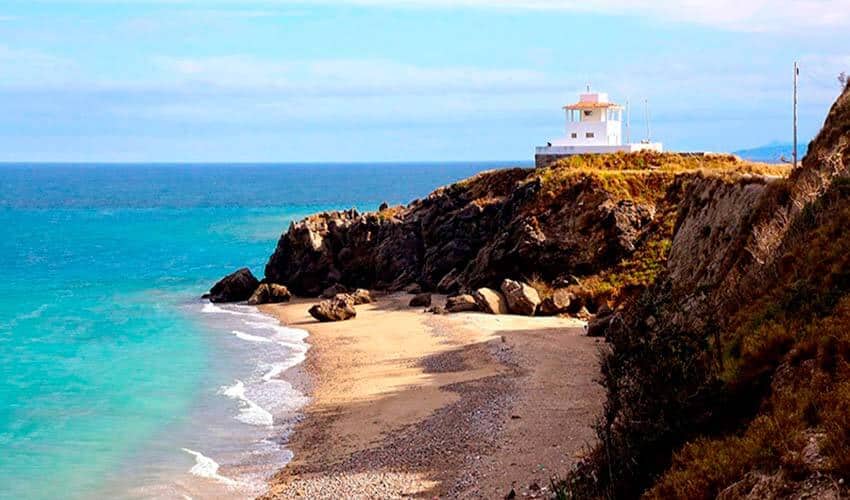
Torruco spoke at one meeting of the potential of the Islas Marías as a vacation spot for American tourists.

“The great connection with the state of California makes it the No. 1 market in the United States for travelers to Mexico,” Torruco said at the event.

The L.A. sojourn was the first of three visits the tourism minister will make to the United States as part of a tourism promotion strategy called operación toca puertas, or the knocking on doors operation.

Torruco will visit Chicago and New York during a four-day trip in October and Houston and San Antonio during a trip of the same length in November.

The company Global Publishing Strategies is organizing the trips at a cost of 4 million pesos (US $200,000) to the federal government. Before departing for Los Angeles, Torruco predicted that his visit would be “very productive.”

The Tourism Promotion Council was previously responsible for tourism promotion abroad, but it was disbanded by the current government.

Tourism contributes about 9% of Mexico’s GDP and directly employs more than 4 million Mexicans. Millions of United States citizens visit Mexico annually, bringing billions of dollars into the country.

With reports from El Economista and Inversión Turística 

COVID roundup: Mexico’s mortality rate is world’s 19th highest

0
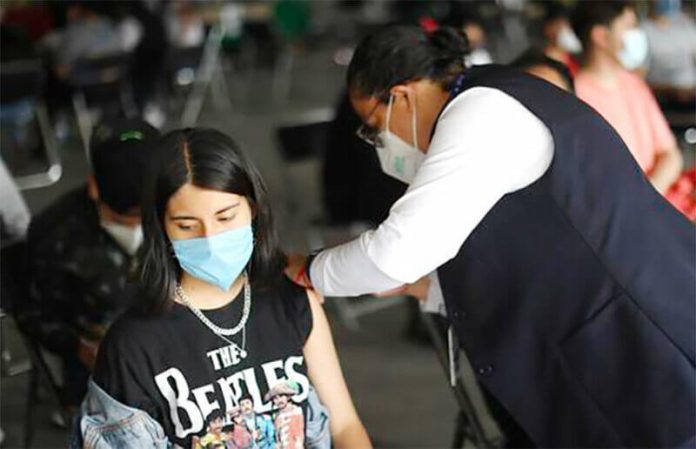
Just over 97.5 million vaccine doses have been administered.

Mexico’s COVID-19 mortality rate is among the 20 highest in the world, according to data compiled by Johns Hopkins University.

Based on the federal government’s official death toll, Mexico has recorded 214.3 COVID fatalities per 100,000 people, a rate that is currently No. 19 worldwide.

Peru has the highest mortality rate with 612.4 COVID deaths per 100,000 people, followed by Bosnia Herzegovina, North Macedonia, Hungary and Montenegro. Ranking sixth to 10th are Bulgaria, the Czech Republic, Brazil, San Marino and Argentina.

Also above Mexico are Colombia, Moldova, Georgia, Slovakia, Paraguay, Belgium, Italy and Slovenia. One spot below Mexico with the 20th highest COVID-19 mortality rate is Tunisia.

Mexico’s case fatality rate is 7.6, meaning that 76 of every 1,000 people who have tested positive for COVID here have succumbed to the disease.

In other COVID-19 news:

• Mexico’s accumulated case tally rose to just under 3.61 million on Thursday with 11,808 new cases reported. The total is the 15th highest in the world.

The official death toll increased to 274,139 with 748 additional fatalities. Only the United States, Brazil and India have recorded more pandemic deaths than Mexico.

An average of 644 fatalities per day were reported during the first 23 days of September, an 8% increase compared to the daily average in August, the worst month of the pandemic for case numbers.

As spikes in COVID deaths typically lag increases in case numbers it is not surprising that fatalities have increased this month, even though seven in 10 Mexican adults have had at least one dose of a vaccine.

There are 67,949 estimated active cases across the country, a 2.5% increase compared to Wednesday.

• Just over 97.5 million vaccine doses have been administered after more than 730,000 were given Wednesday. About 70% of the adult population has received at least one shot but the vaccination rate among Mexico’s entire population is only around 50%.

President López Obrador said Wednesday that the government will offer vaccines to children with chronic illnesses and disabilities but there is no plan to extend the rollout to minors without underlying health conditions.

• México state Health Minister Francisco Javier Fernández Clamont said Thursday that his state is close to switching to low risk green on the stoplight map because indicators used to determine the stoplight color such as the positivity rate and the reproduction rate are trending downwards.

“We received a preliminary report yesterday, we’re still yellow but three points from reaching green,” he said.

México state only switched to yellow from high risk orange on Monday. It is one of 24 yellow states.

• More than 118,000 children have lost either their mother or father to COVID-19, according to estimates by the DIF family services agency. More than 86,000 boys, girls and adolescents have lost their father to COVID, a DIF study found, while over 32,000 have lost their mother.

The study also found that 124 minors were orphaned by COVID, with both their mothers and fathers succumbing to the disease.

With reports from Milenio 

Already seen Chichén Itzá? Meet its ancient sister city of Mayapán

0
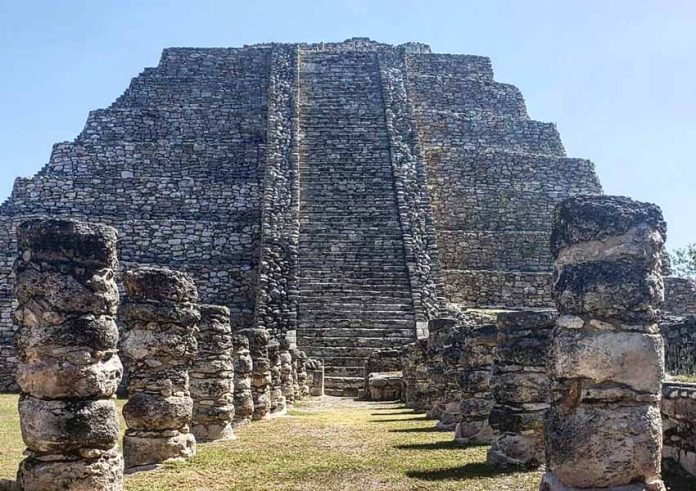
Castle of Kukulcán pyramid at Mayanpán site
Mayapán's Castle of Kukulcán recalls the more famous pyramid at the ancient Mayan city of Chichén Itzá. According to a 16th-century Spanish account, indigenous lore claimed Mayapán was established by the Chichén Itzá lord Kukulcán.

Mayapán, considered the last prominent capital of the ancient Mayas, is ideal for visitors who prefer archaeological zones with fewer crowds.

Mayapán is believed to mean “banner of the Mayas” or “flag of the Mayas.” The site, about 40 kilometers from Mérida, Yucatán, in the municipality of Tecoh, was inhabited between 300 B.C.–A.D. 600, but the walled city is thought to have been established in the 13th century. It was an important Maya city during A.D. 1250–1450, when its population is estimated to have been around 12,000.

The Spanish bishop Fray Diego de Landa wrote around 1560 that local tradition named the founder of Mayapán as the Mayan lord Kukulcán, who is thought to have ruled here for a while before leaving for central Mexico.

Thereafter, Mayapán was ruled by the Cocomes, a wealthy family with the city’s oldest lineage.

According to the National Institute of Anthropology and History (INAH), the city rose to power after the prosperous eras of Chichén Itzá and Uxmal, although it is thought to have had a centralized government like in Chichén Itzá. It was abandoned after being destroyed and burned around the mid-15th century.

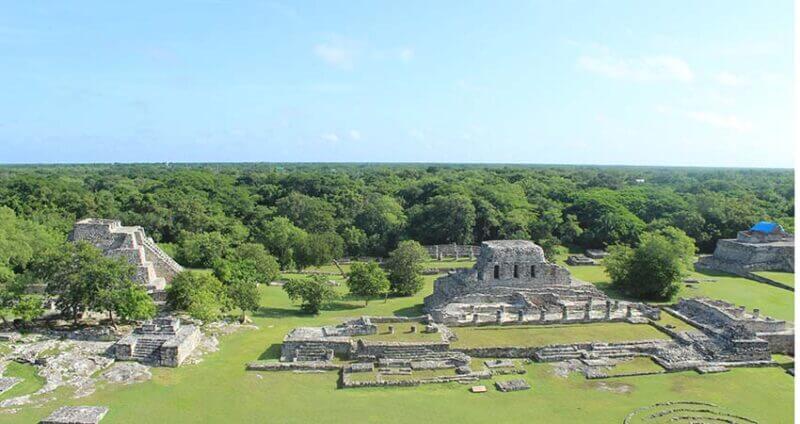
View of Mayapán archaeological site
Mayapán attracts far fewer visitors than other more famous ancient Mayan ruins in Mexico, making it a relaxing visit.

Mayapán extends over four square kilometers with around 4,000 structures, but the main area is small and easy to explore. The city’s surrounding wall has a circumference of over nine kilometers.

Perhaps not surprisingly, given its suspected connection to the more famous Maya city, Mayapán is thought to have been influenced by Chichén Itzá: its main pyramid, the Castle of Kukulcán, resembles the main pyramid of Chichén Itzá (El Castillo, which is also called the Pyramid of Kukulcán). However, Mayapán’s pyramid is smaller.

One enters the archaeological zone from the north. Climbing is allowed on most of the site’s buildings.

Near the entrance is the Temple of the Fisherman, with a stairway to the south. This temple holds a mural that is said to depict a scene of a person catching fish.

A beautiful structure in the north section of the site is the Temple of the Painted Niches. This temple has seven rooms, including one with a mural painting that is believed to depict the entrances of five temples and serpent heads with open jaws, over which the temples rest.

To the south, you’ll find the Central Plaza, where the governmental, administrative and religious structures, as well as the rulers’ residences, were located. South of the Central Plaza is the main pyramid, the most significant and tallest building of Mayapán — the aforementioned Castle of Kukulcán. A nine-level pyramid, it reaches 18 meters in height and sits on a base measuring 30 meters on each side.

There are remains of the temple that was built on top of this pyramid, and the main entrance’s columns were once decorated with serpent figures, according to INAH, which says they were similar to ones found at Chichén Itzá. While the climb to the top of this pyramid is steep, the views from the summit are stunning.

The southeastern side of the pyramid has a substructure with stucco reliefs of decapitated warriors. Due to the discovery of a jawbone and pieces of human skulls, the substructure is speculated to have been used for rituals, possibly of a death cult that covered human skulls with stucco.

To the east, adjoining the Castle of Kukulcán, is the Room of the Frescoes, named for the remains of murals discovered here. A scene includes two richly dressed individuals holding a circular banner that depicts sun symbols. Other features of this room include a bench and an altar.

To the southwest of the Plaza is the Room of the Kings, with many columns and a wall with a doorway. The name comes from the human heads sculpted of stucco discovered here, whose purpose is believed decorative.

Southeast of the Castle of Kukulcán, there is a sinkhole called the cenote Chen Mul. On its southern border, you’ll find the Temple of the Cenote Chen Mul.

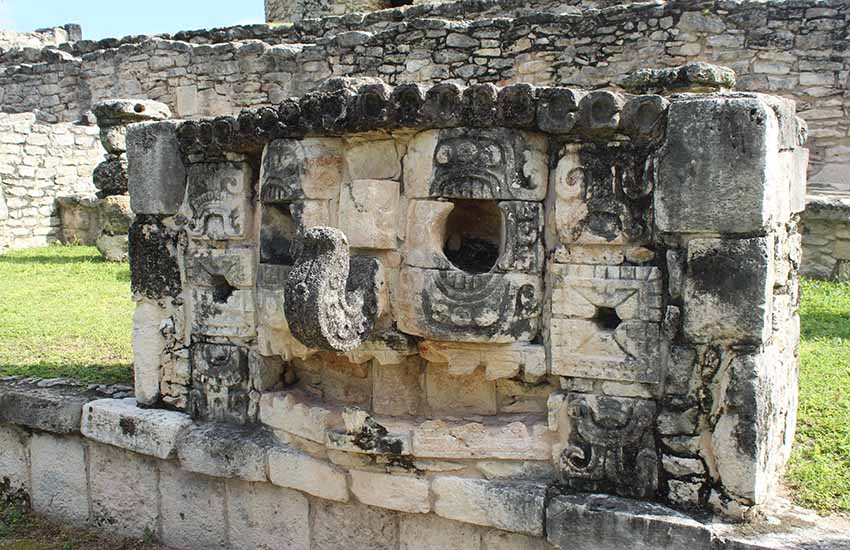
The temple has three entrances, and its interior features include an altar. There is a platform with a drain that likely emptied rainwater into the cenote, and the temple also has a ramp with access to the Castle of Kukulcán. Near the cenote, the Room of the Masks of the God Chaac features an altar and a shrine and is thought to have been a place of religious and ritual activities. The upper section of the structure has masks of Chaac – the Maya god of rain.

A mask of the Maya rain god Chaac
A mask of the Maya rain god Chaac.

East of the Central Plaza is a beautiful structure called the Round Temple — a round structure on a rectangular base, that is believed to have been a ceremonial building.

There is a wide stairway to access the building from the west, and the temple has four entrances.  There is a cylinder-like structure in the center of the temple. The building also includes an altar and a shrine.

To the east of the plaza are other buildings worth seeing. A notable one is the Oratory, whose features include two altars in front and one inside, and a shrine by the stairway where 13 human skulls were discovered. Another building is a structure named Xbi Ac, meaning “Turtle-Man,” named after a turtle sculpture with a human head discovered here. There are altars in this building as well.

Northeast of the Central Plaza, you’ll see the Warriors Temple, thought to be ceremonial in purpose. Built on a two-level base, it has an altar inside. Serpent heads and dice adorn the top of the panels by the stairway.

North of the plaza is the Temple of the Mask with six small altars. It’s named after a stucco head discovered here. Adjoining it is the Shrine of the Skulls, named after the human skulls found here. In this section, a structure called the Turtle’s Room, featuring an altar, is worth seeing. Stone turtle figures thought to have been offerings were discovered here.

There are several other structures to explore, including the Temple of the Crematorium, speculated to be ceremonial in purpose.

The winter solstice is a good time to visit Mayapán, when a light and shadow effect in the shape of a serpent occurs on the Castle of Kukulcán like the famed effect at Chichén Itzá. Meanwhile, a different astronomical phenomenon involving halo-like light effects can also be observed during the winter solstice in the Round Temple.

Thilini Wijesinhe, a financial professional turned writer and entrepreneur, moved to Mexico in 2019 from Australia. She writes from Mérida, Yucatán. Her website can be found at https://momentsing.com/

Conservative Querétaro approves gay marriage

0
Two women kissing in the street wrapped in a multicolored rainbow gay pride flag.
Legal equality for LGBTQ+ persons are on an upward trajectory in Mexico. As of 2022, same-sex marriage has been legal throughout the nation. (File photo)

The Congress of Querétaro, one of Mexico’s most conservative states, approved same sex marriage on Wednesday with 21 of 25 lawmakers voting in favor of legalization.

Same-sex couples can now legally marry in 23 of Mexico’s 32 states. The approval in Querétaro, a deeply religious state governed by the conservative National Action Party, came one month after the Congress of Yucatán approved gay marriage and three months after the legislatures of Baja California and Sinaloa voted in favor of marriage equality.

The Supreme Court ruled in 2015 that civil codes that bar same-sex marriage are unconstitutional but some states have not changed their laws, forcing gay couples to apply for injunctions in order to get married within their borders.

Mexico City was the first entity to legalize gay marriage, doing so in 2010. The states where same-sex marriage has not been legalized are Durango, México state, Guanajuato, Guerrero, Sonora, Tabasco, Tamaulipas, Veracruz and Zacatecas.

With reports from EFE and Milenio

United States triples reward for capture of Sinaloa Cartel chief ‘El Mayo’ Zambada

0
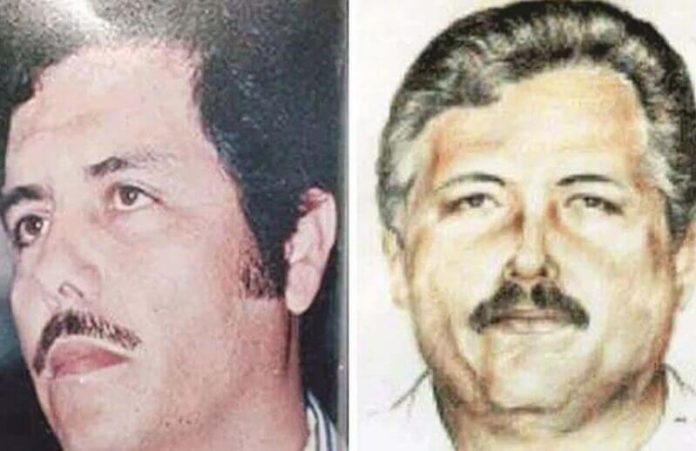
Ismael "El Mayo" Zambada García
An older photo and updated sketch of Ismael "El Mayo" Zambada García, the alleged boss of the Sinaloa Cartel since 2016.

The United States is now offering three times the reward it previously set for information leading to the capture of alleged Sinaloa Cartel leader Ismael “El Mayo” Zambada García.

The U.S. Department of State announced Wednesday an increase from US $5 million to $15 million for information that results in the arrest and/or conviction of Zambada, a 73-year-old former poppy field worker who is presumed to be the cartel’s boss since Joaquín “El Chapo” Guzmán was arrested in 2016.

The reward is offered under the State Department’s Narcotics Rewards Program, or NRP.

“Zambada García is a longtime business partner of convicted Sinaloa Cartel leader Joaquín Guzmán Loera, also known as, ‘El Chapo’ and is charged in several U.S. indictments along with El Chapo and his sons. The increase is commensurate with his leadership status in the Sinaloa Cartel,” the State Department said.

“This reward offer directly complements the derivative designations announced today by the Department of Treasury,” the State Department continued. “Treasury’s designations are being made pursuant to the Foreign Narcotics Kingpin Designation Act of Zambada García’s Sinaloa Cartel associates.  Together, these actions are part of a whole-of-government effort to combat drug trafficking and transnational organized crime globally and in Mexico.”

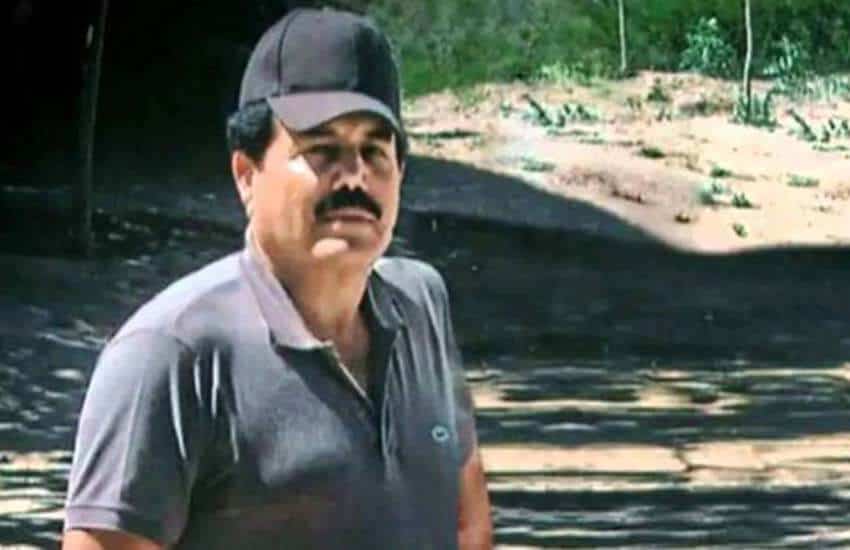
Ismael "El Mayo" Zambada García
Zambada García during a 2012 interview.

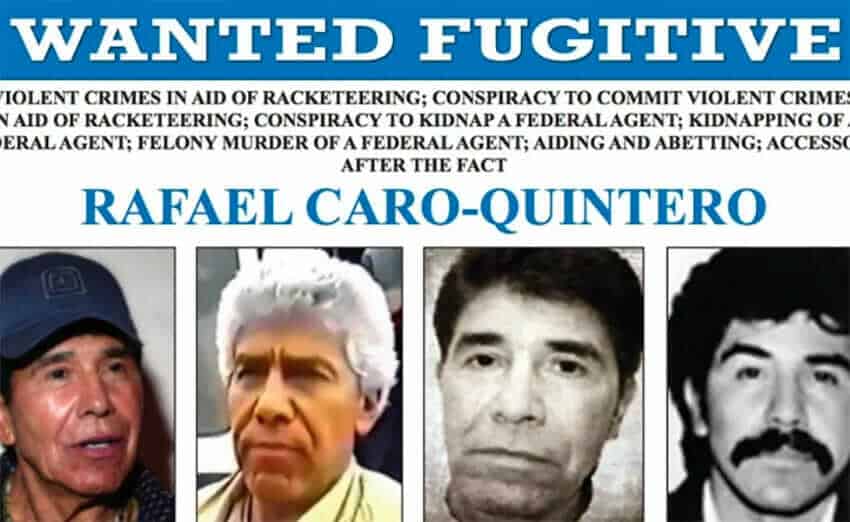
The reward for the capture of Zambada, who has never been imprisoned despite being involved in the illegal drug trade for decades, is now the second-highest on offer for a Mexican trafficker. The FBI is offering a reward of up to $20 million for information leading to the arrest of Rafael Caro Quintero, former leader of the defunct Guadalajara Cartel and currently an alleged Sinaloa Cartel member wanted for his involvement in the 1985 kidnapping and murder of Drug Enforcement Administration special agent Enrique “Kiki” Camarena. Caro Quintero was convicted by a court in Mexico in 1989 and sentenced to 40 years in prison but released in 2013 on a technicality and remains at large.

There are rumors that Zambada is in hiding in the mountains of northern Mexico as he admitted as much in a 2010 interview in which he also said he had a wife, five other female companions, 15 grandchildren and one great-grandchild.

“The six of them are here, on my ranches; they are daughters of the mountain as I am a son of the mountain. The mountain is my home, … my protection, my land,” said Zambada, who conceded he was afraid of being arrested.

“Will you be caught?” asked a journalist from the news magazine Proceso. “[It could happen] at any time, or never,” El Mayo said.

Prior to the State Department announcing the increased reward for the capture of Zambada, the U.S. Department of Treasury said in a statement that its Office of Foreign Assets Control (OFAC) had designated Sinaloa Cartel member Sergio Valenzuela Valenzuela as a “specially designated narcotics trafficker.”

“Based in Nogales, Sonora, … Valenzuela Valenzuela is a Sinaloa Cartel plaza boss. In that role, he oversees a major drug trafficking corridor in Mexico, is responsible for smuggling tons of fentanyl and other drugs into the United States and reports directly to the leader of the Sinaloa Cartel, Ismael Zambada García (a.k.a. ‘El Mayo’),” the Treasury Department said.

Rafael Caro Quintero
The reward being offered by US authorities for Zambada’s capture is the nation’s second largest on offer: the reward for the capture of Rafael Caro-Quintero, wanted for kidnapping a DEA agent, is US $20mn. US Federal Bureau of Investigation

The OFAC also designated seven other Mexican nationals and two Mexican companies as providing material assistance to Valenzuela.

“As a result of today’s action, all property and interests in property of the designated individuals and entities that are in the United States or in the possession or control of U.S. persons must be blocked and reported to OFAC,“ the Treasury Department said.

With reports from Reforma, Milenio and El País

Foreign minister predicts efforts to stop violence will be difficult without US cooperation

0
Ebrard: US must assume coresponsibility.
Ebrard: US must assume co-responsibility.

Reducing violence in Mexico will be very difficult if the United States doesn’t do more to stop the illegal flow of weapons into the country, Foreign Affairs Minister Marcelo Ebrard said Wednesday.

Addressing a National Autonomous University seminar on the federal government’s legal action against United States-based gun manufacturers, Ebrard said that a main reason why violence in Mexico has been increasing since the start of the 21st century is the availability of firearms, mainly those from the United States.

“Of course we’re not saying … that Mexico should excuse itself from everything it must do … to control the entry of these weapons into our country and their distribution and use. But it’s clear that without the possibility of the United States assuming co-responsibility for the rates of violence in Mexico through the availability of weapons … it will be very difficult for us to be able to reduce violence in our country,” he said in a video message.

The foreign minister said the government’s lawsuit against 11 gun manufacturers – which was filed in a U.S. federal court in Boston last month – was prepared over a period of two years.

“… It’s a lawsuit regarding the negligence of companies that produce arms, they even produce arms that are directed at the adolescent market and … designed for use by those who are linked to drug trafficking,” Ebrard said.

He rejected claims that the “very powerful” firearms industry in the United States will easily win the case because Mexico has a “good point in its favor, which demonstrates that these companies have acted negligently and this negligence is provoking enormous effects and costs in Mexico, especially in [terms of] human lives.”

The Ministry of Foreign Affairs (SRE) said in 2019 that firearms from the United States are used in seven out of every 10 high-impact crimes committed in Mexico. Hundreds of thousands of weapons per year are estimated to cross into the country via the northern border.

Mexico alleges that gun manufacturers such as Smith & Wesson and Barrett Firearms know that their business practices contribute to illegal arms trafficking in Mexico and are used in violent crimes.

“Nonetheless, they continue to prioritize their economic benefit, and use marketing strategies to promote weapons that are ever more lethal, without mechanisms of security or traceability,” the SRE said in a document filed as part of the lawsuit.

The gun manufacturers the federal government is suing will have until November 22 to present their response to Mexico’s lawsuit, according to the SRE, after which both sides will have further opportunities to present additional arguments and counterarguments.

Mexico is seeking financial compensation from the gun companies but has not specified an amount. However, Mexican officials have estimated that damages could be as high as US $10 billion if the lawsuit is successful, although that appears unlikely because a U.S. federal law shields gun manufacturers from most civil liability claims.

In talks with the United States government, Ebrard has tried to manage the weapons smuggling issue as a quid pro quo negotiation: Mexico will prioritize combatting the trafficking of drugs to the United States in exchange for authorities in the U.S. doing more to stop the shipment of weapons to the south.

He said last month that U.S. authorities have been willing to work with Mexico to stem the flow of weapons. Former United States ambassador to Mexico, Christopher Landau, said earlier this year that the U.S. had offered equipment to Mexico to help control illegal arms trafficking but the Mexican government rejected it. An SRE official subsequently accused Landau of lying.

Mexico News Daily 

Amid mounting criticism, attorney general tries for 3rd time to arrest 31 scientists

0
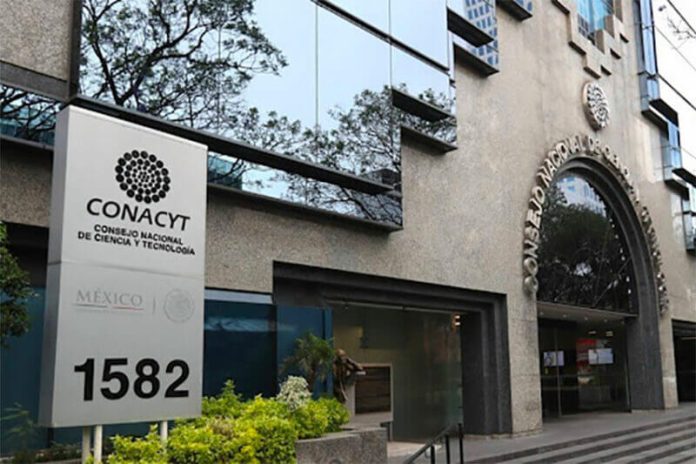
Headquarters of the national science agency Conacyt.

Amid a growing backlash against the federal government’s alleged persecution of academics, the federal Attorney General’s Office (FGR) will once again attempt to secure warrants for the arrest of 31 scientists and researchers on corruption charges.

On Wednesday, a judge at the maximum security Altiplano prison once again rejected the FGR’s request for warrants for the arrest of members of the Scientific and Technological Advisory Forum (FCCyT).

The FGR alleges that 31 scientists and researchers who were formerly employed by the National Council of Science and Technology (Conacyt) embezzled public money via the forum, carried out operations with resources of illicit origin, engaged in organized crime and made illicit use of their positions.

Its allegations center on 244 million pesos (US $12.2 million at today’s exchange rate) the FCCyT received from Conacyt during the 2012-18 government led by former president Enrique Peña Nieto.

The FGR argued against the ruling in a statement on Wednesday.

“The district judge points out in his refusal that the private company that Conacyt public servants created, authorized and funded in order to later join, and in which they used federal resources allocated to scientific research to help said company in its purchase of furniture, vehicles [and] properties, [and to pay] salaries and direct services, is not a criminal act because the advisory forum set out in the Conacyt statute authorizes it,” the FGR said.

“That opinion is not acceptable for the federal Attorney General’s Office given that it’s an internal statute issued ad hoc by the Conacyt officials themselves. It can’t go against what is set out in the Science and Technology Law and Conacyt’s own Organic Law, which are obligatory for [officials to follow] and which consider the forum an internal organ of that institution and don’t allow in any way for [the forum] to be turned into a private company that obtains its funds, profits, resources and salaries from public funds allocated to scientific investigation.”

As a result, the FGR said it will once again seek warrants for the arrest of the 31 scientists, among whom are former Conacyt director Enrique Cabrero Mendoza, Julia Tagüeña Parga, a former director of the FCCyT, Gabriela Dutrénit Bielous, a professor at Mexico City’s Autonomous Metropolitan University (UAM), and Luis Mier y Terán Casanueva, a former rector of UAM.

It will be the third time the FGR seeks authorization for their detention.

According to the Associated Press, the FGR has charged the academics with violating a law that prevents members of an advisory board from receiving money from a government science fund. But that law was passed in 2019, the news agency said, and the scientists and researchers – who have denied any wrongdoing – received the funding prior to that.

Numerous members of Mexico’s academic community assert that the FCCyT members are being persecuted.

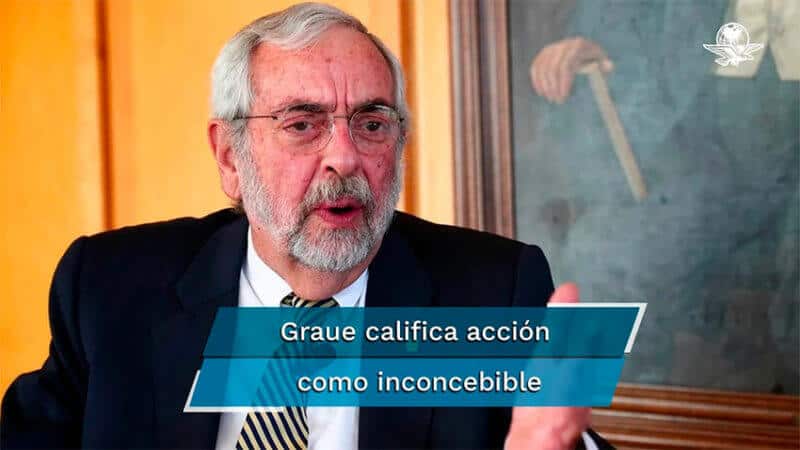
National Autonomous University head Enrique Graue
National Autonomous University head Enrique Graue called the accusations ‘inconceivable.’

“In the face of growing concern and anxiety that has emerged among members of the national academic community due to this nonsense, this inconceivable accusation of criminal association, we must protest,” said Enrique Graue, rector of the National Autonomous University (UNAM)

“… this is an attempt to silence voices that are critical of the management of Conacyt. There is no valid element to justify such extreme accusations,” said David Romero, a UNAM researcher.

The Center for Research and Teaching Economics, a Mexico City university, said the accusations against the academics “are simply unacceptable.”

“… For that reason we demand the authorities withdraw this disproportionate and absurd claim,” it said.

Alejandro Frank, a physicist and National Science Award winner, said the “war” the federal government has waged against the academic community since the start of its six-year term is “incomprehensible.”

“This has awakened a feeling of absolute rejection … from a large percentage of the scientific community,” he added.

President López Obrador weighed in on the matter at his news conference on Wednesday.

“It is presumed that there was poor management of resources at Conacyt. But a judge will resolve this and he who owes nothing [should] fear nothing. The thing is we have to combat corruption … from the very top to down below,” he said.

The initial complaint against the FCCyT members was filed by Conacyt director María Elena Álvarez-Buylla, who earlier this year defended her decision to elevate Attorney General Alejandro Gertz Manero to a lucrative and prestigious position among Mexico’s top-level researchers, even though he allegedly plagiarized a thesis he submitted decades ago.

Gertz, a veteran who was appointed to a nine-year term as attorney general in January 2019, asserts that he cited his sources appropriately.

Álvarez-Buylla has also angered academics by criticizing them for presenting reports in English, rather than Spanish, despite the former language being the lingua franca in some technical fields.

The government has also cut funding for science and other academic endeavors, and López Obrador has charged that corruption was allowed to flourish in academia during previous administrations.

With reports from El PaísReforma and AP

Architect confirms new airport’s control tower has a slight lean, but not like Tower of Pisa

0
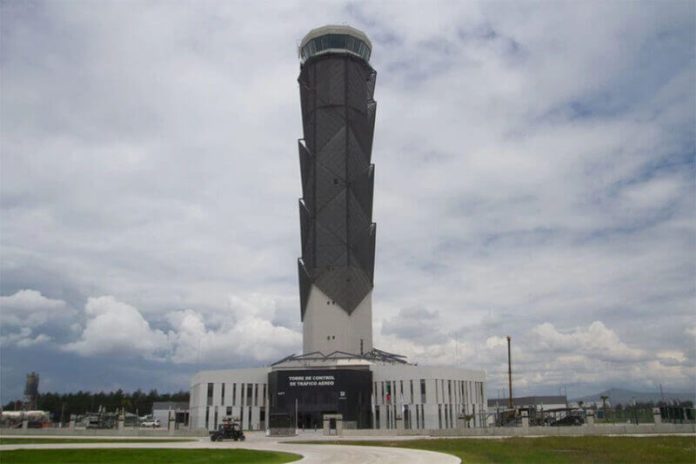
The control tower at Felipe Ángeles International Airport near Mexico City.

An architect has responded to a viral photograph of the control tower leaning slightly to one side at the Felipe Ángeles International Airport (AIFA), near Mexico City. Social media users compared the tilted control tower to Italy’s famous Leaning Tower of Pisa.

Alex Belfort posted on Twitter to say the 88-meter tower had an inclination of 18 centimeters at its highest point, calculated “with topographic measuring instruments,” and assured that “inspection and control work must be carried out to do any work of that type.”

He argued that it was normal for such constructions due to “the building exerting pressure on the ground.”

“It is not necessary for construction of this type to be perfectly vertical … 18 centimeters of inclination is still within a normal safe range,” he added.

The viral photos were addressed in the president’s morning news conference Wednesday in the “Who’s who in the lies of the week” section, and said to be false.

Ana Elizabeth García Vilchis, who presents the segment, said the “published photos were taken from an angle which produces a visual effect.”

“The commander of the Felipe Ángeles International Airport informed that the images put on social media are manipulated to make it look as though there is a lean … its verticality was tested … after the earthquake on September 7 to check if the tower suffered any damage,” she added.

She named several media organizations that had published the “manipulated” photos.

She said there was no inclination in the tower.

With reports from Infobae

Government will offer COVID vaccines to children with certain health conditions

0
A young child receives a measles shot. Soon, children with certain health conditions will also be eligible for COVID-19 inoculations.

The federal government will offer COVID-19 vaccines to more than 1 million children with disabilities and illnesses, but it currently has no plans to inoculate minors without any underlying health problems.

“The decision was taken to vaccinate children with some diseases, … children who need special treatment. More than 1 million children will be vaccinated in the country, children with disabilities, with some kind of problem, a disease,” President López Obrador told reporters at his regular news conference on Wednesday.

Health regulator Cofepris has approved the use of the Pfizer vaccine to immunize children aged 12 and over but the federal government has only offered shots to youths who have obtained injunctions ordering their inoculation.

López Obrador said earlier this month that the government’s medical experts believe that the vaccination of children is unnecessary, even though infections among minors and hospitalizations have increased as the highly contagious delta strain circulates widely.

The president’s announcement on Wednesday was foreshadowed by remarks made by Deputy Health Minister Hugo López-Gatell last week. He said in an interview that 1 million children with underlying health conditions that make them susceptible to serious disease would be offered shots.

“We have identified one million people between 12 and 17 with cancer, renal or hepatic insufficiency, HIV/AIDS, transplanted organs, congenital diseases and other [conditions] that diminish the immune system,” he told the newspaper La Jornada. 

In other COVID-19 news:

• Mexico’s accumulated case tally rose by 11,603 on Wednesday to just under 3.6 million . The official COVID-19 death increased by 811 to 273,391. There are 66,264 estimated active cases across the country, a 3% increase compared to Tuesday.

Mexico City has the highest number of active cases among the 32 states with almost 12,000, according to the Health Ministry.

On a per capita basis, Tabasco has the highest number of active cases with about 170 per 100,000 people. Colima, which also has about 170 active cases per 100,000 people, ranks second followed by Mexico City with a rate of about 130. A graph in the Health Ministry’s daily COVID report shows no other states have more than 100 active cases per 100,000 people.

• Just under 96.8 million vaccine doses have been administered in an almost nine-month-long vaccination rollout after more than 712,000 were given Tuesday, health authorities reported.

Almost 62.5 million adults – 70% of the eligible population – have received at least one dose. Of that number, 42.2 million are fully vaccinated.

López Obrador said Wednesday that all adults will have been offered at least one shot by the end of October.

“We’re going to have enough vaccines. Once we finish vaccinating adults and children [with disabilities and illnesses] we’ll see if we’ll start vaccinating again,” he said, suggesting that booster shots could be offered.

Mexico has received more than 112 million doses, among which are Pfizer, AstraZeneca, Moderna, CanSino, Sinovac, Sputnik V and Johnson & Johnson shots.

• There are 8,745 hospitalized COVID-19 patients across Mexico, according to federal data.

Data from the Acute Serious Respiratory Infection information system shows that general care COVID wards are at capacity in 78 hospital across the country. An additional 13 hospitals have occupancy rates of 90% or higher.

Oaxaca Health Minister Juan Carlos Márquez Heine said Tuesday that 13 hospitals in the southern state are completely full.

Among the other states where hospitals have reached capacity are Guanajuato, Tamaulipas, México state, Yucatán and Nuevo León.

Mexico News Daily