Home Blog Page 1155

Why does the American dream live on in the hearts of migrants?

0
Migrants cross the Rio Grande from Texas back into Mexico to get food and other supplies.
Migrants cross the Rio Grande from Texas back into Mexico to get food and other supplies. Cuartoscuro

What do people want? Opportunity.

To thrive, not just survive. It’s what all of us want.

And if you are guaranteed, or at least very likely, not to thrive where you are — if, even more painfully, your children are guaranteed not to thrive where you are — then chances are you will try to do something about it.

The other day I read an article in the New York Times (I know, I mention it a lot. I have a subscription!) about Haitian would-be immigrants in the United States being deported back to Haiti, some who hadn’t been back to their country for many years. The people profiled in the article had been living in other Latin American countries and had made lives for themselves there before entering the U.S.

But they still wanted to give things a try in the United States, which I think may always be seen as “the land of opportunity,” no matter what the reality may be for most.

Many people in the comments section were confused about why they had gone to the U.S. if they already had good, stable lives in their current host countries. The people quoted in the article talked of owning homes and cars, having jobs, having their children in school.

I was also confused. More than anything, I’m confused by the enduring belief that “anyone can make it” in the U.S. with enough gumption. With so many people suffering there — from homelessness, from perpetual and impossible mountains of debt, from the absence of a significant social safety net, not to mention all the people who can carry loaded weapons around with them — why is arriving there still the dream of so many?

If I were desperate for a better life, I’d try to move some place like Denmark or New Zealand, or even Canada. Granted, those places are quite a bit farther away, but I think the United States doesn’t hold a candle to them when it comes to taking care of its people in a way that affords them a relatively peaceful and secure life.

The mostly Haitian immigrants that were the focus of the story claimed that they’d been told that the U.S. was accepting Haitians as refugees and that they would be processed by immigration and then released.

It’s frustrating for everyone that they would have thought so, and I have my suspicions about how they might have received that message — most of them political.

After all, in the U.S., Republicans benefit from absolute immigration chaos when Democrats are in power, since they can point to their political opponents as the very definition of ineptitude. From their behavior of late, it’s obvious to me that sabotaging an entire institution is obviously not considered a price too high to pay.

Whatever the means through which these migrants felt assured of their safe passage to the U.S., the point is, they thought they’d count as “the tired, the poor, the huddled masses yearning to breathe free.”

Instead, a great number of them have been deported, after having been rounded up cowboy-style, straight back to Haiti, a country where many have not lived for years and which is probably the country least able to accommodate an influx of people in the wake of the pandemic, political turmoil, and a recent earthquake that seemed to want to finish the job of the nation’s total destruction.

What a bitterly disappointing despair-filled experience that must be for those being returned.

This paper is called Mexico News Daily, and so far, I have not mentioned Mexico at all. Do not fret! I promise it’s coming.

Ever since President Trump essentially bullied Mexico into becoming the wall, this country has taken on an outsized role in trying to control the flow of would-be immigrants to the southern U.S. border. It hasn’t been easy.

And though the U.S. administration has changed, the general panic about what to do about such large swaths of people showing up every day has meant that those mitigating measures will remain indefinitely in place.

My adopted home is trying to make progress. After flowery talk about what a great country Mexico would be as a final stop for those on their way to the U.S., the sheer number of people trying to make their way across seems to have overwhelmed and exhausted the government’s goodwill. The same is true for the communities suddenly seeing thousands of desperate people showing up who don’t plan to hang around and eventually contribute to those communities.

It’s now become a perfect storm: the Mexican Commission for Refugee Assistance (Comar), the immigration branch responsible for processing them, has seen their budget cut as the influx of migrants has increased to numbers never before seen in this country’s modern era.

The migrants themselves are losing patience as well, stranded in places like Tapachula, Chiapas, without the ability to work or to keep pressing ahead as their immigration applications take a year to be processed even though they’re required to be processed within three months. They’re tired and want to keep going.

Some have given up on a system that’s essentially broken under its own weight, and there have been violent clashes as they’ve tried to defy the rules since the rule makers haven’t been able to keep their end of the deal. Human patience has its limits, after all, especially when the ones in power, for whatever reason, keep moving the finish line farther and farther away.

I do think Mexico — and the U.S., for that matter — are trying their best to find solutions. But the sheer number of people has put immediate deportation of immigrants back on the table. Mexico has said it will start deporting Haitians as well, and I fear that exhausted officials and bitterly disappointed and despairing people will wind up being an explosive combination.

The United States and Mexico have agreed to cooperate on extending Mexico’s Sembrando Vida tree-planting scheme and paid apprenticeship programs for young people to other countries of Central America (but not Haiti) as a way to create opportunity in would-be immigrants’ home countries. While I truly want to be optimistic about these, if they’ve been mired in corruption here in Mexico, it’s hard to see how they might avoid the same fate in even less-stable countries.

Another suggestion President López Obrador has made to help stem the tide is to offer would-be immigrants temporary work visas to the United States. On this point, I agree with him that a chance to legally go would likely help a bit.

The U.S. government has not responded positively to this suggestion, and how could it, I suppose, in the current political climate? President Biden can likely already hear the “and what will get them to go back once they’re here, eh?” shouts from those who like to frame immigrants as undeserving invaders. So even though the U.S. could no doubt use the influx of workers for all those jobs they say they’re unable to fill, my guess is that it will not happen.

When I expressed to another foreign friend my confusion about why the idea that the United States was the promised land is so persistent, he immediately said: “Things work in the U.S. They work the way they’re supposed to, and that’s not true in most of the world.”

Well, he’s got a point.

However, things work in lots of other places too. But if emigrating on foot is your only option and you want safety, opportunity and the chance to earn the kind of money that would make the difference between poverty and prosperity back home, then a dangerous and unguaranteed journey is a sacrifice that many are willing to make.

Sarah DeVries is a writer and translator based in Xalapa, Veracruz. She can be reached through her website, sdevrieswritingandtranslating.com and her Patreon page.

Academic elite, finding deceit, a Oaxacan treat: the week at AMLO’s press conferences

0
lopez obrador
The president dressed casually for Monday's conference in Oaxaca city.

President López Obrador had spent the weekend in Oaxaca, a state for which he holds particular admiration. The 570 municipalities are more than double the number of any other state, meaning governance is more localized and land has been historically better shared. A third of the population is indigenous, around half of whom don’t speak Spanish.

The first and only indigenous president, Benito Juárez, was a Oaxaca native. Images of revolutionary hero Emiliano Zapata are common on the streets of the state, which was central to the struggle (1910-1920) against the dictatorship of Porfirio Díaz. However, the mustached Mexican rebel icon was actually from Morelos. Meanwhile, the infamous Díaz was Oaxacan born and bred.

Projects in the state include highways from Oaxaca city to the Isthmus of Tehuantepec and the coast and a trade route to connect the Atlantic to the Pacific across the isthmus.

Monday

Oaxaca city was the venue for the week’s first conference, a state with “one of the most cultured peoples in the world,” AMLO said. Governor Alejandro Murat confirmed it was the president’s 10th visit, “not to make any other states jealous.”

A journalist diverted attention toward Friday’s CELAC conference, when Latin American leaders convened in Mexico City. AMLO highlighted successful agreements on vaccine distribution and disaster relief before revealing a letter he’d sent to U.S. President Joe Biden. “The migratory phenomenon requires a completely new treatment … we mustn’t limit ourselves to the application of contention measures, especially ones of a coercive nature,” it read, and suggested replicating Mexico’s tree-planting employment program in Central America, creating apprenticeships and offering temporary work visas as a fix.

Later in the conference, AMLO spoke about welfare, and offered potential ammunition to his detractors. “In Oaxaca they are almost spoiled … there are families in Oaxaca that receive up to three or four welfare checks,” he said.

Breakfast time couldn’t arrive soon enough for the man from Tepetitán, Tabasco: “A hot chocolate with a tlayuda, yep, and some bread. And long live Oaxaca. And long live Mexico.”

Tuesday

Health headliner Hugo López-Gatell took his Tuesday place on the podium. Case numbers had been going down for eight weeks, he said.

Foreign Minister Marcelo Ebrard stepped forward. The Haiti immigration wave, he said, was based on a false premise: a migration program for Haitians already in the U.S. had attracted many to try to reach the country, even though they’d be ineligible. Individuals in Brazil and Chile, he said, were encouraging migrants northward in “a massive hoax.”

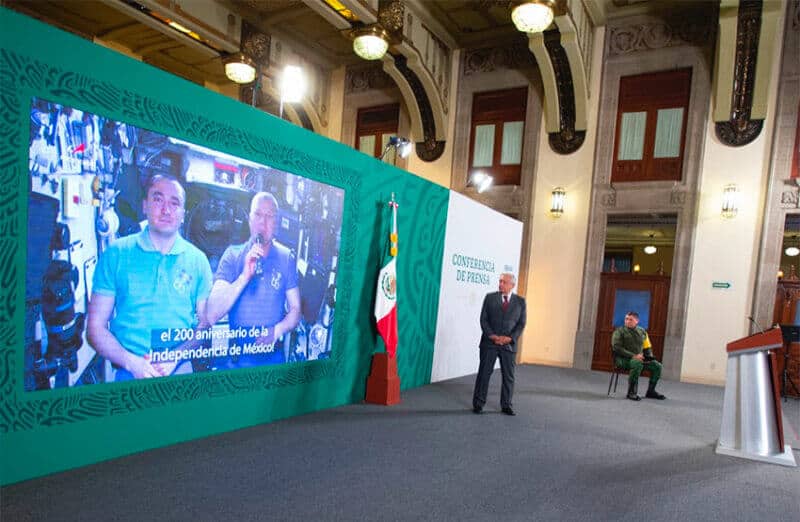
Russian astronauts send a happy birthday to Mexico from space.

On the debate over abortion and the Supreme Court’s legalization, AMLO once again showed neat footwork. “I can’t express an opinion. I’m not washing my hands of it, I’m not Pontius Pilate [the Roman official who ordered Jesus’ crucifixion] … it’s better for all Mexicans that a president doesn’t take sides on an issue of this nature,” he said.

Later, a statement by President Biden was played to back up AMLO’s calls for a just tax system: “How can the richest in the country avoid paying taxes, how can the richest pay less tax than a teacher, a firefighter or a policeman? The truth is that this has worked very well for those at the top. The workers, those who have built this country, have been left out,” Biden said.

The country’s corrupt felt AMLO’s ire shortly after. During the construction of the now canceled Texcoco airport, he said, coyotes, meaning corrupt people, had abounded: “Who bought the land? Coyotes. Who was transporting the material? Coyotes. Who defined the price? Coyotes. Who sold the fuel to the carriers? Coyotes.”

On Friday, the president announced, he would meet with the families of the Ayotzinapa victims, in which 43 students disappeared in 2014.

Wednesday

The monthly security report topped the bill. Security Minister Rosa Icela Rodríguez said federal crimes were down 23.5% on 2019; homicides were down 3.9% on 2020. Fifty municipalities had registered 42% of homicides, she added.

Lie detector Ana Elizabeth García Vilchis took her spot to defend truth. The control tower at the new Felipe Ángeles airport, she said, was not dangerously tilted, but was victim of the “visual effect” of some photos. Her second topic didn’t address a supposed lie, but took a social justice angle: young adults who neither work nor study should no longer be termed ninis, she insisted. García branched into academia next: the conquest was not a “diffusion of cultures,” without attributing the claim, but an “ethnocide.”

On vaccinations for under-18s, a topic often raised at the morning news conferences, AMLO had an announcement: “More than a million children in the country are going to be vaccinated. Children with disabilities, with some difficulties or diseases.”

Talk of the COVID-19 pandemic led the president to the times of the conquest, when disease had devastated the local population: “… when the conquistadors arrived, what is Mexico today had 16 million inhabitants and three centuries later Mexico barely had eight million … the textbooks still say they came to civilize us,” he said.

But, as the conference concluded, AMLO sought peace: “Long live Spain, and long live Mexico,” he said.

Thursday

The year 2021 has been one of ceremony: 200 years since independence, 500 years since the fall of Tenochtitlán, and controversially — doubtfully — 700 years since the ancient city’s foundation. AMLO lined up a couple more. On September 27 the Army of the Three Guarantees’ entrance into Mexico City would be remembered for when Vicente Guerrero and Agustín de Iturbide’s troops joined forces in the independence struggle.

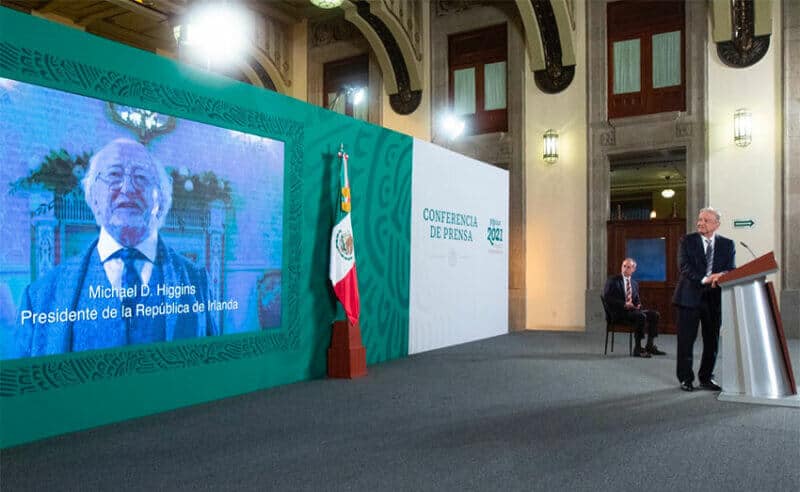
Irish President Michael Higgins
Irish President Michael Higgins joined the conference via video link.

Unconfirmed heads of state would be in attendance, and an exhibition about “the greatness of Mexico” would be inaugurated the same day. On September 28 the president would make an announcement to recognize the rights of the Yaqui people, an indigenous group mainly in Sonora.

Two Russian astronauts appeared by video from the International Space Station to wish Mexico a happy 200th birthday: “The Mexican Aztecs were famous for their deep knowledge of the starry sky. They built space observatories and observed the stars … Long live Mexico, long live freedom!” offered Pyotr Dubrov in his native tongue.

AMLO once again showed himself to be a veritable panamericano: “We have to try to unify all American peoples … just as the Europeans did … with the European Union … we have to do it in America: an economic, commercial bloc,” he said, but revealed himself to be cooler on the United Kingdom joining the North American trade agreement (USMCA): “I’m in favor of the agreement being maintained,” he said.

Politics, the president confirmed, was thirsty work: “Now it’s time for a coffee with milk, and bread,” he announced, shortly before striding away to attend to the nation.

Friday

More birthday congratulations: Ireland’s charismatic president Michael D. Higgins, 80, appeared by video to pass along some warm words. “Since my first visit to Mexico, some years ago, I was amazed with how much our nations have in common … colonization, migration, poverty and struggle.”

He highlighted Guillén de Lampart, a Wexford-born man celebrated on the Angel of Independence monument in Mexico City, who made “the first declaration of independence in Latin America in Mexico City in 1642, and was later executed for heresy,” in Higgins’ words. He also pointed to Irish-blooded Juan O’Donojú — once O’Donnohue — the last viceroy of New Spain who ratified Mexican independence, and Saint Patrick’s Battalion that fought alongside Mexicans against the United States in its mid-19th century invasion.

Later in the conference, a journalist raised a controversial corruption case in the academic community, in which scientists had allegedly filtered government money to a civil society group and spent it, in part, on “chauffeurs, cellphones … food in luxury restaurants and foreign travel,” the Attorney General’s Office alleged.

“Now they feel persecuted,” the president said. “Is the battle against corruption going to be selective?”

He read a rather vulgar tweet by Aldo Aldrete, whom he (incorrectly) identified as one of the accused: “Start with the pseudo-writer, pseudo-investigator whore … The vulture, that idiot who does not even know how to write a sentence without spelling errors [AMLO’s wife, Beatriz Gutiérrez Müller]  … and thanks to the crazy idiot, the imbecile [AMLO] whose shoes are cleaned by [Attorney General] Gertz.”

One noted newspaper columnist later predicted that the president would soon be displaying insults left on the walls of public washrooms.

Mexico News Daily

Mexico City death toll passes 50,000 as nationwide vaccination rate hits 50%

0
Hospital staff transfer a COVID-19 patient, last December.
Hospital staff transfer a COVID-19 patient in Mexico City.

Mexico City’s official COVID-19 death toll passed 50,000 on Thursday, although the real number of fatalities is almost certainly much higher.

An additional 70 deaths were reported in the capital on Thursday, lifting its pandemic total to 50,063. Another 38 fatalities were registered on Friday, increasing Mexico City’s total number of pandemic deaths to to 50,101.

There have been doubts about the accuracy of Mexico City’s COVID-19 death toll since early in the pandemic. Various media outlets, including Sky News and The New York Times, concluded last year that deaths were being underreported and an anti-graft group reached the same conclusion after completing an analysis of death certificates.

The federal government has since conceded that Mexico’s true COVID-19 death toll is much higher than official statistics indicate.

Excess mortality data also indicates that the toll the pandemic has taken on the country is much greater than statistics show.

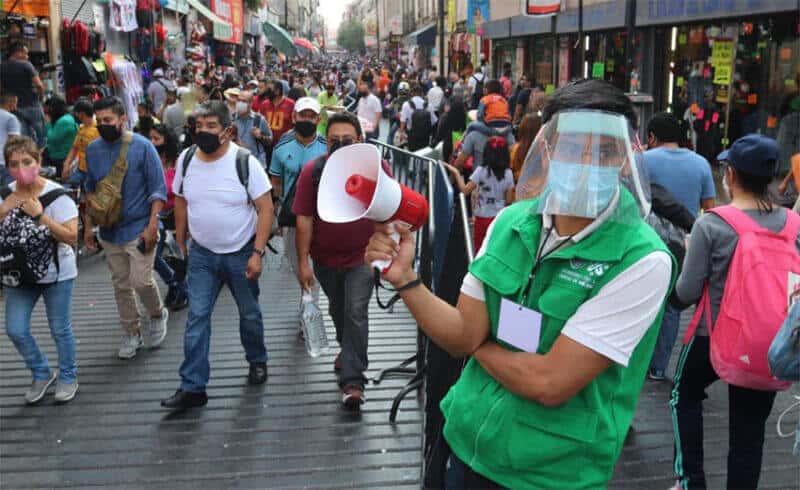
Crowds of masked pedestrians in the streets of Mexico City.

Still, whatever Mexico City’s real death toll is, 50,000 fatalities is a sobering milestone.

México state, which includes many municipalities that are part of the greater Mexico City metropolitan area, ranks second for deaths with 31,549.

Only five other states have recorded more than 10,000 COVID deaths. They are Jalisco (15,788); Puebla (14,381); Veracruz (13,089);  Nuevo León (12,273); and Guanajuato (11,921)

In other COVID-19 news:

• Mexico recorded 10,139 new cases on Friday and 564 additional deaths. The accumulated tallies stand at just under 3.62 million and 274,703, respectively. There are 67,092 estimated active cases, a 1% decrease compared to Thursday.

• Just under 98.3 million vaccine doses have been administered, according to the latest official data. Almost 760,000 shots were given on Thursday.

About 70% of adults have received at least one shot while the vaccination rate among the entire population is approximately 50%.

• The number of hospitalized COVID patients in Mexico City hospitals continues to decline, city official Eduardo Clark said Friday. There are currently 1,677 hospitalized patients, a reduction of 330 compared to a week ago.

The capital, which has also recorded the most coronavirus cases among Mexico’s 32 states, will remain medium risk yellow on the stoplight map for the next week, Clark said.

• Applying for injunctions in order to access vaccination for people aged under 18 is “extremely individualistic,” Deputy Health Minister Hugo López-Gatell said Friday.

Mexico has not offered vaccines to minors although it intends to begin inoculating more than 1 million children with certain health conditions as well as pregnant adolescents in October.

“We follow technical criteria so that everyone gets [a vaccine] when they need it most. That’s why we find this extremely individualistic vision that leads to the use of a [legal] resource unfortunate,” López-Gatell said.

However, he conceded that obtaining injunctions is legal and legitimate.

Hundreds of Mexican children aged 12 and over have been vaccinated after receiving court orders. López-Gatell said that health authorities have even received orders to vaccinate children as young as two.

“We can’t comply with something that would place the life of a minor at risk, … that’s impossible,” he said.

• COVID wards in 11 hospitals in Oaxaca are at capacity, Health Minister Juan Carlos Márquez Heine said Thursday. He also reported 56 additional hospitalizations of COVID patients.

The southern state recorded 360 new confirmed cases on Thursday and 20 additional deaths. Márquez said there is active transmission of the virus in 144 municipalities, including Oaxaca, Ciudad Ixtepec, Juchitán, Tehuantepec and Salina Cruz.

• Case numbers are declining in Los Cabos and and La Paz but the coronavirus risk level in the two Baja California Sur (BCS) municipalities will remain unchanged, authorities said.

BCS has its own health alert system with six different risk levels: low, medium, high, very high, critical and maximum.

Los Cabos and La Paz are at level 2 medium, Mulegé is at level 3 high, Loreto is at level 4 very high and Comondú is at level 5 critical.

Each risk level stipulates social distancing requirements and maximum capacity limits for commercial establishments.

With reports from Milenio

This man’s dirt in a box is helping the rural poor avoid malnutrition

0
EcoHuerto/Earthbox
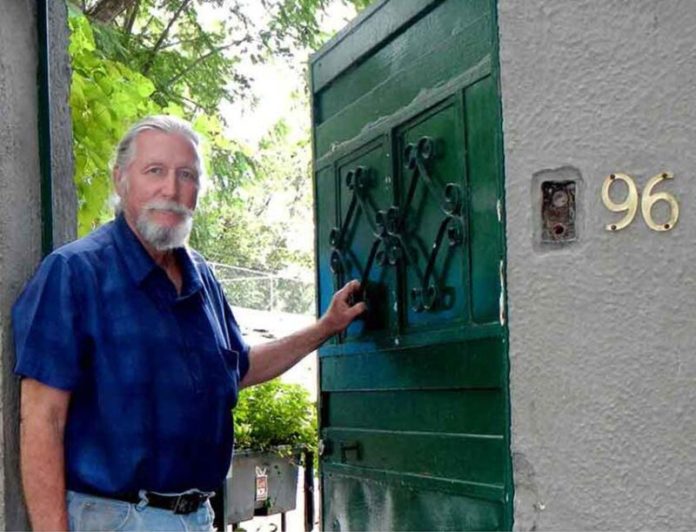
“Welcome to my garden!” says Earthbox Mexico’s Bob Patterson, who has helped families all over Mexico grow in challenging soil and climate conditions.

Robert Patterson worked for the United Nations Food and Agriculture Organization (FAO) for over 30 years and eventually became the FAO’s senior liaison officer in North America, managing programs all over the world and searching for projects to make good, healthy food accessible to the world’s ever-increasing population. In 2002, he worked on ways to make it easy for women and children to grow vegetables at home, and launched a program called The Growing Connection.

“Perhaps the best solution we found was the earthbox,” he told me in his garden-enclosed “office” in Guadalajara. “The inventor of this system was Blake Whisenant, a tomato farmer in Florida. He faced the problem of hurricanes, which could easily destroy tomato gardens.

One day, Whisenant was distracted in church and came up with the idea of a containerized system that works exactly the same as a traditional garden in the ground but protects the inputs and saves a lot of water — as much as 80% — as well as fertilizer.

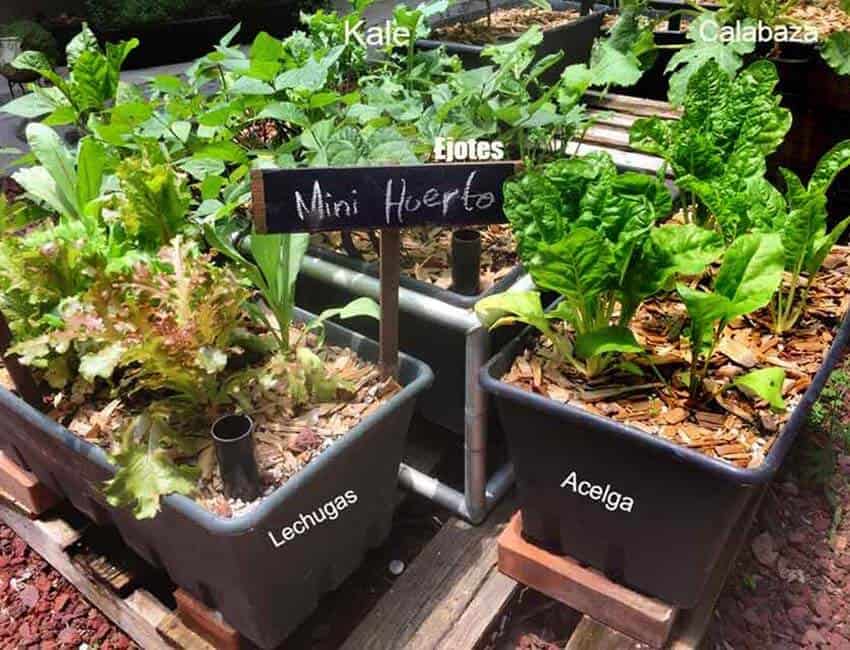
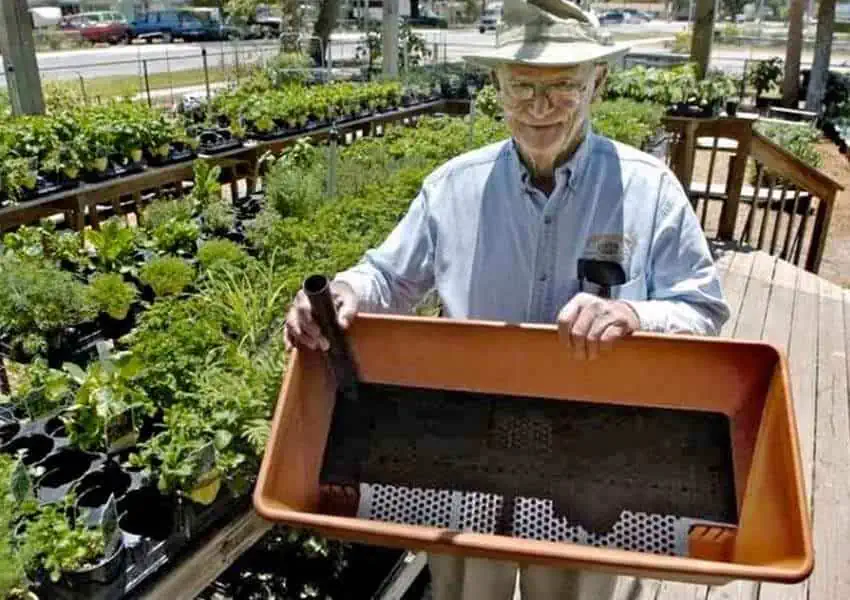
Patterson showed me the anatomy of an earthbox, and I must say, it is wonderfully clever. Each box has a filling tube in a corner into which you pour water. The box has a double bottom, and the water goes down to the lower level, which has a capacity of 10 liters.

The upper section holds the “soil,” which is a mixture of coconut fiber from Colima, perlite and worm castings. You apply an ecofriendly fertilizer, consisting of organic compost and organic fish flour.

EcoHuerto/Earthbox
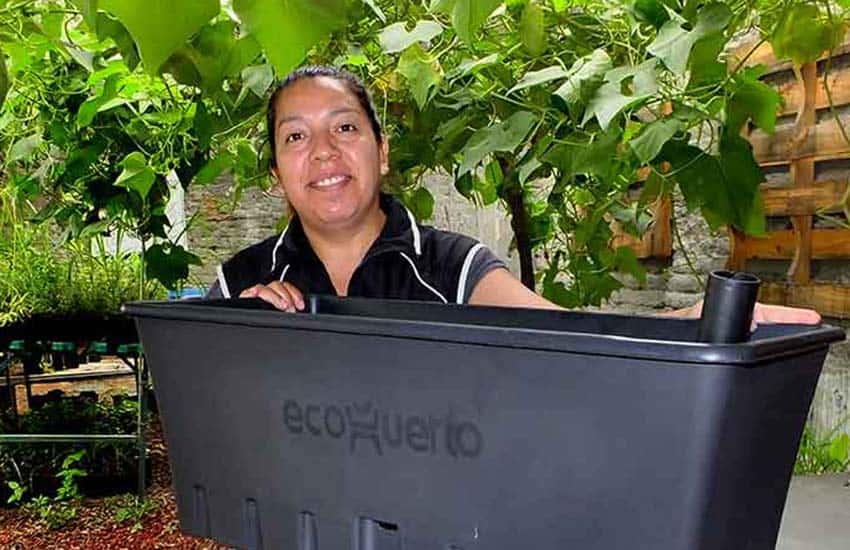
Agronomist Adriana García shows off the new EcoHuerto earthbox, made in Mexico.

Along with all that, you also receive a few California red worms. “More fertile than this you can’t get!” Patterson said with a smile.

A plastic film used to be stretched over the top of the box with up to eight holes for the plants to poke through. Today, the film has been replaced by wood chip mulch, which performs the same function. The dynamics of what happens inside the earthbox are most interesting.

At the two bottom corners, the soil is in contact with the water chamber. Capillary action brings the water all the way to the top, where it condenses on the mulch or plastic cover and drips down onto the soil.

“The water is constantly in motion,” Patterson said, “bringing fresh nutrients to the roots. It’s as if you were relaxing in a hammock and somebody was bringing you a beer and a sandwich every two hours.”

What happens inside an earthbox reminds me of the very successful chinampa farming system used before the Spaniards’ arrival in Mexico. Small squares of land were watered by irrigation ditches that crisscrossed the fields. Water reached the plants from below by capillary action, constantly bringing them new nutrients.

In a sense, you could say Bob Patterson is presenting Mexico with a “chinampa in a box.”

EcoHuerto/Earthbox
With a few earthboxes, you have a vegetable garden. If you move, you can take it with you.

I asked Patterson how he got from the FAO to this project in Guadalajara.

“It all started with a series of concerts called Groundwork, which I organized in 2001 in Seattle, Washington, to combat world hunger,” he said.

One of the bands that played at the concert along with REM, Pearl Jam and Alanis Morissette was Guadalajara’s own Maná. “We liked each other,” he said, “and they liked my work.”

Maná — which supports several very successful conservation projects in Latin America — asked Patterson to bring earthboxes to Mexico. They helped finance the project by donating US $1 for every ticket they sold on their tour of the United States.

Patterson was happy to exchange his FAO job, which mainly involved office work, for a project that would bring him into direct contact with people who need help.

He teamed up with Margarita Álvarez, a longtime friend of Maná, and together they started Earthbox Mexico with headquarters in Guadalajara under the brand name EcoHuerto, which means something like “Eco Garden” and is a whole lot easier for Spanish speakers to pronounce than the word “earthbox.”

EcoHuerto/Earthbox
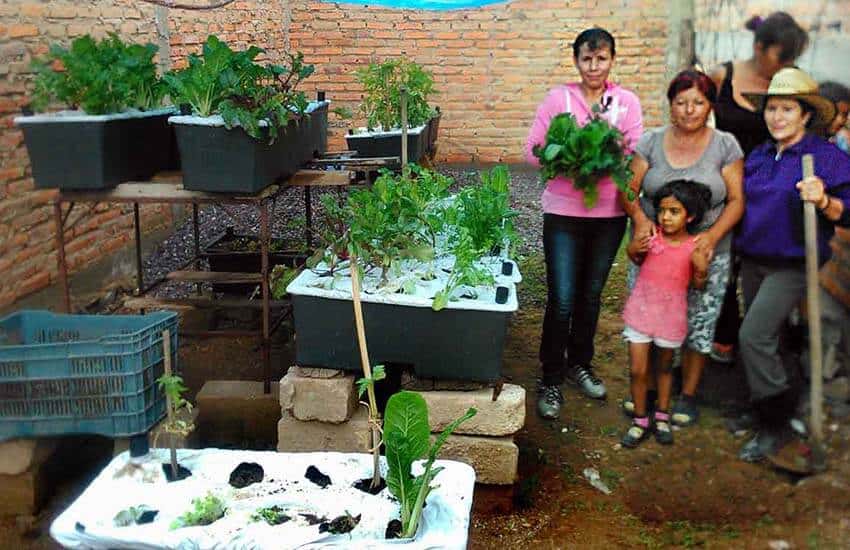
Family garden in an economically depressed zone of El Salto, Jalisco. Alberto Ruiz.

They started out by working in Jalisco’s Sierra Huichol, which has an altitude of 3,000 meters. There, they found, “there’s no water and no green, and all the local people have infected eyes and skin — habitually.”

Not surprisingly, once these people began eating leafy greens grown in earthboxes, the infections disappeared.

“We’ve also worked with indigenous communities in Chiapas, Zacatecas, Nayarit and Chihuahua,” Álvarez told me. “These people live in the most remote places imaginable, and they have unproductive land in most cases. So there they are with terrible land and terrible nutrition, living at the far end of terrible roads.”

“Sometimes our truck would make it all the way, but sometimes we would have to walk several hours more, and, of course, we would have to carry the equipment on our backs,” she added. “Then we would set up earthboxes at the local community center, school or even a private home.”

When they started, all their earthboxes were made in the United States.

“But a few years later, we bought a mold from the owners so we could build the boxes here in Mexico to keep the price down and to be more productive,” Álvarez explained. “We also decided to use recycled plastic [49%], which makes it a greener project.”

EcoHuerto/Earthbox
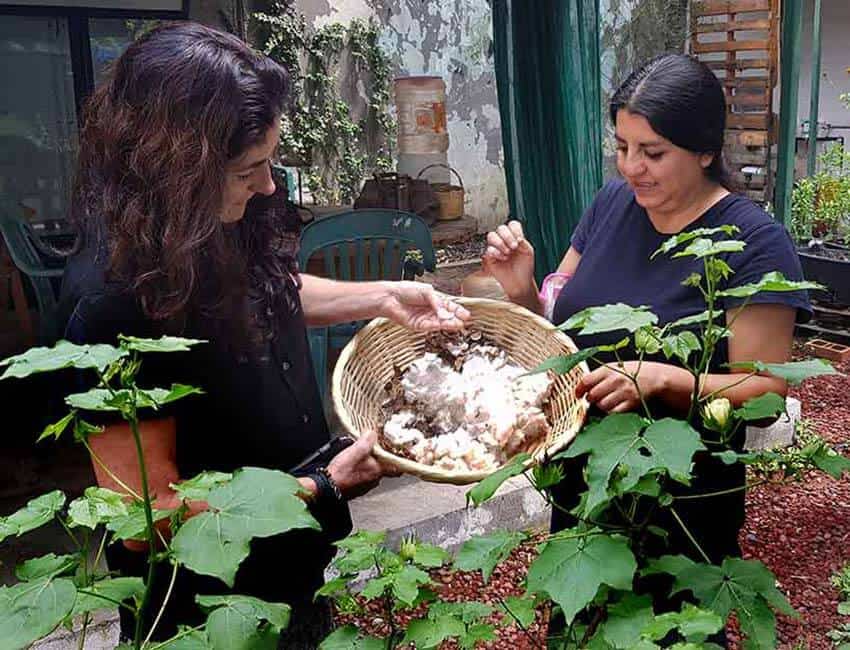
Harvest from a cotton plant in the foreground.

Today, Álvarez told me, EcoHuerto especially focuses on educational projects in schools and community centers in urban areas. These were halted by the pandemic but are now about to restart.

“We have a program called Eduhuerto,” she said. “We start a garden in a school and then go every day or once a week to work with the children, to show them the benefits of growing your own food. The kids get their hands dirty and they come to understand the importance of seeds and how they develop.

“Apart from this program for kids in school, we also do workshops for adults, right here at our headquarters. We have a basic workshop for starting your family garden, and we have workshops on producing your own compost, fertilizers and repellents.”

I searched for reviews of EcoHuerto’s earthboxes on the internet and found nothing but statements like:

“Wow, it really works!”

“Outstanding!”

EcoHuerto/Earthbox
Patterson’s paying customers include anyone interested in using earthboxes to garden in an ecofriendly way with a lot less water.

“Love it.”

“I have been using earth boxes for 10 years, and I still get amazed by the quality and quantity of my veggies every year!”

One reviewer, dietician Jennifer Voss, did a comparative study of the same kind of plants grown in her garden and in two earthboxes.

“For a while,” she said, “the plants in the earthbox grew at about the same rate as the plants in the ground. After about a month, the plants in the earthboxes really took off! They were 5–6 inches taller and definitely fuller than the in-ground plants.”

The best part? “I didn’t have to do any weeding!”

EcoHuerto can send an earthbox, or any of their other products, to any point in Mexico … and they speak English!

EcoHuerto/Earthbox
Harvest time for an earthbox owner. EcoHuerto

• To find out more about EcoHuerto, visit them at #96 Calle 4 in Guadalajara’s Colonia Seattle or call them at 333 165 5361. They can also be reached via WhatsApp at 332 207 3095. Or visit their website, their Facebook page or their Instagram site. EcoHuerto’s staff is happy to answer customer questions and offer advice on how to get the most out of their product.

 The writer has lived near Guadalajara, Jalisco, for 31 years and is the author of A Guide to West Mexico’s Guachimontones and Surrounding Area and co-author of Outdoors in Western Mexico. More of his writing can be found on his website.


EcoHuerto/Earthbox
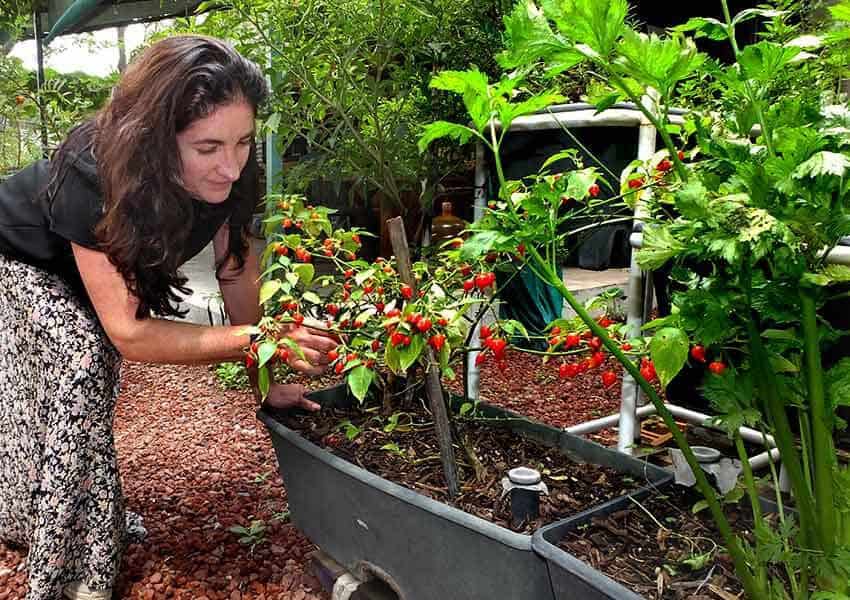
Margarita Alvarez with chiles growing in an earthbox where mulch has replaced the plastic film.


EcoHuerto/Earthbox
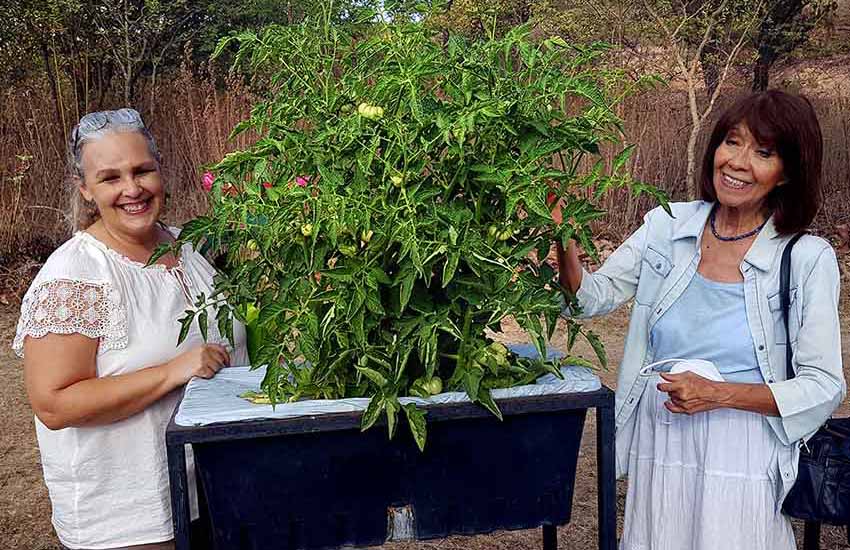
“Just look at our tomatoes!” Two happy earthbox customers.


EcoHuerto/Earthbox
Blake Whisenant, inventor of the earthbox, shows its inner workings.


EcoHuerto/Earthbox
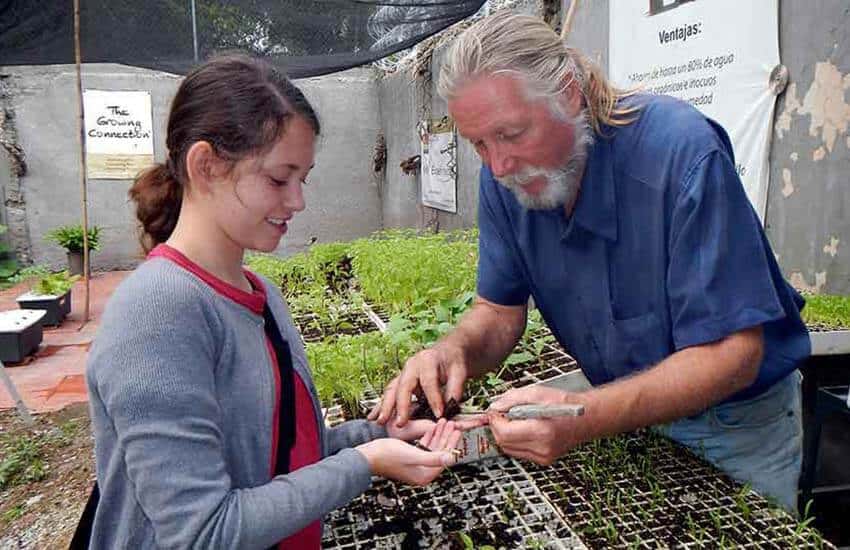
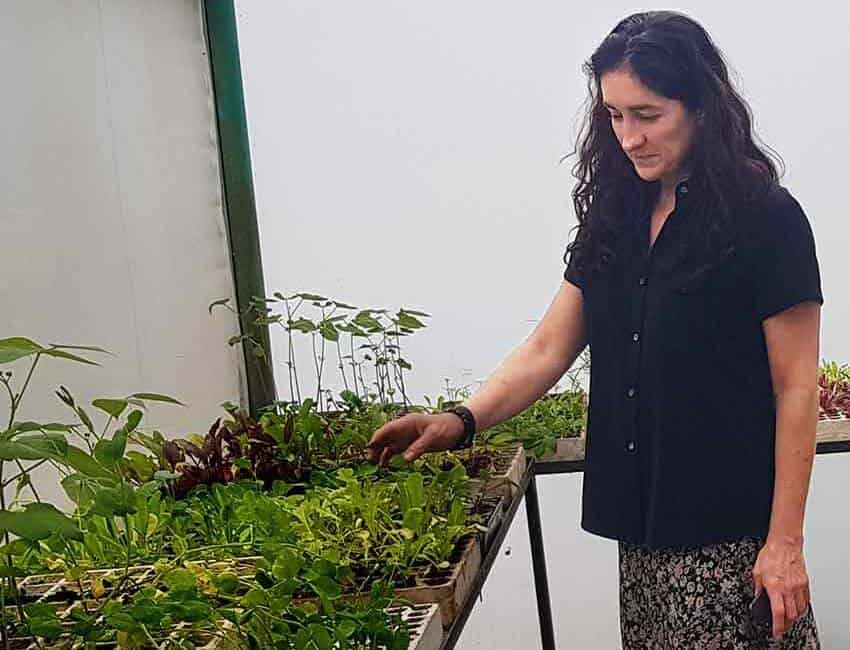
Margarita Álvarez with seedlings in the EcoHuerto hothouse.

Investigators rule out organized crime in Guanajuato restaurant bombing

0
Salamanca bombing suspects were arrested Thursday.

A man and a woman have been arrested in connection with a bomb attack in Salamanca, Guanajuato, that killed two people at a birthday party last Sunday.

The owner and manager of a bar/restaurant were killed when a package with a balloon attached to it exploded seconds after they received it outside the establishment.

The Guanajuato Attorney General’s Office announced the arrest of Eduardo “N.” and Georgina “N.” – the alleged masterminds of the attack – on Thursday.

Attorney General Carlos Zamarripa said they were business partners of the bar’s owner and were owed money.

Their commercial arrangement turned sour due to a large debt, he said. “There was a partnership between them, we can’t say whether it was formal but what’s certain is they had a commercial relationship [that was formed] to open the restaurant, an amount in the millions [of pesos] was provided,” Zamarripa said.

Media reports initially linked the attack to non-compliance with extortion demands made by the Jalisco New Generation Cartel, but the arrest of the two business partners indicates that was not the case.

The homemade bomb was detonated remotely and injured five other people including the person who delivered it.

Zamarripa said authorities were able to track the suspects down after reviewing messages they sent to the courier’s cell phone. “Take [the package] to bar Barra 1604 and ask for the owner,” one message said.

With reports from El País 

Videos reveal torture of Aytozinapa witnesses; file documents ‘massive manipulation of evidence’

0
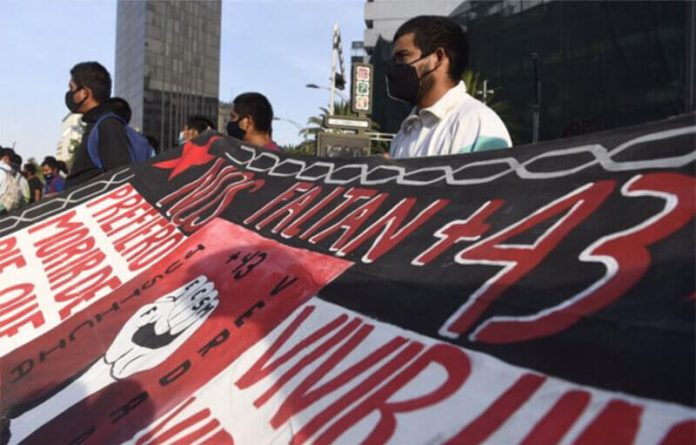
A protest in support of the 43 student teachers who disappeared in Iguala, Guerrero.

Videos showing suspects in the case of the 43 missing students being tortured will support a criminal case against ex-officials who allegedly fabricated the former government’s official version of events about what happened to the young men.

The now-defunct Center for Investigation and National Security made 40 recordings of officials subjecting suspects to torture, according to a report by the newspaper Milenio.

The recordings were made between October 2014 and January 2015 – the first four months after the Ayotzinapa rural teachers college students disappeared in Iguala, Guerrero, on September 26, 2014.

Government sources told Milenio that the videos are part of a file compiled by the Special Investigation and Litigation Unit for the Ayotzinapa case, a division of the federal Attorney General’s Office.

The file documents “massive and systematic manipulation” of evidence in order to fabricate the previous government’s so-called “historical truth,” officials said.

Screenshots from videos showing police torturing interrogation subjects related to the Ayotzinapa case.

First proffered by former attorney general Jesús Murillo Karam at a press conference in January 2015, the “historical truth” contended that the students, traveling on a bus they commandeered to go to a protest in Mexico City, were intercepted by corrupt municipal police who handed them over to members of the Guerreros Unidos crime gang who subsequently killed them, burned their bodies in a dump in the municipality of Cocula and disposed of their remains in a nearby river.

The current federal government has rejected its predecessor’s version of events and launched a new investigation.

According to the sources who spoke with Milenio, the purpose of torturing suspects was not to extract factual information from them. Instead, it was used to break the suspects down intellectually and emotionally so they would become “repeaters” of the version of events concocted by Murillo and Tomás Zerón, former head of the now-defunct Criminal Investigation Agency.

Zerón, whom Mexico is trying to extradite from Israel, anti-kidnapping unit chief Gualberto Ramírez, other officials of the Attorney General’s Office (known at the time as the PGR) and security force members are seen torturing suspects in the 40 videos, officials told Milenio. Lawyers for the suspects also appear in the footage.

The Special Investigation and Litigation Unit’s file includes an expert international analysis that determined that Zerón’s voice is audible in some of the videos.

The file also contains evidence that the PGR and other former law enforcement officials staged crime scenes, fabricated supposed proof, destroyed and discarded evidence, failed to follow some lines of investigation and were generally negligent in their work.

Milenio reported that the 40 videos are part of an “arsenal of evidence” that the Special Investigation and Litigation Unit will use to support criminal complaints against the officials involved. The FGR believes they were part of a coordinated network aiding the construction of the official version of events, government sources said.

The Ayotzinapa unit, headed up by special prosecutor Omar Gómez Trejo, has convinced some 20 former PGR officials who are not under investigation to reveal what they know about the case.

Meanwhile, a newly-leaked confession by a Guerreros Unidos gang member made to the National Human Rights Commission (CNDH) in 2018 provided testimony that was consistent with the “historical truth.”

Juan Miguel Pantoja Miranda confirmed that the students were killed and their bodies were incinerated in the Cocula dump. Pantoja was detained in 2018 but later released.

Scores of other suspects in the Ayotzinapa case were released from preventative custody because they were found to have been tortured by officials. A United Nations reported published in 2018 said that 34 people were tortured in connection with the investigation.

The report said the types of torture identified included “beatings, kicks, electric shocks, blindfolding, attempted asphyxia, sexual assault and various forms of psychological torture.”

A video showing the torture of one suspect surfaced on YouTube in 2019.

Juan Miguel Pantoja Miranda, seen here in federal custody, said the students were killed and their bodies were incinerated in the Cocula dump, but others refute his claims.
Juan Miguel Pantoja Miranda, seen here in federal custody, said the students were killed and their bodies were incinerated in the Cocula dump, but others refute his claims. Vanguardia

The CNDH, which received scores of complaints about the torture of suspects, weighed in on the almost seven-year-old case this week, reiterating that it remains committed to the search for truth and justice.

It said it has opened a file to compile hypotheses put forward by the students’ parents about what happened. Such lines of investigation were not sufficiently considered or valued in previous investigations, the CNDH said.

“In this way, the national commission reiterates its commitment to the families and representatives of the 43 missing teaching students,” it said.

The statement also said the CNDH rejects attempts by the media to revive the so-called “historical truth” by publishing reports citing debunked testimony.

It said that such testimony – such as that of Pantoja – has already been “scientifically and convincingly refuted” by a team of Argentine forensic experts.

The Argentine Forensic Anthropology Team, which conducted an investigation at the request of the parents and families of the missing students, concluded that there had not been a fire of sufficient intensity to incinerate the 43 bodies at the Cocula dump.

With reports from Milenio and Proceso 

Bar at Querétaro country club will continue to prohibit women

0
El Campanario, an exclusive country club in Querétaro.

The bar at a country club in Querétaro has decided to stick with a new rule: no women allowed.

The Campanario announced this week that the Hoyo 19 bar will remain closed to women, despite pushback from club members.

The Querétaro city club first announced the controversial men-only policy on September 7. In response, a group of members gathered more than 200 signatures on a petition requesting that the decision be reversed.

In addition, the chairwoman of the board of directors resigned her position in protest and issued an open letter expressing her disagreement with the board’s values.

Critics say denying female club members entry to Hoyo 19 violates women’s rights as well as local, national and international laws and treaties that guarantee equality for women.

In light of the outcry, El Campanario partially reversed the decision, saying that both men and women would be allowed on Hoyo 19’s outdoor terraces, though women would still be prohibited from entering the main area of the bar. In the same statement, the club said the Hoyo 20 bar will be a women-only space after 1 p.m. every day.

While the introduction of a women-only space was satisfactory for some critics, others said the issue of discrimination was not resolved by giving women a separate area of their own.

Now when women enter Hoyo 19 bar, they are “jeered at and not served, which constitutes discrimination against women,” some members said.

One report said the measure was introduced in response to complaints the club had received over the use of foul language by men inside the bar.

With reports from El Universal and Diario de Querétaro

Unfazed by volcano’s recent activity, alpinist shoots video at El Popo’s crater

0
El Popo blows off some steam early Thursday morning.

The ominous rumbling of the Popocatépetl volcano in recent days was not enough to discourage a Puebla man from making the ascent to its crater.

A Facebook user identified as “Francisco Popocatépetl” shared a video showing his risky adventure. The recording, which shows the alpinist near the crater as it spews volcanic gas, has recorded more than 20,000 views on the social media platform.

“Yahweh will move the air so nothing happens to us,” Francisco said, as plumes of smoke rose up out of the crater and threatened to envelop him. Later, he shouted, “Yahweh, I love you!”

The man climbed the volcano in defiance of current safety guidelines. A 12-kilometer safety perimeter remains in effect around the volcano, inside which civilians are not supposed to enter.

According to his social media profile, Francisco Popocatépetl is a physical trainer.

With reports from UnoTV and Proceso

Police arrest Puebla lawmaker after finding arsenal in her home

0
Sandra Nelly Cadena Santos
Puebla state Congress Deputy Sandra Nelly Cadena, alleged weapons dealer.

A Puebla lawmaker was arrested on Wednesday in possession of a collection of weapons, including at least one semi-automatic machine gun and grenades.

Sandra Nelly Cadena Santos, a Morena party deputy in the state Congress, was detained by police in her home in Tecamachalco, a town 70 kilometers southeast of Puebla city. Her husband, a former Federal Police officer, was also taken into custody.

The Puebla Attorney General’s Office (FGE) announced on Twitter that it had raided the home of Cadena and Jesús Portilla and seized long and short firearms as well as grenades — whose legal use is limited to the army. One of the weapons is a semi-automatic machine gun made by the United States gun maker Barrett Firearms Manufacturing.

Puebla Governor Miguel Barbosa, who also represents Morena, told a press conference that it was an open secret in Tecamachalco that Cadena and Portilla were selling weapons.

“They weren’t using them for target practice. They were for sale; a homeowner doesn’t buy a Barrett,” he said Thursday.

weapons confiscated at Sandra Nelly Cadena Santos' home
Some of the weapons authorities confiscated at Morena Deputy Sandra Nelly Cadena’s home.

“… They presumably dedicated themselves to the sale of the most powerful caliber weapons. Now we have to see who supplied them, it’s a whole chain,” Barbosa said, adding that the investigation into Cadena’s alleged criminal activities was not new.

Cadena, who was formerly the secretary-general of the Tecamachalco municipal government, and Portilla, who was dismissed from the now-defunct Federal Police for “disloyal practices,” were taken to FGE offices near Puebla city after their arrest. A date has not yet been set for their appearance in court.

The newspaper El Financiero reported that the weapons were confiscated and turned over to the Defense Ministry (Sedena) and then eventually taken to a military facility in México state where they were destroyed.

With reports from Reforma and El País 

Sonora lawmakers say yes to same-sex marriage

0
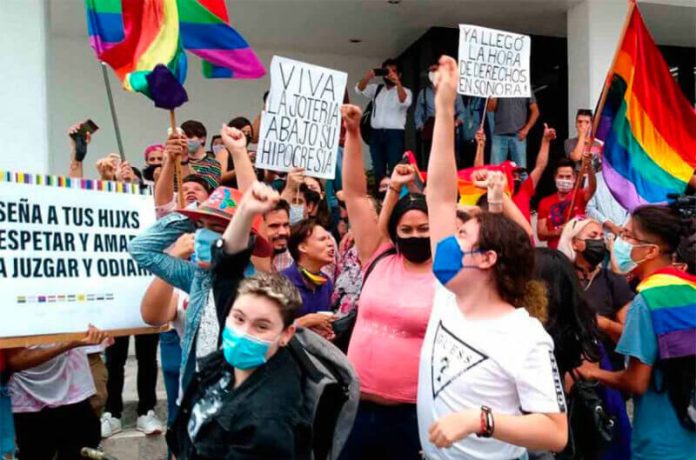
Supporters of the decision cheer in Sonora on Thursday.

The Sonora state legislature approved same-sex marriage on Thursday, making it the 24th state in the country to do so.

Previously, same-sex couples in Sonora needed a judge’s order if they wanted to get married. The new reform makes it clear that marriage is a public institution between two people, regardless of sex.

“The rights of all people, without distinction, must be guaranteed by the law. It is something that has to do with human dignity… that is why to talk about equal marriage is to talk about human rights,” said Rosa Elena Trujillo, one of the Citizen’s Movement (MC) deputies who introduced the bill.

The legalization comes more than five years after the Supreme Court ruled that state laws defining marriage as “the union between a man and a woman, with the only purpose being procreation,” were unconstitutional.

The law passed with 25 in favor and eight National Action Party (PAN) deputies opposed.

Sonora Governor Alfonso Durazo celebrated the move, calling it “an important step to approve and ratify that which the [Supreme Court] has already stipulated.”

“In my government, human rights will be respected when decisions are made; we respect everyone equally,” Durazo said.

With reports from Milenio and Expansión Política