The United States government will deliver an additional 1.75 million COVID-19 vaccine doses to Mexico on Tuesday, according to a White House official who spoke with the newspaper Reforma.
The shipment will fulfill the pledge made by the Biden administration last month to donate 3.5 million Moderna doses to Mexico. The first batch of 1.75 million shots arrived August 24.
Upon taking delivery of the second batch of Moderna vaccines, Mexico will become the largest recipient of United States-donated vaccines in Latin America. Colombia has received about 6 million shots from the U.S. but the total received by Mexico will rise to almost 7.6 million on Tuesday.
Indonesia is currently the biggest recipient of U.S. vaccine donations, having received some 8 million shots. However, shots sent to Mexico will probably exceed that figure in the coming weeks as the Mexican government expects to receive more AstraZeneca shots, although the White House hasn’t confirmed that will occur.
In other COVID-19 news:
• The federal Health Ministry reported Sunday that almost 95.3 million vaccine doses have been administered in the government’s vaccine program, which began December 24. It said that almost 62.1 million people, or 69% of the adult population, have received at least one dose. Two-thirds of that number are fully vaccinated.
• Mexico’s accumulated case tally increased to 3.57 million on Monday with 3,367 new infections reported. The official COVID-19 death toll rose by 262 to 271,765.
There are 60,434 estimated active cases across Mexico, a 12% decline compared to Sunday.
• Nuevo León reported 570 new cases and 33 deaths on Monday. The northern state has recorded more than 270,000 cases and over 13,600 fatalities since the start of the pandemic.
There are 1,005 COVID-19 patients in the state’s hospitals, including 12 pregnant women, authorities said Sunday. Twenty-four pregnant women have lost their lives to COVID in Nuevo León.
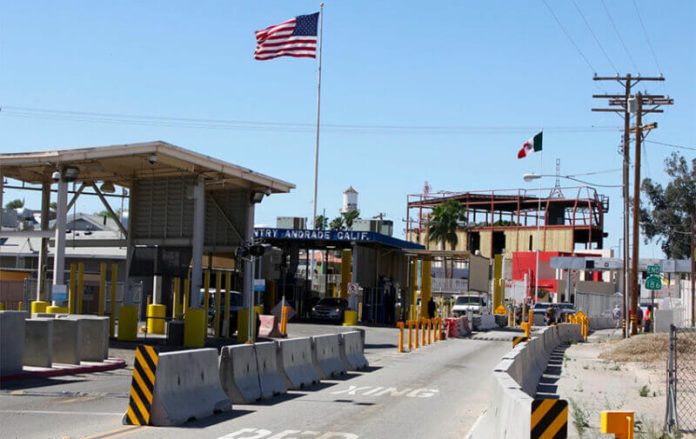
The United States extended restrictions at its land borders with Mexico and Canada on Monday until at least October 21. That bars nonessential travel such as tourism.
The U.S. land borders have been closed for nearly 18 months, since March 2020, when access to southern states was stopped to address the spread of COVID-19. The controls have been reviewed on a monthly basis since then, but the policy has remained in place. Canada opened its border to fully vaccinated U.S. visitors for nonessential travel on August 9.
White House COVID-19 coordinator Jeff Zients was curt on the possibility of policy change. “We do not have any updates to the land border policies at this point,” he told reporters Monday.
Mexico has been pushing for a reopening of the border and prioritized the vaccination of residents of border communities to that end. President López Obrador announced Tuesday at his morning press conference that all adults in border states would receive their second dose of COVID-19 vaccine by the following day. At the same conference, Deputy Health Minister Hugo López-Gatell confirmed that COVID-19 case numbers were falling in all 32 states.
The declining third wave of COVID-19 is reflected in the new coronavirus stoplight risk map, issued Friday by the federal Ministry of Health. At high risk and colored orange are four states, down from 13. No states are at maximum risk red, and four are green.
Meanwhile, Zients also announced that the U.S. will re-open access to air travelers from 33 countries including China, India, Brazil and most of Europe who are fully vaccinated against COVID-19.
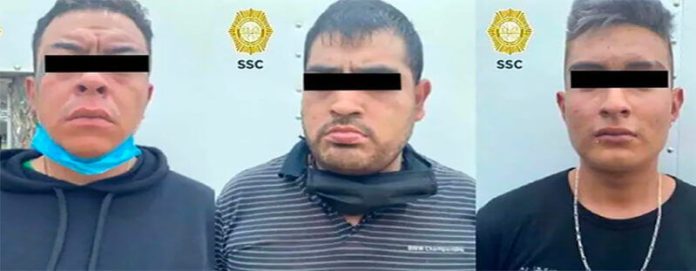
The suspected thieves arrested by Mexico City authorities for attempting to steal 1.2 million pesos' worth of COVID-19 tests.
Three men have been arrested for stealing a van carrying about 1.2 million pesos’ worth (about US $59,500) of COVID-19 tests after it left a customs office at Mexico City International Airport (AICM).
An eyewitness described how three men got out of a car and commandeered the van by forcing the driver out of the vehicle and into their car.
Security officials used video surveillance cameras to track both vehicles. An 18-year-old was driving the van alone when he was intercepted by police officers in Guadalupe Tepeyac, in the north part of the city.
As the suspect was being arrested, a man arrived and identified himself as a worker from the delivery company that was transporting the tests. He recognized the stolen vehicle and asked to make a formal complaint.
Two other men, a 28-year-old and a 26-year-old, were found nearby by police officers. Police searched the two men and discovered a fake pistol.
The 26-year-old had been imprisoned in 2013 in Mexico City for drug dealing and has a record for other offenses, including possession of marijuana, robbery and drinking alcohol in public.
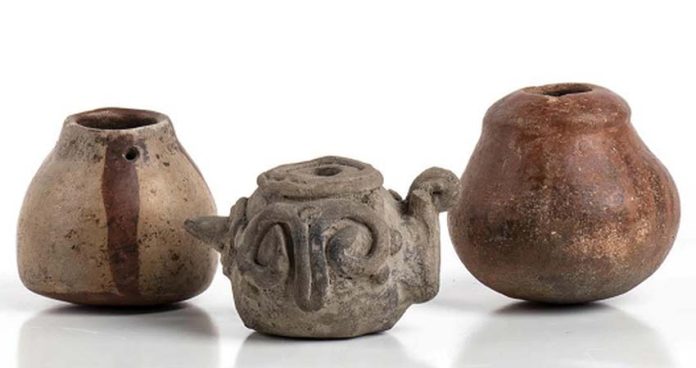
Three of 17 Mesoamerican artifacts from Mexico that were scheduled to go on the auction block at the Bertolami Fine Arts auction house in Rome last Thursday.
Italian authorities intervened to cancel an auction in Rome at which 17 Mexican archaeological artifacts were to go on the block.
Culture Minister Alejandra Frausto said the timely action of Mexico’s ambassador in Italy, Carlos García de Alba, and the European nation’s chief of police for the protection of cultural heritage, Roberto Riccardi, were crucial to the suspension of the auction, which the Bertolami Fine Arts auction house planned to hold last Thursday.
The force commanded by Riccardi seized the 17 artifacts, and Italian authorities will return them to Mexico if it is confirmed they were illegally sold in Mexico or extracted from here.
The cancellation of the auction is the “fruit of cultural diplomacy, dialogue and the permanent work” of Mexico and Italy, Frausto said, adding that both nations recognize their heritage as one of their greatest treasures.
“We will continue to fight against the trafficking of cultural assets head-on,” she said.
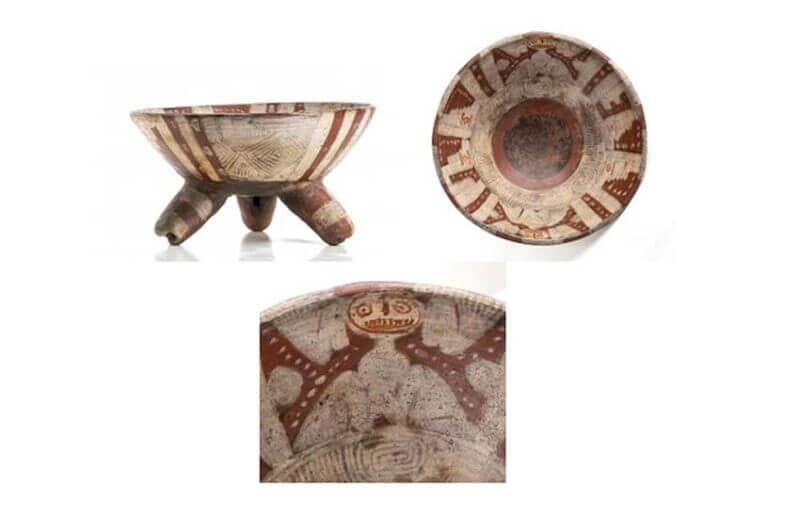
Detail of one of the 17 items — a three-pronged earthenware pot made during the Mesoamerican postclassic period.
Among the lots Bertolami planned to sell were pre-Hispanic pots, bowls and anthropomorphic figurines from western Mexico and the country’s Gulf coast.
The jewel of the collection, according to the newspaper El País, was a painted mud bowl with a three-pronged base. An artifact of the Purépecha culture, the piece dates back to the Mesoamerican late postclassic period, which began in 1200 and concluded in 1521. Other pieces date back to the early and late classic periods, meaning they were made between A.D. 200 and 900.
Many of the lots that would have been sold had already attracted early bids and had been tentatively assigned to buyers.
It is not the first time this year that Italy has helped Mexico reclaim lost cultural artifacts. Italian authorities sent 23 pre-Hispanic relics back here in May.
“The Mexican government will insist on permanent efforts to obtain the restitution of archaeological and historical assets that are the property of the nation and which are abroad illegally,” the Ministry of Foreign Affairs, the Culture Ministry and the National Institute of Anthropology and History said in a joint statement announcing that the Italian auction had been halted.
My wife and I love pizza (who doesn’t?) Our Westinghouse electric fan oven can just about manage 195 C on a good day. Cooking a pizza in it takes forever, and the result is, at best, “edible.”
One day, I saw a video of an Australian man building a pizza oven and thought, “How difficult can this be?” I decided to build one under the palapa. It would make a great centerpiece for parties. A barbecue grill — everyone has one of those! But the thought of pulling out gourmet pizzas was irresistible.
I researched the two types of oven: dome and half-cylinder. The dome demands serious brick skills and a lot of tedious brick-cutting with a diamond disk. They are both equally efficient, but the half-cylinder offers more room inside, so I chose that.
My oven required:
160 high-temperature bricks
Cement
Slaked lime
Sand
Perlite
Fire clay (I used kaolin)
Two meters of steel angle
Chicken wire
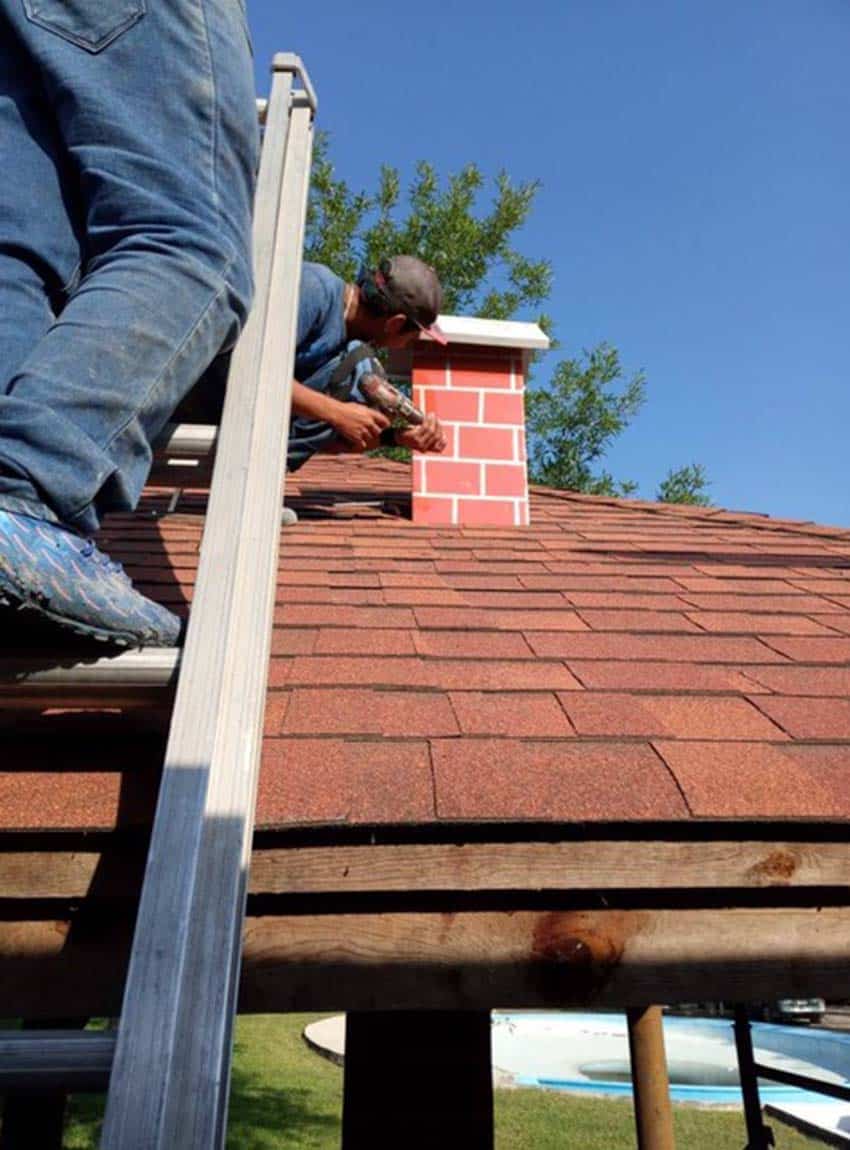
A pizza oven should be accompanied by a chimney, which may require a bit of outside help, but otherwise, a brick pizza oven can be a DIY project.
The total cost of the oven, built myself, was around 3,000 pesos. I had a contractor build the support base, which also acts as storage space for the logs.
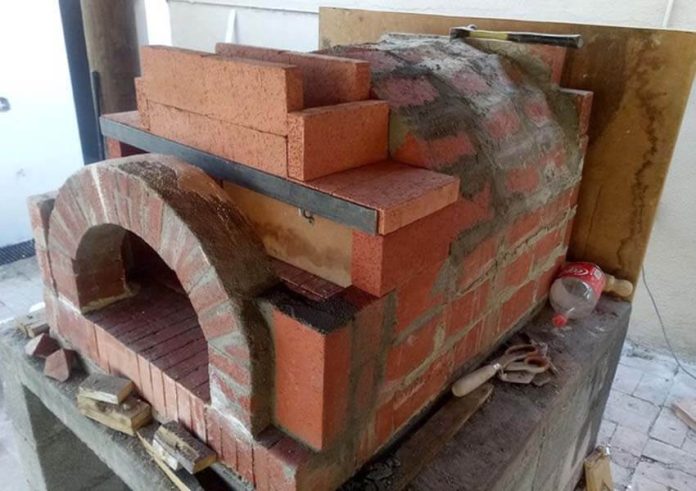
First, you build the base. It’s the same kind you’d use to make a grill. Mine is 1.25 meters square. Once the base has cured, you can draw the outline of the oven on it. Begin by drawing a center line and align all measurements to it.
I built the lowest brick course and the floor first. This involved covering the concrete base with a mix of lime and fire clay to a depth of 1.5 centimeters, leveling it and then placing the bricks edge to edge. Then you must carefully tap the bricks with a rubber mallet to bed them down and make a flat hearth. We don’t cement this.
Then build the rear wall. It’s a simple task, standard bricklaying. You don’t need to use furnace bricks, which are very expensive. We’re not looking to fire pottery at 1100 degrees Celsius. I went to the Ladrillera Mechanizada building materials store, where they had a compressed brick fired at 1100–1300 degrees — perfectly adequate and reasonably priced. Don’t use regular cement. I mixed some lime into mine to give it more fire resistance, but even better, you can buy refractory mortar.
To build the arches, build the second and third course for the walls once the rear wall is in place, which is a straightforward job. You’ll need two arch forms. A form looks like two semicircles of one-inch ply, separated by two-inch wooden spacers screwed together. It fits precisely between the walls and helps us support the brick arches, beginning with the one in contact with the rear wall.
As we finish one arch, we move the form toward the front and begin the next. This continues until we finish the long axis and place the chimney. Traditionally, a second arch is built to support the chimney, but I cheated. I simply placed two lengths of “L” angle steel across the bricks at the right height and used those to support the chimney column. It works as well as an arch and was a lot quicker.
For an oven that’s going to be baking pizzas, furnace bricks, which are more expensive, are not necessary.
Finally, a second arch form, smaller, is built to make the oven door. There’s a “golden ratio” to observe with these ovens to ensure that smoke and flame go up the chimney and not into your face when you open the door. My entrance (door) arch is 25 centimeters high. The chimney begins at 40 centimeters in height, and the oven is 75 centimeters high inside.
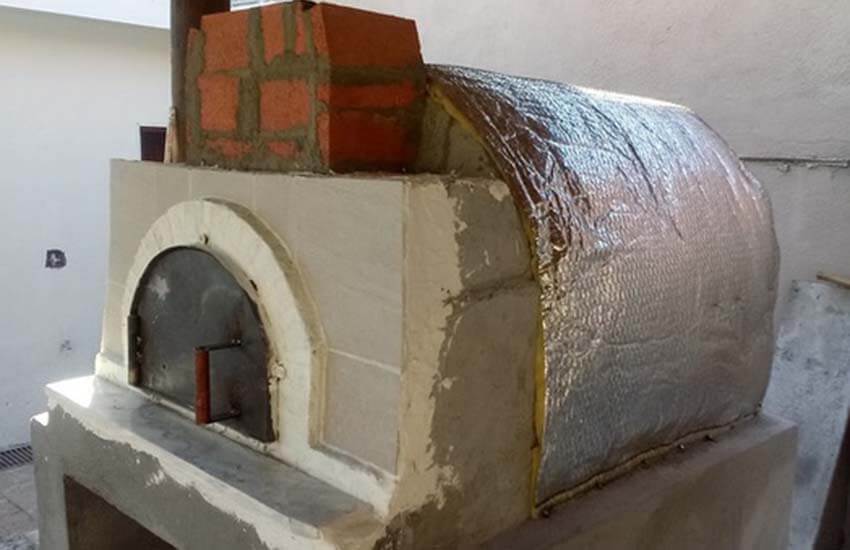
Once the basic oven is finished, it’s time to add heat sinking and insulation. I added four inches of concrete and stone “overcoat,” then six inches of “Perlite mortar” — a mix of 6:1 Perlite (for insulation) to mortar. The finished oven will take several weeks to dry out before it can be used, cautiously at first. I had a steel welder fabricate a 30-by-15-centimeter rectangular metal chimney, which has proved perfectly adequate.
One caution: be careful if you’re not used to brickwork. Do not, as I did, use your hand, claw-like, to hold bricks. I did that and got De Quervain’s tenosynovitis as a result. Also, take safety precautions when cutting bricks. Be gentle with yourself and remember it doesn’t have to be done to a deadline.
Regarding cooking the pizza: I’ve been using my oven for the last six months, and it’s been quite the learning curve. I learned that every oven, like every vehicle, has a “cruising temperature.” Mine cruises at 330 degrees Celsius.
It takes two hours to get there with a modest fire. Then it will retain that temperature for hours with an occasional extra log. If I force it with a raging fire, yes, I can get it to 400 degrees in 90 minutes, but the oven won’t easily retain that heat, and cooking will be a difficult problem given the changing temperatures. I cook pizzas in three to four minutes at 330 degrees. They taste just as good as if I push the oven to 440 degrees and cook them in one minute or so.
One key to the perfect pizza is to have the right base temperature and the right space heat. It took me a while to realize that you start the fire at the front, and push it back when you cook. That’s to get the brick under the base hot enough for the perfect crust. If not? Floppy pizza or burnt topping! If I’m meticulous, I’ll use the heat gun to measure the brick temperature.
The other key is the perfect ingredients. Avoid the flour they sell in supermarkets unless you like your pizza to taste like cake. What you want, at a minimum, is bread flour with plenty of gluten; you’ll make great pizza with that. If you want to be more “pro,” you can order semolina flour on Mercado Libre. A 60/40 mix of bread/semolina will give you a fine Italian-style pie!
To conclude, building a pizza oven is a relatively inexpensive project that can add value to your home and fun to your life.
Clive Warner is a retired British engineer and teacher who moved from the United Kingdom to Monterrey, Mexico, in 1990 with his Mexican wife, Sandra, after their computer business failed. After working in the cement and plastics industries, Clive became a teacher with the St. Patrick’s School in Monterrey. He has written four novels, a book about heart surgery, and a memoir. After selling their house in Monterrey a year ago, he and Sandra bought a “fixer-upper” quinta in Santiago and are still busy renovating it.
Valle del Bravo, where private dams have been built without permission.
An illegal, private dam is being blamed for flooding in Valle del Bravo, México state, on September 3.
Located in the community of Álamos, the dam overflowed due to a structural weakness, reported the newspaper Milenio. Millions of liters of water spilled out of the dam, flooding fields and properties in the vicinity of the El Molino River, where the water rose six meters.
Environmental organizations in Valle del Bravo made formal complaints about the dam on August 17, more than two weeks earlier. It was closed on September 13 by the federal environmental protection agency, Profepa, which said the dam was closed because it wasn’t authorized.
“… the construction of an artificial lake on an approximate area of 8,000 square meters, for which the authorization for environmental impact was not presented … affected a forest area of approximately 7,500 square meters due to flooding …”
Local resident Morgan Szymanski said the environmental impact was severe. “We estimate that the water level rose approximately five to six meters. The natural impact is terrible, the flora and fauna that disappeared in the space of two hours. It’s a great shame and all the neighbors are very angry,” he said.
Lorenza García, whose property was damaged by the flood, emphasized its scale. “What happened here can be called a tsunami,” she said.
She added that authorities had been too slow to act. “The authorities need to take responsibility for not stopping this in time. We made a public complaint, long before that dam burst, and nobody did anything. All this could have been avoided,” she said.
Milenio reported that the the construction of private dams increased during the COVID-19 pandemic, and claims there are dozens of unauthorized dams in the area.
A civic group in Valle de Bravo said the illegal dams are likely to cause environmental damage and are a threat to the local population. “The construction of private dams in Valle del Bravo, without having the corresponding environmental impact permits, cannot go unpunished. The environmental and material effects that these projects can cause are immeasurable, not to mention the risk to human life.”
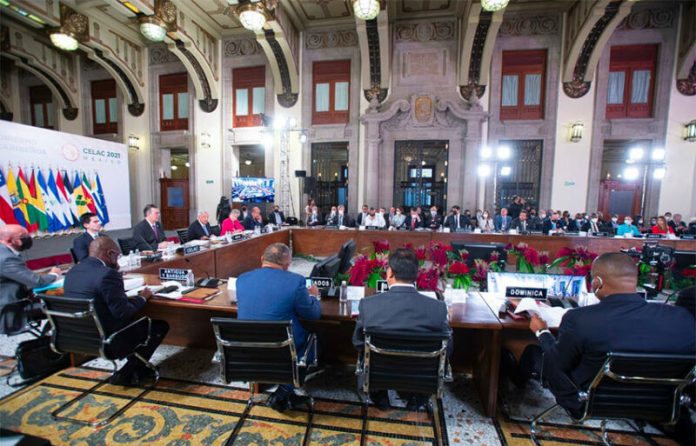
Latin American and Caribbean leaders at Saturday's conference at the National Palace.
President López Obrador called Saturday for Latin American and Caribbean leaders to aspire to the establishment of a European Union-style bloc, but the summit at which he made the call will likely be best remembered for division rather than unity.
The presidents of Paraguay and Uruguay made it clear at the Community of Latin American and Caribbean States (CELAC) meeting in Mexico City that they wanted nothing to do with the Venezuelan government, while the latter also took aim at Cuba and Nicaragua.
“In no sense or circumstance does my presence at this summit represent recognition of the government of Mr. Nicolás Maduro,” said conservative Paraguayan President Mario Abdo Benítez.
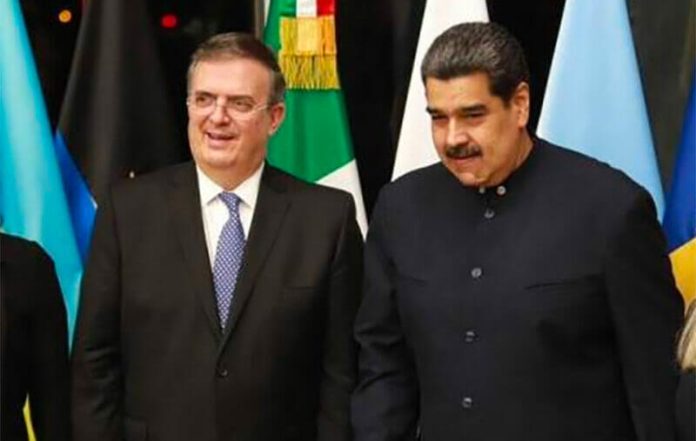
Maduro, who jetted into Mexico City on Friday night to make a surprise appearance at CELAC’s sixth summit, promptly interjected to say his administration didn’t recognize Abdo’s government either.
Minutes later, Uruguayan President Luis Lacalle Pou said his attendance didn’t mean his government was willing to be “accommodating” to those of Venezuela, Cuba and Nicaragua, all of which are widely considered to be undemocratic regimes.
“… We are worried and look gravely at what’s happening in Cuba, Nicaragua and Venezuela,” he said after asserting that they lack “full democracy,” don’t respect the separation of powers, use a repressive state apparatus to silence and jail protesters and don’t respect human rights.
Responding at greater length to Abdo, Maduro challenged the Paraguayan to set a place, a date and a time “for a debate about democracy in Paraguay, in Venezuela and in Latin America.”
He also defended the Cuban and Nicaraguan regimes, led respectively by Miguel Díaz-Canel, who spent several days in Mexico last week, and Daniel Ortega, who didn’t attend the CELAC summit.
“We must turn the page on the divisiveness that was inserted in Latin America, on the harassment of the Bolivarian revolution [that initiated by former Venezuelan president Hugo Chávez] and now the incessant harassment of the Cuban revolution and Nicaraguan revolution,” Maduro said.
For his part, Díaz-Canel charged that Lacalle was ignorant of the reality the people of Cuba face, noting their “courage” in the face of six decades of aggression from the United States, including the imposition of a trade embargo.
He also opined that the Uruguayan president should concern himself with internal issues rather than criticizing Cuba.
Venezuelan President Nicolás Maduro arrives at the CELAC conference in Mexico City. His arrival on Friday night was a surprise.
“Listen to your people, who collected more than 700,000 signatures against the law that you imposed and which changed the conditions to adjust fuel prices; … [it’s a] neoliberal package,” said the first secretary of the Communist Party of Cuba.
In contrast to Cuba, members of the opposition can sign petitions and complain in Uruguay because it’s a democratic country, retorted Lacalle. “That’s the great difference with the Cuban regime,” the center-right president said.
Speaking more tactfully, López Obrador said that Latin American and Caribbean nations should seek the creation of a bloc similar to the EU.
“In these times, CELAC can become the principal instrument to consolidate relations between our Latin American and Caribbean nations,” he said during the summit’s opening ceremony.
“We should build in the American continent something similar to what was the economic community that was the beginning of the current European Union,” López Obrador said while emphasizing the importance of each country maintaining their sovereignty.
His proposition is designed to make CELAC, rather than the United States-headquartered Organization of American States (OAS), the dominant multilateral organization in the Western Hemisphere.
López Obrador said that a CELAC bloc could provide a boost to the region’s economies – which are plagued by inequalities – and help member countries respond to health and other crises.
Weakening the OAS, which excludes Cuba and is not entirely trusted by the region’s leftist regimes, was a stated aim of Mexico at the CELAC summit, held at the National Palace.
Mexican Foreign Minister Marcelo Ebrard said last month that Mexico wants to say goodbye to the OAS, which was established in the middle of the last century, and replace it with a more modern organization.
“What’s Mexico’s proposal? Adiós to the OAS in its interventionist, meddling and hegemonic sense and the arrival of another organization we build in accordance with the United States for the 21st century,” he said.
Insinuating that it takes orders from the United States, López Obrador said in July that the OAS should be replaced “by a body that is truly autonomous” and “not anybody’s lackey.”
“It’s a complex issue that requires a new political and economic vision. … [It’s] a large task for good diplomats and politicians, like those who fortunately exist in all the countries of the continent,” he said at an event in Mexico City on July 24 to commemorate the 238th anniversary of the birth of Simón Bolivár, a military and political leader known as the “liberator of America” and a proponent of a unified Latin America.
“What I’ve suggested here might seem to be a utopia but it must be considered that without ideals on the horizon you don’t get anywhere. Let’s keep the dream of Bolívar alive,” López Obrador said.
Despite the differences of opinions among leaders, Ebrard characterized Saturday’s summit – the organization’s first high-level meeting since 2017 – as a success, noting that a range of resolutions were unanimously supported, including ones that condemned the United States’ blockade of Cuba and sought to create a cooperative COVID-19 vaccination program and a regional fund for disaster response.
“Nobody should be afraid of us having differences,” the foreign minister said, adding that they would only be a problem if they stopped the CELAC member countries from coming together.
“Despite the differences, … which are serious and important, the meeting was held and several substantive decisions were adopted,” Ebrard said.
Pursuing López Obrador’s vision of a European-style trading bloc that would replace the Organization of American States was not among them.
Foreign Minister Marcelo Ebrard, left, welcomes Venezuelan President Maduro.
The federal government came under fire in both Mexico and the United States for welcoming the leaders of Cuba and Venezuela for a regional summit on Saturday.
The head of the National Action Party (PAN) and two Republican lawmakers were critical of Mexico’s reception of Miguel Díaz-Canel and Nicolás Maduro for the 2021 Community of Latin American and Caribbean States (CELAC) summit, held at the National Palace in Mexico City.
“López Obrador has turned Mexico into a dictators’ meeting place,” PAN national president Marko Cortés wrote on Twitter 0n Saturday.
“He’s using his pro tempore leadership of CELAC to degrade our country,” he said. “As a free and democratic country we should be condemning the methods of torture used in Cuba and Venezuela.”
Cortés was also critical of López Obrador’s complimentary remarks about Cuba while hosting Díaz-Canel for Independence Day celebrations last week.
“It’s an aberration that our current president says that Cuba is a [great] example of a nation,” he said. “Could it be because it’s a totalitarian state that persecutes he who thinks differently [and] where freedoms and rights are not respected? A disgrace!”
Ex-president Vicente Fox, who held office for the PAN between 2000 and 2006, and former first lady Margarita Zavala, whose husband Felipe Calderón also represented the PAN, expressed support for Paraguayan President Mario Abdo Benítez, who rejected the legitimacy of Maduro’s presidency at Saturday’s summit.
In the United States, Congressman Michael McCaul, a Republican party representative for Texas, released a statement to decry the attendance of the Cuban and Venezuelan leaders at the CELAC summit.
“As a strong supporter of the U.S.-Mexico relationship, I am disappointed the government of Mexico is hosting Cuba and Venezuela’s dictators, and seeking to weaken the Organization of American States [OAS],” the head of the House Foreign Affairs Committee wrote.
“The Venezuelan and Cuban regimes have Americans unlawfully imprisoned and commit serious human rights violations. Nicolás Maduro also has an open indictment in the U.S. for narco-terrorism. Our Western Hemisphere is stronger with the OAS as the preeminent forum, and member states must remain committed to democratic governance and upholding human rights.”
McCaul previously rejected Foreign Minister Marcelo Ebrard’s call for the Washington-headquartered OAS, which was established in 1948, to be replaced with a new organization for the 21st century.
Representative María Elvira Salazar of Florida, the daughter of Cuban exiles, posted a video message to social media to denounce López Obrador’s invitation to Díaz-Canel.
She expressed sympathy to “my poor Mexican brothers and sisters” because they have a president “of such little stature – not just intellectually but also morally” who invited and showed reverence to a leader who keeps the Cuban people in misery.
The United States government hasn’t formally responded to López Obrador’s calls for it to lift the trade embargo on Cuba, but new U.S. Ambassador Ken Salazar urged Mexico not to get distracted from its bilateral relationship with its neighbor.
“We respect the sovereignty of Mexico [but] our position, that of the United States, in Cuba is that we’re going to continue fighting for democracy. … My perspective is that the United States and Mexico [should be] focused more on the things we can do [together] and not get distracted from what we have to do,” the ambassador said during a weekend trip to Tabasco.
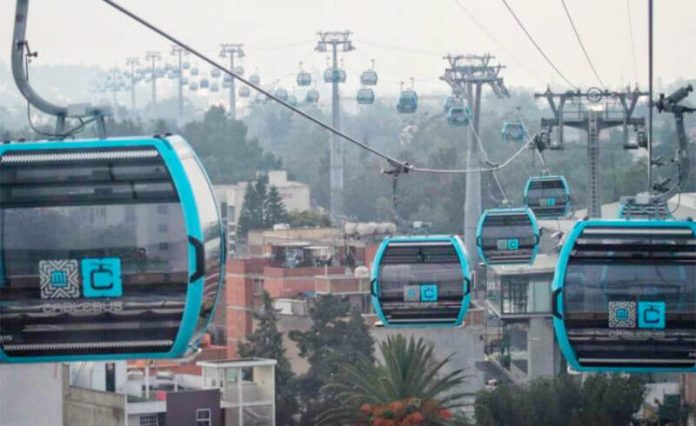
Cable cars were out of commission for an hour on Sunday.
A power failure on a cable car line in the east side of Mexico City left passengers stranded in mid-air for almost an hour on Sunday evening.
Line 2 of the Cablebús in Iztapalapa, the most populous municipality in the country, was suspended for 40-50 minutes from around 7:00 p.m. The transit service reported on Twitter shortly after 8:00 p.m. that passengers were being helped to descend from cabins. Service resumed at around 9:00 p.m.
It was the second electricity failure on Line 2 this month, after power was lost due to the 7.2-magnitude earthquake on September 7. The line went into operation on August 8.
“The company that manages the line is carrying out the necessary inspections to determine the reason for the delay,” Cablebús reported.
Line 2 was constructed and is operated by the Italian company Leitner. The company serviced a cable car line in northern Italy between 2014 and 2016 which collapsed in May, leaving 14 people dead. It has offices in Italy, Austria, France, Slovakia and the United States.
Passengers took to Twitter to criticize the faulty service. “… In a hurry you come enthusiastically to try the ‘fast and efficient’ option of the @MICablebusCDMX line 2 and you get trapped for more than 40 minutes in mid-air … due to ‘system failures,'” wrote one user.
Another described the “desperation” felt by her family while trapped in the cable car.
Line 2 has improved connectivity in working class Iztapalapa through seven stops linking Metro stations Constitución de 1917 and Santa Marta by a 36-minute journey end-to-end. The 10.8-kilometer line has 305 cabins, and cuts the journey by almost 50 minutes. It cost 3.18 billion pesos (almost US $159 million) to build.
The Cablebús system began operating on June 11 through Line 1, connecting the Gustavo A. Madero borough to the Indios Verdes Metro and bus station. The first cable car to open in the Valley of México was the Mexicable in Ecatepec in October 2016. A new 8.2-kilometer line is under construction in the same municipality, and there have been discussions about a new service in the west side of Mexico City in Naucalpan, and another in the southwest of the city to connect the neighborhoods of Magdalena Contreras and Tlalpan.
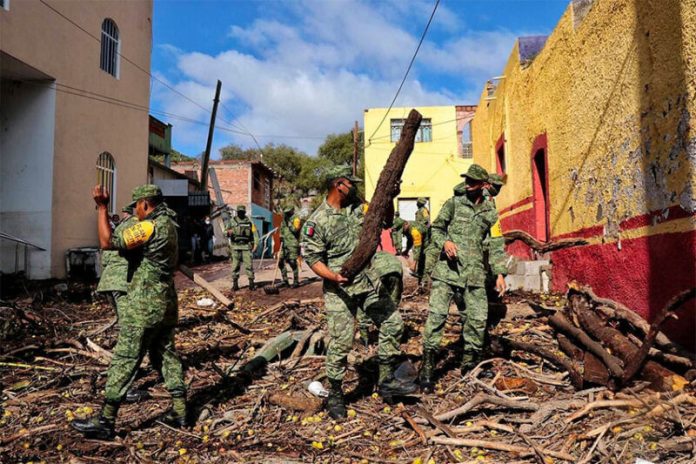
Soldiers clean up after last week's flooding in Zacatecas.
A 24-hour flood alert was issued in Hidalgo on Sunday evening for municipalities in the Tula region that have already experienced severe flooding this month.
The National Water Commission (Conagua) warned that the Tula River, dams and other bodies of water could overflow again Monday due to the persistent heavy rain in the Valley of México, with risk particularly high at around 3:00 p.m.
Conagua said the risk had increased due to the high level of water in sewage tunnels which run toward Hidalgo from Mexico City and the state of México. “Due to the flow from the [sewage tunnels] TEC and the TEO, it is expected that from 3:00 p.m. the level of the Tula River will rise, until it reaches its critical capacity, and it may overflow,” the commission said.
Two temporary shelters have been set up in Tula in case of flooding.
Meanwhile, Zacatecas has requested that flooding in the state be declared an emergency by federal authorities, which would facilitate access to emergency funds. The San Aparicio dam overflowed after heavy rains on Thursday and Friday, affecting 1,270 people.
Water levels reached up to one and a half meters in some homes. Electricity and telephone services were suspended on Saturday evening.
Governor David Monreal sent a letter to Civil Protection chief Laura Velázquez Alzúa which declared that “the operational and financial capacity of the state has been overwhelmed” by the flooding.
The petition was accompanied by photographic and geotagged evidence to demonstrate the severity of the damage and the number of people affected.
Two temporary shelters have been serving affected residents.