Home Blog Page 1187

Extermination sites: the new depths of Mexico’s disappearance crisis

0
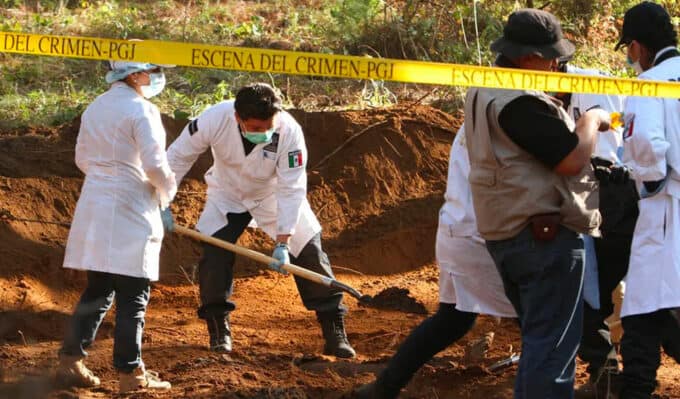
Searching for bodies at La Bartolina, Tamaulipas.

Families combing for clues about their vanished loved ones at recently discovered extermination sites in northern Mexico have turned to local cartel leaders for help — revealing their desperation to find any trace of the disappeared amid masses of incinerated bones.

At the end of July, families of those missing in Tamaulipas issued a letter to the Gulf Cartel faction operating in Matamoros, along the U.S.-Mexico border.

“We are not looking for culprits; We are looking for our sons, daughters, fathers, mothers, brothers, sisters and relatives,” they insisted.

Earlier that month, the Mexican government recognized the existence of an extermination site in Matamoros, where more than half a ton of skeletal remains have been found. The location, known as La Bartolina, lies just 12 kilometers from the border at Brownsville, Texas.

In Tamaulipas alone, groups searching for the disappeared have identified 57 such extermination sites since the end of 2012, according to a report from news portal Elefante Blanco.

Just days before the letter from the families in Tamaulipas, the United Forces for Our Disappeared in Nuevo León (Fundenl) issued a press release urging authorities in the northern border state to speed up investigations into five such sites, where more than 600,000 skeletal remains have been recovered since 2010.

The graves classed as extermination sites all share certain macabre characteristics: multiple clandestine graves, containers to incinerate bodies, encampments, confinement areas and victims’ remains.

In an interview with Elefante Blanco, Mexico’s national search commissioner, Karla Quintana Osuna, stated that La Bartolina is the largest extermination site that federal authorities have identified.

“We have decided to designate them ‘extermination sites’ … because they are crematoriums where they have tried to disappear and pulverize at least hundreds of people,” Quintana said in an interview with Milenio.

Over the last 15 years, more than 80,000 people have disappeared in Mexico. According to a report by the federal government in April, Tamaulipas and Nuevo León are among the five states with the highest number of disappearances reported.

InSight Crime analysis

Recognizing the existence of extermination sites in Mexico is an important step toward understanding the magnitude of the country’s crisis of forced disappearances. However, there is still a long way to go to address the systematic human rights violations that have occurred in the country’s northeast, where criminal groups remain in power.

The areas where extermination centers have been detected once had a significant presence of the Zetas and the Gulf Cartel. These drug groups were involved in several episodes of extreme violence that claimed the lives of thousands of victims.

For example, the Piedras Negras prison in Coahuila was used as an extermination center where the Zetas murdered more than 150 people between 2010 and 2012. Their bodies were then burned in diesel-filled barrels known as “ovens.” Police and prison personnel were aware that the prison was being used as a death camp.

Previously considered some of the most violent groups in Mexico, the Zetas and the Gulf Cartel no longer wield the same power after fracturing. Splinter groups, though, continue to terrorize locals. For example, in June, shootouts in Reynosa left 26 people dead, many of whom were said to be bystanders. A cell linked to the Gulf Cartel was blamed for the gunfire, as well as for the kidnapping of 119 people.

State actors also play an important role in the abuses. In January, for example, 19 people – including Guatemalan migrants – were massacred and burned in the Tamaulipas municipality of Camargo. At least 12 members of Tamaulipas’ special operations group (GOPES), which answers directly to the state governor, were held responsible. That same month, residents of Tamaulipas’ Ciudad Mier reported being forcibly displaced after the disappearance of two people at the hands of the GOPES.

Likewise, in 2019, the DEA accused elements of the unit of detaining and disappearing people, turning them over to the cartels.

The government of Andrés Manuel López Obrador has promised to allocate more resources to the search and identification of missing persons and has created search commissions in each state.

However, most of the burden continues to fall on family members, search groups and other non-governmental organizations, which face bureaucratic barriers, corruption and government negligence.

Activists searching for the disappeared are also constantly threatened for their work and the state rarely offers them protection. On July 16, a woman was murdered in Sonora state after spending months looking for her husband with a group called the Searching Mothers of Sonora.

According to the report by Elefante Blanco, members of the group that discovered La Bartolina in Matamoros have received threats since the government recognized it as an extermination center.

Forced disappearance cases in Mexico face high levels of impunity and investigations into the extermination sites and the clandestine graves have been halting and cumbersome. Authorities are often indifferent. Searchers say that much can be done to speed up identifications and prosecutions, including those of complicit state officials.

“People knew. The authorities knew. Something of this scale cannot happen without them knowing what is happening,” Quintana, the national search commissioner, told Milenio.

Reprinted from InSight Crime. Victoria Dittmar is a writer with InSight Crime, a foundation dedicated to the study of organized crime.


Millennial workers came to the rescue in the pandemic: BBVA study

0
Millennials' average monthly earnings were 7,251 pesos.

Millennials played a key role in the reactivation of the Mexican economy in late 2020 as pandemic restrictions were relaxed, according to a study by BBVA Research.

The population segment counted for almost one third of the working population from August 21-November 28, the period in which infection rates had begun to drop.

The economy had been widely forecast to suffer a deep recession in the second half of 2020, which was largely avoided by the flow of remittance payments from the United States and workers returning to their duties, including about 20 million people in the millennial age category.

There is no absolute consensus on the dividing line between millennials and its preceding, older population group Generation X. For the purposes of the study, BBVA defined millennials as people 25-39 years old in 2020, having been born between 1981 and 1995, while Generation X covered people between 40 and 54 years, born between 1966 and 1980.

The personal income earned by millennials attested to their value to the workforce. On average, they earned 7,251 pesos (about US $364) per month, while Generation X workers averaged just 12.3% more.

The data showed that the labor market valued millennial workers with professional or postgraduate training, but barely distinguished those with bachelor’s degrees from their peers with only primary or secondary education.

The study also revealed the difference in salaries between millennial men and women. In Yucatán men earned 72.4% more than their female peers. In Durango, Baja California, Tamaulipas, Aguascalientes, Michoacán, Chihuahua and Nuevo León, the income gap was over 30%. The state of México, Veracruz, Oaxaca and Quintana Roo were those with the lowest differentials.

There were also marked differences in earnings depending on where millennials lived. For example, the average salary of a millennial employed in Nuevo León was 11,100 pesos a month (about $557), while in Chiapas it was 4,458 pesos (about $224).

The BBVA study was based on the Survey of National Household Income and Expenditure by federal statistics institute Inegi published on July 28. The data was collected from August 21-November 28, 2020.

Mexico News Daily

This year’s Tokyo winners join a 120-year tradition of Mexican medalists

0
Mexican Olympian Alejandra Valencia
Alejandra Valencia's bronze win at this year's Tokyo Olympic Games is part of a diverse history of Mexican medalists dating back to the turn of the 20th century. CONADE

When Mexican diver Joaquín Capilla Pérez headed into his final Olympics at Melbourne, Australia, in 1956, one thing was missing from a dazzling resume: a gold medal.

He closed that year with a splash, placing first. He ended his Olympic career with one gold, one silver and two bronze medals over three Summer Games.

With four medals overall, he remains Mexico’s most decorated Olympic medalist.

The long history of Mexican Olympic achievement includes a diverse medley of sports, from diving to equestrianism to boxing. There are some complicated moments, such as Mexico City’s experience hosting the 1968 Summer Games, in which Black American athletes participated in a notable social protest and student demonstrators died in an infamous massacre at Tlatelolco.

More recently, the men’s soccer team won a gold medal at London in 2012 and taekwondo practitioner María Espinoza placed second on the all-time Mexican medals list, with three, while race-walkers have accumulated 10 medals over the years, the most Mexican medals in a track and field category.

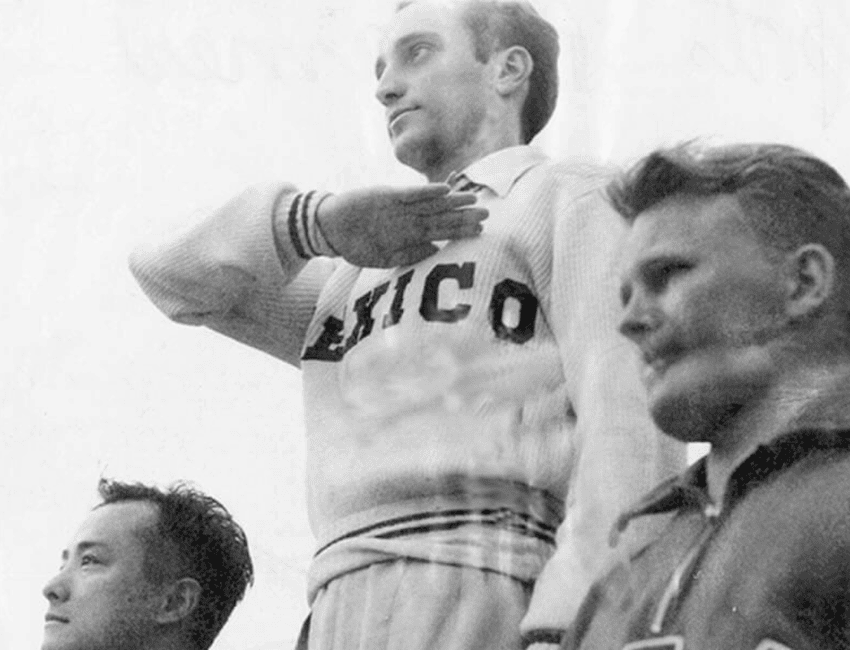
Mexican Olympic diver Joaquín Capilla
Diver Joaquín Capilla, center, won gold at the Melbourne games in 1956. He holds Mexico’s record for the most Olympic medals won by an athlete.

In Tokyo this year, Luis Álvarez and Alejandra Valencia won bronze in mixed-team archery, while in diving, the tradition of excellence continues: divers Gabriela Agúndez García and Alejandra Orozco Loza won bronze in the women’s synchronized 10-meter platform.

“I think Mexico has an interesting history generally in the Olympics,” said William Beezley, a professor at the University of Arizona. “Not high numbers of gold medals, but interesting stories, at least.”

Mexican Olympic achievements began in Paris in 1900 with a bronze in polo.

“Mexico has a long history of sports related to horses,” said Zacatecas-born scholar José Alamillo, a professor at California State University-Channel Islands. “It goes back to the charro [cowboy] and the charreria [equestrianism].”

Mexico fielded its first official Olympic team for the 1924 Paris Summer Games. The National Olympic Committee looked to indigenous running traditions among the Tarahumara community, as a route to success in 1924 and 1928 (the Summer Olympics in Amsterdam).

Although the Tarahumara athletes were veteran long-distance runners, they did not win Olympic marathon medals.

Mexican Olympic boxer Francisco Cabañas
Boxer Francisco Cabañas brought home a silver medal from the 1932 Games in Los Angeles.

“The story goes that the distance was too short,” Beezley said. “These guys were used to running 50, 60 miles. Just doing a marathon distance was only half what they were used to. They were just getting warmed up, getting ready to go. It’s just a story. The real story is, who knows?”

In the next decade, flyweight boxer Francisco Cabañas won one of Mexico’s first two individual Olympic medals — a silver at the 1932 Summer Games in Los Angeles. Gustavo Huet Bobadilla also won a silver medal that year for shooting in the small-bore rifle, prone, 50 meters competition.

“Boxing [in Mexico] starts to take off in the late 1800s during the Porfiriato,” said Stephen Allen, a professor at California State University-Bakersfield and the author of A History of Boxing in Mexico: Masculinity, Modernity, and Nationalism. “There is a lot of incorporation of foreign sports from the U.S. and Europe. The Porfiriato pushed the elites to want to do the same activities as Europeans and Americans.”

Ironically, Allen noted, boxing was eventually banned. The working class in Mexico wasn’t allowed to participate for fear that the sport “would teach the working class how to fight,” he said. That did not change until the 1900s.

In the Olympics, “Mexico has been represented well by boxers,” Alamillo said. “[Cabañas] stood out because boxing is huge in terms of Mexican sports.”

Outside the arena, Mexican athletes faced another foe: racism.

Humberto Mariles at the 1948 Olympics in London
Humberto Mariles with his horse, Arete, at the 1948 Olympics in London, where they won three medals, two of them gold.

“You definitely see a lot of Mexican stereotypes at the Olympics dating back to 1932,” Alamillo said. “Mexican athletes would be represented in sports journalism, often stereotyped, in many ways … very much a caricature of Mexico, stereotypically ‘hot-tempered,’ very much similar to a lot of racial stereotypes in Hollywood regarding Mexicans.”

A decade later, an inspiring friendship blossomed between two rivals who each overcame racial prejudice: Mexican diver Capilla and United States competitor Sammy Lee, an Asian-American.

“You can definitely see both Sammy Lee and Joaquín facing these things, especially how they were represented in sports media,” Alamillo said. “There were a lot of similarities.”

Although Capilla enjoyed many triumphs, he later struggled with personal issues. “[Capilla] ended up in poverty. Things went bad for him,” Beezley said.

Another Mexican Olympian with success on the podium but difficulties later in life was Humberto Mariles, a three-time equestrian medalist at the 1948 Summer Games in London — including two gold medals, the only time a Mexican has topped the podium multiple times.

Mariles, later jailed for murder, “was a strange guy, is all I can say,” Beezley said.

Mexcan fencing Olympian María del Pilar Roldán
Fencing silver medalist María del Pilar Roldán, Mexico’s first female Olympic athlete to win a medal, shone in 1968, the year Mexico hosted the Games.

Scholars had much more to say about Mexico City’s experience hosting the 1968 Summer Games.

“For Mexico’s establishment, the 1968 Olympics, and the 1970 World Cup, were supposed to be a moment when the world watched as a ‘new’ and ‘progressive’ Mexico emerged on the global stage — with a thriving economy, an artistic flair and a new level of technological sophistication,” said Mark Dyreson, the director of research and educational programs for the Penn State Center for the Study of Sports in Society.

“Clearly, hosting the 1968 Olympics is head and shoulders the most important moment” in Mexican Olympic history, Dyreson said. “Mexico became the first nation in the Western Hemisphere outside the U.S. to host a Games — and the second nation after Japan in [1964] outside of Europe or its former British colonies — the U.S. and Australia — to host.”

Yet the Games ended up being remembered for off-the-field moments reflective of the era.

“The 1968 Olympics still have an important legacy in Olympic history,” Alamillo said. “I think there are a couple of reasons why. First, you have the African-American athletes, Tommie Smith and John Carlos. They raised their gloves during that year’s national anthem [in the Black Power salute after winning gold and bronze, respectively, in the 200-meter dash]. “I think that protest still stands out today in thinking about the history of Black athletes making a statement.”

“The other reason is Tlatelolco, the massacre at Tlatelolco, [which] in many ways tainted the Games.”

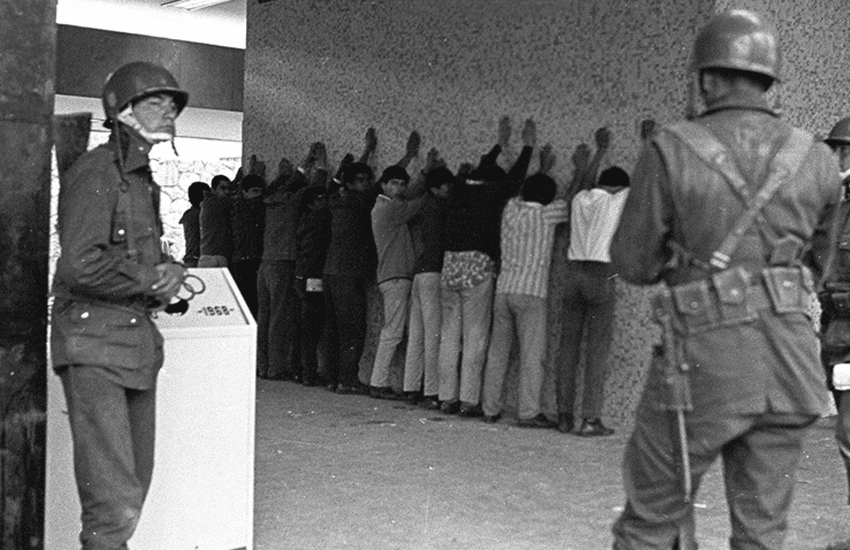
Tlatelolco Massacre of 1968
The Mexican military detain protesters at what came to be known as the Tlatelolco massacre of 1968.

In 1968, 10 days before the Olympics opened, the military shot unarmed student protesters gathered at the Plaza of Three Cultures in Mexico City’s Tlatelolco.

“Ultimately, Mexico could not escape the global forces that swept the world in the late 1960s and highlighted the endemic problems of racial discrimination, economic disparities, social conflicts and other maladies that impacted most nations,” Dyreson reflected.

“What was supposed to be Mexico’s coming-out party instead descended into the tragedy of the Tlatelolco massacre,” he said.

Nevertheless, Mexican athletes marked positive milestones that year: fencer María del Pilar Roldán became the country’s first female Olympic medalist when she won silver. Track and field competitor Enriqueta Basilio lit the Olympic flame, the first woman to do so.

At Sydney in 2000, 32 years later, weightlifter Soraya Jiménez became Mexico’s first female gold medal winner. Ana Guevara won a silver medal in 2004 in Athens.

At the 2016 Summer Games in Rio, taekwondo athlete María Espinoza captured her third Olympic medal to tie Mariles at second place for the most medals won by a Mexican.

Mexican Olympic athlete María Espinoza at 2016 Summer Games
At the 2016 Summer Games in Rio, María Espinoza captured her third Olympic medal in taekwondo.

Guevara, who Beezley called a role model, eventually was elected to Congress and served from 2012 to 2018, where she had to confront men who were “opposed to women athletes, to women being in politics,” he said.

In general, he added, Olympians here have “served as important role models in Mexican society for what’s possible, what can be accomplished.”

Rich Tenorio is a frequent contributor to Mexico News Daily.

Video footage of diver Joaquín Capilla at the 1956 Games in Melbourne.


Hammered copper competition awards prizes to artisans in Michoacán

0
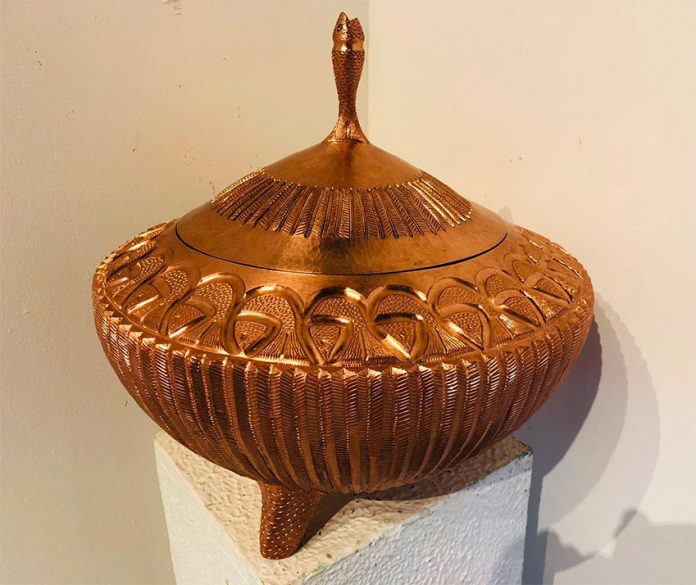
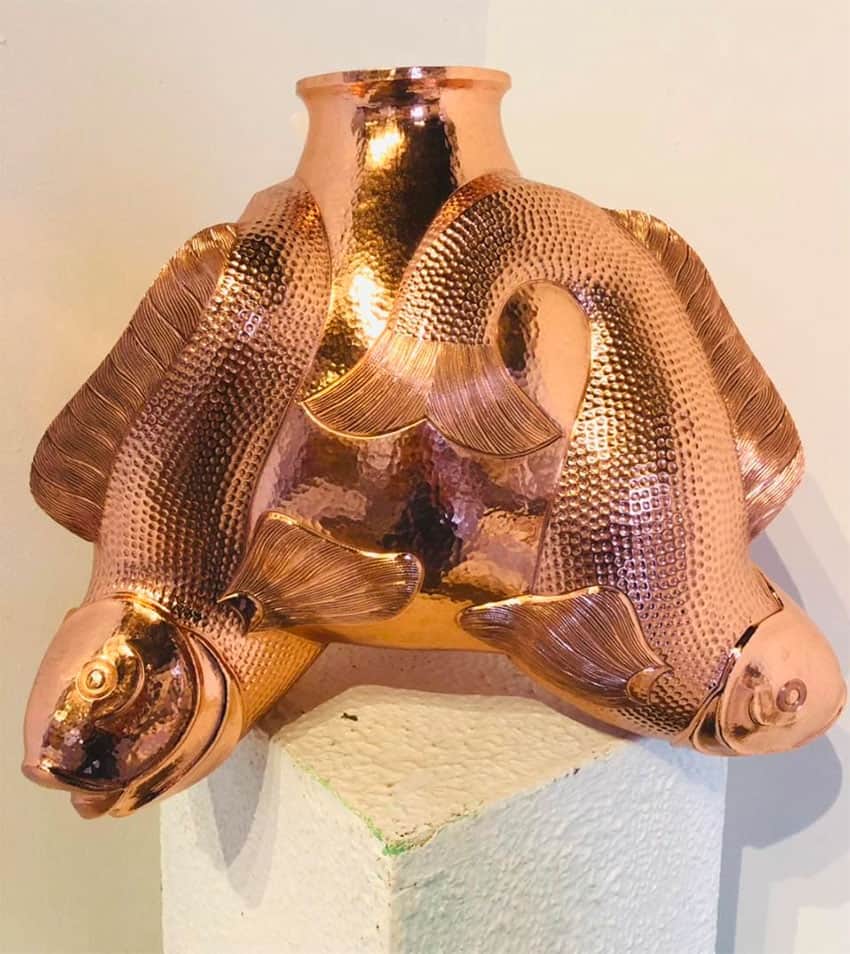
The grand prize winner at Santa Clara's copper competition.

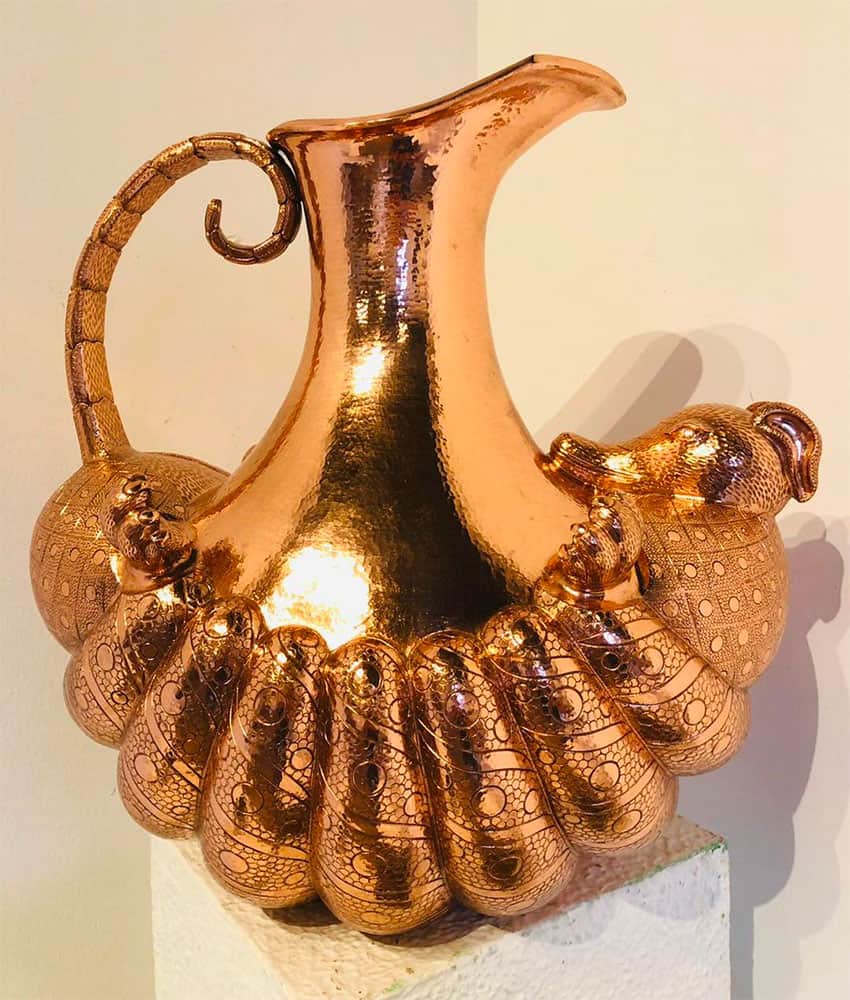
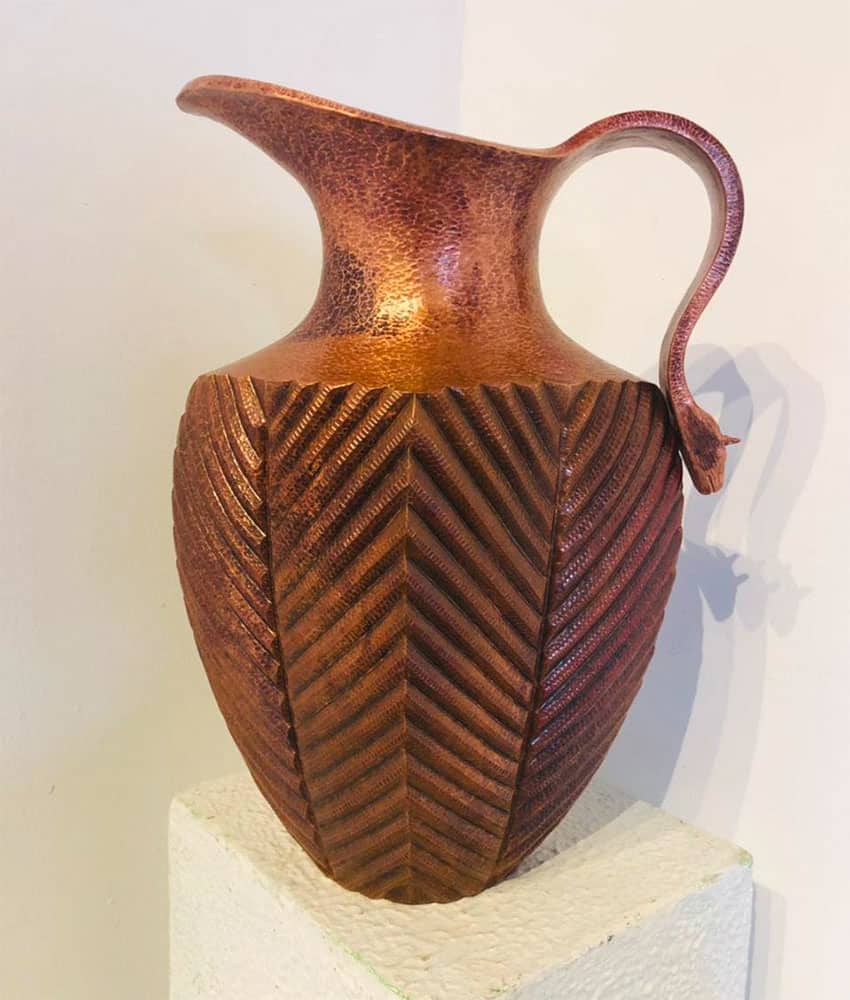
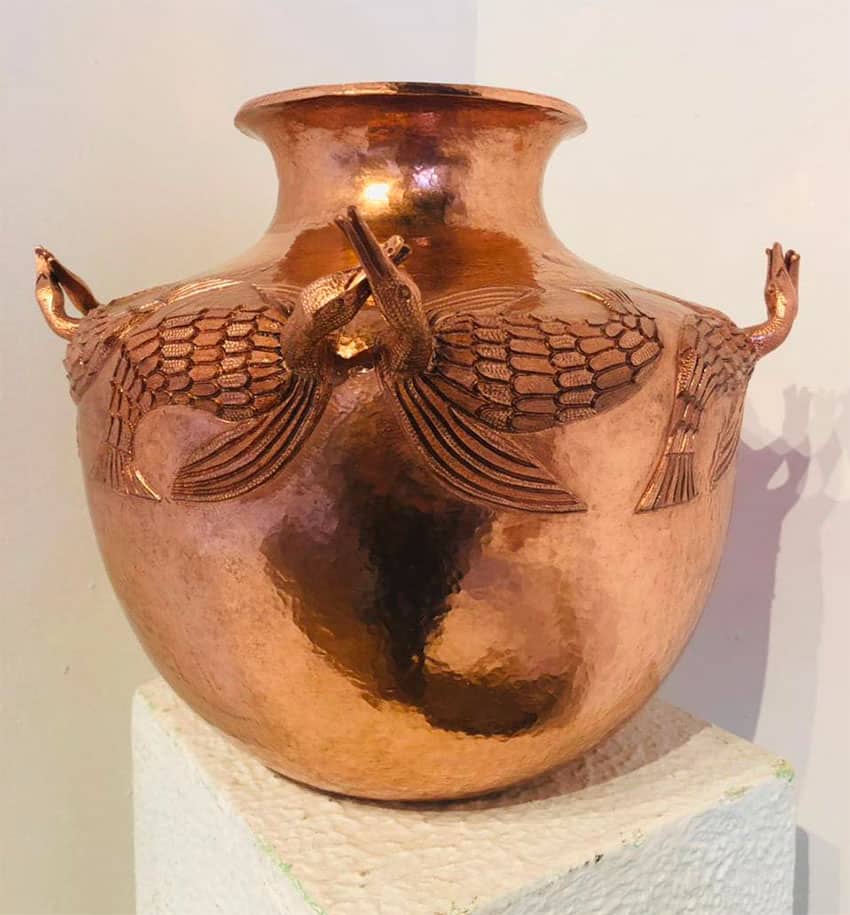
The copper artisans of a Magical Town in Michoacán were celebrated last week with the 76th hammered copper competition, where 80 prizes were handed out to artisans who submitted 561 pieces for judging.

Medals and prize money totaling 440,000 pesos (US $22,000) were awarded to the winners, whose work was on display with that of all 244 artisans last week at the Copper Museum in Santa Clara del Cobre.

An elaborate centerpiece was the grand prize winner, earning a gold medal for José Sergio Velázquez García.

Santa Clara, located an hour from the capital Morelia, is a Purépecha town whose inhabitants mined and worked with copper in pre-Hispanic times.

After the Conquest, they were encouraged to continue creating copper crafts by Spanish Bishop Vasco de Quiroga and the town became synonymous with the production of copper goods throughout the colonial period.

Award-winning pieces at this year’s copper competition

Photos by Michoacán Institute of the Artisan

copper bowl

copper sculpture

copper jug

copper jug

copper art

copper art

Mexico News Daily

US gun makers say only Mexico is responsible for ‘rampant crime and corruption’

0
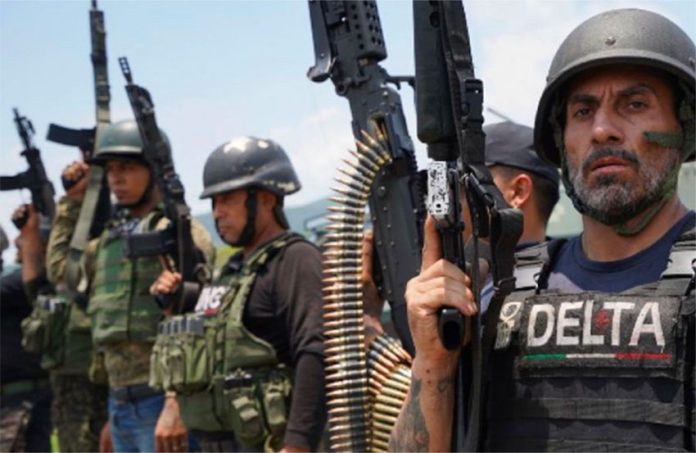
sicarios and guns
Mexico argues that most of their weapons are smuggled from the US.

U.S. gun manufacturers on Wednesday accused the Mexican government of looking for a scapegoat by filing a civil lawsuit alleging that they engaged in negligent practices that have led to illegal arms trafficking and homicides.

The National Firearm Industry Trade Association (NSSF) said allegations of wholesale cross-border trafficking of guns were “patently and demonstrably false.”

“These allegations are baseless,” said NSSF spokesman Lawrence Keane. “The Mexican government is responsible for the rampant crime and corruption within their own borders. Mexico’s criminal activity is a direct result of the illicit drug trade, human trafficking and organized crime cartels that plague Mexico’s citizens. It is these cartels that criminally misuse firearms illegally imported into Mexico or stolen from the Mexican military and law enforcement.

“Rather than seeking to scapegoat law-abiding American businesses, Mexican authorities must focus their efforts on bringing the cartels to justice.”

The association said all firearms sold at the retail level in the U.S. are sold in accordance with federal and state laws, with an FBI background check.

Mexico filed the suit Wednesday against 11 manufacturers in a federal court in Boston, alleging that they and other gun makers knew that their business practices caused illegal arms trafficking in Mexico.

A government study published last year said that some 2.5 million illicit weapons have crossed the border into Mexico over the past decade.

The gun manufacturers disputed those numbers, claiming that less than 12% of the guns seized by Mexico in 2008 had been verified as coming from the U.S. They also charged that Mexican soldiers defect to work for drug cartels, taking their U.S.-made rifles with them.

Weapons used by Mexican cartels also come from Central America and China, they said.

On Thursday morning, President López Obrador defended the suit and accused gun manufacturers of providing organized crime with custom-made weapons.

He said the intention was not to challenge U.S. citizens’ right to carry arms but to encourage controls over their manufacture and sale.

Mexico News Daily

Fearing reopening of industrial pig farm, citizens protest in Mérida

0
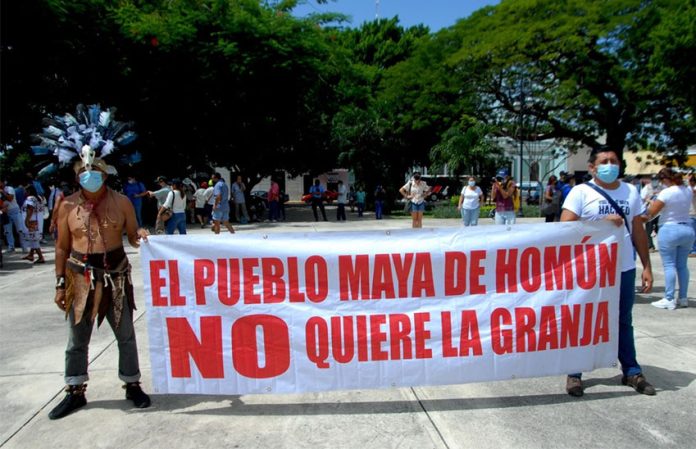
Protesters display a banner with the words, "The Mayan people of Homún don't want the farm."

Some 500 residents from the Mayan town of Homún, Yucatán, traveled to protest in the state capital Mérida Tuesday, fearing that a 49,000-head hog farm in the town’s vicinity would be reopened. A court decision on the matter is due Thursday.

Producción Alimentaria Porcícola (Papo) was built in a Natural Protected Area that attracts tourists for its “ring of cenotes.” Residents have expressed concern that water in the area could become contaminated by pig urine and excrement; a potential disaster for 80% of the population which depends economically on tourism.

The farm has not been in operation since 2018 due to a Yucatán court verdict. That decision was unanimously upheld by the Supreme Court in May, meaning Papo has been forced to remain closed pending tomorrow’s decision in the state’s Second District Court.

However, residents of Homún have alleged that the state government, led by Governor Mauricio Vila Dosal, was attempting to wield influence on the court in favor of reopening the farm.

On June 6, Papo filed a document before the judge which had been issued by the state Ministry of Sustainable Development. In the text the ministry’s legal director, Karen Aguirre Bates, stated that farm was “sufficiently equipped to achieve compliance with the maximum permitted limits of pollution.”

Earthjustice, a nonprofit environmental law organization, filed a friend of the court brief prior to the Supreme Court’s decision in May, which detailed “substantial scientific evidence about the grave and irreversible harm to human health and the environment associated with industrial hog operations … contamination of water, including naturally occurring freshwater wells known as cenotes; emission of noxious air pollution; the spread of dangerous pathogens and contribution to climate change.”

Resident Martina Ramirez Soberanis called on the state government to stand in opposition to the farm. “We believe it is time for the state government of Yucatán … to take a stand against the abuses of the mega pig factory … [which is] trampling on the rights of the Mayans of Homún,” she said.

Another protester complained that the voice of local people was being ignored. “These people from the companies do not love Homún, they just want the farm. We did our consultation and the people of Homún said ‘no, and no,’ and we continue to say ‘no,’ and we will keep defending the water for the future of the children … we are going to continue in the struggle … we remain united and we will defend the sacred water.”

It has been estimated that Papo would generate over 272 million kilograms of urine and feces each year, more than is generated by the entire human population of Tijuana.

With reports from Milenio

9 Oaxaca municipalities on maximum alert for Covid infections

0
Santa María Xadani
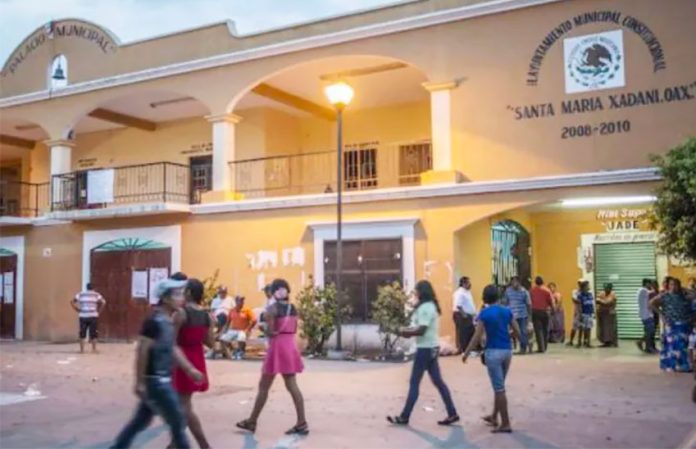
Santa María Xadani is one of the municipalities under red light restrictions.

A red light maximum alert warning now applies in nine municipalities in the Isthmus of Tehuantepec region of Oaxaca due to an increase in coronavirus cases and deaths.

State and municipal authorities have imposed red light restrictions in Juchitán de Zaragoza, Ciudad Ixtepec, Salina Cruz, Santo Domingo Tehuantepec, Santo Domingo Ingenio, El Barrio de La Soledad, El Espinal, Magdalena Tequisistlán and Santa María Xadani.

Residents of two of those municipalities, Magdalena Tequisistlán and Santa María Xadani, are subject to curfews. The former saw case numbers explode after an infected person arrived by taxi last month.

The region escaped the worst effects of the first and second waves of the pandemic but has seen a surge in cases as the highly contagious delta strain of the virus takes hold in Mexico. Hospitals in the area are now under intense pressure and some seriously ill Covid-19 patients have been unable to find a bed and died at home.

The third wave of the pandemic has also hit other parts of Oaxaca, which is currently high risk orange on the federal stoplight map. There are currently 2,361 active cases in the southern state, according to Health Ministry estimates, but that figure is almost certainly a vast undercount because it’s based on confirmed cases and testing levels in Mexico remain very low.

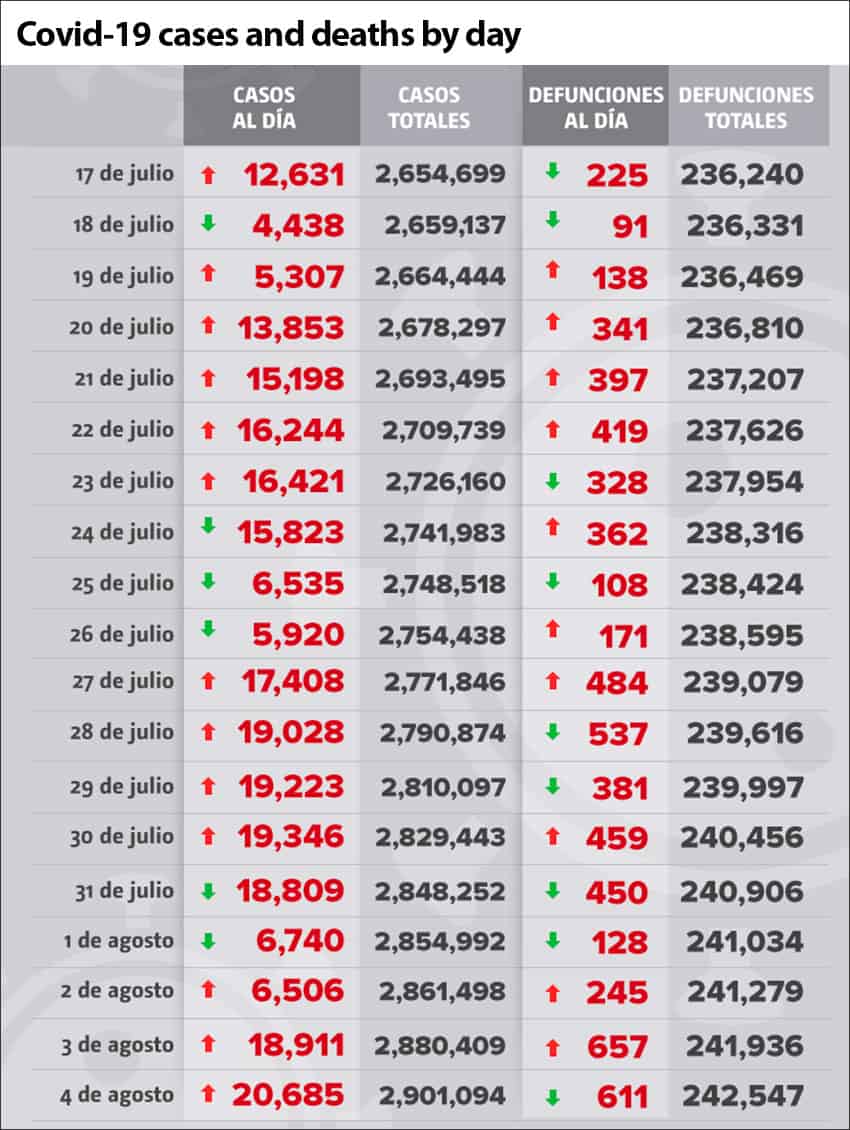
Coronavirus cases and deaths in Mexico as reported by day
Coronavirus cases and deaths in Mexico as reported by day. milenio

In Santa María Colotepec, a municipality where part of the beach destination Puerto Escondido is located, 15 to 20 people per day are dying with Covid, according to a municipal official.

“… [Covid-19] has affected them a lot because we don’t have medical care, there are no hospitals that treat Covid patients,” Saul Martínez told the newspaper Milenio.

“We have to go to neighboring municipalities to see if their clinics or hospitals accept us but the response is always no,” he said.

Colotepec resident Giovanny Vázquez said her father was turned away from the IMSS #32 hospital in Puerto Escondido without even being tested for Covid-19 despite having the telltale symptoms of the disease. He died at home two weeks later.

Paying for care in a private hospital is out of reach for families of limited means, many of whom also face high costs for oxygen required to keep their loved ones alive.

Martínez said many people unable to afford professional medical treatment have used home remedies to treat Covid.

“They make eucalyptus tea in a pot and add red onion, garlic [and Vick’s] VapoRub,” he said. “They’re remedies of our ancestors that are saving lives today,” the official claimed.

Many people would consider vaccination a better option, but the take-up rate has been lower in Oaxaca than most other states, leading the federal government to intensify efforts to get shots into the arms of residents there and in four other states with low rates.

Across Mexico, about 53% of adults have had at least one shot of a vaccine but tens of millions of Mexicans remain unvaccinated. The coronavirus, and in particular the delta strain, is taking advantage of their vulnerability, infecting almost 330,000 people in July, according to official numbers, the second highest monthly total of the pandemic after January.

The Health Ministry reported an additional 20,685 cases on Wednesday, lifting Mexico’s accumulated total to just over 2.9 million. The official Covid-19 death toll rose by 611 to 242, 547, the fourth highest total in the world after those of the United States, Brazil and India.

With reports from El Universal and Milenio 

Nahua version of Conquest to be presented in online lecture

0
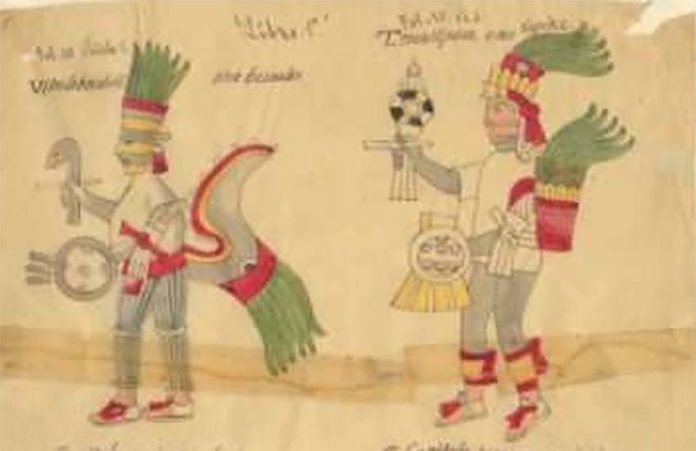
Illustrations from the Florentine Codex, which highlights Nahua perspectives of the Conquest.

The Getty Research Institute (GRI) will give a public lecture on August 13 to tell the story of the Conquest from the perspective of the Mexica people, also known as the Aztecs. It coincides with the 500th anniversary of the fall of the pre-hispanic city of Tenochtitlán, the forbear to Mexico City, which marked the collapse of the Aztec Empire.

A reading in English, Spanish and Náhuatl of Book 12 of the Florentine Codex will connect attendees with eyewitness accounts by indigenous survivors of the Conquest.

The Florentine Codex is a work compiled by Spanish Franciscan friar Bernardino de Sahagún in the 16th century, in collaboration with indigenous Mexicas. Its text was written in both Spanish and Náhuatl and consists of 2,400 pages and 2,000 illustrations drawn by indigenous artists, organized into 12 books documenting the culture, religious beliefs, society, economics, and natural history of the Mexica people.

The version of historical events presented in the codex contrasts markedly with the accounts of conqueror Hernán Cortés and subsequent Spanish versions. For example, a famous defeat for the Spanish, which is commonly known as the “Night of the Sorrows,” is celebrated as a Mexica military triumph in the codex.

The event will run from 9:00 a.m. to 5:00 p.m. with opportunity for active audience participation. The daylong reading will close with a musical performance and poetry readings.

This event will be co-presented by GRI, the Los Angeles County Museum of Art (LACMA), and the National Library of Anthropology and History. It is part of the GRI’s Florentine Codex Initiative and LACMA’s exhibition Mixpantli: Space, Time, and the Indigenous Origins of Mexico which will open on December 12.

Members of the public can register here to attend the event online.

Mexico News Daily

Taxi brought more than passengers to previously Covid-free Oaxaca town

0
An infected taxi passenger may have caused the "first wave" of Covid to hit the town of Magdalena Tequisistlán in Oaxaca.

The coronavirus situation deteriorated rapidly in a previously Covid-free town in the Isthmus of Tehuantepec region of Oaxaca after an infected person arrived in a taxi four weeks ago.

Magdalena Tequisistlán, located 65 kilometers inland from the port city of Salina Cruz, has since recorded more than 160 confirmed cases and at least 19 Covid-19 deaths.

Municipal authorities believe that the real number of cases is above 1,000, which would mean that about one in six residents of the indigenous Chontal town has been infected.

With people staying at home to try to avoid the virus, the streets of Magdalena Tequisistlán are largely empty, according to a report by the newspaper El Universal. The ringing of the bells of the local church is one of the few signs of human presence, but their sound signals death rather than life. Since the first Covid-19 fatality in the town, the bells have barely stopped ringing.

Magdalena Tequisistlán is doing all it can to stop more people with the virus arriving in the town. Health checkpoints have been set up where outsiders must stop to have their temperature taken and everyone who arrives is required to register with municipal police.

For residents, the outbreak is “the first wave” of the pandemic, said Mayor Roel Filo Lozano.

“It’s hitting us with all it’s got because it caught us with a clinic without medicine, an abandoned hospital, without vaccines for people in their 30s and with those in their 50s and 40s only having had one dose,” he said.

“… [The authorities] tell us they don’t have [medical] personnel or equipment to attend [to the situation here]. It’s urgent that the federal government send vaccines to protect us because practically one person per day is dying,” Filo said.

Virtually all municipal officials and many police are currently sick with Covid with the mayor one of just a few exceptions among city workers.

Helena Luna, the municipal trustee, told El Universal that she, the mayor and one councilor, all of whom have so far avoided catching the virus, are carrying out a wide range of jobs due to the absence of other municipal workers. They go to Salina Cruz to refill oxygen tanks and the mayor even dug a grave on one occasion because there was no one else to do it, she said.

“My children told me to stop [working], that I’m putting myself at risk, but I have an obligation to the people,” Luna said.

Other members of the community are also rallying to support their fellow residents, including Roberto Ordaz, who delivered free food and medicine to a struggling family that is caring for two members who are sick with Covid and lost its 73-year-old patriarch to the disease last week.

“It’s a small town and we all know each other. That’s why when I found out about the situation of this family I decided to come and leave them something to eat. I believe it’s a time to support each other,” he said.

With reports from El Universal 

Mexico sues 11 US gun makers over illegal flow of weapons across border

0
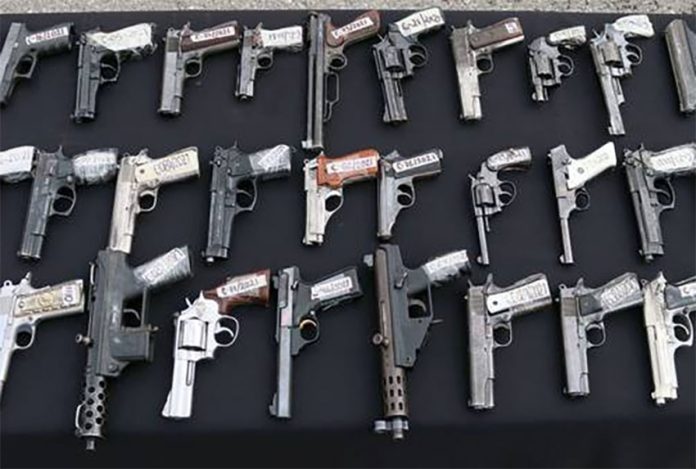
Weapons smuggled from the US to Mexico have likely been used in tens of thousands of homicides
Weapons smuggled from the US to Mexico have likely been used in tens of thousands of homicides.

The federal government sued 11 United States-based gun manufacturers on Wednesday, accusing them of negligent business practices that have led to illegal arms trafficking and deaths in Mexico, where U.S.-sourced firearms are used in a majority of high-impact crimes.

The government filed the lawsuit in a United States federal court in Boston because some of the manufacturers are headquartered in Massachusetts. Among the accused are units of Smith & Wesson, Barrett Firearms, Colt’s Manufacturing Company and Glock Inc.

Mexico alleges that they and other gun companies knew that their business practices caused illegal arms trafficking in Mexico.

Colt’s, for example, manufactured a pistol embellished with an image of Emiliano Zapata, a hero of the Mexican revolution. That weapon was used in the 2017 murder of Chihuahua-based journalist Miroslava Breach.

The government alleges that other arms manufacturers also design weapons to appeal to criminal organizations in Mexico, among which are drug cartels such as the Sinaloa Cartel and the Jalisco New Generation Cartel (CJNG).

A Colt Aztec .38 caliber pistol

“Mexico is denouncing these promotional practices, along with other examples of negligence, like multiple weapons sales to a solo buyer, and the absence of background checks,” said a court document filed by the Ministry of Foreign Affairs (SRE)

Firearms made in the United States and smuggled into Mexico – where there are tight restrictions on gun ownership and just one store, operated by the army, that sells guns – have fueled the high levels of violence here during the past 10 years, the government argues. There were more than 100,000 homicides in the last three years alone as cartels and other crime gangs fight each other for control of illicit rackets such as drug trafficking, kidnapping and extortion.

A government study published last year said that some 2.5 million illicit weapons have crossed the border into Mexico over the past decade. Such weapons have likely been used in tens of thousands of homicides in Mexico and account for the vast majority of gun seizures.

Mexico’s lawsuit, which The Washington Post described as “unusual” and the SRE called “unprecedented,”  maintains that United States gun makers “are conscious of the fact that their products are trafficked and used in illicit activities against the civilian population and authorities of Mexico.”

“Nonetheless, they continue to prioritize their economic benefit, and use marketing strategies to promote weapons that are ever more lethal, without mechanisms of security or traceability,” an SRE document said.

Mexico is seeking financial compensation from the gun companies but has not yet specified an amount. Foreign Minister Marcelo Ebrard said Wednesday that an amount will be determined as the court proceedings take place. The government wants the compensation amount to take into account losses sustained by industries such as tourism due to high levels of gun violence as well as its outlay on security to (try to) keep criminal organizations in check.

Mexican officials have estimated that damages could be as high as US $10 billion if the lawsuit is successful, but that appears unlikely. A U.S. federal law enacted in 2005 “shields gun manufacturers from most civil liability claims, making it difficult for lawsuits like Mexico’s to succeed,” the Post reported.

However, the Mexican government has drawn hope from several recent cases in the United States including one in which a San Diego judge said that survivors of a 2019 shooting at the Poway synagogue in California could proceed with a lawsuit against the company that manufactured the weapon used in the attack.

Gun manufacturers have previously denied responsibility for crimes in which their products were used, while the firearms industry has asserted that it does all it can to prevent the purchase of weapons by people who are not legally allowed to own them.

Nevertheless, “Mexican criminal organizations are able to obtain military-grade weapons through straw buyers in the United States with relative ease,” the Post said.

“In recent years, for example, the use of .50-caliber sniper rifles has increased in Mexico. The guns have been used by criminal organizations to target top Mexican officials.”

Mexico City Police Chief Omar García Harfuch was targeted in an armed attack in Mexico City last year that was allegedly perpetrated by CJNG gunmen.

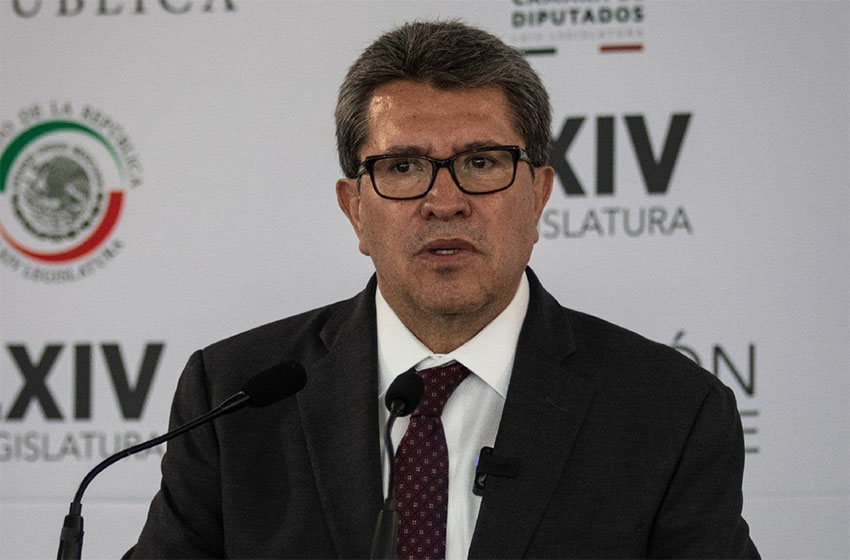
Ricardo Monreal, Morena's leader in the Senate
Ricardo Monreal, Morena’s leader in the Senate

The federal government has sought to ramp up pressure on the United States to do more to stop the illegal flow of weapons south of the border. Just days after a mass shooting in El Paso, Texas, on August 3, 2019, in which eight Mexican citizens were killed, President López Obrador called on the U.S. to pass stricter legislation on gun sales.

Foreign Minister Ebrard, who attended a ceremony in El Paso on Tuesday to commemorate the second anniversary of the attack, has tried to manage the issue as a quid pro quo negotiation: Mexico will prioritize combatting the trafficking of drugs to the United States in exchange for authorities in the U.S. doing more to stop the shipment of weapons to the south.

He said Wednesday that the U.S. authorities have been willing to work with Mexico to stem the flow of weapons. Former United States ambassador to Mexico, Christopher Landau, said earlier this year that the U.S. had offered equipment to Mexico to help control illegal arms trafficking but the Mexican government rejected it. An SRE official subsequently accused Landau of lying.

The lawsuit filed in Boston is not directed at the U.S. government. A Mexican official quoted by the newspaper El País said the purpose of the legal action is not to pressure the United States but to reduce firearm deaths in Mexico.

In addition to compensation, the suit pushes for tighter restrictions on weapon sales and enhanced security features on weapons. It also calls on the gun manufacturers to launch media campaigns against arms trafficking and undertake studies to determine how the problem can be better addressed.

Ricardo Monreal, the ruling Morena party’s leader in the Senate, described the lawsuit as “correct, timely, brave and fair.”

“Mexico cannot remain silent” in the face of the deadly flow of illicit weapons into Mexico, he said.

“What is this lawsuit seeking? Not just compensation but to avoid the continuation of this tragedy of violence that Mexico is living. I’m sure that many of our violence problems are caused by the … smuggling of weapons into our country,” Monreal said.

Ebrard said the filing of the lawsuit is “an important step” in the fight against arms trafficking.

“We’re going to litigate it with complete seriousness and win the trial [in order to] reduce illegal arms trafficking. This … complements other actions we are taking,” he said.

The legal process is expected to be lengthy, and lawyers for the government have indicated they are prepared to take Mexico’s case to the Supreme Court of the United States if they can’t get the result they want in Boston.

With reports from El País, The Washington Post and Milenio