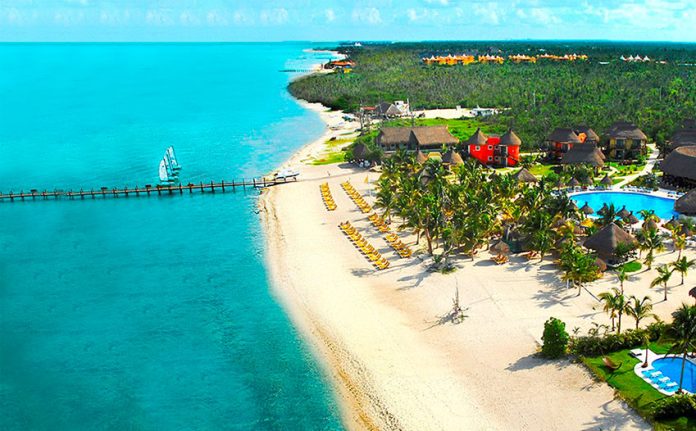
Cozumel will host the third Pitch at the Beach networking event.
The third edition of an international networking event will return to Quintana Roo from August 21-23, this time on the island of Cozumel.
Pitch at the Beach invites investment funds to see 30 projects, half from Mexico and half from international organizations and entrepreneurs. Of the Mexican contingent, three are from Quintana Roo; internationally, the projects are from Spain, Portugal, Chile, Costa Rica and Canada, among others.
Guests speakers include the co-founder of Starbucks, Zev Siegl; Pauly Suchy, head of Global Business Angels Network; and Dominique Einhorn, founder of the startup Supercup & Uniqorn Incubator.
Entrepreneurs present projects applicable to a wide array of industries. Organizers request that projects be disruptive and scalable, promise social impact and are already available on the market.
The event is organized by the Mexican Employer’s Federation (Coparmex) and some of the participating organizations include the World Business Angel Forum, Global Entrepreneurship Network, Startup SuperCup and Founder Institute.
Coparmex director León Cervantes explained that a judging panel will determine which projects can be linked to investment funds, but the ultimate goal of the Pitch at the Beach is for organizers, entrepreneurs and potential investors to network.
“Trade your suit for sandals, pack your bags and join us in Isla Pasión, Cozumel for three days filled with our two favorite things … beach and business,” reads the webpage.
The first edition was held in Cancún in 2018 for local entrepreneurs under the name “Angel Nest.” The second edition took place in Tulum in 2019.
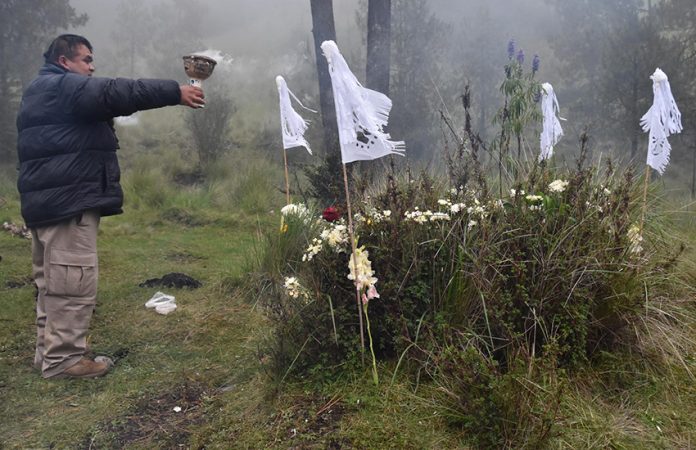
Gerardo, a granicero, or shaman, closes the Canícula ritual after having asked the spirits to prevent crops from being harmed by the rainy season.
“Balance is important in indigenous beliefs,” said Javier as around him, graniceros, traditional Mexican shamans charged with controlling the weather, began unpacking the offerings for a ceremony called the Canícula. “The Canícula is a ritual that attempts to achieve that balance.”
Not just the ritual’s name, the canícula is also the period from early July through mid-August, the dog days of summer, when Sirius the Dog Star (which also bears the name canícula in Spanish), rises and sets with the sun.
Throughout May, graniceros perform rituals to bring rain, hoping to ensure a good harvest. During the dog days, they perform the Canícula, aiming to mitigate damage to crops from the high heat and heavy rains.
“During this time, because of the excess rain and humidity, plants begin to rot,” said Gerardo, the granicero who organized the ritual in a México state pueblo. “If we do not remove it, the plants rot in the heat and animals begin to die. We are [doing this] so that it doesn’t hurt us so much. We are going to leave an offering and ask that they let the animals and flowers live.”
In exchange for being interviewed and photographed about this important ritual, the graniceros asked that only first names be used and that the ritual’s location not be revealed.
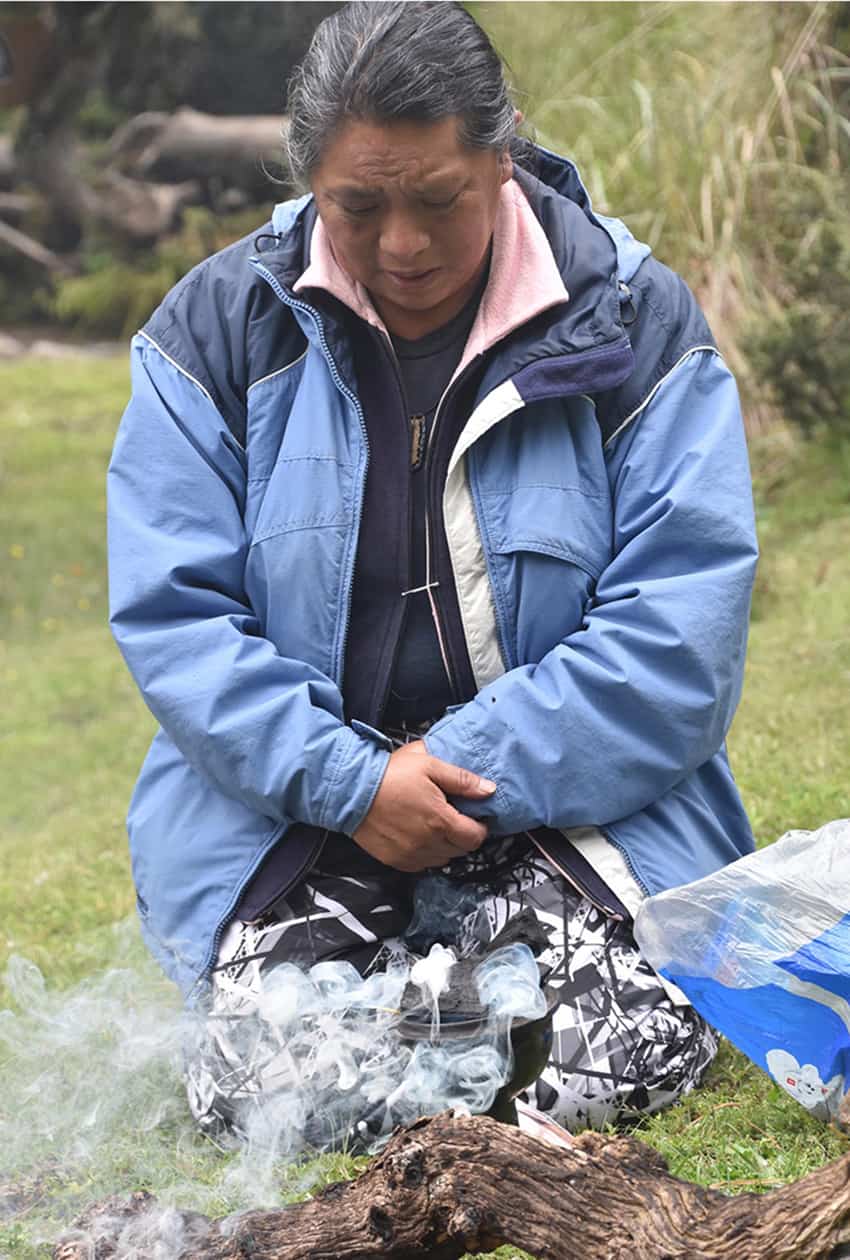
Esmeralda, a granicera who helped conduct the ritual, kneels in front of an incense burner.
Graniceros believe that spirits — particularly those that live in Popocatépetl, an active volcano, and Iztaccihuatl, an extinct one, both of which overlook the Valley of México — communicate with them through dreams. Among other things, spirits tell them what to do to prepare for rituals, what to bring and where to hold them.
“[Another granicera] dreamed that she was in this cave and there was a man selling sweets,” said Gerardo, “and he said, ‘I give you a cross. Tell everyone to put it in their houses as protection so that sickness doesn’t enter the houses.’”
Gerardo called Javier and others participating in the ritual and told them that before the ritual, they should make a small cross from the wood of an ocote pine tree.
“The wood is also used … to start fires in homes and to light incense,” said Javier. The cross he requested — known as a Cruz de Ocote — is often kept in homes as protection from evil spirits.
Although not a granicero, Javier has attended three other rituals, and he’s had dreams before some of them. Before the Canícula, he told me, “I dreamed of guayaba preserves, and Gerardo said that meant that I was to bring that to the ceremony.”
Gerardo told Javier that he believes that the volcanoes are sending him those dreams in order to communicate with him.
Shortly before the Canícula, Esmeralda, a granicera who helped conduct the ritual, had a dream about her sister and a road:
“The road was very bad, and we had to go through ravines and descend with ropes,” she said. “And I told her [my sister], ‘It is better if we go by another road.’ [The spirits] were advising us that the road was very bad.”
On the day of the ritual, a caravan of four 4 x 4s struggled to ascend a dirt road that had become deep mud, nearly impassable. At one point, the caravan had to continue the ascent on a different road, and twice, a chain was wrapped around trees so that the Jeeps could be pulled up inclines.
The initial plan was to hold the Canícula outside a cave, one that has been used for rituals since pre-Hispanic times. But because of a two-hour delay caused by the mud, there was no way to reach it and return during daylight and it was too difficult a descent to make in the dark.
But the spirits had sent Esmeralda another message through her dreams. She had dreamed of a woman descending a mountain on a horse.
“[The spirits] would not let us arrive at the cave because the woman, who was Iztaccihuatl, was going to descend for the offering,” she said.
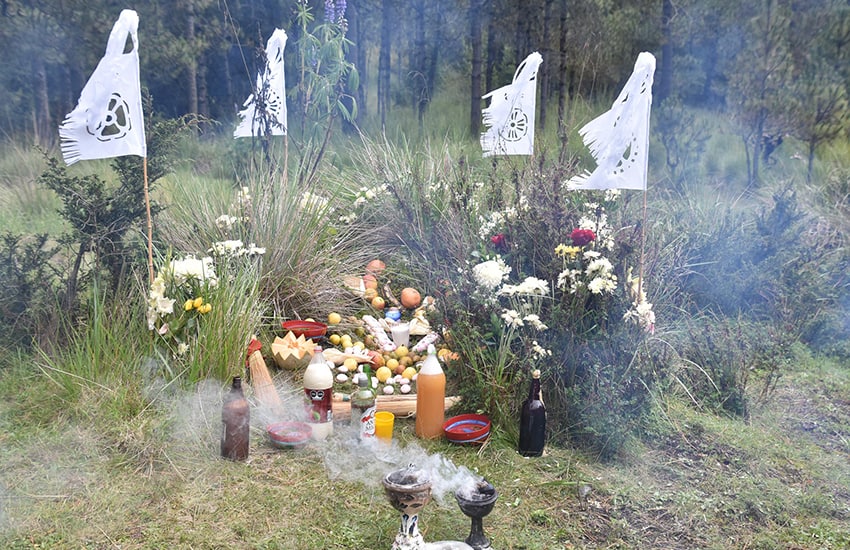
The offerings to the spirits: “We give them a part of what we take from the land: food and some drink,” says Gerardo.
When the caravan arrived at a site beside a stream fed by snowmelt from Iztaccihuatl, Esmeralda knew we’d arrived at the right place.
As soon as the caravan arrived, participants began to hurriedly set out the offerings. The ceremony had to begin at noon.
“The spirits live under the ground,” said Gerardo. “At midday, the spirits can leave the ground … we attract them with offerings.”
Food and drink were placed on the ground, and Jaime, another granicero and Esmeralda’s husband, placed four small white flags at the corners.
“The flags, called plantli in Náhuatl, represent the four cardinal points and the four basic elements of water, earth, fire and wind,” he explained.
Once everything was set, Esmeralda and Jaime purified the area with copal, an incense.
“The spirits of nature like the smell of copal,” Gerardo said. “Through incense, apart from consecrating things, it is a way to have a dialog with them. With copal, they are always attentive.”
Gerardo then took the incense and, standing before the offerings, asked permission of the spirits to begin the ritual.
“The prayer … is a way of waking those beings,” he said, adding that it was also to remind the spirits that they and indigenous groups had made an agreement ages ago. “We give them a part of what we take from the land: food and some drink. They give us part of the richness that is the water and all of the edible and inedible plants.”
After Gerardo finished with the prayer, each participant knelt before the offerings with an incense burner. “During the welcoming ceremony, a person says their name and where they are from,” said Javier. “This is so the spirits know who they are and can find them.”
Participants then moved away from the offerings so that the spirits could partake of them. After eating food that the group had brought, everyone returned to where the offerings had been set out, some of which were eaten.
This is done because graniceros believe that it’s important to share the offerings with the spirits. But some of the offerings, like the mole verde that Esmeralda had dreamed about and brought, were left for only the spirits to consume.
At 3 p.m., Gerardo performed a ceremony to bring the ritual to a close. He said it was important to end the ceremony at that particular hour.
“At 3:00, unfavorable spirits begin to leave [the ground]. It is important to keep the two [spirits] separated. If the ritual ends later than 3:00, things go badly. We cannot stay longer. We cannot leave the spirits out. They have to return to where they were, and [at] another time, we will attract them with offerings. We will call them.”
As we packed up to leave, a dense fog started rolling in and the temperature dropped dramatically. It’s not clear if this signaled the arrival of the unfavorable spirits, but no one seemed to tarry.
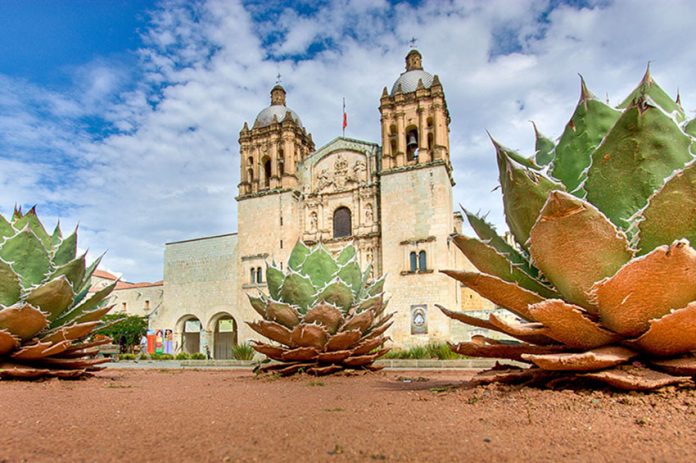
The Church of Santo Domingo de Guzmán is a popular tourist destination in Oaxaca city's historic center.
Quintana Roo, Oaxaca and Jalisco are the states Mexicans most want to travel to once the coronavirus pandemic ends, according to a study by an online travel agency.
The portal booking.com surveyed 1,200 Mexican adults and found that 62% of respondents intend to take a vacation after the conclusion of the pandemic, whenever that might be.
Just over four in five – 81% – of those who intend to travel said they would prefer to vacation in Mexico rather than abroad.
Quintana Roo, Oaxaca and Jalisco were the most desirable destinations among those polled but booking.com didn’t reveal the percentage of respondents that hoped to travel to each state.
Quintana Roo is famous for its white sand beaches, turquoise Caribbean sea and year-round warm climate, and is home to popular tourist destinations such as Cancún, Playa del Carmen, Tulum, Cozumel, Isla Mujeres, Isla Holbox and Bacalar.
Booking.com noted that there are also lesser-known tourism gems in the state such as Xcacel-Xcacelito, a natural protected area 20 kilometers north of Tulum, and Aktun Ha, a cenote, or natural sinkhole, near Tulum that is perfect for snorkeling.
In Oaxaca, walking around the historic center of the state capital, a UNESCO World Heritage site, is a delight, booking.com said, noting that one can observe Mexican and Oaxacan traditions and be reminded of the importance of “our roots.”
Oaxaca city was named best city in the world last year by readers of Travel + Leisure magazine, perhaps making it even more attractive in the eyes of some would-be Mexican travelers.
Monte Albán, a Zapotec archaeological site near the capital that is also UNESCO-listed, is another top attraction in Oaxaca, while Hierve el Agua, a site that includes natural rock pools and a petrified waterfall, is an easy day trip from Oaxaca city.
Booking.com also recommended a visit to the town of Mitla – which includes an archaeological site – “where the caves with rock paintings and the legacy of the first sedentary farmers will win anyone over.”
Oaxaca is also a popular destination for its beaches in Pacific coast towns such as Puerto Escondido, a surfing mecca, and Huatulco, which has a national park with numerous bays.
It’s not hard to see why many Mexicans would like to take a vacation in Jalisco. The state is home to Guadalajara, Mexico’s second largest city and a culinary hub, the birthplace of tequila, the resort city of Puerto Vallarta and scenic Lake Chapala, around which numerous towns and villages are dotted.
Jalisco “is a state with a little bit of everything,” booking.com said, noting that along with Nayarit it is “one of the guardians of the huichol or Wixátari community whose arts and crafts are made from beads” and capture the attention of tourists who can’t avoid taking a piece home.
In 2020, Latin America was the fastest growing region for e-commerce in the world.
E-commerce giant eBay says Mexico is a priority for the business and that its growth will create employment opportunities in the country, its largest market in the region.
Buying online boomed in 2020, when Mexico became the fourth fastest growing e-commerce market in the world, at 62%, despite an otherwise tumultuous year for the retail industry.
At the regional level, Latin America became the fastest growing region for e-commerce in the world in 2020, with growth of 63%, breaching the US $100 billion mark for the first time. Mexico is likely to account for about 27% of the Latin American market this year at around $35 billion, second only to Brazil.
eBay’s director general of emerging markets, Ilya Kretov, said Mexico was central to the company’s plans.
“The figures represent a great opportunity for us … Having Mexico as the largest market for eBay in Latin America makes it a priority for our business,” he said.
He added that improving user experience and logistics processes and widening the company’s inventory were all key steps to make eBay the region’s most popular e-commerce platform.
Ease of trade with the United States, Kretov explained, was a major point of strength for the country. “Mexico represents a positive growth opportunity as part of a group of our global emerging markets … this large market is in a very good position to continue taking advantage of its proximity to the United States and access to global markets through e-commerce,” he said.
However, the emerging markets expert admitted logistics infrastructure was still lacking, for which eBay would try to establish business relationships with public and private couriers.
Kretov added that employment benefits would accompany eBay’s growth in Mexico. “eBay plays a very important role in creating economic opportunities for buyers and sellers … thousands of sellers can do business more easily and connect with buyers and thrive,” he said, before conceding that the company had a part to play to make sure work opportunities are realized at the regional level.
“We need to work and collaborate with local players in the e-commerce industry to strengthen the infrastructure and make the most of this global environment. The contribution of all players involved in the market, such as logistics providers and authorities, can make e-commerce more accessible to Latin American sellers and buyers,” he said.
The 'wanted' poster used to promote the yes vote in Sunday's referendum.
It sounded like something from Robespierre’s terror. The people would deliver a verdict on five of their previous leaders, deciding whether they should face justice for their crimes. In the event, President López Obrador’s referendum on prosecuting his predecessors delivered a damp squib rather than revolutionary fireworks. Just over 7% of the population turned out to vote, a fraction of what was required for the exercise to be binding.
Investors have already experienced the damage López Obrador’s peculiar brand of democracy can do. In 2018, the newly elected president scrapped a badly needed and partly built US $13-billion new airport for Mexico City after a “people’s poll.” A $1.4-billion beer factory under construction in northern Mexico was canceled last year after a vote by 36,781 people in a city of 1 million.
Some voters in Sunday’s referendum may have been put off by the tortuous wording of the question, which was toned down by the Supreme Court. But any doubts would have been dispelled by the “wanted” posters produced by the referendum’s advocates. These showed ex-presidents Carlos Salinas, Enrique Peña Nieto and Felipe Calderón with red blindfolds detailing their alleged crimes under the slogan, “Do you want Salinas, Peña and Calderón to go to jail?”
A human rights organization pointed out that the ex-presidents were more likely to receive the justice of a Roman circus than the due process of a modern G20 nation. Critics questioned the need for a costly referendum when laws already on the Mexican statute books allow for the prosecution of corruption and other misdeeds in office.
Such arguments ignore the veteran populist’s political logic. López Obrador used the referendum to mobilize his supporters and remind them he is pursuing the enemies of his self-styled “fourth transformation” of Mexico — an epochal change he immodestly equates with the Mexican revolution of 1910 or independence from Spain. True to form, he hailed the referendum as a success because the vast majority of those who voted supported him.
In reality, López Obrador’s pursuit of justice appears curiously selective. Despite extraditing Emilio Lozoya, a former head of the state oil company Pemex, from Spain a year ago on charges of corruption in a scandal involving Peña Nieto, Lozoya has yet to appear in court and no prosecution has been brought against Peña Nieto.
The country’s notorious drug traffickers are being embraced with a presidential strategy of “hugs, not bullets.” On occasion, the embrace has been more than metaphorical. López Obrador released the son of jailed Sinaloa Cartel boss Joaquín “El Chapo” Guzmán, met and shook the hand of Guzmán’s mother, and publicly apologized for using the drug lord’s nickname.
Worrying reports have emerged that drug traffickers favored candidates from López Obrador’s party in midterm elections last month, kidnapping and threatening opposition candidates. Christopher Landau, U.S. ambassador to Mexico until January, has described López Obrador’s attitude towards the cartels as “pretty laissez-faire.”
The Biden administration, preoccupied with a politically toxic surge of migration from Mexico and Central America and keen to keep López Obrador as an ally, has said little on the subject — a reticence it will come to regret.
Mexico’s former leaders have been spared the tumbrils of López Obrador’s revolution for now. But the president’s fondness for show over substance conceals a worrying disregard for institutions and the rule of law. Investors should beware.
The navy has an agreement to purchase $5.5 million worth of Sig Sauer rifles.
The Mexican navy is set to buy U.S. automatic assault rifles worth as much as US $5.5 million, subject to approval by the U.S. government.
The arms will be sold by U.S. manufacturer Sig Sauer, which is the largest member of L&O Holdings, a worldwide business group of firearms manufacturers.
Weapons that contain parts or intellectual property from the United States fall under U.S. export control rules, which means sales require governmental approval.
There are two principal ways for foreign governments to purchase weapons from the United States: direct commercial sales negotiated with companies, and foreign military sales in which governments typically contact a Defense Department official at the U.S. embassy. Both require a governmental go-ahead, and it is not clear which method was employed in this case.
The Mexican Embassy in Washington D.C. and Sig Sauer did not respond to requests for comment by the news agency Reuters. Likewise, the U.S. State Department refused to give specific details on the case.
The deal could prove controversial as most of the weapons involved in violence in Mexico in recent decades have come from the United States, many by illegal means. About 70% of weapons seized from crimes in the country are traced back to the U.S., according to a report by the United States Governmental Accountability Office, published in February.
The arms manufacturer in the deal is no stranger to controversy either. Sig Sauer CEO Ron Cohen avoided jail in Germany in 2019 for the illegal shipment of 38,000 pistols sent to Colombia, which was still in active conflict at the time. Through a plea deal, Cohen was handed an 18-month suspended sentence and fined $675,000. Meanwhile, Sig Sauer’s German division was required to pay more than $12 million.
Independent distributors declared an indefinite strike on Tuesday.
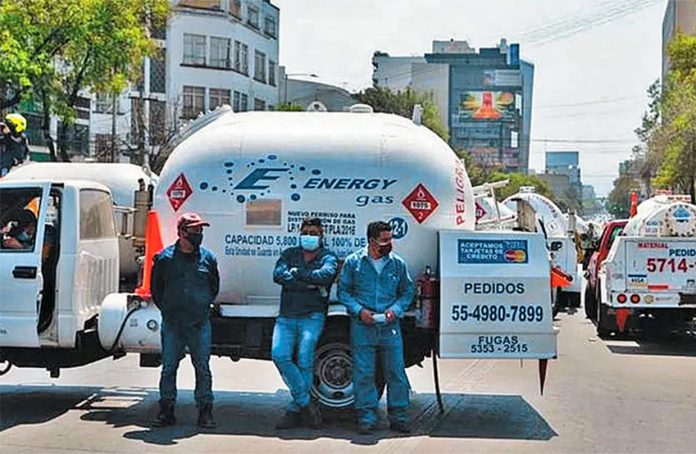
Many LP gas distributors went on strike in Mexico City and México state on Tuesday to protest against price ceilings set by the Energy Regulatory Commission (CRE) on Sunday.
The National Gas Workers Union called on crews that distribute gas to go on an indefinite strike to protest the price controls, which caused prices to drop by almost 11% on average across Mexico and 24% in Mexico City. Gas workers said the strike could expand to other states.
The CRE published maximum LP gas prices for 145 regions across the country after the Energy Ministry instructed it to do so last week, a directive deemed illegal by Mexico’s antitrust regulator. The current price caps on LP gas – used by almost four in five Mexican households for cooking and to fuel water heaters – will remain in effect until Saturday but controls will continue for six months.
President López Obrador, who is aiming to keep all fuel price increases below the level of inflation, has railed against recent gas price hikes, asserting they have occurred “unjustifiably.”
Many gas distributors say that the price caps announced by the CRE will hurt their earnings and make their jobs unviable. On Tuesday, trucks owned by small independent distribution companies and their crews blocked entrances to gas tank farms in greater Mexico City to protest the price ceilings.
Experts had warned that imposing price caps would likely lead to gas shortages because distributors could refuse to operate if the government sought to limit their profits. Ricardo Sheffield, chief of the consumer protection agency Profeco, warned that gas distributors could be stripped of their licenses if they didn’t respect the new price ceilings.
The Mexican Association of Gas Distributors, another organization that represents gas tank farms and large distribution companies that own fleets of trucks, didn’t support Tuesday’s strike.
It distanced itself from “the actions by groups of independents who work on commission, who do not hold distribution permits and who are blocking plants, preventing us from going out and working to supply homes and businesses that need gas.”
Photos published by media outlets showed masked men smashing the windows of some small gas tank trucks in an apparent attempt to force their crews to join the strike, which left many gas consumers in the Valley of México, including business owners, without gas.
Some residents of Tlalnepantla, a México state municipality that borders the capital, went to the neighborhood of San Juan Ixhuatepec, where several gas vendors are located, to try to purchase the fuel. But many were unsuccessful because the companies were closed or out of gas.
Ascención Ávila, a housewife, was unable to buy gas at four different companies she visited.
“Obviously it’s something basic we need to do our [household] activities,” she told the newspaper Reforma. “… I’m surprised that none of the gas companies have any. … I see that I’m not the only one [without gas], there are a lot of people in this situation.”
Some small-scale gas distributors who didn’t heed the advice to strike also found themselves unable to purchase gas.
“The instruction was to strike but a lot of us live day to day. … Today we won’t earn anything,” one distributor said.
In Nicolás Romero, another México state municipality that is part of the greater Mexico City metropolitan area, an employee of a small gas distribution company told Reforma that López Obrador had not shown a willingness to talk to gas companies about their prices.
“Ultimately, [gas] companies have to make some profit. If they don’t, how will they pay employees, gasoline and everything else they have to use in order to provide service,” he said.
UPDATE: The union called off the work stoppage on Wednesday afternoon, telling reporters at a press conference that participating distributors had resumed gas deliveries.
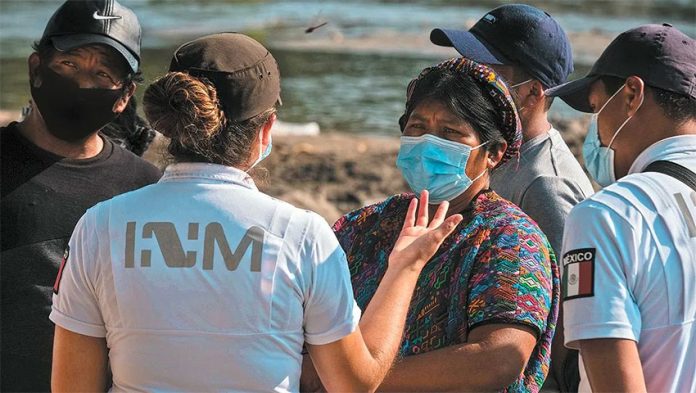
Immigration agents and migrants: more than 64,000 application have been made for asylum this year.
The number of people seeking asylum in the first seven months of the year is close to becoming a record for the highest yearly total as growing numbers of migrants choose to stay in Mexico, although it is unclear how long they intend to remain.
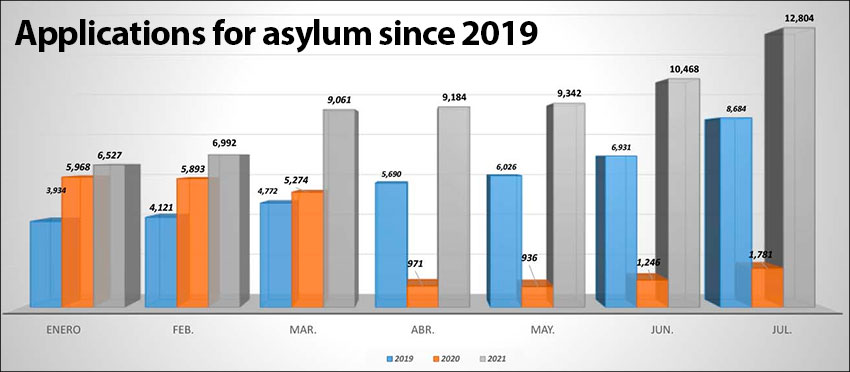
The Mexican Commission for Refugee Assistance (Comar) has registered 64,378 applications for asylum so far this year. July alone saw 12,804 asylum requests, 11,023 more than in July 2020.
In 2019, which saw the highest number of asylum applications since 2013, 70,405 applications were received, only 6,027 higher than this year.
The comparable seven-month period in 2019 recorded a relatively modest 40,158 requests.
In 2013, when record keeping began, only 1,296 migrants made asylum applications. The figure spiked in 2019 when far more than double requested asylum compared to the previous year. The total receded in 2020 due to limitations on cross border movement in the Covid-19 pandemic, only to spike again this year.
Applications made during the first seven months of the last three years. comar
Since 2019, migrants from Honduras have made the most requests.
Large numbers of asylum seekers have also come from Haiti, Cuba, El Salvador, Venezuela, Guatemala and Nicaragua since 2019. The vast majority of applications for asylum are made at the Tapachula, Chiapas, office at the Guatemalan border.
In the first seven months of the year 19,383 asylum applications were processed. Venezuelan migrants’ applications were approved in 97% of cases, requests from Salvadorans were approved in 87% of cases and applications from Hondurans in 85% of cases. In contrast, asylum requests from Haitians were normally rejected: only 32% were granted.
The suspect who was apprehended by a mob in Chiapas.
A suspected thief was set on fire in the ejido of Matamoros, Chiapas, close to the Guatemala border, in an act of mob justice on Monday.
Antonio “N,” 29, was apprehended by around 60 people at his home who beat him, tied him to a tree and set him on fire, saying they would bring him to justice as authorities would let him off without punishment.
Some of the group managed to aid him by stripping him of his flammable clothes and eventually brought water to put the fire out. Hours later he was found near a river with third-degree burns.
The assailants had accused him of stealing more than 10 motorcycles including a violent robbery in a nearby municipality, from which he fled on the vehicle.
A video was uploaded to social media in which Antonio could be heard screaming as he rolled on the ground burning. A voice can be heard shouting “Bring water, bring water,” before the flames were extinguished.
While Antonio was captive, police officers arrived to try to liberate him, but the mob refused to hand him over and pledged that they would do justice without the help of authorities.
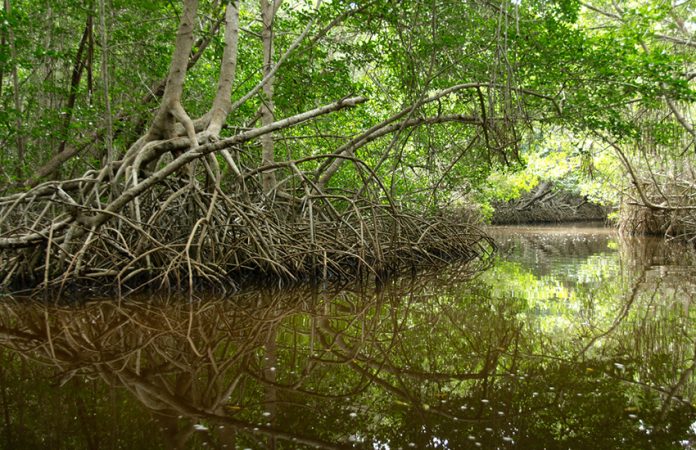
Mangroves at El Corchito Ecological Reserve in Progreso, Yucatán. deposit photos
This week, between August 2 and 8, Mexico will be at the forefront of the Plastic Oceans’ Trees & Seas international festival, celebrating the importance of forests and the oceans and the places where they intersect.
Building on Plastic Oceans’ BlueCommunities initiative, which strengthens local environmental action, the Trees & Seas festival will take place in more than 30 communities internationally, a number of them right here in Mexico.
This year, the primary hub for the event will be Chiloé Island, Chile; a UNESCO World Heritage Site in Patagonia. A number of satellite locations will also be holding events across the globe, including four in Mexico, making the nation one of the global forerunners for progressive community conservation in the program.
The inaugural year of the weeklong festival will see more than 100 beach and forest cleanups globally, more than 50 youth workshops and more than 20 panel discussions streamed via Zoom, plus the planting of more than 90,000 trees. This total includes 45,000 mangroves in Mexico, where there will be a significant drive to aid the restoration of this most remarkable of ecosystems through forest and coastal cleanups and educational workshops.
“We wanted to create awareness about the connection between ocean and forest conservation, which too often are thought of as separate entities that have nothing to do with each other,” says Salvador Ávila, executive director of Plastic Oceans Mexico. “At best, people see them as distantly related. There needs to be a shift in perspective toward viewing them as connected parts of a whole, so we created a global reforestation event in collaboration with semi-aquatic communities.”
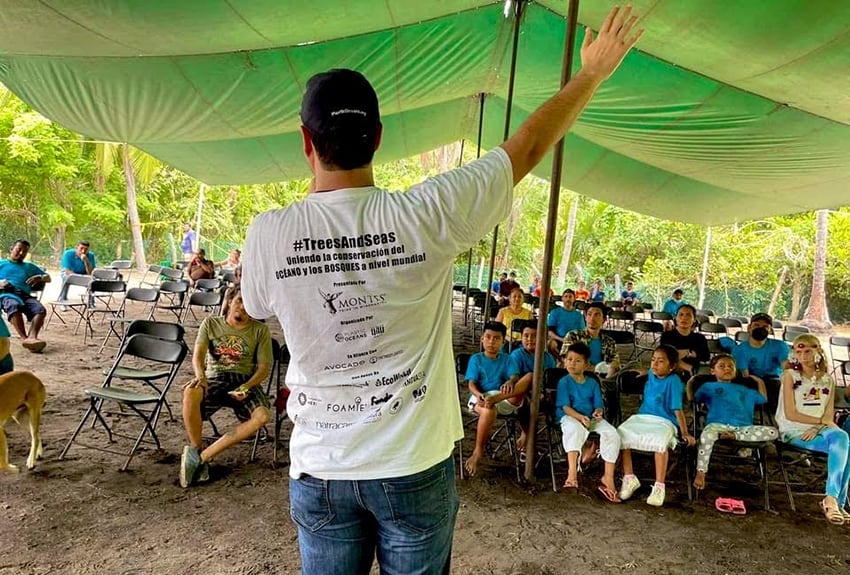
Part of the Trees & Seas festival’s events this week will be a number of youth workshops.
The importance of conserving mangrove ecosystems in Mexico cannot be understated. To geographers, mangroves are known as “watershed terminal ecosystems,” meaning they are critical boundary points at which the land and the sea interact. They have functional characteristics that determine how human communities exist within them — for example, acting as natural boundaries against seaborne weather systems and filtering runoff from the land into the ocean.
As of 2017, official studies determined that more than 18,000 hectares of mangrove forest had been lost in Mexico as a result of infrastructure and urban and tourism development significantly compromising their ecological benefits. Yet, rising sea levels and increasingly extreme weather patterns as a result of climate change, expected to worsen over the coming years, mean that the restoration of mangrove ecosystems along the Mexican coastline is more important than ever.
On a broader level, the restoration of mangroves in Mexico also offers the opportunity to meet 2030 carbon reduction targets, set as a Nationally Determined Contribution (NDC) under the Paris Agreement.
Given that current government policies mean that Mexico is already failing to meet its 2020 pledge of a 30% reduction, it is essential that conservation work that encourages carbon sequestering is brought to the fore. Moreover, mangroves are key to the strengthening of coastal protection and the recovery of marine ecosystems.
Alongside the year-round work done by Plastic Oceans to conserve marine environments, the Trees & Seas festival will support workshops, webinars throughout the week and cleanups hosted by ecological groups of every variety.
In the Yucatán Peninsula, where the waterways are already a focal point for conversations around sustainable ecosystem management, participating organizations will be running a wide array of events, including a Snorkel4Trash in the Riviera Maya with the non-profit Saving Our Sharks; reforestations in Akumal, Playa del Carmen and Campeche and educational and cultural events at the latter location.
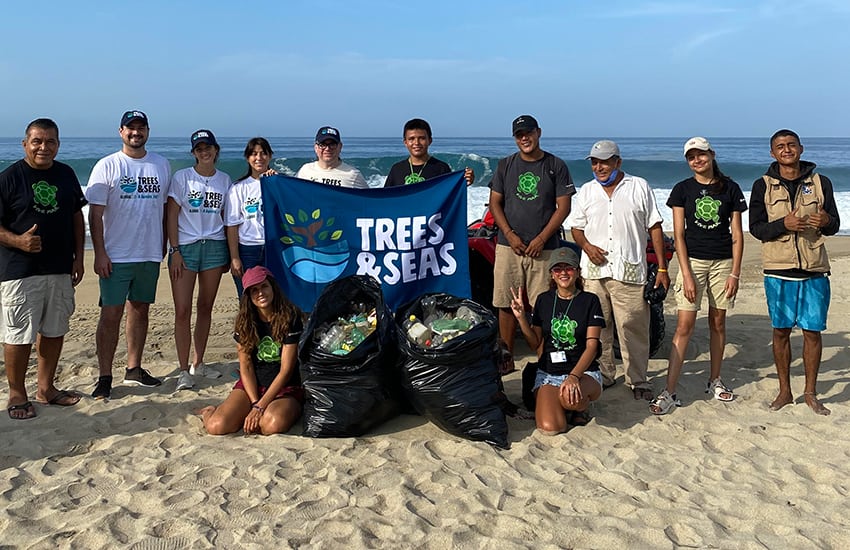
Beach cleanups are happening across the globe this week as part of the festival.
The promise of such wide-ranging engagement in the festival’s inaugural year speaks to the value of the existing work being done by the BlueCommunities of the Yucatán and to increasing public awareness about the oceans’ plight in the face of chemical runoff and oil spills, rising global temperatures and the 10 million tonnes of plastic waste that finds its way into ocean currents every year.
Nevertheless, Ávila is keen to share the importance of the community work already being done by the organizations across Mexico and the globe in raising awareness for the conservation of all kinds of environment: oceans, forests, parks and beyond.
“The willingness and enthusiasm of the organizations involved in this event really highlight the importance of coming together in our communities — as a global entity, no less — to raise awareness about the interconnection of ecosystems on our planet,” he said.
The Trees & Seas festival will build on the cornerstone of grassroots environmental activism: using people power to foster a healthier planet. Increasingly across the world, networks that have a real impact on the global environment are being built through this formation of relationships, where commitment to making a positive change becomes a driving force irrespective of creed, color or religion.
Against the often harrowing environmental news we consume daily, focusing on the amazing work being done by so many people on the front lines can perhaps be a shot in the arm for catalyzing our renewed efforts to combat ecosystem degradation, biodiversity loss and, of course, the ever-changing climate.
• For more information about the festival, including how to get involved, visit Plastic Oceans’ Trees & Seas festival web page.
Shannon Collins is an environment correspondent at Ninth Wave Global, an environmental organization and think tank. She writes from Campeche.