Home Blog Page 1186

Guns, germs and stealing: the week at the mañaneras

0
AMLO at press conference August 5, 2021
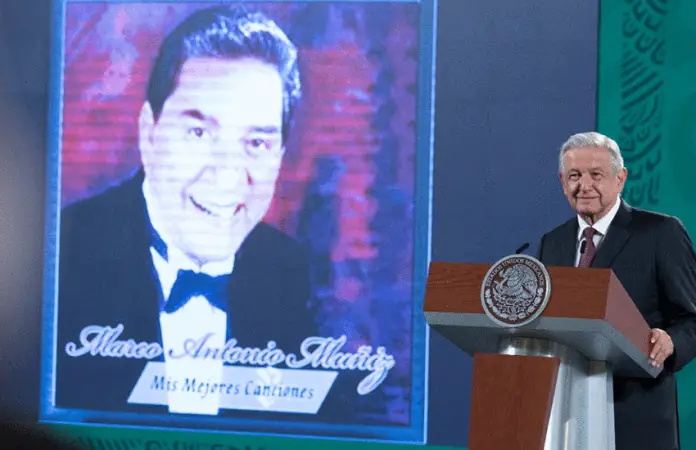
The president took a moment at his Thursday press conference to dedicate a bolero by Marco Antonio Muñiz’s Lamento Borrincano to Puerto Rico.

The national referendum last weekend had asked whether five former presidents should be investigated for corruption. Some international media outlets had called President López Obrador’s motivations into question for putting the matter to the public.

After all, there was no longer presidential immunity, and so there was nothing stopping former leaders from being investigated: AMLO himself had made sure of that by lifting the privilege in 2019.

With plenty at stake — not least for a group of ex-presidents with chequered political records — the conferences were likely to be a combative affair.

Monday

It was back to the beach to start the week: Puerto Vallarta, Jalisco.

Governor Enrique Alfaro reviewed the state’s security. The crime rate, he said, was below the national average up to July, but homicide was higher than in 2018.

The first journalist to speak pointed straight to the elephant in the room. Sunday’s vote on whether five ex-president’s should be investigated had failed to inspire the public. It registered a meager 7% turnout, miles short of the legally binding 40% required.

The president endeavored to view the positives: “6,474,708 citizens, women and men, participated yesterday … the majority voted for ‘yes’, 97%,” he said. The National Electoral Institute, he added, who “pretend to be democrats,” were culpable due to their failure to promote the poll.

However, AMLO confirmed that charges against ex-leaders were not off the table.

The topic of corruption is never far from the mañaneras. A local journalist queried: had it been wise to disband the Tourism Promotion Council?

“Oh, of course, no, no, no. It was the cave of Ali Baba and the 140 thieves. They robbed all of the money, it was a facade,” AMLO replied.
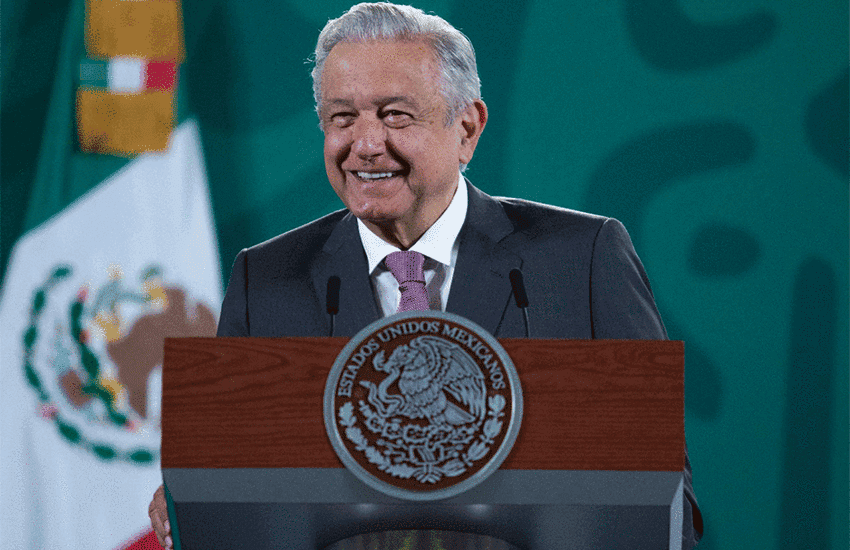
AMLO at press conference on August 3
AMLO found much to be happy about this week, even the results of the nationwide referendum on Sunday on whether to investigate ex-presidents.

“Now, it’s breakfast time,” he declared, shortly before striding away to attend to the nation.

Tuesday

Deputy Health Minister Hugo López-Gatell fulfilled his recurring duty on Tuesday, and stated that 97% of people who were in hospital for Covid-19 hadn’t been vaccinated.

Scandal was afoot when a journalist revealed he had seen the transcripts from a private meeting of the Pemex union: “It was direct confrontation, including insults against you,” he said, and added that attendees had conspired to strike to put pressure on the government.

AMLO kept his cool, and called for clean, democratic union elections. Later, on the topic of authoritarianism in teacher training colleges, he renewed his call. “No to chiefdoms. Democracy in schools, democracy in unions, democracy at home and democracy in government. Everywhere,” he said.

Many prison inmates are soon to be released, under certain conditions: one is torture. However, a journalist said that forcing prisoners to shave was tantamount to torture, according to legal modifications made in 2017. The president conceded he didn’t know how many suspects would be freed, and declined to clarify the legal status of the clean shaven.

Wednesday

Gas company workers had gone on strike in the Valley of México to protest a new price ceiling. They could be prosecuted, AMLO said, shortly before Ana Elizabeth García arrived to discuss media untruths.

Despite reports to the contrary, the Environment Ministry was not using a toxic fertilizer in the Sowing Life treeplanting project, nor did the government leave flood victims out of pocket, she confirmed. García added that a report on a hike in electricity rates was sensationalist because it didn’t factor in inflation. She then raised another article on the president’s plan for potholes, but failed to highlight a lie.

It was all sour grapes, AMLO said, and stated that advertising from the last three administrations had made the media rich: more than 2 billion pesos for the newspaper El Universal.

Later in the conference, the president pondered a poem to be included in his new book, apparently due for publication at the end of the month.

A journalist interjected, referring the president back to the case for tightening press regulations. He refuted the notion, before returning to the poem. “A drop of mud may fall on a diamond, and can even obscure its radiance, but even if the whole diamond is covered in mire, its value will never be lost for a moment and it will always be a diamond …”
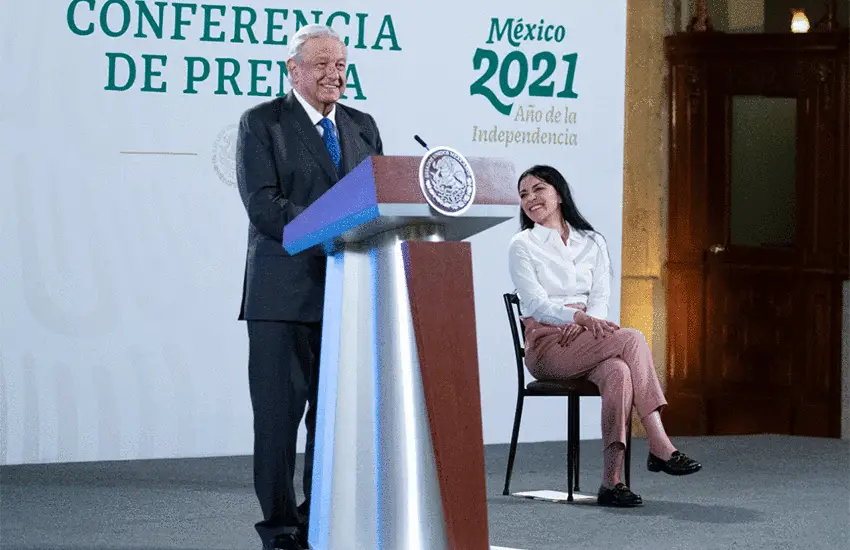
AMLO and fake news czarina Elizabeth García Vilchis
Fake news patrol head Ana Elizabeth Garcia shares a lighthearted moment with the president on Wednesday.

The conference came to an abrupt halt shortly after. The president had an “important engagement,” to attend, but left the identity of his meeting companion a mystery.

Thursday

The head of the Federal Electoral Tribunal had been removed Wednesday, and AMLO called for further changes: “There is a crisis … reform is essential in both the National Electoral Institute and the Electoral Tribunal,” he said.

A journalist raised the government’s civil case against U.S. gun manufacturers, and inquired about the Venezuela negotiations. The president said Mexico would likely be the venue for talks between President Nicolás Maduro’s ruling party and the Venezuelan opposition.

Migrants and their remittances were given a big hand by the president, whom he estimated could send US $48 billion back home this year. “The truth is that our countrymen help us a lot … So, all our support, our attention, our respect, our admiration and our gratitude to the migrants.”

To those in Puerto Rico — 300,000 according to a journalist — he dedicated a song. Marco Antonio Muñiz’s Lamento Borrincano was played; it’s a bolero ballad about the island.

Once again, the president had big travel plans. Friday’s conference would be broadcast from Los Cabos, Baja California Sur. Saturday would take him to Colima, and Sunday to Ciudad Juárez, Chihuahua.

Friday

Sporting a guayabera, a sun-kissed AMLO delivered the conference from Los Cabos. The state had the second least number of homicides in the country, Governor Carlos Mendoza Davis said, adding that Yucatán had the least.

A congratulations from the president: the men’s Olympic soccer team had taken bronze.

Poverty, more than one journalist mentioned, had risen precipitously: more than 2 million people had slidden into extreme poverty, according to the social development body Coneval.

The president pointed to the economic impact of the pandemic, and to other indicators, which he said told a different story. The peso, he said, had held steady, salaries had increased in real terms and tortillas had become more affordable.

Before wrapping up, AMLO added to his criticisms of the Federal Electoral Tribune. “They created a Frankenstein. It’s a judicial power, but the Supreme Court can’t intervene … [they made it that way] so that the court depended on political parties. That is the kind of party politics that needs to be corrected,” the Tabascan premier asserted.

Mexico News Daily

Masa harina: what it is and what to do with it

0
masa harina tortilla dough
Making your own tortillas is way easier than you think!

It never occurred to me to use masa harina, or corn flour, in anything besides tortillas.

But now that I am using it, I’m loving the nutty corn flavor, slightly gritty mouth-feel and airiness it lends to both sweet and savory baked goods. It’s surprisingly versatile, and I’m having fun in the kitchen with it!

Apparently, I’m not the only one — check out the recipe below for Masa Ball Soup, a clever (and delicious!) take on classic Matzoh Ball Soup.

So what’s the difference between masa harina and cornmeal? They’re both from corn, but that’s where the similarities end.

Cornmeal is simply dried, ground corn. We’re talking “regular” field corn, not the super-sweet hybrids we like to eat at picnics. Unless it’s labeled “whole grain,” it’s made from degerminated corn, i.e., the nutritious bran and germ have been removed to make it last longer.

Tequila Lime Cake
You can make this Tequila Lime Cake with 3 tablespoons of the Mexican liquor or substitute lime juice.

Masa harina is also made from dried corn, but using a special process called nixtamalization. It’s soaked in a limewater solution to remove the hull, improve the texture and help release nutrients. When those soaked corn kernels are ground, that’s fresh masa. If you dry that, you have masa harina — literally “dough flour.”

That’s why you can’t really substitute one for the other; they’re very different.

Tortillas, sopes, huaraches, gorditas — all of these are made from masa harina. Can you, should you, make your own at home? Another surprise: it’s not that hard. Really!

Tequila Lime Cake

  • 1 cup flour
  • ¾ cup masa harina
  • 2 ¼ tsp. baking powder
  • ½ tsp. salt
  • 1 cup granulated sugar
  • 4 Tbsp. butter, melted OR 1/4 cup coconut oil, melted (or half and half)
  • 2 large eggs
  • 2 tsp. vanilla extract
  • ¾ cup milk
  • 3 Tbsp. tequila OR fresh lime juice
  • Zest of 3–4 limes

 Glaze:

  • 1 cup confectioners’ sugar, sifted if lumpy
  • Zest of 2–3 limes
  • 2 tsp. tequila or milk
  • 2 to 3 tsp. lime juice

Preheat oven to 350 F. Lightly grease an 8-inch square or 9-inch round pan. In small bowl, whisk flour, masa harina, baking powder and salt. Set aside.

In larger bowl, whisk granulated sugar, melted butter, eggs, vanilla, milk, tequila/lime juice and zest. Stir dry ingredients into wet ingredients. Pour batter in prepared pan. Bake 25–30 minutes, until cake edges begin to pull away from sides of pan and toothpick inserted in center comes out clean. Cool completely before glazing.

To make glaze: Mix confectioners’ sugar, zest, tequila (or milk) and enough lime juice to reach a smooth, pourable consistency. With cake turned out onto a plate, pour glaze over top, spread to edges and allow to drip down the sides.

Masa Ball Soup

  • 4 eggs, beaten
  • ¼ cup water
  • ¼ cup vegetable or canola oil
  • 1 cup masa harina
  • 1 tsp. baking powder
  • 1 tsp. salt, plus more to taste
  • Freshly ground black pepper
  • 3 quarts chicken stock
  • 1 carrot, diced
  • 1 rib celery, diced
  • ¾ cup diced sweet potato
  • Garnish: minced cilantro, sliced jalapeño, lime wedges

In large bowl, whisk eggs with water and oil. In a small bowl, mix masa harina with baking powder, salt and pepper. Add dry ingredients to wet ingredients; combine thoroughly. Refrigerate uncovered for 30 minutes.

Divide stock evenly between two pots, season both to taste with salt; bring to a simmer. Add carrots, celery and sweet potato to one pot; simmer until just tender. Set aside.

Using wet hands (re-wetting as necessary), form masa mixture into 1 to 1 ½-inch balls. Add to simmering pot of stock without vegetables. Mixture may feel soft but should form balls. Once all masa balls are added, cover and simmer until cooked through, 30–45 minutes. Cooked masa balls can be kept warm in their broth until ready to serve.

Reheat both pots. Using slotted spoon, transfer masa balls to serving bowls; strain masa ball cooking broth with fine-mesh strainer into the pot with broth and vegetables. Ladle hot broth and veggies into each bowl. Garnish with cilantro, peppers and lime wedges.

Tortitas de Elote

 Enjoy as a crispy side dish or as a snack with bean dip, sour cream, fresh salsa or a squeeze of lime.

Tortitas de Elote
Tortitas de Elote are crispy, cheesy bites of heaven.
  • 1¼ cups masa harina, plus more for coating
  • ½ tsp. salt
  • ½ cup grated Chihuahua cheese
  • 1¼ cups milk
  • ¾ cup sweet corn kernels
  • ¼ cup chopped scallion
  • ¼ cup minced fresh cilantro
  • 1 clove garlic, minced
  • Corn oil

In a bowl, mix masa harina, salt and cheese. Heat milk to a simmer; pour into masa harina mixture. Stir. (Cheese should melt and incorporate into the dough.) Gently fold in corn, scallions, cilantro and garlic. Let sit 30 minutes to turn into a medium-stiff dough.

Heat oil in large skillet over medium heat. Using your hands, make patties out of the dough, about 4 inches across and ½-inch thick. Dredge in masa harina; lay gently in the skillet. Cook until golden and crispy, about 4 minutes per side.

Masa Harina Pancakes

  • 1 cup masa harina
  • ½ cup flour
  • 1 tsp. sugar
  • 1 tsp. baking powder
  • ½ tsp. salt
  • ½ tsp. baking soda
  • 2 eggs
  • 1 ½ cups milk
  • 3 Tbsp. corn oil

Mix dry ingredients in large bowl. In a small bowl, whisk eggs, milk and oil. Pour into dry ingredients; stir. Let sit 5 minutes; stir again. Batter should be thick. Heat skillet over medium heat and spray or pour a little oil onto it. Cook pancakes, turning once when bubbles form.

masa harina pancakes
Masa harina pancakes are just as fluffy as conventional ones, but with a touch of nutty corn flavor.

 Tortillas

  • 2 cups masa harina
  • ½ tsp. salt
  • 1½ cups warm water

In large, shallow bowl, combine masa harina and salt. Gradually add 1 cup water, using your hands to make a cohesive dough; then add remaining water slowly, mixing and kneading in the bowl, until dough is smooth and somewhat firm (like Play-Doh). Divide into golf ball-sized chunks, then roll into balls. Cover with plastic wrap or damp towel.

To shape, a tortilla press is easiest, but they can be rolled by hand or pressed with a skillet or flat-bottomed dish. (Put plastic wrap on either side of the dough ball before flattening it.)

Preheat a comal, cast iron pan or griddle over medium-high heat for 5 minutes until evenly hot. Add a tortilla. Flip after 10 seconds, then cook each side for about a minute or until brown spots form. Tortillas should puff up while cooking the second side.

Janet Blaser is the author of the best-selling book, Why We Left: An Anthology of American Women Expats, featured on CNBC and MarketWatch. She has lived in Mexico since 2006. You can find her on Instagram at @thejanetblaser.

Daily Covid infections far higher than official counts, says specialist

0
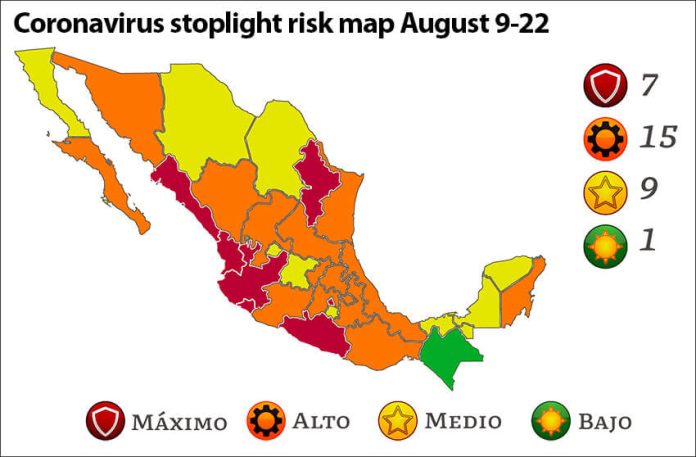
The new stoplight risk map which takes effect Monday.

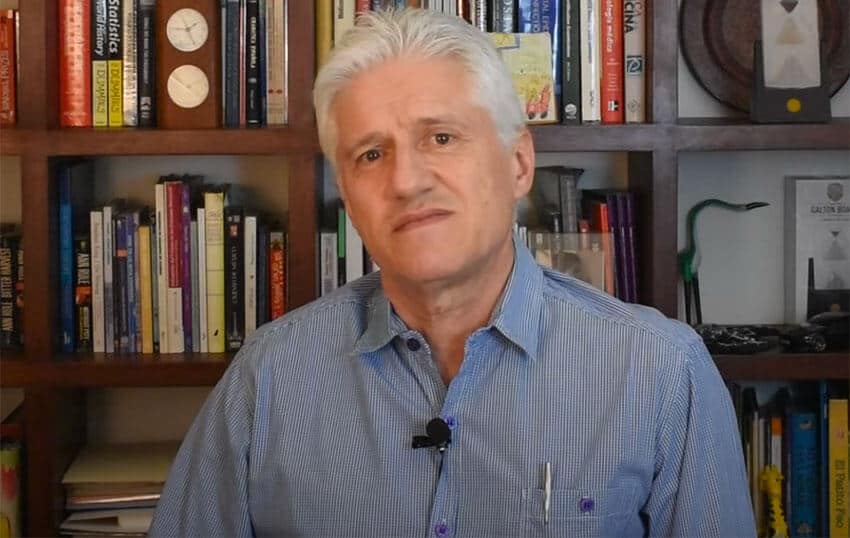
While health authorities are saying that Covid-19 is currently infecting some 20,000 people a day, the actual number is 25 or 30 times higher, according to an infectious disease specialist.

But Dr. Alejandro Macías of the University of Guanajuato offered the less than consoling observation that the pace of infection cannot keep up — because the disease would run out of recipients within two months.

However, he also told a Covid-19 discussion panel that he expects a sudden drop in new cases will occur by September after a peak in August.

“It’s a tough situation, there’s a lot of sickness. This is a steep incline that I hope will arrive at its peak in August so as to begin to decline at the end of the month or in September,” Macías told a virtual Covid discussion hosted by the Tec de Monterrey university.

He estimated that half a million Mexicans are being infected daily.

Dr. Alejandro Macías discounted concerns about the Cansino vaccine.

A fellow panelist said that despite the pronounced growth in case numbers, Mexico’s situation can be compared with what happened in India and the U.K., where there was an abrupt and rapid decline in new cases.

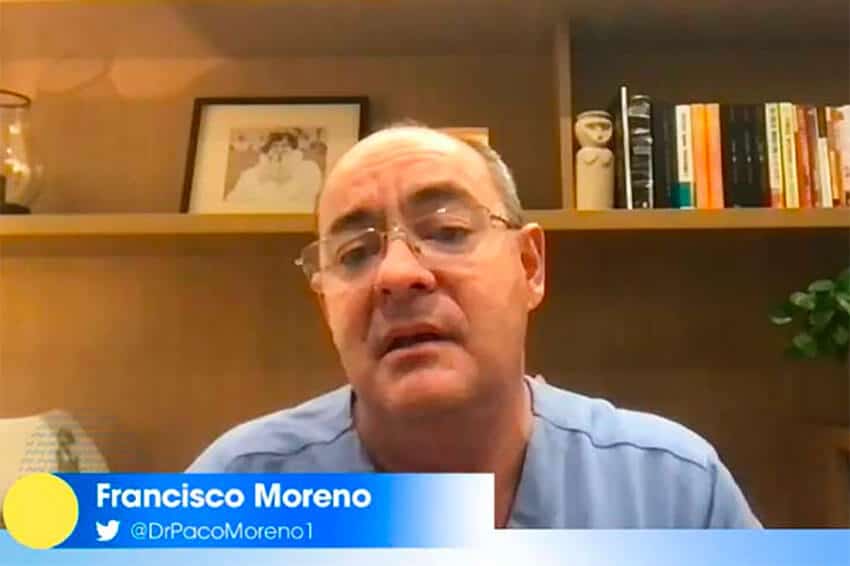
“If we behave ourselves during two or three weeks we can arrive at the point where there is a rapid descent,” said Dr. Francisco Moreno, head of the Covid department at the ABC Medical Center in Mexico City.

And that, Macías said, means slowing the spread of the virus by avoiding crowds and enclosed spaces and wearing face masks, considering the highly contagious delta variant that is at the forefront of the new infections.

“This could take a turn for the worse if we don’t understand right away that it’s not just about being vaccinated,” Moreno said. “It’s about looking after yourself with basic measures.”

Macías also spoke to the doubts that have been raised about the efficacy of some vaccines such as the Chinese Cansino, which he attributed to a lack of information having been provided about them.

“Millions of people have been vaccinated in Mexico with Cansino yet we are not seeing hospitals full of people who were injected with it. We are seeing more or less the same proportion [of hospitalizations of patients given other vaccines]. It isn’t any more risky to have been vaccinated with Cansino.”

Dr. Francisco Moreno
Dr. Francisco Moreno said many youths hospitalized with Covid are seriously overweight.

The discussion also looked at the effect of the delta variant on youths, a highly mobile sector of the population that is hard to keep at home and likes going out to have fun. But the vulnerable among them are those who suffer from other issues. Moreno said that 80% of the youths intubated at the ABC Medical Center are obese or seriously overweight.

“This is an important health message that we need to spread after the pandemic.”

Panel moderator and Tec de Monterrey researcher Dr. Guillermo Torre described obesity and Covid as “one pandemic on top of another that is clearly aggravating the situation we have today.”

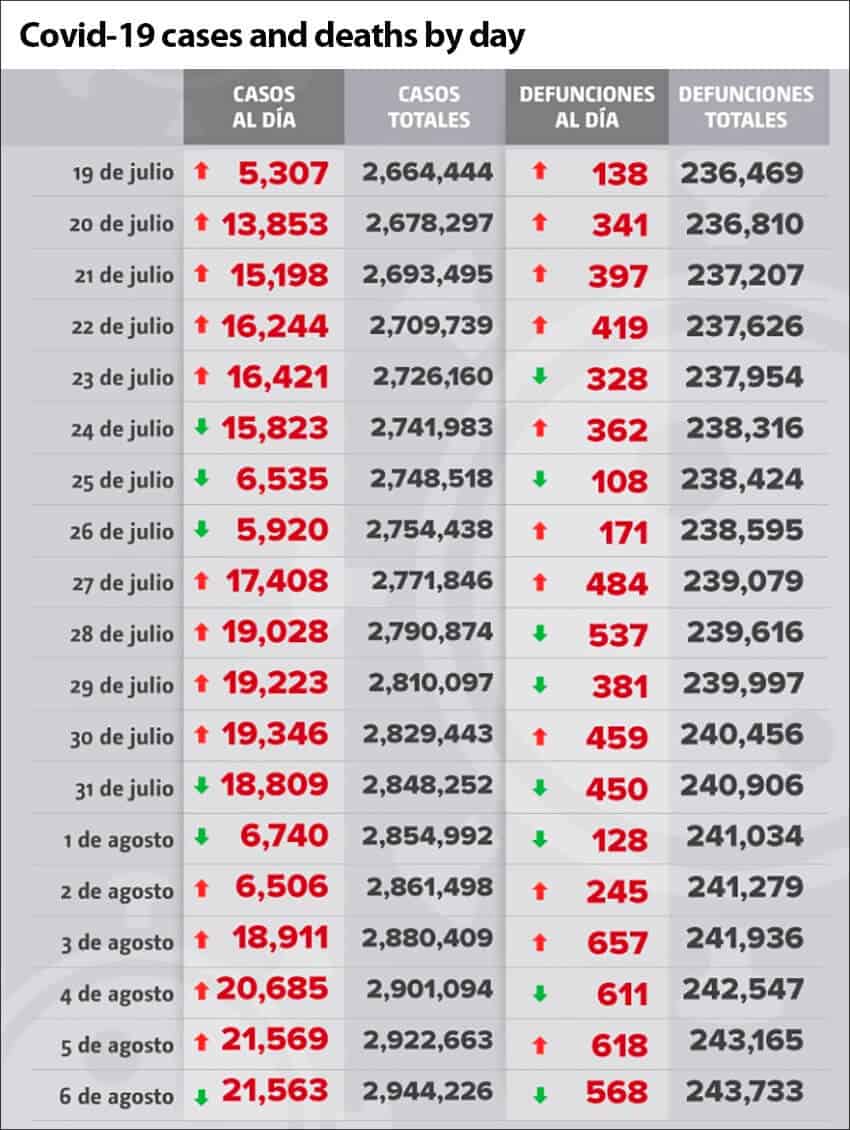
In other Covid news, the federal Ministry of Health reported 21,563 new cases on Friday, bringing the accumulated total to 2.94 million. It was the third day in a row that more than 20,000 new cases have been recorded.

Health officials reported another 568 deaths and estimated there are currently 144,176 active cases.

Coronavirus cases and deaths in Mexico as reported by day
Coronavirus cases and deaths in Mexico as reported by day. milenio

• Mexico City and five other states will go red on the coronavirus stoplight map effective Monday, the federal Health Ministry said. The other states are Colima, Guerrero, Jalisco, Nuevo León and Nayarit. They will join Sinaloa, the only state that has been red for the past two weeks.

Fifteen states are high risk orange: Baja California Sur, Sonora, Tlaxcala, Tamaulipas, San Luis Potosí, Zacatecas, Durango, Michoacán, Querétaro, state of México, Hidalgo, Veracruz, Puebla, Oaxaca and Quintana Roo, and nine are medium risk yellow: Baja California, Chihuahua, Coahuila, Aguascalientes, Guanajuato, Morelos, Yucatán, Campeche and Tabasco.

Chiapas is the only low risk, green state on the map, which is effective Monday through August 22.

• There will be no closures of beaches, hotels or bars in tourist destinations such as Acapulco and Zihuatanejo, although some new measures will be announced on Monday, the governor of Guerrero said today.

The state’s health minister said Friday afternoon that 38 Covid deaths had been recorded in the previous 24 hours, the highest number recorded in a 24-hour period since the pandemic began. There have been 169 deaths in the first six days of this month.

Chilpancingo, Acapulco, Zihuatanejo, Ometepec and Chilapa are the municipalities with the highest number of active coronavirus cases.

Mexico News Daily
Geologist’s delight: see 3 types of volcano in 1 day in Guadalajara

0
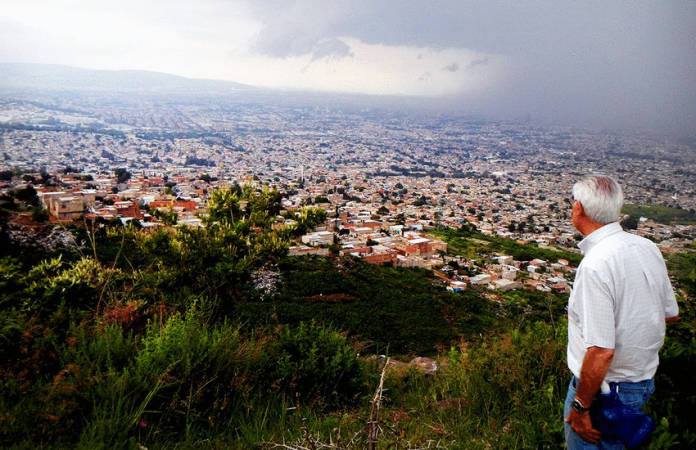
peak of el Cerro del Cuatro, Guadalajara
The peak of el Cerro del Cuatro offers an excellent view of the city of Guadalajara.

One day a geologist casually mentioned to me that people living in Guadalajara are lucky because in one day they could easily visit three of the major types of volcanoes.

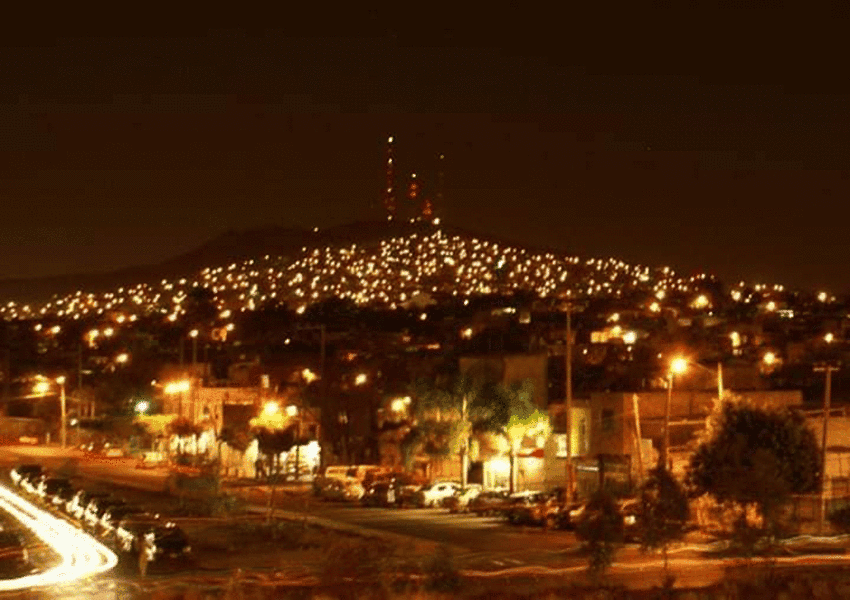
They could, for example, go to the top of Cerro del Cuatro, the tallest “hill” in Guadalajara (1,860 meters high) to have a look at a scoria volcano, also known as a cinder cone.

This is the most common type of volcano on our planet, conical in shape, with very steep slopes and composed of lightweight volcanic rock filled with holes, commonly called tezontle in Mexico.

The second type of volcano they could visit is a stratovolcano such as El Volcan de Tequila (Tequila Volcano), located only an hour’s drive from Guadalajara. Stratovolcanoes feature the classic Mount Fuji-type profile and are famous for their explosive eruptions.

This one is no longer active, however, and conveniently has a cobblestone road leading up to microwave towers at the top.

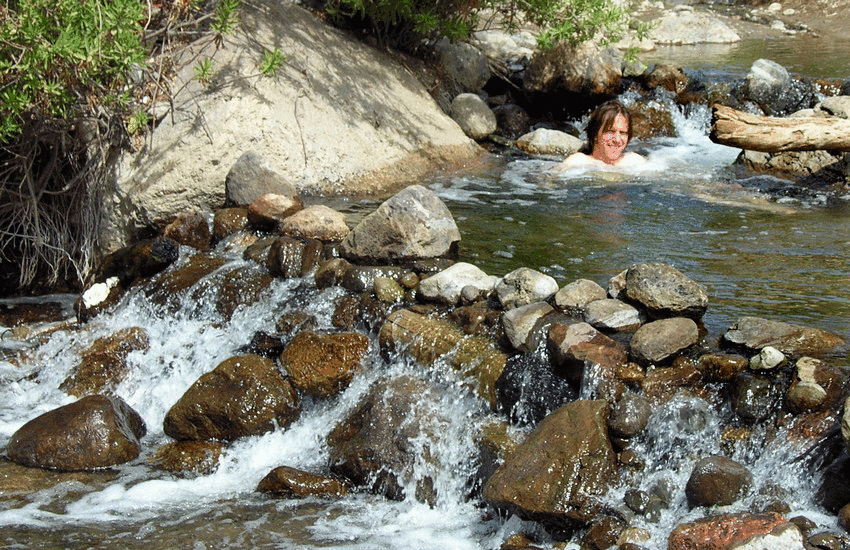
Río Caliente in Primavera Forest, Jalisco
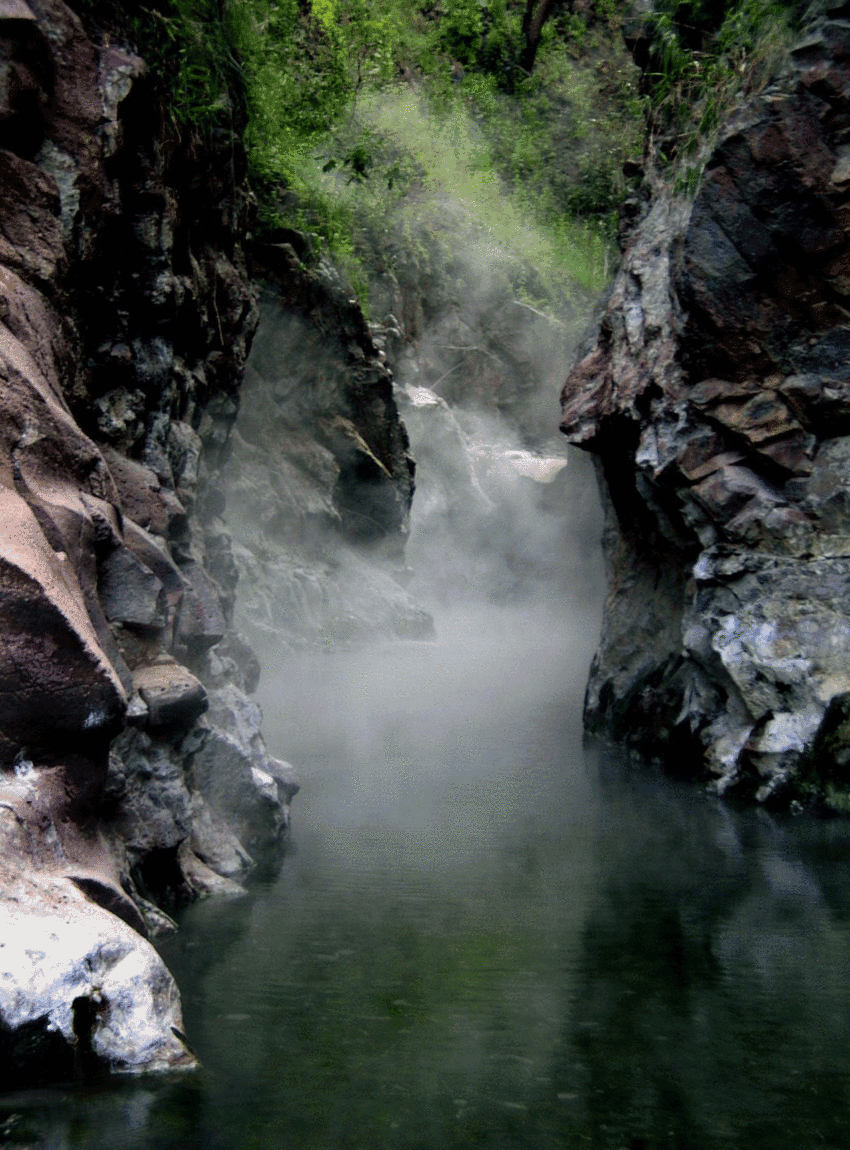
Río Caliente, the hot river which runs through the Primavera Forest, is exceptionally rich in minerals.

The third major type of volcano is the caldera, which is a huge, bowl-shaped hole in the ground left after a volcanic explosion. Such an explosion occurred in western Mexico 95,000 years ago, ejecting 40 cubic kilometers of pumice and ash (locally known as jal) into the air, creating the Primavera Caldera — and, by the way, giving the name Jalisco to the area where the jal fell back down to Earth.

The idea of visiting three types of volcanoes in one day intrigued me. “I wonder if it would be possible for someone to do all three on foot?” I asked myself.

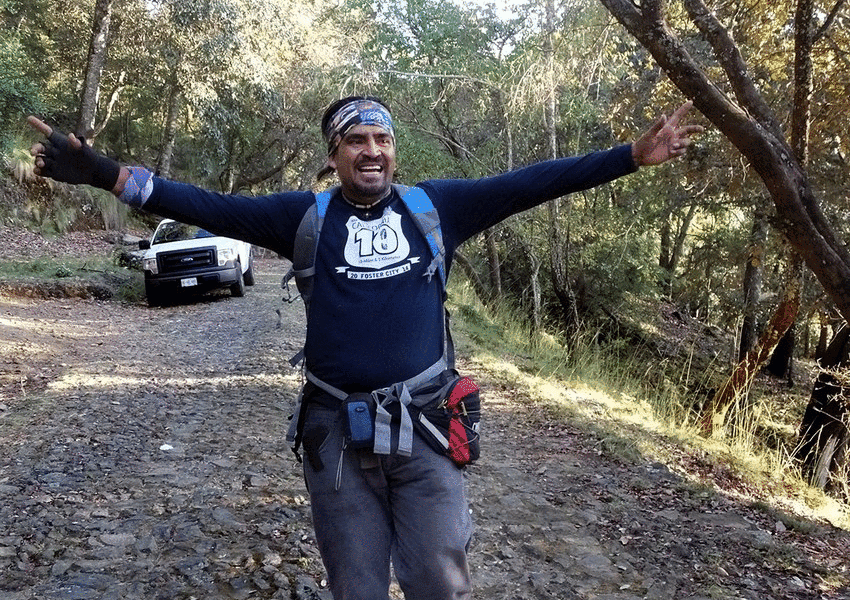
I had only to mention this crazy idea to Mexican ultrarunner Sergio Vidal, who specializes in runs of more than 100 kilometers.

“I’m going to do it,” he replied without hesitation. “Let’s start working on the route.”

The first thing we did was to substitute another scoria volcano for el Cerro del Cuatro. “I love running,” Vidal said, “but I prefer the great outdoors to city streets.”

Fortunately, there happened to be another scoria volcano just southwest of Guadalajara called El Cerro de Mazatepec.

Hiking inside the crater of Tequila Volcano
Hiking inside the crater of Tequila Volcano.

Vidal and three other Mexican long-distance runners decided that they would run up and down El Cerro De Mazatepec, then cross the Primavera Caldera (now called the Primavera Forest) and finally run to the top of Tequila Volcano, not via the cobblestone road but straight up its steep and weedy south flank.

This they accomplished in December of 2016, completing the 120-kilometer run, which they called the “Trivolcano,” in 35 hours, without bothering to stop and sleep as they had originally planned.

If you are an ultrarunner, you might be interested in trying to break that record, but if you are an ordinary mortal, here are volcanic vistas near Guadalajara, all of which can be visited by car — or on foot, if you insist.

Cerro del Cuatro (scoria cone)

I have viewed Guadalajara from several lookout points outside its municipal boundaries and, in my opinion, none of them offer a view of the city as good as the one from the top of El Cerro del Cuatro, especially during a thunderstorm. So be patient as you negotiate the rather unsightly streets on the Cerro’s steep flanks.

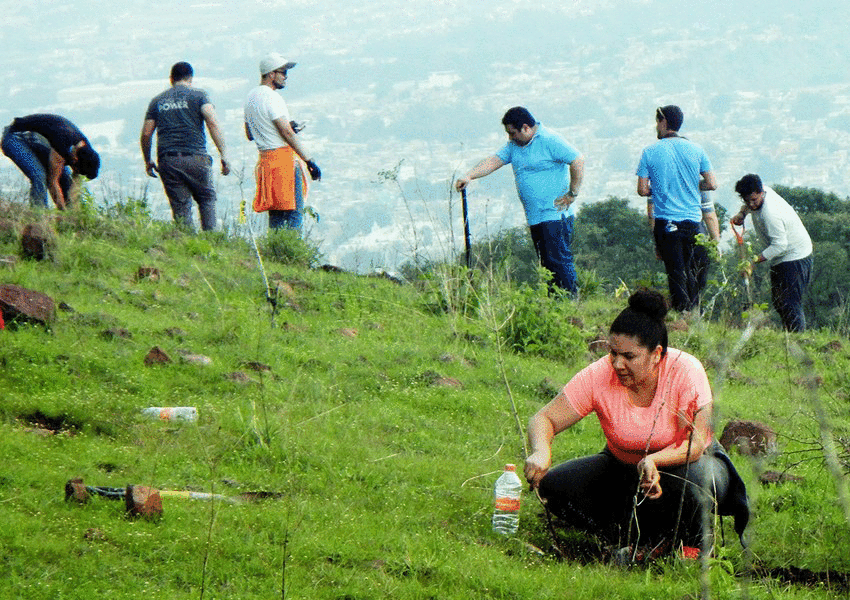
Once you make it all the way to the top, a delightful little park awaits you, with rolling hills covered with green, where volunteers have been planting trees every year for a long, long time. You’ll have a hard time believing that you are still in the city!

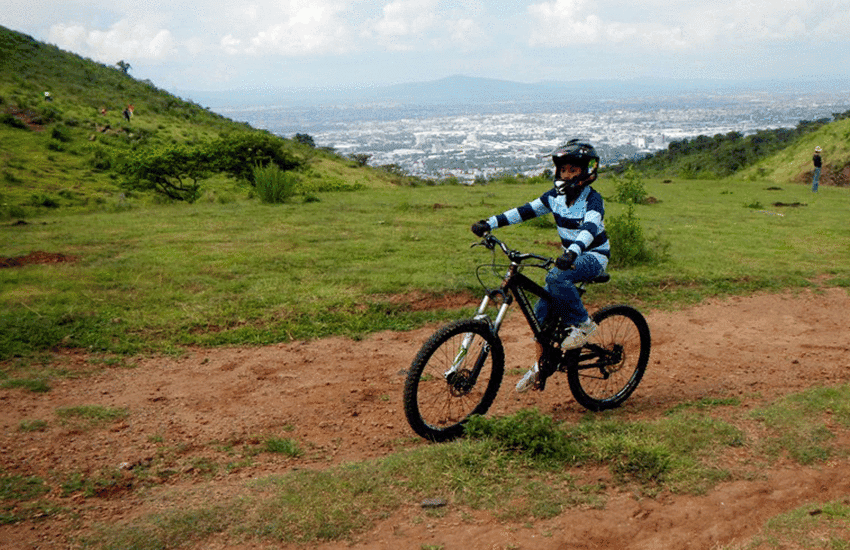
Cerro del Cuatro, Jalisco
A bicycle trail atop Cerro del Cuatro reveals the red tezontle or scoria rock of a typical cinder-cone volcano.

A long arroyo (brook) cuts through all this, making it a favorite for downhill bicycle riders to prove their skills. Scratch around in the arroyo and you’ll come up with a handful of red tezontle or scoria rocks, proof that you are indeed standing on top of a cinder cone.

To reach the top of the hill and the antennas, from which you can enjoy that great view, ask Google Maps to take you to Estación Transmisora SPR, Jalisco.

The Primavera Caldera

This caldera was a big hole filled with water for 10,000 or 20,000 years, but then magma pushed the bottom up and the water out, giving us the pine- and oak-covered hills of Bosque la Primavera, a protected area and home to deer, foxes, ringtails, coatis and even a few pumas.

It also has fumaroles and a hot river (Río Caliente) to remind you that it’s a volcano and far from dead. The Primavera Forest is located immediately west of Guadalajara and nearly matches the city in size. To bathe in the hot river, ask Google Maps to take you to Pilitas Río Caliente, Jalisco.

While splashing in one of the hot pools, notice the pumice rocks all around you. These are light enough to float on water and came from that explosion here 95,000 years ago.

Planting trees in El Cerro del Cuatro, Jalisco
Volunteers plant trees in the city park atop El Cerro del Cuatro.

Tequila Volcano (stratovolcano)

El Volcán de Tequila, located near Tequila, Jalisco, erupted 200,000 years ago, spewing out great rivers of lava, many of which cooled into the numerous deposits of obsidian that the state is known for. A cobblestone road takes you from Tequila town, ever upward through ecosystem after ecosystem, to the antennas at the top.

From here, you can hike into the volcano’s absolutely gorgeous crater and perhaps even climb the great vertical plug that protrudes from it, peaking at 2,920 meters above sea level and offering an impressive view of blue-green seas of agaves in every direction. See this article for more info and directions.

The volcanic domes of Ahuisculco

The Selva Negra Nature Reserve, located 32 kilometers southwest of Guadalajara, is the site of extensive deposits of obsidian that did not come from Tequila Volcano but oozed out of domes and dikes like toothpaste squeezed from a tube.

This may be the biggest single source of obsidian in Mexico, but it was not born of a classic volcano. Because the obsidian is pure and of very high quality, the pre-Hispanic people loved it and established hundreds of mines and workshops here, meaning that everywhere you go you will come upon great heaps of broken or discarded knives, arrowheads and other artifacts.

Selva Negra Nature Reserve
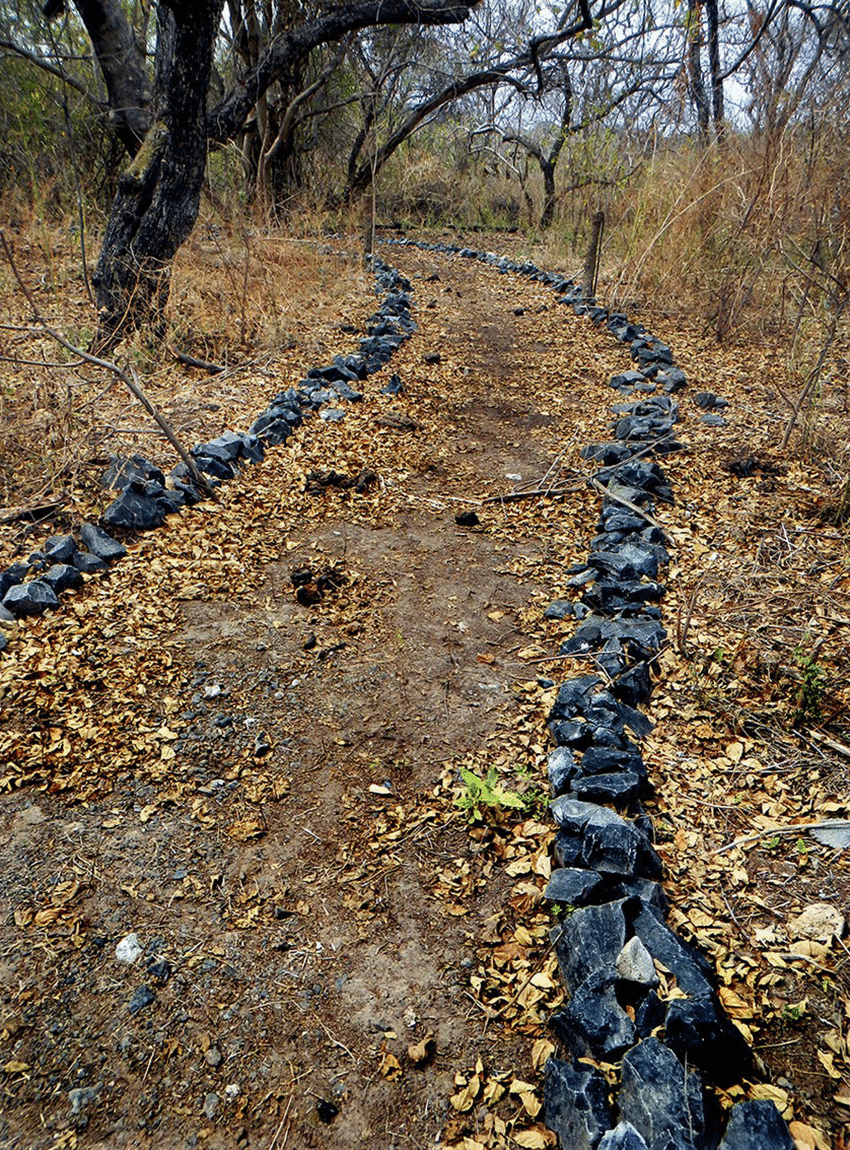
A path through Ahuisculco’s Selva Negra Nature Reserve is marked by rows of broken or discarded pre-Hispanic artifacts made of obsidian.

This forest forms an animal corridor between two other protected areas of Jalisco and is under the management of a foundation created by the Guadalajara rock band Maná. If you have a high-clearance vehicle, you can get here by inputting H7JF+JV Ahuisculco, Jalisco, in Google Maps.

Take a break and enjoy a volcanic vista!

The writer has lived near Guadalajara, Jalisco, for 31 years and is the author of A Guide to West Mexico’s Guachimontones and Surrounding Area and co-author of Outdoors in Western Mexico. More of his writing can be found on his website.

Río Caliente in Primavera Forest, Jalisco
The source of Río Caliente is a narrow canyon where water literally boils out of the ground.
Tequila Volcano, Jalisco
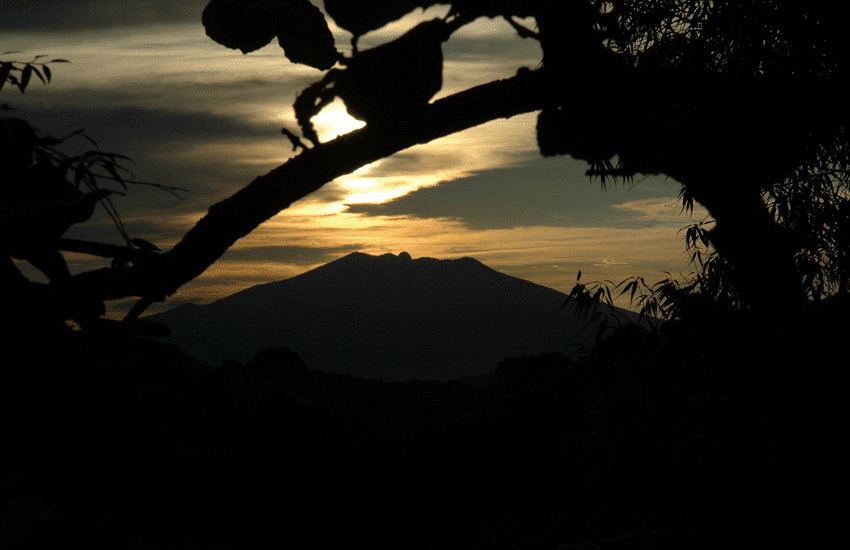
Tequila Volcano is a landmark in Jalisco and can easily be identified by the volcanic plug that rises from its crater.


Cerro del Cuatro in greater Guadalajara.
At 1860 meters above sea level, the heavily populated Cerro del Cuatro is the highest point in greater Guadalajara.


Guadalajara ultramarathon runner Sergio Vidal
The Guadalajara area has 3 volcanoes near enough to each other that ultrarunner Sergio Vidal ran the 120-kilometer Trivolcano challenge in 35 hours.

Manhole covers focus of thieves in Puebla’s historic center

0
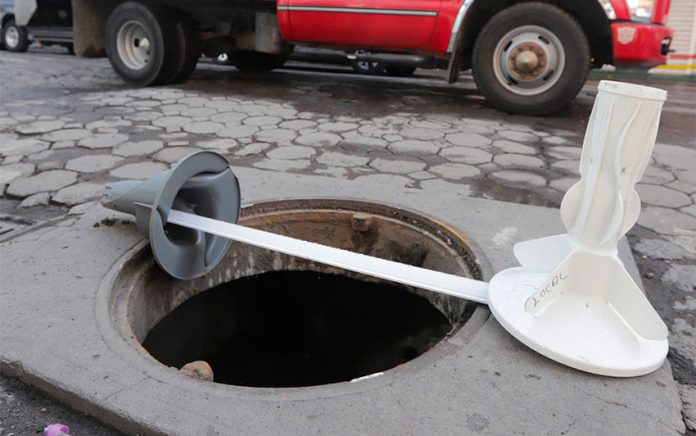
Missing manhole covers a danger in Puebla.

Pedestrians beware: in Puebla’s historic center, a rash of manhole cover thefts has alarmed neighbors and frustrated authorities.

The covers are stolen for their scrap metal value, leaving holes that present a danger both to pedestrians and vehicles. In some cases, neighbors have taken it upon themselves to mark the holes with caution tape or objects, hoping to prevent accidents.

According to a source close to the state’s Public Security Ministry, the manhole covers are worth less than 1,000 pesos each to thieves. The areas of the city with the most robberies are the México-Puebla highway, Vía Atlixcáyotl and the historic center.

Though the covers can be difficult to replace, municipal police have managed to detain at least one alleged thief. Last Sunday, a man was arrested for making off with a cover after a neighbor witnessed the crime and called police.

Puebla is hardly the only area suffering from manhole cover thefts. The problem has also been reported in San Luis Potosí, Tamaulipas and Guanajuato.

“When the rainy season arrives, the problem is accentuated … [citizens] complain but there isn’t much to be done because the authorities do not have sufficient resources to repair all the damage,” said Rubén Guajardo Barrera, a San Luis Potosí state legislator who called for greater enforcement to prevent and punish the thefts.

In July, Tamaulipas water authorities reported that the stolen drain covers were costing them more than 100,000 pesos a week. And in Salamanca, Guanajuato, authorities have started to replace some of the covers with concrete rather than iron, hoping to reduce thefts.

It is not a new problem. The Mexico City government said in late 2015 it had spent more than 17 million pesos to replace stolen manhole covers and drainage grates.

With reports from Periódico Central and El Universal

Oaxaca music students get their stolen instruments back

0
Another Oaxaca youth orchestra will benefit from a donation courtesy of Metallica.

After the theft of musical instruments from a youth philharmonic band, the halls of the community center in a Oaxaca community fell quiet. But now the instruments have been recovered and the students can get back to practicing their music.

The community of Santa María Tlahuitoltepec discovered the identity of the thief, a resident, through an internal investigation. After being outed, the thief returned the instruments at a community meeting and was sanctioned.

The instruments were taken on June 29 when the thief broke into the Santa Ana-Ne’äm community center, stealing a clarinet, two saxophones, four trumpets and three trombones. The community, located east of Oaxaca city in the Sierra Mixe, is home to the indigenous Mixe people.

The incident was not the first musical heist for a Oaxaca youth band. In December 2019, 26 instruments — worth half a million pesos — were stolen from the Philharmonic Band of San Pedro and San Pablo de Ayutla, another Mixe community. In that case, the instruments were replaced by funds raised through social media donations.

Now, that same band will benefit from another, high-profile source of funds: the proceeds from a Metallica song. The heavy metal band’s 30th anniversary disk, The Black Album, includes covers by more than 50 artists. Every artist chose an organization that would benefit from the proceeds of their cover.

El Instituto Mexicano de Sonido, which covers the song Sad but True, chose the San Pedro and San Pablo de Ayutla philharmonic band as its beneficiary.

Other causes supported by the album include UN Women, Save the Children and the Nashville Rescue Mission.

With reports from Milenio and El Universal

Cougar attacks and kills 12-year-old boy in Oaxaca

0
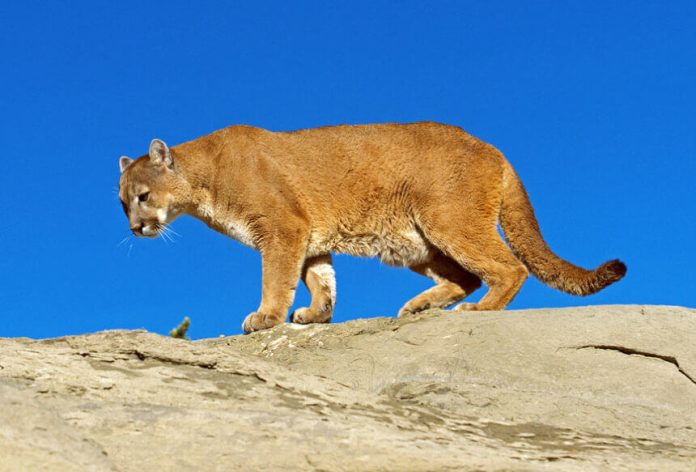
The cougar is one of five wild cat species found in Oaxaca.

A young boy has died after a cougar attacked him in Guadalupe Siete Cerros, a community in San Francisco Chapulapa, located in the Cañada region of Oaxaca.

Local media outlets reported that Gabriel Trovamala, 12, went out into the fields to check the crops on August 1 when he was attacked. Trovamala, a member of the Mazateca indigenous community, died of internal bleeding.

Local residents said there have been attacks against livestock and one adult, who was unharmed. They attribute all the attacks to the same animal.

Though the director of the National Commission for Natural Protected Areas (Conanp) asked that people not demonize the large cats, the Mazateca community has organized the placement of traps and plans to hunt the animal down, hoping to prevent another attack.

Oaxaca is home to five of Mexico’s six wild cat species: jaguars, cougars, ocelots, lynxes and jaguarundi all inhabit the mountainous state, according to Conanp.

With reports from El Universal and Televisa

Hidden camera captures customs agent demanding a bribe

0
Former customs agent Hernández.

A customs agent in Matamoros, Tamaulipas has been dismissed after a video caught him asking for a bribe of US $1,000 to let a merchant through without declaring his products.

“A person likes to go to the mall… he has a family,” explained the agent, Saúl Hernández, by way of justification in the video. “You have $10,000 in merchandise. If I asked for $9,000 … it would be robbery, it would be extortion. But 10%, that’s not bad. Legally you would have to pay 25%.”

Little did Hernández know, his target was secretly recording the conversation, which took place at a customs office on the International Free Trade Bridge that connects Matamoros to Los Indios, Texas.

The video was not the first indication of corruption on Hernández’s part. The Federation of Tamaulipas Chambers of Commerce and the vice president of the Confederation of National Chambers of Commerce (Concanaco) have accused the same agent of committing acts of corruption against both merchants and tourists.

Concanaco vice president Julio Almanza Armas said his reports to the General Customs Management Office received no response.

“We solicited an urgent audience with the customs director, Horacio Duarte, to give him our evidence of corruption in the Tamaulipas customs office, but we have received no response,” Almanza Armas told the newspaper Reforma.

But an official announcement came Friday. Customs chief Duarte announced Hernández’s “immediate departure” for loss of trust. “We have a zero-tolerance policy toward corruption.”

With reports from Reforma

Woman who was tortured by authorities freed after 11 years

0
María Isabel San Agustín
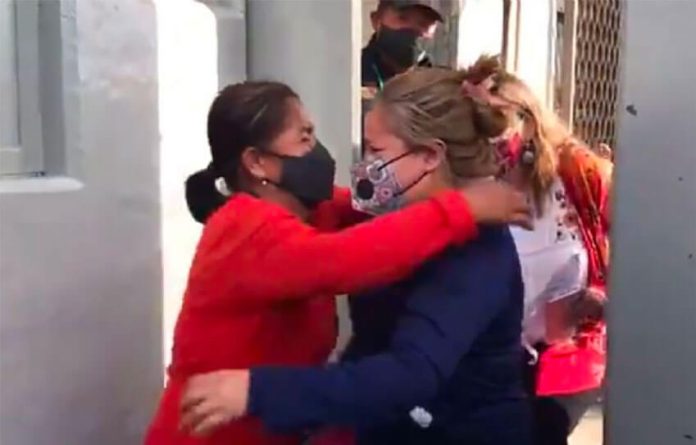
María Isabel San Agustín, right, embraces a family member moments after walking out of a Mexico City prison.

An indigenous woman who was sentenced eight years ago for kidnapping was freed Thursday on the grounds that she had been tortured during the investigation.

María Isabel San Agustín, originally of Hidalgo, was arrested in the Mexico City borough of Milpa Alta in 2011 and sentenced two years later to 65 years in prison.

But her case was revisited by federal justice authorities in 2018 and she was ordered released under the Istanbul Protocol, an international set of guidelines on the documentation of torture. The National Human Rights Commission had found evidence of torture after her arrest.

Nonetheless, the 35-year-old had to wait another three years to walk free. Her liberation appears to have been hastened by President López Obrador’s announcement last week that thousands of inmates would be released from jail if they had been victims of torture or were over 75 years old and had not committed a serious crime.

Mexico City Mayor Claudia Sheinbaum announced San Agustín’s release on Twitter.

“I was in communication with María Isabel San Agustín’s family to inform them of the liberation of her release in the next few hours, after suffering torture and spending 11 years imprisoned unjustly.” She added that other similar cases were currently being examined.

The Mexico City Human Rights Commission said Monday that at least 479 people in city prisons were victims of torture. In 49 of those cases it has been determined that torture could have interfered with the investigation of the crimes of which they were accused.

It was an emotional moment yesterday at 6:00 p.m. when San Agustín walked out of a Mexico City prison into the arms of waiting family members. “Justice was done,” she declared to reporters, but cautioned that justice remained to be done in the prison she had just left.

“… most of the population here is innocent.”

With reports from El Universal and Proceso

Pandemic pushes poverty figures up: the poor number 55.7 million

0
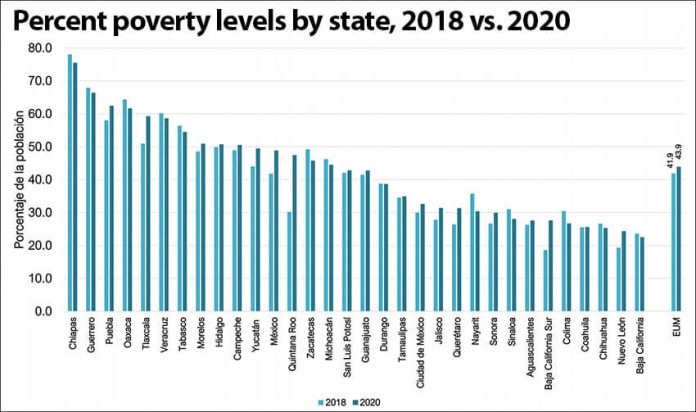
Percentage of people living in poverty by state
Percentage of people living in poverty by state. coneval

There are an additional 3.8 million Mexicans living in poverty, according to the latest figures compiled by Coneval, the federal agency that measures social development.

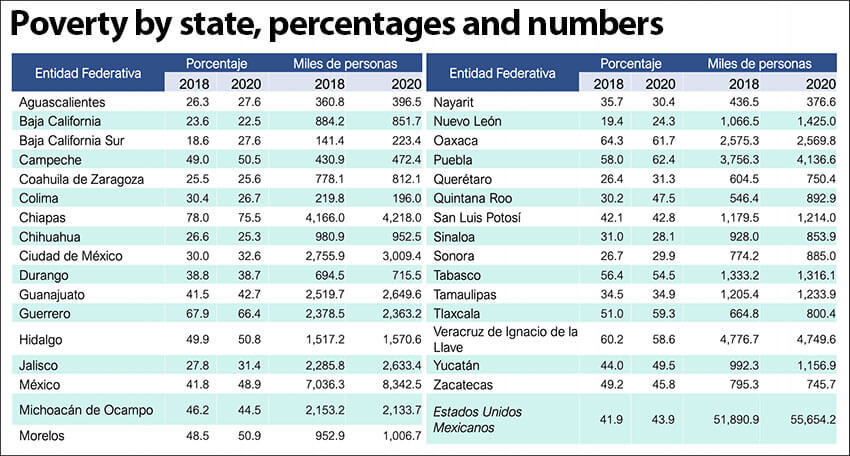
In its 2020 report, Coneval said the number of people it classified as poor rose to 55.7 million people, or 43.9% of the population, up from 41.9% in 2018. The coronavirus pandemic was mainly responsible, it said.

The highest growth in poverty levels was seen in states that rely on tourism. Quintana Roo saw the biggest increase in poverty, rising 17.3% to 47.5% of the population compared to 30.2% two years before. In absolute numbers, the poor totaled 893,000, up from 546,000.

The Caribbean coast state was followed by Baja California Sur: poverty was up from 18.6% to 27.6%, an increase of 9%.

They were followed by Tlaxcala, México state and Yucatán.

Poverty figures by state
Poverty figures by state, in percentages and absolute terms, by thousands of persons. coneval

Mexico’s poorest state is Chiapas, where 75.5% live in poverty, a slight improvement over the 2018 figure of 78%. Guerrero, Puebla, Oaxaca and Tlaxcala followed with poverty levels of 66.4%, 62.4%, 61.7% and 59.3%, respectively. Two of those states saw an improvement but the situation worsened in Puebla, up from 58% in 2018, and Tlaxcala, where the figure soared from 51%.

At the other end of the scale were Baja California, with 22.5% of its citizens living in poverty; Nuevo León, 24.3%; Chihuahua, 25.3%; Coahuila, 25.6%; and Colima, 26.7%

The number of Mexicans living in extreme poverty — those with insufficient income to meet the basic needs of food, clothing and shelter — rose from 7% of the population to 8.5%, from 8.7 million people to 10.8 million.

Among social deficiencies, some of which were basically unchanged or improved, lack of access to health care saw a whopping increase from 16.2% of the population to 28.2%, meaning that an additional 15.6 million people fell outside the healthcare system. They were unaffiliated with any of the state healthcare services and unable to obtain healthcare from either public or private providers.

In an executive summary to its report, Coneval described as urgent the need for the healthcare system to transition fully to the Insabi health care service, introduced by the current federal government to replace Seguro Popular, and guarantee healthcare attention to the public.

One sector of the population where poverty levels fell in percentage terms was the elderly. People over 65 accounted for 43.2% of the population in 2018; in 2020 that figure had fallen to 37.9%, likely due to the increases in seniors’ pension introduced by the administration of President López Obrador. However, because of the increase in the seniors population the number living in poverty remained about the same in absolute terms at 4.5 million.

Coneval’s figures are based on a survey of households between August and November, but President López Obrador said on Friday that he did not accept the results.

“… I have for example my own method of measurement … I see the macroeconomic data,” he told his morning press conference. “I have other information and I believe the people are receiving more support and even with the pandemic people have enough for their basic needs and something very important, they have not lost faith and we’re moving ahead.”

With his customary ability to see the positive side of things, López Obrador said the economy is in recovery in most sectors.

“… aviation, tourism, trade, industry, there is an extraordinary recovery, exceptional, to a degree that growth forecasts for this year are more than 6%.”

Measuring poverty

According to Coneval, people are in a situation of poverty when they are lacking access to at least one of six social rights — food, health, education, social security, adequate housing and basic housing services — and their income is insufficient to purchase the canasta básica, or basic food basket. Its value is currently 1,745 pesos in urban areas and 1,256 in rural ones (US $87 and $63 respectively).

Extreme poverty is defined as lacking access to at least three of those social rights, not having sufficient income to purchase the canasta básica and lacking in the nutrition necessary for a healthy life.

Coneval measures poverty in Mexico every two years using data generated by the national statistics agency, Inegi.

Mexico News Daily