Home Blog Page 1192

The long Covid nightmare: rashes, nausea, brain fog and rage

0
long-Covid
After his housemate recovered from Covid-19, Bodie Kellogg began a labyrinthine quest to resolve the symptoms she experienced for months afterward. arloo/Shutterstock

Part 1 of this story of the writer’s memories of his pandemic experiences in 2020 ended with he and his housemate, The Captured Tourist Woman (TCTW), searching for a competent doctor to treat her case of Covid-19. In this conclusion, the couple go down an even more complicated road in search of relief from her months of symptoms afterward.

She got over the initial infection, but then long Covid kicked in with a spontaneous rash.

The first doctor she found prescribed steroids for five days. By the end of the week, she was feeling good and the rash had diminished.

But then, three days later, the rash returned with a vengeance, along with several new symptoms — the worst of which was a smoldering rage.

During this emotional period, I spent much of my time avoiding nonessential interactions with her.
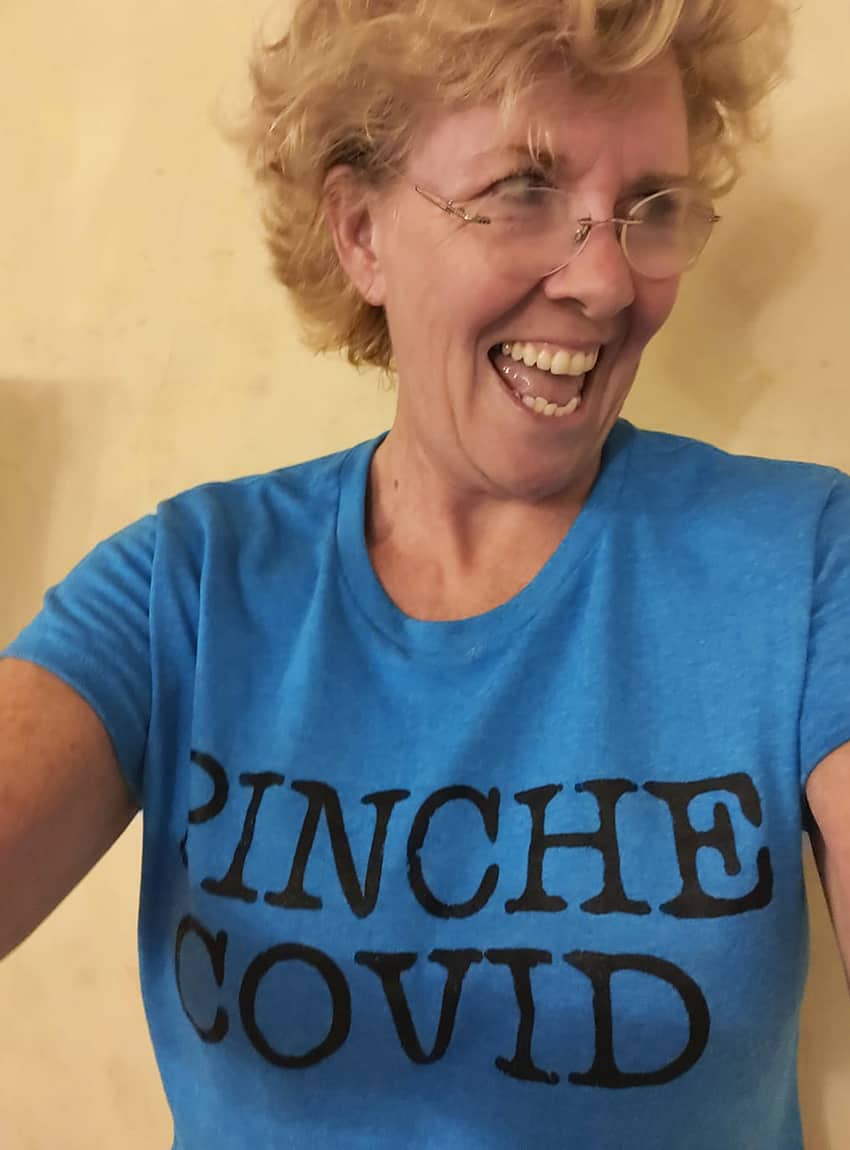
recovered long-Covid patient in Mazatlan
The T-shirt says it all.

One evening, we walked a block to get food when we encountered an older woman not wearing a mask. TCTW’s new fury stepped up: she immediately began berating this senior citizen for her lack of concern for others. When I noticed her hands bunching into fists, I grabbed her by the shoulders, spun her around and quickly escorted her away from the bewildered matron.

It was time to try another doctor.

The second physician put her on a different steroid for three weeks. Both her rage and her rash diminished, but when she started having to shave her face, we decided it was again time to change doctors.

Over weeks, two other doctors gave her medications that we later learned should never have been prescribed. Her condition(s) grew worse.

After wide inquiries, TCTW set up appointments to interview five of the most well-regarded Covid physicians in town. Three wanted to put her back on steroids. One said that her several months of misery was due to something she ate (seriously).

But the last one was a winner.

Her new doctor forbade her from taking any more steroids and immediately had her get an elaborate blood test. After reviewing her results, he put her on a number of different medications.

Since this doctor had his office right next to the full Covid ward at the city’s largest private hospital and spoke to her in terms she thought reflected high competency, we had high hopes. The new medications eliminated her dependence on the steroids, modulated her ugly mood and diminished her rash, but a nagging brain fog remained.

Then the nausea began. The doctor wanted a urine sample, along with more blood tests. When we arrived at the lab and she pulled the urine container from her purse, The Captured Tourist Woman and the receptionist both looked at it in open-mouthed horror: it was no longer full.

The assumption that the container was liquid-tight was a pure expat mistake. We then realized that since we had not specifically asked for a liquid-tight container, this predicament was completely of our own making.

As noses in the room began wrinkling with disgust, I quickly relegated her purse to the trunk of my car.

The medication failed to control her retching. Over the weeks, which turned into months, as things got worse, we tried some natural cures: green apples and ginger were the two most touted on the internet, along with cannabis.
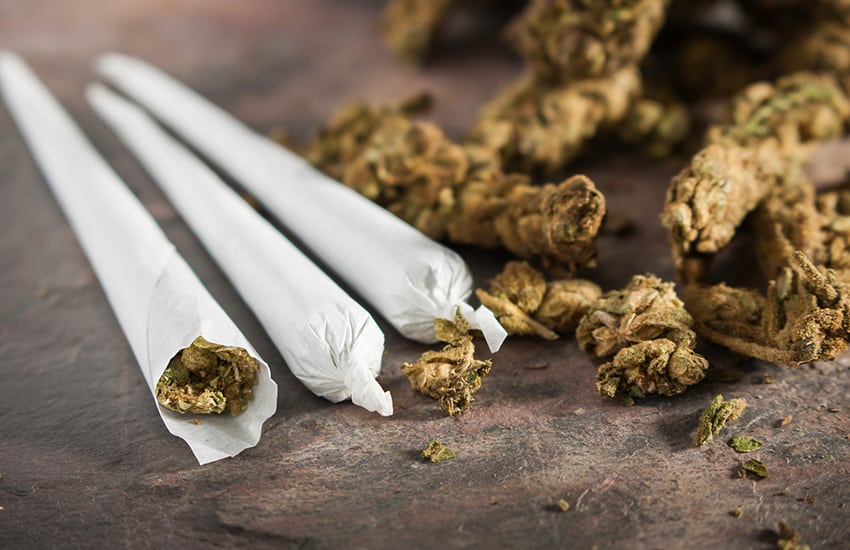
marjiuana joints
Medicinal marijuana helped with the constant nausea, but not for very long. Craig F. Scott/Shutterstock

The centro mercado (central market) had the apples and ginger, but the cannabis required a visit to a neighbor who sported brightly colored dreadlocks. The apples and ginger worked at first, but soon lost their effectivity; time for the cannabis.

I fired up the joint, took a hit just to make sure it wasn’t oregano and handed it to TCTW, who took a couple of good tokes and passed it back. Twenty minutes later, her nausea was gone and she was loudly laughing and smiling for the first time in months. It was short-lived, however.

Her nausea returned, and we realized that we would need to become the Mazatlán incarnation of Cheech and Chong in order to fight her long-term illness with cannabis. And neither of us could have kept up with the cost of the Pringles chips she was driven to devour at the end of each session.

She got a new prescription for anti-nausea medication. We had high hopes that she was finally on the road to recovery. However, the medication would not stay down long enough to be effective.

By this time, she had lost about 15 kilograms and had very little energy. She was becoming seriously dehydrated; it was time for the hospital.

At the admitting desk, her doctor immediately whisked her off to a saline drip while I dealt with the inordinate amount of paperwork.

Whenever I need to deal with any Mexican institution or bureaucracy, I am still always stunned by the volume of paper created for even the most rudimentary of transactions. Complex transactions will require your signature, multiple times, everywhere but on the edge of the paper, and will often be festooned with a colorful assortment of mechanical stamps.

As TCTW was being set up in a room, I soon discovered I was involved in a complex transaction with someone who had the demeanor of a low-rent bill collector. He started by handing me a four-page contract for services, all in 10-point font and, of course, all in Spanish. I began at the top of the first sheet and slowly worked my way down.

After about three minutes, the man carefully removed the contract from my hands, laid it on the counter and handed me a pen while pointing to the signature line at the bottom. I told him I needed to read through the whole document just for a vague understanding as to what I was signing.

TCTW had been an attorney in her life before Mexico, and she would give me a right good thumping for signing something unread. So I asked the man to explain what the four-page contract said. I was told that the hospital would need a 25,000-peso deposit immediately and would need to collect a similar amount, or maybe more, every other day.

This employee had just summed up four pages of single-spaced, small-font, convoluted legalese in less than 15 words. Obfuscation with a smile.

I told him that he needed to speak to my attorney, who was somewhere on the third floor. Even in her diminished state, TCTW would easily sort this guy out, plus she had a complete collection of credit and debit cards in her somewhat smelly purse.
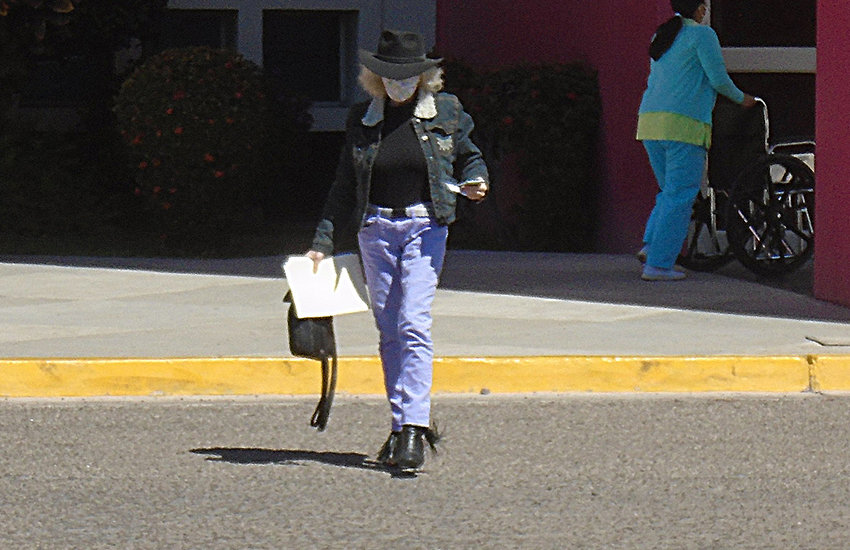
Covid patient leaving hospital in Mazatlán
Months later, the recovered and masked Captured Tourist Woman leaves a Mazatlán hospital.

It took eight days of several types of intravenous medication to bring her back from the brink. With the exception of the pushy bill collector, her hospital stay was as pleasant as something like that could be, especially after they moved her off the bland diet and she discovered the hospital’s tortilla soup was superb.

As we have moved through this global event so far — and we know it’s not over — we both learned new things about ourselves and the people around us: our circle of friends has dwindled while at the same time become more authentic; we discovered, to our delight, that having most of our daily needs assuaged by servicios a domicilio (home delivery) was rather sumptuous, and it’s become a convenient routine.

Also: not all doctors are competent, and not all urine containers are liquid-tight.

Get the vaccinations and wear the mask. This can be some serious shit.

The writer describes himself as a very middle-aged man who lives full-time in Mazatlán with a captured tourist woman and the ghost of a half-wild dog. He can be reached at buscardero@yahoo.com.
Journalists rally to defend newspaper in face of ongoing attacks by government

0
lopez obrador
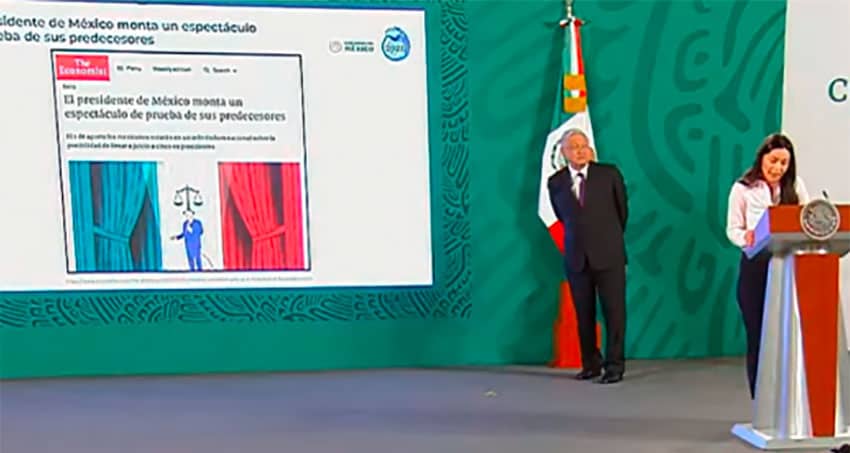
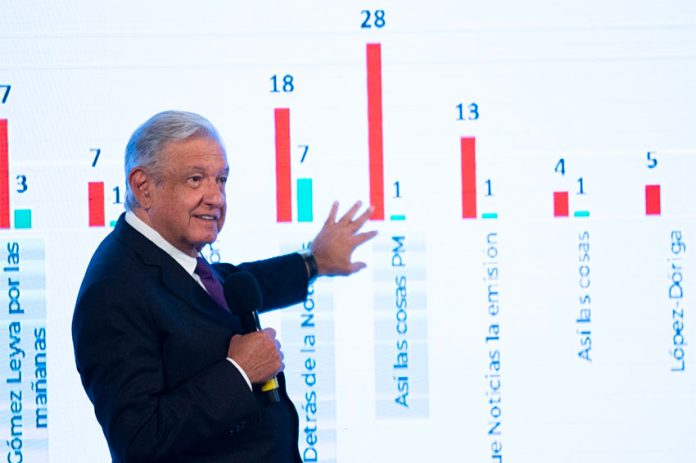
The president displays a graph indicating by news outlet the number of stories that cast his government in a negative light.

More than 100 columnists and other contributors to El Universal have put their names to an open letter to President López Obrador to defend themselves and the newspaper in the face of ongoing attacks by the federal government.

“The president of Mexico has mentioned El Universal and its columnists and contributors on several occasions, sowing the idea that all criticism of his administration has an interest unconnected to journalism,” the letter said.

“This has no foundation at all. Freedom of speech is not the fruit of revenge nor of a conspiracy, it’s a hard won right in this country.”

Endorsed by columnists such as retired Supreme Court judge José Ramón Cossío Díaz, United States-based Mexico expert Duncan Wood, former first lady Margarita Zavala and cartoonists including Ángel Boligán, the letter asserted that El Universal doesn’t impose an editorial line on its contributors, who represent a “variety of positions and political opinions.”

Nor does the newspaper ask its contributors to join “campaigns of any kind,” it said.

“Those of us who write here are the masters of our own voices, pens [and] opinions,” the El Universal contributors said, adding that they they are not motivated by political and economic interests but rather “the quest for independent, rigorous and critical journalism.”

“President: what we do is called journalism, not yearning for supposed lost privileges,” the letter said, referring to López Obrador’s repeated claims that those who are critical of him and his government are angry at the loss of privileges they enjoyed during previous administrations.

The contributors rejected any suggestion that they are motivated by any other interest beyond providing “information and analysis of reality for our readers.”

Several journalists, including some that work for other media outlets, offered personal defenses of El Universal.

“Nobody ever called me to tell me, ‘Don’t go and publish that,’” said well known journalist Ciro Gómez Leyva, referring to years during which he contributed to the publication that describes itself as “The Great Newspaper of Mexico.”

“I had absolute freedom during the years in which, according to López Obrador, we all shut up,” he said in a radio interview.

An opinion piece by the British newspaper The Economist
An opinion piece by the British newspaper The Economist got a special mention Wednesday for its ‘deceitful news.’

The president has claimed that media outlets – many of which have depended heavily on government advertising to stay afloat – were in cahoots with previous governments and not critical of them as a result.

Echoing a call from the Inter-American Commission on Human Rights, Manuel Clouthier, an El Universal columnist and brother of Economy Minister Tatiana Clouthier, urged the government to scrap its “journalism lessons” – fake news exposé sessions officially called “who’s who in this week’s lies” that recently became a once-a-week feature of López Obrador’s weekday conferences.

The government presents “good journalism” as that in favor of President López Obrador, while journalism that is critical of the government is “bad, self-interested, sensationalist or conservative,” Clouthier charged.

Another “who’s who” of lies session was presented on Wednesday by the government’s fake news debunker-in-chief, Ana Elizabeth García Vilchis.

After explaining that fake news is “all pseudo-journalistic content” that seeks to pass itself off as real news, García asserted that the government’s aim was not to denigrate the media but to merely question it and expose lies and corruption.

An El Universal article asserting that the budget for the new Mexico City airport has been cut by 90% is false and a column by The Economist about this Sunday’s referendum over whether former presidents should be investigated for corruption is an example of “deceitful news,” she said.

“… We want to provide a relevant piece of information,” García said, explaining that there were 73 newspaper, television and radio reports based on The Economist column that portrayed the federal government in a negative light.

In addition, there were countless columns and opinion pieces that echoed criticisms of López Obrador that were first published by the British newspaper, she said. García also presented a study that monitored media coverage of the president.

“… In terms of print media, Reforma, El Universal, El Financiero, El Economista and La Crónica stand out for the most negative mentions about Andrés Manuel López Obrador” she said.

The coverage of the president by Reforma – also a frequent punching bag of the president – and El Universal was overwhelmingly negative, García said, explaining that there were 20 “negative mentions” about López Obrador for each positive one in both newspapers.

She singled out the journalists Joaquín López-Dóriga, Maricarmen Cortés and Mario Maldonado and the cartoonist Pacasso as “leaders” in the negative coverage of the president.

López-Dóriga, a Spanish-Mexican journalist who has his own news site, responded that he wouldn’t be intimidated by the government, while Maldonado said that his inclusion on the list of López Obrador’s chief critics added to his justification for signing the El Universal letter directed to the president.

Julio Hernández appeared Wednesday to defend himself against accusations made last week by the government's Ana Elizabeth García
Julio Hernández appeared Wednesday to defend himself against accusations made last week by the government’s Ana Elizabeth García that he had published lies.

“Today I was mentioned again in the [president’s] morning press conference because I exercise my [right to] freedom of speech,” Cortés, a radio, television and print journalist, wrote on Twitter.

“I will continue doing so, as I have always done, even though the 4T [fourth transformation] believes that journalists should only applaud and not be critical,” she said, referring to the government by its self-anointed nickname.

Another journalist attended yesterday’s presidential press conference to defend his work after he was mentioned in last week’s “who’s who” of fake news.

Julio Hernández, a journalist and columnist for La Jornada and director of the leftist newspaper’s San Luis Potosí edition, rejected claims that he had lied in his work.

“I’ve come here to point out that I haven’t lied,” he said, asserting that he has evidence to back up his claim.

Hernández, who has been a journalist for decades, said he was committed to independent and critical journalism – and “the truth” – and gave a lengthy defense of his work related to environmental issues in San Luis Potosí.

“Very good,” López Obrador responded. “Well, look, the right of reply and the right to dissent is now guaranteed, which is fundamental for democracy,” he added before engaging in a heated to-and-fro with the journalist.

With reports from El Universal 

Fishing coops mask narcos’ drug shipments to Mexico

0
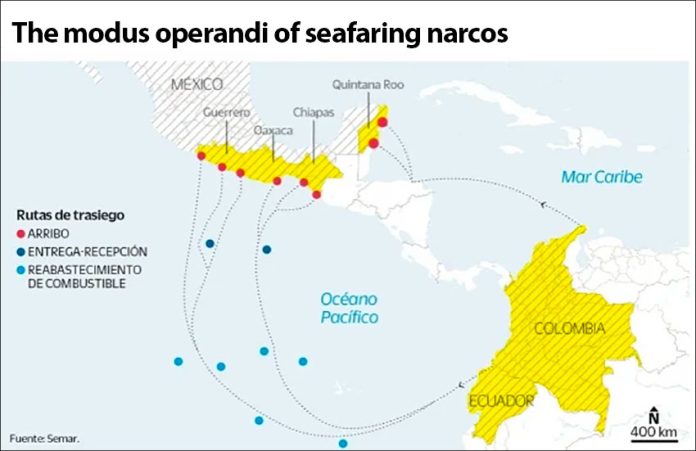
Drug smuggling routes from South America
Drug smuggling routes from South America: in light blue are refueling areas, in dark blue the delivery zones and in red the arrival points. el universal

Mexico’s largest criminal groups are outsourcing the retrieval of cocaine shipments to smaller groups posing as fishing cooperatives, providing another example of how maritime infrastructure is subverted by the drug trade.

Groups such as the Sinaloa Cartel and Jalisco New Generation Cartel (CJNG) are contracting local gangs in Mexico’s southern states of Chiapas, Oaxaca and Guerrero to fetch large shipments of cocaine out at sea, according to a report from Mexico’s Navy Ministry (Semar) accessed by the newspaper El Universal.

These local gangs set up fake fishing cooperatives, register vessels and use them to travel up to 350 nautical miles out to sea to receive drugs coming from Colombia and Ecuador. The cooperatives are usually created in marginalized coastal communities with local residents participating in the operations in search of a good payday, according to the SEMAR report.

The gangs receive the drugs, usually cocaine, in shark-fishing vessels rigged with outboard motors or in go-fast boats.

The ship’s crew is usually made up of both gang members and local fishermen, with a security presence maintained for more sensitive outings. A trip to go fetch a shipment of drugs can take between eight and 10 days depending on the type of vessel used.

Further support is provided by a detailed support system where other fishing vessels and lookouts on the shore provide information about where Mexican authorities are operating in order to avoid contact with naval ships.

InSight Crime analysis

Especially during times of economic hardship, it has become increasingly common for Latin American criminal groups to coerce vulnerable fishing communities into the drug trade.

This new scheme along Mexico’s southern coast is one of the more complex seen to date, requiring several parts. First, local gangs are subcontracted to retrieve drugs belonging to larger groups. Second, fake fishing cooperatives are created in rural fishing communities to create a veneer of legality. Third, local fishermen are encouraged to crew the vessels or track the movements of naval ships.

The Semar report detailed how the abundance of fishing communities along the Pacific coasts of Chiapas, Oaxaca and Guerrero provide plenty of options for the creation of these cooperatives. The registration of new vessels is also easy to hide among the thousands of new fishboats that were declared to Mexico’s fishing authority between 2017 and 2020.

The use of fishing communities is extensive outside Mexico as well. In Ecuador, fishermen have often been forced to act as drug mules, transporting shipments of cocaine to larger vessels offshore. More broadly, across the Americas, 13% of all drug seizures at sea in 2019 involved fishing vessels, according to a Colombian military report on maritime trafficking.

And whether volunteering or coerced to work as drug mules, fishing crews are often convenient targets. In 2017, 300 fishermen from Ecuador’s western provinces of Manabí and Esmeraldas were in jail across the Americas for transporting drugs at sea. Some of them have even been jailed in federal penitentiaries in the United States.

Reprinted from InSight Crime. Scott Mistler-Ferguson is a writer with InSight Crime, a foundation dedicated to the study of organized crime.

Competition regulator warns emergency decree to control gas prices is illegal

0
If private companies cannot make a profit they will stop distributing gas, which will lead to shortages. el economista

An emergency directive published by the federal government that seeks to set a maximum price for LP gas is illegal, according to Mexico’s antitrust regulator.

The Energy Ministry (Sener) published a document on Tuesday directing the Energy Regulatory Commission (CRE) to develop a methodology within three days under which LP gas prices can be fixed for a period of six months. The CRE is scheduled to meet on Thursday afternoon to consider the petition.

But the Federal Economic Competition Commission (Cofece) said the government’s directive is unlawful because the Hydrocarbons Law (LH) establishes that the market will determine gas prices.

“Specifically, article 82 of the LH mentions that the prices … of LP gas will be determined according to market conditions,” Cofece said in a statement.

The regulator said that maximum prices should only be set if there is a lack of competition in the market. Setting maximum  prices in a market in which competition does exist could cause shortages, Cofece said.

Price ceilings can only be set by regulators if monopoly pricing practices are detected, the regulator said. Cofece said an investigation to determine whether such practices were occurring began on May 31 but hasn’t concluded. Its chief said that before a price cap can be set, Cofece must draw up a “declaration of absence of competition conditions.”

“… While there is no final determination, prices can’t be fixed,” Alejandra Palacios said.

The CRE can intervene and set prices if it is determined that companies are colluding to set prices and effectively eliminating competition, she said.

Announcing earlier this month that the federal government would create a new state-owned company to distribute LP gas directly to consumers, President López Obrador asserted that five large distribution companies “with very high profit margins” dominated the market and are responsible for recent gas price hikes.

Experts consulted by the Associated Press (AP) said the attempt to establish a price cap is reminiscent of decades past when Pemex imported LP gas and sold it to distributors at fixed prices. Most gas is now imported by private companies that would cease to do so if they couldn’t make a profit on it.

“If the price controls reach a point where they [private companies] can’t cover the cost of the gas, they simply won’t deliver it and there will be shortages,” said Eduardo Prud’homme, a partner at Gadex, an energy consulting and analysis firm.

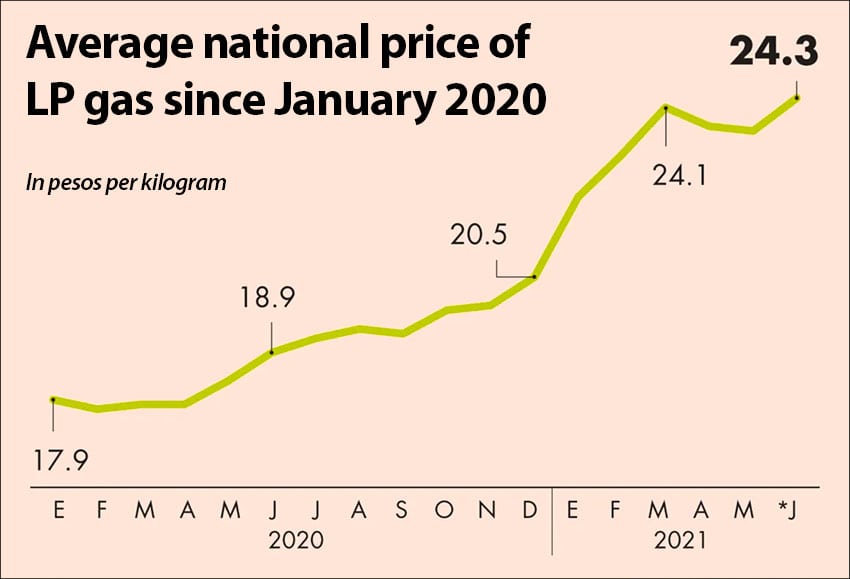
lp gas price rise
The steady rise in the price of gas since the beginning of last year.

“Shortages will create a black market” he added. LP gas industry association Amexgas also warned of the possibility that black markets for LP gas would emerge as did a former Cofece commissioner.

“If you impose an official price in an area where there is competition you will distort the market because the price you set won’t be the market price. If you set it very high, consumers will end up paying more. If you set it very low, producers won’t want to supply [gas] … at that price. So a black market will be created or [there will be] a gas shortage,” Miguel Flores Bernés said.

If the state oil company decided to try to serve as the importer and seller of last resort, AP said, that could create a classic problem of subsidies, with artificially cheap gas potentially being siphoned away to markets where it can be sold at market prices.

This week’s attempt to impose a six-month price cap on LP gas stems from López Obrador’s desire to keep fuel price increases below the rate of inflation, which is currently about 6%.

The president said July 7 that his government has kept its commitment to keep price rises for gasoline and electricity below the level of inflation but has been unable to do the same with LP gas, whose prices have increased “unjustifiably.”

According to the Ministry of Energy, LP gas prices increased 28% on average across the nation between May 2020 and the same month this year. The increase was 37% in Mexico City, the ministry said, while AP reported that prices in some parts of the country have almost doubled over the past year.

More than two-thirds of Mexican households use LP gas for cooking and other purposes. Gas Bienestar (Well-Being Gas), as the new state-owned distribution company will be called, will be created by Pemex within three months, López Obrador pledged July 7.

“It’s going to sell cylinders of 20 to 30 kilos of gas at low prices … without these other private companies ceasing to participate [in the gas market]. But there’s going to be competition because there isn’t [now],” he said.

Some analysts have questioned the wisdom of creating the company. Gabriela Siller of Banco Base said it is not clear how Gas Bienestar will offer gas at lower prices given the transport, storage and commercialization costs it will face.

“… Creating the [state-owned] company doesn’t guarantee that gas will be offered at a lower price. The only way for that to occur would be to incur the cost of creating the company, operating it and then selling gas at a subsidized price,” Siller wrote on Twitter.

With reports from Reforma and El Economista

3 Mexican navy ships ships en route to Cuba to deliver humanitarian aid

0
One of three Mexican ships that left for Cuba this week.

Three Mexican ships carrying diesel, medical supplies and food set sail for Cuba this week in what experts described as Mexico’s biggest aid run to the island nation in three decades.

The José María Morelos II, a Pemex tanker, left Coatzacoalcos, Veracruz, on Monday night carrying 100,000 barrels of diesel.

The fuel will be used to generate power for hospitals in Cuba, the Foreign Affairs Ministry (SRE) said.

A second ship, El Libertador, left the port of Veracruz on Tuesday, and a third, El Papaloapan, departed the same port on Wednesday.

Those two ships are transporting medical supplies such as syringes, oxygen tanks and face masks as well as foodstuffs including beans, flour, canned tuna, powdered milk and cooking oil, the SRE said.

A Mexican Air Force plane transported 800,000 syringes to Cuba earlier this month.

El Libertador is carrying 612.5 tonnes of beans, the newspaper El Universal reported. That ship and El Papaloapan are expected to arrive in Cuba during the next two days. Some media outlets reported that the José María Morelos II arrived in Havana on Monday night after leaving Mexico last week. But the federal government said it departed Monday night and has not announced its arrival in Cuba.

The SRE said Mexico was sending aid to help mitigate the impact of the coronavirus pandemic on the island nation, where large protests against the government have occurred in recent weeks.

Rafael Elias Rojas, a Cuban historian and professor at the College of Mexico, told the Associated Press that the aid dispatched in recent days is Mexico’s largest material support of Cuba since the administration of former president Carlos Salinas de Gortari, who was in office from 1988 to 1994.

“This is a new phenomenon” only comparable to aid received during Cuba’s “special period”  – 1991 to 2000 – after the collapse of the Soviet Union crippled the island, he said.

“There have been minor instances of aid during hurricane seasons, but the last big aid efforts of this scale or larger, were during the administration of Carlos Salinas de Gortari, when exchanges with Cuba increased significantly and when, as now, there was a deep economic crisis on the island,” Rojas said.

Jorge Guajardo, a former Mexican ambassador to China and consul general in Austin, Texas, called Mexico’s current support for Cuba unprecedented but also said that it harked back to Institutional Revolutionary Party governments’ attitude toward the island nation in the 20th century.

Cuban President Miguel Canel-Díaz thanked Mexico on Monday for its support but didn’t refer specifically to the humanitarian aid.

“President López Obrador has once again dedicated words of solidarity to us in his morning press conference. … Thank you Mexico,” he wrote on Twitter above a video of AMLO railing against the United States embargo of Cuba, which he has called “inhumane.”

López Obrador said last week that Cuba should be declared a World Heritage site because it as an “example of resistance.”

He has urged other countries to send humanitarian aid to Cuba as well. “It’s not enough to vote against the blockade at the United Nations every year,” the president said.

He rejected any suggestion that Mexico’s relationship with the United States would suffer as a result of sending aid to Cuba because “we’re an independent, free and sovereign country and we’re acting in that way.”

The government has, however, faced criticism for its support as Cuban authorities carry out a crackdown on dissent.

“While the Cuban regime brutally suppresses protesters, the foreign minister of Mexico, Marcelo Ebrard, meets with his counterpart Bruno Rodríguez to express his ‘solidarity.’ Shameful,” Human Rights Watch Americas director José Miguel Vivanco wrote on Twitter July 24.

With reports from ADN 40, El Universal, BBC and AP

Mexico’s avocado boom benefits rural farmers — but also organized crime

0
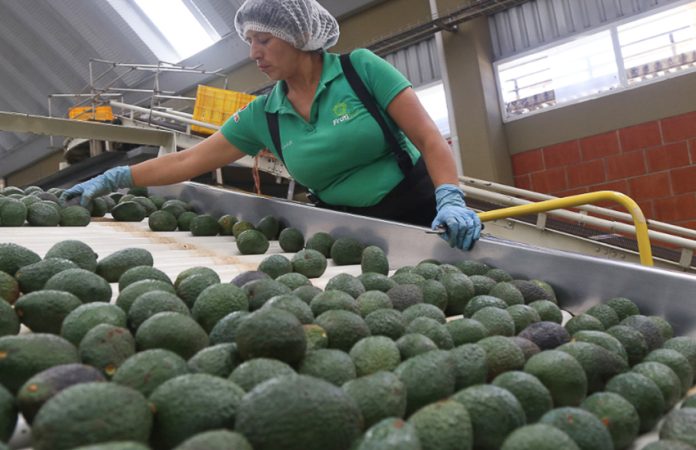
Processing avocados at a plant in Michoacán.

Armed avocado farmers have recently made their way into the news again, for challenging not only the cartels that threaten their livelihoods but also the federal government’s unwillingness to do much more than plead with them to lay down their weapons.

Mexico’s “green gold” is the main point of contention, but rural people taking the law into their own hands when the government is absent or impotent is nothing new in Mexico’s history.

Native to Mexico, avocados have been an important crop since before the Spanish arrived. But today, with the very shippable Hass variety, Mexico now exports 2.1 million tonnes of the fruit each year, providing 70% of the world’s supply.

It is the most important food export after beer, worth US $3.1 billion. Mexico ships to 64 countries around the world, but by far, most avocados grown here go to the United States, which has developed a ravenous appetite for guacamole, especially during Super Bowl week.

Sales in early February alone are worth millions of dollars to farmers and shippers.

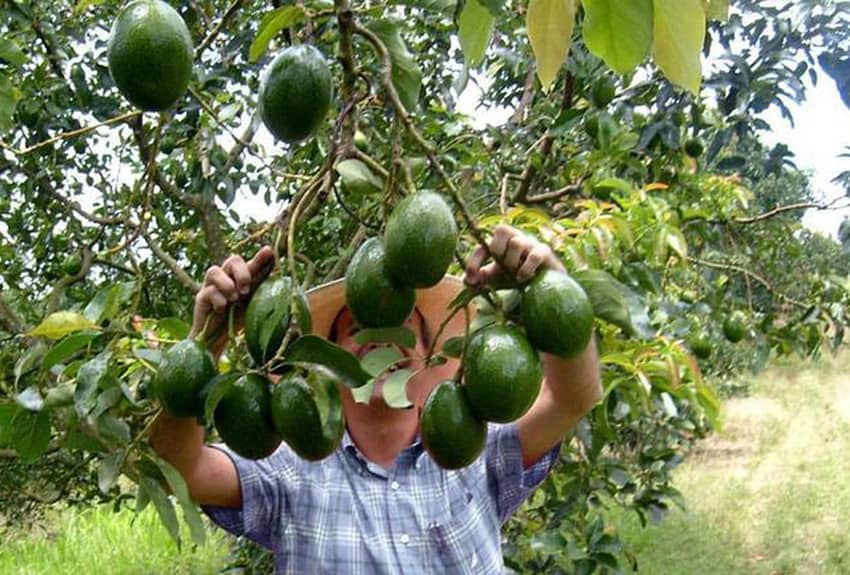
Harvesting avocados in Michoacán.
Mexico exports 2.1 million tonnes of avocados each year, providing 70% of the world’s supply.

Their mass export out of the country is a relatively recent phenomenon.

Fresh avocados from Mexico were banned by the United States from 1914 to 1997 because of the seed weevil, a pest seen as a threat to U.S. avocados grown primarily in California.

The export of Mexican avocados began instead to Europe, starting in 1988.

The North American Free Trade Agreement and other commercial changes loosened restrictions until a system was set up to allow safe import into the U.S. A boom soon began, and in 2016, avocados became Mexico’s most important produce export, displacing tomatoes.

Today, about 46% of all Mexican exported avocados head to the United States, according to the Association of Mexican Avocado Producers and Packers for Export (APEAM), but all of that export crop must pass United States Department of Agriculture (USDA) inspection before they ever cross the border.

Avocados are also grown in sections of Jalisco, México, Nayarit and Morelos, but over three-quarters of Mexico’s production comes from the state of Michoacán, although Jalisco is Mexico’s fastest-growing producer of avocados, according to the World Resources Institute.

armed avocado growers in San Juan Parangaricutiro
Michoacán avocado growers like these men in San Juan Parangaricutiro have armed themselves to stop organized crime from extorting them or stealing their crops. file photo

But Michoacán’s climate and groves at various altitudes means that it can ripen avocados year-round.

Avocados have been a huge boon to Michoacán’s economy, which is overwhelmingly still agricultural. The state also produces significant quantities of citrus, guava, melons and berries, but none of these crops come close to the income that avocados provide.

Avocados generate 70,000 jobs in Mexico directly and support another 300,000 indirectly, primarily in Michoacán. As of 2020, Michoacán had 28,000 avocado producers, half of whom hold a hectare or less in cultivation, with 62 certified to export to the United States.

That’s the good news.

Unfortunately, the avocado boom has also brought serious problems to an area of the country that can least afford it. By far, the worst of these problems is with organized crime.

Cartels and other gangs have operated in the state for decades, the most famous of which are narcos bringing product up through Mexico’s west coast. In many cases, drug runners and local populations have had a kind of detente, each keeping mostly out of the others’ way.

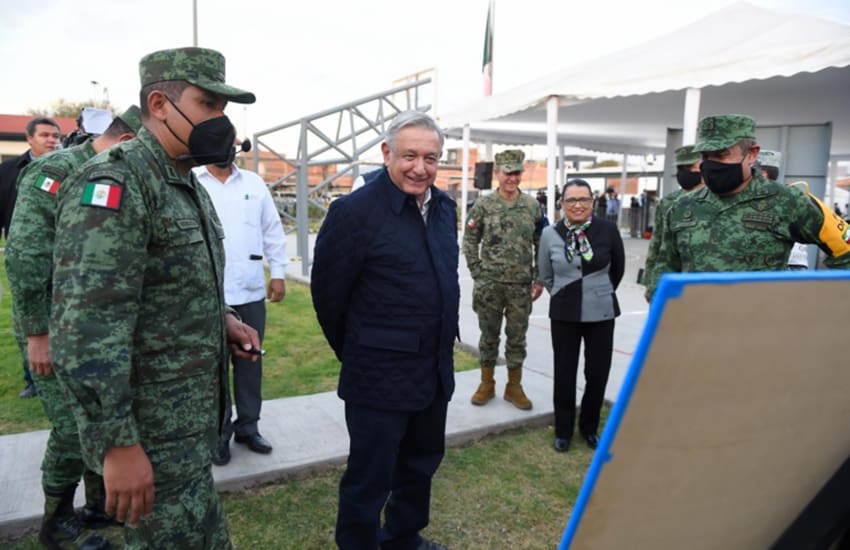
AMLO in Zamora, Michoacan opening National Guard
The president opening a National Guard barracks in Zamora, Michoacán. President López Obrador has repeatedly urged growers to let the government handle cartel violence and not to arm themselves.

But organized crime has never limited itself to drugs: cartels have also been involved in illegal mining and logging, as well as extorting legal businesses, especially charging a cut for crops headed for Michoacán’s main port, Lázaro Cárdenas.

The huge amount of money that avocados bring to the table has broken many of these informal arrangements.

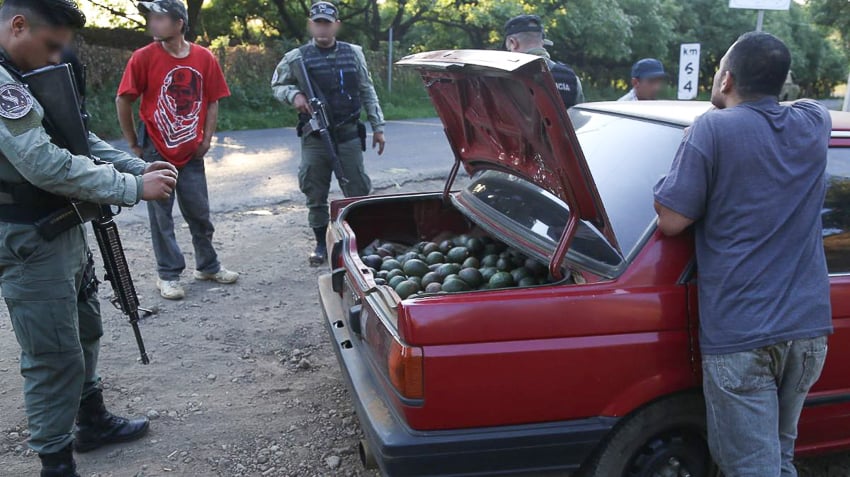
Farmers and others feel (mostly correctly) that local, state and federal authorities can’t — or don’t want to — put a stop to the increasing squeeze on their livelihoods. Despite extremely strict gun laws, farmers in Michoacán and other places have organized into armed groups called autodefensas (self-defense groups) or policia comunitaria (community police), creating checkpoints and even disarming corrupt local police. In some cases, they have been quite effective.

The problem for avocado producers (and others) is quite real: in 2019, USDA inspectors were detained by organized crime members, and the U.S. threatened to shut down inspections, which would have halted exports.

The fighting between vigilantes and cartel members makes for a very public challenge to federal authority, but President López Obrador is reluctant to take on the cartels in any direct way.

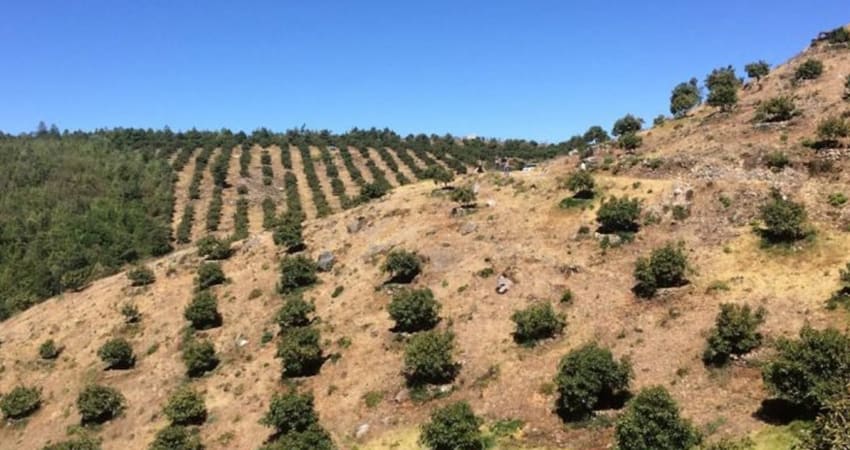
Another problem is environmental, as farmers look to take further advantage of lands on which avocados will grow. The World Resources Institute estimates that avocado production has driven 30–40% of deforestation in Michoacán and worries that it threatens other states’ forests as well.

Avocado orchard in forest land in Michoacan
A Michoacán avocado orchard carved out of a parcel of forest land.

Much of the deforestation is happening on communal lands or lands on which ownership is in dispute. Some groves have worked to get environmentally friendly certifications from organizations such as the Rainforests Alliance, but they are few and far between.

The last problem is one that has not been discussed in the Mexican press but that is a major concern for veteran producer Alejandro Bautista Villegas of Uruapan, Michoacán. He has been a producer for more than 50 years.

The extremely high demand, he says, is causing many producers to take shortcuts to satisfy shippers and take advantage of price spikes. Avocados can take up to a year from flower to ripe fruit and need at least nine months on the tree in order to be viable.

Bautista blames a lack of commitment to quality and regulation on the part of the government for harvesting avocados that are too small and too unripe. He particularly warns against red avocados or avocados with black navels (where the flower was attached), which will never ripen, making them completely useless to the consumer.

This continuing demand and lack of suitable growing conditions has led some Mexican entrepreneurs to look outside the country for new orchards to plant. One country that has benefitted from this is Colombia, especially parts of the country in which avocados can grow and ripen year-round. The nation began exporting avocados in 2013, mostly via Mexican firms.

The avocado situation is a double-edged sword for both Mexico and worldwide consumers. The just say no mentality applied to drugs does not work with a legal, healthy one with very wide appeal.

Avocados at Central de Abastos Mexico City
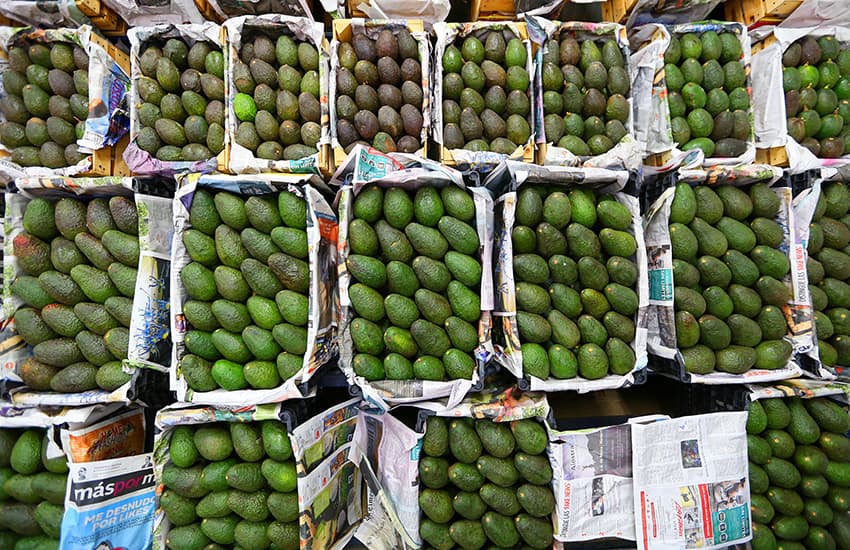
Avocados at the Central de Abastos wholesale market in Mexico City. CDMX/ Wikimedia Commons

If Mexico cannot get a handle on how to manage its avocado industry, it risks, over time, the loss of its phenomenal share, much like it did with vanilla and chocolate.

Leigh Thelmadatter arrived in Mexico 18 years ago and fell in love with the land and the culture in particular its handcrafts and art. She is the author of Mexican Cartonería: Paper, Paste and Fiesta (Schiffer 2019). Her culture column appears regularly on Mexico News Daily.

Epidemic’s potential ‘very large and growing rapidly,’ says medical expert

0
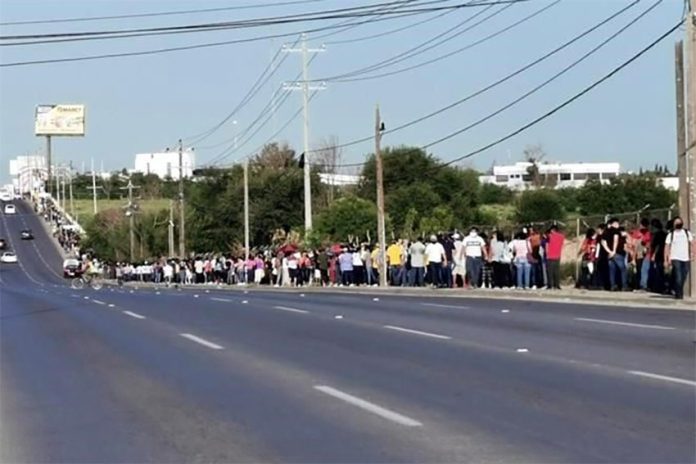
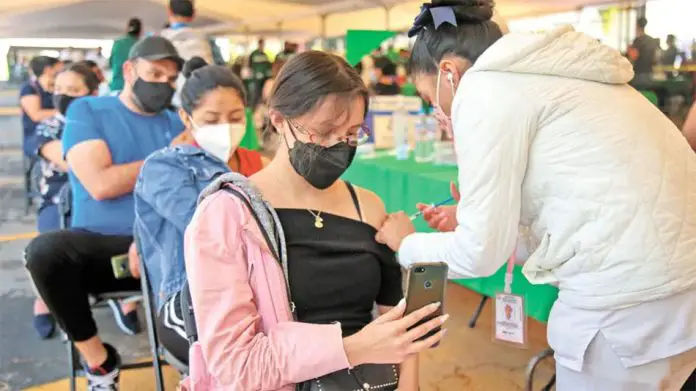
After vaccination opened for the 18-29 age bracket, vaccine centers in Reynosa, Tamaulipas saw long lines of young people eager to get the shot.
After vaccination opened for the 18-29 age bracket, vaccine centers in Reynosa, Tamaulipas, saw long lines of young people eager to get the shot.

Although Mexico’s vaccination rate continues to rise, the coronavirus pandemic still has significant potential to increase, according to a medical expert.

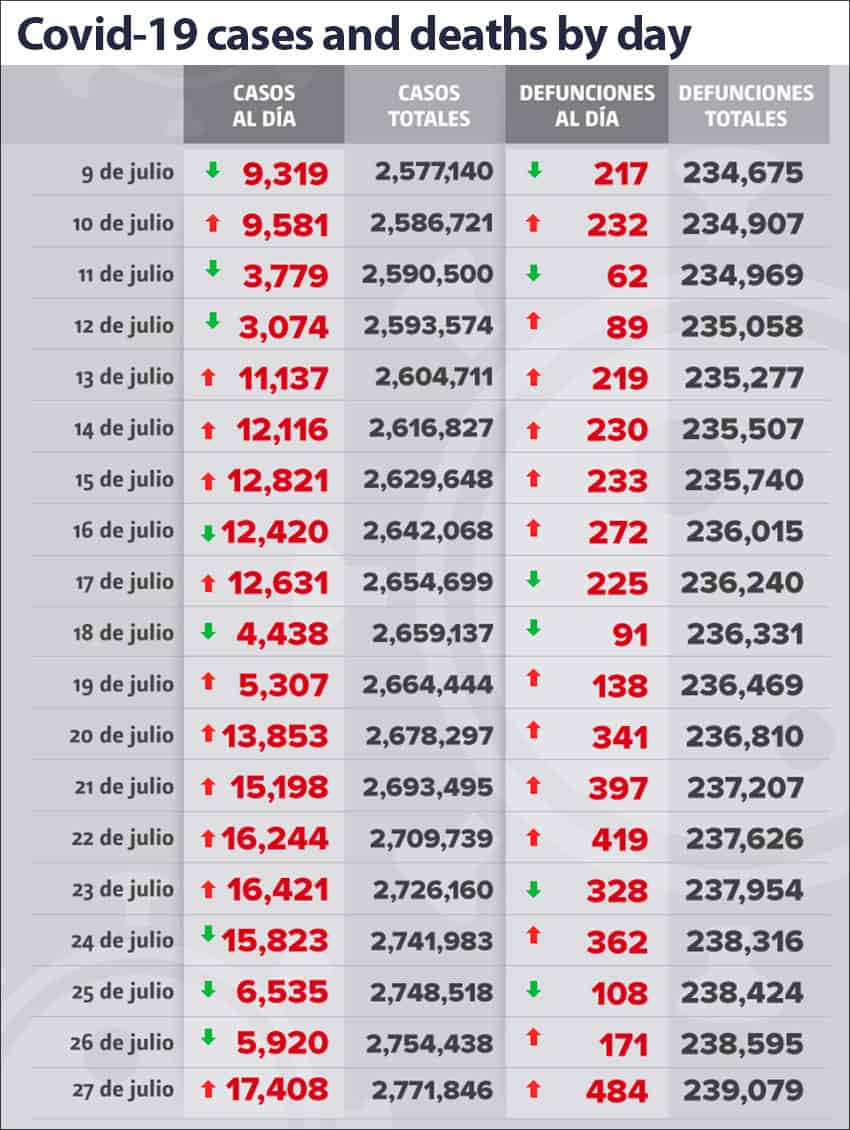
Mexico is currently amid a third wave of the pandemic with daily case numbers approaching the peaks recorded during the second and worst wave – which began in late 2020 and extended into early 2021 – on several days this month. The Health Ministry reported 17,408 new cases and 484 Covid-19 deaths on Tuesday, lifting the accumulated tallies to 2.77 million infections and 239,079 fatalities.

Figures for both cases and deaths are considered vast undercounts due to Mexico’s low testing rate.

A daily average of 9,355 new cases was reported in the first 27 days of July, a 166% increase compared to June but still well below the average of 14,134 in January – the worst month of the pandemic for both infections and deaths.

Reported deaths have averaged 223 per day this month, a reduction of 29% compared to June and 79% compared to January. The decline indicates that vaccination is saving thousands of lives, even though only one in five Mexicans is fully vaccinated.

Fueling the current coronavirus outbreak is the highly contagious Delta strain, which is now circulating widely.

According to a professor at the San Luis Potosí Autonomous University’s Medical School and Center for Health Science Research and Biomedicine, the situation could get much worse.

“The potential of this epidemic is very large and it is growing very rapidly,” Dr. Andreu Comas told the Associated Press (AP).

The new wave of the pandemic is “hitting the bulk of the population,” he said, referring to the more than 60 million Mexicans aged 16 to 55.

“It is the population that moves the most because on one hand it is the country’s economic engine and on the other it is the population with the most social life,” Comas said.

Dr. Francisco Moreno Sánchez, an infectious diseases expert and head of the Covid-19 unit at the ABC medical center in Mexico City, noted that most people in the younger part of that cohort are unvaccinated and thus remain vulnerable to infection.

Some young people don't appear overly concerned about getting infected.
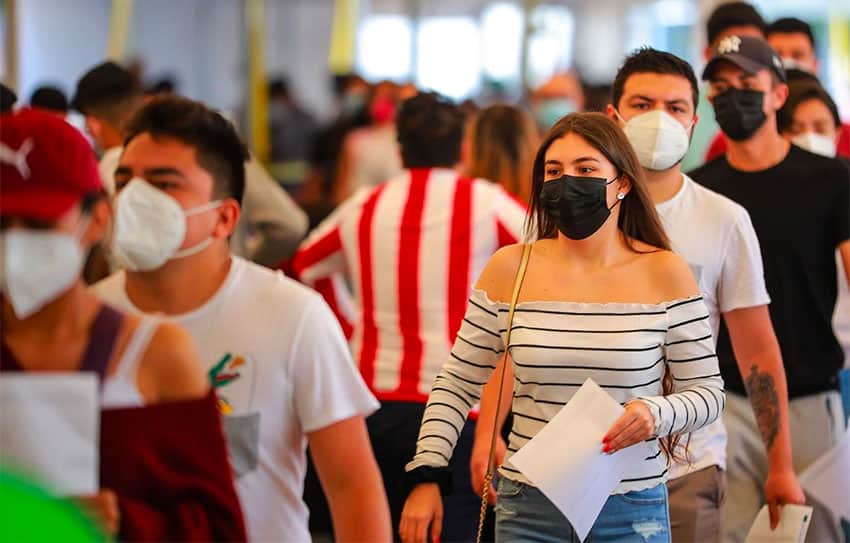
Some young people don’t appear overly concerned about getting infected.

Some young people are apparently unconcerned about catching the virus.

“I’m not worried about getting infected because I’m young,” 21-year-old Mario Estrada Flores told AP while hanging out and rapping with unmasked friends in a park in Coyoacán, a borough in the capital’s south.

“I have more defenses than an older person, … we have the idea that since we’re young nothing bad is going to happen to us or if we do get it it’s not going to be so strong.”

Not wearing a mask “is a little ignorant on our part because we’re taking a risk and we have older relatives, and we also put them at risk,” Estrada said.

Everyone aged 60 and over in Mexico has had the opportunity to be fully vaccinated and most in the 30-59 bracket have had the chance to get at least one shot. However, almost 4 million seniors and 3.6 million in the 50-59 age bracket remain unvaccinated, Health Ministry data shows.

Almost 62 million Covid-19 vaccine doses have been administered since inoculation began on December 24 but only 19% of Mexico’s 126 million strong population are vaccinated, according to The New York Times vaccinations tracker, while 34% have had at least one shot.

Among adults, the rate rises to 48%, according to the most recent federal data, which doesn’t take Mexicans vaccinated in the United States into account. That figure will continue to rise in the coming weeks as the federal government rolls out vaccines to millions of Mexicans in the 18-29 age bracket and attempts to boost vaccination levels in the five states with the lowest rates.

The inoculation of the country’s youngest adults began in Baja California last month after the United States donated more than 1.2 million single-shot Johnson & Johnson doses, and people in the 18-29 bracket have also received shots in some other states including Mexico City and Tamaulipas.

Lines of young people that stretched for kilometers were seen in the border city of Reynosa on Tuesday as eager jab-seekers flocked to vaccination centers.

President López Obrador has pledged to offer vaccines to all Mexicans free of charge but expressed skepticism on Tuesday about the need for booster shots.

“… We have to find out if they’re needed or not. [We won’t be] subjugated, subordinated by the pharmaceutical companies telling us that a third or fourth dose is needed,” he said.

However, there is growing evidence that booster shots will be needed, especially considering the virus’s potential to continue mutating.

Coronavirus cases and deaths in Mexico as reported by day
Coronavirus cases and deaths in Mexico as reported by day. milenio

Pfizer said Wednesday it believes people will need a third shot of its vaccine in order to maintain high levels of protection.

The United States pharmaceutical company said that data – which hasn’t been peer-reviewed or published – showed that a third dose of the vaccine developed by the German firm BioNTech generated antibodies against the Delta variant that are more than five times higher in people aged 18-55 and more than 11 times higher in those aged 65-85.

A third shot could be offered six to 12 months after the second shot of the Pfizer vaccine, which has been used in Mexico but not as widely as in some other countries such as the United States.

“All in all, I think a third dose would strongly improve protection against infection, mild moderate disease, and reduce the spread of the virus,” Pfizer’s chief scientific officer Mikael Dolsten said during a call to discuss the company’s quarterly results.

“… Receiving a third dose more than six months after vaccination, when protection may be beginning to wane, was estimated to potentially boost the neutralizing antibody titers in participants in this study to up to 100 times higher post-dose three compared to pre-dose three. These preliminary data are very encouraging as Delta continues to spread.”

With reports from AP, ReformaEFE and Animal Político 

IMF raises Mexico growth forecast to 6.3% for 2021

0
An IMF expert said Mexico's growing vaccination rate will quicken the recovery.

The International Monetary Fund (IMF) has upped its 2021 growth forecast to 6.3%, a 1.3% rise on its last estimation in April and the agency’s third upward revision. Its growth prediction for 2022 was also bumped — 1.2 percentage points to 4.2%.

However, the figure still lags behind the government’s prediction of 6.5% growth for 2021 but above the 6% forecast by independent economists surveyed by Citibanamex.

In line with the revisions, the IMF expects Mexican debt will stand at 59.9% of gross domestic product (GDP) at the end of the year, 0.5 percentage points lower than it predicted in April.

Economic advisor at the IMF, Gita Gopinath, explained the reasons for the improved projection. “In April the effect of the recovery of the export sector was evident and now we see that domestic demand is also growing … [Mexico] is indirectly benefiting from additional U.S. stimulus packages that have somehow increased and strengthened demand,” she said.

The United States’ economy is now expected to grow 7% this year and 4.9% next year, up 0.6 points and 1.4 points respectively.

Another reason for optimism was vaccination, Gopinath added. “The vaccination rate is growing [in Mexico] and will also help accelerate the recovery,” she said.

The economist illustrated the impact the pandemic can have on an economy, using Japan and India as examples. The IMF revised both countries’ 2021 forecasts downwards due to their failures in vaccine administration and containing the spread of Covid-19. For India, where the highly contagious Delta-variant originated, the 2021 forecast was dropped three percentage points to 9.5%.

The IMF’s 2021 predictions for the Latin America and Caribbean region were similarly optimistic: up 1.2 percentage points to 5.8%. Last year, the region contracted 7%, marking the worst performance of any region in the world.

The agency stated that the improved performance was largely down to the region’s two biggest economies. “The forecast upgrade … results mostly from upward revisions in Brazil and Mexico, reflecting better-than-expected first quarter outturns, favorable spillovers to Mexico from the improved outlook for the United States, and booming terms of trade in Brazil,” the report read.

With reports from El Economista and AP News

How to get rich quick in a country that loves deafeningly loud music

0
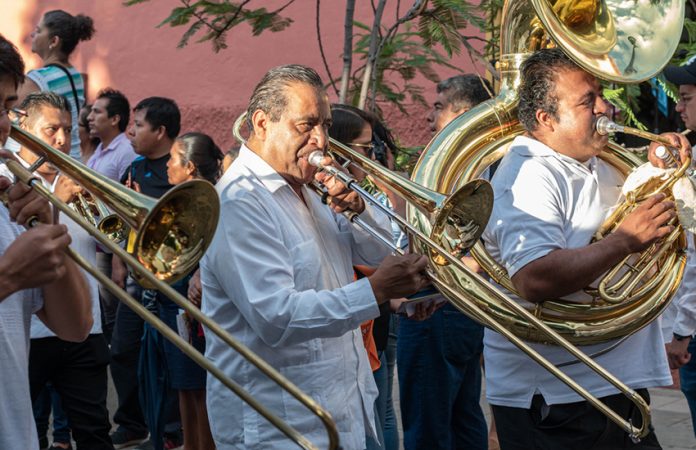
Brass band, Oaxaca, Mexico
In Mexico, it's not really a party until you break out the brass. deposit photos

I’m gonna get rich. Very rich. Filthy rich, in fact. How, you may ask? Simple. I’m going to open a chain of hearing aid stores in Mexico.

OK, that’s not as sexy as opening a chain of stores selling, say, Gucci handbags or the latest cell phone. And I don’t want to open them because it’s rumored that more retired American expats are moving here; they probably already have hearing aids.

Me, I’m aiming for the local market.

I’ve traveled fairly extensively across Mexico, and I don’t recall seeing any hearing aid stores. I suppose there have to be a few, but if there are, they’ve escaped my detection.

I don’t understand why there aren’t hundreds — thousands, even.

I see dentist offices everywhere, and I’ve read that’s because Mexicans consume huge quantities of soda, especially Coke. This leads to cavities which lead to dentist visits.

But hearing aid stores? Nary a one. But that’s about to change because I’m gonna start a chain that’ll make Starbucks look like some little mom-and-pop operation.

Why do I think that this will make me rich? Because millions of Mexicans, if they aren’t already nearly deaf, will be soon. Very soon.

This is because they’re apparently blissfully unaware that sitting next to huge speakers or walking in front of bands blasting out norteño music — at religious processions, fiestas, quinceñeras and pretty much any event that’s happening in Mexico — may not be a particularly good idea.

I’ve been in processions where bands play at ear-shattering decibels and no one seems to notice. Or care. These are bands that are playing at a volume that would make a 1973 Led Zeppelin concert seem like a quaint string quartet recital.

The bands are almost always at the back of the procession, meaning that dozens of people are walking immediately in front of them, seemingly without a care in the world. Me, I’ve learned to stay as far away from the band as possible — way in front or way, way behind the band. Even a few seconds next to a band leaves my ears ringing for the rest of the day.

And then there are the fiestas where people will sit directly in front of the bandstand, where a dozen or more musicians are blasting out music. Of course, these musicians are surrounded by speakers that I’m sure could have been used by The Who in their prime.

Yet people will think nothing of sitting in front of the percussionists — we’re talking snare drum, bass and crash cymbals — who are beating their instruments as hard as humanly possible.

They are not visibly bothered; in fact, they’ll most likely be carrying on a conversation. In what appears to be a normal voice. No shouting. Lots of smiles. Blissfully unaware of the pounding their eardrums are taking.

But now when I see people exposing themselves to deafening music, I don’t worry. Because now I see my fortune waiting to be made.

Joseph Sorrentino, a writer, photographer and author of the book San Gregorio Atlapulco: Cosmvisiones and of Stinky Island Tales: Some Stories from an Italian-American Childhood, is a regular contributor to Mexico News Daily. More examples of his photographs and links to other articles may be found at www.sorrentinophotography.com  He currently lives in Chipilo, Puebla.

Mexico’s methane leak rate twice as high as that of US, study finds

0
Pemex processing center Ku-A in the Gulf of Mexico
Pemex processing center Ku-A in the Gulf of Mexico.

Methane – considered a major driver of global warming – is leaking from Mexican gas and oil operations at “alarming and worrying” levels, according to a scientist who contributed to a new study about emissions of the gas in Mexico.

A group of researchers found that Mexico’s methane leak rate is more than double that of the United States, the world’s largest oil producer. A report on their findings is scheduled to be released on Wednesday.

Daniel Zavala, a senior scientist at the United States-based non-profit Environmental Defense Fund who specializes in methane emissions from oil and gas operations, told the news agency Reuters that satellite data shows that approximately 4.7% of methane produced in Mexico as a byproduct of oil and gas production leaks into the atmosphere. The rate is considered very high by global standards.

The leak rate is 2.3% for the United States as a whole and 3.7% in the Permian Basin, a region in western Texas and southeastern New Mexico that is the largest crude oil producing area in the country.

“It’s a huge gap,” Zavala said. “Cutting these emissions in half would have the same climate benefit over 20 years as removing one third of total passenger cars in the country.”

Reuters said the study on methane emissions in Mexico concentrated on the country’s east where almost all gas and oil production takes place.

“The leak rate is a formula that divides total oil and gas methane emissions by total natural gas production. The calculation includes all sources of methane emissions from the industry: leaks, vents and flaring,” the news agency said.

Zavala was one of 13 climate change scientists who studied 20 months of data gathered between 2018 and 2019 by a sensor on board a European Space Agency satellite.

Reuters said it was unable to establish whether Mexico’s methane leak problem has improved or worsened since President López Obrador took office in late 2018.

The researchers estimated that 1.3 million tonnes of methane worth some US $200 million is wasted annually in Mexico. That figure is equivalent to about one-third of Mexico’s annual natural gas imports.

The report says the main culprit for the high leak rate is the midstream sector, whose facilities gather, compress and process the gas. Venting – the release of gas from oil wells without capturing it – also shoulders some of the blame as does flaring, or the burning of gas at wells.

“While flaring is a big source of methane emissions, and our measurements showed that it’s higher than what the government and industry report, it’s not enough to explain the emissions we measured,” Zavala said.

“The findings point to other key sources of methane emissions: venting from wells and midstream facilities handling the offshore gas.”

Reuters said that neither Pemex nor the Energy Ministry responded to its requests for comments about the issue. But both have previously acknowledged maintenance issues that could exacerbate the leak problem.

The United Nations said recently that “methane is an extremely powerful greenhouse gas” that has been responsible for around 30% of global warming since the pre-industrial era.

Mexico’s oil and gas methane emissions account for about one-quarter of its total manmade methane emissions. Landfills and the agricultural sector are major emitters of the gas.

President López Obrador has faced extensive criticism for continuing to champion fossil fuels and opposing renewable energy companies at a time when much of the world is shifting toward greater use of environmentally-friendly energy sources.

Proposals he presented at U.S. President Joe Biden’s Leaders Summit on Climate earlier this year were not serious, based on ideology more than reality, and harked back to decades past, according to some environmentalists.

With reports from Reuters