Home Blog Page 1281

Mexico’s contemporary authors find fertile symbolic ground in ghosts

0
Carmen Boullosa is one of the Mexican authors literary scholar Carolyn Wolfenzon discusses in her new book.

When Bowdoin College professor Carolyn Wolfenzon Niego conducted interviews with some of Mexico’s top contemporary authors, she noticed a common theme in their work. All were interested in the concept of the ghost and how it was shaped by Mexico’s past and present.

Guadalupe Nettel, for example, evoked otherworldly themes in multiple novels, including Después del invierno (After the Winter), when a Mexican character living abroad in Paris goes to the famed Père Lachaise cemetery on the Day of the Dead to commune with her deceased neighbor, who is buried there.

In El complot de los Románticos (The Romantics’ Conspiracy), Carmen Boullosa imagines a group of deceased writers, including Dante Alighieri, traveling on rats from New York City to Mexico City for a literary conference; when they reach the Mexico-U.S. border, they find a surreal sight — movie screens bearing stereotypical images of each country, such as idyllic Norman Rockwell scenes for the United States and Los Supermachos for Mexico.

Fascinated, Wolfenzon launched a deeper exploration into the theme of the ghost in the authors and their works. The result is her new book, Nuevos fantasmas recorren Mexico: Lo espectral en la literatura mexicana del siglo XXI (New Ghosts Run Rampant in Mexico: The Specter in Mexican Literature of the 21st century).

“I realized that many contemporary authors are fascinated with ghosts,” Wolfenzon said. “Ghosts are very present in different ways in contemporary Mexican literature.”
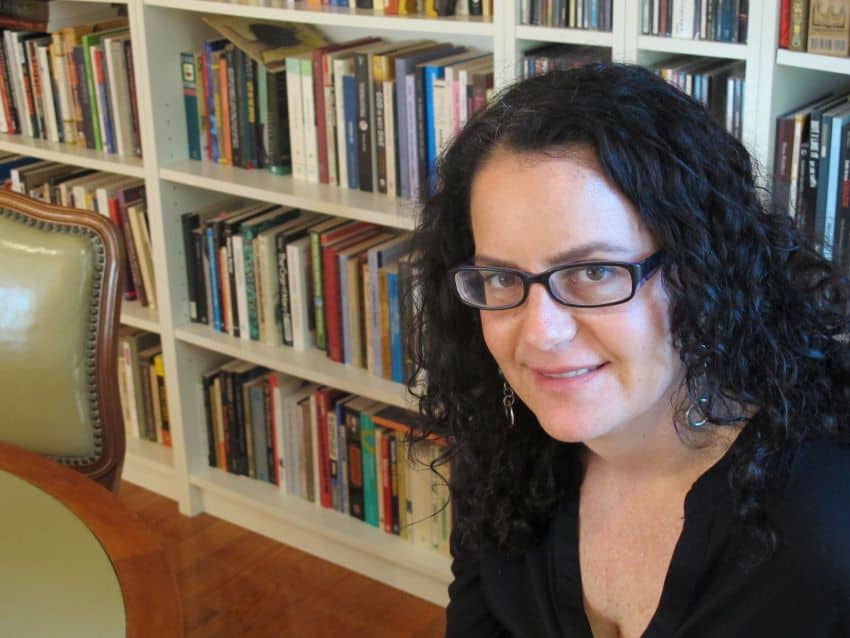
Carolyn Wolfenzon's new book discusses the use of ghosts by many contemporary Mexican authors.
Carolyn Wolfenzon’s new book discusses the use of ghosts by many contemporary Mexican authors. Carolyn Wolfenzon

The book is based upon interviews conducted between 2013 and 2016 with eight Mexican authors. In addition to Nettel, Boullosa and Herbert, she spoke with Valeria Luiselli, Yuri Herrera, Emiliano Monge, Daniel Sada (who has since died) and Elmer Mendoza.

All are novelists except for the journalist and nonfiction writer Herbert, whose books include a study of a real-life tragedy — a little-remembered massacre of the Chinese population of Torreón during the Mexican Revolution.

Wolfenzon, who is from Peru, interviewed each of the authors for the Lima-based journal Buensalvaje.

“Before the interviews, I read a lot of their books,” Wolfenzon said. “It happened that I started to notice the topic of ghosts was very present.”

So were references to two mid-20th-century novels by famed Mexican writers, both of which feature ghosts — Pedro Páramo by Juan Rulfo and Aura by Carlos Fuentes. As Wolfenzon explains, Pedro Páramo is set in Comala, “a town made up of ghosts” that reflects the idea of convivencia, “living together with the past.” In Fuentes’ Aura, the present intersects with the age of the French intervention, in a house in Mexico City shared by the protagonist, Felipe Montero, along with the ghosts of a general named Llorente and the Empress Carlota herself.

Wolfenzon said that while there are echoes of these novels in the contemporary authors she examines, they all “depart from Pedro Páramo and Aura, do something different. What they are doing … is connecting the idea of the ghost and different topics. There’s a diversity in the way they use the figure of the ghost.”
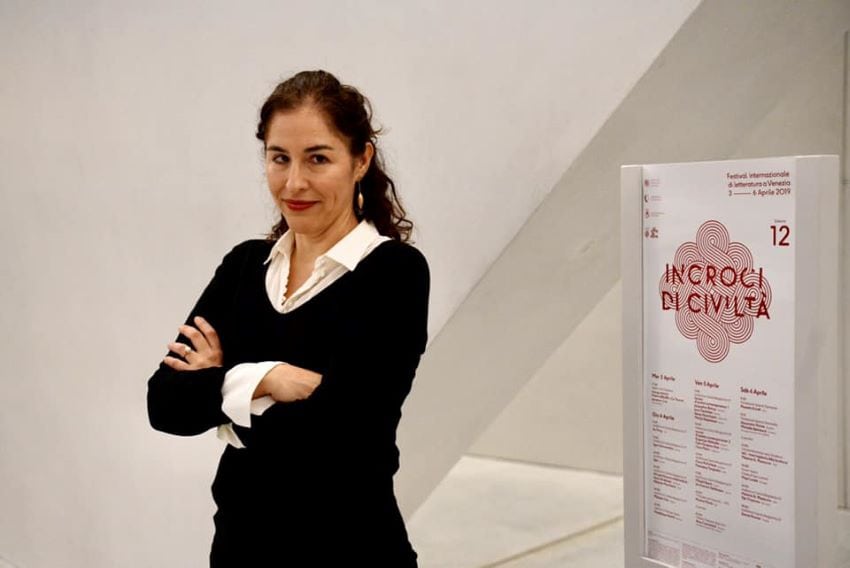
Author Guadalupe Nettel in 2019 at Venice's International Literary Festival.
Author Guadalupe Nettel in 2019 at Venice’s International Literary Festival.

A professor in the Department of Romance Languages at Bowdoin, Wolfenzon’s previous book was titled Death of Utopia: History, Antihistory and Insularity In The Latin American Novel. In her new book, she takes a similarly comprehensive approach, suggesting that in contemporary Mexican literature, the concept of the ghost can be found in both traditional and nontraditional depictions.

Although contemporary novels include the familiar portrayal of a ghost as the spirit of a dead person, Wolfenzon also sees parallels in them between ghosts and characters who are alive but ignored by society. These include the early-20th-century Mexican poet Gilberto Owen, who goes unnoticed by New Yorkers while living in the metropolis in Luiselli’s novel Los íngravidos (The Weightless).

Wolfenzon also analyzes the inhabitants of the nightmarish city of Remadrin in Sada’s novel Porque parece mentira la verdad nunca se sabe (Because It Seems Like A Lie, The Truth Is Never Known) seems like a lie. There, the corpses of protesters are transported in a truck to a mass grave, while each of the city’s still-living inhabitants must repetitively perform a single, separate menial task.

Such a soul-crushing existence reminds Wolfenzon of the souls condemned to hell in Dante’s Inferno — as well as a new Comala. “In general, all Remadrin is a city of ghosts,” Wolfenzon said.

She also asks whether a place can be a ghost — such as the U.S.-Mexico border in its otherworldly portrayal in Boullosa’s El complot de los Romanticos. “[Boullosa] is allowing that the border between the U.S. and Baja California is a ghost in a way, a line [that is] kind of nonexistent, no matter the divisions,” she said.

In what Wolfenzon calls “a very imaginative novel, and, in a way, hilarious,” Boullosa depicts a border demarcated by movie screens projecting stereotypical images such as Rockwell’s all-American depiction of youths on a fishing expedition and the violent imagery in Jose Orozco’s mural Katharsis.
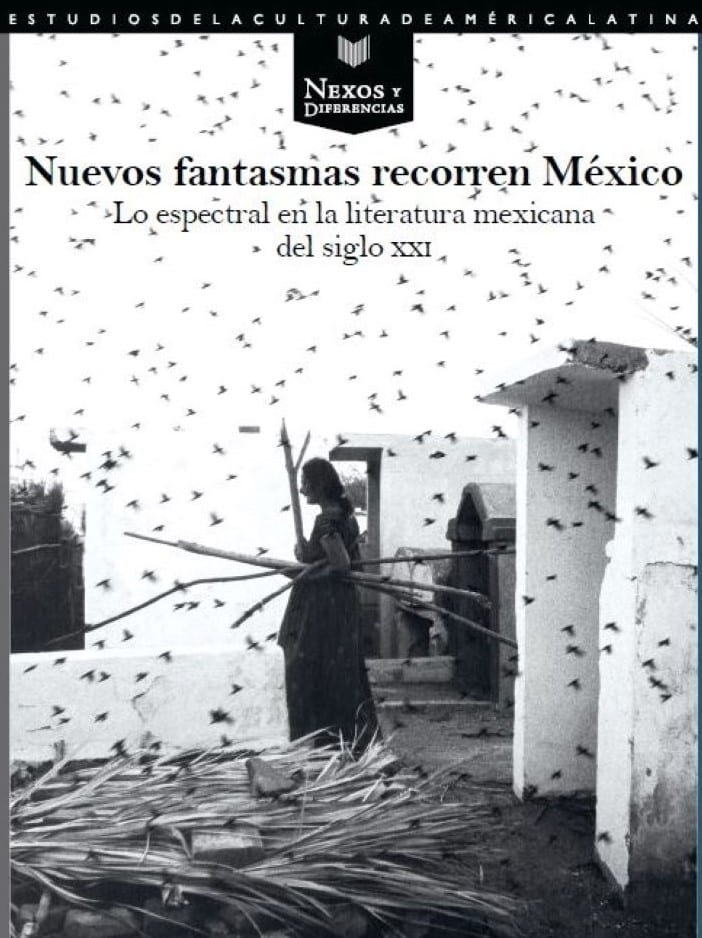
The cover to Carolyn Wolfenzon's new book.
The cover to Carolyn Wolfenzon’s new book. Courtesy of Iberoamericana Vervuert

“We always have a border in our minds that is kind of ghostly,” Wolfenzon said, “all the images … stereotypical things about both countries.” She notes that such images in the media influence “the way you create your own picture of the countries even before getting there.”

While these images have a ghostly presence in Boullosa’s novel, there is a ghostly absence in Herbert’s nonfiction book La casa del dolor ajeno (The House of Others’ Pain) about the 1911 massacre of the immigrant Chinese population of Torreón. He attributes their deaths to the army of president Francisco Madero.

Before the Revolution, there was a vibrant Chinese community in the city, Wolfenzon said. Yet, half the community — 300 people — died in the massacre. “[They were] killed just because they were Chinese,” she said. “Julian calls it xenophobia, hate of the Chinese people.”

When Herbert visited the Museo de la Revolución de Torreón, “it emphasized the victory and very good things about the Mexican Revolution,” Wolfenzon said. “It did not say anything about what happened in the massacre of 300 Chinese people in the community of Torreón” — save for what she calls a “small, tiny” mention.

Wolfenzon received a scholarship from Bowdoin to visit Torreón, including the museum.

“For me, it was very interesting that the museum is built [in the former home of] one of the Chinese [individuals] expelled,” she said, referring to the doctor J. Wong Lim. “His house was stolen. They created a museum on top of his house … on top of the grave of [some] of the Chinese people they killed. There is no trace left of the rich, interesting, good community that used to live in Torreón before the massacre.”
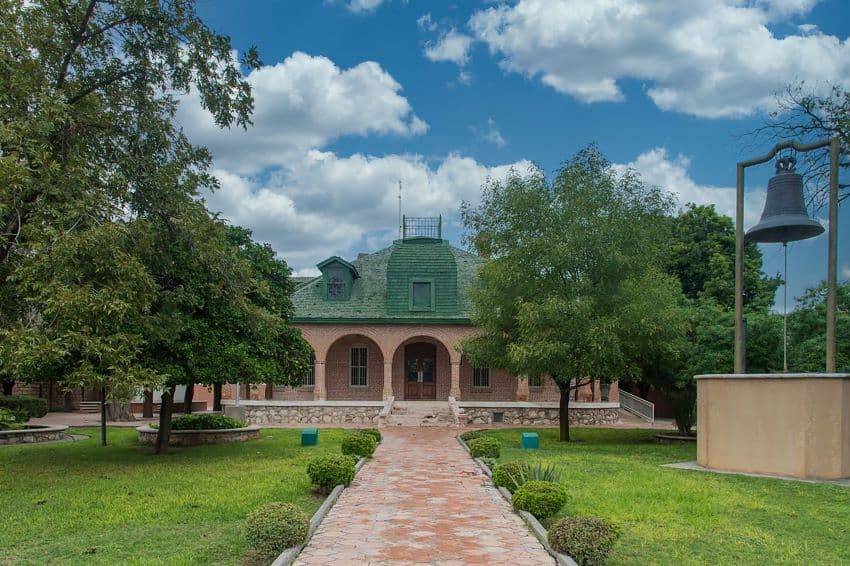
The Museo de la Revolución in Torreón.
The Museo de la Revolución in Torreón.Alejandro Ahumada

Wolfenzon recalled that when she interviewed Herbert, he talked about going to the city center in search of physical evidence of the former Chinese community and finding neither their houses nor their businesses, with the only evidence located in archives.

“The places he mentions are ghosts,” Wolfenzon said. “They just were not there. He said it was difficult to reconnect everything.” In addition to the deaths of 300 people, “things were expropriated; things were created on top of those spaces. He spent many hours in the archive to see how this community used to be.”

Wolfenzon said that the concept of the ghost is present in literary depictions of “some of the traumas in Mexico,” such as the Tlatelolco massacre of 1968 and the fact of current migrants “trying to escape narcotrafficking, violence, maybe Covid in the present moment, and looking for a job.”

In Monge’s novel Las tierras arrasadas (The Devastated Lands), which is about a pair of migrants who are kidnappers, “He makes a parallel to cantos, songs of the Conquest … a circle of repetition. The idea of trauma is present in the idea of the ghost.”

Reflecting on Mexico and its colonial legacy, Wolfenzon said, the nation’s colonial past is not completely solved.

“It is latent in contemporary Mexico. It has a meaning of bisagra, past and present connected, a colonial ghost, in a way,” she said. “Yuri Herrera’s character Makina, in a way, represents La Malinche a little bit. She has things in common with her, how [La Malinche] has, in fact, not been completely abandoned in the actual Mexico of the 21st century. Many values, ideas and problems are unresolved from that period in dealing with new problems of the present.”

Rich Tenorio is a frequent contributor to Mexico News Daily.

Remittances continue growing; February total up 16%

0
us dollars

Remittance payments to Mexico grew 16.2% annually in February, elevated by a higher number of payments and a higher average payment value, according to information supplied by the Bank of México (Banxico) on Monday.

The number of payments, which came principally from Mexican migrants who live in the United States, rose 6.3%, while the average value of each payment was up 9.3%.

The dollars received during the second month of the year surpassed US $3.17 billion; the 10th consecutive month of positive growth with the majority of those months showing double-digit increases.

In 2020, the total value of remittances surpassed $40.6 billion, a record rise of 11% compared to 2019, despite the damaging economic effects of the global coronavirus pandemic.

The first two months of the year saw $6.47 billion in remittances; 20.9% higher than those recorded for January and February of 2020.

The money represents the second-largest contributor of foreign currency to Mexico, with automobile exports still the primary source.

President López Obrador has thanked the 38 million Mexicans living in the United States for their remittance payments on numerous occasions. He has called them “heroes” for their contribution, which he estimates to benefit close to 10 million poor families.

The government hopes that remittances will play a role in lifting the economy, which contracted 8.5% in 2020, according to the National Institute for Statistics and Geography (Inegi).

Source: Expansión (sp)

16 dead after bus and van collide on Sonora highway

0
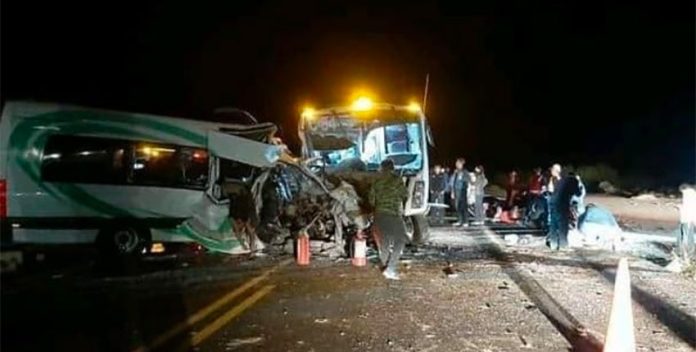
The accident scene Tuesday morning in Caborca.

At least 16 people died and another 14 were injured after a motor vehicle accident at dawn in the municipality of Caborca, northeast Sonora.

A truck carrying mine workers and a van carrying tourists collided at around 3 a.m. at kilometer 156 of the Caborca-Sonoyta highway, in front of the entrance to the Penmont mine.

Reports indicated that the deceased were all passengers on the tourist van, belonging to Transportes Ejecutivos Premiere.

The mining company, Minera Penmont, confirmed that 13 injured workers were in stable condition, while the truck’s driver was in critical condition.

All of the injured are being treated at hospitals in Caborca.

“As soon as the accident was known the emergency services were notified. Minera Penmont profoundly regrets this unfortunate accident and is in constant communication with local authorities to facilitate investigations” the company stated in a release.

Source: Reforma (sp)

Education Ministry’s new textbooks seek to purge ‘authoritarian discourse’

0
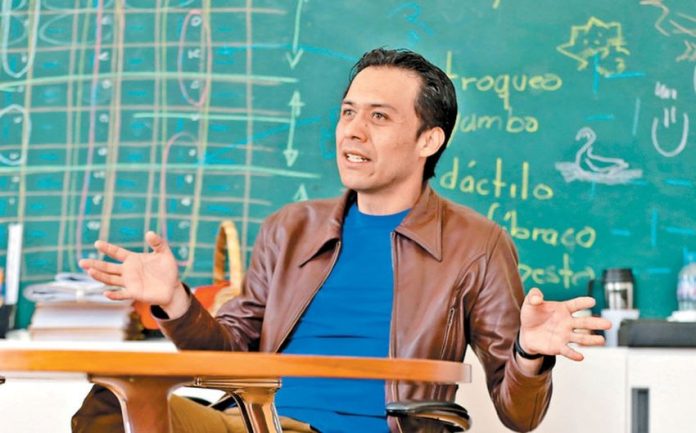
The Education Ministry's director of educational materials Marx Arriaga.
The Education Ministry's director of educational materials, Marx Arriaga.

The federal government has entrusted a group of teachers, teaching students and retired teachers with the task of writing 18 textbooks that, unlike their predecessors, will be free of “authoritarian discourse.”

The 2,365 people selected to work on the project, none of whom has previous experience in writing textbooks, will have just two weeks to complete the job, which includes penning primary school texts and workbooks for Spanish, natural sciences, history and geography, among other subjects.

The writing of new textbooks normally takes up to nine months, the news website Animal Político reported, noting that experts in each subject area, and pedagogy in general, as well as editorial designers, are traditionally involved in the process.

Marx Arriaga, director of educational materials at the Ministry of Public Education (SEP), said experts weren’t asked to develop the new books because previous texts only served certain academic and economic interests.

The teachers, teaching students and retired teachers tasked with developing the next textbooks for grades 3–6 have been given training that covered topics such as “how to develop didactic material.”

They were expressly told by Arriaga that their objective is to “eliminate authoritarian discourse” that appears in existing texts.

The new textbooks, which are slated to be ready for the 2021–2022 school year, will comply with the ideals of the government’s “new Mexican school” concept.

In a training session broadcast online, Arriaga made it clear that the books should have both a political and pedagogical function, apparently saying in code that they should be sympathetic to the current government and propagate its ideals.

Esther López Portillo, a textbook author and expert in the development of educational materials, told the newspaper Reforma that it was worrying that the SEP is seeking to develop new texts in such a short period of time.

“The process of making a textbook can take six months or a year, even two years, depending on the project. … Not four days to write something, four days to evaluate it, four days to illustrate it,” she said.

López was also concerned that Arriaga saw textbooks as tools for the indoctrination of students.

“The biggest risk,” she said, is that the new textbooks won’t contain quality educational material and won’t be neutral in a political sense.

Source: Reforma (sp), Animal Político (sp) 

Mercado Libre to invest US $1.1 billion in Mexico this year

0
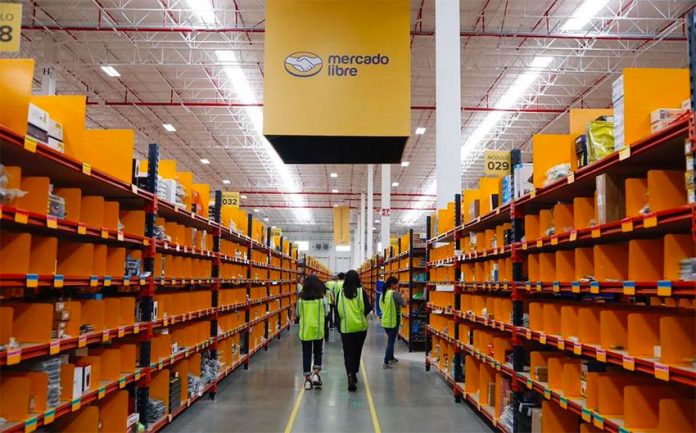
A Mercado Libre distribution center in Tepotzotlán, México state.
Investment continues despite the slowdown: Mercado Libre, Mexico's leading warehouse tenant, plans to invest US $2.5 billion in the country in 2025. (File photo)

The Argentina-based e-commerce company Mercado Libre said on Tuesday it will invest US $1.1 billion to grow its storage and service capacity in Mexico this year, propelled by a boom in online purchases during the coronavirus pandemic.

It will be the company’s second biggest investment after Brazil and its biggest in four years.

The figure is almost triple the amount the company invested last year in Mexico, a rapidly growing market in which global rivals such as Amazon want to expand.

The investment will help Mercado Libre double its storage space and drive its fintech services like consumer credit. The expansion will create more than 4,700 jobs.

In the fourth quarter of 2020 Mexico surpassed Argentina, the company’s local market, in terms of items sold. It has continually grown its delivery network, recently opening a fourth distribution center, a 60,000-square-meter site in Nuevo León.

At the end of last year, the company operated 210,000 meters of storage space, principally on the outskirts of Mexico City.

During the announcement, Marcos Galperín, founder and CEO of Mercado Libre, said the investment is a demonstration of the enormous opportunity that Mexico represents for his company. “We hope to grow in Mexico for many years to come,” he said.

However, economic recovery will only be possible if the labor and financial capital is available to enable transactions between sellers and buyers, warned David Geisen, head of Mercado Libre’s Mexican unit.

He added that during the pandemic, seven of 10 sales by small and medium-sized businesses were digital and of those, 50% were made through Mercado Libre.

“Growth in 2021 will be double digit, not triple digit like in 2020, but we will see increments at pre-pandemic levels,” Geisen predicted, without divulging exact figures.

Source: Milenio (sp)

16-year-old loses leg after attack by state police in Guerrero

0
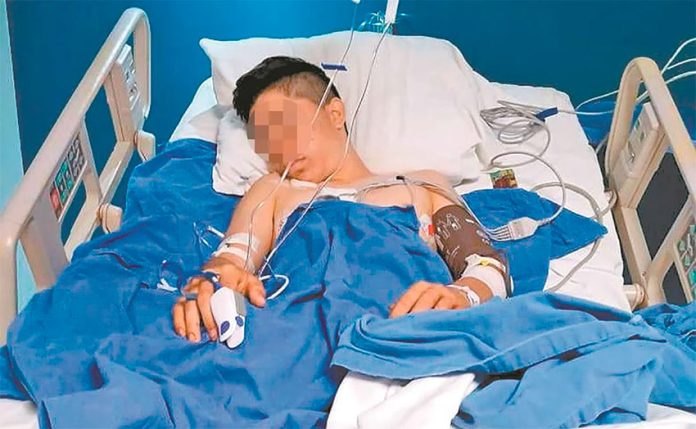
The young man who lost a leg after police stopped a vehicle in Acapulco.

After state police officers shot a 16-year-old youth in the leg late Friday on the outskirts of Acapulco, Guerrero, doctors had to amputate the limb due to the severity of the wound.

The young man, identified only as Mario, was traveling with his two cousins on Vicente Guerrero Boulevard on the way to visit their grandmother, when the officers signaled for them stop. They then asked Mario and his cousins to exit the vehicle for an inspection.

As he exited the vehicle, Mario was struck in the leg by bullets from an R-15 rifle carried by one of the officers, reported El Universal.

When his cousins asked for help from the police to get Mario to hospital they were ignored, according to the report. Unassisted, they took Mario to the local public hospital but after they were left unattended they took him to a nearby private hospital.

But there was little the doctors could do for the youth’s leg. Due to the damage the doctors decided to amputate.

News of the attack went unreported until Saturday night when Mario’s aunt, Dalia Díaz, posted on social media: “State police, treacherously and advantageously, fired shots without call and without preventative action against a blue Ibiza vehicle, in which three people were on board, including a minor, who was wounded by a bullet in his right leg. His leg had to be amputated due to the severity of his injury.

“The authorities have still not intervened because there were state police involved and they are covering up for them. The prosecutor’s office has not opened an investigation because of formal requirements …

“Please, federal, state and municipal authorities, we ask for your intervention, because the family has only limited resources and we do not have the funds to pay the hospital expenses. We ask the entire community for its support by sharing this message, since they left my nephew Mario abandoned. They didn’t even give him first aid …” the post read.

Governor Héctor Astudillo condemned the incident, offering his apologies to the family and requested the state’s attorney general Jorge Zuriel investigate.

“I ask for forgiveness from the family for the injury caused to young Mario. I offer a sincere apology. As governor I am not going to allow acts of excess and abuse to go unpunished. This is a deplorable situation.”

In a release, the state government confirmed that the police officers involved were identified and had been suspended. However, the statement did not reveal whether the officers had been detained, and how many had participated in the attack.

Source: El Universal (sp)

Ex-mayor of embattled Michoacán town arrested in Guatemala

0
A file photo of former mayor Comparán.

Following the arrest last week of a former Mexican mayor in Guatemala, U.S. prosecutors unveiled an indictment against him and criminal rivals allegedly attacked the town he once ruled.

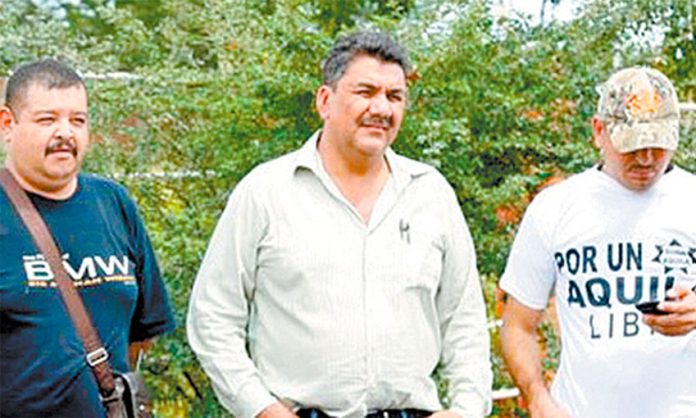
Adalberto Fructuoso Comparán Rodríguez, the former mayor of Aguililla, Michoacán, was arrested on March 30 in Guatemala City and is wanted for extradition by the United States for allegedly coordinating drug shipments to the country, according to a statement released by the U.S. Attorney’s Office in the Southern District of Florida.

The former mayor, also known as “Fruto,” is a suspected leader of the Cárteles Unidos and a former member of the Knights Templar, according to a criminal complaint submitted by U.S. authorities.

The complaint alleges that Comparán shipped over 500 kilograms of methamphetamine to South Florida as part of a $4.15-million deal negotiated with a Drug Enforcement Administration (DEA) informant who recorded members of the trafficking ring openly discussing plans to import the drugs and launder the proceeds.

The methamphetamine was sent to Miami by truck in two separate loads, the first hidden in concrete tiles and the second in house paint, according to the criminal complaint.

The former mayor’s son, Adalberto Comprarán Bedolla, accompanied the drug shipments and was arrested in Miami on March 30, shortly after receiving a fake cash payment for the delivery.

That day, the elder Adalberto had been in Guatemala City attending a meeting with the DEA informant in which they discussed a transaction that involved importing firearms via a port in Guatemala that the cartel had “greased,” the criminal complaint alleges.

Just hours after the former mayor’s arrest, members of the Jalisco New Generation Cartel (CJNG) launched armed attacks against the former mayor’s Aguililla municipality.

It’s not clear if the attack was linked to the sudden arrest of Comparán, and reports from the area spoke of at least eight killed, but possibly many more.

InSight Crime analysis

The investigations carried out by U.S. authorities paint a clear picture of an ambitious former public official with a long criminal history, an ability to strike lucrative drug deals and a desire to wipe out his rivals in the CJNG.

In one meeting recorded by the DEA, Comparán claimed to have access to hundreds of kilograms of crystal methamphetamine in Atlanta, Georgia, as well as heroin.

The network appears to have also farmed poppy fields and operated methamphetamine production facilities in Michoacán, according to photos and videos allegedly sent to the DEA’s source by the former mayor and an associate.

In one of the recorded conversations, the confidential informant offers to pay the former mayor in weapons for a deal. Comparán replies that he preferred to be “paid in money, so that he could take control in Michoacán,” a state disputed by powerful cartels such as the CJNG.

Comparán is certainly no stranger to that game. He was mayor of Aguililla between 2008 and 2011, and in 2013 became part of a self-defense group in Michoacán known as the “Fuerza Rural,” which purportedly worked with municipal police to combat organized crime, according to news agency EFE.

However, many of the self-defense groups were involved in criminal activities themselves. Comparán, for example, was a close ally of the former Knights Templar leader, Servando Gómez Martínez, according to a report by Milenio.

The Cárteles Unidos emerged from that fray, and in 2015 the former mayor was injured during an armed ambush in Michoacán which killed one of his bodyguards, according to Crónica.

The group’s principal nemesis is the CJNG. According to the criminal complaint, the DEA recorded the former mayor saying “he wanted to use an organization of self-defense groups to eliminate ‘El Mencho’s’ cartel,” a reference to Nemesio Oseguera Cervantes, the leader of the CJNG.

Now, as Guatemala readies Comparán extradition to the United States to face charges, his town may be under siege by that same rival.

Alex Papadovassilakis is a writer at InsightCrime, a think tank dedicated to researching and reporting on organized crime in Latin America and the Caribbean.

Another empty Covid syringe; AMLO suggests incident was staged

0
Oscar Sánchez (in blue) was given the nonexistent vaccine by a volunteer nursing student.

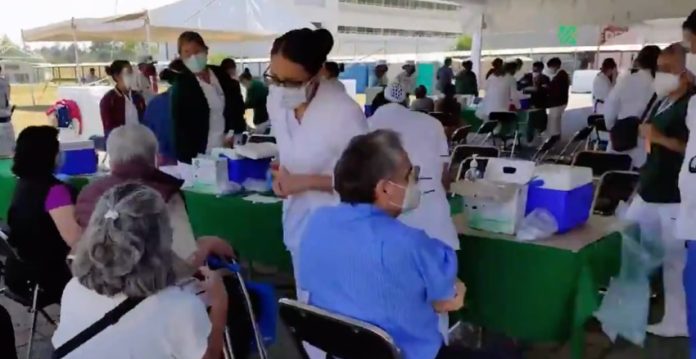
President López Obrador has suggested that the injection of a man with an empty syringe at a Covid-19 vaccination center in Mexico City was staged.

In an incident filmed by his partner and later posted to social media, Óscar Sánchez was injected with an empty syringe at a vaccination center in the northern borough of Gustavo A. Madero last Friday.

In the video, circulated by news media and on social media, the unnamed nursing student can be seen inserting the syringe into Sánchez’s arm, but she doesn’t depress the plunger, merely taking the needle out of his arm after a moment.

The apparent error came after a similar incident occurred in Ciudad Obregón, Sonora, on March 27.

Speaking at his regular news conference on Monday, López Obrador said an investigation was needed to determine whether the incident was staged.

“They’re capable of everything,”  López Obrador also said, referring to the media, of which he is frequently critical. “… I know a journalist and a television channel that were specialists in setups. So I don’t trust [the media].”

The president said that about 1.2 million vaccine doses have been administered in Mexico City and questioned why a single case in which a senior was injected with an empty syringe became national news.

“It appeared in all the media outlets,” López Obrador said. “… This is big news? Don’t you think it’s an exaggeration?”

The president noted that Sánchez was vaccinated after officials became aware that he had been injected with an empty syringe. But the media didn’t report that, he asserted.

Deputy Health Minister Hugo López-Gatell, the government’s coronavirus point man, said Monday night that no hypotheses about what happened at the Gustavo A. Madero vaccination center could be ruled out. Human error and a setup or stunt were among the possibilities, he told the Health Ministry’s coronavirus press briefing.

López-Gatell said the person who injected Sánchez, as well as “people external to the operation,” could have been involved in a plan not to fill the syringe on purpose.

The latter could have pressured or paid a bribe to the former, he said, adding that the authorities could press criminal charges if they find evidence of premeditated wrongdoing.

The deputy minister said an investigation would be carried out as quickly as possible, adding that the person who injected Sánchez with the empty syringe had been identified.

The director of the Mexican Social Security Institute (IMSS), Zoé Robledo, said earlier on Monday that the person in question, a young woman, is a nursing student at the National Polytechnic Institute. Robledo said authorities are investigating how she was recruited and what training she completed before starting work as a volunteer at the vaccination center.

The IMSS chief added that supervisors at the center said the woman felt uncomfortable and pressured because she was being filmed while working.

“… For us, the most important thing is to clear things up,” Robledo said.

The senior injected with the empty syringe said in a media interview that he believes the incident was intentional.

“I feel that it was done wittingly; it can’t be a human error. The young woman knew exactly what she was doing,” Sánchez told Grupo Multimedios without saying what the motivation might have been.

He described the incident as an “attack on health,” adding that it mustn’t go unpunished because impunity could cause others to lose faith in the government’s vaccination program.

Sánchez called on authorities to increase supervision of the vaccination process and warned other seniors to be vigilant when getting their shots. The senior, who got a shot with a filled vaccine after he told officials what had happened, said he is considering taking legal action and is currently receiving advice from experts.

Meanwhile, the number of vaccine doses administered in Mexico increased to just under 9.3 million on Monday, according to Health Ministry data. About 6.85 million seniors have received at least one vaccine dose, an increase of more than 800,000 compared to last Wednesday.

That means that there are still just under 9 million people aged 60 and over who have not yet been vaccinated. The federal government is aiming to inoculate all seniors with at least one shot by the end of April.

Source: Reforma (sp), El Universal (sp), Milenio (sp) 

The battle for Aguililla: 27 believed killed in massacre by Jalisco cartel

0
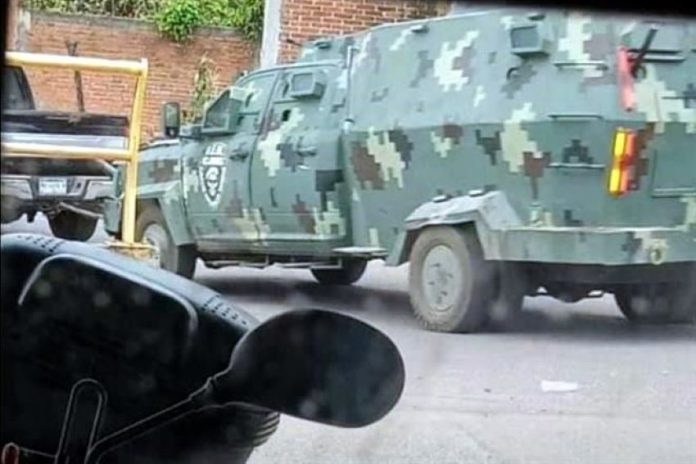
In a show of force, presumed CJNG cartel members paraded this armored truck through the streets of Aguililla, Michoacán on Monday.
In a show of force, presumed CJNG cartel members paraded this armored truck through the streets of Aguililla, Michoacán, on Monday.

The Jalisco New Generation Cartel (CJNG) is believed to have killed as many as 27 members of a rival criminal organization in a massacre in Michoacán last week.

The Twitter account Unidad de Inteligencia Ciudadana (Citizens’ Intelligence Unit) said in a post last Wednesday that 26 members of the Cárteles Unidos were killed by the CJNG in Aguililla, a municipality in the notoriously violent Tierra Caliente region and the birthplace of Nemesio “El Mencho” Oseguera Cervantes, leader of the CJNG and a wanted man in Mexico and the United States.

The news website Infobae reported that the death toll from the massacre could be as high as 27.

Above three graphic photographs showing slain bodies and decapitated heads, the Citizens’ Intelligence Unit wrote that members of the Cárteles Unidos of Aguililla surrendered to the CJNG during a confrontation and were subsequently executed.

“Eight of them were beheaded. The regional boss Chirrios Revueltas managed to escape,” the post said.

The Michoacán Attorney General’s Office (FGE) announced last Thursday that eight decapitated bodies had been found in Aguililla.

The FGE has not refuted reports that as many as 26 or 27 presumed criminals were massacred.

It said the eight decapitated bodies, all of which bore gunshot wounds, were taken to a state government morgue, where autopsies were to be carried out.

However, the bodies — and possibly those of the alleged additional victims the Michoacán government has not publicly acknowledged — disappeared from the morgue, according to media reports and the Citizens’ Intelligence Unit.

A post by the latter said last Thursday that 26 bodies and eight heads had disappeared from the morgue.

“Family members of the Cárteles Unidos of Aguililla gunmen who were massacred by the CJNG are asking for help to make it public that the bodies that were moved to the morgue disappeared and [that the authorities] don’t want to hand them over anywhere,” the post said.

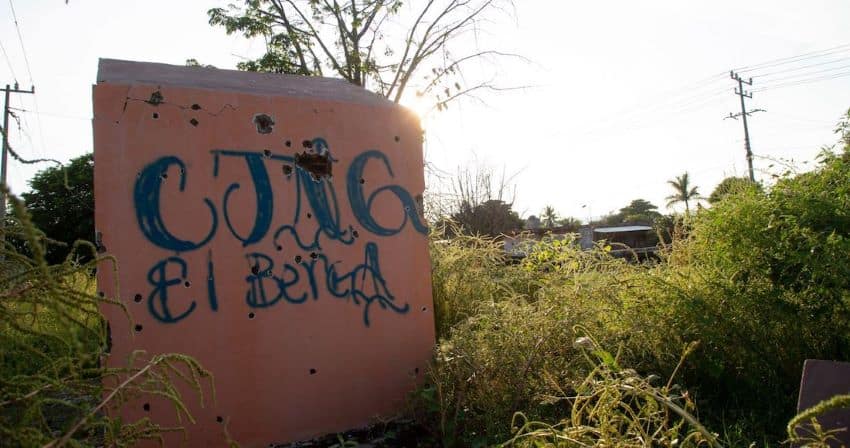
Scars of a cartel war: graffiti message on a wall in Aguililla.

Presumed CJNG members were again flexing their muscles in Aguililla on Monday, arriving in the municipal seat in the early morning. El Universal reported that the heavily armed cartel members entered via the community of Dos Aguas despite an army and National Guard checkpoint being located there.

Their arrival at the municipal seat caused some residents to flee their homes in fear, according to media reports. A video posted to social media showed an armored CJNG vehicle and a black SUV that also allegedly belonged to the cartel driving through the streets. Social media posts also said that gunshots were heard starting early Monday morning.

“Be careful, bullets are falling on houses …,” said one post on Facebook. However, there were no reports of additional deaths on Monday.

The news website Sin Embargo reported that seizing control of the municipality, which occurred either Monday or last month according to different media reports, is an “enormous trophy” for the CJNG. It said that a range of different criminal groups — including the Milenio Cartel, the Caballeros Templarios (Knights Templar cartel) and more recently the Viagras — have previously controlled it.

“Local organized crime forces have defended this point, even from the Mexican government, because it’s the entry to the Tierra Caliente [region], …where the drug is cooked,” Sin Embargo said, apparently referring to the manufacture of illicit substances such as methamphetamine and fentanyl.

Although some media reports said the CJNG seized Aguililla on Monday, there is evidence that the cartel, generally considered Mexico’s most powerful criminal organization, has been in control of the municipality for some time.

[wpgmza id=”294″]

A video in which members of the cartel show off an armored “narco-tank” in broad daylight in El Aguaje, a town in Aguililla, surfaced on social media a month ago. The tank, towed by an armored vehicle emblazoned with the CJNG initials, was apparently seized from the Viagras.

A report published in March by the newspaper El País said the CJNG had seized control of Aguililla after waging a war against rival organizations for months, if not years. It was reported in late 2019 that El Mencho wanted to return to his home town and that the CJNG was making preparations for that to occur.

The Jalisco cartel has also recently attacked several other towns in Michoacán’s Tierra Caliente region. According to a report by the news website Zeta, armed men routinely arrive in Michoacán towns and shoot up public buildings, including government offices, police stations and schools, as well as businesses and parked cars. If they see any members of rival criminal groups, they attack them as well.

The CJNG’s goal is clear: to control as much territory in Michoacán as it can. Zeta said that a “new war” is taking place in the state, with new offensives every day. The CJNG is determined to take control of all illicit activities, including drug trafficking, kidnapping, fuel theft and extortion, according to Zeta.

Meanwhile, ordinary residents are terrified of the criminals and the violence they generate. Some have even resorted to digging trenches across highways in an attempt to stop the CJNG from entering their communities.

But efforts to thwart the cartel’s Michoacán incursion, including those by government security forces, have not stopped the organization from expanding its influence. For its part, the CJNG has said in videos posted online that it will “liberate” Michoacán residents from the stranglehold of other criminal groups.

However, for many residents, the increased sway of the CJNG in the state certainly doesn’t feel like a liberation.

Violence has long been a problem in the state, Mexico’s largest avocado producer and home to the important port city of Lázaro Cárdenas – through which drugs and other illicit goods pass, but according to many analysts, the situation is worse now than it has been for years. According to Zeta, there is not a single one of Michoacán’s  113 municipalities where crime and violence isn’t a problem. Some, however, are far worse off than others, with frequent outbreaks of violence on the streets.

Among the most violent are Uruapan and several Tierra Caliente municipalities, including Tepalcatepec, which has also seen CJNG massacres, and Aguililla.

Source: Infobae (sp), El Universal (sp), Reforma (sp), Sin Embargo (sp) 

University completes restoration of Leonora Carrington’s home

0
British surrealist artist Leonora Carrington in her Mexico City home in 2010.

With painstaking attention to detail, the Metropolitan Autonomous University (UAM) has restored and replenished the Mexico City home of Leonora Carrington, a British-born artist who called Mexico home for almost 70 years.

The 431-square-meter three-level home where the artist lived for more than 60 years before her death in 2011 will eventually open its doors to the public, but 360-degree virtual visits will be possible as of Tuesday on the Casa Estudio Leonora Carrington website.

After purchasing the home that Carrington shared for part of her life with her Hungarian-born photographer husband Emerico Weisz and two sons, UAM began the project to restore it in 2018.

Now, according to a report by the newspaper El Universal, the house appears just as it did when it was home to Carrington — an acclaimed surrealist painter and multimedia artist who was born in Lancashire, England, in 1917.

Her artworks, including her own, are displayed throughout the home; her erstwhile clothes are in her closet; black and white family photographs abound; the bookcase is filled with the books she owned and the same cooking spices she frequently used are on the kitchen shelves.

In short, the home, which is also filled with Carrington’s furniture and a wealth of other personal belongings, is just as the artist liked it.

“This is not a museum, it’s a home study. It’s an academic and cultural project,” Francisco Mata, UAM’s communications coordinator, told El Universal.

“… Lenorora Carrington lived here with her family. … The house itself is a great document [of her life]. It contains her objects, books, letters, diaries. … It contains domestic items — her hair clips, combs, glasses — and, of course, her artistic work,” he said.

Indeed, there are 45 of Carrington’s sculptures spread throughout the house, located on Chihuahua Street in Roma, a neighborhood a few kilometers west of Mexico City’s historic center.

“We know that there are Leonora museums in San Luis Potosí and Xilitla, [but] our project [shows a more] intimate [side of] Lenora’s life,” Mata said.

“What we show is everyday Leonora — the Leonora who had tea in the morning, the Leonora who got up to paint, the Leonora [who loved her] cats and plants,” he said.

“The objects in the house and their context … can be of great relevance to researchers, not just of Leonora but of the Surrealist era — of exile, of literature. For us, this space becomes a node that intersects with different sectors, not just academia but also culture and tourism,” Mata said.

Alejandra Osorio, who led the project to restore the house to its former glory, said the restoration is now 100% finished but the home won’t yet open to the public due to the coronavirus pandemic.

The restoration, much of which was completed during 2020, included painting the home, repairing floors, building a new staircase and rewiring. All told, UAM spent about 12 million pesos (US $590,000) to purchase and restore it.

During the restoration, more than 8,600 objects were removed from the home and fully catalogued, Osorio said. Many of them will be digitalized so that researchers and others interested in Carrington’s life and work can examine them online.

The beginning of virtual tours on the website — which is already partially operational — on Tuesday coincides with the 104th anniversary of the artist’s birth. Her work and personal objects have been displayed in countless exhibitions, including recent ones in Mexico City and San Miguel de Allende, Guanajuato.

Source: El Universal (sp)