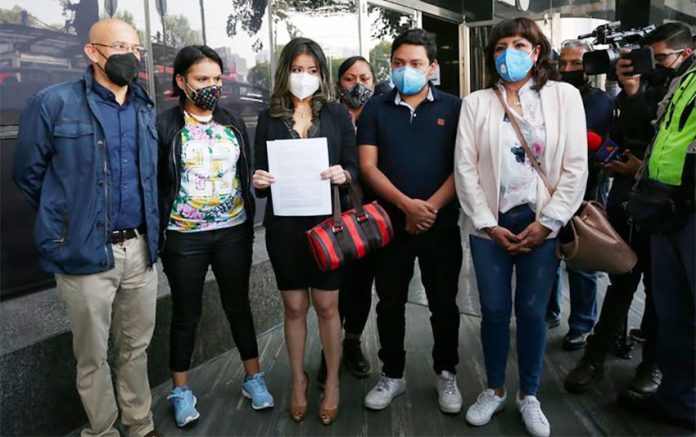
The parents outside the offices of the attorney general on Wednesday.
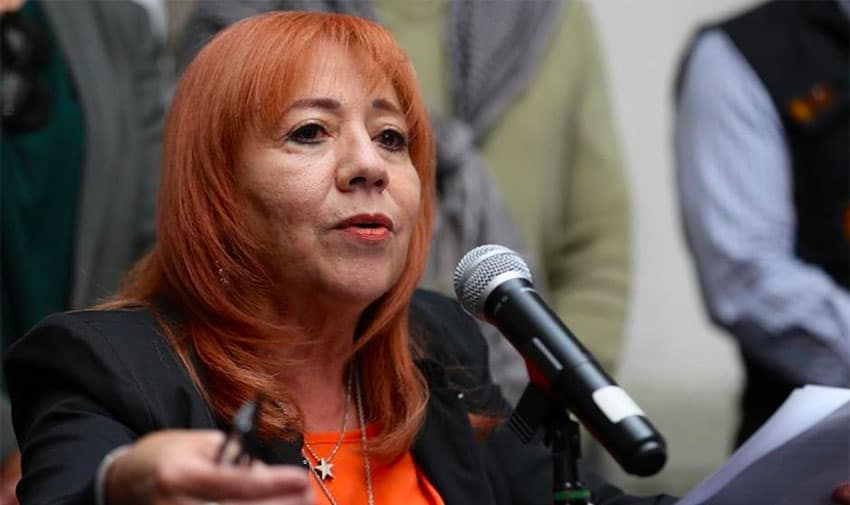
A group of parents of children with cancer filed a complaint on Wednesday against the president of the National Human Rights Commission (CNDH), asserting that she hasn’t done anything to help solve long-running medication shortages.
Accompanied by their lawyer, the parents filed the complaint against Rosario Piedra at the federal Attorney General’s Office in Mexico City.
They accuse her of abuse of authority, saying that she hasn’t responded to their more than 500 complaints about cancer drug shortages that began last year and have been blamed for the deaths of several children.
“Rosario Piedra hasn’t done her job, … she hasn’t issued a proclamation that could help children with cancer. One of the responsibilities of the CNDH is to look out for the human rights of all citizens, [including] boys and girls,” said lawyer Andrea Rocha Ramírez. “Up to now it seems to be a body that does practically nothing.”
Rocha charged that Piedra’s failure to speak out about the problem after 552 complaints were filed with the CNDH is proof of her lack of commitment to the job. The lawyer also took aim at the rights chief for dismissing a CNDH medical representative who had committed to filing a complaint with the federal Health Ministry over its alleged delay in acting to respond to the drug shortages.
Rosario Piedra’s nomination to head the rights commission was controversial. Critics claimed she would be a government puppet.
Rocha also said that the parents will seek the intervention of the Senate to have Piedra removed as rights chief, a position she assumed just over a year ago amid claims that she would be a government puppet.
“We’re going to begin … a formal process before the Senate for her dismissal,” she said.
However, it appears unlikely the parents will get their wish as the leader of the ruling Morena party in the upper house, Ricardo Monreal, said recently that Piedra has the full confidence of the majority of the Senate.
Israel Rivas, spokesman for a national group of parents of child cancer patients, said parents are also pushing for the early application of Covid-19 vaccines at hospitals where young cancer sufferers are treated.
If that doesn’t occur in late December or early January, Rivas said that parents will stage protests at airports and on highways as they have done countless times to denounce the medication shortages.
He claimed that the national vaccination plan presented last week is “unfair”and “genocidal” because it doesn’t take vulnerable groups of people, such as children with cancer, into consideration.
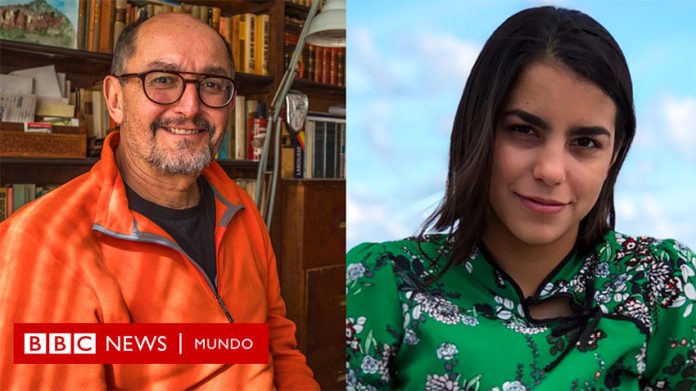
Inspirations Awards winners Rojas-Bracho and Baquedano.
Two Mexicans are among nine people from around the world who have won the British Broadcasting Corporation (BBC) Inspirations Awards this year, which rewards people for their efforts to make the world a better place.
Ana Baquedano Celorio, a student who convinced lawmakers to make “revenge porn” illegal after an ex-boyfriend shared her nude selfie, and Lorenzo Rojas-Bracho, a biologist who braved poachers and pirates in efforts to save a critically endangered marine animal, will be featured on a December 30 episode of the BBC World Service program, Outlook.
Baquedano, now in her 20s, was a teenager when she sent a naked selfie to her boyfriend, who promised to delete it but instead later shared it, resulting in her being bullied and harassed.
Instead of being cowed by the experience, Baquedano led a campaign to make what her ex-boyfriend did a crime in her home state of Yucatán, which since 2018 punishes with jail time the publication of intimate images of people without their consent and classifies such images as child pornography if the person in the image is under 18.
Rojas-Bracho is a biologist known by some as “Mr. Vaquita” for his work since the 1990s in conserving the vaquita marina, a rare, endangered marine animal that is described as a tiny porpoise.
Part of Rojas-Bracho’s achievements regarding the vaquita been convincing other scientists that the animal still exists, but Rojas also carried on his conservation efforts in the face of threats from cartel-supported poachers.
The Inspirations Awards, given annually by the BBC World Service’s long-running program Outlook, shine a light on people with extraordinary personal stories. Both Baquedano and Rojas-Bracho’s stories have been featured on previous episodes of Outlook over the past two years.
“Every day on Outlook, we hear from people who take your breath away with their resilience, compassion, courage and determination to overcome difficulty and make a real difference in the world. These awards are our way of applauding their achievements,” said Mary Hockaday, controller of the BBC World Service English. “And in a year that has been so challenging, we’re delighted to end 2020 by celebrating the stories of people who give us so much hope.”
Some of this year’s other Inspirations Award winners included a London bus driver who converted a bus into a roving music studio that gave young men in local gangs the opportunity to make music and even virtually collaborate with rival gang members, and a former professional tennis player from Sierra Leone who founded a sports foundation that supports the country’s next generation of athletes.
One in four have had the coronavirus, a survey reveals.
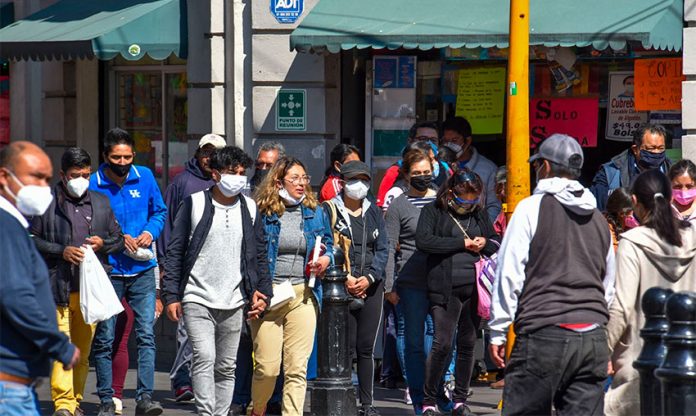
More than 30 million Mexicans – about a quarter of the population – have been infected with the coronavirus, a serological testing survey suggests.
The National Institute of Public Health (INSP) collected 7,098 blood samples from adults, teenagers and children between August and November and found that 24.8% had developed antibodies against the coronavirus.
If the percentage is extrapolated across the entire population of Mexico, approximately 31 million people have been infected with the virus, said INSP director Juan Rivera.
That’s about 24 times higher than the current official confirmed case tally, which stands at just under 1.3 million.
“It shows a high speed of spread,” Rivera said.
Just over 26% of males and 23.6% of females who provided blood samples had developed coronavirus antibodies. A quarter of people aged 20 to 59 had antibodies while among those aged 60 and over only 18% appeared to have had the virus.
“It gives the impression that people over 60 took more care, stayed at home more and followed all the [health] measures,” Rivera said.
Referring to the likelihood that one-quarter of Mexicans have already had the virus, the INSP chief said that means that “75% of Mexicans [still] don’t have immunity against Covid” and therefore the population is still a long way from achieving herd immunity.
“It’s a very high percentage, almost 100 million people. … We mustn’t be careless, we mustn’t drop our guard. … The vast majority of us are [still] vulnerable to infection,” he said, acknowledging also that there is a possibility of reinfection.
It is likely that a lot of people who have had the coronavirus weren’t aware that they were infected.
The INSP classified 70% of people who developed antibodies against the coronavirus as asymptomatic. Only 20% of people with coronavirus antibodies experienced the telltale symptoms of Covid-19 while the other 10% only had one mild symptom.
“Almost 80% without symptoms. What does this mean? Maybe a lot of us are asymptomatic and therefore we could be transmitting the disease without realizing it,” Rivera said. “That’s why it’s important to take all the precautions.”
The coronavirus pandemic has hit Mexico harder than most other countries. As of Wednesday, its accumulated case tally of 1.27 million was the 13th highest in the world while the official Covid-19 death toll of 115,769 was the fourth highest after the United States, Brazil and India.
Amazon will open a new distribution center in the state of Yucatán, its first in the country’s southeastern region.
“Yucatán will have an Amazon logistics center in the municipality of Umán, generating an important economic spillover and competitive, quality jobs,” Yucatán governor Mauricio Vila said on his Twitter account.
“Amazon’s expansion reflects our commitment to clients in Mexico, which is focused on improving the customer experience. Our method of expansion is aligned with the objective of improving our service to clients,” said Diego Méndez de la Luz, Amazon’s director of operations in Mexico. “This expansion will help us better serve our Mexican customers.”
In October, Amazon announced it would invest US $100 million to expand its presence throughout Mexico with the opening of two new fulfillment centers in Apodaca, Nuevo Leon, and in Tlajomulco, Jalisco, as well as a building in México state, and 12 new delivery stations throughout the country.
The investment cost of the Yucatán complex is unknown.
Amazon’s operations in Mexico, which began in 2015, include five fulfillment centers, two support buildings, two sorting centers and 27 delivery stations.
The company is in stiff competition with other e-commerce vendors like Walmart, which in September spent 140 million pesos to open its first logistics center in the country in Mérida, and Mercado Libre, which has a strong presence in Mexico.
Amazon has been working with the Yucatán government to train 284 of the state’s small businesses in effective selling on the online platform.
Sixty percent of the businesses trained came from the food and beverage industry, 25% from the textile sector, and 15% from various other types of businesses, including crafts, cosmetics and cleaning and hygiene products.
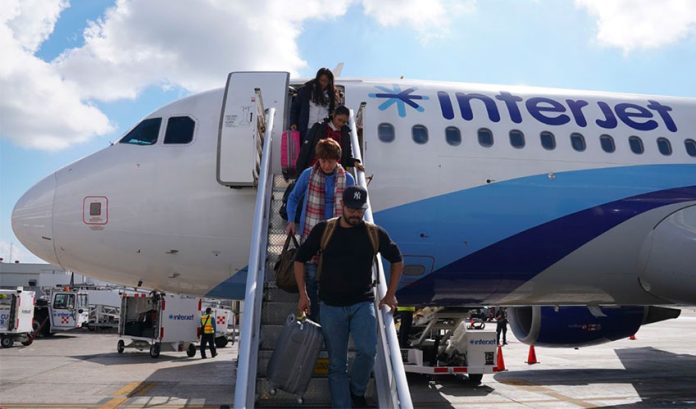
Interjet announced Thursday that it is canceling all flights for the rest of the year but anonymous sources say the airline’s grounding might be longer.
Sources close to the airline told the newspaper El Financiero that the airline may never resume operations.
Interjet notified its employees that all flights starting tomorrow and through December 31 have been canceled and all operations will be shut down during that period.
The airline’s flights have already been grounded for several days and dozens of flights have been canceled over the past six weeks, largely because there has been no money to purchase fuel.
Interjet has been struggling to stay afloat financially amid the coronavirus pandemic’s steep decline in demand for air travel. But it has faced multiple other issues unique to the airline’s situation.
Employees are owed over three months of unpaid wages and benefits, which has led to public protests, and some employees have not bothered showing up for work. The airline owes nearly six months’ worth of social security employee contributions, US $131.3 million in unpaid fuel bills, and US $151.4 million in back taxes. In the last two months, the airline has also lost 95% of its fleet.
Meanwhile, businessmen Carlos Cabal Peniche and Alejandro del Valle were going to inject US $150 million of badly needed capital into the airline. But Cabal decided to pull out.
More recently, ex-employees have filed 50 claims against Interjet for unpaid severance amounting to 11 million pesos. Employees who were dismissed as far back as March say they have not been paid any of the money they are owed.
In addition, the International Air Transport Association (IATA) suspended Interjet’s participation in its billing and settlement plan this week, which facilitates the sale and issuing of airline tickets through an IATA affiliated network of travel agents.
Last week, Interjet’s union asked the federal government to take over the airline, saying it is on the verge of bankruptcy and poses a risk to national security. The government declined the union’s request.
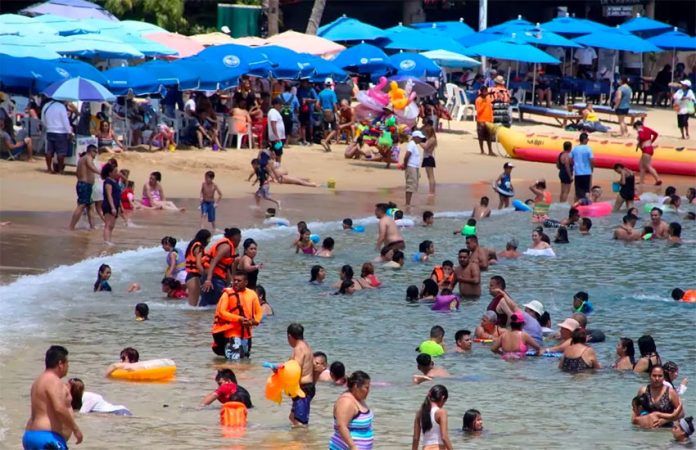
Tourists are set to flock to some of Mexico’s most popular coastal resort cities during the Christmas-New Year vacation period despite appeals for people to stay at home due to the worsening coronavirus pandemic.
Acapulco, Guerrero, and Puerto Vallarta, Jalisco, are both gearing up for a large influx of holidaymakers while Cancún, Quintana Roo, and Los Cabos, Baja California Sur, also expect tourist numbers to rise albeit to levels below those seen at the same time in recent years.
According to tourism authorities in Acapulco, hotels are already booked to their 50% permitted capacity for the period between December 21 and January 8. At least 350,000 people with hotel reservations are predicted to descend on the Pacific coast resort city during the three-week period.
Authorities say that the number of visitors could easily double to 700,000 given that many people stay in timeshare apartments, holiday homes and properties rented on online accommodation platforms such as Airbnb.
Due to the expected influx of tourists and the ongoing pandemic, the government of Guerrero, the state in which Acapulco is located, has canceled New Year’s Eve fireworks displays in tourist destinations across the state.
Guerrero is currently an orange light “high” risk state, according to the federal government’s coronavirus stoplight system. Acapulco has recorded more confirmed cases and Covid-19 deaths than any other municipality in the state.
About 1,000 kilometers to the north, Puerto Vallarta is also expecting to end the year with hotels as full as they are allowed to be. In the case of Jalisco’s premier tourism destination the maximum capacity is 75%, said state government official Alejandro Guzmán Larralde.
“The tourism industry is beginning to recover after being one of the [sectors] hardest hit by the pandemic,” he said.
Luis Villaseñor, director of the Puerto Vallarta Tourism Trust, said that an influx of both domestic and international tourists is expected at the end of the year, adding that most of the latter will come from the United States.
“We’ve recovered some flights that no longer operated, … that’s the case with the United Airlines flight from Newark, with daily flights, and the American Airlines flight from Charlotte,” he said.
There were about 1,000 flights in and out of Puerto Vallarta in October, up from just 322 in June, while there were almost 700 in the first half of December, providing another sign that tourism is recovering.
Acapulco’s New Year’s fireworks show has been canceled this year.
Certified by the World Travel and Tourism Council as a safe destination due to its compliance with measures designed to stop the spread of the coronavirus, Puerto Vallarta is also commonly accessed by road, especially from Guadalajara, located about 330 kilometers inland.
The city has recorded just over 2,600 confirmed coronavirus cases since the start of the pandemic. Jalisco is currently orange on the stoplight map.
On the other side of the country, Cancún has had average hotel occupancy of 45% this month but there is optimism that it will increase to 65% by the end of the year. But even if that level is achieved, it will be the lowest in recent years for the end-of-year vacation period.
Roberto Cintrón Gómez, president of the Hotel Association of Cancún and Puerto Morelos, had expressed hope that occupancy levels would go as high as 90% if the Caribbean coast state of Quintana Roo reached green light “low” risk status on the stoplight system.
Cintrón said that 60% or 65% occupancy during the winter holiday season would be low compared to previous years but at least give hotels some much-needed revenue.
According to Quintana Roo authorities, there are currently just over 70,000 tourists in the state but that number is expected to increase in the coming days with greater numbers of domestic and international flights scheduled to arrive.
Other popular tourism destinations in the state include Playa del Carmen and Tulum, which have recorded far fewer coronavirus cases than Cancún. Almost half of Quintana Roo’s 15,128 confirmed cases were detected in the municipality where Cancún is located while more than a quarter were found in and around the state capital, Chetumal.
At the tip of Mexico’s other famous tourism peninsula, hotels in Los Cabos currently have an average occupancy level of 39% but hoteliers hope to reach the maximum permitted capacity of 50% by the end of the year. Hotel owners in other Baja California Sur tourism hotspots, such as the state capital La Paz, also hope they can at least have half of their rooms occupied during the upcoming vacation period.
However, 50% occupancy would be 20% lower than the average in previous years during the entire winter period when tourists from the United States and further afield commonly seek out warmer weather in destinations such as Los Cabos.
The downturn in tourism this year has hit Baja California Sur hard, causing economic pain for hotels, restaurants and other businesses that rely heavily on visitors. According to the national restaurant association Canirac, about 8,000 direct jobs in that sector alone have been lost in Baja California Sur.
The state is currently orange on the federal stoplight map with just over 1,000 active coronavirus cases, according to federal Health Ministry estimates. Just over 30% of Baja California Sur’s 16,027 confirmed cases were detected in Los Cabos while 50% were found in La Paz.
Another state where the tourism industry has been hit hard by the pandemic is Veracruz. Sergio Lois Heredia, president of the Metropolitan Tourism Council in the Gulf coast state, said that this winter holiday season will be the worst on record.
He said hotel occupancy of just 50% is expected whereas it has been above 75% at the same time in recent years.
Veracruz is one of just three green light “low” risk states in Mexico but according to Heredia, visitor numbers in the state’s eponymous port city have not yet recovered.
Employees crouch behind the counter as the theft takes place outside the ice cream parlor.
A surveillance video in Mexico City’s Polanco neighborhood was a silent witness to a lightning-fast theft in which a robber knocked down a patron outside an ice cream parlor and made off with the man’s US $15,000 Rolex watch.
The 16-second video of the attack, which occurred early Sunday afternoon at the parlor’s entrance, recently went viral on social media.
The victim, who authorities said was a Canadian, can be seen from the parlor’s employee surveillance video as the theft occurs just outside the parlor’s wide-open doorway. The thief, dressed in a button-down white shirt and slacks and wearing a sanitary mask, approached and grabbed his victim from behind, pulled him in close with a gun pointed at him and then knocked the man down. While the victim was splayed on the sidewalk, the thief removed the Rolex from his victim’s wrist and fled the scene.
Police said the victim sustained a blow to the head.
Authorities said the stolen watch was a Rolex Datejust 41 Wimbledon and that the victim told them it was worth $15,000.
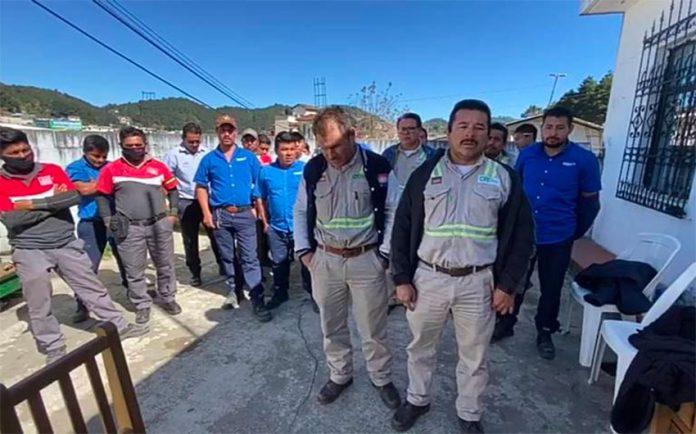
Residents of a Chiapas municipality that has been plagued by political unrest for years have kidnapped at least 15 employees of government institutions and transnational corporations.
Among the workers taken hostage were employees of the Federal Electricity Commission (CFE), the Mexican Social Security Institute (IMSS), Coca-Cola and Pepsico.
The kidnapping occurred in San Juan Chamula, located about 10 kilometers north of San Cristóbal de las Casas. The kidnappers also took vehicles belonging to the institutions.
Two of the employees being held, both wearing shirts bearing CFE logos, appeared this week in a video posted online in which they addressed state authorities and asked them to give in to the residents’ demand to liberate a jailed politician in exchange for the employees’ release.
“We as citizens are not to blame for the situation that is happening, and our families are worried,” one of the two men said on the video.
[wpgmza id=”277″]
“The people are threatening us that they will take other measures if their mayor, Juan Shilón de la Cruz, is not freed soon,” said the other. “So to avoid any violence toward us, we also demand that [Shilón] be released so that they will let us leave. Otherwise, we are going to remain here.”
Since 2018, San Juan Chamula has seen opposition to the administration of Mayor Ponciano Gómez and the municipal council, all of whom belong to the Morena party. On Tuesday, supporters of Shilón congregated at Gómez’s home where they fired weapons at it before setting it on fire.
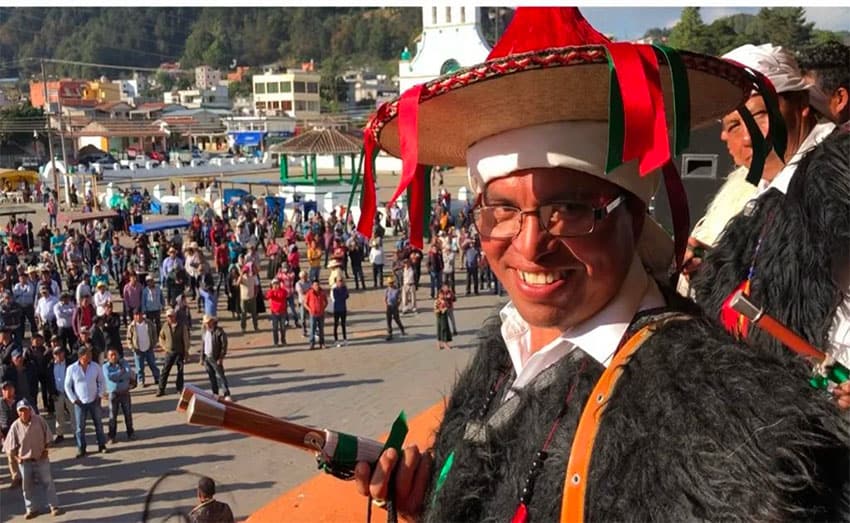
The kidnappers want to see Shilón and a municipal council of their choosing running the municipality instead of the current administration. In March, hundreds of his supporters, who are Mayan indigenous Tzotzil, marched into the municipal palace and held a traditional ceremony in which Tzotzil leaders handed Shilón a ceremonial staff and declared him the true mayor.
Shilón’s supporters claim that Mayor Gómez is corrupt and that since being elected in July 2018 he has diverted at least 45 million pesos (US $2.2 million pesos at today’s exchange rate) in municipal funds, while governing from a house in San Cristóbal de las Casas.
Shilón, affiliated with the Institutional Revolutionary Party, has been in the custody of state authorities since September 9 when he was accused of aggravated robbery and sedition after he and his supporters temporarily took over San Juan Chamula’s municipal palace in August.
This is not the first time Shilón has been arrested nor that his followers have reacted to his arrest by engaging in kidnapping: after he was arrested in September 2019 on sedition charges his supporters kidnapped some Chamula government officials and their families until Shilón was released.
Juan Shilón is the preferred candidate for mayor in the eyes of some citizens.
He and his supporters have also been accused of repeated acts of vandalism and violent confrontations throughout 2019 and 2020, including incidents in which the municipal palace and the DIF family services building were set on fire.
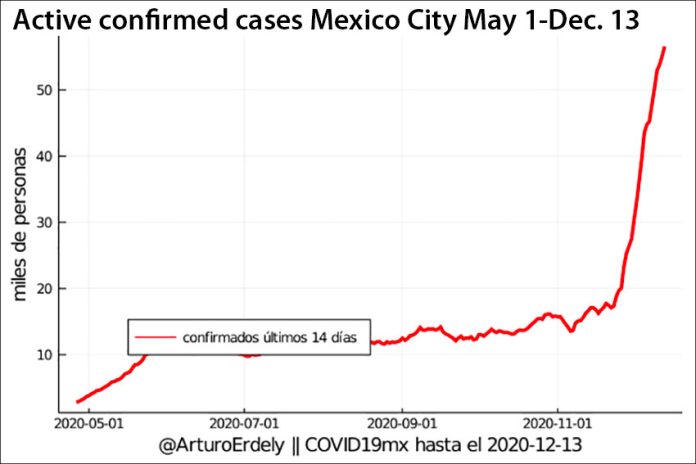
There was a major spike in new virus cases in the first two weeks of December. Arturo Erdely
The number of coronavirus patients in Mexican Social Security Institute (IMSS) hospitals reached a new peak on Wednesday as the pandemic worsens in many states around the country.
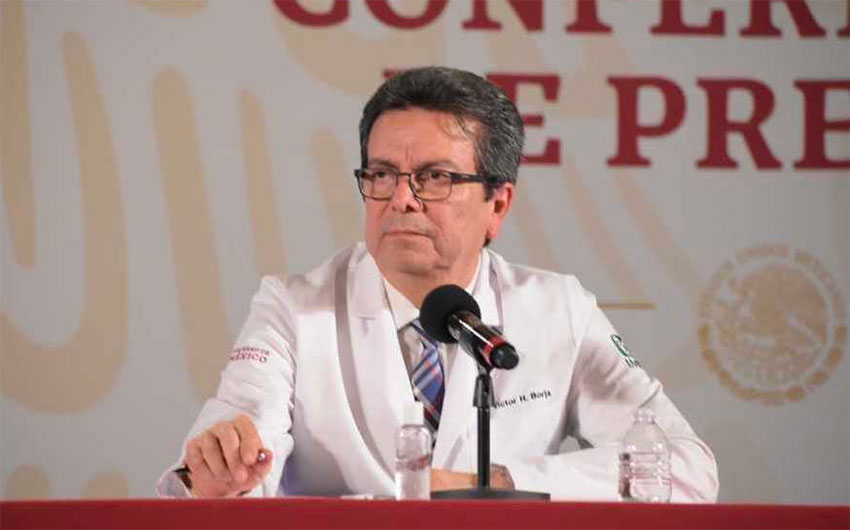
IMSS official Víctor Hugo Borja said there were 8,060 patients in general care beds, 30 more than the peak recorded in the middle of the year. He said there are also 320 patients in critical care beds in hospitals operated by IMSS, a major public healthcare provider.
Borja highlighted that the occupancy levels in IMSS hospitals in México state and Mexico City are 95% and 86%, respectively.
Finding an available bed in the Mexico City area is becoming increasingly difficult as coronavirus case numbers in the capital and surrounding metropolitan zone trend sharply upwards.
Borja said the appeal to citizens to stay at home – President López Obrador this week urged people to avoid going out in the lead-up to Christmas – is “serious.”
Borja: occupancy has exceeded the historic maximum seen in June.
“We still have beds, spaces are being opened to attend to [more] patients but if this number [of hospitalized patients] keeps going up we run the risk of having to stop treating other diseases in order to attend to Covid patients,” he said.
“We don’t want diseases to compete for care. We’re not going to leave Covid patients without care but it’s a fact that we exceeded the historic maximum we had in June,” Borja said.
“Now there are more beds; we have 15,096 general care beds [for coronavirus patients], 522 intensive care ones and more than 4,000 ventilators. … [Providing] mechanical ventilation hasn’t been a problem but there are a lot of patients who need a bed at the same time.”
In turn, IMSS director Zoé Robledo said that 81,145 Social Security Institute workers have dedicated an average of 1,300 hours each to responding to the pandemic. The figure equates to 162.5 eight-hour days.
“The personnel are stressed and tired and the only way to help them … is to stay at home,” Robledo said, adding that citizens themselves have the capacity to stop the situation getting out of control. “Let’s not go to parties, let’s not accept invitations,” he said.
Mexico City Health Minister Oliva López Arellano said Thursday that health workers are exhausted. She said that when hospitalizations decreased earlier in the year, authorities were able to give medical personnel an additional day off per week but that is no longer possible. Workers are being provided with psychological support to help them deal with the situation, the health minister said.
A doctor at the Tláhuac General Hospital said medical staff have been working shifts of more than 30 hours.
Rodrigo Ibarra, an IMSS epidemiologist in Mexico City, told the newspaper El Universal that some health workers will be on the job over the entire Christmas-New Year period.
“We will work without [having the opportunity] to see our loved ones, … we’ll be combatting the pandemic,” he said.
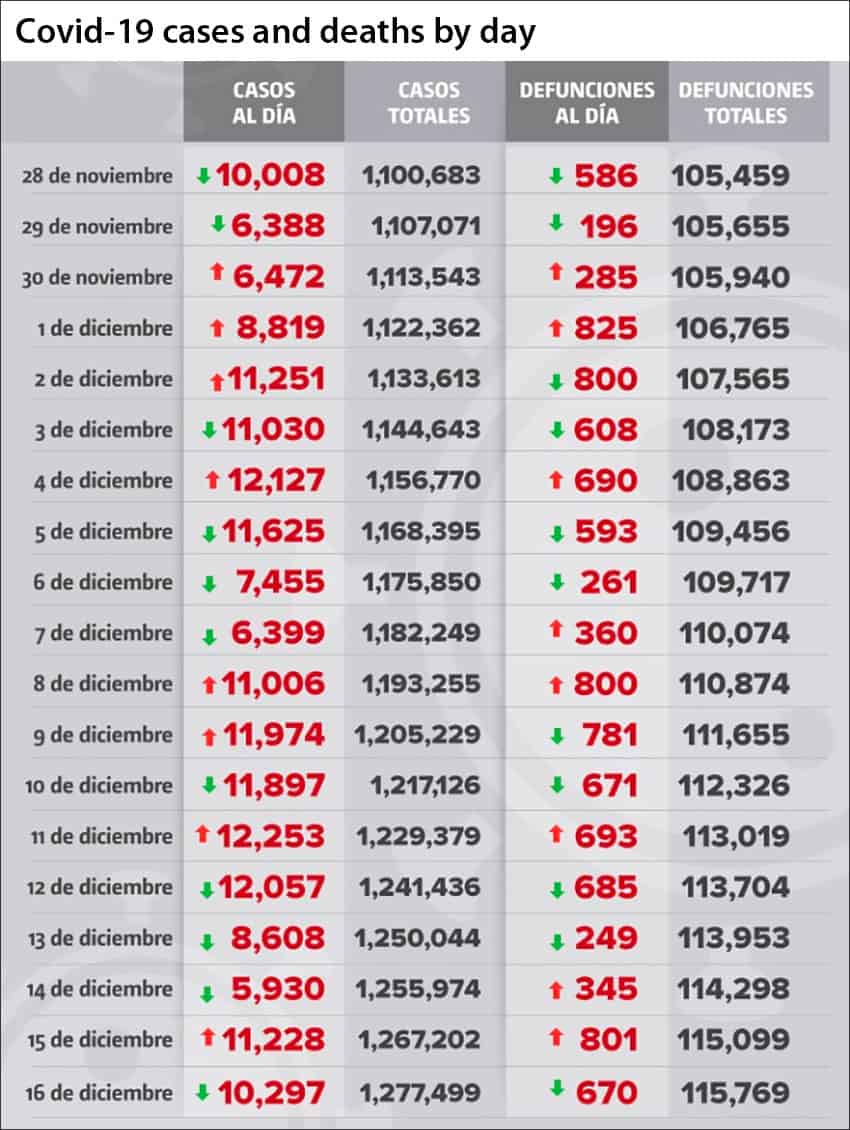
Mexico’s coronavirus outbreak has considerably worsened in December with 163,956 new cases and 9,829 additional deaths reported in the first 16 days of the month. With an average of 10,247 new cases and 614 additional fatalities per day, this month is on track to exceed July as Mexico’s worst of the pandemic.
The accumulated case tally currently stands at 1,277,499 with 10,297 new cases registered on Wednesday while the official Covid-19 death toll is 115,769 after 670 additional fatalities were reported.
Statistics compiled by National Autonomous University mathematician Arturo Erdely show that confirmed case numbers increased significantly in nine states in the first half of December.
Coronavirus cases and deaths in Mexico as reported by day. milenio
Mexico City recorded about 56,000 cases in the first two weeks of December compared to about 15,000 in the first half of November.
“[Case numbers] almost quadrupled in a very short period of time,” Erdely said. “The past month has been brutal.”
México state, which includes many municipalities in the Mexico City metropolitan area, recorded a similar increase in percentage terms with case numbers rising to about 14,000 in the first half of December from 4,000 a month earlier.
The other seven states where Erdely noted significant increases were Tabasco, Baja California, Querétaro, Guanajuato, Hidalgo, Jalisco and Sonora.
The federal government is scheduled to release an updated stoplight map on Friday, although Deputy Health Minister Hugo López-Gatell, the government’s coronavirus czar, appears to be losing confidence in the system.
Speaking at a coronavirus press briefing last Friday, he dismissed the importance of the stoplight color in Mexico City – currently “high” risk orange even though hospital occupancy level is above the 65% threshold for switching to red – saying that at a certain point “it’s not significant.”
“[There’s an] alert for Covid-19 [in Mexico City], an emergency for Covid-19. Is there any doubt?”
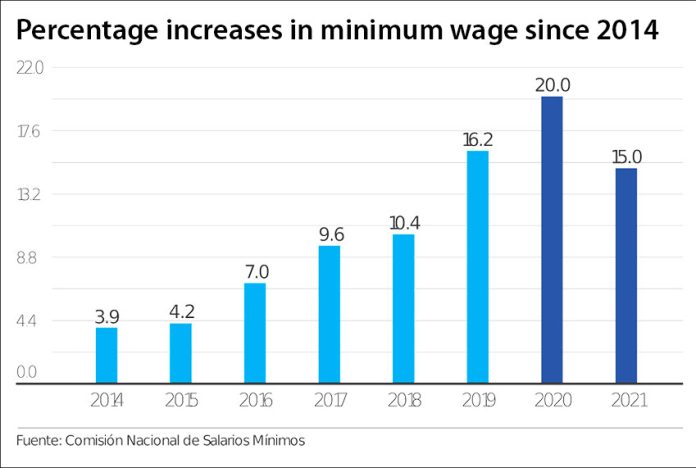
Mexico’s daily minimum wage will increase 15% to 141.7 pesos (US $7.15) on January 1 after the National Minimum Wage Commission (Conasami) approved the hike on Wednesday.
Members of the federal government and the labor sector voted in favor of increasing the daily wage 18.5 pesos (US $0.93) from its current level of 123.2 but business sector representatives opposed the hike.
The daily minimum wage will also increase 15% in the northern border free zone, rising to 213.4 pesos (US $10.76) from 185.6.
Approval of the increase came a week after President López Obrador described the current minimum wage as an “embarrassment” and recommended raising it at least 15%. The new hike follows a 20% increase at the start of this year and a 16% rise at the beginning of 2019. In just over two weeks, the daily wage will be 60% higher than when López Obrador took office in late 2018.
As a result of the latest increase, Mexico will rise eight places to 76th on a list of 135 countries ranked according to their minimum wage, the federal Labor Ministry said. The government’s objective is that Mexico is among the top 60 by the end of its six-year term in 2024.
The government and the labor sector say the 15% increase will provide a much-needed boost to workers’ purchasing power but the business sector warned that the hike will cause the closure of businesses and a rise in unemployment as the coronavirus pandemic continues to take a heavy toll on the economy.
The Business Coordinating Council, an influential umbrella organization that represents 12 business groups, said that many small and medium-sized businesses won’t have the capacity to pay the higher minimum wage to their workers.
It said that if businesses’ revenue doesn’t increase over the next three months, as many as 700,000 of them could be forced to close.
Gustavo de Hoyos, president of the Mexican Employers Federation, also said that 700,000 businesses could disappear due to the lack of government support during the pandemic and “now an irrational increase to the minimum wage.”
“Combined with the acceleration of [coronavirus] infections … and the resulting closure of the operations of more companies, the collapse of thousands of businesses and the loss of more sources of work is imminent,” he said.
In contrast with that view, Conasami president Luis Munguía, the government representative on the commission’s council, said a higher minimum wage “strengthens the domestic market through increased consumption.”
For his part, labor sector representative José Luis Carazo said: “We’re aware of the situation due to the pandemic but we’re also aware that the purchasing power of workers has deteriorated a lot.”
He added that wages are not currently a factor that is causing inflation.
López Obrador said last week that previous governments let the minimum wage stagnate on the grounds that increasing it would cause inflation to rise. However, the president said that the hikes approved during his time in office have not caused inflation, an assertion backed up by official data.