Home Blog Page 1361

Puebla town’s New Year’s Day tradition harkens back to Italian ancestry

0
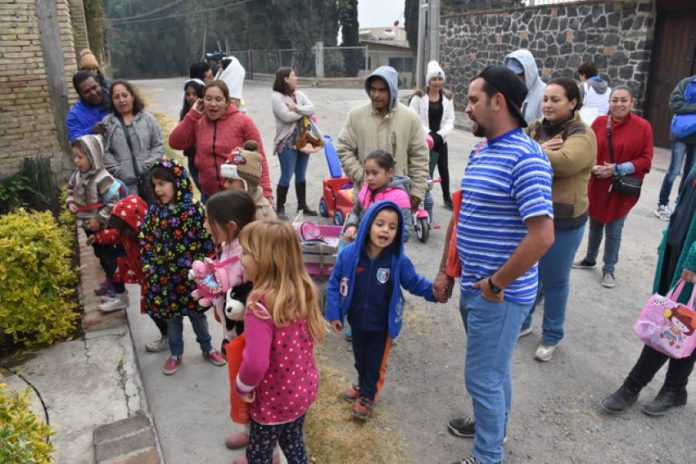
Chipileños sing at one of their neighbors' doors.

It’s New Year’s Day in Chipilo, Puebla, and Luisa Merlo is stationed by her front door, boxes of treats on a table nearby.

“I have been here since 5:30 this morning,” she said, “and I will probably be here until 11.” While she speaks, children have been lining up in front of her home. On cue, they begin belting out a song.

When the singing finally dies down, she opens the door and hands out treats. The children hold their bags out in anticipation. She only has a moment’s rest before another group heads up her walkway.

They’re celebrating Cappo d’Anno, a New Year’s Day tradition brought over from Veneto, a region in northern Italy. Chipilo was settled in October 1882 by families from that region, and while Italians settled in many pueblos throughout Mexico, Chipilo is the only one to retain its Italian roots, traditions and language.

Although the Italian families arrived in the town in 1882, many traditions didn’t take root until much later.
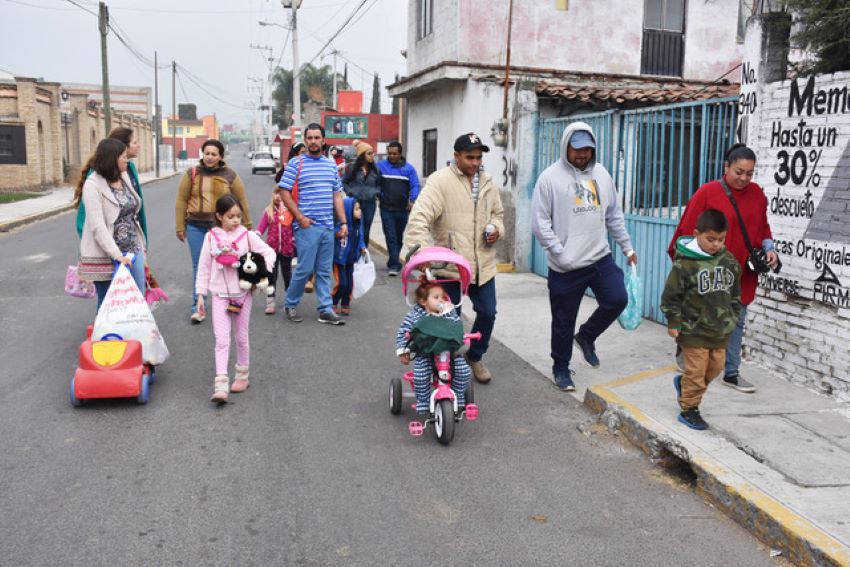
Participants go door-to-door to wish neighbors a good upcoming year.

“When [our ancestors] arrived in Mexico, they did not have money,” says Eduardo Piloni Stefanonni, the director of Chipilo’s Casa d’Italia. “They did not speak Spanish, and it took a long time to establish a community. There was only work … they did not have time for anything else.”

He figures people started celebrating Cappo d’Anno about 80 years after the first settlers arrived. The tradition seems a lot like a daytime version of Halloween, minus the costumes.

The words to the song they sing are in the Venetian dialect of their ancestors:

Bon di, bon dan  Tell me a pleasant good morning.

Deme la bostra man Give me your hand.

Que estegue ben May you have a good year.

Tut al ano

Prima par el anema First in the soul

E dopo por al corpo And then in the body.

Den yure an bon capo de ano I wish you a good start to the year.

Que estegue ben May you have a good year

Tut al ano

Prima par al anema First in the soul

E dopo par al corpo And then in the body.

Luisa, like most chipileños, handed out candies but at least one person handed out peanuts.
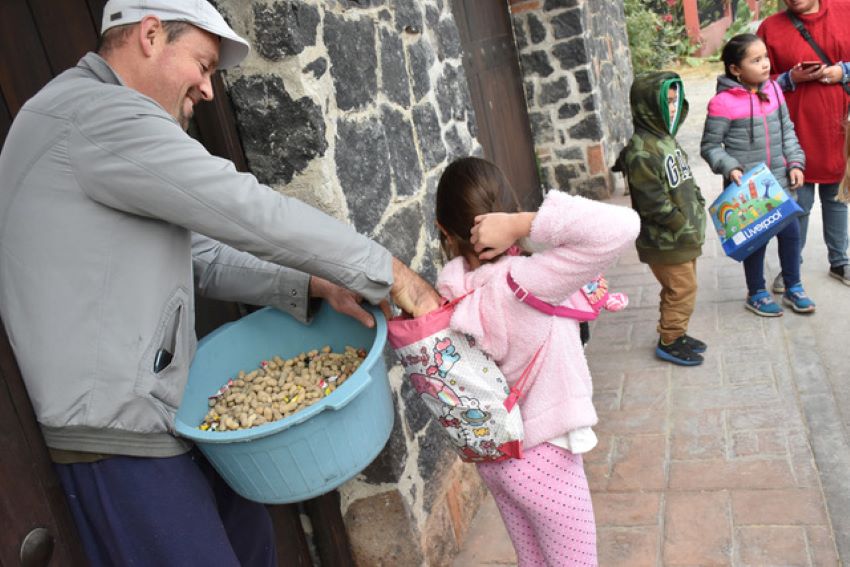
Cappo d'Anno, a holiday in Chipilo, Puebla, came with the residents' ancestors who emigrated from Veneto in 1882.
Cappo d’Anno, a holiday in Chipilo, Puebla, came with the residents’ ancestors who emigrated from Veneto in 1882. Photos by Joseph Sorrentino

“They are a more traditional treat,” Zuri Merlo explains.

Incidentally, a lot of people in the town are named Merlo, and during a chat on New Year’s Day, Zuri and Luisa discovered they were distantly related.

“I consider it important to maintain the traditions our ancestors taught us,” said Zuri as we walked through town. “It is the basic essence of the culture of our pueblo, and in them are reflected the beliefs, the food and our education. They are key points in maintaining a united community.”

When we arrived at her parents’ home, she reminisced about what Cappo d’Anno was like when she was a child.

“Something that I remember from when I was a little girl is my father’s excitement and devotion to this tradition,” she said. “He invested a lot of time and money, filling bags with different sweets. He said it was his obligation, that the children who came to his home gave him a blessing, and according to his beliefs, that determined if he would have a good year. And I’m so happy to see my own daughters having these experiences … in our beloved Chipilo.”

It’s understandable that the celebration has caught the attention of nearby pueblos.

“Years ago, it was only chipileños,” said Luisa. “Now, there are many people from outside.”

Zuri agreed, adding, “In fact, there are more adults and children from neighboring communities participating than those from our own pueblo.”

People from nearby towns don’t know the song, and they certainly don’t speak the dialect, but despite this, they still get the treats.

Joseph Sorrentino is a regular contributor to Mexico News Daily.
Finding a hospital bed can be a challenge for Covid patients in Mexico City

0
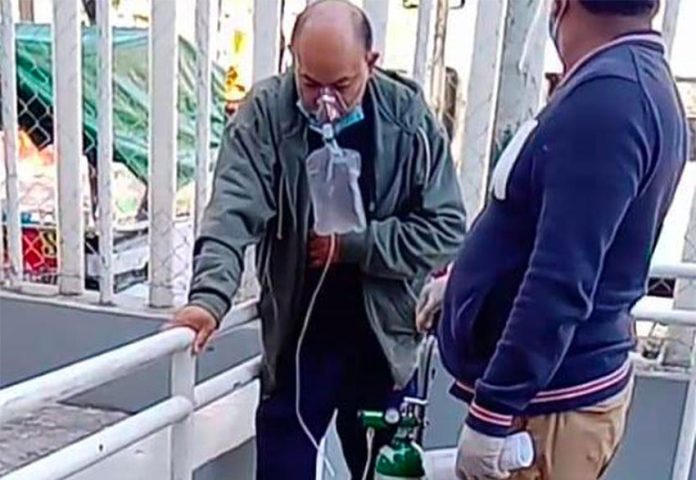
Tomás Hernández called on a dozen hospitals before he found a bed.

As hospitals in Mexico City fill up with Covid-19 patients, the cases of two men sick with the infectious disease show that finding a bed in the capital’s strained healthcare system is becoming increasingly difficult.

Tomás Hernández, a 49-year-old Mexico City resident, was turned away by 12 different hospitals before finally finding a bed, while ambulance paramedics transporting a man from a México state municipality that is part of the capital’s metropolitan area couldn’t find a healthcare facility with availability during a search that lasted more than six hours.

According to a report by the newspaper Milenio, Hernández – who tested positive for Covid-19 a few days ago and quickly became gravely ill and dependent on an oxygen tank to breathe – left his home on Monday night with his two brothers to seek treatment.

Hernández’s family had requested an ambulance but when it failed to arrive they decided that they would have to act themselves.

“The ambulance never came for my brother … [so] we decided to leave in our own car; we never imagined that it would be the beginning of a whole odyssey,” said José Hernández.

Tomás, José and Juan Hernández spent the next 16 hours in their car while they searched for an available hospital bed in neighborhoods all over Mexico City. Tomás has medical insurance with ISSSTE, the State Workers Social Security Institute, but even so was unable to find a bed in its designated Covid hospitals. He was also turned away from Mexican Social Security Institute (IMSS) hospitals and private healthcare facilities where there was no space available.

“We had to … [search] the whole night, we haven’t slept in fact,” José told Milenio on Tuesday. “… Whether it’s the private sector [or] the government sector … there’s no space, there are no beds and my brother is getting worse and worse.”

Later on Tuesday, Tomás’ brothers finally found an available bed at the Xoco Hospital in the capital’s Benito Juárez borough but staff there said they could only admit him temporarily while they X-rayed his chest and retested him for Covid-19.

“They saw that his lungs were all black and inflamed and the test came back positive but they told us they couldn’t treat my brother there,” José said.

“… They directed us to the Juan Ramón de la Fuente General Hospital [in the Iztapalapa borough], they gave us a pass and with that they let us in,” he said.

While Tomás was receiving treatment on Wednesday, José said that his brother was in an extremely poor state of health when he finally found a hospital bed.

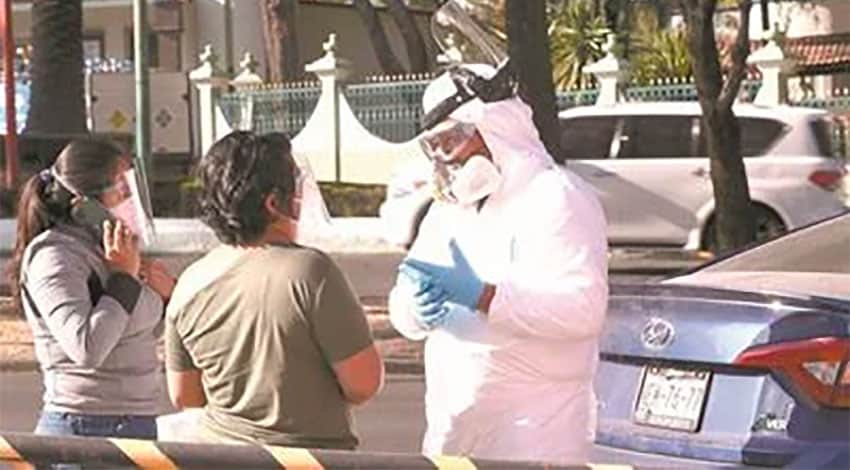
Villanueva, in protective suit, discusses options with his family.

Ricardo Villanueva, a medical doctor, faced a similar situation with his brother, who is also gravely ill with Covid-19.

According to the newspaper El Universal, Villanueva – kitted out in a protective suit and mask so that he could be by his brother’s side – took a difficult decision at about 5:00 p.m. Tuesday: he paid the paramedics of a private ambulance for their services after they spent more than six hours looking for a hospital with availability in Mexico City.

The ambulance had arrived at the Villanueva home in the México state municipality of Naucalpan on Tuesday morning to collect Ricardo’s brother, whose first name wasn’t disclosed.

The man was first taken to the Central Military Hospital in the Miguel Hidalgo borough where he waited two hours to be attended to. When staff said it could be eight hours before he was assessed and that there was no guarantee he would be offered a bed, a decision was taken to transport him to a provisional healthcare facility set up at the Banamex Convention Center at the Hipódromo de las Américas horse race track. However, Villanueva was also unable to access treatment there.

After waiting outside the facility for some four hours, Ricardo realized that if his brother remained in the ambulance any longer he wouldn’t have enough money to pay the paramedics for their services.

“We also have medication expenses … and we have two other people at home who are receiving treatment [for Covid-19]” he said.

The sick man was placed in a car owned by relatives and Ricardo told El Universal that they would travel to Toluca, the México state capital, if they couldn’t find a hospital with availability in Mexico City.

“It’s possible that we’ll take him there. We’ll rule out other options here but Toluca could be an option,” he said Tuesday afternoon. “… The authorities say there is space [in the health system] but [there’s] nothing. … Today we have a pilgrimage to look for a place where he can be treated.”

Published early Wednesday, the El Universal report didn’t say whether Ricardo was eventually able to find a hospital bed for his brother in Mexico City, Toluca or elsewhere.

According to the Mexico City government, there were 4,732 coronavirus patients in hospitals in the capital at 10:00 p.m. Tuesday including just over 1,000 on ventilators. The number of hospitalized patients is higher than at any other time in the pandemic.

However, Mexico City data shows that almost a third of hospital beds set aside for coronavirus patients in the capital – roughly 2,200 – are, in theory, still available as overall occupancy is 68%. (Occupancy is 84% according to federal data but Mexico City Mayor Claudia Sheinbaum says that her government’s statistics are more accurate.)

The experience of the Hernández and Villanueva families shows that locating the theoretically available beds is not easy. The federal Health Ministry has advised people with Covid-19 symptoms to call 911 to confirm the availability of hospital beds before seeking treatment to avoid facilities that are already full.

But Ricardo Villanueva said that 911 operators were not able to provide his family with that information.

Hospital occupancy levels are also concerning in several other states. According to federal data, more than 70% of beds set aside for coronavirus patients are in use in México state and more than 60% are occupied in each of Baja California, Guanajuato and Hidalgo.

Meanwhile, the accumulated coronavirus case tally and Covid-19 death toll continue to rise at an alarming pace despite Mexico’s low testing rate.

The former rose to 1,267,202 on Tuesday with 11,228 new cases reported while the latter increased to 115,099 with 801 additional fatalities.

Source: Milenio (sp), El Universal (sp) 

Is the coronavirus stoplight about people’s health or about the economy?

0
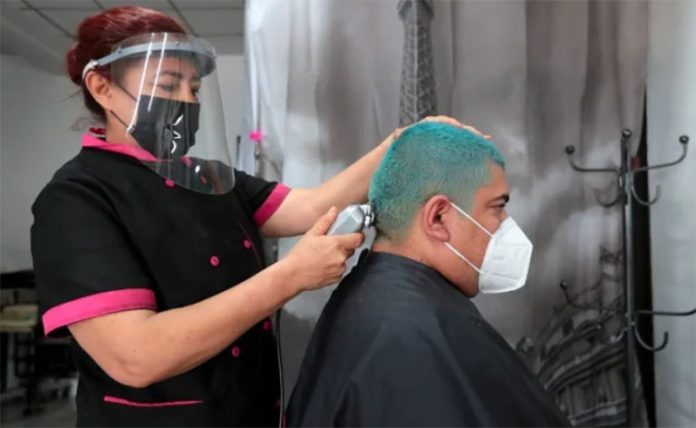
A hair salon in Mexico City in the "new normal".
A hair salon in Mexico City in the "new normal."

You probably heard that a couple of more states have made it into the “green” category of Mexico’s Covid-19 stoplight system. Among them was my state of Veracruz, joining Campeche and Chiapas.

Like many veracruzanos, I felt briefly elated to see that our state was now listed as green. At last! Could my daughter return to her classroom? Could I safely see a movie in a movie theater? Could I pull my mask down once in a while to breathe fresh air?

Those thoughts began fading almost immediately when I began reading the fine print, which made it clear that we were still in it for the long haul and would need to keep up our current precautions.

Fine. I can keep wearing my mask and continue to maintain my distance and at the very least feel guilty for doing anything that is not absolutely necessary in the same general space as people who are not in my household, which is basically me and my kid.

But really, what does green mean to you? One thing that I know for sure is that most people — especially tired, fed-up people — are not super great at reading the fine print. I’m not super great at it, and it’s basically my job. Besides, the color green doesn’t mean “proceed with caution,” it means “all systems go.”

A closer look at my green state’s map showed that almost every municipality was either yellow or orange, except for a very few rural handfuls. Only 11 of the state’s 212 municipalities were green for the week ending December 6.

There’s no visual map yet for the week ending December 20, but there is a chart in which slightly over one-third are in green — though the reality is few of them are major cities. How is it possible that the whole state can obtain that sought-after color designation while almost all of its major population centers are in yellow and orange?

The mismatch between the overall state rating and the individual municipality ratings, to me, makes no sense. Add in the fact that Mexico City Mayor Claudia Sheinbaum and Deputy Health Minister Hugo López-Gatell have both said not to pay too much attention to the stoplight system, and we really have a problem of both messaging and design.

Let’s narrow our view a bit now and look at my municipality of Xalapa, which is currently in orange.

The nice mall — well, the newest, most popular mall — is open. It’s been open. So are the smaller malls from what I can tell. I haven’t been since before the pandemic started, but when I pass by that newest mall, I notice that the parking lot is always at least three-quarters full, surely necessitating more than the 30% of personnel recommended by the “orange light” designation.

You might think that the many outdoor places where we used to typically spend our Sundays were open to the public, to encourage safer activities, but you’d be wrong. City parks and playgrounds are cordoned off with yellow “caution” tape.

While it’s probably not the best idea to spend all of one’s time in a crowded park, I hardly see how the enclosed space of a mall has been deemed safer.

Also, can I just say this again? It makes me so mad that government functionaries are behaving as if their hands were tied when it comes to the economy.

“OK, we’ll tell people to stay home, but pobrecitos, how will they earn money to eat if they don’t work? Wouldn’t it be cruel not to allow them to earn money? How are they supposed to eat and pay rent?”

Grr and grr again, government. As if we didn’t have the ability to help people not starve. Meanwhile, criminals are making a bigger show of helping those in need than you are. Criminals. If they can do it, so can the government. I mean, really.

As Paul Krugman stated perfectly in a New York Times editorial last week, monetary help for individuals and families to follow the suggestions for keeping themselves safe at this point isn’t “stimulus,” it’s “disaster relief.”

It is the height of cynicism and cruelty for the powers that be to behave as if they were powerless to help anyone economically and have no choice other than to let people endanger themselves for a job.

That said, I let go of my hope for any kind of economic help for average workers long ago.

“It’s up to state health authorities to make the most convenient decisions to balance social mobility, activate the economy and reduce the number of cases,” López-Gatell said almost a month ago at a press conference.

Which perhaps reveals that the stoplight system, in the end, is mostly about the economy, i.e., “This is how you’re allowed to keep it going, but if you can opt out, please do. But, also, please don’t let the economy go down the drain.”

Fine.

But make it clear that it’s for the benefit of the economy and not for people’s health. And, for goodness sake, get rid of the green until it actually means we’re virus-free.

Sarah DeVries is a writer and translator based in Xalapa, Veracruz. She can be reached through her website, sdevrieswritingandtranslating.com.

Rail corridor between Mexico, Canada represents US $1.6bn investment in MX

0
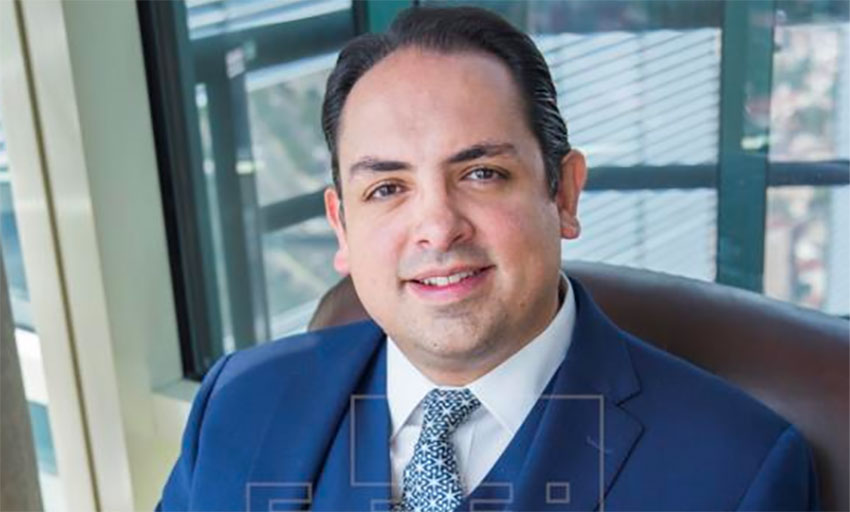
Caxxor's Carlos Ortiz
An aerospace park in Sinaloa is part of the project.

A Mexican company that is planning to develop an ambitious North American trade corridor between the Pacific coast port city of Mazatlán, Sinaloa, and Winnipeg, Canada, is also preparing infrastructure projects in Mexico’s south.

Caxxor Group announced in October that it was aiming to raise US $3.3 billion in initial investment to build a new port and shipyard in Mazatlán, industrial parks in an undisclosed number of locations in Mexico, a Mexican exports logistics center in Winnipeg and 87 kilometers of railway tracks in Sinaloa that will connect with more than 7,000 kilometers of existing railroads in Mexico, the United States and Canada.

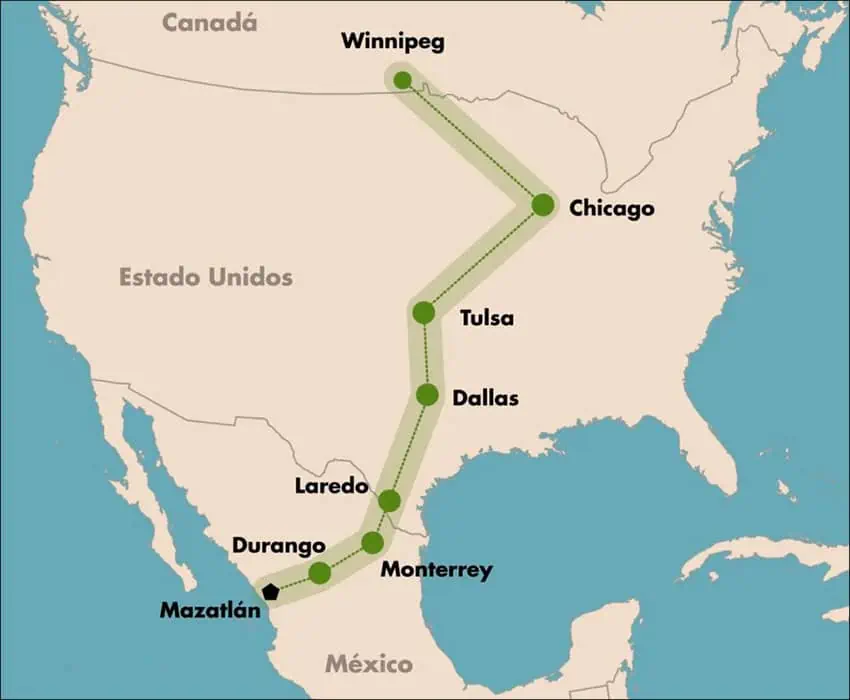
The project is called the USMCA corridor, named after the new trilateral North American trade agreement that took effect July 1. It is slated to run through industrial regions of Sinaloa, Durango and Monterrey, Nuevo León, before reaching the United States. In the U.S., it will run to Chicago, Illinois, via Dallas, Texas, and Tulsa, Oklahoma.

Caxxor CEO Carlos Ortiz told a press conference Monday that the investment in Mexico is expected to be about $1.6 billion. Between $650 million and $700 million will go to the rehabilitation of 167 kilometers of existing railroad and the construction of 180 kilometers of new tracks, he said.

Ortiz said the project will start with the construction of the $900-million port in Mazatlán, adding that its exact location will be announced at the end of January.

Route of the rail corridor between Mazatlán and Winnipeg.

He said that Caxxor and its investment partner, United States-based National Standard Finance, will seek environmental approval and other required permits later in 2021. Ortiz said the project is backed by 50 institutional investors in the U.S.

Ortiz said previously that after agricultural, automotive, manufacturing and energy sector goods leave the Mazatlán port and move along the Mexican section of the USMCA corridor they will be transformed at newly-built factories and plants that will add value to them.

The transformational nature of the trade corridor will be a point of difference with other logistics routes such as the Panama Canal, he said in October.

In a new interview with the newspaper Milenio, Ortiz said that Caxxor is also planning a $600-million USMCA “southern border” corridor in the south of Mexico, although it won’t include development of a rail network.

He said that projects planned for the states of Chiapas, Tabasco, Campeche and Quintana Roo will be on a smaller scale than those along the Sinaloa-Winnipeg route.

The largest project of the southern border corridor will be a $250-million multiple use maritime terminal in Puerto Chiapas, a port town on the Pacific coast about 30 kilometers southwest of Tapachula.

Caxxor's Carlos Ortiz
Caxxor’s Carlos Ortiz said a $600-million southern corridor is also being planned.

Expected to be completed in 2021, the terminal is to be used by auto sector companies that export to countries in Central and South America. Asian shipping companies will use it as a freight center, Ortiz said, and part of the facility will handle agricultural goods for export.

The Caxxor CEO said that smaller projects including industrial parks and port terminals are planned for the Gulf coast states of Tabasco and Campeche and Quintana Roo, which has an extensive Caribbean sea coastline.

He said that new port terminals in those states will be “very modest” and service ships traveling between Mexican ports.

“They will be joined to a logistics park, each one for different industrial sectors,” Ortiz said.

He said that Caxxor will act as the manager of the southern border project and will seek investors to support it. The investors will form a trust that will have responsibility for obtaining the required permits and licenses to execute the project, Ortiz said.

The different projects in the four states are expected to be built over the next 18 months, he said, adding that a master plan for Caxxor’s projects in Mexico will be presented next month.

Source: Milenio (sp), El Economista (sp) 

Time for a road trip? 5 alternative tourism routes promote travel by land

0
The city of Campeche
The city of Campeche is included in the Wonders of the Peninsula route.

A new tourism initiative offers five road trip routes that encourage people to travel responsibly, safely and sustainably in Mexico.

The Mexican Federation of Tourism Associations (Fematur), the World Wildlife Fund (WWF) and vacation rental company Airbnb have joined up to create Mexico by Land, five different road trips that take in destinations in Mexico’s south, southeast, central and Pacific coast regions.

The three partners are aiming to reactivate domestic tourism, help the economy recover during the ongoing coronavirus pandemic and “promote tourism in balance with local communities and biodiversity.”

The five routes include “attractive and biodiverse spots in Mexico that seek to be an alternative to mass and traditional tourism,” Airbnb said in a statement.

“In turn, they will allow people to travel more safely, integrate their experiences with local communities, and make their value chains visible while contributing to economic recovery during and after Covid-19.”

Mahahual is on the Caribbean Paradises route.

The five Mexico by Land routes, described in detail on a new Airbnb website (Spanish only), are El Corridor del Jaguar (The Jaguar’s Corridor), La Ruta del Sol (The Route of the Sun), Joyas del Pacífico (Pacific Jewels), Paraísos del Caribe (Caribbean Paradises) and Maravillas de la Península (Wonders of the [Yucatán] Peninsula).

The Jaguar’s Corridor begins in the Chiapas capital Tuxtla Gutiérrez and passes through several destinations in the same state as well as Campeche. They include the colonial city of San Cristóbal de las Casas, the Lagunas de Montebello, the archaeological sites of Bonampak, Palenque and Calakmul and the magical town of Palizada.

The Route of the Sun begins in Mexico City and takes in destinations including the laidback magical town of Tepotzlán, Morelos state capital Cuernavaca – known as the city of eternal spring – and the silver city of Taxco, Guerrero. It ends in Acapulco, Mexico’s once-famed international tourist destination that is now more popular with domestic sun, sand and surf seekers.

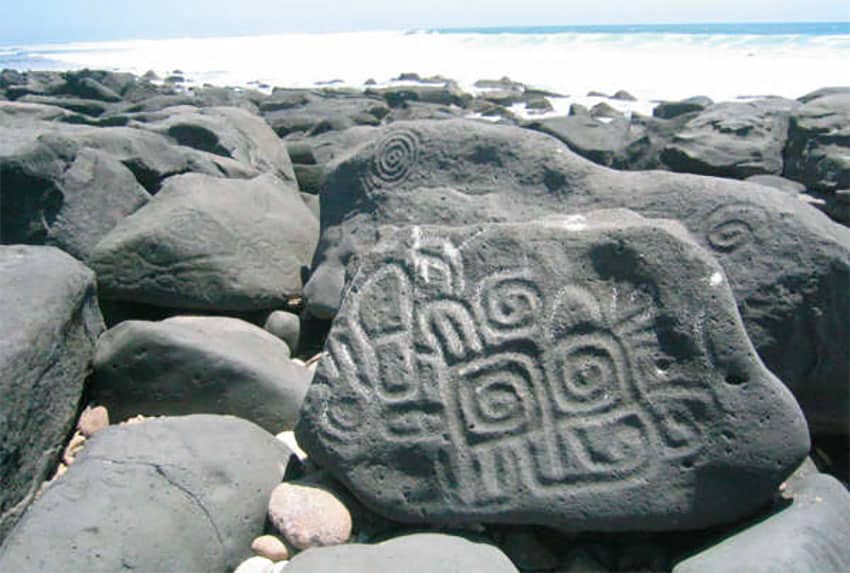
The Pacific Jewels route begins in the Jalisco capital Guadalajara, Mexico’s second largest city, and ends at Las Labradas, a coastal archaeological site in Sinaloa. Destinations between the two points include the birthplace of Mexico’s favorite tipple, the magical town of Tequila, the resort city Puerto Vallarta, the relaxed beach town of Sayulita, Nayarit, and Sinaloa’s Pearl of the Pacific, Mazatlán.

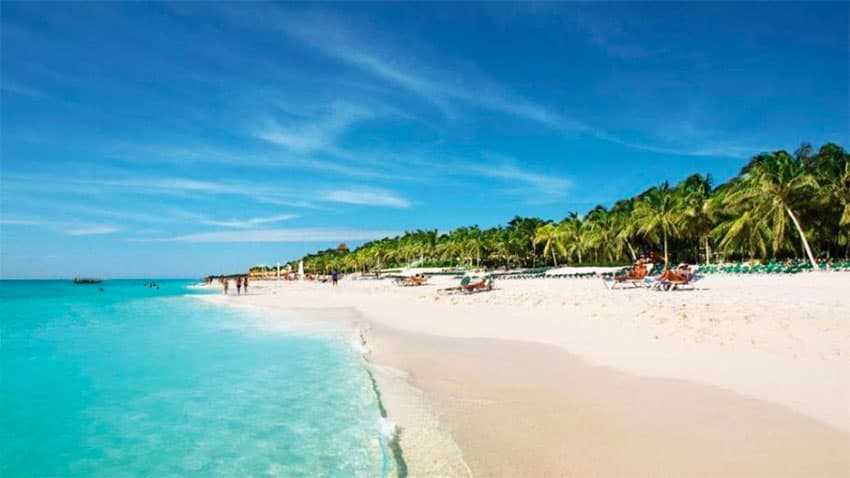
As its name suggests, the Caribbean Paradises route focuses on Mexico’s Caribbean coast in the state of Quintana Roo. It includes the popular beach destinations of glitzy Cancún, trendy Playa del Carmen and hip Tulum. Barely straying inland, the route also includes lakeside Bacalar, the beach town of Mahahual and the islands of Cozumel and Holbox.

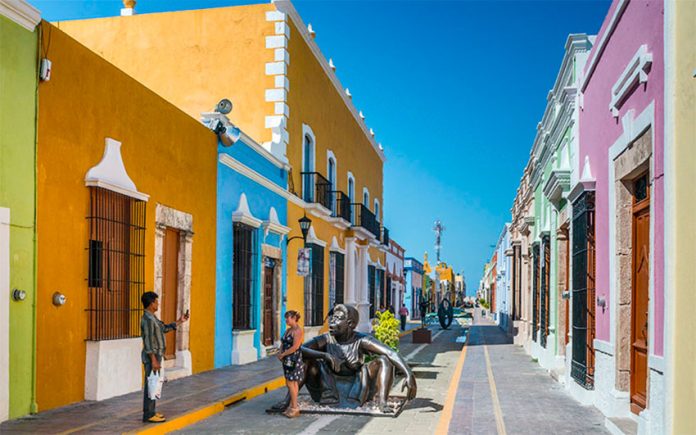
The fifth and final route, Wonders of the Peninsula, begins in the Yucatán’s largest city and cultural capital, Mérida, colloquially known as the white city. Other destinations on the route include the small port of Sisal – one of 11 new magical towns announced earlier this month, the yellow city of Izamal, the colonial city of Valladolid, which is well known for its convent, and colorful Campeche, a port city filled with pastel-colored colonial architecture. The Mayan archaeological sites of Uxmal and Ek Balam are also on the route.

Petroglyphs at Las Labradas, a destination on the Pacific Jewels road trip.

Airbnb México public affairs director Jorge Balderrama said the Mexico by Land initiative “seeks to contribute to boosting the economy of micro and small entrepreneurs in Mexico through these highway routes.”

“We believe that in order to travel more safely and continue contributing to the tourism economy, domestic and land travel in compliance with the prevention measures against Covid-19 established by governments are a responsible solution,” he added.

Balderrama also said the initiative would help support more than 10 million direct and indirect jobs related to tourism.

WWF México conservation director María José Villanueva said that “sustainable, responsible and inclusive tourism is a great opportunity … to raise awareness about the biodiversity of our country.”

“The alliance with Airbnb is an example of how travel can be sustainable in Latin America, and how it can help local communities to have a green recovery in the new normal,” Villanueva said.

Source: El Universal (sp), El Economista (sp)  

Cultures mix easily at Zihuatanejo’s Orient Bay Restaurant

0
Zihuatanejo's Orient Bay restaurant.
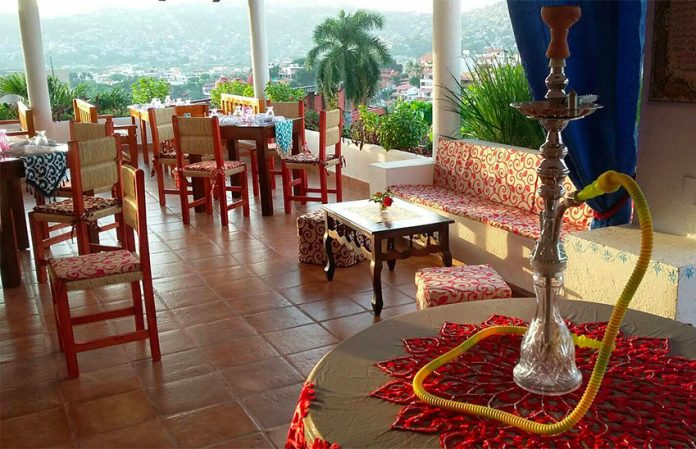
Orient Bay restaurant overlooks the city of Zihuatanejo.

High in the hills and overlooking the beautiful city of Zihuatanejo sits a charming restaurant known as Orient Bay, now in its second year. But like restaurants all over Mexico, this year has brought its challenges.

But owner and chef Didier Pic has hit upon a way to encourage clientele to come back by combining his love of Arabic and Mediterranean food and the performing arts.

Born in Marseille, France, Pic received his training in culinary arts on the French Riviera, in Nice. His extensive career has taken him around the globe as an executive chef to Saudi Arabia, where he reported to Prince Ibrahim Al Saud; to the Camino Real Polanco, famous for Mexico’s largest banquet facility, which accommodates up to 4,000 people; and to Japan, Poland, Spain, Tunisia, China, Thailand, and the United States, to name a few more.

A career opportunity with Club Med brought him to Ixtapa, Zihuatanejo, in 1992, where he met his future wife, who also worked at the resort. After leaving there in 1996, despite having two children, Pic continued his career as a freelance consultant, setting up kitchens or working as an executive chef. Eventually, all the time away from his family made him decide to return home to Zihuatanejo, and in 2019 he launched Orient Bay.

From the beginning, the Mediterranean, Arabic and Asian cuisine received rave reviews from patrons who wanted something different. But like many others, Orient Bay faced a setback when Covid-19 hit. His restaurant, along with other businesses, was forced to close temporarily.

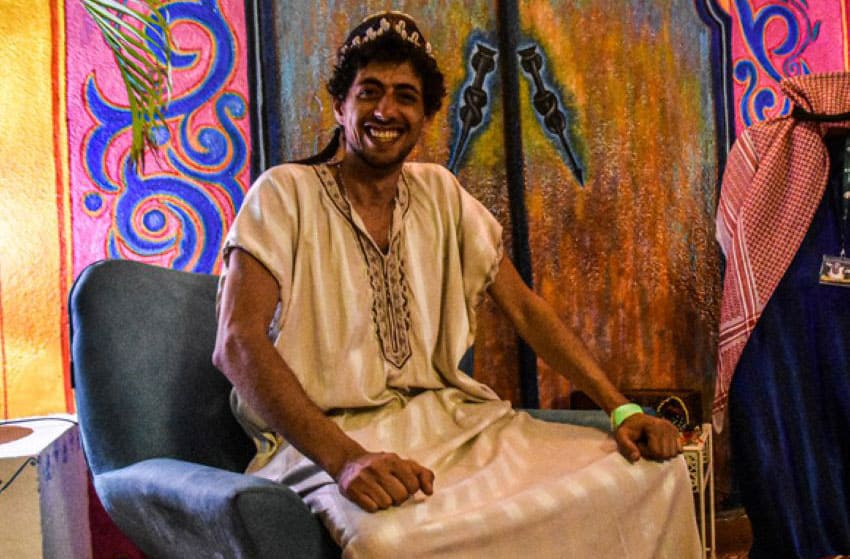
Hicham Billouch from Morocco heads the music and belly dance troupe.

When the go-ahead to reopen came, Pic looked for ways to bring people back. An idea he had planned to implement before Covid struck blossomed once more. He turned to the internet to search for someone who could help him achieve his vision.

There he found a young musician from Morocco, Maestro Hicham Billouch, who already had a remarkable career in his home country. Billouch had played for the Mexican Senate and had cemented a solid reputation here.

Like many people, he came to Mexico a few years ago as a tourist, fell in love with its diversity and decided to stay. He was gratified by the enthusiasm Mexicans had for Arabic and Moroccan music. In particular, he was surprised by the sheer number of belly dancers and belly dance schools in Mexico City alone.

“In Morocco,” Billouch told me, “we have only one!”

With a wide talent pool to choose from, Billouch was able to create a troupe to play traditional Moroccan instruments, along with belly dancers, who were willing to perform across Mexico. Together now for six years, Orquestra Nour Marruecos includes belly dancers Giselle Rodríguez and Judith — the former also plays the qanun, vocals, and the rig, Ernesto Vega on the darbuka, Betzy López on violin and bass and, lastly, Maestro Hicham Billouch on keyboard, guembri and vocals.

As Pic suspected, Zihuatanejo was ripe for something different. Performances for the restaurant’s two shows on December 11 and 12 sold out in mere days. A diverse crowd of both locals and tourists clearly enjoyed the lively performance.

Chef Didier Pic.
Chef Didier Pic.

For 248 pesos per person, patrons were treated to a platter of sampler appetizers like hummus and labneh and a main course filled with tabouleh, falafel and kebob skewers of three different meats. For dessert, there were dates and basbousah cakes.

The event was so successful that Pic plans to add future shows and entertainment. You can find out more at the restaurant’s Facebook page.

The writer divides her time between Canada and Zihuatanejo.

Appearance of salt dome stokes fears of volcano in Veracruz

0
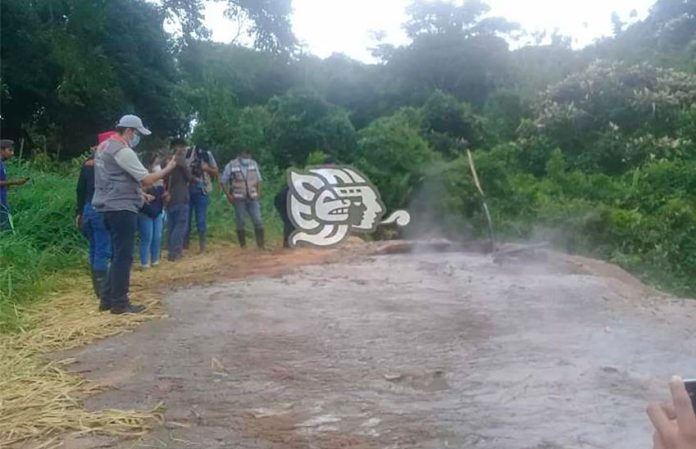
It's a saline dome, not a volcano.

The emergence of a natural salt dome in southeastern Veracruz triggered fears among residents that a volcano was forming, but state officials say their worries are unfounded.

However, the dome, which appeared in the municipality of Moloacán, does pose other possible risks, including contamination of water supplies, possible burns from contact with boiling saline-infused mud, and accidents due to possible soil erosion.

Officials said the saline was damaging flora and fauna exposed to the salt-infused mud near the dome and contaminating the water. The boiling hot mud is releasing vapors that had led to residents’ fears about a volcano.

Biologists with the Civil Protection agency said the phenomenon was caused by movements in the ground that are causing shifting and cracks that allow certain gases to escape.

State officials also warned area residents not to drink from local water supplies nor give animals water from nearby sources like streams. In addition, they warned residents not to turn the dome into a local attraction because of possible soil erosion around it.

Salt domes can occur in sedimentary basins where thick salt deposits dating back up millions of years have been buried by at least 500 feet of sediment. If the sediment layers exert enough pressure on the salt layer, it can cause some parts of the salt layer to push upward through sediment.

Salt domes have appeared in the area before. Three domes appeared in 2014 between Moloacán and the municipality of Las Choapas. The natural occurrence eventually disappears, they added, and predicted that new one would last anywhere from a few weeks to a few months.

Sources: Milenio (sp), Imagen de Veracruz (sp)

Lawmakers approve bill that regulates activities of foreign agents in Mexico

0
DEA agents' activities will be restricted under new law.

The lower house of Congress approved legislation on Tuesday that regulates the activities of foreign agents in Mexico, removes their diplomatic immunity and allows for their expulsion from the country.

Passed by the Senate last week, the National Security Law reform attracted the support of 329 deputies while just 98 opposed it. The legislation was subsequently sent to President López Obrador for promulgation.

While it refers to foreign agents in general, the legislation is seen as being aimed primarily at United States Drug Enforcement Administration (DEA) and Federal Bureau of Investigation agents who have long operated in Mexico.

Outgoing United States Attorney General William Barr has warned that the legislation would “only benefit the violent transnational criminal organizations and other criminals that we are jointly fighting,” making citizens of Mexico and the U.S. “less safe.”

López Obrador has defended it, saying that it affirms Mexico’s sovereignty and “puts things in order” with regard to the regulation of cooperation with foreign agents.

The legislation states that those agents must share information they gather here with Mexican authorities. They will be required to provide monthly reports of their activities to the ministries of Foreign Affairs and Security.

The law also stipulates that foreign agents will not have any immunity should they commit a crime or carry out an activity that corresponds exclusively to local security forces.

“Although according to international law they will have functional immunity if they stick to exercising consular functions, if they commit crimes they will be subjected to Mexican justice,” said Rocío Barrera, a Morena party deputy.

“They won’t have any immunity if they enter our country without being accredited by the Ministry of Foreign Affairs,” she added.

Adriana Dávila, a deputy with the National Action Party, which opposed the legislation, described the law as a unilateral approach to multilateral threats such as organized crime, drug and arms trafficking, money laundering and terrorism.

She said that removing foreign agents’ diplomatic immunity and making them subject to trial in Mexican courts could result in an “international conflict with serious consequences.”

The legislation also stipulates that Mexican authorities will at at all times monitor the activities of foreign agents to ensure that they are complying with Mexican legal obligations and those derived from international security agreements to which Mexico is party.

One example is the Mérida Initiative, a 12-year-old security cooperation agreement between Mexico, the United States and Central American countries.

The legislation says that if a foreign agent, “in the opinion of Mexican authorities,” violates “general and specific provisions” applicable to him, “the government of Mexico will request his withdrawal from the government of the accrediting state.”

It also says that foreign agents in Mexico can only carry weapons that have been authorized by the Mexican Ministry of Defense. They will be prohibited from acting unilaterally to make arrests or raid private property.

Mexican officials will have to get permission from a new security panel to meet with foreign agents and will be required to promptly provide details of what they discussed to the Foreign Affairs and Security ministries.

Ioan Grillo, a veteran drug war journalist based in Mexico, said in a video posted to his YouTube channel that the legislation is a “real big, game-changing law.”

Mexican Law Puts Leash On DEA Agents
Journalist Ioan Grillo says law is retaliation against US for arresting ex-defense minister.


“[It] really alters how the DEA has done business here in Mexico for almost 50 years,” he said, adding that it will “really restrict what American agents can achieve here in Mexico.”

After noting that there is widespread agreement that Mexican security forces are “extremely corrupt,” Grillo said that under the new law “any information about drug traffickers and what the [foreign] agents are going after goes to the Mexican federal government government,” adding that the information could “slip out and these people could perhaps escape capture that way.”

Grillo and other observers say the legislation is retaliation for the United States’ arrest in October of former army general Salvador Cienfuegos on drug trafficking charges. After being lobbied by Mexican authorities, who complained about not being informed about the plan to arrest the ex-defense minister, the U.S. in November surprisingly agreed to drop charges against Cienfuegos and send him back to Mexico even though he is not currently accused of any wrongdoing here.

Alejandro Hope, a Mexican security analyst, told The New York Times that the legislation is a symbolic effort to reassert Mexican sovereignty before Joe Biden assumes the United States presidency in January.

“They’re scared of the transition in the United States. They want to send a message that there are tools on this side” of the border,” he said.

In a congratulatory letter sent to Biden on Monday, López Obrador included a caution about Mexico’s support for non-intervention in the affairs of foreign countries, writing, “we are certain that with you as president of the United States it will be possible to continue applying” the principle.

Source: Milenio (sp) 

Partying, gun-happy cops investigated in Michoacán

0
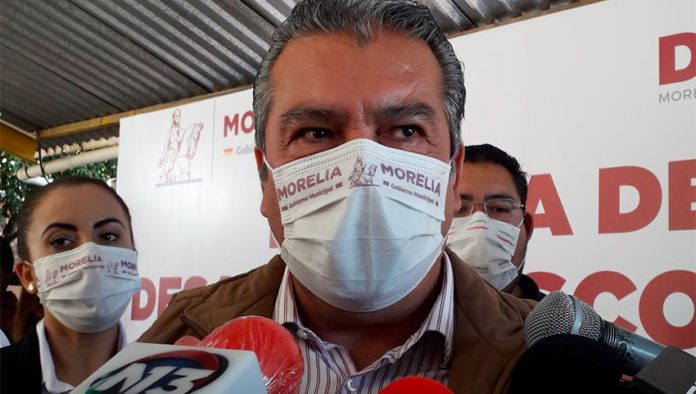
Mayor Morón
Mayor Morón: investigation ordered.

Municipal and state security officials are investigating an incident in which at least 10 Michoacán state and Morelia municipal police officers were caught on video at a house party last weekend where a gun was fired into the air.

The 20-second video was recorded at night and not clear. But what was on the video was enough for municipal and state authorities to launch their own separate investigations.

Michaocán police said they had identified one of their female employees in the video.

Morelia Mayor Raúl Morón Orozco said he had instructed the police to open an internal investigation into the video.

Any officers found to be involved in the incident would be sanctioned according to municipal regulations, he said.

In the video, which shows what appears to be a small house party, multiple people dressed in what appear to be police uniforms are seen drinking and dancing inside a house. Later in the video, men in civilian clothes who Morelia security officials have identified as municipal police officers are seen on a patio outside.

One of them shoots a pistol into the air three times in the general direction of a street. A municipal police car can be seen parked in the background.

Sources: Mi Morelia (sp), El Universal (sp)

Tulum festival regrets not having canceled event that spread virus

0
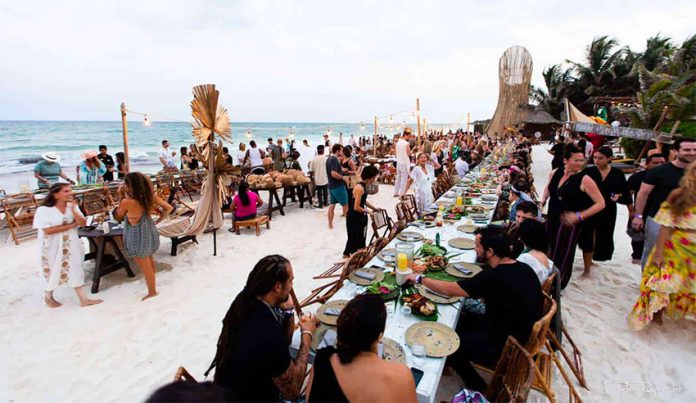
Festival-goers enjoy a previous, pre-Covid Art With Me event.

The organizers of a multi-day festival in Tulum, Quintana Roo, last month — described as a coronavirus  superspreading event — have issued an apology.

In a statement to CNN, the organizers of the Art With Me festival said they regretted “not canceling the event entirely.”

Numerous cases of the coronavirus were detected in both Mexico and the United States among people who attended the November 11-15 festival or had contact with someone who did.

The event, which organizers describe as “an international arts, music and cultural festival curated to inspire us to be more connected to ourselves,” published recommendations on its website to prevent the spread of the virus but many attendees ignored them.

Video footage of nighttime parties at hotels, restaurants and cenotes (natural sinkholes) in Tulum show hundreds of maskless people dancing in close proximity to each other.

Marlene Góngora, a 40-year-old Mexican lawyer who attended the festival, told CNN that the risk of infection was far from her mind while she was enjoying the event.

“When people are gathering in front of the DJ, it’s obvious that nobody is wearing a mask because you are at the beach. At that moment, when you’re at a party, you’re not thinking of contagion,” she said.

The festival organizers said they cooperated with authorities to develop health measures that included temperature checks upon entry to venues, the distribution of face masks and their mandatory use “in certain areas.”

But “we learned that we cannot control people from adhering to guidelines, or staying away from other venues in the area that did not adhere to our standards,” they said.

“We stand behind our protocols and are grateful to the Mexican government for their incredible cooperation. However, in the end, we regret not canceling the event entirely. We apologize for any strain this may have caused our already overtaxed healthcare system and front line workers, and we hope others might learn from our experience.”

As of Tuesday, only 311 confirmed coronavirus cases had been detected in the municipality of Tulum compared to more than 7,000 in Benito Juárez, which includes the Quintana Roo resort city of Cancún.

tulum
In Tulum, festivals are permitted to have gatherings of up to 300 people

Tulum Mayor Víctor Mas told CNN that up to 300 people are permitted to attend events in the municipality as long as venue capacity limits are adhered to. That allowed the organizers of Art With Me to hold the festival at five venues across Tulum, he said.

Tulum Hotel Association president David Ortiz Mena said that the owners of local hotels, which hosted some of the Art With Me events and accommodated attendees, agreed to comply with coronavirus restrictions including limits on restaurant and bar capacity.

However, he acknowledged that the rules were not always followed.

“Sadly, even though efforts were made both by the organizers of the event and the local government, this event clearly got out of hand,” Ortiz said. “I think the attendees to the event also have a responsibility. Clearly, people are not taking care of themselves.”

The hotel association chief said he was concerned that large events such as Art With Me, and the surrounding negative media coverage, could have an adverse effect on the broader tourism industry in Tulum.

“I think it’s one thing to have tourism, to have our beaches open, to have people visiting Tulum. But … if you do this type of event, it really puts us all at risk, not just the visitors, but our staff, the people who live here,” Ortiz said.

“And at the end of the day, not just human lives, but also the economy. People are supposed be able to make a living and there’s no excuse to put us all at risk. We should avoid this at all cost.”

Another multi-day festival, Zamna, is scheduled to go ahead in Tulum on New Year’s Eve but Mayor Mas said that it and other large events won’t be permitted unless the coronavirus risk level drops to green light “low.”

The risk level in Quintana Roo is currently orange light “high” on the federal government’s coronavirus stoplight system after switching to that color from yellow light “medium” at the start of last week.

Source: CNN (en)