Home Blog Page 1401

Veteran Catrina makeup artist won’t let the virus stop her Day of the Dead

0
Erika Ponce, a former chemist, has made women into Catrinas for 10 years.

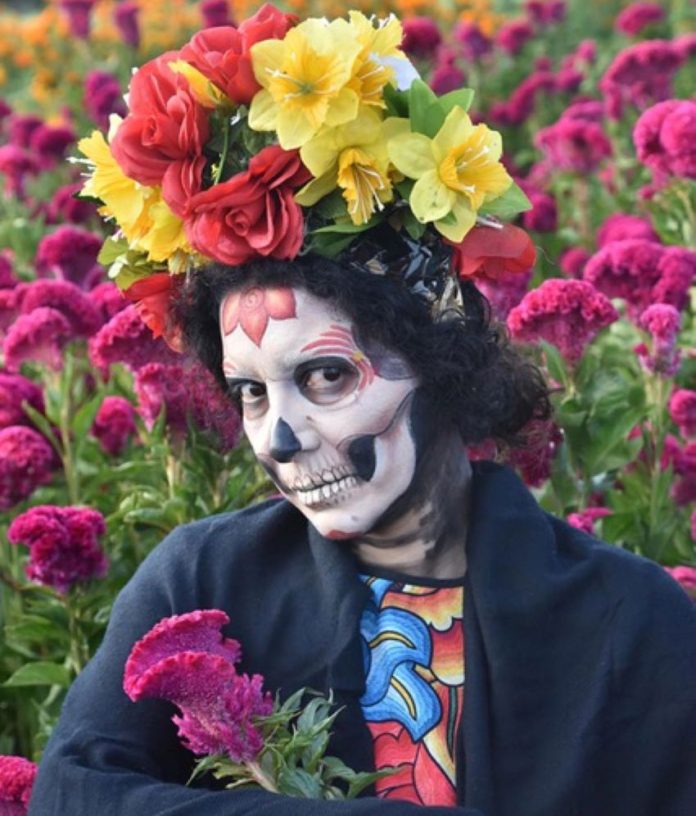
It takes an hour and a half, but by the end, makeup artist Erika Ponce transforms herself from an attractive 40-year-old into a frightening skeleton known as La Catrina, the iconic image that appears throughout Mexico during Day of the Dead celebrations.

The original Catrina was an etching by José Guadalupe Posada from the first decade of the 20th century, showing a female skull in a fancy flowered hat. Posada made it to poke fun at Mexicans who were adopting European dress and rejecting their indigenous roots. Ponce sees other things in the image as well.

“It does not matter how much money or how many things you have, you cannot take anything with you at the end,” she said. “We will all be skeletons.”

Ponce trained as a chemist, but decided she preferred painting to the laboratory and taught herself to paint portraits. For the last 10 years, she’s been turning women into Catrinas.

“I transitioned from painting to this,” she said, “changing from painting on canvases to painting on faces.”

When Ponce does a Catrina transformation, she starts with the greasepaint clowns use.

She works in her home at a small kitchen table crammed with brushes and paints, illuminated by a single light as she stares into a mirror. Intensely focused, she nevertheless carries on a conversation with her parents eating lunch at the same table while nearby, her 7-year-old son Tiago plays Beethoven on the piano.

Ponce first applies a base of greasepaint, the same stuff clowns use, followed by a layer of powder. Then it’s white and various shades of brown and black as she traces the outlines of her facial bones.

“This can take as little as 15 minutes or as long as six to 10 hours to do a whole body,” she said. “For clients who just want their face painted, it is about 40 minutes.”

Afterward, Ponce heads to a field of cempasúchil (Mexican marigold) and terciopelo (cockscomb) — the brilliantly colored Day of the Dead flowers — dressed in a traditional Mexican outfit.

“I usually dress in fancier clothes,” she said, “but traditional clothes look nice.”

She attracts a lot of attention, with people smiling and nodding at her as if they recognize an old friend.

After finishing painting the Catrina skull on her own face, Ponce often crowns herself with flowers gathered in a nearby field.

Like everyone in Mexico — and around the world — the pandemic has adversely affected her.

She usually works at the Catrina parade in Mexico City, but that’s been canceled this year.

“It is really sad for me because it’s the holiday I love most,” she said. “And for makeup artists, it is the best time to make some money. It is a big economic loss.”

But she won’t let the pandemic stop her completely.

“We will not have parades or big festivities, but Mexicans cannot let Day of the Dead pass,” she said.

Ponce's final version of the traditional Catrina skeleton is both beautiful and frightening.
Ponce’s final version of the traditional Catrina skeleton is both beautiful and frightening.

Her tone takes on a bit of defiance as she continues.

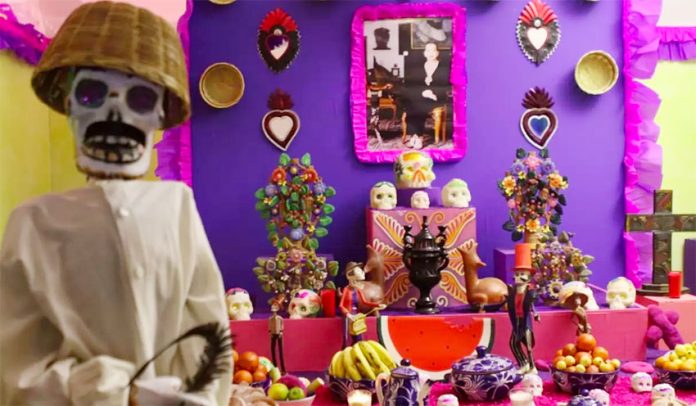
“We will celebrate at home. We will make our ofrendas [altars], we will dress up, do our makeup and enjoy hot chocolate, hojaldras [pastries] and pan de muerto [bread of the dead] with family and neighbors. We will think about our family members who passed away and celebrate their lives with fun anecdotes.”

But during the fun and curtailed festivities, she’ll remember why she continues to celebrate the holiday and why she spends hours transforming herself into a skeleton. It’s a realization perhaps more poignant this year.

“We do this to remind ourselves that life is short.”

• More of Ponce’s work can be seen here and more information can be found on her Facebook page.

Joseph Sorrentino is a regular contributor to Mexico News Daily.
No Covid worries for devotee of St. Jude: ‘He can take care of it’

0
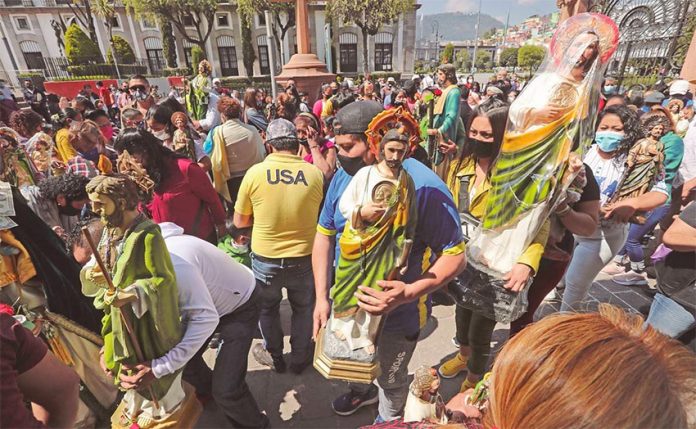
Devotees of the saint at a celebration Wednesday in Toluca, México state.

The coronavirus pandemic couldn’t stop devotees of Saint Jude Thaddeus flocking to the San Hipólito church in central Mexico City on Wednesday to pay their respects to the patron saint of desperate cases and lost causes on his annual feast day.

Thousands of believers defied calls from Mexico City authorities to stay away from the church in order to avoid possible transmission of the virus.

The devotees, many carrying flowers and statues of their beloved saint, began arriving at the church also known as the Temple of San Judas Tadeo on Tuesday night and larger numbers descended on it throughout Wednesday. Some arrived barefooted or walking on their knees.

The Mexico City government and the church had said that nobody would be allowed into the temple due to the pandemic and feast day services were canceled. However, the authorities relented and allowed groups of 30 people to enter and show their devotion to their saint in five-minute intervals.

“We welcome them, say a prayer of blessing and tell them to leave,” Mario González, the rector of San Hipólito, told the Associated Press.

As they waited for a chance to enter, crowds of people, some of whom were not wearing face masks, ignored social distancing protocols and gathered together in close proximity.

While hundreds made the journey to pay homage to their saint, the annual celebration was only about one-tenth its normal size, according to Mexico City Culture Minister José Alfonso Suárez.

One fervent follower who was undeterred by the pandemic was a 45-year-old man identified only as Jorge by the newspaper El Universal.

He said he rode his bicycle 20 kilometers from the México state municipality of Tlalnepantla to pay his respects.

“I come every 28th of the month with faith and devotion. My faith is bigger than Covid,” he said while clutching his plaster figure of Jude the Apostle.

Jorge and many other believers agreed that their faith helps them overcome all manner of adversities, including the coronavirus.

“Saint Jude can handle everything, even the damn Covid,” said one. “People should pray hard, they should have faith and that son of a bitch will put an end to all this pandemic. That’s what I’m going to ask for and you’ll see that everything will be fine after this.

San Judas’ feast day also brought out vendors of religious items who set up their wares on Hidalgo Avenue, knowing that the faithful would arrive despite the growing coronavirus case tally and death toll.

As might be expected, the patron saint of desperate cases and lost causes is especially popular with the poor and those who have had run-ins with the law. There are thousands of street shrines to San Judas Tadeo in the streets of Mexico City, especially its poor areas.

The saint also has followers in many other parts of the country with significant numbers in Monterrey, where many devotees also ignored the risk of coronavirus infection to gather Wednesday at the San Judas Temple in the city’s downtown area.

Source: El Universal (sp), Animal Político (sp)

Mexico expresses ‘profound discontent’ to US over Cienfuegos case

0
Foreign Minister Ebrard
Foreign Minister Ebrard: Mexico still doesn't have all the details.

Mexico has expressed its “profound discontent” to the United States over not being informed about the plan to arrest former defense minister Salvador Cienfuegos, Foreign Minister Marcelo Ebrard said Thursday.

Cienfuegos, army chief during the 2012-2018 government led by former president Enrique Peña Nieto, was arrested at Los Angeles airport October 15 on drug trafficking and money laundering charges.

“We’ve let the United States know our profound discontent that they did not share the information [about the arrest] with our country,” Ebrard told President López Obrador’s morning news conference.

The foreign minister said the federal government has informed the U.S. government of its displeasure both verbally and in writing.

López Obrador has called on the United States to provide Mexico all information about the Cienfuegos case but Ebrard said the government is still not privy to all the details.

He noted that United States Ambassador Christopher Landau told him that U.S. authorities can’t share all the information due to legal constraints.

Following a proposal that the government pay Cienfuegos’ legal fees, López Obrador said the 72-year-old former defense minister, denied bail at a hearing last week, is receiving consular assistance but stressed that the government wouldn’t fund his defense.

“When Mexicans are detained and on trial abroad, they are supported. There’s consular assistance but [government] resources aren’t used to defend any alleged perpetrator of crimes; that possibility is not being considered,” he said.

“Budget money can’t be used to pay the defense of people arrested in the United States.”

The Institutional Revolutionary Party proposed that the state pay for lawyers representing former Mexican security officials who don’t face accusations in Mexico.

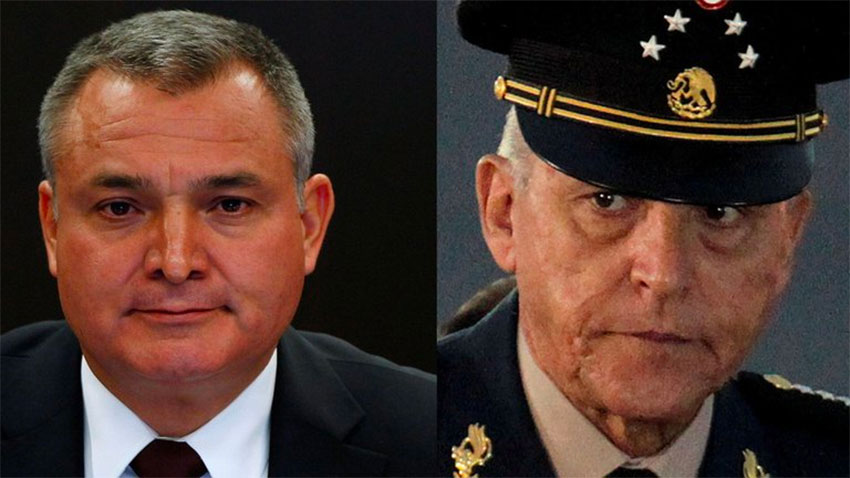
Former Security Minister Genaro García Luna was arrested in the United States last December on accusations he colluded with the Sinaloa Cartel but like Cienfuegos doesn’t face charges at home. García, security chief during the 2006-2012 administration of Felipe Calderón, is in prison in the U.S. awaiting trial.

Ex-security minister García and ex-defense chief Cienfuegos
Ex-security minister García and ex-defense chief Cienfuegos: both are in jail in the US on drug charges.

López Obrador has used the arrest of both Cienfuegos and García to support his claim that past governments were corrupt.

The arrest of the former raises awkward questions for the president because his government is relying heavily on the military for public security as well as the construction of infrastructure projects and a range of other tasks not directly related to national security. However, he has defended the military and portrayed Cienfuegos’ case as an exception rather than the rule.

Ruling party Senator Ricardo Monreal said Wednesday that the Congress had doubts about the accusations against the former army chief and stressed that it will respect his right to the presumption of innocence.

“We’re not going to act rashly or [make] presumptive accusations,” he said. “We want to express our respect for due process and the presumption of innocence.”

Speaking in the presence of current Defense Minister Luis Cresencio Sandoval, the leader of the Morena party in the upper house said the military as an institution was “unscathed” by the arrest of Cienfuegos.

“The Senate … trusts the armed forces, … isolated events [involving] members of the army don’t damage or stain the army and the armed forces,” Monreal said.

The lawmaker also said that the Senate would send a diplomatic note to the United States government seeking additional details about the arrest of Cienfuegos, who allegedly colluded with the H-2 Cartel to smuggle drugs into the U.S.

If convicted, the former defense chief could face a mandatory prison sentence of at least 10 years.

Source: El Financiero (sp), El Norte (sp), Reforma (sp), Milenio (sp) 

Sanctuary closure sparks virtual butterfly tours to support economy

0
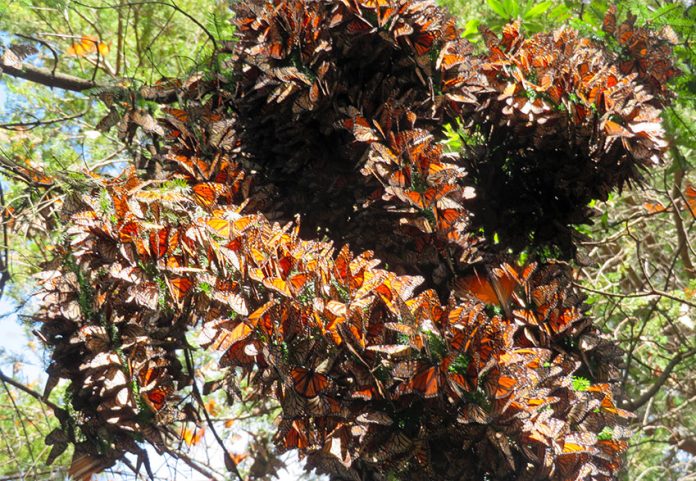
Cluster of monarch butterflies on Cerro Pelón
Cluster of monarch butterflies on Cerro Pelón, in México state. butterflies & their people

While butterfly sanctuaries in México state are gearing up to open for the arrival of the monarchs in November, two sanctuaries on the butterflies’ first major stop in Mexico — and where they form their first colony of the season — will be closed to the public this year due to fears about the coronavirus pandemic.

The monarch butterflies were sighted last week in the town of Macheros, but visitors will not be allowed to enter the viewing site there, nor the one in nearby El Capulín, due to concern among officials that outsiders will bring Covid-19 to their community.

The founder of Monarch Watch, an organization dedicated to the conservation of the monarch butterflies, expressed dismay over the decision.

“The many people employed to serve the public and protect the forest in the community will surely suffer from a loss of income, and potential visitors to the area will be excluded from the wonderful, sometimes life-changing, experience of seeing the masses of monarchs on the oyamels,” Chip Taylor said. “It’s a shame.”

The annual fall migration of monarch butterflies from Canada and the United States to Mexico begins in late August or September. By November, the butterflies, after traveling up to 4,800 kilometers, have gathered in Mexico at various locations in Cerro Pelón, a 3,200-hectare federal nature reserve spanning both Michoacán and México state in the Pelón mountain range.

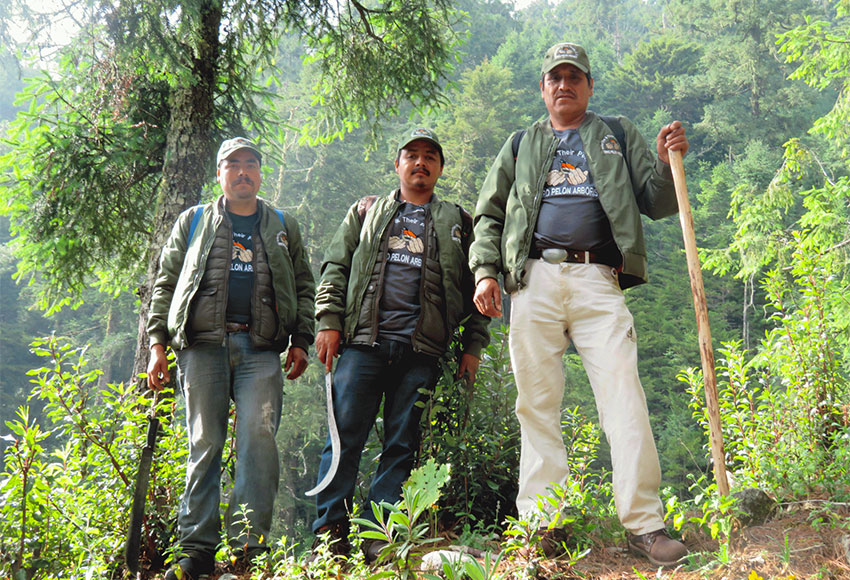
Butterflies & Their People arborists in the Cerro Pelón Monarch Butterfly Sanctuary. butterflies & their people

Because the entire Cerro Pelón sanctuary is protected, towns wishing to allow visitors to access sanctuaries in their communities must apply for a permit. This year, says Ellen Sharp, who owns JM’s Butterfly B&B in Macheros, officials declined to apply, citing coronavirus fears.

“Members of our community have been told there will be consequences if they’re caught sneaking people in,” Sharp said.

The economic effects of the closure of Macheros and El Capulín this year could also have ramifications for the monarchs’ habitat inside that part of the sanctuary, Sharp said, once locals see that the sanctuary sites are empty.

In this small, remote community of 2,000, job opportunities are scarce. Butterfly tourism has become an alternative to the illegal logging of the oyamel, pine, oak and cedar trees in the preserve. Logging threatens the butterflies’ habitat since the trees in the mountainous forest area provide a moist protective canopy that attracts the monarchs to winter there.

Macheros native and butterfly guide Ana Moreno states the issue bluntly.

“When people don’t have enough to eat, they cut down trees to sell,” she said.

Ellen Sharp of Butterflies & Their People.

Sharp, whose nonprofit Butterflies & Their People employs six “forest guardians” to patrol the Macheros area of the sanctuary for signs of both butterfly activity and logging, says the guides have already reported signs of increased logging.

Habitat loss has been a concern for monarchs internationally for decades. Urban sprawl is a factor, contributing to the loss of both habitat and food sources, as is increased mowing along roadsides even in rural areas, which all threaten milkweed, the only food monarch caterpillars eat, and pollination sources. Insect and weed control chemicals are another factor.

This summer, the Commission for Environmental Cooperation, a Canadian NGO, organized the International Monarch Monitoring Blitz, a citizen-scientist-powered count of monarch numbers, migratory habitats, and food sources in Canada, the United States and Mexico. At just 9,649 eggs, caterpillars and adults, monarch summer populations appear to be down from last year, the commission said.

The Wisconsin Department of Natural Resources said in 2019 that widespread habitat loss has resulted in monarch populations east of the Mississippi River declining 80% in the last two decades.

Beyond the effects of the pandemic on her hospitality business, with no butterfly tours available nearby this year, Sharp has already begun warning away monarch-focused customers and is refunding deposits.

She is experimenting this year with “virtual tours” of the Macheros part of the sanctuary that will start next month.

[wpgmza id=”262″]

People will be able to sign up for a digital multimedia magazine updating them regularly on the monarchs’ activity beginning in November, and in February she’ll offer a daily video newsletter with footage of the monarchs during their busy month before leaving Mexico.

Part of the proceeds from the virtual tours will keep the forest guardians employed, Butterflies & Their People supervisor Patricio Moreno said.

“I hope that people will join our online experiences,” he said. “The more participants we have, the more people we can hire to help us to patrol the forest during this difficult time.”

Mexico News Daily

City invites citizens to submit Day of the Dead altar photos

0
The top 100 photos will be entered in a contest on Instagram.

Mexico City is launching an online Day of the Dead altar contest to allow citizens to celebrate the holiday from home and share images of their altars.  

Citizens who create altars honoring loved ones who have passed away are invited to take photos of their creations and upload them to the Ministry of Culture’s social media sites with the hashtag #OfrendaInfinita, or “Infinite Offering.” 

The best photos will be published on October 31 to Facebook, Twitter and the ministry’s website.

Also posted will be photos of altars at the capital city’s museums and those created by artists.

The top 100 photos will be entered in a contest on Instagram with winners announced at noon on November 6. 

The photos will then be shown in open-air art galleries around the city, as well as at Mexican consulates in cities around the globe. Winners will receive bus passes, Xochimilco tours and free tickets for the Six Flags Mexico amusement park.

In addition to the contest, officials announced that monuments in Mexico City will be illuminated in orange until November 6.

And on November 1 at 8 p.m. the city’s lights will be turned off for 10 minutes in honor of the victims of Covid-19. Residents are also encouraged to light a candle on behalf of medical personnel and families of the deceased.

Meanwhile, the Tourism Promotion Fund is encouraging people to buy Day of the Dead bread, snap a photo of themselves soaking the bread in hot chocolate or coffee and upload the photo to Instagram with the hashtag #ChopeandoElPan or “DunkingBread.” 

Cemeteries in Mexico City will be closed over the holidays and the traditional Day of the Dead parade will be an online event this year due to the pandemic. 

Source: El Financiero (sp)

As of Sunday, not wearing a face mask in Nuevo León could land you in jail

0
covid patient
Ten Chihuahua hospitals are over 80% full.

People not wearing face masks in Nuevo León will be subject to arrest as of Sunday, the state health minister said Wednesday as hospitals in northern Mexico fill up with an influx of coronavirus patients.

Manuel de la O Cavazos said that people not wearing face masks in Nuevo León could be arrested and detained for 36 hours.

Authorities could also fine mask scofflaws or make them perform community service, the health minister said.

“We have to be stricter, … we have to use face masks,” he said.

His warning that penalties will be imposed on people who refuse to cover their faces in public came the same day as President López Obrador said that enforcing coronavirus measures with punishment or curfews is unnecessary because Mexicans are “obedient, responsible and sensible.”

De la O Cavazos also said that municipal and state police will be authorized to break up gatherings of 20 or more people at homes, party halls and other venues. Attendees could be arrested and detained for 36 hours and face hefty fines, he said.

“The objective is … not to collect economic resources, the objective is to look after [people’s] health,” the health minister said.

Nuevo León currently has the third highest number of active cases among Mexico’s 32 states, according to federal Health Ministry estimates. Only Mexico City and México state, with 12,727 and 3,730 estimated active cases, respectively, have a higher tally than the northern border state, where 3,505 people are currently estimated to have symptoms.

As of Wednesday just under 1,300 Covid-19 patients were hospitalized in Nuevo León, according to the state government.

The risk of coronavirus infection in the state is currently orange light “high,” according to the federal government’s stoplight system, but de la O Cavazos said earlier this week that the state should be “intense red.”

Hospitals filling in Chihuahua

In the only state that is currently red – Chihuahua – hospitals in Ciudad Juárez, Delicias and Nuevo Casas Grandes have recently filled up with Covid-19 patients.

Eighteen of 25 Covid-designated hospitals in the northern border state are more than 50% full and 10 have reached occupancy levels of 80% or higher, according to the Chihuahua government.

Federal health authorities announced Tuesday that the state’s capacity to treat Covid-19 patients will be increased in light of the growing number of hospitalizations.

Health Ministry Director of Epidemiology José Luis Alomía said that additional medical personnel are being deployed in Chihuahua and that extra medical equipment and supplies, including 50 ventilators, have been sent to the state.

Chihuahua currently has an estimated 2,467 active coronavirus cases and there were more than 800 patients in the hospital on Tuesday including 155 on ventilators, according to state authorities.

The state has recorded 17,271 confirmed cases since the beginning of the pandemic, the 19th highest tally among the 32 states, and 1,839 Covid-19 deaths.

Durango hospitals risk being overwhelmed

Hospitals in neighboring Durango are also under intense pressure.

The president of the Medical College of Durango told the newspaper Reforma that many hospitals are at risk of being overwhelmed.

“Due to the number of cases we’re having – yesterday [Tuesday] we had 363 new confirmed cases – the Covid areas of the hospitals are practically at 100% [capacity],” Nora Covarrubias Torres said.

“If we have 100% occupancy and we continue to have an elevated number of [new] cases it’s logical that the health system will collapse, it’s [already] on the verge of collapsing.”

Covarrubias, an anesthetist, said that doctors including orthopedists, pediatricians and gynecologists are treating Covid-19 patients due to a shortage of specialized personnel.

“We’re all exhausted … but with the desire to keep working,” she added.

Covarrubias said that while doctors are working to save the lives of people sick with Covid-19, many residents of Durango are not taking the necessary precautions to slow the spread of the coronavirus.

“There’s a feeling that we’re not in the fight at the same level; we’re here trying to take care of a population that doesn’t want to take care of itself,” she said.

Durango currently has an estimated 2,309 active coronavirus cases, the seventh highest tally in the country, and has officially recorded 775 Covid-19 deaths since the beginning of the pandemic.

The northern state is currently orange on the federal coronavirus map but health promotion chief Ricardo Cortés warned last week that it will turn red if its coronavirus outbreak doesn’t decline. He issued the same warning for Nuevo León and Coahuila.

Deaths spike in Sonora

In Sonora, there is plenty of space available in hospitals but Covid-19 deaths have increased sharply in the past three weeks, Governor Claudia Pavlovich said on Wednesday.

There were 176 deaths in the three week period between October 4 and 24 compared to 125 in the three weeks prior, a 41% spike.

However, Pavlovich said the percentage of infected people who are dying has almost doubled in recent weeks from 3.5% to 6.9%.

Currently “medium” risk yellow on the stoplight map, Sonora has recorded 3,141 Covid-19 fatalities since the start of the pandemic and 37,764 confirmed cases, the fifth highest tally in the country behind Mexico City, México state, Nuevo León and Guanajuato.

The Health Ministry estimates that there are currently 849 active cases in the state.

Nationally, deaths pass 90,000

The national case tally rose to 906,863 on Wednesday with 5,595 new cases reported, while the official Covid-19 death toll increased to 90,309 with 495 additional fatalities registered.

Mexico ranks 10th in the world for confirmed cases and fourth for deaths, according to data compiled by Johns Hopkins University.

Among the 20 countries currently most affected by Covid-19, Mexico has the highest case fatality rate with 10 deaths per 100 confirmed cases. Among the same group of countries, it has the fourth highest mortality rate with 71.6 deaths per 100,000 inhabitants.

Belgium, Spain and Brazil rank first to third, respectively, in that category while the United States ranks fifth.

Source: Milenio (sp), Infobae (sp), Reforma (sp), Animal Político (sp), El Imparcial (sp) 

Man who worked at US embassy an ‘experienced sexual predator’

0
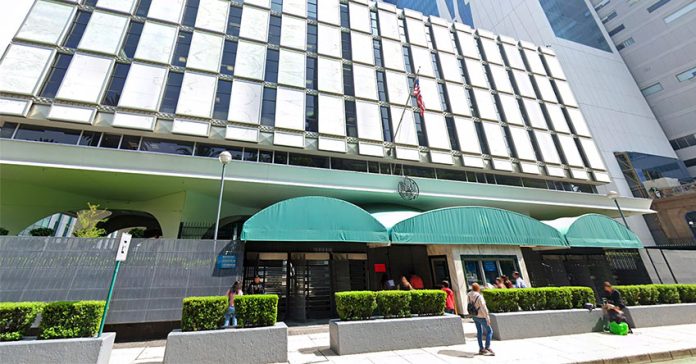
US Embassy Mexico City
The suspect worked at the US Embassy until last May.

A man who worked at the U.S. Embassy in Mexico City was an “experienced sexual predator,” according to court documents, with at least 22 victims in both Mexico and the U.S. 

Brian Jeffrey Raymond, a U.S. citizen who until May worked for an agency of the United States government has been charged with coercion and enticement in the United States, although more charges are expected to be added.

The indictment stems from a May 31, 2020, incident in which police were summoned after a woman shouted for help from the balcony of a Mexico City apartment owned by the embassy. The woman was scared and disoriented and was taken to the hospital where doctors found injuries indicating that she had been injured and raped.

Raymond, 44, maintained that his relationship with the woman was consensual and he was released by Mexico City police. He left the country for the U.S. the following day and after a two-week quarantine agreed to be interviewed by federal investigators.  

Authorities seized his phone and other electronic devices and discovered at least 25 videos and 400 photos of naked and unconscious women. At least nine women in Mexico City appear to have been victims, the indictment alleges, as well as 15 others in the United States.

He was arrested on October 9 in La Mesa, California, where he was visiting his parents.

According to the prosecutor, Raymond would contact women through dating apps like Tinder or Bumble, meet up with the women and drug their drinks before sexually abusing them.

He continued dating women after returning to the United States, authorities say.

Raymond has been denied bond and is awaiting trial in San Diego. If convicted he could face life in prison.

Source: Milenio (sp), NBC News (en)

59 bodies discovered in hidden Guanajuato graves

0
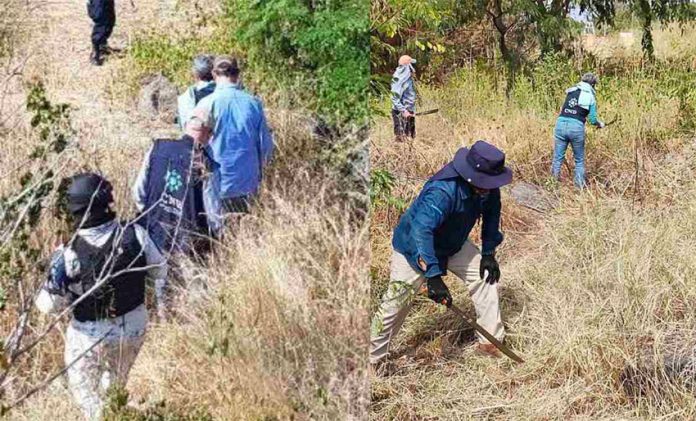
Searching for bodies in Salvatierra, Guanajuato.

At least 59 bodies were discovered in clandestine graves in Salvatierra, Guanajuato, this week, authorities say. 

Between 10 and 15 of the bodies were women, and preliminary evidence suggests the majority of those buried were young people or adolescents.

The excavation of the graves began on October 20 in the San Juan neighborhood of the city. The army, National Guard, criminal investigators and a private search brigade participated in the effort.

The graves were located due to a tip received two weeks ago, and authorities say there may be more people buried in the area. 

People who have family members who have disappeared are encouraged to report their disappearance and have genetic testing performed in order to be able to identify remains.

The bodies have been transferred to Celaya for forensic identification. 

It was the largest discovery of bodies so far this year in Guanajuato, a state that has become a bloody battleground between rival criminal gangs as the Santa Rosa de Lima and Jalisco New Generation cartels fight for control.

Guanajuato has seen 3,032 homicides in the first eight months of this year, representing a 33% increase over January through August 2019 and making the state the most violent in Mexico.

Source: El Universal (sp), Latinus (sp)

Environmentalists urge halt to decree that would allow herbicide, GM corn

0
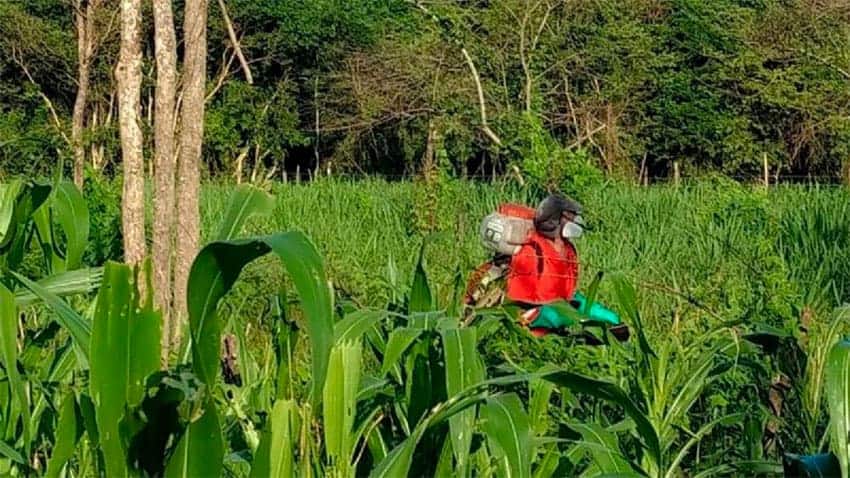
The presidential decree would allow the continued use of glyphosate.

More than 200 activists and environmental and sustainable agriculture organizations have written to President López Obrador to urge him to cancel a plan that they say will open the door to the cultivation of genetically modified corn and allow the ongoing use of glyphosate, a controversial herbicide.

In an open letter, the activists and organizations including Greenpeace, Sin Maíz No Hay País (Without Corn There Is No Country) and Alianza por la Salud Alimentaria (Alliance for Food Health) say that an Agriculture Ministry (Sader) proposal that is intended to serve as the basis for a presidential decree violates campaign promises made by López Obrador.

The president pledged to ban genetically modified corn and phase out the use of glyphosate – the active ingredient in the Monsanto herbicide Roundup, whose effect on human health is hotly contested.

According to the letter, Agriculture Minister Víctor Villalobos and presidential legal adviser Julio Scherer sent the Sader proposal to the Commission for Regulatory Improvement (Conamer) last Friday.

The critics say that the proposal instructs the relevant authorities to continue analyzing the possibility of granting permits for the cultivation of genetically modified corn.

They urge López Obrador to withdraw the Scherer-Villalobos proposal from Conamer and to have a new one drawn up in accordance with his promises.

The activists and organizations reminded the president that he said he would take a close interest in the Agriculture Ministry’s views on genetically modified organisms to ensure they align with his own. They urged López Obrador to seek an explanation from Villalobos and Scherer, who they charge are betraying him.

“They’re seeking to … betray your trust, preventing you from keeping your word in the sense that [you said] there won’t be genetically modified corn during your government and that the use of glyphosate will be progressively outlawed until its total elimination in 2024,” they said.

The letter says this is the third attempt by Sader to have a presidential decree published that opens the door to the cultivation of genetically modified corn. The ministry also sought approval of proposals in June and August but was unsuccessful due to opposition from the Environment Ministry, among other reasons.

Former environment minister Víctor Toledo resigned at the end of August a few weeks after audio was leaked in which he is heard railing against Sader’s opposition to banning glyphosate and declaring that the federal government is full of “brutal contradictions.”

López Obrador said in early September that Toledo stepped down for health reasons but officials close to the president told the newspaper El Universal that his resignation was linked to his criticisms of the government in the leaked recording.

The Environment Ministry under Toledo had been pushing for a presidential decree prohibiting glyphosate and began banning its importation last year.

In his final act as minister, Toledo announced that López Obrador would publish a decree to establish the gradual prohibition of glyphosate and 80 other chemical agents as well as the banning of genetically modified corn.

“I believe this will mark a watershed in the environmental history of the country,” he said.

However, it remains to be seen which way the president will lean.

His commitment to disallow the use of genetically-modified organisms has been questioned since the beginning of his presidency, especially because of his appointment of Villalobos as agriculture minister and Alfonso Romo as his chief of staff.

Both men have been involved in organizations that support the genetically modified food industry.

Source: Proceso (sp) 

Annual pilgrimage has ancient pre-Hispanic and Catholic roots

0
Mexico City's Pilgrimage of the Concheros has roots dating to the Conquest
Mexico City's Pilgrimage of the Concheros has roots dating to the Conquest.

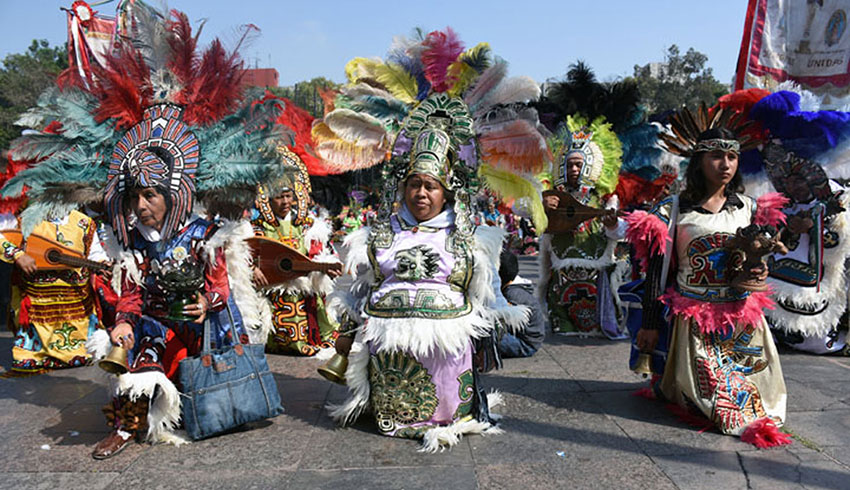
Every second Sunday in November, Tlatelolco’s Plaza de Tres Culturas in Mexico City fills with the smell of incense, the pounding of drums and singing as thousands of concheros from across central Mexico gather for their pilgrimage to Villa Guadalupe.

“It is one of four pilgrimages that we are required to make every year,” says Miguel Antonio Zamora Solís, a leader of Grupo San Miguel, a conchero group. “The others are pilgrimages to Chalma, La Virgen de los Remidios and El Señor del Sacromonte.”

Concheros are traditional musicians and dancers who are only found in Mexico’s central states where the Aztec and Chichimeca civilizations had flourished. Although this pilgrimage is called The Pilgrimage of the Concheros, other groups participate, each distinguished by their dress, instruments and dances.

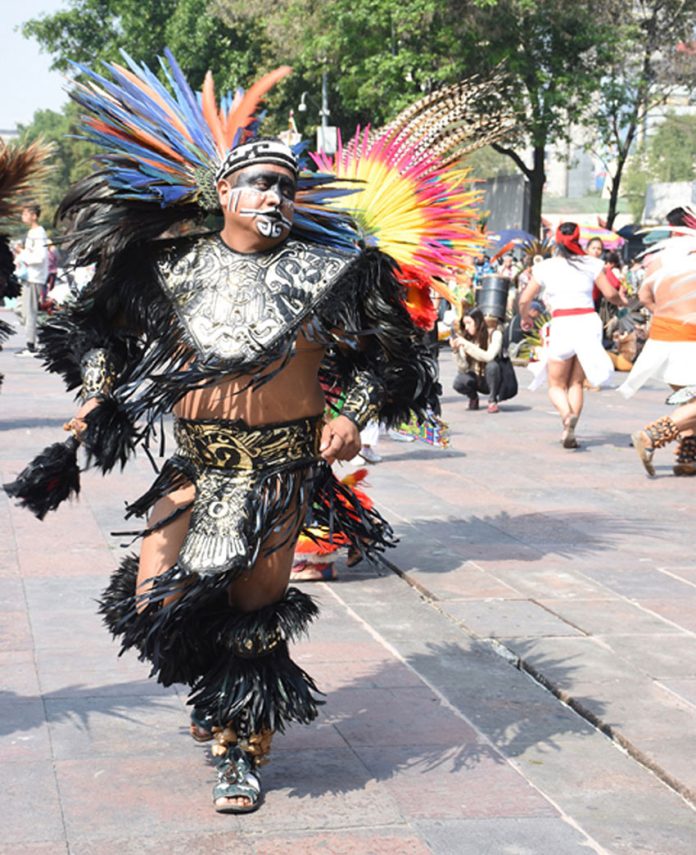
Concheros play stringed instruments called conchas, wear colorful skirts and capes that have an image of the Virgin Mary or an indigenous god on the back. They’re the oldest type of dancers, and it’s believed they were begun in 1531. Danzas Aztecas is probably the most easily recognized of these traditional dance groups, since they can be seen dancing in Mexico City’s zócalo.

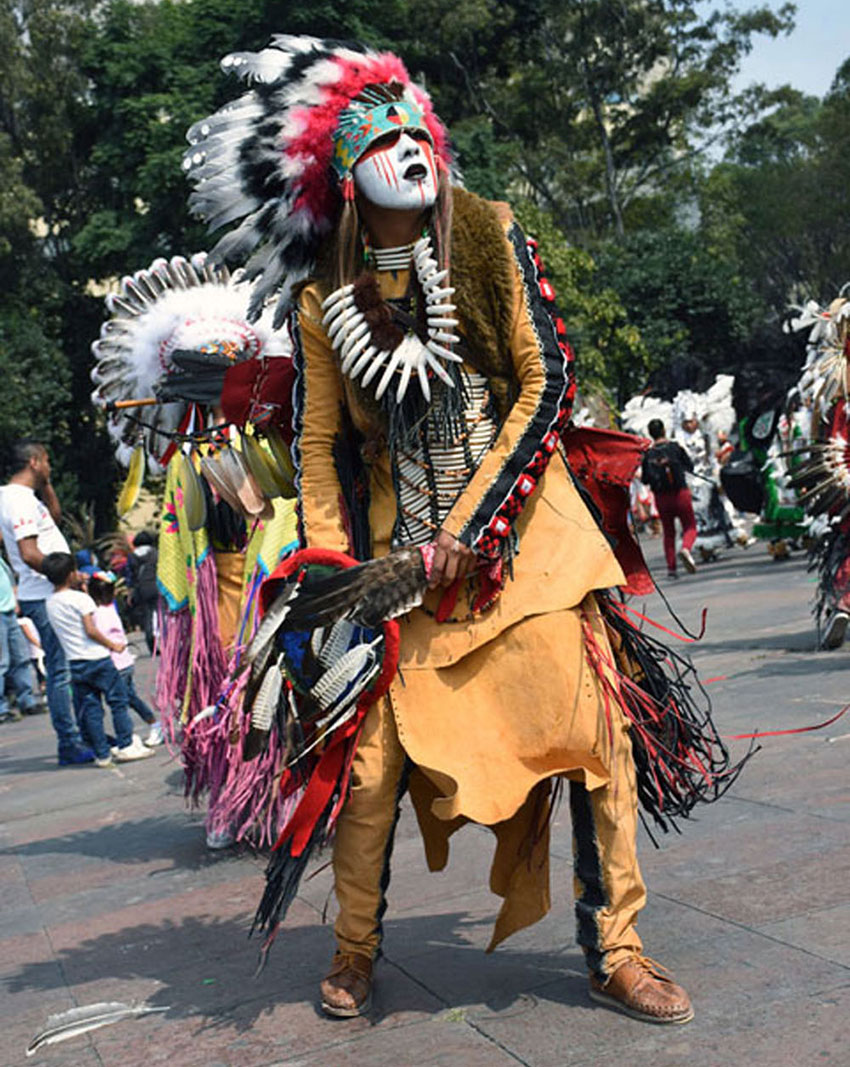
The dancers wear large feathered headdresses, have seeds from the ayoyote tree strapped to their ankles and dance to the pounding of the huehuétl, an indigenous drum. Other groups of dancers include the Danzas Guerreros, who paint their bodies black, and the Kikapoos, whose dress is like that of the Plains Indians from the United States.

Dancing in these annual pilgrimages is a tradition passed down through families.

The pilgrimage to Villa Guadalupe commemorates a miracle attributed to the Virgin of Guadalupe.

According to Catholic beliefs, the Virgin Mary appeared to Juan Diego, an indigenous man, four times in December 1531 in Tepeyac, Mexico City. This was where Aztecs had once worshipped Tonantzin, their mother earth goddess. During the last of these apparitions, flowers appeared on a hill — despite it being winter — and Diego reverently gathered them in his cloak as the sign of a miracle. When he opened his cloak to show the flowers to the Catholic bishop in Tlatelolco, so the story goes, Mary’s now-famous image had appeared on the cloak.

The bishop kept the cloak in his private chapel for a time until, on the second Sunday in November 1538, a procession was formed to carry it to Tepeyac. During the procession, an indigenous man was accidentally shot with an arrow and was expected to die. Others in the procession prayed to the Virgin and, miraculously, the man survived. The modern pilgrimage honors that miracle.

Tlateloco, located in the Cuauhtémoc borough in the northern part of Mexico City, was the second most important city after Tenotichtlán during the Aztecs’ reign. It was founded in 1337 and had the largest tianguis (market) in the Aztec empire. It also had a temple dedicated to Huitzilopochtli, the Aztec god of war, and an astronomical observatory.

Ruins are still visible in the Plaza de Tres Culturas, directly in front of the Church of Santiago Tlateloco, built by the Spaniards in 1521 atop destroyed Aztec temples.

The pilgrimage begins with groups performing cleansing ceremonies — participants and their instruments are cleansed with smoke billowing from incense pots. During this ceremony, the incense pot is moved in four directions, invoking both the Christian cross and the four cardinal directions important to many indigenous religions.

"We dance to better ourselves, our lives, how we act,” says conchero Miguel Antonio Zamora Solís.
“We dance to better ourselves, our lives, how we act,” says conchero Miguel Antonio Zamora.

In the large plaza, groups gather in circles where they dance and sing.

“In pre-Hispanic times, only warriors and priests danced,” says Javier Marquéz Juárez, who has studied and written about conchero history.

After the conquest, the Spanish tried to suppress all indigenous ceremonies, including dances, and when they couldn’t they incorporated Catholic symbolism and ceremonies. That is why, during the pilgrimage, people dressed in indigenous clothing can be seen performing cleansing ceremonies and dancing in front of Catholic altars while conch shells are sounded nearby.

“This is a Catholic celebration,” conchero Gregorio Paéz Paéz says, “but it is mixed with indigenous religion. They are of equal importance.”

As the morning progresses, more groups pour into the plaza, forming circles and performing rituals. The singing and drumming reach a fever pitch; the dancing becomes more frenetic.

“The words to the songs are Catholic,” Marquéz says, “but the thoughts are indigenous. The songs honor the Virgin of Guadalupe and Tonatzin.”

Participants in these events reflect Mexico's hybrid traditions: here men dressed as Roman centurions escort the Virgin Mary.
Participants in these events reflect Mexico’s hybrid traditions: here men dressed as Roman centurions escort the Virgin Mary.

And the dances aren’t just for performance or pleasure.

“With the dance, it is a union of the two religions — Catholic and indigenous,” said Zamora. “We dance to obtain different levels. For us, we believe there always exists selfishness. We dance to better ourselves, our lives, how we act.”

The sounds these groups make are so loud, it’s impossible to hold a conversation. Finally, when a signal is given, the procession begins, and people stream out of the plaza.

Villa Guadalupe is located in the place the Aztecs called Tepeyac. It’s only about four miles from Tlatelolco, but it will take three or four hours for the entire procession to reach it. Along the way, it’s possible to see the huge variety of groups that participate.

In addition to the concheros and other groups, there are men dressed like Roman centurions pulling a cart carrying a figure of the Virgin Mary. Others perform mock sword fights depicting the struggle between Christians and Muslims. There is at least one person dressed as a monster.

The scene at Villa Guadalupe is a repeat of what was happening in Tlateloloco: thousands of concheros forming circles, dancing and singing. While most participants enter the church where a mass is being performed, not all do.

A Kikapoo dancer, whose dress resembles that of Plains Indians in the US.

“Some groups don’t enter the church because they don’t recognize the Christian god,” said Marquéz.

“These are the Danzas Aztecas and Guerreros [groups].” Zamora added, “As Catholics, we go to visit the Virgin of Guadalupe. Those who venerate indigenous culture go to honor the land.”

The dancing and chanting continue long into the night, testing a person’s endurance. Somehow, they find the strength to continue.

“We are all warriors,” said Zamora. “It is an internal war. It is a fight to improve ourselves, to overcome our tiredness, to strengthen our faith.”

Joseph Sorrentino is a regular contributor to Mexico News Daily.