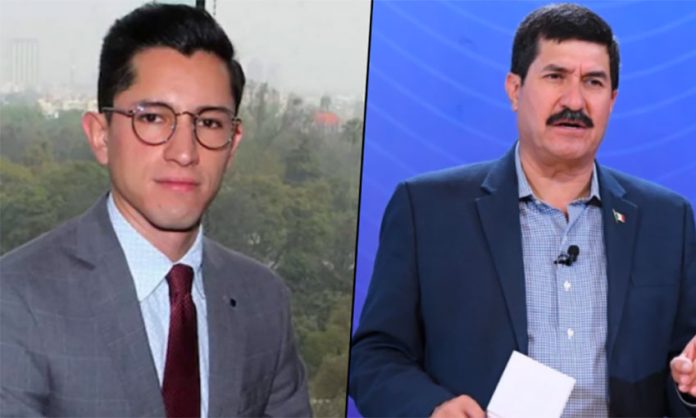
Velasco, left, and Corral: accusations continue to fly.
Chihuahua Governor Javier Corral has failed to comply with an agreement with the federal government to deliver water to the United States, according to a high ranking foreign affairs official.
Roberto Velasco, head of the Foreign Ministry’s North America department, told the newspaper Milenio that Corral has failed to comply with a pact to send hundreds of millions of cubic meters of water north of the border from Chihuahua.
Corral has denied signing an agreement with the federal government but Milenio said it has seen a pact endorsed by the governor and Velasco.
The foreign affairs official said that one possible reason why Corral decided not to comply with his commitment is that he believes doing so would hurt his National Action Party at 2021 elections in Chihuahua.
Corral said last week that the northern border state is complying with its obligations to send water to the U.S. and that officials with the National Water Commission (Conagua) are to blame for the failure to keep up with Mexico’s water obligations.
But Velasco claimed that the governor has manipulated figures and that Chihuahua is illegally retaining water.
“It’s the responsibility of the federal government to distribute water equitably and we’ll continue down that path to comply with our obligations [to the U.S.] even though it doesn’t suit the political interests of the Chihuahua government and annoys Governor Corral. … It’s not fair for a state to monopolize water at the expense of others,” he said.
Velasco’s remarks came after Deputy Security Minister Ricardo Mejía Berdeja accused a family of walnut farmers, a group of onion farmers and politicians of controlling and monopolizing water in Chihuahua.
The water commission said in a statement that it had to divert water from dams in Chihuahua because it can only send water it owes to the United States from international dams on the border, as Corral proposed, under certain conditions which cannot currently be met.
Velasco noted that Corral is aware that his proposal is not viable because water in such dams is needed to supply border cities such as Reynosa, Matamoros, Nuevo Laredo, Ciudad Acuña and Piedras Negras.
Conagua said that in order to comply with the water treaty – considered by many to be favorable to Mexico as the United States sends more water south of the border than it receives – it’s essential that Chihuahua meet its obligation to send 54.1% of the total water quantity that must be sent north of the border in each five year treaty cycle.
The state has so far only delivered 45.8% of the water that must be sent to the United States, the commission said.
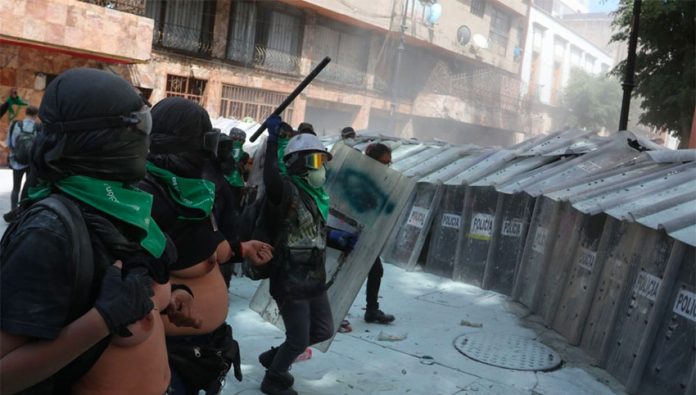
Shield-bearing police meet bare-chested protesters in Mexico City Sunday.
A group of about 40 women clashed with police in the historic center of Mexico City on Sunday during a pro-abortion march.
Members of the Bloque Negro feminist collective along with victims of abuse departed the headquarters of the National Human Rights Commission (CNDH) – which was taken over earlier this month by a women’s group and turned into a shelter for victims of gender violence – at 2:00 p.m. but their march was soon blocked by a contingent of more than 600 police officers led by policewomen.
The confrontation between the two parties quickly turned violent.
With their path blocked, women threw Molotov cocktails at the police on “repeated occasions,” according to the Mexico City government. They also graffitied buildings and caused damage to a convenience store.
The women, some of whom wore masks that covered their entire faces, also confronted the shield-wielding police with hammers and prohibited electrical apparatuses, according to a government statement, evidently referring to electroshock weapons.
A female reporter was pushed against a wall of the National Museum of Art, the newspaper El Universal said.
Eleven police officers sustained injuries including burns during the clash and eight were taken to hospital for treatment, the government said.
The protesters said they were victims of police violence.
“They pulled my hair, they choked me with a green handkerchief I was wearing around my neck, they grabbed me by my arms and they beat me in the face and ribs,” said Érika Martínez, a protester and mother of a girl who was a victim of sexual abuse.
While the clash between the protesters and police was occurring, women occupying the CNDH headquarters removed furniture, clothes and paper and set the objects alight on Cuba Street to prevent any attempted police incursion into the building, where women and children are taking shelter.
Women occupying the building say that police vehicles frequently approach the building before turning around, conduct they consider to be a threat.
After being corralled in the street by police and prevented from leaving for four hours, the protesters were finally allowed to return to the CNDH offices.
The Mexico City government said it had identified the protesters who attacked police and vandalized property and that they would be dealt with in accordance with the law.
It said that the aim of police was to “accompany and protect” the march but the actions of the protesters placed themselves, the media and other citizens in danger.
There were also protests after a majority of Supreme Court justices voted in July against upholding an injunction granted in Veracruz that ordered the state Congress to remove articles from the criminal code that stipulate that abortion in the first 12 weeks of pregnancy is illegal.
Abortion activists had hoped that the court would deliver a landmark ruling that would pave the way for the decriminalization of abortion across Mexico.
Mexico City and Oaxaca are the only states that have decriminalized abortion, the latter doing so in September last year.
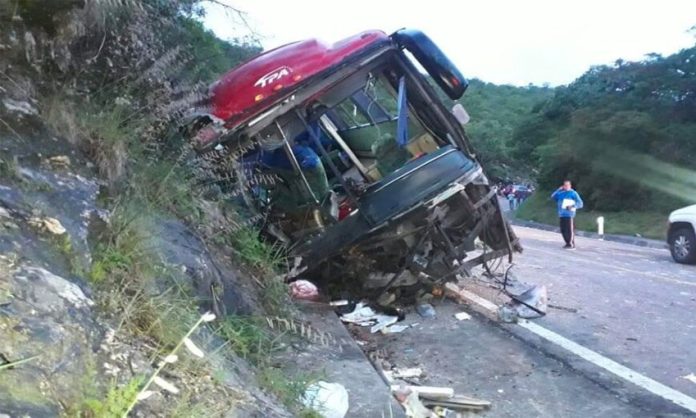
At least 13 people are dead and 25 injured in Chiapas after a bus crashed Monday morning on a stretch of highway near the city of Comitán.
Civil Protection director of emergencies Elías Morales Rodríguez told the newspaper Milenio that the accident occurred around 5 a.m. when the bus, which belongs to Transporte de Pasaje “La Angostura,” crashed into a “fixed object” on the road in the municipality of La Trinitaria. Among the injured were 11 women, nine men, and five children.
The object was apparently a concrete wall at the side of the highway. According to one report, the bus’s brakes failed.
“It’s a lamentable accident,” he said. “We are checking to see if any of the injured require emergency-flight transport.”
The bus was operating between Tuxtla Gutiérrez and Motizintla, traveling on the La Trinitaria–Chimic section of the Comitán–Ciudad Cuauhtémoc highway.
Various rescue personnel spent the morning working to remove passengers from the vehicle and transferring the dead to a nearby facility for forensic investigation. The wounded were transported by emergency personnel to various hospitals in nearby Comitán.
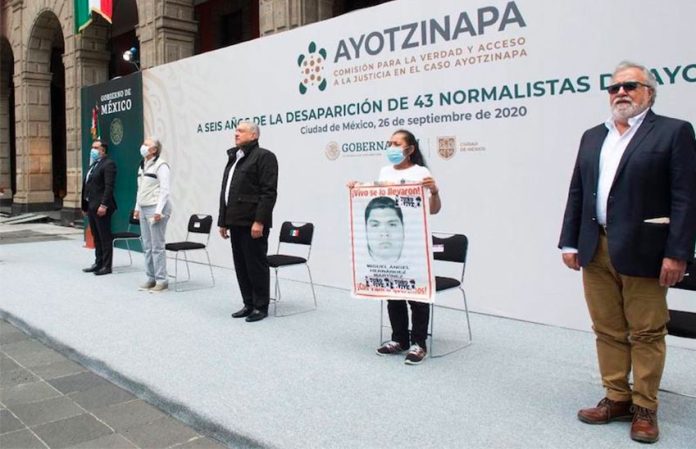
The president and other officials address parents of the missing students on Saturday, the sixth anniversary.
For the first time, arrest warrants have been issued against soldiers and federal police in connection with the disappearance and presumed murder of 43 students in Guerrero in 2014.
The Attorney General’s Office (FGR) announced Saturday – the sixth anniversary of the Ayotzinapa rural teachers college students’ disappearance in Iguala – that 25 new warrants had been issued for the arrest of people who participated in and/or knew about the abduction.
Attorney General Alejandro Gertz Manero said that “those responsible for the forced disappearance of the 43 students … are fully identified” and will be prosecuted.
In an address to parents of the missing students at an event on Saturday, President López Obrador also spoke of the arrest warrants against soldiers and police.
“He who participated and it is proven will be tried, this is an advance, there will be no cover-up,” he said.
“The truth, the authentic truth, has to be known. That’s the commitment,” López Obrador said, pledging that there will be zero impunity in the case.
He called on judges to act with rectitude and not release suspects, many of whom have already been set free.
“We need the judges to help to advance [in the case]. There are a lot of problems in the judicial branch, they release suspected culprits for any reason,” López Obrador said.
According to the previous government’s official version of events – the so-called “historic truth” – the students, who had commandeered buses to travel to a protest march in Mexico City, were intercepted by corrupt municipal police who handed them over to a local gang, the Guerreros Unidos.
Gang members then killed the students, burned their bodies in a dump in the municipality of Cocula and disposed of their remains in a nearby river, according to the version of events presented by former attorney general Jesús Murillo Karam in January 2015.
But the “historic truth” was widely questioned and rejected by the current government, which established a truth commission and launched a new investigation into the case.
Former chief investigator Zerón has been accused of stealing more than 1 billion pesos.
The army has long been suspected of being involved in the students’ disappearance and parents of the victims have demanded it be investigated.
There is a large army base near where the students were abducted and independent investigations have found that members of the military were aware of the events of September 26, 2014. One theory is that the students’ bodies were burned in army incinerators after they were killed.
Omar Gómez Trejo, the special prosecutor in charge of the reexamination of the case, said that among the suspects currently being sought are “the intellectual and material authors of the disappearance.”
“These orders [arrest warrants] include police from various municipalities, federal police [and] members of the army,” he said.
Gómez said that current and former officials with the FGR and members of organized crime groups are also being sought. He didn’t reveal whether Murillo Karam was one of the officials authorities are seeking to arrest.
The motive for the students’ abduction and presumed murder has not been definitively established by the current government but Gertz Manero, who said earlier this year that the “historic truth” is over, said Saturday that the students were “victims who ended up in the middle of a battle of interests between drug trafficking forces.”
They were allegedly mistaken for members of a rival gang, Los Rojos, and there have been reports that there were drugs on the bus they commandeered. Heroin made with opium poppies grown in Guerrero has long been transported through Iguala en route to the United States.
Gertz Manero said the Ayotzinapa students were not the only people to have been killed in Iguala on the night of September 26.
“Nearly 80 people were massacred and hidden in Iguala by the different criminal groups and their official accomplices,” he said.
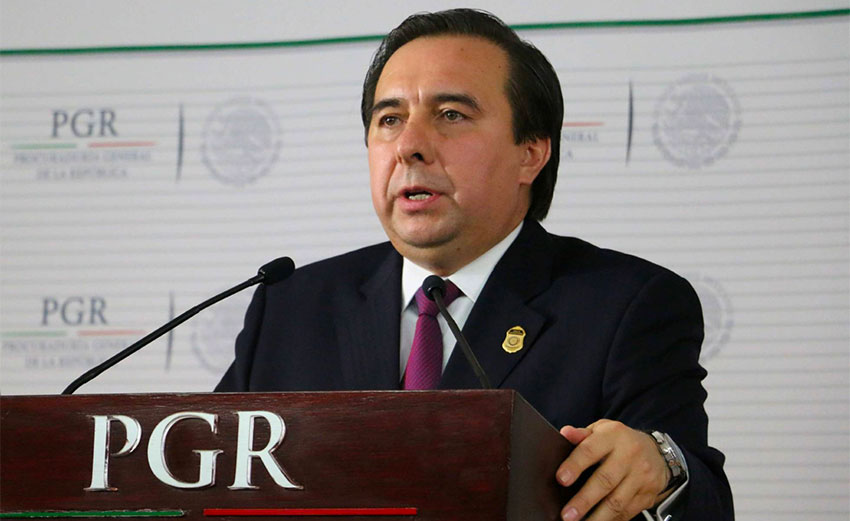
One former official being sought by authorities is Tomás Zerón, who was head of the now-defunct Criminal Investigation Agency at the time of the students’ disappearance.
A warrant has been issued for his arrests on charges of torture – many suspects were found to have been tortured and were released from custody as a result – and covering up forced disappearances.
Gertz Manero said Saturday that Zerón was in Israel and that the Mexican government has asked Israeli authorities for help to arrest him.
The attorney general also accused Zerón of stealing more than 1 billion pesos (US $44.3 million at today’s exchange rate) from the budget of the PGR, the FGR’s predecessor.
“Last year, when we started this investigation and discovered this enormous embezzlement, this individual fled the country,” Gertz Manero said, adding that after authorities obtained a warrant for his arrest they lodged an application for his extradition with Canadian authorities.
“But he immediately fled to Israel, a country which has been asked for its complete support. … Its authorities know very well what human rights violations mean and the responsibilities that executioners and torturers [must face],” he said.
Gertz Manero asserted that the previous government was “deeply infiltrated by crime and corruption” and that Murillo Karam was involved in the cover-up of the Ayotzinapa case.
Gómez said that Zerón must face justice and reveal why he did what he did. He said that a total of 70 arrest warrants have been issued in connection with the students’ disappearance. One Federal Police officer is already in custody, he said.
Several suspected members of the Guerreros Unidos are also in custody, including alleged leaders José Ángel “El Mochomo” Cassarrubias Salgado and his brother Sidronio Cassarubias Salgado.
Former Iguala mayor José Luis Abarca and his wife, María de los Ángeles Pineda Villa – who have been accused of being the masterminds of the students’ abduction and complicit with the Guerreros Unidos – are also awaiting trial in prison as are at least two municipal security officials.
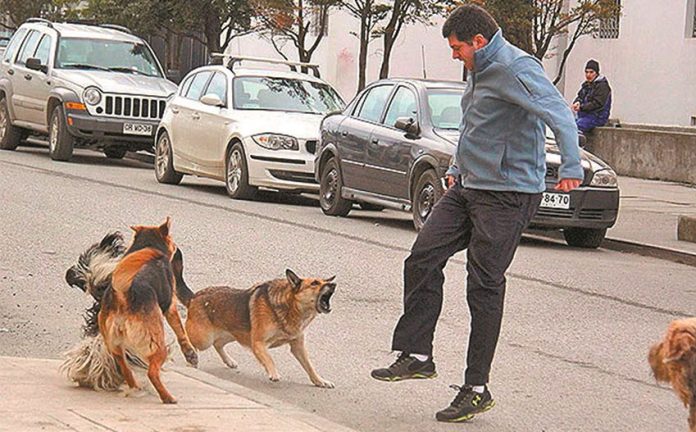
There is at least one bright spot in a year of pandemic, lockdown, and economic instability: dog bites in Mexico are down by over 34%, possibly due to social distancing rules put in place to slow the growth of Covid-19.
“The place where dog bites occur most are in urban areas,” said Nibardo Paz Ayar, a medical epidemiological coordinator with the Mexican Institute of Social Security (IMSS). “It’s where there are the most incidents — not necessarily in parks but on the street. So it’s thought that the decrease in bites is due to coronavirus social distancing restrictions keeping people at home.”
Whatever the cause, 2020 has been a better year for dogs and people getting along in Mexico. While just last week, 412 Mexicans reported being bitten by dogs, according to the National Epidemiological Bulletin published by the Ministry of Health, the total number of such cases so far this year is only 55,258. During the same period last year, over 84,000 people suffered dog bites, ranging from minor incidents to serious attacks.
These statistics appear to contrast with those reported by Mexico’s neighbor to the north: in the U.S., some states have seen sharp increases in the number of dog bites since the pandemic and shelter-in-place orders became a fact of life. An article published in June in the Journal of Pediatrics documented a three-fold rise in dog bites of children seen at Children’s Hospital Colorado since March. The city of Minneapolis recently instituted a new leash law after noticing that dog bites in March were up 80% from the same month last year.
Despite Mexico’s relatively good news, medical officials warn that dog bites are still a public health problem that can result in victims having to receive rabies vaccinations, major medical attention, and psychological counseling. Although the incident can last less than a minute, the physical injuries and mental scars from dog attacks can be long-lasting.
“For this reason, we carry out careful monitoring of these incidents although they are currently not the biggest [health] problem,” said a recent Bulletin report, which still ranks attacks by other types of mammals as more serious because of the diseases they can transmit.
“There are [victims] that develop symptoms of stress and anxiety,” says Arturo Barraza Macías, a researcher with the Pedagogical University of Durango. “The act of seeing a dog or hearing one bark makes them afraid. Many times, these incidents go ignored, and the emotional damage is not addressed.”
Paz said there is no statistical data tracking death rates from dog attacks. Only injuries and cases of rabies in humans are tracked. Victims of dog bites tend to be 22 to 44 years old.
Tracking of any kind of animal-caused injuries by the Health Ministry has only been going on since the year 2000, and it wasn’t until 2004 that dog bites were separated in statistical information, along with snake bites.
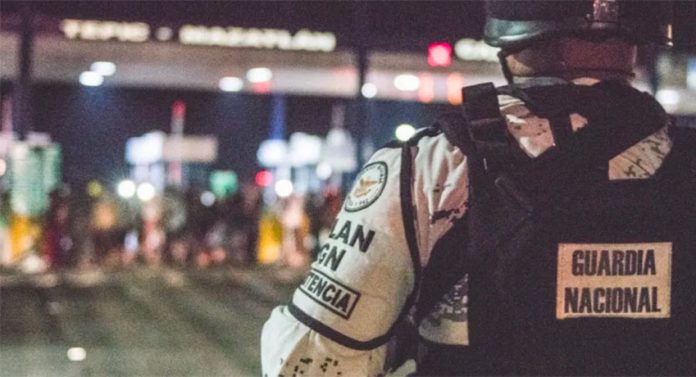
A National Guardsman at one of eight plazas cleared of protesters.
The National Guard (GN) led an operation on Sunday that evicted protesters at eight highway toll plazas in Nayarit.
In coordination with state police, a GN anti-riot team forcibly removed protesting farmers at one toll plaza on the Tepic-Mazatlán highway after they continued to refuse to leave after two hours of dialogue.
Farmers who say that they haven’t been compensated for the expropriation of land for construction of the highway have occupied the Trapichillo toll plaza since November 2018, charging cars and trucks 50 pesos and 100 pesos, respectively, to pass.
Ten farmers were arrested during the operation to remove them, according to the Nayarit Security Ministry, but none was injured.
The GN announced on Twitter that it had evicted protesters at eight toll plazas, stressing that dialogue was favored as the “first option” to solve the conflict.
“Thanks to the common sense of the people who were protesting we were able to carry out an operation without complications,” the security force said.
The eight toll plazas were Ruiz, Acaponeta, Trapichillo, Matanchén, Santa María del Oro, La Cantera, Compostela and Amado Nervo.
In addition to state police, the GN received support from the army, the navy and personnel from the Nayarit Human Rights Commission, the federal Security Ministry (SSPC) said in a statement.
The SSPC said that authorities carried out the operation with full respect for the protesters’ human rights.
A Nayarit farmers’ association is demanding that compensation be paid to 600 community landowners in the municipalities of Acaponeta, Ruiz and Tecuala. According to a report by the newspaper Milenio, the farmers’ group is asking for 300,000 pesos (US $13,500) to be paid to each of the landowners for each of the 14 years since the Tepic-Mazatlán highway was built.
But the company that build the highway, a subsidiary of Grupo Financiero Inbursa, has only agreed to pay 200,000 pesos to each landowner for the entire 14 years the road has been in operation.
Unhappy with the offer, the farmers have occupied toll plazas for months and in some cases years.
The Association of Road Infrastructure Concessionaires says that billions of pesos in toll revenue has been lost due to the protests.
Media reports suggest that a group of people occupying a toll plaza can collect more than 1 million pesos (about US $45,000) per day.
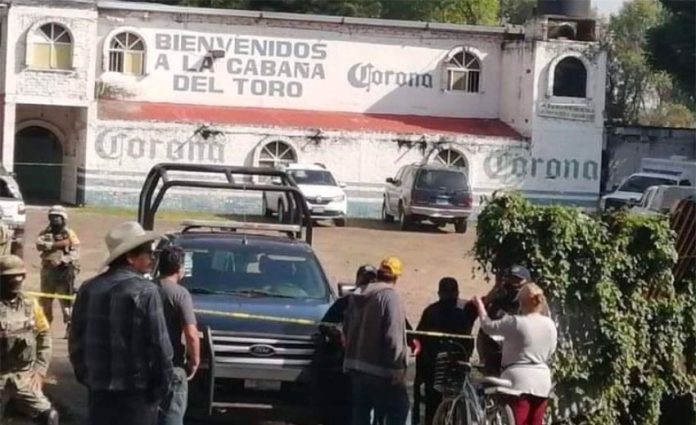
The Salamanca bar in which 12 people were killed Sunday.
Twelve people are dead and two are missing after an armed group invaded a Guanajuato bar early Sunday morning and killed patrons, a bartender, and female dancers.
Four women and seven men were declared dead at the scene. One other woman, found alive with gunshot wounds, later died under medical care.
They were among 31 murder victims in the state on Sunday, making it the second worst day on record this year.
According to official accounts, about six men arrived at the bar at dawn and without a word began firing at everyone inside. Officials offered no motivation for the crime but said that they believe the shooters took two additional persons from the bar against their will. Their identities have not been disclosed and their whereabouts are unknown.
Emergency officials arrived at the Cabaña del Toro bar, located in Jaral del Progreso, about 35 kilometers south of Salamanca, after they received a call around 6 a.m. regarding gunfire. Authorities have found spent shells of various calibers at the scene, and forensic tests confirmed that all 12 deaths were from gunfire.
Dozens of locals showed up at the bar Sunday morning trying to identify the dead.
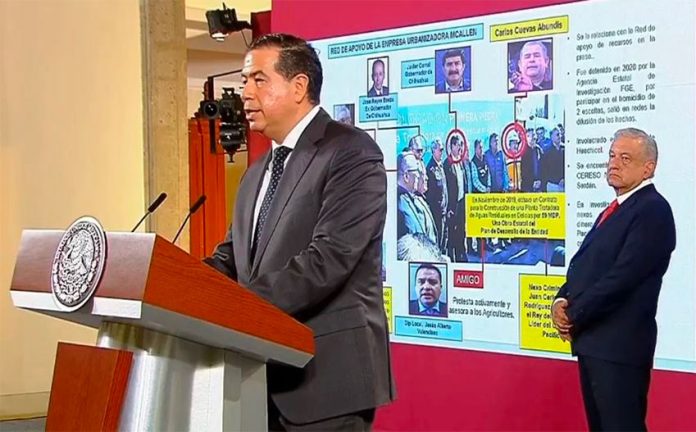
Mejía levels accusations over the monopolization of water in Chihuahua.
The federal government has accused a family of walnut farmers, a group of onion farmers and politicians of controlling and monopolizing water in Chihuahua, where there have been protests against the diversion of water to the United States.
Mejía charged that the Urionabarrenechea family, large-scale producers of walnuts, control a significant portion of water in Chihuahua. The father-in-law of one of the family members was formerly the head of the Chihuahua water utility, he added.
“This group [the Urionabarrenechea family] is important because it was to a large degree behind the financing of the protests and it’s linked to [former Chihuahua governor Cesár] Duarte,” he said.
The deputy minister said that there is another group known as Los Cebolleros (the onion farmers), which he claimed also illegally controls water resources in Chihuahua. The group traveled to the Andrew Weiss dam and demanded that the National Guard leave, Mejía said, adding that the onion farmers are close to state National Action Party (PAN) lawmaker Jesús Valenciano.
Mejía claimed that farmers who control water in the northern state played a part in the Chihuahua government’s awarding of a contract to build a water treatment plant to businessman Carlos Cuevas Abundis, who is accused of murdering two of his security guards and allegedly has links to a drug cartel and fuel thieves.
“Carlos Cuevas was awarded a treatment plant project, he has a friendship with [Jesús] Valenciano,” he said, adding that the state lawmaker has been active in the water protests.
Mejía also asserted that Chihuahua Governor Javier Corral has a personal relationship with Cuevas that played a role in a company he founded being awarded the government contract.
Farmers and politicians involved in the control and monopolization of water resources want to maintain the status quo to “the detriment of the nation,” the official said, adding that their actions place the water treaty – considered by many to be favorable to Mexico as the United States sends more water south of the border than it receives – at risk.
President López Obrador has also asserted that walnut farmers backed by state politicians are behind the water protests. He said in July that politicians with PAN – which Corral represents – want to protect water in Chihuahua for their own business interests.
“The manipulation of information by the federal government is despicable and vulgar,” he said.
“The first thing we have to do is lament the tragedy of Mexico. We’ve gone from a corrupt and corrupting president, as [Enrique] Peña Nieto was, to a president who sows hate, manipulates and ignores the truth,” Corral said.
The governor rejected the claim that his government awarded a water treatment plant contract to Cuevas and said that all information about the tendering process is available on the federal government’s online transparency platform.
“This Ricardo Mejía Berdeja has lost all scruples; he’s become López Obrador’s media hitman on this [water] issue,” Corral said.
Eyraud was killed Thursday by attackers wearing tactical gear and carrying high-caliber weapons.
The brother-in-law of an indigenous and water rights activist in Tecate, Baja California, who was murdered Thursday evening has also been killed, family members report.
Daniel Sotelo, the brother-in-law of Óscar Eugenio Eyraud Adams, was murdered in a store where he worked on Friday afternoon, a close friend of both victims said.
“We fear for our lives,” the friend said. “We plan to bury [Eyraud] directly and not hold a wake for fear by the whole family.”
Although few details are available related to the most recent killing, new information is emerging about Eyraud’s death. No motive in either killing has been officially determined.
A member of the Kumeyaay indigenous group, Eyraud had been an activist for years on issues of ethnicity and environmental injustice, a family member said.
Last month, Eyraud publicly denounced the lack of water in his community in an interview with Reforma and warned of cultural consequences to come if transnational companies were provided with water at the expense of indigenous communities.
On Thursday night, at least five men clad in tactical gear and armed with pistols and high caliber weapons pulled up at Eyraud’s home in two white SUVs, authorities say.
Eyraud lived in the house with his uncle, who said Eyraud stepped out to go shopping around 6:30 p.m.
Police say the 34-year-old man was chased down the street and tried to return home to take refuge but the gunmen shot him in the back in his front yard. As his body lay face down on the patio, the men also shot up the house. Thirteen casings from four different caliber weapons were found at the scene.
A neighbor told the prosecutor’s office that she had seen a man dressed in camouflage clothing with his face covered carrying a machine gun and later heard several shots ring out.
Eyraud was the cousin of Tecate Mayor Zulema Adams Pereyra, who lamented the crime but clarified that the two were not on speaking terms.
“The municipal government sends its condolences and stands in solidarity with the family and friends of Óscar Eyraud, an activist always concerned about a better quality of life for the Kumeyaay community. We join in the request for the clarification of these unfortunate facts,” the mayor said in a statement.
The organization Agua Para Todos [Water for Everyone]called on the government to put a stop to the killings of activists in Mexico.
“Decisive government intervention is urgently needed to prevent names from being added to the already long list of comrades from communities and organizations killed for defending water and nature and demanding their legitimate rights,” they wrote in the statement.
At least four other activists have been killed in Mexico this year, and the country is one of the most dangerous in the world for those who publicly condemn environmental injustice, according to Amnesty International. Fifteen activists were killed in Mexico in 2019.
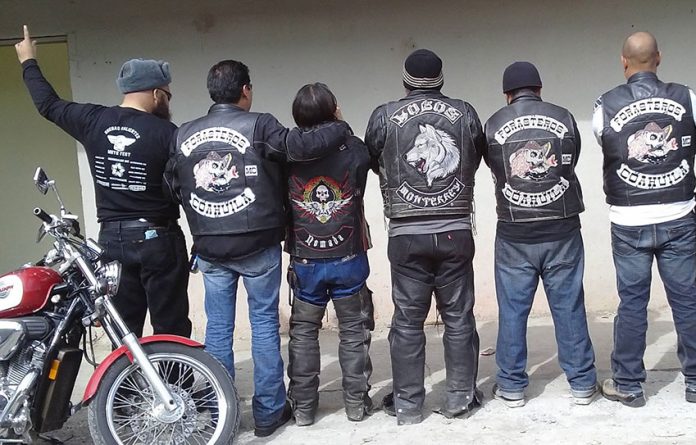
Members of motorcycle clubs from Saltillo, Coahuila, and Monterrey, Nuevo León. Foresteros Moto Club
As of 2017, there were over 3.5 million motorcycles on the roads of Mexico, a market that has been experiencing robust growth.
One reason is the availability of inexpensive, small bikes that are good for urban transportation, and indispensable with the rise of delivery services like Uber Eats.
Most motorcycling is practical urban transportation, but a “biker” culture of large cruisers on open highways does exist. Black leather jackets, boots, tattoos, certain bikes, and rock and roll dominate and on the surface, there is little to distinguish Mexican bikers from their U.S. counterparts. So are they simply mimicking? The answer is yes and no.
American media brought images of tough guys on Harleys to Mexico. It was adopted, and like in the U.S., the biker culture has since evolved. Mexico’s biker culture is more a homage to that north of the border, rather than a simple imitation, says Diego Piña, co-owner of the Black Dog House, a biker-themed bar in Querétaro.
The influence of the United States also extends to the negative stereotypes many non-bikers have, and unfortunately there are a few bikers who live up to the bad reputation. The lingering social stigma can mean that some bikers will hide their passion at their 9-5 jobs but pull out the stops on weekends. Mechanic Rene Esteves of Querétaro calls them “bikers de closet.”
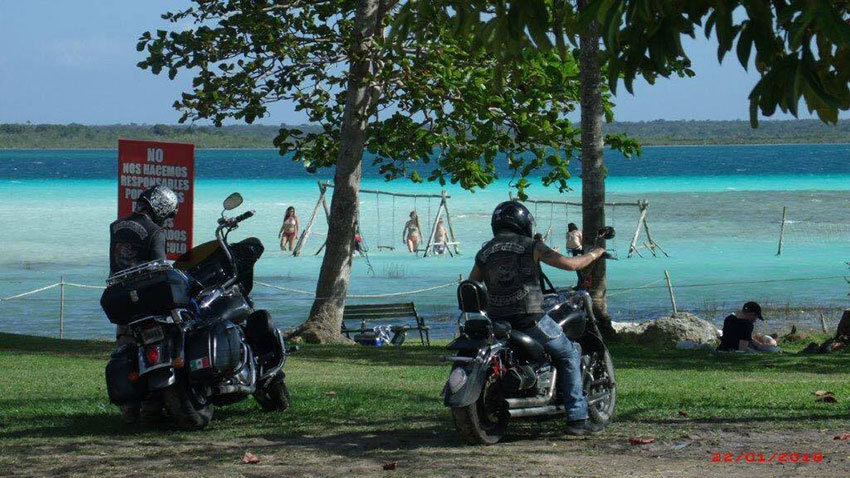
Members of the Foresteros Moto Club from Saltillo in Bacalar, Quintana Roo.
Mexico does not have the same history of social rebellion like the United States, so what is the attraction? The principal answer is motorcycles themselves. Bikers find their passion young, attracted to the power and freedom from the mundane that the machines promise. In addition, there is an exoticism to the dress and social ritual.
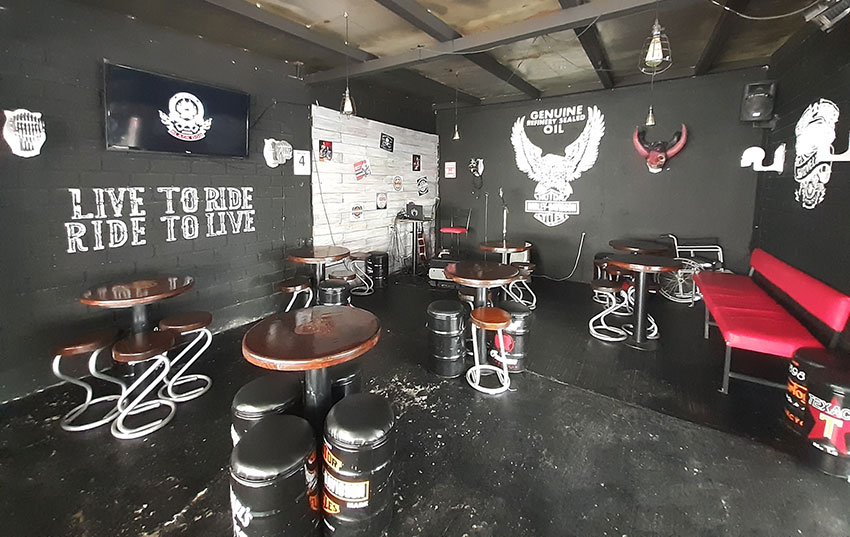
Black Dog, with its chicken wings, onion rings, and live rock and roll, was like being back in college for me, but the Mexicans at my table found it both strange and wonderfully human at the same time.
That said, the biker culture has been around long enough to take on a “Mexican touch.” First is the image of singer and actor Pedro Infante. Starring in the movie A Toda Máquina (Full Speed Ahead, 1951), he gave Mexican riders an icon to go along with Elvis Presley and Marlon Brando.
Longtime biker Edgar Cisneros of Saltillo says that cruising bikes and rallies are more popular in the center and north of the country than in the south. The north has long distances to cross, requiring better planning, but it also has the drier weather and majestic scenery that most bikers crave. Many U.S. bikers come to Mexican events in the northern border states and Baja, and many norteños can get to U.S. events.
Rock and roll dominates by far among motorcyclists, but this is not absolute. Those riding urban sport bikes tend to prefer more modern dance music, and some cruisers favor mariachi and other older styles of Mexican music.
Perhaps the most “Mexican” adaptation is the involvement of religion. Pilgrimage to shrines has been mixed with the concept of group riding. Such rides occur all over Mexico, but the two most popular are to Our Lady of San Juan de Los Lagos, and Our Lady of the Favor in Hostitipiquillo, both in Jalisco. Many biker events will start by having a priest bless the helmets to protect the riders.
The biker-themed Black Dog House in Querétaro.
Family involvement is cited as extremely important by most Mexican bikers. Bikers Sally Mayer and Javier Ramos explain that a common way to include family members is to have them travel in cars behind the motorcycles so that everyone can get to the destination. Other ways include teaching children to ride and even having sidecars. One advantage of family events, Mayer says, is that there is far less drinking and drugs.
Serious motorcycling is not a cheap hobby. Long rides require good bikes, and the usual costs of travel. Some bikers do sacrifice other wants and needs for their obsession, but most are white-collar workers and business owners. Elitism, especially among Harley owners, is not uncommon, in part reflecting the country’s social stratification. One curious result is the banqueteros (sidewalk motorcyclists), who ride their expensive bikes on weekends to a local spot to show it off parked out front.
Many bikers have certain hangouts that they favor, but “biker bars” per se are rare in Mexico. The Black Dog House was established specifically to provide that kind of environment with some important modifications. The main one is that everyone, including non-bikers, are welcome as “there are no colors here.”
While “lone wolves” can certainly be seen in Mexico, organized group rides are the norm. One important advantage is safety; companions can help in case of an accident or other emergency, and groups of riders can fend off bullying cars and trucks on the highway. Many motorcycle organizations have developed almost military-like precision, with assigned roles and protocols.
The preference for organized rides means that biker events are popular and growing. The largest are in the Mexico City area along with the western and northwestern states of Jalisco, Zacatecas, Sinaloa, Sonora, Nuevo León, Chihuahua, and all of Baja California. They bring riders from all over Mexico, many from the United States, and even some from South America and Europe.
The largest is the Semana Moto Mazatlán, and another, Chikas Biker, is dedicated to women riders. Most events look to project a more positive image for bikers, often raising money and collecting donations for charity and having strict rules for behavior. Another important event is the Expo-Moto at the World Trade Center in Mexico City, which showcases 600 brands of motorcycles and accessories.
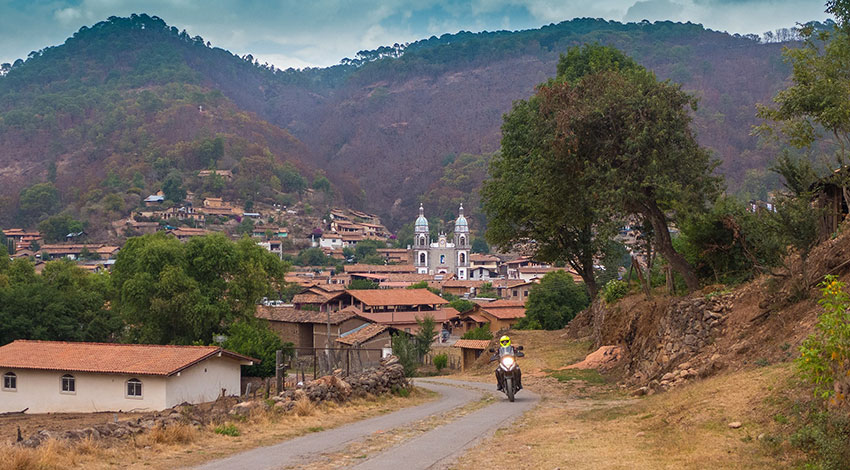
A lone biker with a picturesque backdrop. Bike Mexico
There are too many motorcycle groups to count in Mexico, which vary by membership requirements including type of bike, riding style, geographical location and sometimes sex, religion, socioeconomic status and more. There are also umbrella groups such as the Federación de Motociclistas and the Confederación de Motociclistas.
Interestingly, while there are expat motorcyclists they do not dominate the scene. Perhaps because of this, there are motorcycle tour businesses such as Bike Mexico in Puerto Vallarta, tours down the Baja peninsula highway from San Diego, and a Facebook group called Motorcycle Mexico.
Biker events can be an economic boon to cities and towns, as bikers spend money on gasoline, lodging, food, etc. Riders often go into rural areas that see little benefit from Mexico’s tourism industry. That is not to say that there are never any problems. Mayer likens biker events to rock concerts – most are fine, but there are some which cause problems.
Mayer and Ramos agree that motorcyclists wanting to join others in Mexico need to do their homework to find out which group is right for them, but “99% of motorcyclists are decent people.”
• Special thanks to William B. Kaliher, author of Mexico by Motorcycle: An Adventure Story (Sombrero Books) for his help in connecting with the biker community in Mexico.
Leigh Thelmadatter arrived in Mexico 17 years ago and fell in love with the land and the culture. She publishes a blog called Creative Hands of Mexicoand her first book, Mexican Cartonería: Paper, Paste and Fiesta, was published last year. Her culture blog appears weekly on Mexico News Daily.