Home Blog Page 1456

López Obrador responds to decline in polls: he has other information

0
President claims bias in latest polls.

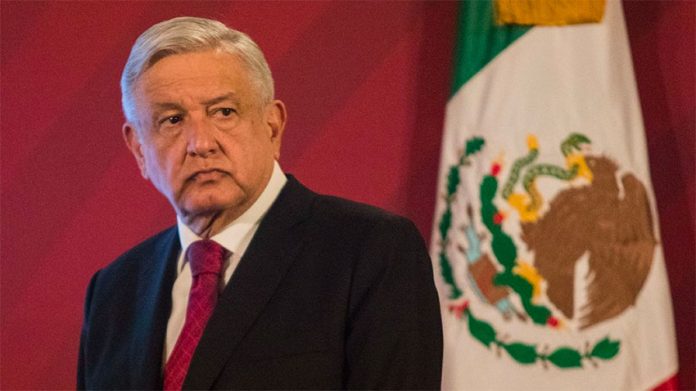
President López Obrador has rejected recent opinion polls that show that his approval rating is below 60%, charging that he has other information that proves he is considerably more popular.

Speaking at his regular news conference on Monday morning, López Obrador described polls that show his approval rating has declined as biased.

He claimed that a poll published Monday by the newspaper Reforma that showed his rating at 56% had only surveyed certain sectors of the population, including “organic intellectuals” and members of an organization that opposes him and his government.

“I have my own opinion poll [that shows] 70%, 65%, 64% approval,” López Obrador said, adding that if a “revocation of mandate” vote was held today, 70% of people would vote in favor of him continuing as president.

He said that only 25% of people would vote for him to leave office and that 5% don’t care one way or the other.

Responding to a reporter who asked whether his approval rating has fluctuated, the president responded that it has stayed the same.

Without providing specific details, López Obrador also said that there is an international poll that shows he is the second most popular leader in the world. “With the pandemic, I’ve fallen two points,” he added.

Reforma says that I have 56% approval; I won [the 2018 presidential election] with 31 million votes, what is 56% of 80 million citizens [who are eligible to vote]? Help me to do the math, 45 million – I’m 14 million above even with the Reforma poll [numbers],” López Obrador said.

“[It’s] thanks to the people, who are my guardian angel,” he said. “Thank you very much to the people of Mexico, … I won’t fail them because  if it wasn’t for their support, I’d be nothing.”

In addition to the new Reforma poll, two other surveys whose results were published this month show that the president’s approval rating is below 60%.

One conducted by the polling company Enkoll found 58% support for AMLO, as the president is commonly known, while one by the newspaper El Universal found that 53.4% of respondents approved of his performance.
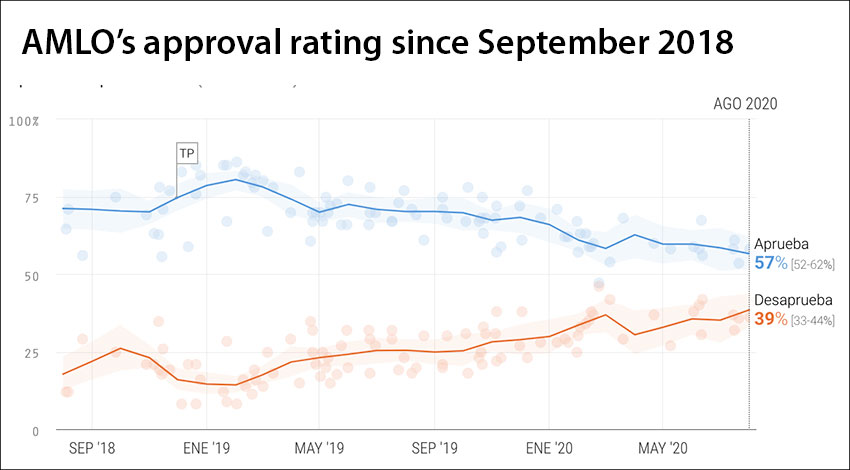
AMLO's approval rating is in blue and disapproval in red in this 'poll of polls' by Oraculus.
AMLO’s approval rating is in blue and disapproval in red in this ‘poll of polls’ by Oraculus. TP indicates the date he took office.

A poll of polls collated by the website Oraculus shows that López Obrador’s approval and disapproval ratings are currently 57% and 39%, respectively.

The president’s collated approval rating has declined 13 points since August 2019, 11 points since the end of last year and six points since April, the first full month of nationwide coronavirus restrictions.

AMLO’s approval rating rose above 80% early in his term, a percentage that was above the highest ratings achieved by any of his four most recent predecessors at any time in their six-year terms.

However, after 20 months in the job, Felipe Calderón, in office from 2006 to 2012, had an approval rating of 62%, five points higher than López Obrador’s current rating of 57%.

Vicente Fox, president from 2000 to 2006, had the same approval rating as AMLO 20 months after taking office while Enrique Peña Nieto (2012-18) and Ernesto Zedillo (1994-2000) both trailed the current president at 46% and 45%, respectively.

Despite finding that a majority of people approve of the president’s performance, the new Reforma poll, which surveyed 1,200 adults between August 19 and 24, shows that more respondents believe that he is doing a bad job than a good job in six of seven key areas.

In the areas of health, combating corruption, combating poverty, combating organized crime, security and the economy, a greater number of respondents rated AMLO’s performance as bad than those who rated it as good.

The only area in which more respondents rated the president positively was education, with 43% saying he is doing a good job compared to 32% who said the opposite.

Six in 10 respondents said that the strategy against drug trafficking and organized crime – the government has favored a non-confrontational so-called “hugs not bullets” approach that aims to address the root causes of crime rather than aggressively eliminate it – is not working.

Indeed, homicide statistics for the first seven months of the year show that Mexico is on track to record its most violent year in recent history.

With regard to management of the coronavirus pandemic, 52% of respondents to the Reforma poll approved of López Obrador’s performance while 45% disapproved.

Despite Mexico having one of the highest Covid-19 death tolls in the world – it currently ranks fourth for total fatalities behind the United States, Brazil and India – and the government being widely criticized for not testing more widely and not enforcing a nationwide lockdown, AMLO said last week that his administration has implemented a “very good strategy” against the pandemic.

Nevertheless, just under one-third of respondents to the Reforma poll said that they personally knew someone who died from Covid-19 and 44% said they knew someone who has been infected.

The survey shows that 48% of people believe that AMLO has taken good decisions with respect to the economy, down six points from March, while 43% regard his decisions in the area as bad, a seven-point spike.

Three in 10 respondents said they had lost their job due to the pandemic and 46% said that they had stopped receiving an income. More than one in five of those polled said they had to sell something to get by and 4% said that they had to move because they couldn’t afford their rent.

Just over half of the respondents – 53% – said that López Obrador hasn’t taken the necessary steps to avoid an economic crisis – the central bank is forecasting a 12.8% contraction this year in a worst-case scenario – while only 39% said that he has.

A majority of respondents – 56% – said that AMLO should suspend construction of key infrastructure projects such as the Maya Train and Dos Bocas refinery and instead dedicate the resources to confronting economic problems created by the pandemic.

With regard to the corruption case against former Pemex CEO Emilio Lozoya, who has in turn accused three past presidents and several other former officials of corruption, 58% of respondents to the Reforma poll said that nothing will come of it while only 28% believe that it will result in the imprisonment of former officials.

Source: Reforma (sp), El Universal (sp), Expansión Política (sp) 
Rains, flooding isolates 30 communities in Jalisco

0
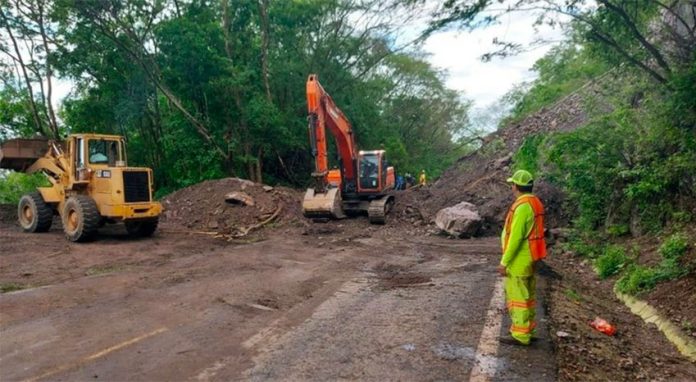
Workers clear a slide in Jalisco.

Heavy rains and flooding from Tropical Storm Hernán had left 30 communities in Jalisco without power or communications and an estimated 630 homes and nine schools damaged as of Sunday afternoon.

It also destroyed thousands of turtle eggs in Michoacán.

In Jalisco, worst hit were the southwestern coastal municipality of Cihuatlán, which saw 250 homes affected, and the southeastern municipality of La Huerta, with 228 homes affected.

State officials report one death and one injury related to the storm. A man in La Huerta died after he fell from the roof of his home while checking for damages and a woman in Cabo Corrientes suffered burns to her arms and legs due to an oven fire. She was in stable condition.

Emergency personnel said 250 state and federal workers had been sent to the affected areas and agencies were bringing in food and supplies by helicopter. A collection center for donations has been opened in Guadalajara.

In Michoacán, meanwhile, Hernán disrupted not only human lives but those of turtles too.

Big waves produced by Hernán’s winds pounded a marine turtle sanctuary in Aquilla near the state boundary with Colima. The storm damaged thousands of Olive Ridley turtle eggs in nests on Punta Ixtal Beach.

According to César Reyes, who runs the Ixtapilla Marine Turtle Sanctuary, most of the 600,000 eggs laid in five massive turtle arrivals this month were probably swept away at the 800-square-meter protected breeding ground.

Although the Olive Ridley turtle population has recuperated some in the last five years, according to environmental officials, it remains in danger of extinction.

The sanctuary is one of 19 that have operated in the area since 2004. They are maintained by some 300 residents of the area, where an estimated 70,000 Olive Ridley turtles show up annually to lay their eggs.

Source: La Jornada (sp)

Anonymous call leads mother to find missing son in secret grave

0
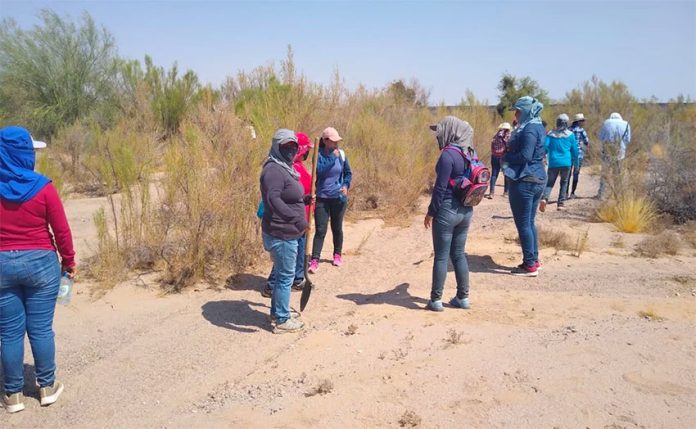
The Searching Mothers of Sonora.

Searching for the bodies of missing loved ones in secret graves doesn’t usually yield quick results. But that wasn’t the case for a Sonora woman on Saturday.

The woman, identified only as Martha, found the remains of her missing son two months after his disappearance thanks to an anonymous tip, family members, and Madres Buscadoras (Searching Mothers), a group that has found over 175 missing persons since 2019.

The woman began her search after receiving an anonymous phone call telling her that her son’s remains could be found in the forest surrounding El Coyote in Caborca, Sonora. Armed with shovels, 30 of Martha’s family members went into the forest to help her find Marco Antonio’s body.

The search party found the body which Martha identified as her son by his clothes.

Madres Buscadoras’ leader Cecy Flores described the discovery as “a very painful moment.”

Flores started the group on May 4, 2019 after the disappearance of her own son in Hermosillo. With this discovery, Madres Buscadoras has now found 176 missing persons in little more than a year. But it doesn’t get any easier when a loved one’s body is found.

Flores said she felt “pain, anguish, and hopelessness” as she watched Martha almost fall to the ground upon seeing the belongings of her son, “a ball of bones amid the smell of decay when the body was disinterred.”

Source: El Universal (sp)

There are several things to look for when selecting a good watermelon

0
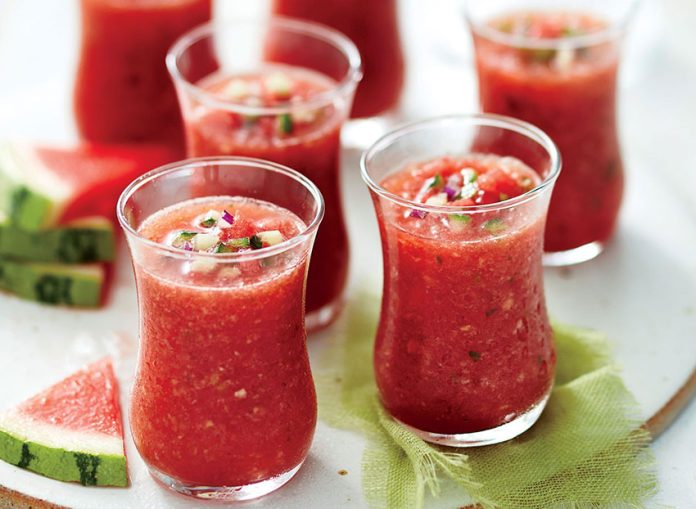
Refreshing shooters of watermelon gazpacho.

Everybody wants to know the same thing about watermelon: how to pick a good one.

I’ve relied on my farm-girl mother’s advice about looking for a hollow sound when you tap it. Turns out there’s a handful of other things to look for in your quest for the perfect sweet, juicy sandía. While there are many varieties of watermelon, these parameters work for all of them.

Let’s start with appearance. See that one that looks shiny? Not ripe. You want a watermelon whose rind is dull or matte-looking, with a dried-up stem. (Extra points if it’s curly!) Don’t pick one with a green stem — it was picked too soon and won’t have had time to develop the sweetness you’re looking for.

Another indication of sweetness is a watermelon with lots of webbing (those dry-looking trails on the rind), which forms when bees touch the flower.

One more telltale sign is the splotch on the bottom of a watermelon where it sat on the ground. You want a “field spot” that’s creamy yellow —not white, and not beige. That was a new one for me.

One of the things to look for in a good watermelon.

Next, pick up the watermelon you’re leaning towards. The sweetest, juiciest ones will be heavy for their size. You’ll have to pick up several melons about the same size to get a sense of an average weight. And heavy doesn’t necessarily mean big: experts say the best watermelons are average sized, “just right” for their variety. Now, give it a thump. You should hear that hollow sound my mom told me about, not a sharp ping.

And finally, you want a female watermelon. Huh? Male watermelons are taller, longer and more watery, while females are rounder and sweeter. This doesn’t apply to seedless varieties or some hybrids, which are all the same gender-free shape.

In Mexico, watermelons are grown in several states, with Sonora, Colima and Nayarit being the biggest producers. While the majority are exported to the U.S., sandías are still plentiful, delicious and inexpensive all throughout Mexico.

I’ve always wondered why watermelon has its own distinct word in Spanish —sandía — while all other melons (cantaloupe, honeydew, Gaia) are lumped together with the word melón. I spent some time trying to figure this out and the most I could find has to do with the origin of the fruit itself.

Historians say watermelon most likely came from the Kalahari Desert and the Nile River Valley, where its seeds were found in some of the pharoahs’ tombs.

Etymologically speaking, though, it’s the Arabic word for watermelon — sandiyya, indicating it came from Sindh, an area of eastern Pakistan that’s thousands of miles from Egypt and even further from Spain — that is the root of modern-day sandía in Mexican Spanish. Así es.

Watermelon Margarita

This makes just one cocktail — double or triple if you have company.

  • Kosher salt
  • 1 lime wheel
  • 3 oz. fresh watermelon juice
  • 1½ oz. tequila blanco
  • ¾ oz. fresh lime juice
  • Watermelon wedges

If desired, salt the rim of your glass by rubbing lime juice around the rim and then dipping in salt. Combine watermelon juice, tequila and lime juice in a shaker. Fill shaker with ice, cover and shake vigorously, about 20 seconds. Strain into prepared glass. Garnish with reserved lime wheel and a watermelon wedge.

Watermelon & Tomato Salad

Pretty, refreshing and delicious, this salad is perfect for a hot summer day.

A summer salad of watermelon and tomato.
  • 4-6 ripe, juicy tomatoes, cut into 1¼ -inch cubes OR 1 pint cherry tomatoes
  • 1 small seedless watermelon, cut into 1¼ -inch cubes
  • ¼ red onion, sliced thin
  • 1 tsp.  salt
  • ¼ cup olive oil
  • 2 Tbsp. sherry, rice wine or red wine vinegar
  • Salt and freshly ground pepper to taste
  • 1 cup feta cheese, crumbled
  • 2-4 Tbsp. julienned fresh mint or basil leaves

Combine tomatoes, onion and watermelon in a large bowl and toss gently. Add 1 tsp. salt and let stand 5-10 minutes while you prepare dressing. Whisk the oil and vinegar, add herbs and season with salt and pepper. Add feta to the tomatoes and watermelon, add dressing, and toss gently to combine. –nytimes.com

Easy Watermelon Gazpacho

Serve in shot glasses as an appetizer, garnished with a sprig or parsley, mint or cilantro.

  • 2 large tomatoes, puréed
  • 1-2 jalapeños or serrano chiles, veins and seeds removed
  • 4 cups seeded, cubed fresh watermelon, divided
  • 2 tsp. red wine vinegar
  • ½ cup extra-virgin olive oil
  • ¼ cup minced red onion, plus more for garnish
  • 1 cucumber, seeded and minced
  • 2-3 Tbsp. minced fresh dill, parsley, cilantro or a combination, plus more for garnish
  • ½ cup crumbled queso fresco, feta cheese or plain yogurt
  • Kosher salt and freshly ground black pepper

In a blender, purée tomatoes, chile and half of the watermelon. Add vinegar and olive oil and pulse. Add onion, cucumber and herbs; purée until smooth. Season with salt and pepper. Pour into bowls or shot glasses and garnish with herb springs, feta and remaining watermelon cubes, cut into bite-size cubes.

Watermelon Granita

  • 8 cups watermelon chunks, seeds removed
  • 2-4 limes, juiced
  • 1/3 cup sugar

Place half the watermelon, half the lime juice and half the sugar in a blender. Process until smooth, then pour into a bowl. Repeat with other half of ingredients; add to same bowl.

Transfer mixture to a 9×13 glass baking dish. Freeze for two or three hours, then begin the process of scraping the layers. Using a fork or spoon, scrape the top frozen layer and return pan to freezer with the shaved ice on top. Continue scraping the top layer about every 2 hours until the entire mixture has been scraped and you have a dish full of fluffy granita. Cover and store in freezer until serving.

Janet Blaser has been a writer, editor and storyteller her entire life and feels fortunate to be able to write about great food, amazing places, fascinating people and unique events. Her first book, Why We Left: An Anthology of American Women Expats, is available on Amazon. Contact Janet or read her blog at whyweleftamerica.com.

Protesters in 14 states demand justice for missing persons

0
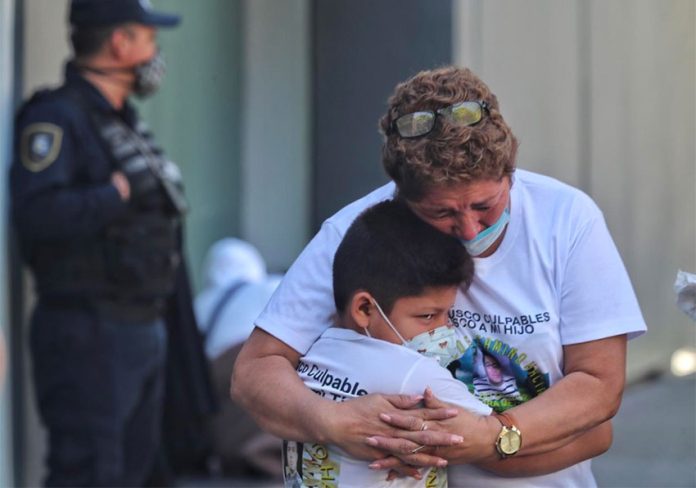
It was a day of protest and a day of grief for families of missing persons.

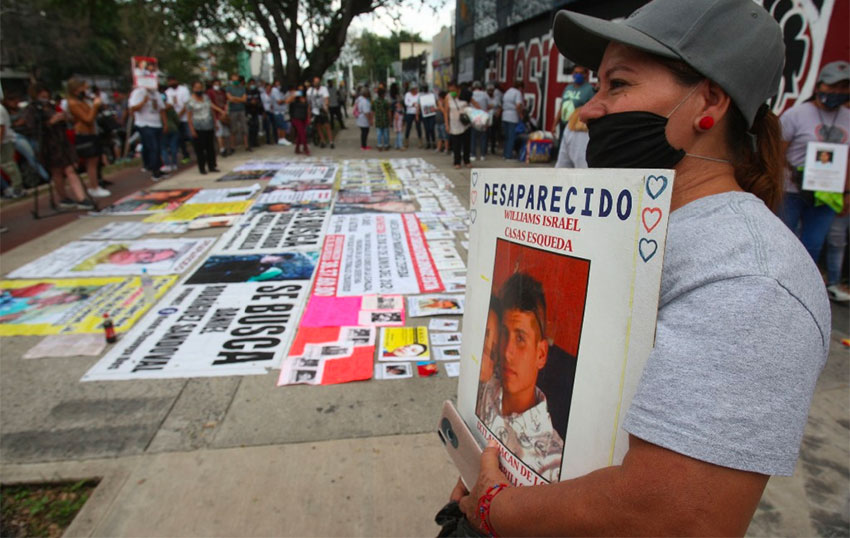
Hundreds of demonstrators gathered in at least 14 states Sunday — the International Day for Victims of Forced Disappearances — to demand justice for the thousands of missing-persons cases across the nation and to put an end to high rates of kidnapping.

From Baja California to Veracruz, from Tamaulipas to Sinaloa, parents and children of kidnapping victims and other advocates gathered in front of government buildings, in cathedrals, in the zócalo in Mexico City and many other places to hold rallies and demonstrations.

They set up information kiosks to inform the public and to urge an end to what organizers say is a pattern of unwillingness by authorities to investigate such crimes.

Organizers accused authorities throughout Mexico of manipulating kidnapping figures for years in order to suppress the true number of victims and generally refusing to investigate disappearances. Activists in Puebla, for example, pointed out that while the state attorney general’s figures list 1,700 missing, the National Registry of Missing Persons estimates there are 3,500 cases.

In Tamaulipas, the state with the highest number of missing persons cases at 11,000, various NGOs demonstrating in Reynosa called on authorities not to abandon investigations, accusing the state Attorney General’s Office of merely archiving filed reports.

Remembering the missing in Guadalajara.

In Jalisco, which at 10,268 has the second-highest number of cases nationwide, Families United for Our Disappeared held a Mass in the Guadalajara cathedral before staging a rally.

In Baja California, activists gathered in Tijuana, the city where notorious gang member Santiago Meza says he dissolved 300 men in acid by order of Tijuana cartel drug baron Teodoro García. It is estimated that 1,225 people have gone missing in the city since 2015.

In Mexico City, mothers, sisters, and daughters of kidnapping victims gathered at the National Search Commission headquarters and at the zócalo. In Chihuahua, various activist groups took to the streets and to municipal cemeteries in Cuauhtémoc and Parral to demand the truth about their missing loved ones.

In some cities there were creative attempts to educate the public and give protests a sense of permanence. In Irapuato, Guanajuato, organizers constructed three informational kiosks where they placed 100 placards with the names of missing persons and the words, “We continue looking for you.”

In Jalisco, on Avenida Federalismo, one organization unveiled a mural with a giant sign reading “Until They Are Found.”

Though most of the protests were peaceful, a protest in Hidalgo turned destructive, damaging a municipal building’s facade and leaving graffiti on the Tula Cathedral’s perimeter fence and on a Benito Juárez statue.

Source: La Jornada (sp)

It could take Puerto Vallarta tourism 5 years to recover from Covid-19

0
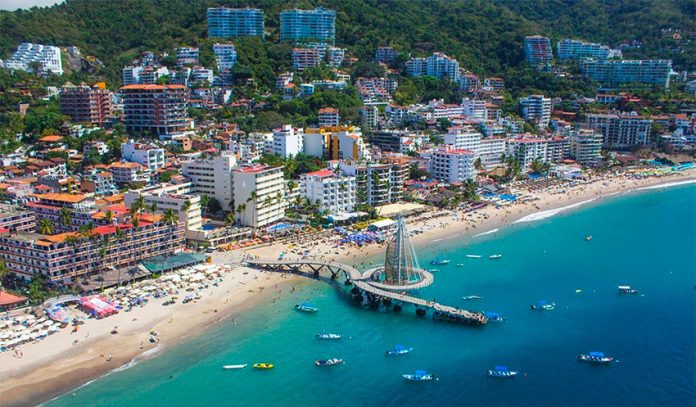
Recovery estimated to take time in Puerto Vallarta.

Tourism in Puerto Vallarta, Jalisco, could take up to five years to recover to pre-pandemic levels, according to the head of the local chapter of the Mexican Employers Federation (Coparmex).

Jorge Alberto Careaga said the current estimate is that it will take three to five years to get back to the visitor numbers and revenue levels of 2019 when tourism injected some 42 billion pesos (US $1.9 billion) into the economy of the Pacific Coast resort city.

He said that official data shows that 3,762 tourism sector workers lost their jobs in Vallarta due to the pandemic and associated economic restrictions and only 862 have returned to work since the economy began to reopen.

“This represents … the recovery of [just] one-fifth of the jobs lost,” Careaga said.

With Puerto Vallarta heavily dependent on tourism revenue, local business owners say it’s urgent that all levels of government develop new strategies to promote the destination.

Gabriel Igartúa Sánchez, a hotel owner and president of Coparmex’s national tourism commission, said the coronavirus downturn has hit Vallarta so hard that the tourism industry is at “risk of extinction.”

He said that visitor numbers increased slightly in July and August but noted that about 40 hotels are currently closed.

Igartúa said that the start of the new school year last week caused visitor numbers to plummet and forced some hotels to close for a second time this year. He also said that tourism revenue was down about 70% in recent months compared to the same period last year.

Igartúa said the federal government needs to approve additional resources for tourism promotion, explaining that keeping Vallarta at the forefront of the minds of people who live in “our main markets is a very important factor” in attracting them to the destination.

While the resort city is popular with international tourists, most visitors come from Guadalajara, located about 330 kilometers east, and Bajío region states, the Coparmex tourism official said.

One positive for the destination is its “land connectivity” to its key markets, Igartúa said, describing the ease of getting to Vallarta by road as a factor that differentiates it from other resort cities in Mexico.

The recovery of tourism destinations across the country is expected to be slow as many people remain wary of traveling.

The Jalisco government has committed 100 million pesos (US $4.6 million) to efforts to revive tourism in Vallarta while its federal counterpart is optimistic that the new Visit México website will allow tourism promotion to reach new audiences and open new markets.

The website was relaunched last week after two embarrassing problems in recent weeks. including the humorous mistranslation into English of several states and tourism destinations.

Source: El Economista (sp) 

Through residents’ own initiative, Puebla town has its first doctor

0
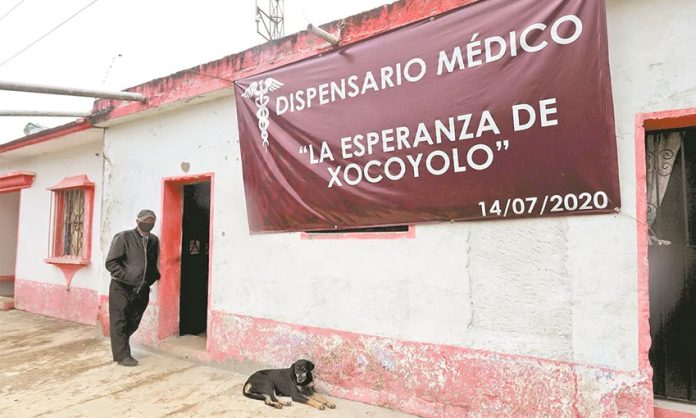
The new community-funded clinic in Xocoloyo.

Thanks to the efforts and financial contributions of its residents, a town in northern Puebla has a medical doctor for the first time in its history.

Residents of Xocoyolo, located in the Sierra Norte municipality of Cuetzalan del Progreso, have been asking state and municipal authorities to set up a clinic and send a doctor to their town for years.

They even took their plea to President López Obrador, submitting a letter to him during a visit he made to the nearby municipality of Zacapoaxtla last October. But as had occurred before, their request fell on deaf ears.

In that context, members of the town’s political committee decided to take matters into their own hands to ensure that residents could access the health care they require.

Now, not only is there a new clinic in town, dubbed “the Hope of Xocoyolo,” but also a resident doctor – Coral Anais Medina, who arrived from Tamaulipas last month.

Araceli Cerqueda, a retired nurse who is now volunteering at the clinic, told the newspaper El Universal that due to the inaction of authorities, residents decided to turn part of a local government building into a clinic themselves.

She explained that almost everything in the clinic including “the bed and the desk” are on loan from local residents but will eventually have to be returned.

Cerqueda explained that residents agreed to pay 150 pesos (about US $7) per family per month in exchange for medical care and medications, “if we have them.”

Part of the money is used to pay the salary of the resident doctor and the remainder goes to the purchase of medical equipment, supplies and medicines, she said.

The retired nurse said that a clinic was badly needed in Xocoyolo because a large number of the indigenous Nahua residents have chronic diseases such as hypertension and diabetes.

“We went around the community to announce the clinic and we found out that there are at least 350 diabetics; there are even 20-year-old people with the disease,” Cerqueda said.

In addition to treating chronic diseases, Medina has also detected five probable cases of Covid-19 since the clinic opened in mid-July. Volunteer nurses told El Universal that the cases were treated in the community because there are no Covid hospitals nearby.

Until April, Xocoyolo residents with chronic diseases or other medical issues traveled to the towns of Cuetzalan or Zacapoaxtla to see a doctor but appointments have been suspended due to the pandemic.

As a result, people with diabetes and high blood pressure didn’t receive the treatment they needed until the new clinic opened, said Medina, the recently-arrived doctor.

“Something that we mustn’t forget is that [in addition to] Covid, there are other serious illnesses that require attention,” she said.

According to volunteer nurses, up to 16 people a day are now attending appointments at the Hope of Xocoyolo.

Despite families contributing to the purchase of supplies, there is a constant need for more, Cerqueda said, adding that the clinic also lacks equipment.

“It would help us a lot to have an examination table and an oxygen tank,” she said, explaining that the latter is needed because of the town’s distance from the closest hospitals.

Source: El Universal (sp) 

6 marines arrested in Tabasco for home robbery

0
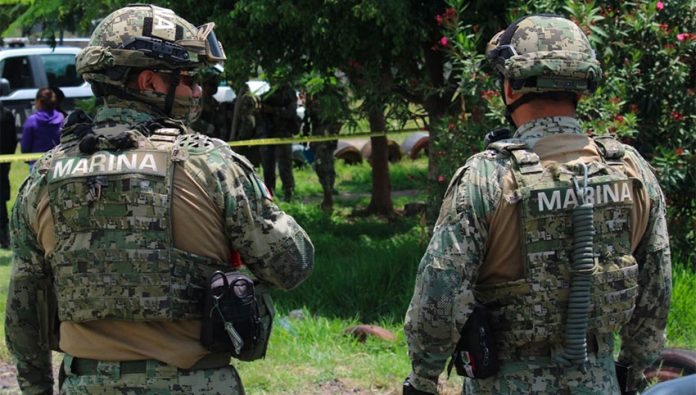
Marines are under investigation for robbery in Tabasco.

Six navy marines are in the custody of Tabasco state authorities after local police in the municipality of Cunduacán arrested them for home robbery.

Navy officials said they are investigating and promised to act in “strict adherence to the law, and with rigor, force, and transparency.”

The arrest comes on the heels of another incident a week ago in another part of Tabasco, also apparently involving marines, which was publicized widely on social media after one of the victims filmed the incident on her phone.

According to the Ministry of the Navy, the marines in the most recent incident are believed to have entered a house sometime last week in the community of Tulipán. Residents reported the crime to Cunducacán police, who investigated the case with the help of police from two other nearby municipalities, state police, and the National Guard.

Authorities arrested the suspects following an hour-long pursuit marked by assault weapons fire that ended in the municipality of Paraíso, where state and federal officials were waiting.

Officials did not provide a clear motive for the robbery. “They didn’t injure anyone, nor were they drunk, but possibly under the influence of some other substance,” Cunduacán Police Chief Lidia Hinojosa said.

The second incident took place August 23 in the town of Benito Juárez, Cárdenas. It came to light after a video surfaced showing men in naval uniforms breaking into a home, firing their weapons and holding members of a civilian family at gunpoint.

The attack is believed to have been retribution for a recent machete attack on a marine that resulted in injuries to the man’s wife and son.

According to navy officials, the marines had entered the home after deciding that the family was responsible for the attack. In the video, the men are heard yelling at the family and a woman is heard telling the soldiers, “What’s wrong with you? We are a family. How can you involve yourselves if you don’t know how things were?”

Later, the woman is heard shouting at the soldiers that they have shot her father.

Source: El Sol de México (sp)

Morena launches campaign for public vote on prosecuting ex-presidents

0
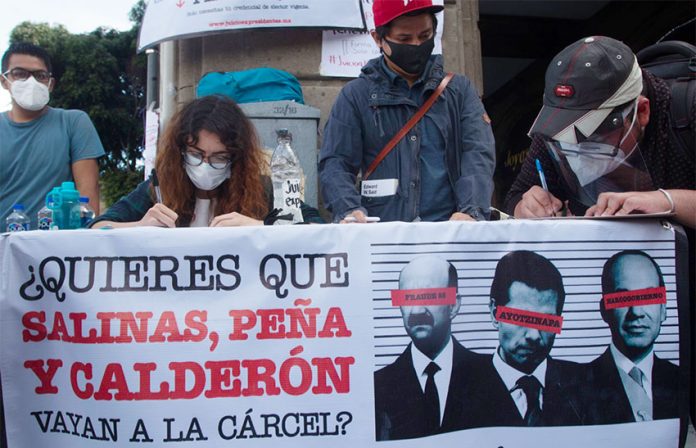
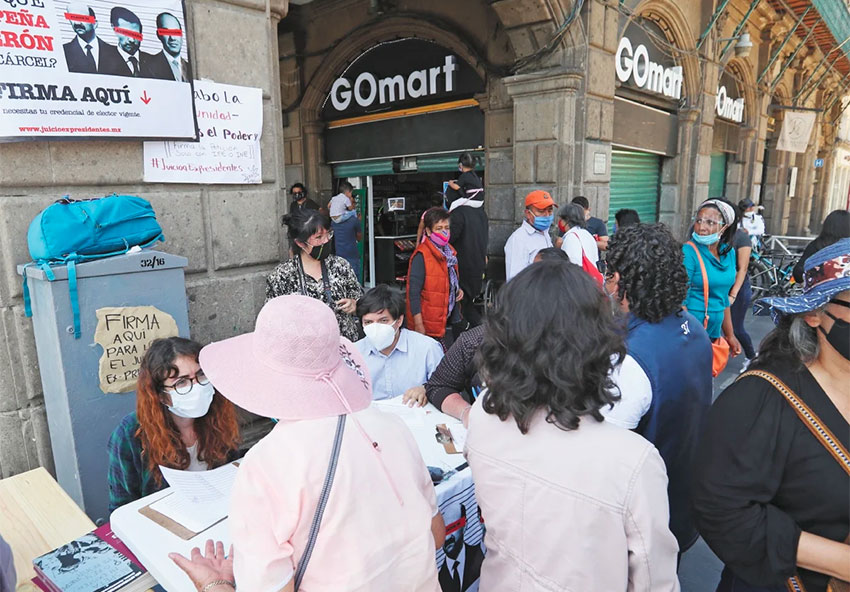
'Do you want Salinas, Peña and Calderón to go to jail?' reads the sign at a table gathering signatures for the Morena party petition.

Mexico’s ruling party is attempting to collect 2 million signatures of support for a public consultation to decide whether the five most recent former presidents should face justice for crimes they allegedly committed while in office.

Members of the Morena party’s national council voted unanimously in favor of carrying out a national campaign to collect the signatures required for a referendum in which citizens will be asked whether they support prosecuting Carlos Salinas, Ernesto Zedillo, Vicente Fox, Felipe Calderón and Enrique Peña Nieto for alleged acts of corruption and other offenses.

At least 1.8 million people must support a vote in order for one to be held but Morena party president Alfonso Ramírez said the aim is to collect 2 million signatures to ensure that “there are no excuses” for a consultation not to go ahead.

The party will be in a race against the clock because, according to the Constitution, a petition for a consultation can only be submitted between September 1 and 15 in any given year.

If Morena fails to collect the signatures it requires by the middle of next month, it will have to wait until September 2021 to submit a request for a consultation.

Morena party supporters gather signatures in Mexico City.

In an interview with the newspaper El Universal, Ramírez acknowledged that some Morena supporters have already begun collecting signatures but added that the party cannot formally do so until the Senate has reviewed and approved a “single format” petition.

He predicted that will occur this week, adding that party members and supporters will subsequently spread out across the country to begin collecting signatures.

“We took away the pension [for past presidents], now we’re going to get rid of [presidential] immunity and [ensure] that ex-presidents are investigated,” Ramírez said.

As the Morena party president acknowledged, members and supporters of the ruling party as well as the Labor Party, a political ally, set up “signing” tables in at least 12 states over the weekend.

According to reports by El Universal, residents of Mexico City as well as those of certain cities in Sinaloa, Oaxaca, Chiapas, Guerrero, Morelos, Tamaulipas, Hidalgo, Quintana Roo, Nuevo León, San Luis Potosí, Tlaxcala and Veracruz had the opportunity to add their signatures to petitions calling for a consultation to be held.

Enrique Calles, one of a group of Morena supporters collecting signatures in Mexico City’s historic center, described garnering support from 2 million people as a “titanic” task but expressed confidence that it would be accomplished.

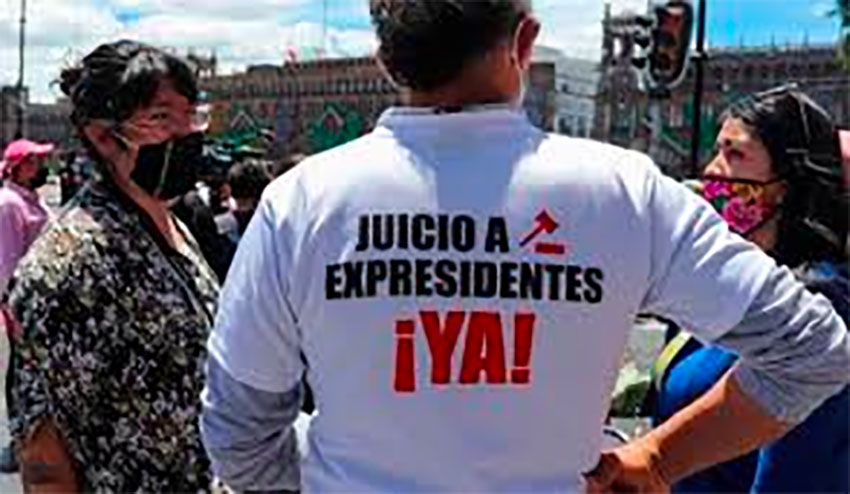
'Prosecute presidents now!' reads the t-shirt.
‘Prosecute presidents now!’ reads the t-shirt.

He said that there has been support for prosecuting past presidents for years but past efforts to bring them to justice had failed.

According to a recent poll, there is still very strong support for past presidents and other former officials to face justice, with more than 95% of respondents saying they would like to see them tried for the crimes they allegedly committed.

Calles said that he and his fellow activists, who wore shirts emblazoned with the message, “Prosecution of ex-presidents now!” would hit the streets every weekend to collect more signatures.

The efforts to find sufficient support for a consultation even went international with Morena party supporters collecting signatures on Sunday in the New York borough of Queens.

Isaac Ramírez, who collected signatures in the neighborhood of Corona, told El Universal that “we’re very happy because people came” to support the proposal.

“We must take advantage of this golden opportunity to prosecute the corrupt past presidents,” he added.

President López Obrador has made it clear that he supports a referendum although he has said that he won’t vote in favor of prosecuting his predecessors because he favors looking to the future rather than dwelling on the past.

Source: El Universal (sp) 

No guarantee that decline in virus case numbers will continue: Ministry of Health

0
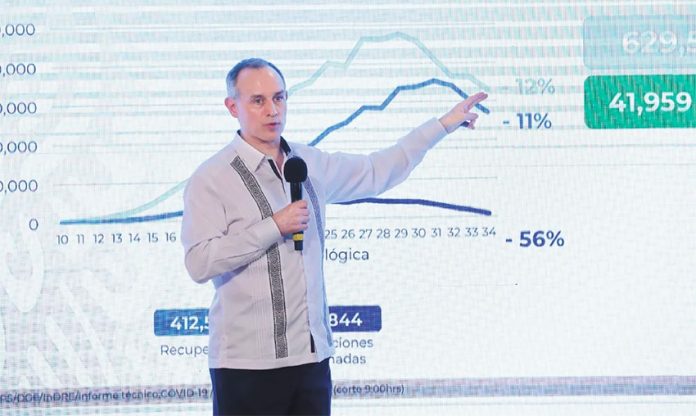
A 12% decline in new case numbers might not be sustained, warned Deputy Health Minister López-Gatell.

New coronavirus case numbers have declined in recent weeks but there is no guarantee that the trend will continue, Deputy Health Minister Hugo López-Gatell said Sunday.

Health Ministry data shows that estimated new case numbers declined 12% between epidemiological weeks 33 – August 9 to 15 – and 34. The decrease in new case numbers continued a downward trend that began in mid-July.

But López-Gatell, who leads the government’s pandemic response, explained that the Health Ministry is still registering data for week 34 – August 16 to 22 – and as a result the 12% decline might not be sustained.

“We can’t guarantee that this [reduction] will be maintained,” he said, adding that it is possible that new case numbers actually remained stable between weeks 33 and 34.

“Maybe we’ll end up again in a plateau stage. Remember that we’ve explained over and over again that the epidemic doesn’t decline in a monotonic way, … with a continuous decrease in other words. Rather, [the decline] has moments of stagnation,” López-Gatell said.

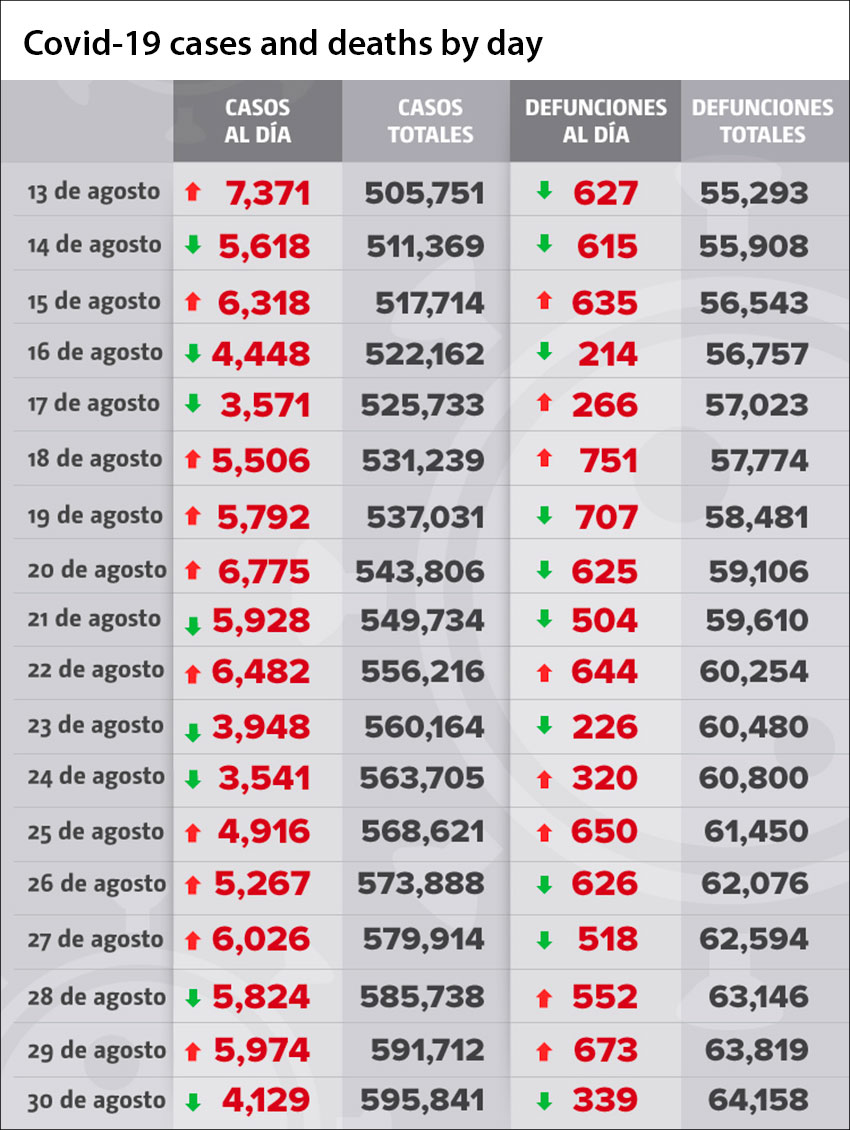
Coronavirus cases and deaths reported by day.
Coronavirus cases and deaths reported by day. milenio

Total confirmed cases in Mexico increased to 595,841 on Sunday with 4,129 new cases registered. The Health Ministry estimates that there are 41,959 active cases across the country.

Mexico City has the highest number of estimated active cases, with 7,613, followed by México state, where 3,567 people currently have symptoms of Covid-19, according to health authorities. Two other states, Nuevo León and Guanajuato, are estimated to have more than 3,000 active cases.

Mexico’s official Covid-19 death toll increased to 64,158 on Sunday with an additional 339 fatalities registered. López-Gatell said that deaths decreased 56% between epidemiological weeks 33 and 34.

However, as the Health Ministry is still registering data for the latter week, it is improbable that such a large decline will be maintained.

Mexico City has the highest Covid-19 death toll in the country with 10,508 people confirmed to have lost their lives to the disease.

México state ranks second for total deaths with 8,002 followed by Veracruz, Puebla and Baja California, each of which has recorded more than 3,000 Covid-19 fatalities.

López-Gatell reported that 1.34 million people have now been tested for Covid-19 and that the positivity rate – the percentage of tests that come back positive – is 43%.

The rate is very high because the vast majority of testing is carried out on people who arrived at health care facilities with serious coronavirus-like symptoms.

López-Gatell also reported that 35% of general care hospital beds set aside for coronavirus patients are currently occupied while 30% of those with ventilators are in use.

Nuevo León has the highest occupancy rate for general care beds, at 63%, followed by Nayarit and Hidalgo, where 52% and 50%, respectively, of such beds are in use.

Nuevo León also has the highest occupancy rate for beds with ventilators, at 56% followed by Aguascalientes and Colima, where 51% and 50%, respectively, of critical care beds are in use.

Source: El Universal (sp)