Home Blog Page 1457

Fighting corruption: analysts criticize government’s approach

0

Three corruption analysts have criticized the federal government’s approach to combating corruption, charging that it should broaden its focus beyond high-profile former officials and make greater use of the National Anti-corruption System (SNA).

Maureen Meyer, vice president for programs and director for Mexico at the Washington Office on Latin America (WOLA), said President López Obrador uses powerful rhetoric to denounce corruption but charged that he hasn’t shown strong support for nor interest in the SNA, which was partially set up by the previous federal government but remains incomplete.

She told the newspaper El Economista that the president has expressed support for the federal Attorney General’s Office (FGR) in its emblematic cases against corruption – such as those against former Pemex CEO Emilio Lozoya and ex-cabinet minister Rosario Robles – but added that he needs to do more to ensure that Mexico’s corruption fighting bodies have the resources they need.

Meyer said neither the SNA nor the Special Prosecutor’s Office for Combatting Corruption currently have sufficient funding and noted that López Obrador – who says that eliminating corruption is his top priority – has not made all the necessary appointments to the former.

The WOLA vice president also said the FGR needs to go beyond conducting high-profile corruption probes and investigate cases in which lesser known former government officials were involved.

Meyer added that the FGR should also be investigating acts of corruption allegedly committed by current government officials and members of the ruling Morena party.

She said that the progress made in the Lozoya case – the former Pemex CEO recently submitted a document to the FGR in which he accuses three past presidents and several former officials of corruption – and other high-profile cases will only be important if those who committed crimes are actually punished.

Sarahí Salvatierra, a researcher at the Fundar Center for Analysis and Research who specializes in corruption and transparency issues, also charged that the government has not made good use of the SNA and the Special Prosecutor’s Office, noting that the budget of the latter has been slashed by 70%.

She told El Economista that the government has relied chiefly on the FGR, the Ministry of Public Administration and the Finance Ministry’s Financial Intelligence Unit (UIF) to fight corruption.

Salvatierra said the work of the UIF, which has conducted investigations into money laundering offenses allegedly committed by former officials including Lozoya, has been important but claimed that it has failed to collaborate effectively with other agencies to strengthen cases against those it accuses of corruption.

“This government has opted for a segmented strategy,” she said.
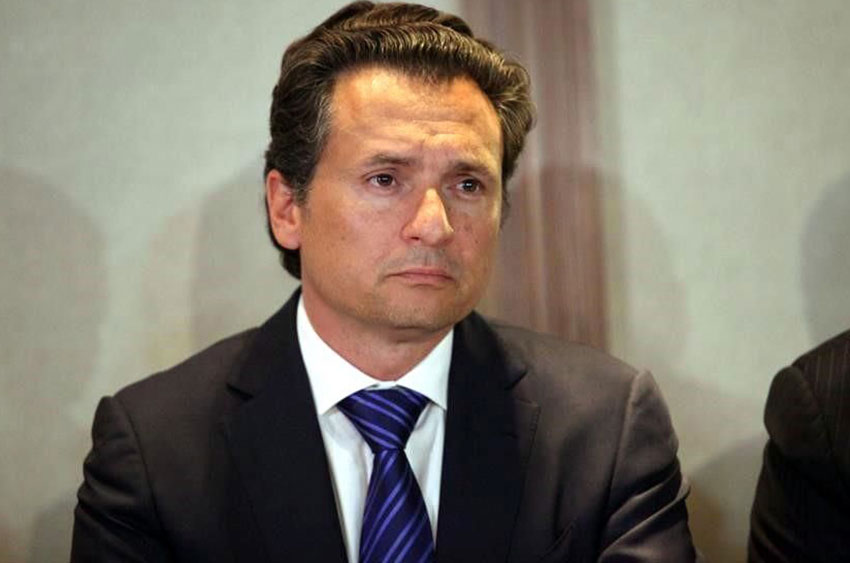
emilio lozoya
Fighting corruption should go beyond the high-profile cases such as that of Lozoya (pictured), says one observer.

Salvatierra was also critical of the government’s apparent decision to focus mainly on prosecuting high-profile government officials rather than functionaries of all levels. She charged that the approach was akin to a “witch hunt” and won’t be effective in destroying corruption rings that may still exist within the government.

In the investigation into the so-called “Master Fraud” embezzlement scheme in which government departments allegedly misappropriated billions of pesos during the administration of former president Enrique Peña Nieto, the current government has only focused on prosecuting Robles and not other officials who participated in the diversion of resources, Salvatierra said.

The Fundar researcher criticized the government for politicizing high-profile corruption cases, such as that against Lozoya, and charged that it has contributed to the creation of a media circus around them. As a result, investigations and the prosecution of crimes are being placed at risk, she said.

“In the end, … crimes and those who committed them [could] go unpunished,” Salvatierra said.

Luis Ángel Martínez Ramírez, a corruption and transparency expert at the Ethos Public Policy Laboratory, was also critical of the government for not making use of the National Anti-corruption System.

He said the SNA also has a national anti-corruption policy that the López Obrador administration has not made use of. The policy says that government and civil society should work together to combat corruption but the president has ignored the advice, Martínez told El Economista.

He also said the policy establishes that corruption cases can be prosecuted in both criminal and administrative courts. However, prosecution in the latter is not possible because López Obrador has not fulfilled his obligation to name 18 anti-corruption judges to the Federal Tribunal of Administrative Justice, Martínez said.

Echoing Salvatierra’s remarks, the corruption expert said the government has politicized the cases against Lozoya and Robles and charged that it has handled them in a messy way.

Martínez said that remarks López Obrador has made about the Lozoya case – he has called on his two most recent predecessors to testify – may have even violated due process and as a result put a guilty verdict against the former Pemex chief and those he accuses at risk.

He said the president’s calls for all evidence in the Lozoya case to be made public and the subsequent leaking of a video showing former Senate officials receiving large amounts of cash and the former Pemex CEO’s deposition to the FGR undermined the legal process.

“We’re losing a unique opportunity to combat corruption, … when everything was leaked, everything was contaminated. … It’s a political soap opera more than a legal process,” Martínez said.

He was also critical of López Obrador’s plan to hold a public consultation to decide if past presidents should be brought to justice for crimes they allegedly committed while in office, describing the proposal as “very worrying.”

He charged that the president’s motivation is political, designed to win votes at next year’s midterm elections, and claimed that he planned to hold the referendum on the same day that voters will go to the polls.

López Obrador said this week that the consultation would go ahead if the Supreme Court rules that such a vote is constitutional. However, he said he would personally vote against prosecuting his predecessors because he favors looking to the future rather than the past.

“I don’t want people to think that I’m an executioner, revenge is not my strong point,” the president explained.

Source: El Economista (sp) 
Oaxaca hotel opens doors to students, provides internet and TV

0
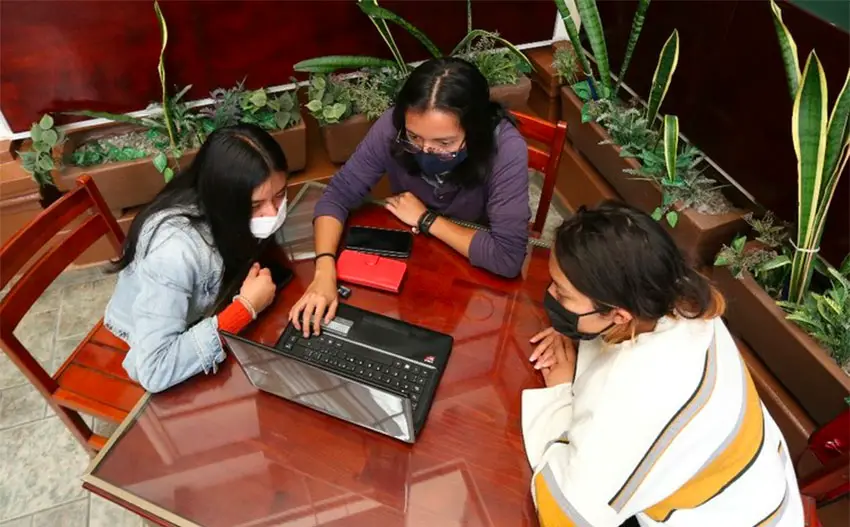
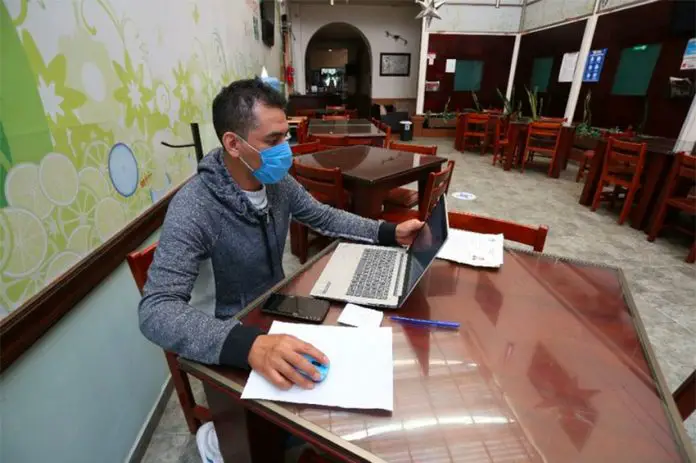
The 'study hall' at Hotel Don Nino in Oaxaca.

As physical classrooms are replaced with a distance learning program due to the coronavirus pandemic, children from low income and rural families are often finding themselves at a disadvantage as essential tools for learning are financially out of reach. 

But a hotel in the heart of Oaxaca’s capital is looking to level the playing field. 

Hotel Don Nino, which is closed due to the pandemic, has opened its doors to children in need, providing two rooms and the dining room as classrooms, complete with a television, computer and high-speed internet. 

“Being at home, my daughters shared their concern for those students who do not have television or internet,” hotel manager Carlos said. “Last weekend we prepared the restaurant area and the meeting room. In addition, the television channels were adjusted and the internet connection was checked.”

Carlos reasoned that since he has to pay for basic services such as electricity, water and internet anyway, it made sense to take advantage of the space and keep children in school by opening it up to distance learning.

Study time at Hotel Don Nino in Oaxaca city.

The hotel is open daily, free of charge, from 8 a.m. to 6 p.m. Children must be accompanied by an adult and everyone must wear masks. Capacity is limited to 15 students, who are greeted with anti-bacterial gel and a temperature check.

University students are also taking advantage of the hotel-turned-study-hall. Clara Montaño Bautista, who studies communication science at Oaxaca’s Vasconcelos University, says she uses the hotel for school because the town where she lives, Teotitlán Del Valle, is 31 kilometers away. Cell phone coverage there is spotty and the internet speed is slow and irregular.

According to government data, Oaxaca has the second-lowest percentage of internet users in Mexico at 60.5%. One in four homes in the state does not have a television.

Source: La Jornada (sp), El Universal (sp)

The Tarahumara Project: one woman’s arrival home to a much different world

0
Libby Townsend in her Rarámuri clothing.
Libby Townsend in Rarámuri dress at the Feria Maestros de Arte. leigh thelmadatter

Let’s be  frank: Libby Townsend caught my attention because here was a white woman in full Rarámuri (Tarahumara) dress at the Feria de Maestros de Arte handcraft fair. But before anyone accuses anyone of “cultural appropriation,” it’s a good idea to know the full story.

Townsend’s story is about creating bridges of mutual respect when life presented her with the chance.

She was traveling in Chihuahua in a Jeep with friends when it broke down in the middle of nowhere and the weather was turning bad. Fortunately, a group of Rarámuri men appeared, but no one in either group spoke Spanish. With the few words they did know, plus a lot of gestures, the men promised to get help.

“Some time later, the world’s oldest logging truck appeared …” and pulled the Jeep to the next village, then from there to Creel, the center of Rarámuri country in Chihuahua. At the time there were no bank machines or cell phone reception, and the travelers were stuck in Creel as parts were located for their vehicle.

They had no money, but the townspeople gave them credit. After two weeks, parts arrived, the Jeep was fixed, and the group was able to settle their bills and be on their way.

Rarámuri country
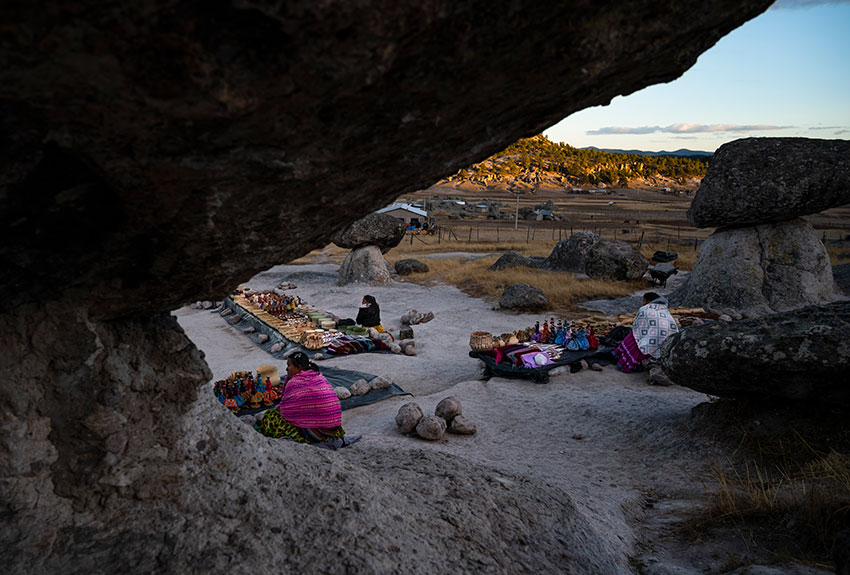
Rarámuri country: Valle de los Hongos, Chihuahua. orlando gonzález

The experience deeply impressed Townsend.

Some years later, she saw a report about a particularly bad winter in Rarámuri country. The image on her television was of two girls walking barefoot in the snow to school. The reporter asked why not stay home for a few days and the girls said they could not as one wanted to be a teacher and the other a doctor to help their people.

Townsend’s grandfather also grew up poor in the cold mountains of Montana. She decided to pay back the kindness she was shown by collecting donations of clothes and other necessities. It was slow at first, but she managed to collect enough to make the trip down to Mexico, 1,000 miles away, worthwhile.

It was supposed to be a one-time thing.

When she returned from Mexico, there were enough donations waiting for her for another trip. The problem was financing the haul. This was resolved by taking donations of items the Rarámuri did not need and holding yard sales.

These trips bloomed into The Tarahumara Project, which has moved into other activities beyond donating old clothes and blankets. It has not only benefitted the Rarámuri, but Townsend herself, giving her a mission in life, and a Rarámuri identity.

Rarámuri crafts at the Feria de Maestros de Arte.
Rarámuri crafts at the Feria de Maestros de Arte. libby townsend

According to Townsend: “On one of the trips we were unloading blankets, etc. at the hospital … A man approached with a little girl with him and he said something. I had recognized the word for hello, so I answered him with hello. He spoke to me some more [but] all I understood was the word for gift, so I repeated it in an affirmative manner. He then took my hands in his, and put his hands on my forehead and then mine on his while talking the whole time in Rarámuri … he doesn’t speak Spanish.

“I got all tingling. It isn’t common for the traditional Tarahumara to speak to outsiders, much less a man to a woman who isn’t related. … The people who work at the hospital were dumbfounded … it turns out that he said I was good for his people, a blessing to them, good medicine. He said he would consider me to be a member of his hearth (loosely translated). The hospital staff explained that it was like making me a member of his family. I later found out that he was the head spiritual leader.”

Townsend uses traditional dress because the Rarámuri decided that she could as she is family and represents them in the outside world. This relationship has grown over decades, not only by working to get needed supplies and fair prices for Rarámuri crafts, but she is a godmother, which has great importance in Mexican and Rarámuri societies.

The world knows little of the Rarámuri, except perhaps that they can run fast in sandals. They live in some of the most inhospitable of Mexico’s environments precisely to maintain an existence that is as separate as possible. Like the Amish, the most traditional eschew things we take for granted. They will not cut down trees, or build houses, instead living under rock outcroppings blocked with stone and deadfall.

But it is not possible to be 100% self-sufficient as families need income for certain expenses, and “European” encroachment continues, today in the form of organized crime trafficking in drugs and people. Townsend and her mother have since moved to Mexico, living and working in Guadalajara as a base, but she regularly drives into the Chihuahua mountains in some of the most dangerous areas of Mexico today.

Townsend still collects donations for the communities in Chihuahua with the support of her employer, the Guadalajara Reporter. To find out how you can help, contact Libby at the_tarahumara_project@yahoo.com.

Leigh Thelmadatter arrived in Mexico 17 years ago and fell in love with the land and the culture. She publishes a blog called Creative Hands of Mexico and her first book, Mexican Cartonería: Paper, Paste and Fiesta, was published last year. Her culture blog appears weekly on Mexico News Daily.

AMLO accuses NGOs, news portal of receiving foreign donations to fight Maya Train

0
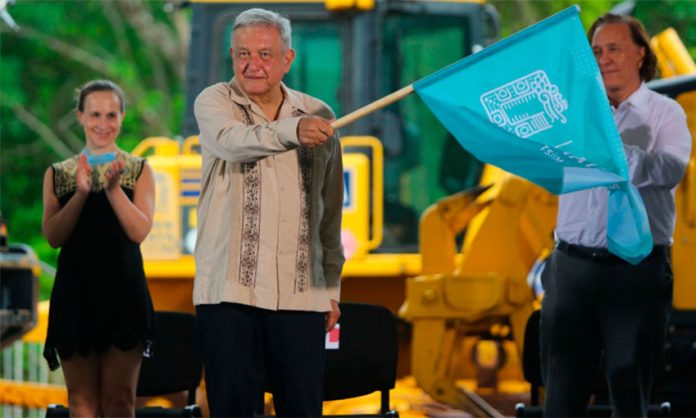
The president waves the starter's flag at inauguration of construction of the Maya Train in June.

Civil society organizations and a news website have rejected a claim by President López Obrador that they received funding from foreign foundations to oppose the federal government’s Maya Train railroad project.

López Obrador made the allegation at his morning news conference Friday, where his communications coordinator provided more details about the alleged arrangements.

Jesús Ramírez Cuevas claimed that the Ford, Kellogg, Rockefeller, Climate Works and National Endowment for Democracy foundations, all of which are based in the United States, have provided resources to Mexican organizations to fund critical research and coverage of the Maya Train, the government’s signature infrastructure project which is currently under construction in Mexico’s southeast.

Among the organizations that received funds for that purpose, Ramírez said, are México Evalúa, a public policy think tank; Mexicans Against Corruption and Impunity (MCCI); Indignación, a human rights-focused NGO; the Mexican Center for Environmental Law; the Mexican Civil Council for Sustainable Forestry; the Due Process Foundation; the Indigenous Regional Popular Council of Xpujil (a town in Calakmul, Campeche) and Animal Político, an independent news site.

MCCI responded in a statement that the government’s claim is false.

“MCCI has not received any international funding to criticize the Maya Train. … The research priorities and editorial line that MCCI follows … don’t respond to the interests of national or foreign donors,” the organization said.

“No donation compromises the mission nor the activities of the organization,” MCCI said, adding that it decides its own agenda.

The anti-graft group charged that the use of the “presidential podium” to attempt to discredit civil society organizations amounts to an “abuse of power.”

“Their words [those of López Obrador and Ramírez] are a new attempt to silence critical voices,” the group said.

MCCI has been highly critical of the current government, accusing it of corruption and joining a collective that launched legal action against the Santa Lucía airport project north of Mexico City. It also published a report in May that claimed that the government was underreporting Covid-19 deaths.

The director of México Evalúa also rejected the claim that it received funding to criticize the Maya Train, writing on Twitter that “what was said at the president’s [press] conference is not true.”

AMLO launches a broadside at organizations deemed to oppose his signature infrastructure project.

Edna Jaime said that México Evalúa has received donations to analyze justice system reforms but not the train.

“We don’t oppose anyone,” she added. “We’re [a] civil society [organization] that thinks, analyzes and builds a better country. At México Evalúa we work with data, evidence, statistics and facts. We don’t oppose – we propose that public money be used honestly.”

Indignación responded to López Obrador’s claim using one of the president’s own favorite catchphrases to reject criticism leveled at his government.

“Mr. President, in response to the comments and opinions you expressed today, this working team would like to inform you that after 30 years walking with the Mayan people of the Yucatán Peninsula, WE HAVE OTHER INFORMATION,” the human rights group said.

The Mexican Center for Environmental Law and the Mexican Civil Council for Sustainable Forestry also rejected the claim that they received international funding to oppose the US $8-billion Maya Train project, which some experts say poses a range of environmental risks in the five states – Tabasco, Campeche, Yucatán, Quintana Roo and Chiapas – through which it will run.

For his part, the director of Animal Político asserted that the news outlet “doesn’t receive funding conditional on praising or criticizing any public program.”

“We haven’t even published any extensive report about the Maya Train. We deeply regret that the president is insinuating without proof that there is something irregular,” Daniel Moreno said on Twitter.

“We also regret that the president uses his morning press conferences to make accusations without carrying out research beforehand. Those of us who produce Animal Político demand that he clarify this information that damages the journalistic work we’ve been doing for 10 years with the sole objective of serving our readers,” he wrote.

The news website said in a report published Friday that it received funding from the W.K. Kellogg Foundation to carry out a 2017-18 project about racism and inequality, and that it accepted resources from the Ford Foundation between 2016 and 2020.

Animal Político said it signed an agreement with the Ford Foundation to deliver workshops and provide training for journalists working in several states, adding that it used Ford money to develop a journalism manual that has been distributed to hundreds of students and active journalists.

The news outlet said it is currently using a Ford Foundation grant to conduct research and publish articles about impunity, corruption, inequality and climate change.

The Kellogg Foundation also responded to the government’s claim in a statement issued on Friday.

“Well before the Mayan Train project, the W.K. Kellogg Foundation has been supporting organizations in southern Mexico that strive to make the communities they work in ones in which all children can thrive. The grants the foundation provides support areas such as health, education, food production and language interpretation for access to justice,” it said.

“They also support work in the defense of human rights, indigenous rights and environmental protection. The W.K. Kellogg Foundation respects its grantees’ active pursuit of these issues, as they determine; but the foundation does not direct the use of funds.”

The foundation said it has been working in Mexico since 1944 and that it now supports more than 100 organizations here including grassroots entities as well as public universities and research centers.

“The foundation’s focus on the Yucatán Peninsula began in 2010 – eight years before public conversations about the Mayan Train project began. All of the work of the W.K. Kellogg Foundation in Mexico complies with all transparency and other requirements of the governments of both the United States and Mexico. The foundation verifies that all of its grantees do so as well.”

Source: Reforma (sp), Animal Político (sp) 

Tortilla maker equips classroom in back of a truck for kids without resources

0
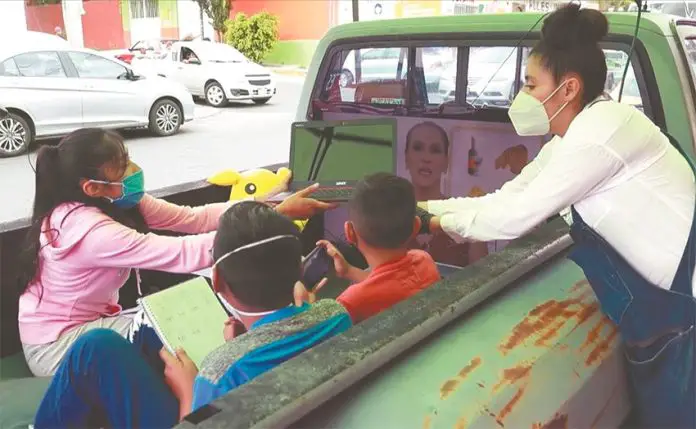
Tortillería owner Dalia Ávila passes a laptop to a student in the improvised classroom.

A Mexico City tortilla maker began providing food for the hungry a few months ago. Now they have turned to helping children who don’t have access to the technology they need to go back to school.

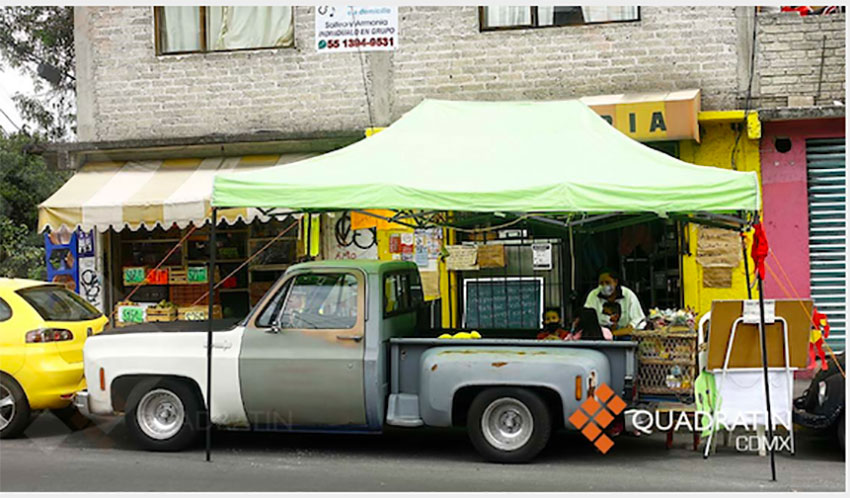
Tortillería owner Dalia Ávila has converted the bed of a pickup truck bed into a virtual classroom for disadvantaged children.

Furnished with a desk, television, laptop, smartphones and notebooks, the truck provides an improvised classroom for children in the Mexico City borough of Tlalpan.

Ávila calls it the “Rinconcito de Esperanza,” or Little Corner of Hope, and dedicates the project to the memory of her infant son Leo who died in February. 

Ávila says she was inspired by the charity of strangers while tending to her ailing son in the hospital, and after his death she vowed to pay it forward in his name. 

A school for 'the new normal' in Tlalpan, Mexico City.
A school for ‘the new normal’ in Tlalpan, Mexico City.

“They infected us with love, hope and empathy, and all that they gave us we are replicating here,” she says.

Her Tortillería La Abuela has been providing daily meals to the hungry, free tortillas to the elderly, and groceries to the needy. 

Opening a study area for children of working mothers was a natural transition that began as a way to help her own employees make sure their children had access to education through the coronavirus-triggered distance learning program.

“Many children do not have internet, a laptop or television to be able to watch the classes. I saw the suffering and stress of the mothers who had to decide between work and their children’s education,” she says.

The initiative started with five children but has grown substantially. Groups of children now climb into the study truck on an appointment basis. When school supplies such as notebooks run out, Ávila improvises by handing children the paper she wraps tortillas in so they can continue their homework. 

Masks and hand sanitizer are provided, and only children who live together can be in the truck at the same time. The truck bed is disinfected daily.

According to the Ministry of Communication and Transportation, 35% of the country’s population over six years old does not have internet access.

After just a week of operation, 50 children have signed up to attend virtual classes in the back of Ávila’s pickup.

Source: El Universal (sp)

Real estate firm fires #Lady3Pesos after confrontation at Walmart

0
An angry #Lady3Pesos at a Mexico City Walmart Friday.

A woman was fired from her job at a real estate firm after she was captured on a video berating a Walmart security guard Friday in the borough of Azcapotzalco in Mexico City.

The woman was nicknamed #Lady3Pesos on social media after she launched into an expletive-laden classist tirade against security personnel who refused to let her enter the store with her child, a policy clearly stated at the entrance of the store in order to help prevent the spread of the coronavirus.

“What an asshole, what are you going to tell me? I need to do the shopping for my children, you’re an asshole. I’m a lawyer, I’m going to go to [the consumer protection agency] Profeco right now, fuck all of you,” the woman shouted. 

“Ridiculous shit, you earn 3 pesos, right? Oh, poor thing, go eat pork rinds in salsa verde [green sauce] in your little house, you fucker,” she continued. “Enjoy your 3,500 pesos per month.” 

The woman demanded to see a manager and be reimbursed for the 5-peso parking fee she had paid.

The security guards refused to do either.

“What’s your name, idiot? Have balls and tell me your name. Asshole, what’s your name? Little asshole!” shouted the woman before shoving one of the security guards and walking away, daughter in tow.

“We regret with great sorrow and disappointment what has happened, and we completely dissociate ourselves from the inadmissible conduct of this consultant who, as of the issuance of this statement, has been removed from our offices and from the entire network,” Century 21 House Hunters wrote in a letter posted to their Facebook page yesterday. 

“Respect, honesty, inclusion, transparency and service are non-negotiable, fundamental values ​​for all our members,” the statement read.

Denizens of the internet have responded to the video with endless memes and comments, mostly expressing outrage at her derogatory attitude toward pork rinds in salsa verde

“#Lady3Pesos can mess with my studies, with my life, rip off my legs, but nobody messes with my chicharrón in salsa verde,” one Twitter user wrote.

Source: El Universal (sp)

Zihuatanejo beach earns Blue Flag designation

0
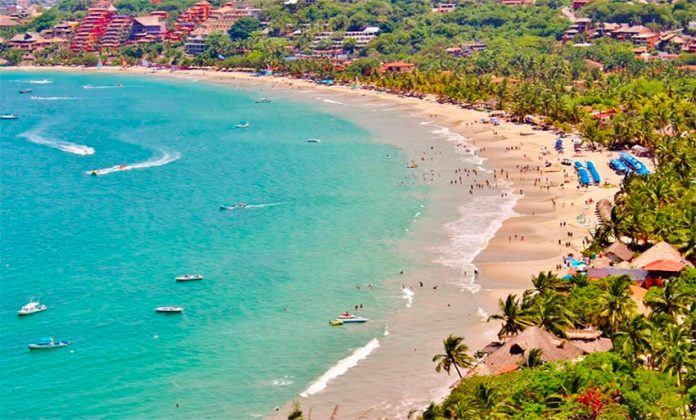
La Ropa beach.
La Ropa beach.

Zihuatanejo’s La Ropa beach has been awarded the prestigious Blue Flag distinction, joining El Palmar I, II and III as the four beaches in the popular tourist destination to have achieved the international certification.

At Friday’s flag-raising ceremony, Guerrero Governor Héctor Astudillo Flores expressed his approval of the achievement, thanking residents for their cooperation and efforts to keep the beach safe and clean.

Mayor Jorge Sánchez Allec, in turn, thanked the governor for supporting Zihuatanejo.

“It is a great coordination job that we have done with the state government. Today we can guarantee that we have an orderly beach with clean sand but also clean water,” he said.

The Blue Flag designation “helps us to promote the beach destination. Having the certification was a dream that all the restaurateurs, neighbors and residents of this town had,” he added.

Beaches, marinas and tour boats can earn the international distinction once they have met the Foundation for Environmental Education’s stringent environmental, educational, safety and access-related criteria.

Among other requirements, Blue Flag beaches must offer environmental education activities, display a code of conduct, and provide information about water quality. Garbage cans, water, and restrooms are required, and lifeguards and first aid services must also be in place. 

According to the Blue Flag Mexico website, the country has 62 Blue Flag-certified beaches, three Blue Flag marinas and 25 certified tourist vessels.

Quintana Roo leads the nation with 45 Blue Flag beaches and boats, followed by Baja California Sur with 23 beaches and a marina.  

Source: El Universal (sp)

10 states now yellow on coronavirus stoplight map; only Colima at extreme risk

0
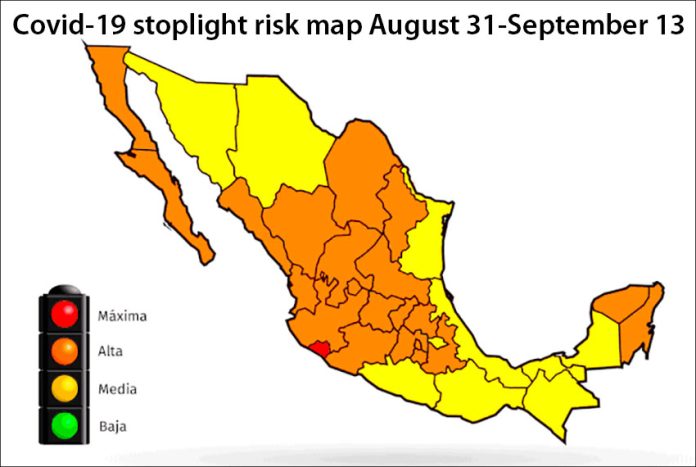
Mexico changes color as the coronavirus risk level drops in more states.

The risk of coronavirus infection will be yellow light “medium” in 10 states as of Monday, the Health Ministry announced Friday, while Colima will be the only state at the red light “maximum” risk level.

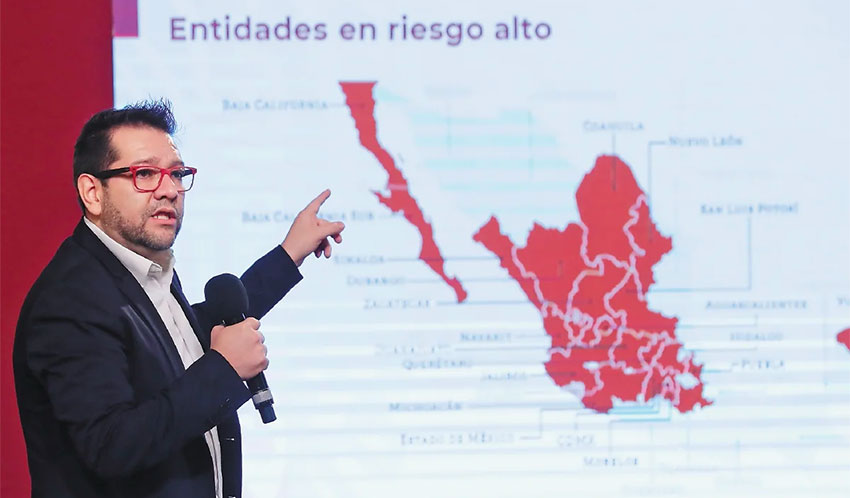
Health Promotion chief Ricardo Cortés presented a new coronavirus “stoplight” risk map that showed that Campeche, Tabasco, Chiapas, Oaxaca, Guerrero, Tlaxcala, Veracruz, Tamaulipas, Chihuahua and Sonora will start next week as yellow light states.

The only state that is yellow on the “stoplight” map currently in effect is Campeche, which switched to that color on August 17. Cortés said the 10 yellow light states now look forward to reaching the green light “low” risk level.

The nine states switching from orange to yellow on Monday will be able ease coronavirus restrictions with the federal government’s blessing.

Each stoplight color is accompanied by recommended restrictions to slow the spread of the virus but some states have chosen to follow their own guidelines rather than those drawn up by federal authorities.

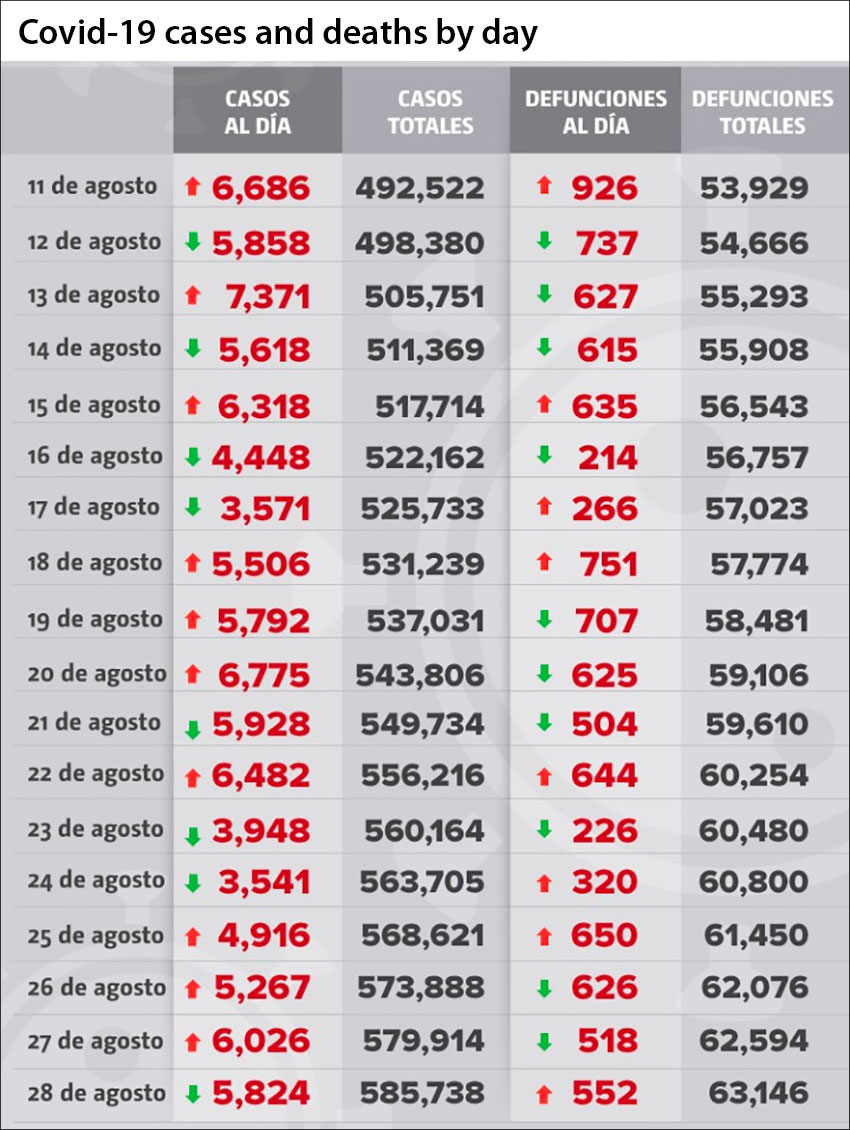
Coronavirus cases and deaths reported by day
Coronavirus cases and deaths reported by day. milenio

The new “stoplight” map showed that 21 states will start next week as orange light “high” risk states.

They are Aguascalientes, Baja California, Baja California Sur, Coahuila, Durango,  Guanajuato, Hidalgo, Jalisco, Michoacán, Mexico City, México state, Morelos, Nayarit, Nuevo León, Puebla, Querétaro, Quintana Roo, San Luis Potosí, Sinaloa, Yucatán and Zacatecas.

The risk level has been downgraded from red to orange in five of those states – Aguascalientes, Baja California Sur, Hidalgo, Nayarit and Zacatecas.

Cortés urged residents of orange light states to continue acting with caution in order to slow the spread of the coronavirus and thus allow the risk infection level to be reduced.

The infection risk level in Colima, now the sole red light state, remains at maximum because case numbers, hospital admissions and Covid-19 deaths are still trending upwards, the health official said. The small Pacific coast state has recorded a total of 3,542 confirmed coronavirus cases and 414 Covid-19 deaths.

Cortés explained that the new “stoplight” map was formulated for the first time using 10 different indicators, rather than four, to assess the risk level in each state.

Ricardo Cortés of the Ministry of Health presents the new Covid-19 risk map at Friday's press briefing.
Ricardo Cortés of the Ministry of Health presents the new Covid-19 risk map at Friday’s press briefing.

The 10 indicators are: the Covid-19 effective reproduction rate (how many people each infected person infects); estimated case numbers per 100,000 inhabitants; the weekly positivity rate (the percentage of Covid-19 tests that come back positive); total case numbers; the number of coronavirus patients per 100,000 inhabitants; hospital occupancy rates for general care beds; occupancy rates for beds with ventilators; hospital admission trends; Covid-19 mortality rate (deaths per 100,000 inhabitants); and Covid-19 death trends (whether the number of deaths per week is increasing or decreasing).

Earlier in Friday night’s press briefing,  Cortés reported that Mexico’s accumulated case tally had increased to 585,738 with 5,824 new cases registered.

Confirmed case numbers have trended downwards in recent weeks but fewer than 3,000 cases have not been reported on a single day since June 8.

The Health Ministry estimates that there are currently 42,822 active cases across the country while the results of 83,357 Covid-19 tests are not yet known.

The official Covid-19 death toll rose to 63,146 on Friday with 552 additional fatalities registered. National data shows that 36% of general care hospital beds set aside for coronavirus patients are currently occupied while 31% of those with ventilators are in use.

Friday marked six months since Mexico’s first two cases of Covid-19 were reported. The two first cases were men who had traveled to Italy.

Mexico currently has the eighth highest case tally in the world, according to data compiled by Johns Hopkins University, and the third highest Covid-19 death toll after the United States and Brazil.

Source: El Universal (sp), El Financiero (sp) 

Coronavirus: Guerrero is second state to go yellow, Mexico City remains orange

0
'Maintain healthy distance,' Mayor Sheinbaum reminded citizens Friday.

Guerrero will be the second state in Mexico to switch from orange to yellow on the federal government’s coronavirus “stoplight” risk map while the infection risk level will remain at orange light “high” in Mexico City for a 10th consecutive week between August 31 and September 6.

Governor Héctor Astudillo announced Friday that Guerrero will become a yellow light “medium” risk state as of Monday.

He said the move to yellow will allow the state to ease restrictions and as a result welcome more tourists. The governor  highlighted that hotels will be able to open more rooms and restaurants will be able to seat more diners.

Astudillo said the loosening of restrictions will boost the state economy, especially in the main tourism destinations of Acapulco, Ixtapa/Zihuatanejo and Taxco.

“It’s good news but we still have to look after ourselves; face masks, healthy distance and … a lot of hand washing,” he said.

Guerrero has recorded 14,432 confirmed coronavirus cases, according to state data, and 1,654 deaths. There are 658 active cases in the state including 257 in the state capital Chilpancingo and 156 in Acapulco.

Hospitalizations of coronavirus patients, Covid-19 deaths and new cases have all recently declined in the state. It will become the second yellow light state in the country after Campeche, which switched to that color on August 17.

Federal health officials are expected to present a new “stoplight” map at Friday night’s coronavirus press briefing. Most of Mexico’s 32 states are orange on the current map although six – Zacatecas, Hidalgo, Baja California Sur, Nayarit, Aguascalientes and Colimaare painted red.

In Mexico City, there will be no change to the risk level next week, Mayor Claudia Sheinbaum announced Friday.

“We’ll continue at the orange light [level],” she said before urging citizens to remain aware that the pandemic hasn’t ended and reminding them that maintaining a healthy distance from each another is still important.

Sheinbaum said that hospitalizations of coronavirus patients have slightly increased in recent days and therefore moving to the yellow light risk level is not currently possible.

Although Mexico City has remained orange for the past two months, the city government has gradually eased some restrictions in that period.

Bars, cantinas and other entertainment venues were permitted to reopen at reduced capacity almost three weeks ago although they had to tweak their business model and operate as if they are restaurants while theaters were allowed to reopen at 30% capacity last week.

Museums, public swimming pools, sports centers and cinemas are now also open in the capital but operating at a reduced capacity.

Sheinbaum said that large new outbreaks of the coronavirus have been avoided despite the reopening of the economy.

Mexico City has recorded 95,185 confirmed coronavirus cases and 10,370 Covid-19 deaths since the beginning of the pandemic, figures far higher than those reported in the other 31 states. The federal Health Ministry estimates that there are currently 6,710 active cases in the capital.

Meanwhile, the nationwide coronavirus case tally rose to 579,914 on Thursday with 6,026 new cases registered. There are an estimated 41,786 active cases across the country.

Mexico’s official Covid-19 death toll currently stands at 62,594 with 518 additional fatalities registered on Thursday. However, several independent studies have concluded that fatalities are being significantly underreported, mainly due to a lack of Covid-19 testing.

More than 1.3 million people have now been tested for Covid-19 in Mexico but the testing rate here remains very low compared to many other countries.

Source: Milenio (sp), Infobae (sp), Sin Embargo (sp) 

AMLO says concerns over Nuevo León refinery are politically motivated

0
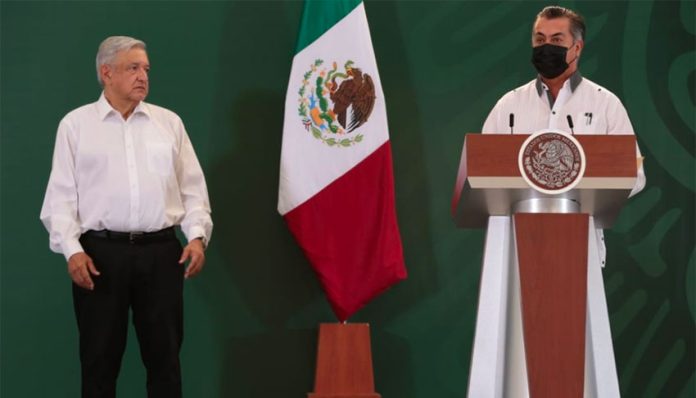
The president listens while Governor Rodríguez speaks at Thursday's press conference.

President López Obrador has ruled out any possibility of closing the oil refinery in Cadereyta, Nuevo León, due to the high levels of contamination it emits and charged that current concerns about it are politically motivated.

Speaking at a news conference in Monterrey on Thursday, López Obrador said the refinery, one of six in Mexico owned and operated by the state oil company Pemex, cannot be closed because it is needed to fulfill his government’s energy plan.

The president is determined to reduce reliance on fuel imports, pledging in June that Mexico will be self-sufficient in the production of gasoline by 2023.

López Obrador said that concerns about the contamination the Cadereyta refinery produces – it’s one of the world’s worst sulfur dioxide polluters, according to Greenpeace – are legitimate but also claimed that environmental advocates, especially those seeking public office, become more active in the lead-up to elections.

Elections to renew the lower house of the federal Congress and to elect a new governor, deputies and mayors in Nuevo León will take place next June.

López Obrador said the government will seek to resolve the Cadereyta contamination problem through investment primarily aimed at making it more productive. He said that 2 billion pesos was invested in the facility last year and that more funds are being spent on upgrading it this year.

Speaking at the same press conference, Nuevo León Governor Jaime Rodríguez said the contamination from the refinery, located about 40 kilometers east of Monterrey, affects large parts of the state and urged the president to examine the issue.

He also said he had spoken with the representatives of several companies about how the contamination problem can be resolved. “It’s necessary that we start looking at this,” Rodríguez told López Obrador.

Earlier this month, the state government’s Ministry of Sustainable Development filed a complaint with the federal Attorney General’s Office against the Cadereyta refinery after liquid contaminants from the facility spilled into a nearby waterway.

But airborne pollutants remain the biggest concern. Toxic gases emitted by the refinery, which opened in 1979, affect several municipalities in Nuevo León including those in the metropolitan area of Monterrey and they also reach the neighboring state of Coahuila.

Considered one of the most productive and profitable refineries in Mexico, the facility has the capacity to refine 275,000 barrels of oil per day, although at the start of June it was operating at just over 40% of that level. In addition to gasoline, it produces ultra low-sulfur diesel, propylene, LP gas, asphalt and coke among other products.

As a result of its activities, the refinery is the biggest polluter of sulfur dioxide and particulate matter smaller than 2.5 microns in the Monterrey metropolitan area. It also emits large quantities of nitrogen oxide and particulate matter smaller than 10 microns.

Source: Milenio (sp), El Economista (sp)