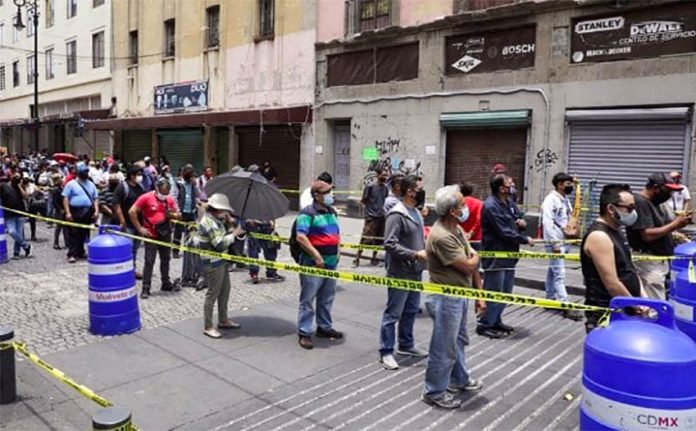
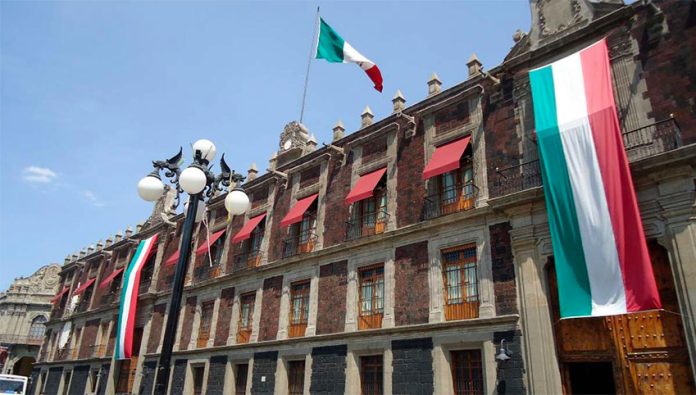
'Maintain healthy distance,' Mayor Sheinbaum reminded citizens Friday.
Guerrero will be the second state in Mexico to switch from orange to yellow on the federal government’s coronavirus “stoplight” risk map while the infection risk level will remain at orange light “high” in Mexico City for a 10th consecutive week between August 31 and September 6.
Governor Héctor Astudillo announced Friday that Guerrero will become a yellow light “medium” risk state as of Monday.
He said the move to yellow will allow the state to ease restrictions and as a result welcome more tourists. The governor highlighted that hotels will be able to open more rooms and restaurants will be able to seat more diners.
Astudillo said the loosening of restrictions will boost the state economy, especially in the main tourism destinations of Acapulco, Ixtapa/Zihuatanejo and Taxco.
“It’s good news but we still have to look after ourselves; face masks, healthy distance and … a lot of hand washing,” he said.
Guerrero has recorded 14,432 confirmed coronavirus cases, according to state data, and 1,654 deaths. There are 658 active cases in the state including 257 in the state capital Chilpancingo and 156 in Acapulco.
Hospitalizations of coronavirus patients, Covid-19 deaths and new cases have all recently declined in the state. It will become the second yellow light state in the country after Campeche, which switched to that color on August 17.
Federal health officials are expected to present a new “stoplight” map at Friday night’s coronavirus press briefing. Most of Mexico’s 32 states are orange on the current map although six – Zacatecas, Hidalgo, Baja California Sur, Nayarit, Aguascalientes and Colima – are painted red.
In Mexico City, there will be no change to the risk level next week, Mayor Claudia Sheinbaum announced Friday.
“We’ll continue at the orange light [level],” she said before urging citizens to remain aware that the pandemic hasn’t ended and reminding them that maintaining a healthy distance from each another is still important.
Sheinbaum said that hospitalizations of coronavirus patients have slightly increased in recent days and therefore moving to the yellow light risk level is not currently possible.
Although Mexico City has remained orange for the past two months, the city government has gradually eased some restrictions in that period.
Bars, cantinas and other entertainment venues were permitted to reopen at reduced capacity almost three weeks ago although they had to tweak their business model and operate as if they are restaurants while theaters were allowed to reopen at 30% capacity last week.
Museums, public swimming pools, sports centers and cinemas are now also open in the capital but operating at a reduced capacity.
Sheinbaum said that large new outbreaks of the coronavirus have been avoided despite the reopening of the economy.
Mexico City has recorded 95,185 confirmed coronavirus cases and 10,370 Covid-19 deaths since the beginning of the pandemic, figures far higher than those reported in the other 31 states. The federal Health Ministry estimates that there are currently 6,710 active cases in the capital.
Meanwhile, the nationwide coronavirus case tally rose to 579,914 on Thursday with 6,026 new cases registered. There are an estimated 41,786 active cases across the country.
Mexico’s official Covid-19 death toll currently stands at 62,594 with 518 additional fatalities registered on Thursday. However, several independent studies have concluded that fatalities are being significantly underreported, mainly due to a lack of Covid-19 testing.
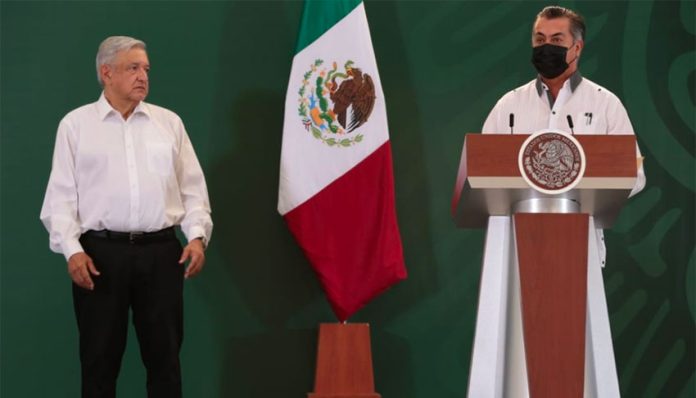
The president listens while Governor Rodríguez speaks at Thursday's press conference.
President López Obrador has ruled out any possibility of closing the oil refinery in Cadereyta, Nuevo León, due to the high levels of contamination it emits and charged that current concerns about it are politically motivated.
Speaking at a news conference in Monterrey on Thursday, López Obrador said the refinery, one of six in Mexico owned and operated by the state oil company Pemex, cannot be closed because it is needed to fulfill his government’s energy plan.
López Obrador said that concerns about the contamination the Cadereyta refinery produces – it’s one of the world’s worst sulfur dioxide polluters, according to Greenpeace – are legitimate but also claimed that environmental advocates, especially those seeking public office, become more active in the lead-up to elections.
Elections to renew the lower house of the federal Congress and to elect a new governor, deputies and mayors in Nuevo León will take place next June.
López Obrador said the government will seek to resolve the Cadereyta contamination problem through investment primarily aimed at making it more productive. He said that 2 billion pesos was invested in the facility last year and that more funds are being spent on upgrading it this year.
Speaking at the same press conference, Nuevo León Governor Jaime Rodríguez said the contamination from the refinery, located about 40 kilometers east of Monterrey, affects large parts of the state and urged the president to examine the issue.
He also said he had spoken with the representatives of several companies about how the contamination problem can be resolved. “It’s necessary that we start looking at this,” Rodríguez told López Obrador.
Earlier this month, the state government’s Ministry of Sustainable Development filed a complaint with the federal Attorney General’s Office against the Cadereyta refinery after liquid contaminants from the facility spilled into a nearby waterway.
But airborne pollutants remain the biggest concern. Toxic gases emitted by the refinery, which opened in 1979, affect several municipalities in Nuevo León including those in the metropolitan area of Monterrey and they also reach the neighboring state of Coahuila.
Considered one of the most productive and profitable refineries in Mexico, the facility has the capacity to refine 275,000 barrels of oil per day, although at the start of June it was operating at just over 40% of that level. In addition to gasoline, it produces ultra low-sulfur diesel, propylene, LP gas, asphalt and coke among other products.
As a result of its activities, the refinery is the biggest polluter of sulfur dioxide and particulate matter smaller than 2.5 microns in the Monterrey metropolitan area. It also emits large quantities of nitrogen oxide and particulate matter smaller than 10 microns.
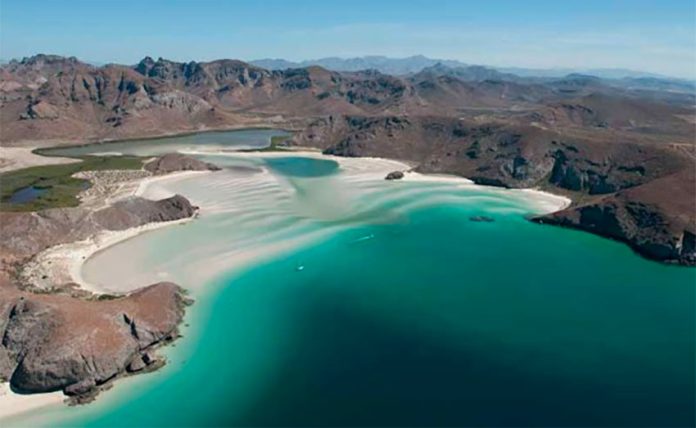
Playa Balandra wraps around the the bay of the same name, just sound of La Paz, Baja California Sur. (File photo)
Coronavirus restrictions will be lifted further next week in Baja California Sur (BCS), the Ministry of Health reported, as the state moves from level 5, or critical risk, to level 4, considered high risk on the state’s health alert system.
As of Monday, businesses will be able to operate at 40% capacity, up from 30%.
Churches, movie theaters and gyms may also reopen next week for the first time in five months.
The easing of restrictions stems from the fact that the epidemiological curve has plateaued in BCS, officials report. “Thanks to the responsibility and sacrifices of thousands of people, today we are taking another step towards reopening,” Governor Carlos Mendoza Davis said Friday afternoon.
The announcement was good news for the tourism-reliant resort towns of Los Cabos, which had the second-highest hotel occupancy in the country between August 10 and 16, Mexican Tourism Minister Miguel Torruco tweeted last week. Puerto Vallarta led the nation at 29.3% occupancy, while Los Cabos came in a close second at 27.4%
As of yesterday, the federal government reported 7,276 accumulated cases of the coronavirus in BCS, as well as 337 deaths, although the numbers are different from what the state lists. On the BCS website, which says it is updated in real time, 7,193 coronavirus cases have been reported and 370 deaths.
Hola Hernán
Cloudy skies and rainfall prevailed in BCS Friday as tropical depression Hernán rolled into the state east of Los Barriles with 75 km/h winds. The storm caused torrential rainfall in some parts of mainland Mexico as it worked its way north, but then lost considerable strength and was expected to further degenerate over the next 24 hours.
Fiestas canceled
Loreto’s patron saint festivities, scheduled for September 6 through 8, have been canceled due to the coronavirus, the municipality reports. Normally the city celebrates with religious, civic and cultural activities and a statue of the Virgin of Loreto is paraded through the city’s streets as townspeople gather along the parade route.
This year, the parade and other religious services will be carried out virtually, and residents are urged to remain in their homes, Peninsular Digital reports.
In Los Cabos, November’s popular international gastronomic festival, “Sabor a Cabo” will not take place this year.
Each year more than 3,000 people attend the festival which kicks off the start of the high season. Attendees sample dishes from 60 different restaurants as well as wineries and tequila and mezcal distillers with profits going to charities such as the Red Cross and the Los Cabos Children’s Foundation.
The festival’s organizing committee said sponsors have dropped out so it will refocus its efforts on bringing a new and improved version of the festival to Los Cabos in 2021, possibly organizing around a Day of the Dead theme, Metropolimx reports.
Tacos on TV
Through the taco, Mexico has conquered the world, and the Netflix series The Taco Chronicles that was released last year paid homage to the many flavors and forms this revered dish can encompass. Season one of the Spanish-language docuseries profiled six different tacos, ranging from al pastor to barbacoa.
Season two launches on September 15, and this time the series makes a stop in La Paz to explore the beauty of the fish taco, visiting the aptly named Taco Fish restaurant, a local favorite since 1992.
Animal shelter has seen a 35% increase in homeless pets, and a large decrease in donations.
Abandoned animals
Animal welfare activists in Los Cabos say that due to the coronavirus pandemic, they have seen a 35% increase in homeless pets and a 90% reduction in donations, cutting their staff to just four, BCS Noticias reports
The director of the Los Cabos Humane Society, Armando Martínez, says there may be as many as 90,000 pets roaming the streets. Support from municipal government is nonexistent, even though one of Mayor Armida Castro’s campaign promises was to protect animals, he says, and the organization is on the brink of collapse.
Adoptions are way down from normal levels. Currently, the society says, it adopts out just two or three animals a month, compared with 10 to 15 prior to the pandemic.
Caught
After a car chase through the streets of La Paz, police detained two people for robbing an Oxxo storeroom. Inside the trunk, authorities found 400 cans of stolen beer of various brands and a pilfered package of noodle soup. Both men, who were 18, were arrested and jailed.
Also this week, the National Guard in San José del Cabo gave chase to a Chevrolet Aveo which ended up striking a post. After making sure the driver’s injuries were not life-threatening, officers found six packages of hybrid marijuana in the vehicle, labeled as Amnesia, Champagne, Hydrolotus and Matermase. They also found 40 packages of generic cannabis and six doses of cocaine.
And in Cabo San Lucas, a man who was caught using the streets of Cabo San Lucas as a bathroom in full view of police officers was stopped and searched. On his person, police found two medium-sized packages of marijuana and another two of methamphetamine, BCS Noticias reports.
Beaches: there’s an app for that?
The president of the Hotel and Tourism Association in La Paz, Agustín Olachea Nogueda, announced this week that beaches in the municipality could potentially reopen, but by reservation only through an official app. “This application is new, it will be the only one in the country. It will also give excellent control to ensure the health of visitors to the beaches, and make it easy to control access to beaches,” he said.
The announcement was met with consternation by La Paz residents who had many questions about how the app would be administered. They expressed concerns about whether a hotel could simply block out all available appointments for their guests and that access to the beaches would be limited to people who have smartphones. Some called it a step toward privatizing beaches in the municipality, El Sudcaliforniano reported.
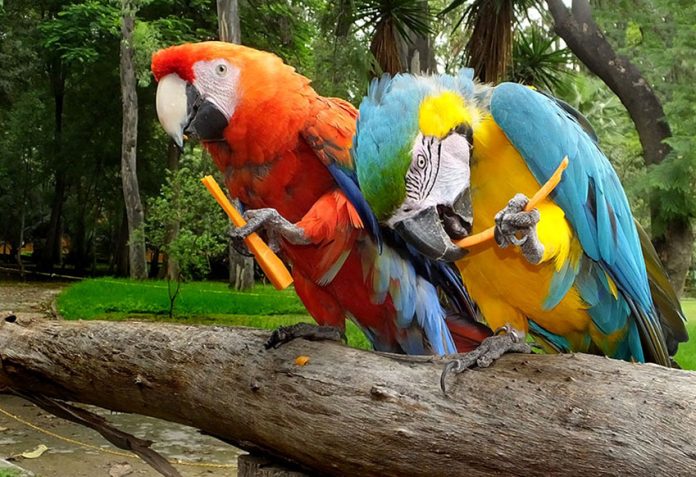
Macaws of two different species have become friends ... and mates.
Once upon a time, Mexico had an excellent nationwide network of centers — founded in 1988 — called CIVS (Centro para la Conservación e Investigación de la Vida Silvestre) which were dedicated to rehabilitating and returning to the wild all sorts of exotic animals which, for one reason or another, found themselves in deep trouble.
It was the CIVS center in Guadalajara that came to the rescue of a crocodile nearly two meters long which was discovered in 2009 swimming around in a lagoon inside the very popular Primavera Forest, located just west of the city.
Park rangers had long heard rumors about a croc lurking somewhere among the park’s 30,500 hectares of hills and canyons, but they assumed their informants had probably seen a turtle and with a bit of imagination — or a bottle of tequila — had turned it into one of those large reptiles normally seen near the Pacific coast.
Then, one of the rangers actually spotted the creature with his own eyes and imagined it had been abandoned there by “someone ignorant of how much damage such an action could cause not only to the animal, but also to the equilibrium of the local ecosystem.”
Capturing the crafty croc took three days and nights, I was told by Andrés González, then director of CIVS Guadalajara, “but eventually we caught him and now he is back among his own kind in an estuary on the Pacific Coast.”
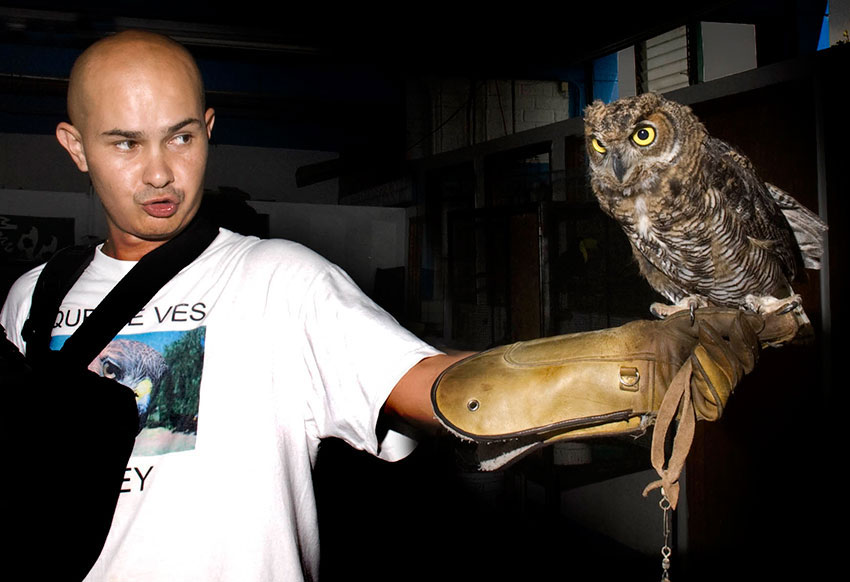
An owl is taught how to hunt.
Another creature saved by CIVS was Arnolda the lioness. She had been kept at a restaurant in Mismaloya, south of Puerto Vallarta, and had been named after Arnold Schwartzenegger, who starred in the film Predator, which was filmed in that area in 1987.
In 1994, CIVS began to receive reports from customers at the restaurant, especially tourists, claiming the lion was in terrible condition. CIVS investigated, rescued the animal and brought it to Guadalajara. “I couldn’t believe what they had done to that poor creature,” Andrés González told me. “Arnolda weighed only 46 kilos. She had pneumonia and was suffering terribly because her teeth had been ground down, exposing the roots.”
Arnolda stayed at CIVS one year, during which time her teeth were capped by a volunteer dentist and her pneumonia was cured. “After a year, Arnolda was fat and happy,” commented González, “but we couldn’t find any place in Mexico that would take an adult lion, so we sent her off to a wildlife organization in California. Aeroméxico gave her free transportation to the U.S.A.”
A few years ago, Mexico had 11 CIVS centers located all around the country and all of them had a marvelous reputation for their dedication and efficiency. A center typically had only two paid staff members assisted by numerous volunteers and much of the equipment they needed was either homemade or paid for out of the workers’ pockets. It was hoped that these centros de rescate would be considered models for the opening of many more such animal rescue centers in other parts of the country.
Then something happened during the administration of President Peña Nieto. First I was told that CIVS Guadalajara was being closed and then I heard that eventually all the centers in the country would be closed. These closings, I was told, were just part of more widespread changes affecting all government organizations dedicated to nature conservation and ecology.
Nothing of the sort had been reported in the media, yet rumors persisted that many “green” organizations in the government were being defunded and downsized.
Parque Urbano manager Karina Aguilar with two rescued macaws.
In an attempt to get some facts, I asked the environmentalists I knew for their opinions. To my surprise, every one of them agreed that something bad was in the wind. I heard stories of drastic reductions in budgets and even cases where biologists and veterinarians were fired and replaced by political appointees with no qualifications or experience. “It’s because they want to open the door to fracking in Mexico,” some said.
Whether these rumors were true or not, I don’t know, but one by one Mexico’s CIVS wildlife centers actually were shut down, the last one closing in 2019. “And in that year alone” says the newspaper Excélsior, “those centers that were still operating managed to save 3,094 animals.”
As for the reason the centers were shut down, government sources told Excélsior they were closed due to “budgetary restructuring aligned to the principles of austerity of the ‘Fourth Transformation.'”
“So what is going to happen now?” I asked conservationist Rodrigo Orozco. “If someone finds a lynx with a broken leg in her back yard, what does she do?”
“We Mexicans are very adaptive and imaginative,” Orozco answered. “We have to be with the kind of politicians we have. So, new animal shelters are arising from the ashes. Shall we go to visit some of them?”
A few days later, we drove to the center of Guadalajara, to Agua Azul, one of the city’s oldest and most popular parks, famed for its aviary, orchidarium and butterfly farm, as well as its new Jardin Educativo, where visitors can take a walk while learning all about cacti, agaves and succulents.
The owl with a twisted claw will soon be released.
Here we were met by Guadalajara’s park manager, Karina Aguilar.
“We have a great deal of space on our grounds, 416 hectares to be exact, and we are biologists,” Aguilar told me, “so when we heard the CIVS centers were being shut down, we began taking in animals needing help.”
Because Agua Azul has an aviary, they are particularly well prepared to help injured or abandoned birds and you might say they specialize in macaws.
I asked the team at Agua Azul for an example of one of their rescue projects.
“Bueno,” said veterinary doctor Edgar Ramírez, “let me tell you about our owls. One day somebody brought us two big owls in a rather small cage, both of them with their wings clipped. Their owner had been feeding them chicken and there was no way those owls could be returned to their natural habitat because they didn’t know how to hunt. So, over time we presented them with different types of prey and one of them learned to hunt well.
“After a year, we let it go, but the other one needed more training and more time for its wings to grow to full size, so every day we would bring it rats and other small creatures and just last month we felt our pupil was finally fit to fly and ready to be out on her own. We’re happy to report that the neighbors where we liberated her say they hear her hooting every night, so we think she is doing fine.”
[soliloquy id="121244"]
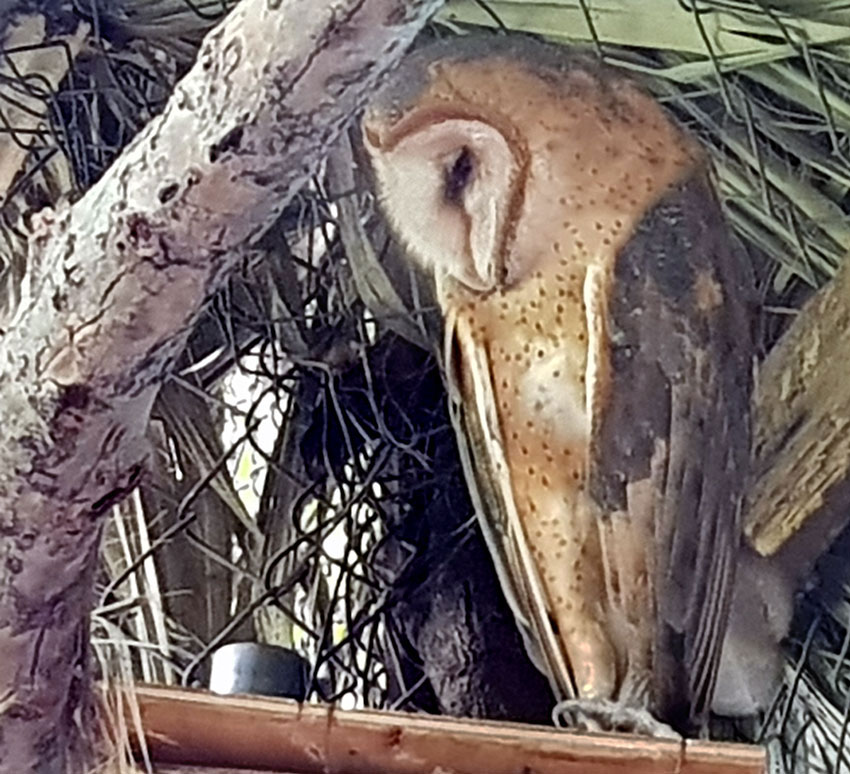
Karina Aguilar then showed me another owl that’s ready to be released. “This lechuza arrived here with a leg which had been broken and had healed on its own, but in the wrong position, leaving the poor bird with one claw facing upward and one down. We figured we would have to amputate, but then we saw that the owl had learned to live with this and could hunt and eat quite well.
“We figure she is now ready to be released and we are going to let her go in this neighborhood since we have other owls of the same species around here. In fact, she already has a male friend who visits her all the time, so we have a plan to build her a cage on top of our water tank and let her get used to living there little by little. And then, one day, we will leave the door open.”
Not all these stories have a happy ending. A recent Agua Azul project involved the rehabilitation of a crow which had lived its entire life in a cage in the center of Guadalajara. “It was used to eating crackers and potato chips,” park staff told me. “So we invented healthy crackers for it and began to train it to hunt, using falconry techniques but, sad to say, the crow’s health began to fail and we didn’t know what to do. After it died, we performed an autopsy and discovered this crow had the equivalent of chronic smoker’s lung. It had been suffering from terrible necrosis, the result of breathing smog its entire life.”
Happily, several other animal rescue centers have sprung up around Guadalajara and I will report on them in the near future.
If you live in the Guadalajara area and happen to spot that limping lynx in your back yard, call 332 088 8988. The animal rescue people at Agua Azul are on duty every day of the week from 9:00 a.m. to 9:00 p.m.
The writer has lived near Guadalajara, Jalisco, for more than 30 years and is the author of A Guide to West Mexico’s Guachimontones and Surrounding Area and co-author of Outdoors in Western Mexico. More of his writing can be found on his website.
Two of seven health systems whose funding is not equitable.
Mexico is spending less than half the amount it should on its health system, according to Pan American Health Organization (PAHO) recommendations.
Spending on health has declined in recent years from 2.9% of GDP in 2012 to 2.5% in 2020. The PAHO recommends spending at least 6%.
The public health agency has noted that countries that have spent that percentage of GDP or more on their health systems in recent years have had the most success in providing quality health care to greater numbers of people.
Mexico’s spending on health is dwarfed by that of its northern neighbor, the United States, which allocated 14.3% of its GDP to the sector last year.
Germany and France spend 9.9% and 9.3%, according to a report by Forbes México, while Japan spends 9.8%.
Mexico’s spending is also well below several Latin American countries including Costa Rica, Chile and Colombia, all of which spend more than 5% of GDP on health.
Forbes noted that health spending in Mexico declined over the past decade even as Mexico’s population increased by almost 13 million people.
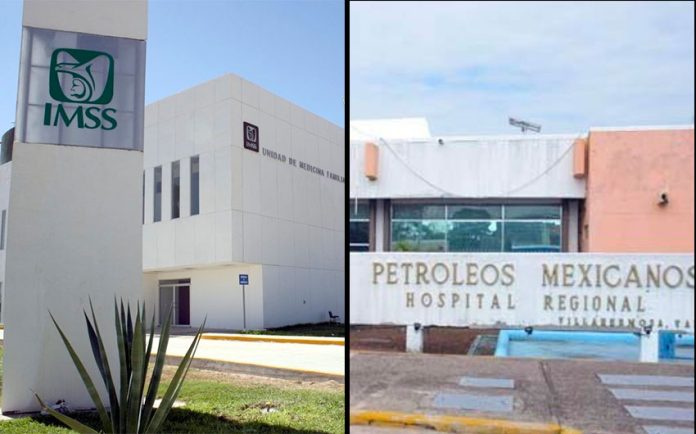
It also noted that the limited spending on health is divided between seven different public systems including those operated by the Mexican Social Security Institute (IMSS), the State Workers Social Security Institute (ISSTE), the state oil company Pemex and the Ministry of National Defense.
The funding allocated to each system is not equitable: for every peso spent per member of IMSS Prospera, a subsystem that provides health care to people in poor rural areas, 4 pesos per insured person are allocated to the broader IMSS system, 5 pesos go to the ISSSTE system and 10 pesos are spent on the Pemex system, the news website MVS Noticias reported.
During a recent virtual forum on Mexico’s health system, Rodolfo de la Torre, director of social development at the Espinosa Yglesias think tank, noted that spending on health care is not equitable across the country either.
He said the government spends 300,000 pesos (US $13,700) per person per year on the health system in Mexico City but less than 30,000 pesos per capita in some states.
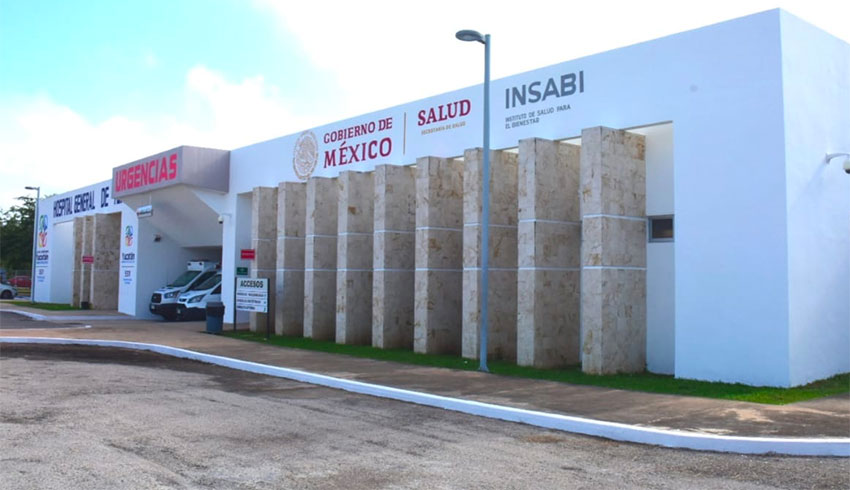
The Insabi health system should offer the same level of service as IMSS, critics say.
Participating in the same forum, Mariana Campos of the public policy think tank México Evalúa said that the most serious issue is that since 2019, not all of the resources authorized for the health sector have been used. As a result, programs aimed at preventing chronic diseases that are among the leading causes of death in Mexico, such as diabetes, have been neglected, she said.
Rogelio Goméz Hermosillo, a representative of Citizens Action Against Poverty, a group currently calling on the government to provide a basic income to people who have lost their jobs due to the coronavirus, said that 20 million people don’t have access to free healthcare because they’re not registered with any of the public systems even though the system known as Insabi is supposed to provide medical services to people with no other insurance.
The forum participants proposed that the government increase spending on health to 3.5% of GDP as a first step toward improving the public health system as well as access to it.
They said that the Insabi scheme, which replaced the universal healthcare program known as Seguro Popular at the start of this year, should have the same capacity to provide medical services as the IMSS system. That would ensure that informal sector workers, who make up about 60% of the nation’s workforce, would have the same access to health services as their formal sector counterparts.
The underfunded public health system has been cited as a factor in the high number of Covid-19 deaths – 62,594 as of Thursday.
In a report published in early June, the Bloomberg News bureau chief in Mexico wrote that the public health system was woefully unprepared to deal with the coronavirus pandemic, noting that many hospitals have a shortage of basic equipment, medication and personnel and some don’t even have soap.
Hospitals in several cities including Acapulco, Tijuana and Matamoros struggled to cope at different stages of the pandemic as they filled up with seriously ill coronavirus patients.
The Ministry of Education (SEP) is planning a remodeling of its offices that appears to contrast sharply with President López Obrador’s philosophy of austerity in government.
In a request submitted in December 2019 and obtained by the newspaper El Universal, the ministry requested 1.4 million pesos (US $64,078) for leather furniture, mahogany desks and bar refrigerators.
Revamping the office is essential to improving the ministry’s image, the request explains.
The ministry wants 10 mahogany desks valued at 133,580 pesos, 10 leather office chairs worth 50,000 pesos , and an entire living room set in black leather for 51,500 pesos. Five refrigerators, one industrial refrigerator and five bar refrigerators are requested for a total of 84,703 pesos. In addition, a gas stove, a bread oven and an icemaker were among the kitchen items listed.
The ministry is also requesting the purchase of a 42-inch HD television for 77,942 pesos, a 750-watt speaker for 49,018 pesos and a UR4D receiver for a wireless microphone system for 122,026 pesos among other electronic equipment.
The ministry’s request said that after an inventory of office furniture and supplies was conducted, it was determined that some of the property had deteriorated with age and had already undergone attempts at repair. It argued that it would cost about the same to repair the furniture and property as it would to replace it when labor and materials are figured in. The SEP’s technology is also obsolete, the ministry said, and often incompatible with more modern devices.
On Friday, the ministry said the request did not have the authorization of the minister. “They want to create a scandal where there isn’t one,” the ministry said on Twitter, stating that it continually practices austerity.
Last month the president asked federal bureaucrats to share their computers because no more would be bought due to corruption in the purchasing department. He urged public officials to stop thinking about their own interests and tackle the larger issues the country is facing.
“Imagine those who fought in other times for freedom, justice, democracy and sovereignty,” López Obrador declared. “Were they waiting to get their computers in order to fight and transform?”
In an effort to assure Mexicans that his administration is rooting out government corruption and that his strategy to eradicate organized crime is working President López Obrador is using the name of an unconvicted criminal suspect to make his point.
In one of several videos being used to promote his annual address to the nation on September 1, the president has declared there will be “no more García Lunas in Mexico.”
López Obrador said his strategy is to work to guarantee the safety of the people and help young people study and find work. “… never again will it be crime that governs in Mexico, no more García Lunas in the government.”
He was referring to Genaro García Luna, a former Minister of Security under former president Felipe Calderón.
García was arrested in the U.S. last year and is now awaiting trial on charges of taking millions of dollars in bribes from Joaquín “El Chapo” Guzmán’s Sinaloa Cartel when he was in charge of Mexico’s Federal Police. He faces a minimum of 20 years in prison if convicted.
López Obrador has refused to investigate Calderón’s knowledge of García Luna’s activities or ties to El Chapo because he says it would “create the perception that we’re doing it for political purposes,” but he clearly uses García Luna as an example of political corruption at its worst.
This year’s address to the nation, López Obrador’s second since taking office in late 2018, will again be delivered in the National Palace but unlike last year, governors and dignitaries are not expected to attend due to the coronavirus pandemic. Only some cabinet members will be present.
A huge ecological park to be developed on and around the site of the abandoned Mexico City airport project will cost just over 17.7 billion pesos (US $808.7 million), the National Water Commission (Conagua) has determined.
According to an investment proposal recently submitted to the Ministry of Finance, development of the 12,225-hectare Lake Texcoco Ecological Park (PELT) will begin in 2021 and finish in 2028.
Conagua said the outlay during the current government’s six-year term (2018-24) will be just over 10.9 billion pesos with a first installment of 2.9 billion pesos to be allocated to the project next year.
The water commission also calculated that the operation and maintenance of the park, which will be divided into four different zones, will cost just over 13 billion pesos during a period of 31 years.
The total cost of the project will therefore be at least 30.77 billion pesos (US $1.4 billion).
Referring to the grandeur of the project and its waterways, President López Obrador said earlier this month that the ecological park will be like a “new Tenochtitlán,” the water-rich capital of the Aztec empire that once stood on the land where Mexico City is now located.
Iñaki Echeverría, an urbanist and architect who designed the PELT, said last week that one area of the park will be opened to the public in 2021.
The ancient lakebed site of the abandoned airport, a US $13-billion project that was canceled by López Obrador after a controversial public vote before he took office, will be part of the PELT’s 4,875-hectare Zone II.
The zone, much of which will be reforested, will feature three different parks with gardens, public spaces, walking paths, sporting facilities and parking lots, according to a cost-benefit analysis.
Across the PELT’s four different zones, a total of eight separate parks are slated for development. Zone I will encompass six restored lakes and lagoons including Lake Nabor Carillo while Zone III will include three more lagoons.
Zones III and IV will set aside land for agricultural purposes and a solar farm is slated to be built in the former.
The government expects that the PELT, which will dwarf Mexico City’s 678-hectare Chapultepec Park, will lead to a reduction of respiratory illnesses among local residents and generate a range of other environmental benefits including improved regulation of water resources.
It also expects that the project will add value to real estate in six México state municipalities and two nearby boroughs of Mexico City.
Conagua said the PELT will “promote inclusion and social cohesion” in the surrounding areas and “generate identity and pride” among people who live in the eastern region of the Valley of México.
Echeverría orginally designed the Lake Texcoco Ecological Park in 2010 but the project was sidelined four years later by former president Enrique Peña Nieto’s plan to build a new airport on land located about 25 kilometers northeast of central Mexico City.
A large crowd turned up for an event Thursday in Matamoros.
To avoid large numbers of people gathering President López Obrador has urged residents of Reynosa, Tamaulipas, not to attend events he will preside over on Friday to inaugurate infrastructure projects in the northern border city.
His plea on Friday morning came after thousands of people flocked to an event Thursday in the city of Matamoros.
Speaking at a news conference in Reynosa, López Obrador asked residents to stay at home and instead follow his events via traditional and social media.
He said that social distancing recommendations were not observed at events he attended Thursday and warned that it was “very risky” for people to gather in large numbers.
“So, I want to ask the citizens of Reynosa … to allow us to communicate with them through the media, both conventional media and [social] networks. … Stay at home and you’ll be able to find out about the projects that will be inaugurated,” López Obrador said.
“We can’t be careless, we have to maintain a healthy distance and avoid massive [numbers of] infections for the good of everyone.”
As an additional deterrent to the risk of coronavirus infection, the president declared that anyone who shows up at his events today will be dubbed a “conservative,” a term he uses regularly to disparage those who oppose him and his government.
But he added that if people want to go to his events, “of course” they have the freedom to do so. “It’s a respectful call to everyone [not to go],” López Obrador said.
On Thursday, more than 2,000 people gathered in the street and atop buildings outside a new sports center that was officially opened by the president.
Members of the large crowd, many of whom were wearing Morena party t-shirts and waving flags emblazoned with the ruling party’s logo, failed to distance themselves from each other while gathering outside the center, located in a poor area of Matamoros.
Many of the attendees were not wearing face masks even though Tamaulipas authorities have made them mandatory.
López Obrador spoke for just three minutes at the event due to the presence of the large crowd and their failure to follow health protocols.
“I feel ashamed, very ashamed because this event shouldn’t have been held. We’re still in the middle of a pandemic and we have to take care of ourselves so I’m not going to take long because I want you to keep a healthy distance and to clear away. I say it to you with complete respect, we have to look after ourselves, health comes first,” he said.
“I know that there is a lot of passion, a lot of desire to participate but we have a lot of time ahead and we will continue to meet with each other,” López Obrador said.
“I will return with you soon. I want to be over there with you, hugging you, taking photos because I truly love you. I have deep love for the people of Mexico but … we can’t be together, we have to keep our distance because we have to look after our health. A virtual hug! [I send you] a hug as if we were [really] hugging, just as affectionate,” he said.
Also among the president’s loyal supporters were protesting health sector workers and farmers, the newspaper Reforma reported.
Hundreds of the president’s supporters also showed up at an earlier event at a new market in Matamoros, which was inaugurated by López Obrador, and at a new family health care clinic in Reynosa he toured late Thursday afternoon.
The president was criticized early in the pandemic for continuing to hold campaign-style rallies and hugging and kissing his supporters while health authorities were calling for people to practice social distancing.
He stopped touring the country for about two months while federally-mandated coronavirus restrictions were in place but was back on the road by early June, traveling to the Yucatán Peninsula to inaugurate construction of his signature infrastructure project, the Maya Train railroad.
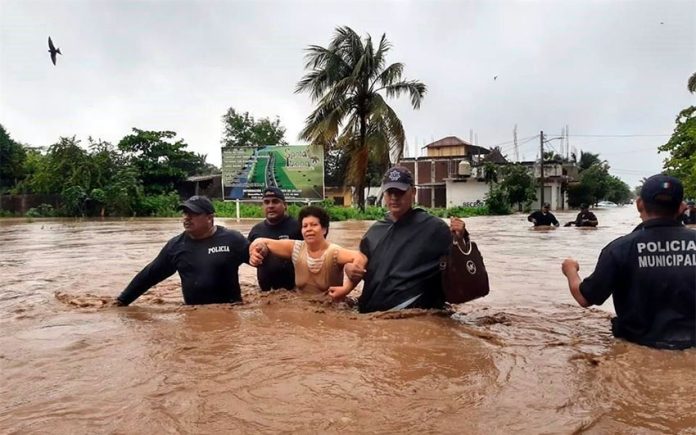
Four shelters have been opened for flood victims in Cihuatlán.
Faced with the flooding of homes and roads due to Tropical Storm Hernán, now downgraded to a tropical depression, municipal governments of Cihuatlán and La Huerta in Jalisco and Manzanillo in Colima have installed shelters to evacuate residents at risk.
In Cihuatlán, the municipal government opened four shelters to house evacuees, Mayor Fernando Martínez Guerrero announced, and was preparing to declare a state of emergency Friday morning as clean-up begins.
The El Pedregal arroyo in Melaque overflowed its banks, causing heavy flooding, as did the Río Purificación. A sinkhole partially closed the Santa Cruz-Melaque highway and in Emilio Zapata the Cuixmala River breached its banks leading to the closing of Highway 200 in both directions.
Mayor Martínez announced last night on social media that due to the volume of 911 emergency calls he was forced to set up a second telephone number for those needing immediate assistance.
In La Huerta, Hernán wreaked particular havoc in La Manzanilla where “half the town is practically flooded,” Mayor Ray Mendoza reported. “The rising stream collapsed the bridge that connects to the other side of the beach, which made a dam and this caused the water to rise to the center of La Manzanilla,” he said.
A mudslide blocked Highway 80 near the town of Lázaro Cárdenas, while in Mazatán water had risen to cover the bridge. Eight emergency shelters are currently operating and at least 185 people have been evacuated.
In Manzanillo, classrooms were welcoming evacuees and the mayor was considering opening a new shelter with a capacity of 300 if needed. Highways in the area have been closed due to landslides or flooding.
According to the National Water Commission, rains of more than 250 millimeters are expected in the two states as Hernán moves north. A storm surge of three to five meters is expected in coastal areas.
Hernán was moving at 33 kilometers per hour which should put it over the southern tip of the Baja California peninsula near La Paz later today or this evening. Maximum sustained winds were clocked at 55 kilometers per hour with some higher gusts. Hernán is expected to weaken to a low pressure area tonight and dissipate by Sunday.