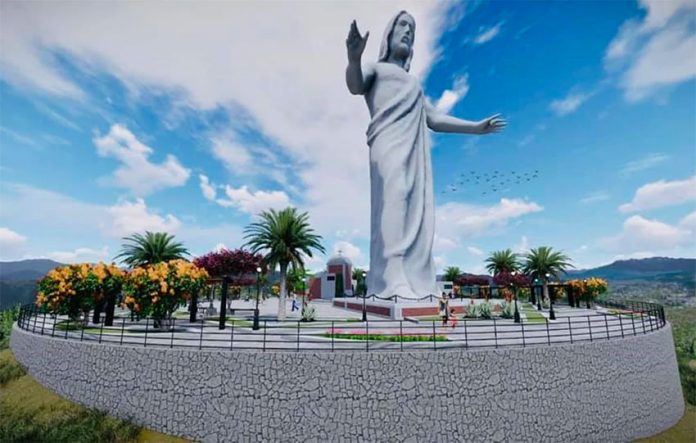
The statue and esplanade to be built on a hill in the municipality of Tabasco.
A town in Zacatecas has begun construction of the biggest statue of Jesus Christ in all of Mexico.
The municipality of Tabasco, located 128 kilometers south of the state capital, is building a 31-meter-tall Christ of Peace that will cost 13 million pesos (US $595,000) and is being funded by a mixture of municipal and state resources and remittances from citizens who work in foreign countries.
Construction of the statue will take a year, and when finished will be three meters taller than the Broken Christ in San José de Gracia, Aguascalientes, and seven meters taller than Christ King in Tijuana, Baja California.
Zacatecans have already embraced oversized religious imagery as a tourist attraction. In Zóquite, located in the municipality of Guadalupe, the parish priest commissioned a 6.5-meter baby Jesus weighing in at between 750 and 800 kilograms.
When the statue was installed last November, it was thought to be the largest baby Jesus in the world and inspired a series of memes, with denizens of the internet noting that it bore a striking resemblance to Genesis vocalist and drummer Phil Collins.
The statue of the baby Jesus in Guadalupe, Zacatecas.
Tabasco mayor Saúl David Avelar said the idea for the statue arose about a year ago among constituents who like to “think big.” Immediately architects, landscapers, economic and legal advisers began working together to plan the construction.
Jalisco sculptor Miguel Romo Santini, who designed the Broken Christ in Aguascalientes, was hired to design the effigy, which will be constructed with wrought iron and built on a hectare of land overlooking the town of 17,000 from what is known locally as the Hill of Faith and Religion.
An esplanade is planned for the statue’s base, which will have a scenic outlook, a chapel and restrooms.
The statue itself will have a spiral staircase inside so visitors can actually enter the body and stop at one of four landings, which are designed to be areas of prayer and reflection.
The mayor estimates the total cost of the esplanade and statue will be 20 million pesos (US $97,394), but he predicts the Christ of Peace will pay for itself in no time, with tourism increasing fivefold once the statue is complete, generating 40 million pesos of revenue (US $1.8 million) annually.
Tabasco’s economy is based on remittances from abroad, agriculture, a candy factory and the largest dam in the state, El Chique.
“I hope that this Christ will inspire us to live in peace, and we can be builders of peace,” said the bishop of Zacatecas, Sigifredo Noriega Barceló, at the laying of the first stone last week.
The largest Jesus statue in the world is Christ the King in Świebodzin, Poland, which is 36 meters tall. Tabasco’s statue will be one meter taller than the 30-meter Christ the Redeemer in Rio de Janeiro, Brazil.
A 77-meter statue of Christ was planned for Tamaulipas in a project spearheaded by Mexican actor Eduardo Verástegui, but as of July the project had stalled, having been declared inviable as planned.
CORRECTION: Missing zeros made a significant change to the cost of the statue in the earlier version of this story. Its cost in US dollars is actually $595,000, not $595.
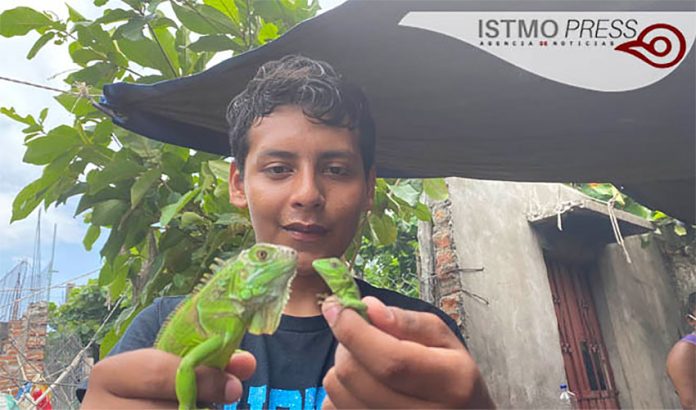
A teenager in Oaxaca is determined to help save endangered iguanas in the Isthmus of Tehuantepec, where hundreds are killed every day for food.
At just 15 years old, José Francisco Sánchez of Juchitán is dedicated to the conservation of the reptile, which is a traditional ingredient on menus in the region and whose meat is thought to be an aphrodisiac.
According to data from the Juchiteco Ecological Forum, 200 iguanas are consumed each day in Juchitán, a number which soars to 500 per day during Holy Week when the meat is often used to make tamales or stew.
However, the rise in consumption over Easter comes during the time of year when iguanas lay their eggs, but the Zapotecan tradition continues and iguanas in the wild are in short supply.
Sánchez’s love for the iguana began two years ago in middle school, and since then he has used his own money to buy wood, wire and other supplies to build cages that mimic their natural habitat. Although he says he realizes he can’t convince people not to eat them due to cultural reasons, he hopes to help breed them to aid in the species’ survival.
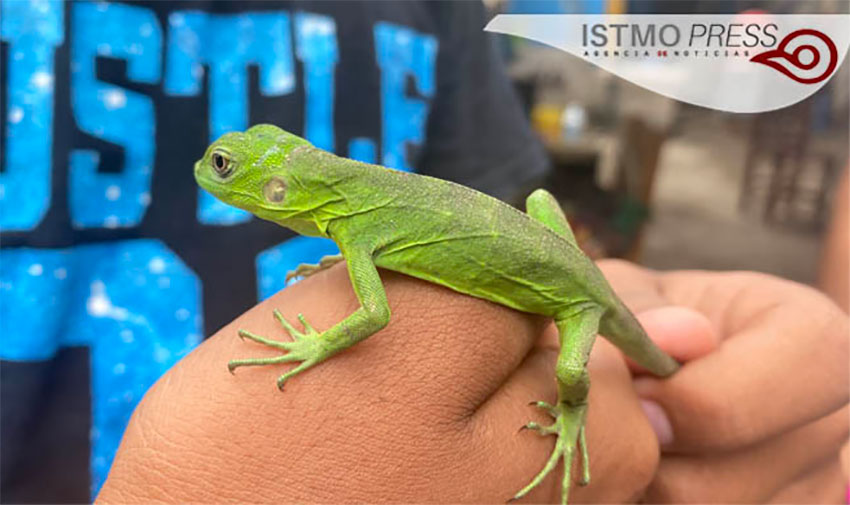
One of José Sánchez’s young iguanas.
“I learned to value animals since I was a child,” Sánchez says. His uncle also breeds iguanas and the teenager’s dream is to see his breeding program become a federally accredited Wildlife Management Unit (UMA). That way he could breed them legally as the reptiles are in danger of extinction and have been granted special protection under Mexico’s environmental laws.
UMAs are also allowed to sell iguanas, which some people raise like chickens in backyard farms rather than hunt them in the wild, a practice that helps conserve the species.
But Sánchez plans to raise his lizards to adulthood — iguanas reach sexual maturity at between 3 and 4 years of age — before releasing them into the wild.
Sánchez learns about their care and feeding through the internet and social media, and says he dreams of one day becoming a herpetologist.
Juchitán is also home to an iguanarium which has had federal permission to breed green and black iguanas for 15 years. In June, the iguanarium released more than 50 iguanas into the wild, and some 3,000 of the reptiles have been released since the project began in 2005. The iguanarium also sells iguanas to keep up with local demand for their meat.
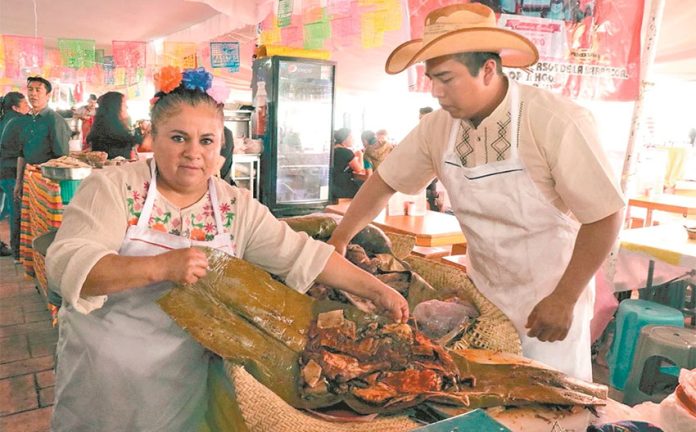
The coronavirus pandemic has dealt a heavy blow to the renowned barbacoa industry in Hidalgo, where some 15,000 families depend directly on the sale of mutton or lamb cooked in the leaves of the maguey plant.
Many barbacoa restaurants and street stands have closed in the central Mexican state due to the pandemic, causing a significant loss of jobs, according to a report by the newspaper El Universal.
Demand for the slow-cooked meat, which is a particularly popular weekend dish, has also fallen due to the ongoing health crisis.
Horacio Gómez, president of a barbacoa producers and vendors association in Hidalgo, told El Universal that the closure of restaurants and the slump in sales has had far-reaching ramifications.
In addition to meat suppliers, people who sell maguey leaves, firewood, cilantro, onions, spices and even soft drinks to barbacoa restaurants have been affected, he said.
Among the municipalities where thousands of people work directly or indirectly in the industry, and as a result have been hit hard by the closure of restaurants and falling barbacoa sales, are Actopan, Tulancingo, Ixmiquilpan, Apan and Tula.
Gómez said that in normal times barbacoyeros, as people who prepare and sell the meat are known, create jobs for up to 40 people, many of whom are now unemployed.
He said that many vendors have left their home towns to try to open restaurants or street stalls in parts of Hidalgo where the barbacoa tradition isn’t as strong and even in other states. However, they have faced difficulties opening new establishments and even encountered opposition to setting up street stalls, Gómez said.
He said that more than 50% of barbacoa eateries in Hidalgo have closed and that those that remain open have seen their sales fall by up to 70%.
Many of those that closed will be unable to reopen due to a lack of resources, Gómez said, explaining that renting restaurant premises, paying employees’ wages and purchasing supplies can cost 40,000 pesos (US $1,840) a month.
“We’re done for, we don’t have capital,” he said. “Citizens don’t have money either to buy a kilo of meat that might cost between 300 and 450 pesos [US $14-$21].”
The airline hopes for a renewed demand for travel to warm destinations.
American Airlines is shifting its routes to reflect what it hopes will be a renewed demand for leisure travel to warmer destinations this winter and is adding nine new routes to the Mexican resort destinations of Los Cabos, Cancún and Puerto Vallarta beginning in December.
The airline will fly to Los Cabos from Austin, Texas, New York’s JFK and Sacramento, California, beginning mid-December.
The Austin-Los Cabos route was announced late last year and was supposed to commence in May, but was delayed due to the coronavirus pandemic. Cancún will see new direct flights from Columbus, Ohio; Indianapolis, Indiana; Raleigh-Durham, North Carolina; and Saint Louis and Kansas City, Missouri. The flights from Raleigh will be daily and the other destinations will be on Saturdays
Puerto Vallarta will now be connected with Charlotte, North Carolina, with the addition of a Saturday flight.
The new routes are expected to remain in place until April 2021. American Airlines is also waiving change fees, as are United and Delta.
Last month Eastern Airlines announced its first route to Mexico, also with service from JFK to Los Cabos on Wednesdays and Saturdays beginning November 14.
The route had originally been scheduled to launch at the end of August, but the “infrastructure Eastern Airlines needs in Los Cabos to operate flights at the Los Cabos airport has become unavailable,” the airline posted on its website, hence the delay. Introductory fares start at less than US $200.
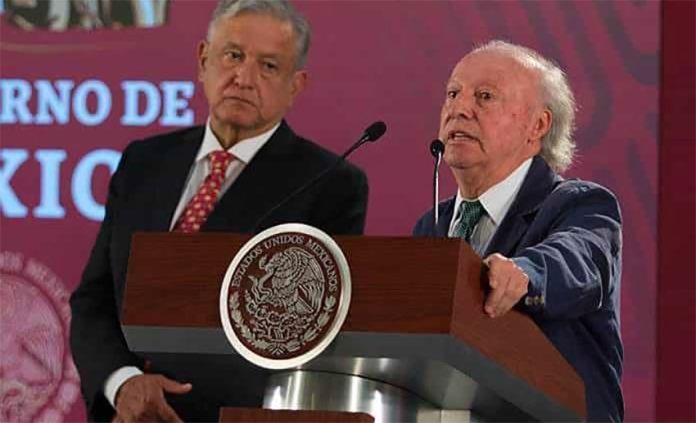
López Obrador said the foundations for the new Mexico will be laid by December 1.
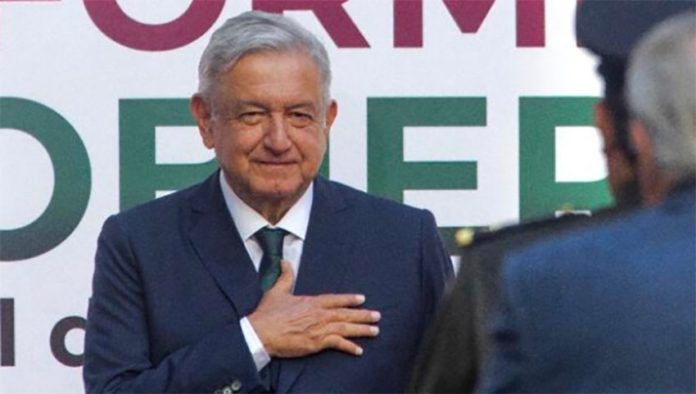
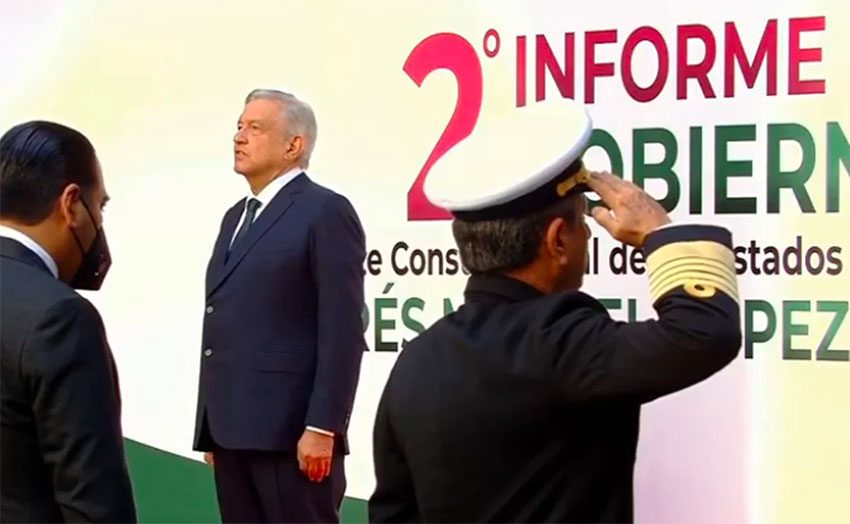
The foundations for the “Mexico of the future” will have been laid by December 1, President López Obrador declared Tuesday in his second annual report to the nation.
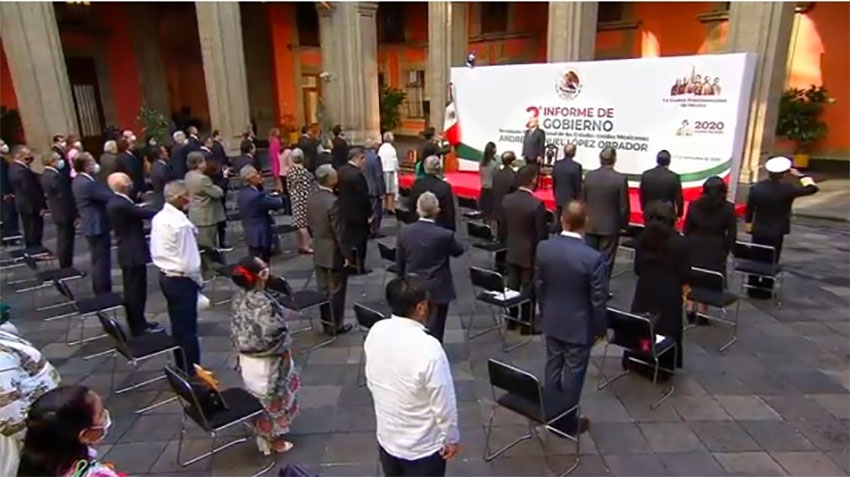
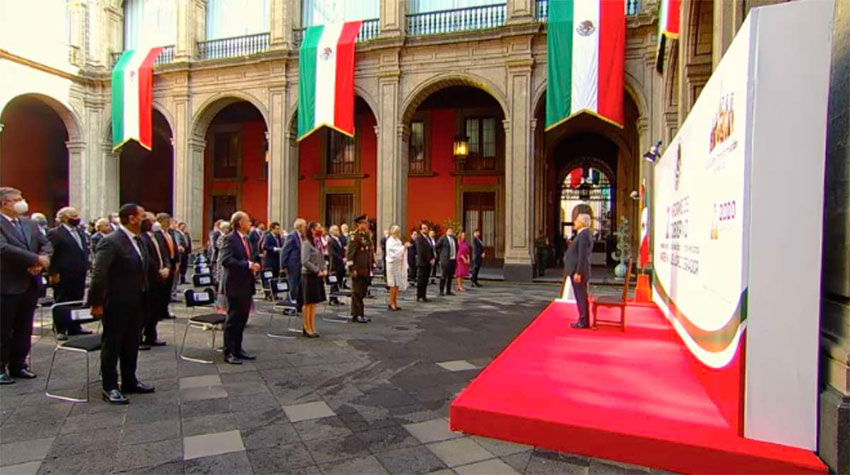
The president delivered an almost hour-long address at the National Palace, highlighting his administration’s achievements in combating corruption, responding to the coronavirus pandemic, delivering welfare programs, reaching a new trade deal with the United States and Canada, taking care of the environment, building infrastructure projects, reducing crime and improving the justice system.
López Obrador asserted that that he has fulfilled 95 of 100 commitments he made on December 1, 2018 – the day he took office – and declared that his government has implemented a new economic policy that benefits the ordinary people of Mexico rather than the nation’s wealthiest.
Speaking to a crowd of about 70 people including government officials and business leaders, the president said his government “will not be remembered for being corrupt.”
“Our main legacy will be the purification of public life in Mexico and [in this] we’re making progress.”
Without offering specific details, he claimed that “by not allowing corruption,” the government has generated savings of approximately 560 billion pesos (US $25.7 billion).
“At the worst time,” López Obrador said referring to the dual economic and health crisis precipitated by the coronavirus pandemic, “we have the best government.”
He highlighted that his administration has implemented a policy of “republican austerity,” declaring that “there are no longer luxuries in the government.”
The savings generated have been allocated to programs designed to improve the well-being of the people, he said.
Although Mexico has been one of the worst affected countries by the coronavirus, López Obrador praised the government’s response, particularly highlighting efforts to increase the health system’s capacity to respond.
Mexico will have a better health system at the end of the pandemic than it had at the start, he said, while also touting the plan to manufacture a coronavirus vaccine here and subsequently inoculate all citizens free of charge.
‘It’s a badge of pride to help so many people,’ the president said of his social programs.
After acknowledging that the high prevalence of diet-related chronic diseases contributed to making the impact of the pandemic more severe and urging citizens to eat a healthy diet and exercise, the president turned his focus to the government’s economic response to the crisis, which has been widely described as inadequate.
He highlighted that his administration has targeted financial aid at the country’s poorest and most vulnerable rather than large companies and banks.
“For the good of all, the people are bailed out first,” López Obrador said, explaining that seven in 10 families are receiving some kind of financial support from the government. He added that 100% of indigenous people and the nation’s poorest are being supported by his administration.
It’s a “badge of pride” to help so many people, the president said after brushing off the private sector’s criticism of his economic response to the pandemic, which only offered small loans to business owners.
Welfare payments to seniors and children with disabilities are “not an expense but an investment, not a handout [but] justice,” López Obrador said, adding that his government is guaranteeing young people’s “right” to education and employment through the delivery of scholarships to students and the establishment of a youth apprenticeship scheme.
“We won’t allow young people to be roped into crime,” he said. “With them we’re building the future.”
López Obrador also highlighted the support his government is providing to farmers and fishermen, including the delivery of free fertilizer and the establishment of guaranteed prices for five agricultural products.
Referring to the government’s broad support for the nation’s most vulnerable, the president said that Mexico now serves as “a global example of how to make ‘progress with justice’ a reality.“
He praised migrants for increasing their transfer of remittances to family members in Mexico during the current difficult economic times and asserted that crime hasn’t risen during the pandemic.
Economically speaking, the worst impact of the pandemic has passed and a V-shaped recovery is underway, López Obrador said, highlighting that 93,000 jobs were created in August and that the peso and Mexican oil price have both recently strengthened.
Despite the near 20% slump in GDP in the second quarter, the president said that the pandemic has caused less damage here than in many other countries. He said that most employers didn’t lay off workers, noting that while 1 million formal sector jobs were lost, the vast majority were maintained.
López Obrador noted that Mexico was appointed to the United Nations Security Council for the 2021-22 sitting period, asserting that its bid was strongly supported while neglecting to mention that it was unopposed in its candidacy to become the new representative for Latin America and the Caribbean.
About 70 government officials and business leaders attended the Tuesday morning event.
Turning to domestic issues, the president reiterated his pledge not to increase gasoline and electricity prices during his six-year term and claimed that his administration is a champion of the environment.
He stressed that the government hasn’t allowed fracking or the planting of genetically-modified corn and asserted that it is taking care of the nation’s water resources. Not a single new mining concession has been granted on his watch, López Obrador said, whereas the previous five governments granted 118 million hectares of land to mining companies.
“This devastating sell-out is now over,” he said.
López Obrador focused on the benefits his government’s key infrastructure projects will bring, rather than the environmental concerns that have been raised about them, observing that the construction of a new airport north of Mexico City, a new refinery on the Tabasco coast, the Maya Train railroad and the Isthmus of Tehuantepec trade corridor will generate 150,000 jobs by the end of the year.
With regard to security, the government is addressing the root causes of crime such as poverty and unemployment and making a particular effort to avoid young vulnerable people being recruited by crime gangs, the president said.
Compared to November 2018, the month before he took office, the incidence of most crimes including kidnappings, femicides, robberies and vehicle theft has declined, the president said before acknowledging that homicides and extortion have increased.
“Organized crime is no longer in charge like before. … There are no longer officials like [Genaro] García Luna in the government,” he said, referring to former president Felipe Calderón’s security minister who is awaiting trial in the United States on charges he colluded with and accepted bribes from the Sinaloa Cartel.
López Obrador also said that his government has kept its promise to make the country’s justice institutions fully independent.
The Attorney General’s Office (FGR) and the judicial system now act with “complete autonomy,” he said, charging that they formerly took orders from the sitting president.
The executive is no longer the “power of powers,” the president said before noting that Attorney General Alejandro Gertz Manero and Supreme Court Chief Justice Arturo Zaldívar declined their invitations to attend today’s address.
“In other times, this didn’t happen,” López Obrador said, adding that the FGR has complete freedom to investigate past presidents and other officials for alleged wrongdoing if it sees fit to do so.
If a majority of people vote for past presidents to be prosecuted at a proposed referendum, the president said that he will respect the result even though he doesn’t support bringing them to justice himself.
‘Governing with rectitude and love:’ AMLO
“In a democracy, the people decide,” he said.
Approaching the conclusion of his address, López Obrador made a remark reminiscent of assertions made by his counterpart in the United States, claiming that no president since revolutionary hero Francisco I. Madero has faced so many attacks.
The president charged that “the conservatives,” a term he uses frequently to describe members of past governments and his current political opponents, “are angry because there is no longer corruption and they’ve lost the privileges” they once enjoyed.
Undeterred by their opposition, the government is continuing to carry out the “fourth transformation” of Mexico after independence from Spain, the 19th century liberal reform known as La Reforma and the Mexican Revolution, López Obrador said.
“I won’t fail the people of Mexico,” he proclaimed.
“… The new economic policy based on morality, austerity and development with progress is underway. The commitment to finish laying the groundwork for the Mexico of the future by December 1, when we’ll complete two years of government, still stands,” López Obrador said.
“Once the foundations are built, the only task left will be to complete the project of transformation and to continue governing with rectitude and love for the people in order to have their support always.”
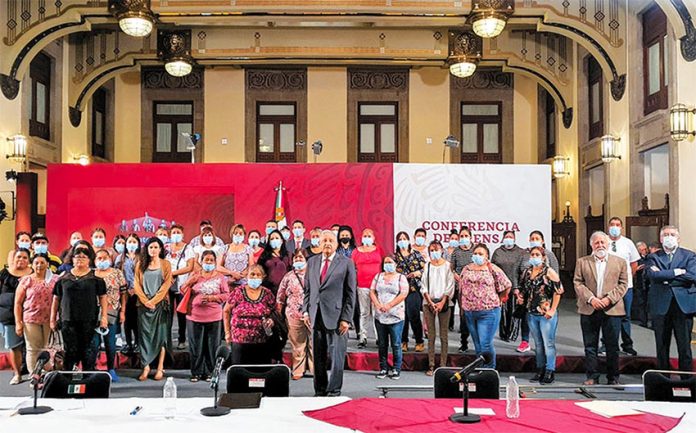
The president with families of the victims on Monday at the National Palace.
The federal government is offering compensation of 3.7 million pesos (US $170,306) per family to the relatives of 65 coal miners who died in a 2006 explosion in Coahuila. Authorities have also offered to place a monument at the accident site.
After a two-hour meeting Monday at the National Palace between relatives of the victims and President López Obrador, Labor Minister Luisa María Alcalde explained that family members will decide whether the government should complete the expensive task of recovering 63 bodies from the collapsed Pasta de Conchos mine.
The excavation will cost the federal government an estimated 1.7 billion pesos and take four years.
It is not an either/or situation, Alcalde emphasized, because the families will receive the compensation whether the bodies are retrieved or not. They have until September 14 to make a decision whether the undertaking justifies the cost and time.
The families were presented with the information regarding the rescue, Alcalde said, and they will decide if retrieving the bodies should proceed. The alternative, the minister said, is a monument.
López Obrador promised last year to exhume the bodies of the miners after relatives of the deceased had argued for years that efforts be made to do so. The mine owner, Grupo México, has insisted that conditions are too dangerous to make the attempt.
The decision to retrieve the bodies came after Mexican and foreign experts determined that “the rescue process is theoretically and technically feasible,” the federal government announced in a February 19, 2020 communiqué.
Grupo México will also hand over the title to the mine, located in San Juan de Sabinas, Coahuila, to the federal government at President López Obrador’s request, and excavation is set to begin in October, the government said.
The National Human Rights Commission conducted an investigation at the site following the accident and determined that government officials had allowed the mine to operate under unsafe conditions.
Family members of the miners suspected that Grupo México did not want to continue the search at the time of the accident because poor and dangerous working conditions would be revealed, a suspicion supported by the Inter-American Commission on Human Rights.
Grupo México’s internal documents revealed it had been operating the Pasta de Conchos mine under less than optimal safety conditions for years, yet no one has been held legally responsible for the deaths of the 65 miners.
Aida Briseño, a family member of one of the miners, left Monday’s meeting with the president feeling happy and calm, she said, “because at last we were heard. It is historical, I’m very proud that he received us.”
Toledo: government full of “brutal contradictions” and without clear objectives.
Víctor Manuel Toledo is set to be replaced as federal environment minister less than a month after an audio recording was leaked in which he made highly critical remarks about the government.
Some media reports claim that Toledo is stepping down due to health reasons but officials close to President López Obrador told the newspaper El Universal that his departure is linked to the leaked recording in which he declared that the government was full of “brutal contradictions” and didn’t have clear objectives.
Toledo also said that the environmental views of some cabinet ministers and the president were not consistent with those of the ministry he headed.
The environment minister reportedly made an offer to resign on August 6 – the day after the recording went viral – and López Obrador has now apparently accepted it.
Welfare Minister María Luisa Albores will replace Toledo, according to government sources.
In the leaked recording, Toledo says that there are “power struggles” within the federal cabinet and takes aim at López Obrador’s chief of staff, Alfonso Romo, charging that he has blocked environmental projects and stood in the way of a transition to clean energy.
“Alfonso Romo has acquired enormous … power within the government, given to him by the president,” he said.
The 74-year-old National Autonomous University-trained biologist was also critical of Agriculture Minister Víctor Villalobos, who he said was opposed to agroecology and the move to ban the herbicide glyphosate.
In addition, Toledo spoke out against a government plan to allow a United States company to establish a massive dairy farm in Campeche and Tabasco, which ultimately wasn’t approved, and efforts by the Interior Ministry to garner support within the López Obrador administration for Constellation Brands’ US $1.4-billion brewery project in Mexicali, Baja California, which was axed in March.
The environment minister becomes the latest of several high-ranking officials to depart the López Obrador government.
Among those who have left are former finance minister Carlos Urzúa and former communications and transportation minister Javier Jiménez Espriú. Both men, like Toledo, disagreed with some government decisions.
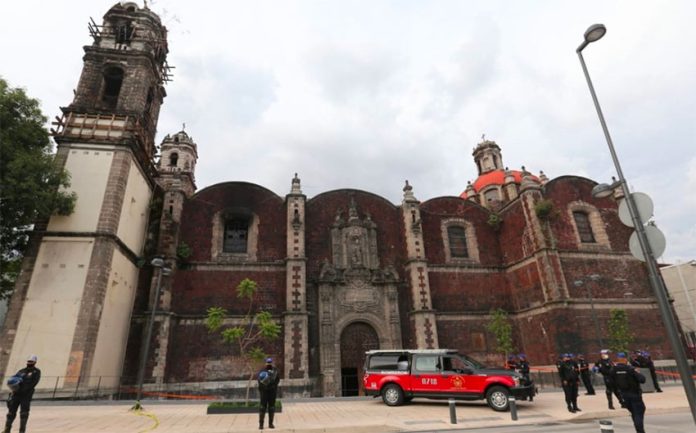
The 18th-century church is located in the historic center.
Mexico City’s second oldest church was severely damaged in two fires which broke out on Sunday.
Stained-glass windows, the pipe organ, paintings and the bell tower at the Church of the Santa Veracruz located in the city’s historic center were charred or destroyed in the blaze, authorities report.
The fire is thought to have been started by a homeless person who broke into the church and was living in the bell tower. One homeless man located inside the church was rescued by firefighters.
The first fire started early Sunday morning when wooden scaffolding — installed to prop up the building after it sustained structural damage during the 1985 and 2017 earthquakes — caught on fire.
The fire was considered under control by 7:10 a.m., but burning embers had fallen into one of the organ’s pipes unbeknownst to firefighters, who were called back to the church to fight a second blaze at 4 p.m.
Fire department personnel were posted at the church to prevent another blaze, and police officers were deployed to keep people away from the church while a barricade was being built around the site.
The National Institute of Anthropology and History (INAH) deemed the church “a high-risk and uninhabitable property” three years ago and it has been closed since then.
Mexico City Government Secretary Alfonso Suárez del Real has been advocating for the church’s repair since the 2017 earthquake.
“I hope that these dramatic upheavals that we have had at dawn today and this afternoon will serve to make us all get back on our feet and fully attend to the Santa Veracruz temple and its surroundings,” Suárez said on Sunday.
He said the church is not at risk of collapse, but continuing shifts may occur due to the stone structure’s response to the fire’s heat.
Father Salvador Barba, liaison between the Archdiocese of Mexico and the Ministry of Culture, said that for three days in a row homeless people had broken into the church to spend the night, and he speculated they may have lit a fire for warmth.
Access points to the building are being bricked up in the interest of public safety.
The church’s historical archive of documents was not damaged in the fire, nor was a painting by Spanish artist Cristóbal de Villalpando, the archdiocese reports.
Spanish conqueror Hernán Cortés founded the church, which was built in 1568. It was reconstructed in the 18th century due to damage sustained by unstable ground, flooding and earthquakes.
Manuel Tolsá, a noted sculptor and architect in Spain and Mexico, is buried inside the Santa Veracruz church in an undisclosed location.
The National Institute of Anthropology and History plans to restore the building in conjunction with the archdiocese. Insurance and money from the federal natural disaster fund should allow for reconstruction to be completed in 2021.
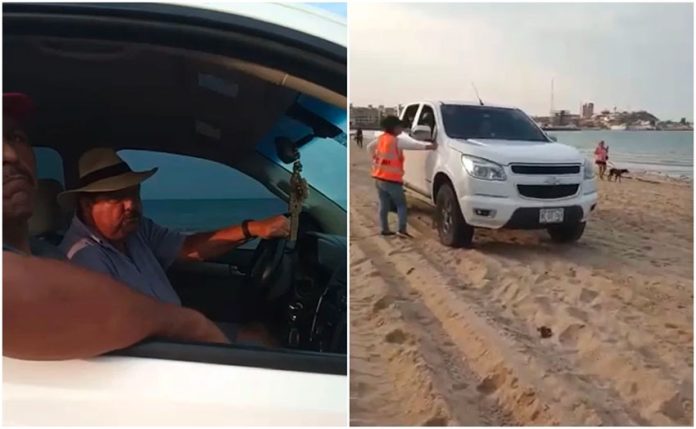
López chats with a federal agent on the beach in Puerto Peñasco.
Driving on the beach is not an offense if your daughter is the mayor of Hermosillo, Sonora.
The father of Morena party Mayor Célida López Cárdenas was stopped by agents belonging to the federal office of maritime land zones (Zofemat) while driving on the beach in Puerto Peñasco, an activity that is prohibited.
During the encounter, which was filmed and uploaded to YouTube on the weekend, Amadeo López Inzunza dropped his daughter’s name and explained he was driving on the beach because he hadn’t been there for a “shitload” of time.
A man in the backseat of the extended cab pickup appeared to be intoxicated as he drank from a can of beer and said, erroneously, that Sonora Governor Claudia Pavlovich was López’s daughter.
López, who was driving, clarified that Célida was his daughter and told the agent he would say hello to her on the agent’s behalf.
“Yes, tell her. She knows me, she knows me very well,” the agent replied.
López then asked the agent to put on a mask so that she wouldn’t contaminate them and continued on his way, despite being asked not to drive on the beach.
A Covid-19 patient in Chihuahua, where restrictions have been eased in border municipalities.
The risk of coronavirus infection according to the federal government’s “stoplight” system switched from orange light “high” to yellow light “medium” in nine states on Monday, prompting authorities in all but one to ease at least some restrictions.
According to a report by the newspaper La Jornada, the governments of Chihuahua, Oaxaca, Campeche, Guerrero, Chiapas, Tlaxcala, Sonora, Tamaulipas and Veracruz all eased some restrictions on Monday in line with their shift to the “medium” risk level.
But authorities in Tabasco decided to postpone the switch to yellow light status until Monday of next week.
In Chihuahua, which has recorded 7,710 confirmed coronavirus cases and 1,139 deaths, the government decided to keep 57 of the state’s 67 municipalities at orange light status, allowing only 10 municipalities on or near the border with the United States to make the switch to yellow.
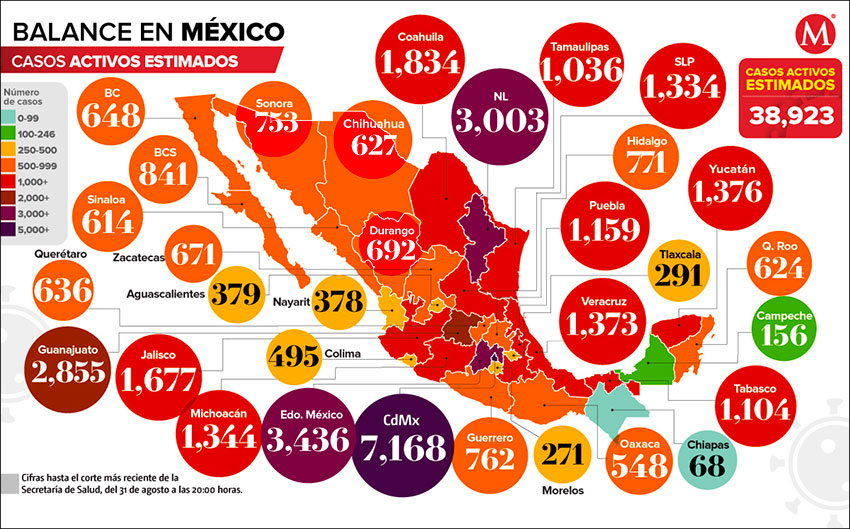
Estimated active Covid-19 cases as of Monday. milenio
In those municipalities, among which are Juárez, Janos and Nuevo Casas Grandes, bars and places of worship were permitted to reopen at 30% capacity on Monday. Swimming pools and sports centers were also allowed to reopen for the first time in five months.
In the rest of Chihuahua, entertainment venues and places of worship are only allowed to operate at 15% capacity while orange light restrictions continue to apply.
In Oaxaca, where 13,699 coronavirus cases have been detected and 1,280 people have lost their lives to Covid-19, all nonessential businesses that remained closed for the past five months including bars and nightclubs were allowed to reopen as of Monday at a reduced capacity while following strict health protocols.
Governor Alejandro Murat said the state is doing well in keeping the coronavirus outbreak under control and highlighted that no new Covid-19 deaths were reported between Saturday and Sunday. However, 10 additional Covid-19 deaths were reported in Oaxaca on Monday.
The southern state is currently in the midst of an initiative dubbed “40 days for Oaxaca” during which residents are being urged to wear face masks in all public spaces.
In Campeche, which has recorded 5,586 coronavirus cases and 755 deaths, more than 7,500 bureaucrats returned to work on Monday two weeks after the state formally switched to yellow light status and several archaeological sites reopened.
According to La Jornada, 85% of hotels in the southeastern state are now operating but bars and nightclubs remain closed. A “dry law” prohibiting alcohol sales remains in place, prompting a protest Monday by more than 100 liquor store owners.
Authorities in Guerrero, which has recorded 14,793 confirmed coronavirus cases and 1,658 deaths, allowed a range of businesses including hotels, restaurants, cinemas, hair salons, gyms and sports centers to increase their capacity from 30% to 60% on Monday.
In Chiapas, where 6,267 coronavirus cases have been detected and 1,001 Covid-19 deaths have occurred, some restrictions were eased on Monday, allowing businesses to operate at a greater capacity but most government workers will not return to their workplaces until September 16.
Authorities in Tlaxcala, which has recorded 6,374 coronavirus cases and 900 deaths, also allowed businesses to operate at an increased capacity as of Monday but they announced that there will be no “cry of independence” ceremony on September 15 nor street parades the following day.
Despite some restrictions easing in Sonora, Health Minister Enrique Clausen said that the northern state’s switch to yellow light status doesn’t mean that people can relax or drop their guard.
“We must continue behaving as if we were at [the] red [light level],” he said.
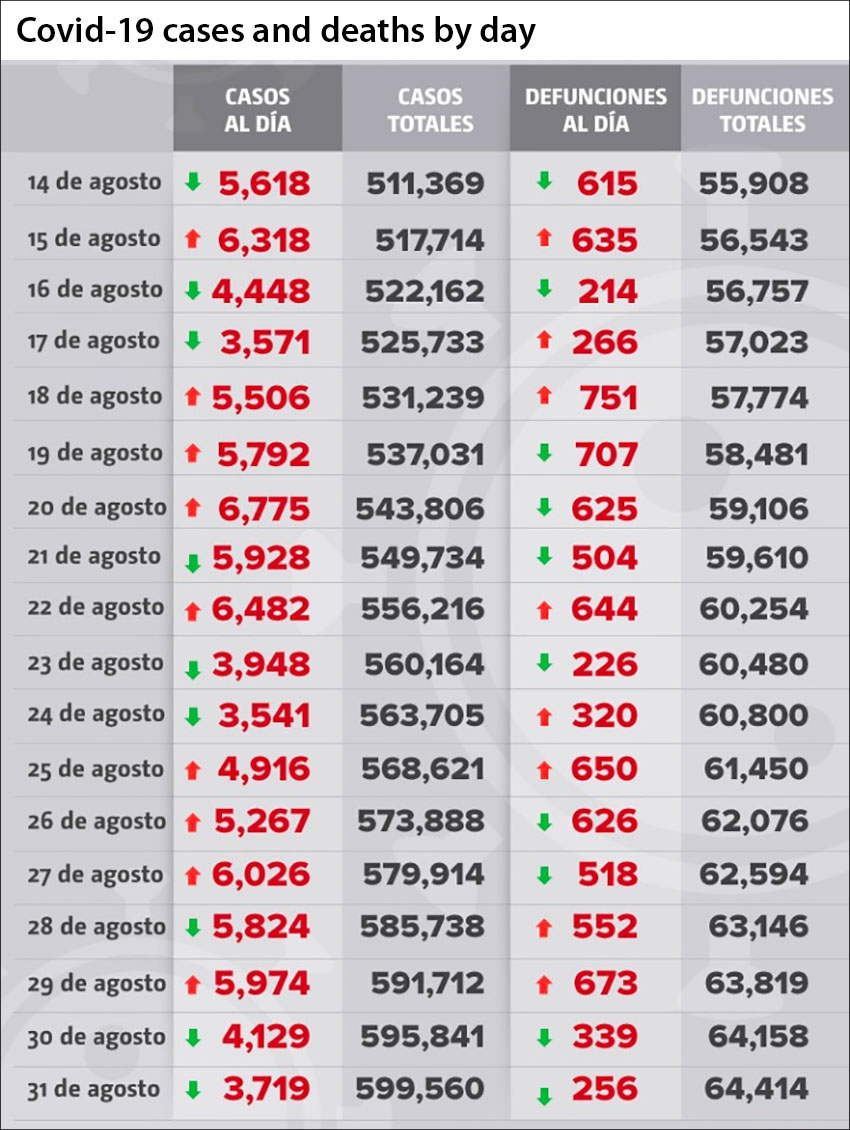
Coronavirus cases and deaths reported by day. milenio
Gyms are among some nonessential businesses that haven’t been allowed to reopen in Sonora despite the coronavirus risk level being reduced. The state has recorded 21,433 confirmed cases and 2,646 Covid-19 deaths.
Authorities in Tamaulipas and Veracruz, both of which have recorded more than 20,000 confirmed coronavirus cases, also eased some restrictions on Monday but the government of Tabasco decided it was too soon to make the switch to yellow and kept orange light rules in place.
Authorities in the Gulf coast state, which has 28,354 confirmed cases and 2,565 Covid-19 deaths, said it will designate Tabasco a yellow light state as of September 7, a move that will allow hundreds of businesses to reopen or increase their capacity.
Meanwhile, Mexico’s accumulated case tally rose to 599,560 on Monday with 3,719 new cases registered. The Health Ministry estimates that just under 39,000 cases are active.
The official Covid-19 death toll increased by 256 to 64,414, the Health Ministry reported.
Mexico overtook the United Kingdom a month ago to rank third for total Covid-19 fatalities behind the United States and Brazil but its death toll was passed this week by that of India and it now ranks fourth.