Home Blog Page 1460

With a shaky start, Ministry of Tourism relaunches Visit México portal

0
VisitMéxico.com, back on line and with mistranslations corrected.

After two embarrassing problems in recent weeks, the Visit México tourism website was officially relaunched on Tuesday by Tourism Minister Miguel Torruco.

However, the new beginning didn’t go as smoothly as he and other officials might have hoped: at the time the new site was being presented, it had not yet gone live.

But by Wednesday afternoon the Visit México portal was live, accessible and — apparently — error-free.

Torruco told a virtual press conference that the new website will feature the latest and best technology and that companies such as Google, Discovery Channel, Mastercard, Ford and Aeroméxico as well as the New York Yankees will partner with it via sponsorship deals.

The government won’t pay anything for its operation and upkeep, he said.

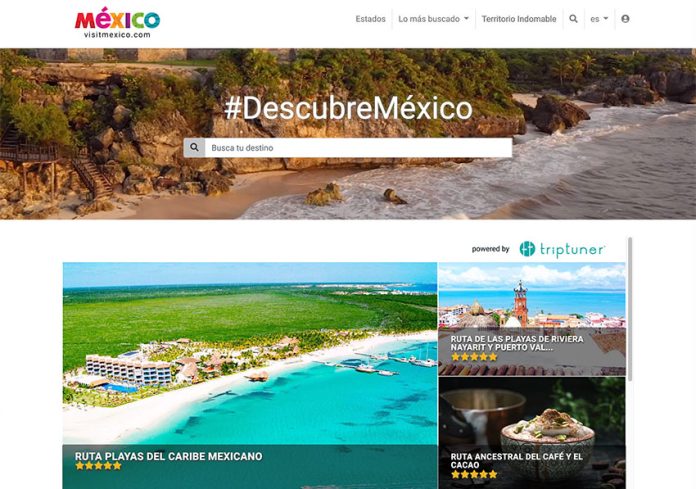
In its current incarnation, Visit México includes information about a range of tourism routes and has sections promoting each of Mexico’s 32 states, the country’s best beaches, archaeological sites, adventure and ecotourism and magical towns.

Torruco said that the site won’t function as an online travel agency where reservations can be made but rather as a “nerve center” that connects potential visitors to tourism operators and travel agencies in Mexico.

Among the businesses and people that will benefit from the new site, the tourism minister said, are restaurants, hotels, tour guides and travel agencies.

Torruco asserted that the new portal will allow tourism promotion to reach new audiences and open new markets.

“We want the new era of tourism to be for everyone,” he said, adding that the large number of small tourism-oriented businesses that don’t have currently have a digital presence will be provided with assistance to move online, and onto the Visit México site.

“We’re digitalizing the sector and democratizing tourism. … This new platform … is for everyone that wants to join the transformation of our thriving industry,” Torruco said, apparently referring to pre-pandemic times.
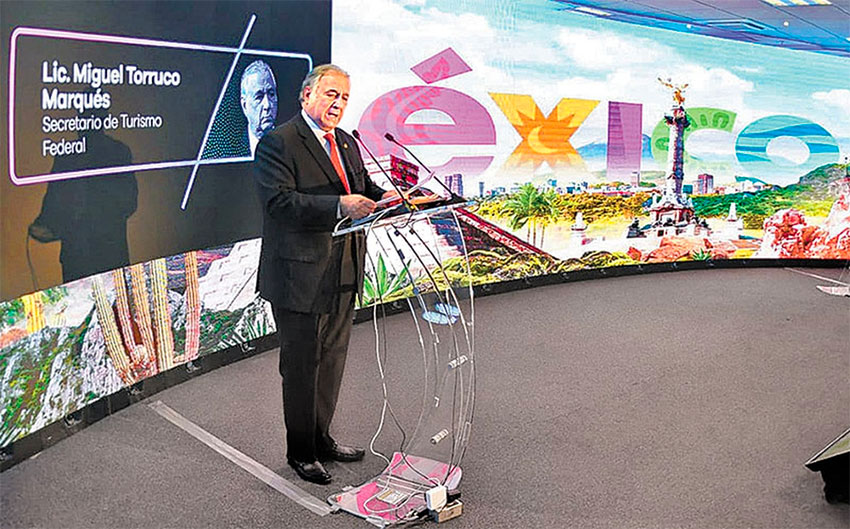
Tourism Minister Torruco speaks at Tuesday's relaunching.
Tourism Minister Torruco speaks at Tuesday’s relaunching.

“We’re taking a firm step in our digital strategy, doing more with less but with a global vision.”

Visit México president Marcos Achar said that 70 million pesos (US $3.2 million) has been invested in the site to date and that great efforts have been made to create the world-class tourism platform the country deserves.

Carlos González, the site’s general director, said that Visit México is protected by cutting-edge technology that will guarantee that it isn’t taken down or tampered with by hackers. The site is “capable of repelling all attacks,” he said.

The relaunch of Visit México came a month after it was taken down, allegedly for lack of payment to the website host.

However, the company that has been in charge of managing the site’s content since 2019, Braintivity, claimed the page had been hacked.

The website was back online by early August but its English language content contained several errors that appeared to have been machine translated or intentionally changed. As a result, the names of numerous destinations were rendered as literal (and in some cases, inexplicable) translations.

Guerrero became Warrior, Hidalgo was translated as Noble and Tulum, the Caribbean coast beach town, was suddenly called Jumpsuit. The site was shut down after several media reports lambasted the government and site operator for the mistranslations.

Torruco said August 10 that a criminal complaint had been lodged against whoever was responsible for the suspension of the site and subsequent changes to the English-language translations of some destinations.

He said a month earlier that the site, previously relaunched in 2019 with private sector money, would end up being regarded as an important achievement and special legacy of the current federal government.

But just a day after Visit México’s second relaunch in as many years, it remains to be seen whether those epithets will be applied to the website in years to come.

Source: Milenio (sp), El Financiero (sp), Reportur (sp) 

Horses have a special place in the heart of Elena Larrea

0
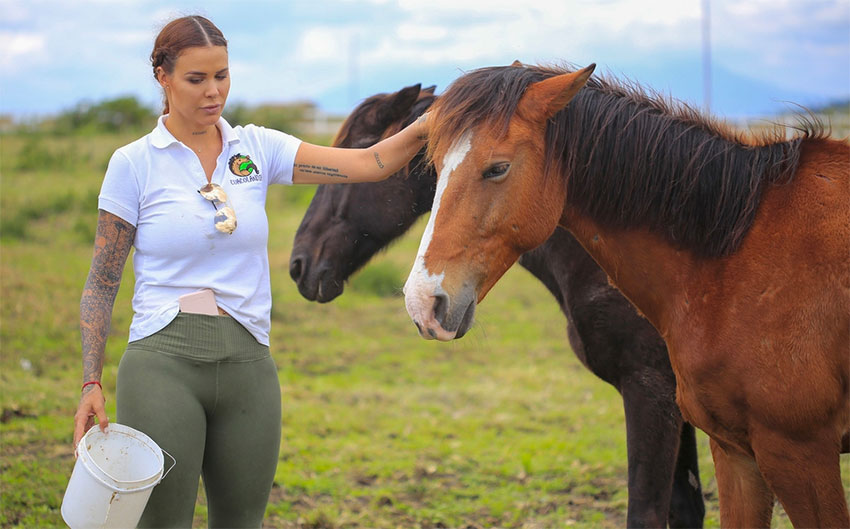
Larrea and one of more than 100 horses at her sanctuary in Puebla.

Elena Larrea is literally saving lives. The young woman from Puebla runs Cuacolandia, a sanctuary for abused and mistreated horses that is one of just a handful of similar organizations in Mexico.

The photos she posts to Facebook of the horses that find their way to her are dramatic, a testament to her love for the animals and determination to allow them to live what remains of their lives with health and dignity. 

Larrea considers herself an activist in defense of animal rights of all species, but horses have a special place in her heart.

“There is nothing deeper than the gaze of a horse,” she told the newspaper Milenio in an interview. “Horses are the windows to your own soul. That nobility they have is not possessed by any other animal.” 

Cuacolandia is located in the Haras Ciudad Ecológica area of Puebla’s capital and is home to more than 100 rescued horses from all over the country.

“We have cart horses from the state of Mexico and the carriages of Acapulco, we have retired mounted police horses, we have horses who were abandoned in the streets,” she says. 

This spring Larrea received 42 former carriage horses from Acapulco after the city began enforcing Guerrero’s animal welfare act of 2014, which prohibits their use.

One of them was Unicorn, so-named because his former owners used to slap a fake horn on his forehead when he pulled tourists through the city’s streets. Unicorn arrived at Cuacolandia not much more than skin and bones, yet after just six months he’s returned to a healthy weight. 

Another new arrival is Willy, a brown horse with a ghastly open wound the circumference of a melon at the base of his neck, the result of pulling a garbage cart in Reyes La Paz, Mexico state.

Larrea is treating his injury with medication, has removed his horseshoes and is showering him with “love and carrots” as he heals. 

According to Larrea, most of the horses are over 18 years old, The oldest is El Abuelo, at 29, and the youngest is El Covid, who at two months old is the first foal born at the sanctuary.  

We need to start treating horses as sentient beings,' Larrea says.
‘We need to start treating horses as sentient beings,’ Larrea says.

Unfortunately, most horses arrive at the ranch in similar states to Unicorn and Willy. Often they are abused, malnourished, or simply abandoned by their owners after they have served their purpose. 

Larrea even takes in former racehorses who have been injected with cocaine or other performance-enhancing drugs until they are no longer useful.

Around 30% of the animals that arrive at Cuacolandia suffer from obvious injuries and malnutrition, and another 10% come to her in a state Larrea describes as alarming.

She hopes her labor of love will remind people that horses have been humanity’s constant companion throughout history, and should be treated with respect and kindness. 

“We need to start treating them as sentient beings, which is what they are. Beings who feel pleasure, who feel pain, who dream. We must stop seeing them as an object and if you are going to have them as an object, at least have respect for them and give them a good life, and if you are going to exploit them, at least feed them,” she says.

Maintaining so many animals and the space they need is no small feat. Food is Larrea’s top expense, and Cuacolandia tries to produce its own forage to offset costs. Donations of any kind are always welcome.

But no matter the expense, no horse will be sold or adopted out, and Larrea says that the property could support up to 300 horses if need be.

“We don’t use them for anything, they just come to a place to have a decent life after having served the human under deplorable conditions all their lives,” Larrea says. The goal is to give the animals a break and a moment of peace. 

“It costs nothing to be kind to a being lower than you,” Larrea says. “They are here with us, not for us.”

Source: Milenio (sp)

Beverage firms challenge information regarding soft drink consumption

0
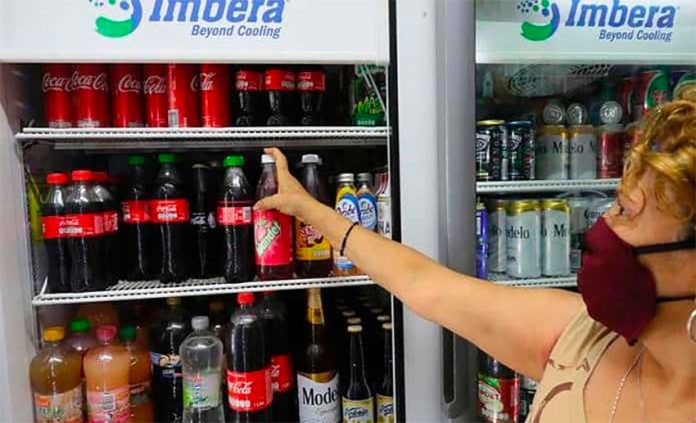
Consumers in Chiapas don't drink as much soda as study found, industry says.

The Mexican soft drink industry has rejected a study that found that residents of Chiapas drink an average of 821.25 liters of soda per person per year.

In a letter to Mexico News Daily, the general director of ANPRAC, the national soft drink makers association, said that data from the Mexican beverage industry and the national statistics agency Inegi shows that per-capita soda consumption in Chiapas was 133 liters last year, less than one-sixth the amount cited in a 2019 study by the Chiapas and Southern Border Multidisciplinary Research Center (Cimsur).

Jorge Terrazas’ dismissal of the study comes after Mexico News Daily published a story last week based on Cimsur’s findings.

The ANPRAC chief said the study cites local statistics for per-capita soft drink consumption in Chiapas that are incorrect.

Terrazas also challenged the claim that soft drink consumption in the southern state is more than five times higher than the national rate. According to data from Inegi and the National Population Center, consumption in Mexico in 2019 was 157 liters, he wrote.

Based on the statistics cited by Terrazas, soda consumption in Chiapas was in fact 24 liters — or 15% — lower than the national average in 2019.

The statistics cited in the Cimsur study are “inconsistent with reality,” the ANPRAC chief wrote, adding that it generally “lacks scientific rigor.”

Terrazas also rejected a claim in a National Institute of Public Health study that concluded that more than 40,000 deaths per year – 7% of the annual total – are linked to the consumption of sugary drinks.

He said that attacks on the soft drink industry and attempts to stigmatize it have “regrettably” intensified in recent months and attributed the attacks to “certain groups” that are “seeking to establish a narrative of direct correlation between the consumption of bottled beverages and all the serious multifactorial health problems we face as a society.”

“It’s very important to mention that until now, there is no scientific evidence that establishes a relation between between heart diseases, obesity and excess weight and the consumption of flavored drinks,” Terrazas wrote.

He added that the Mexican beverage industry is aware of the obesity problem in the country and committed to working with society and government to promote the benefits of a balanced diet and physical activity.

“This important industry believes that there are no ‘good or bad’ products but rather the key to a healthy life is energy balance,” Terrazas wrote.

He also said that it was “simplistic” to claim that a single product or an industry was an aggravating factor in the Covid-19 pandemic in Mexico.

Deputy Health Minister Hugo López-Gatell called sugary drinks “bottled poison” last month when asserting that Covid-19 has had a huge impact on Mexico due to the high prevalence of diet-related chronic diseases.

Since the deputy minister’s remarks, Oaxaca and Tabasco have passed laws banning the sale of junk food and sugary drinks to minors, and several other states look set to follow suit.

Mexico News Daily 

A real relationship with healthcare professionals is sadly lacking

0
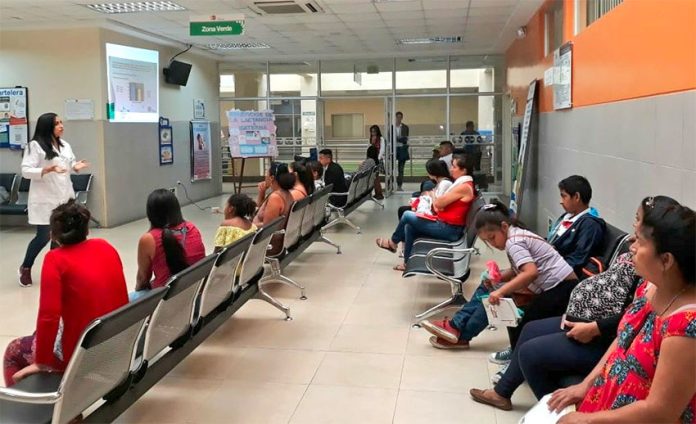
The public system is by design mostly impersonal.

My paternal grandmother lived to be 92 years old and was in excellent health for most of all of her long life save that last tiny sliver.

Much of this was a result of lifestyle: she was a vegetarian, had no addictions or vices, exercised regularly, and did yoga way before it was cool. Unlike many women of her generation, she had the right combination of strength, privilege, and resources to get out of an emotionally abusive marriage and had the family support to “start over” in a strong economy that provided her later with a healthy pension and good health insurance throughout nearly 30 years of retirement.

But most of all, I attribute her excellent health to a bit of hypochondria. Any little tickle in her throat, any extra few seconds of heart-pounding, any strange itch that didn’t go away after a day of cortisone cream and off to the doctor she’d go. Treatment in hand, she’d write out the instructions and follow them religiously, often setting alarms to remember to administer it exactly on time. My sister and I would roll our eyes a bit at this, but in the end, it seems she got the last laugh.

Unlike my grandmother, who really seemed to have come into her own in the 1970s U.S., the world I live in as an adult is markedly different. She had strong, employer-provided health insurance, an ample sick-day policy, and dedicated doctors that she knew by name, something that nobody I know has nowadays. In the case of an emergency, she knew exactly what hospital she’d go to and how it would be paid for.

When I get sick and don’t get better within a few days, my first stop is usually a doctor at one of the Farmacias de Ahorro, a popular pharmacy chain in which you can see a doctor for free. Obviously the doctor there is different each time. I assume they’re just as underpaid and overworked as most professionals and of course, they don’t have access to your medical history.

It’s a fair option in a pinch and certainly better than nothing, but all the medical talent in the world can’t make up for the absence of actually being familiar with the terrain they’re working on (basically, you). They don’t know you, you don’t know them. And they’re not Dr. House either who, let’s not forget, is a fictional TV character.

As a freelancer I don’t have state-sponsored insurance, and as a young(ish) healthy adult haven’t felt the need to sign up for it. My surface justification is that I can afford to be treated privately if something non-catastrophic comes up and I don’t want to clog the already overtaxed system that’s meant for those truly in need with no other options.

My just-below-the-surface one is that I don’t quite trust these institutions to give me the care I’d need, not because of inferior talent, but because they are already severely understaffed and understocked.

While private insurance could be an option, my pay — especially in Covid times — varies too greatly from month to month and most companies are loath to provide services to people that don’t have a steady (and high) regular paycheck coming in. Requirements for gaining access to steady and guaranteed private services are the same, but the benefits that most jobs provided in order to qualify for those services have been on sharp decline for decades now in both of my countries.

All this said, I’ve got it pretty good. Many people don’t even have my undesirable options and, like me, would not be quite sure what to do in the event of a true medical emergency. Even if they are covered by Mexico’s public health system, it’s even more overtaxed than usual.

The reality is that the sickest patients, in many cases, are refusing to go until they are literally already dying (for an excellent analysis of this phenomenon, see the New York Times article Id Rather Stay Home and Die” from August 10). More often than not, then, they do die there in the hospital, which becomes “evidence” to back up the suspicion that people are “doing alright” until they get to the scary hospital.

Give it some gas with alarming WhatsApp forwards with seemingly-logical but fantastical connected dots, and you’ve really got a problem of legitimacy. It’s not helped by a long list of problems at public hospitals that existed before all this started.

Like most professionals in both Mexico and the U.S., doctors are overwhelmed even when we’re not in the middle of a pandemic. There are a lot of people in need of care, and not a lot of people able to care for them.

The absence of streamlined medical care and prevention, of course, has not simply eliminated the need for medical care in an ever-increasing population. The result, now, is that fewer and fewer people actually have relationships with one single doctor or a handful of them who know them, their history, and their cases well.

Put them in a situation in which they’re very sick, scared, alone, and surrounded by stressed-to-the-max medical personnel who’ve probably slept less than three hours over the previous three days and also have never seen them before, and it’s amazing that anyone is making it out of there alive.

A real relationship with healthcare professionals is necessary to get the best care that you can. The more information they have about you, the better they can treat you. If they have no knowledge of your medical history — conditions you’ve had or currently have, allergies, whether or not you’re fully vaccinated, past surgeries, chronic conditions or even suspected chronic conditions — how can they successfully treat you?

This is exactly the type of situation a sizable portion of the population in Mexico has found themselves in: they don’t know who’s treating them, and fear and mistrust are high. The public system is by design mostly impersonal, and the private system is simply not available to many people.

My grandmother referred to and talked about “her doctor” all the time. I dream of a time when those of my generation and the ones who follow will be able to do the same. In the meantime, let’s open the ideas forum: we’re going to be rebuilding everything after this anyway. So let’s get some good systemic ideas in for how to make the institution of healthcare work the way it’s supposed to.

Sarah DeVries writes from her home in Xalapa, Veracruz.

No school for many students in remote areas of Guerrero

0
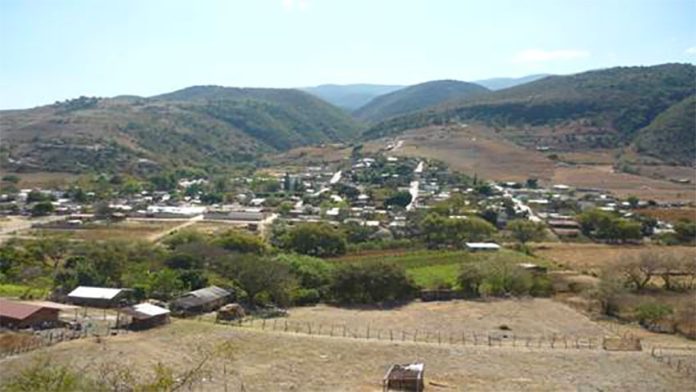
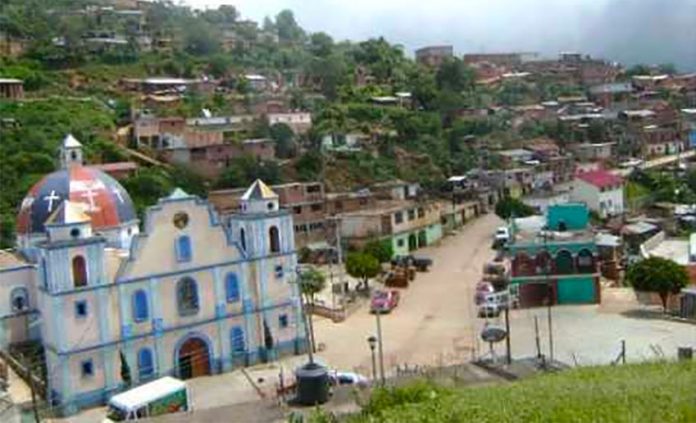
Amojileca, Guerrero, where TV reception is spotty.

More than 2,000 indigenous Nahua children from some 18 primary schools in the municipalities of Atlixtac and Chilapa de Álvarez, Guerrero, were unable to start classes with the rest of the country on Monday because they lack internet and televisions. 

It’s a common refrain as unequal access to technology accentuated by poverty brings out the flaws in distance education. Those who are disadvantaged may not receive an education until the coronavirus pandemic subsides. 

On Monday morning Antonio Aranda Pinzón, principal of the Adolfo López Mateos bilingual primary school in the town of Mexcaltepec, one of the few towns in the Montaña Alta that sometimes has television reception, called an assembly.

Aranda placed an old tube television set in the center of the schoolyard and switched it on but was unable to pick up the educational programming or any of the stations broadcasting the Ministry of Education’s  “Learn at Home II” curriculum.  

In towns across the state’s Sierra, Montaña Alta and Baja and Costa Chica regions children are being prevented from learning, said José Manuel Venancio Santiago of Ceteg, the state teachers union. 

And it’s the poor who are disproportionately affected. 

“There are towns where they do not even have electricity, and those who have money can pay for the SKY service to watch private television channels, but those who do not, they cannot do anything,” he said. “How can a child learn to read on television?”

The Ministry of Education’s distance learning program is, in his opinion, “simply not viable.”

That’s proving to be the case in Amojileca, a town of about 1,000 residents located only 20 minutes from the capital, Chilpancingo.

Television reception is spotty at best, especially in the rainy season, and residents have asked Governor Héctor Astudillo Flores for community internet but to no avail.

In some areas of town residents can catch a signal, but to do so they must purchase a Wi-Fi card, which costs 20 pesos per day. 

Erika Álvarez Ramos, a single mother of two school-aged children, makes and sells tortillas for a living and spending 200 pesos (US $9.11) a week so her children can learn is a financial impossibility. 

And the logistics of distance learning are also hard for her to grasp even on a good day with TV reception, which she is lucky to have.

“I have to leave them at my house and turn on the television so they can take their classes while I go to work,” she said. 

Distance learning means her children will be home unsupervised. It also means they will miss out on the free school lunch.

Whether the town’s 500 or so students will be able to attend class this year is uncertain, in a situation that is repeating itself across the state. 

Source: La Jornada (sp)

Prickly pear cactus doesn’t look like a tasty treat—but it is

0
Eloise Serralde Nieto prepares a nopal tortilla.

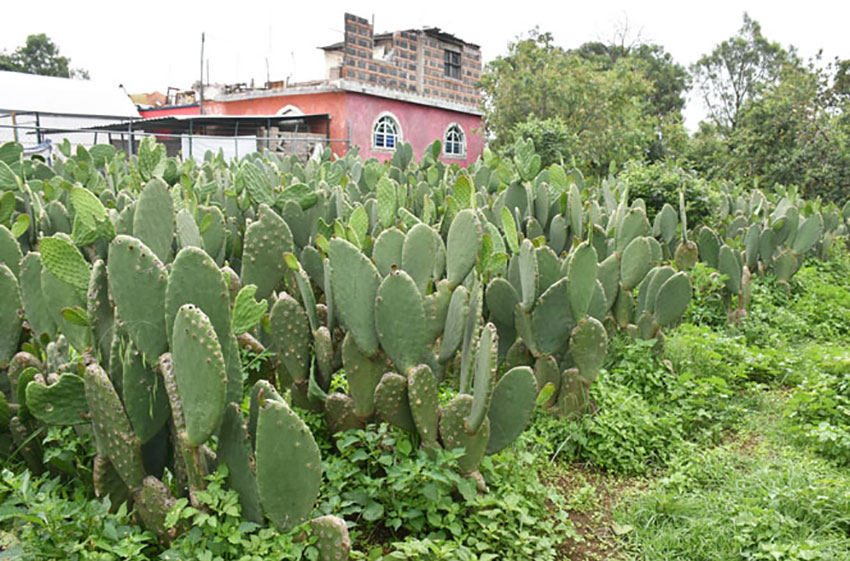
There aren’t many people who upon passing a prickly pear cactus would think, “Well, that looks like a tasty and nutritious plant.”

Its stems tend to be thick and uninviting and its pads are covered with long needles. Worse, tucked in between the long needles are a multitude of tiny, thin and practically invisible needles which, once embedded in your body are especially challenging to remove (suggested methods include using nylon stockings or glue).

But somehow, around 20,000 years ago, hunter-gatherers in the Valley of México recognized it as a food source. It was then domesticated approximately 9,000 years ago by the Chichimecas and, along with maguey, corn and beans, was a primary food source for many indigenous groups. It continues to be an important food for Mexicans today.

The Centro de Acopia (Collection Center) in Milpa Atla, one of Mexico City’s boroughs, isn’t really that big; maybe half a city block. But it bustles with activity every day from 2:30 in the morning until 6:00 in the evening as campesinos from across Milpa Alta truck in their nopal, set up their stands and sell what they have.

Although all the campesinos cultivate small fields of only a few acres, an incredible amount of nopal passes through the center. “Every day, we have 250 tonnes of nopal [brought here],” said Juan Gutiérrez, the center’s administrator. “In a year, approximately 91,200 tonnes.”

Nopal has been cultivated in the Valley of México for 9,000 years.

Although nopal is grown throughout Mexico, it’s most closely associated with Milpa Alta which produces 300,000 tonnes of nopal annually, accounting for 90% of what’s grown in Mexico City.

Although Milpa Alta is now known as a center for nopal production, growing it in quantity didn’t happen until the middle of the last century. “Years ago, people grew corn and maguey to make pulque,” said Zarai Loza Jurado, whose family has been growing nopal for generations.

“When beer became more popular, people stopped growing maguey and they needed another source of income, so they started growing nopal. Nopal is harvested all year long, so people can earn more than they can from corn, which is only harvested once a year.” Also, Milpa Alta doesn’t have water all year round and nopal does just fine when there isn’t any.

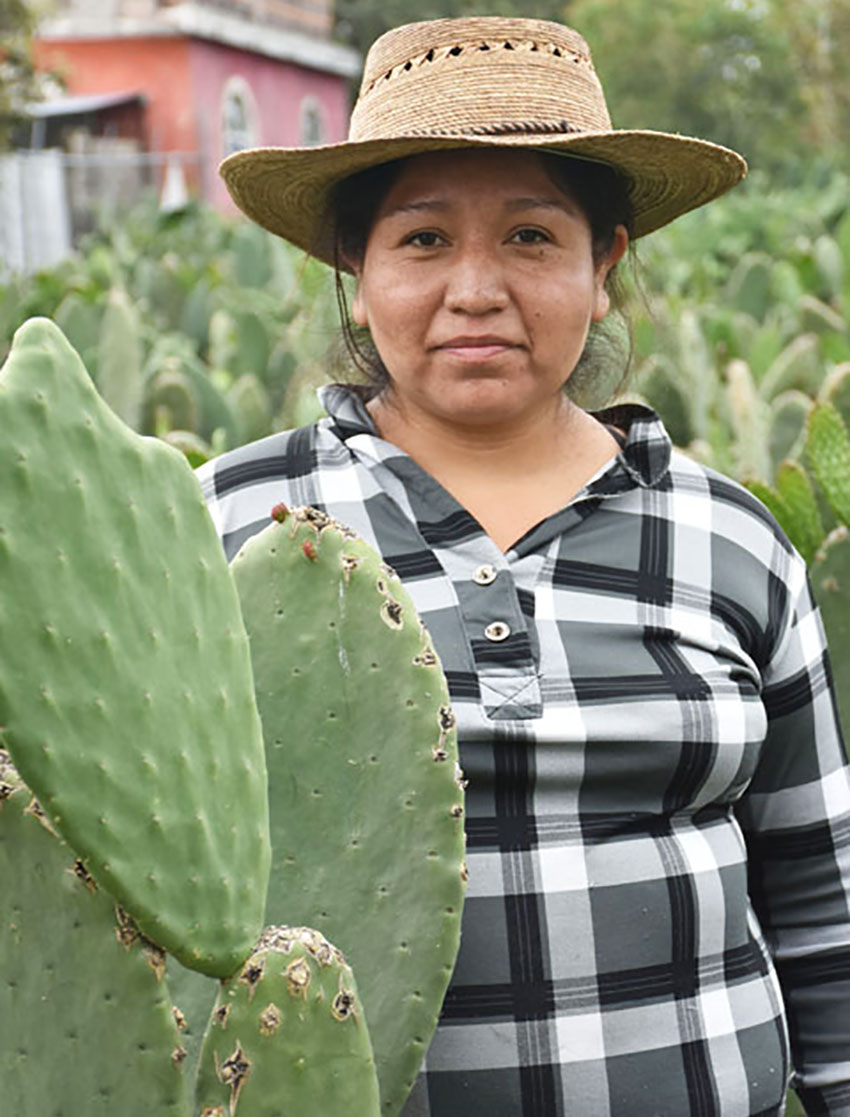
Loza took me to her family’s property, which looked to be about an acre. “Right now, four generations of the family are working in nopal,” she said. “We don’t produce a great quantity but our quality is better. We take care of the environment. Here, we don’t use the word ‘organic.’ We say that ‘we use ancestral methods’ or ‘we farm as our grandparents did.’ We say that this is the resistance of the pueblo.”

Nopal remains an important food source for several reasons: it’s abundant, it’s found in markets across Mexico and it’s inexpensive: a kilo in local markets costs around 15 pesos. “Many people, especially campesinos, cannot afford meat or chicken … not even fish,” said Loza. “So [nopal] is a nutritious meal, especially when served with rice and beans.”

She’s right. Among other things, nopal is a good source of vitamins B and C, calcium, potassium, and fiber. It may be used to treat burns and small cuts, has been shown to control diabetes and lower cholesterol levels and may have anti-carcinogenic properties. And perhaps just as important, it’s tasty. Given its popularity, it should come as no surprise that there are countless ways to prepare it.

Zarai Loza's family has been growing nopal for generations.
Zarai Loza’s family has been growing nopal for generations.

It’s best to buy nopal that has already had its needles removed; vendors in the markets are quite adept at this. Small pads may be eaten raw in salads but it’s recommended to toss them with salt for several minutes to remove the gelatinous substance inside. A simple way to prepare larger pads is to score them gently with a knife, brush them with oil and then grill them. These are then typically wrapped in a tortilla.

For cooking, pads should be chopped and boiled for about 20 minutes to release that gelatinous substance, and then thoroughly rinsed. I like to combine these with tomatoes, corn and onions to make a stew. Dried nopal is also used to add flavor to meat, soups and salads. The fruit of the cactus — called tuna — is eaten raw and used in jellies and desserts. I admit to being taken aback when I first saw tuna ice cream advertised.

The Serralde Nieto family has been growing for 10 years and started a small, family-owned company that has expanded the ways nopal is used. “We sell many nopal-based products,” said Eloise, the family matriarch. “We have tortillas, cookies, jellies, and nopal enchilada [dried nopal dusted with chile piquín], as well as soaps, shampoos and creams.”

And now there’s one more way to enjoy this cactus: Nopalea C, a beer.

It’s a lager that was developed by Nopalea Industries in Nuevo León in collaboration with with the University of Prague and the Association of Brewers in Czechoslovakia. Unfortunately, its distribution is still fairly limited through several stores in Nuevo León and just a couple in other states.

The company’s website highlights the health benefits of drinking their beer, promoting it as a source of vitamins and minerals as well as fiber. But they also note that it would take 14 beers to provide the recommended daily intake of 40 grams of fiber.

But take heart: a 2014 study found that extract from nopal can reduce the severity of hangovers. So if you were inclined (and able) to drink 14 Nopalea Cs to get your daily fiber intake, you may find yourself slightly less groggy the next day.

Joseph Sorrentino writes from San Gregorio Atlapulco, Mexico City. He is a regular contributor to Mexico News Daily.

Ads for AMLO’s report to the nation are clearly focused on elections: analysts

0
The president in one of the ad spots.
Electioneering or informing citizens? The president in one of the ad spots.

Government advertisements to promote President López Obrador’s second annual report to the nation have a clear electoral intent, according to some analysts.

The government has made four ads to be broadcast in the lead-up to López Obrador’s address next Tuesday in which the president uses some of his most emblematic political slogans including his oft-said maxim, “For the good of all, the poor come first.”

AMLO, as López Obrador is best known, used the phrase as a campaign slogan when he ran for president in 2006, 2012 and 2018 and rolled it out again in an ad in which he describes the government’s response to the coronavirus-induced economic crisis.

“The pandemic brought us pain and sadness and it also affected us economically. We are now boosting the popular economy because we’re applying a new model,” he says. “Now it’s not like before when bankers and large business owners were rescued. Now the people are being rescued. For the good of all, the poor come first.”

In another ad in which AMLO encourages citizens to purchase lottery tickets for a raffle whose prize money is loosely based on the value of the presidential plane the government is trying to sell, the president uses a variation of an election slogan that also served as the name of the coalition he led at the 2018 election.

After urging people to buy a ticket in the raffle to be drawn September 15, López Obrador says, “Let’s make history.”

The name of the three-party coalition he led was Juntos Haremos Historia, or Together We Will Make History.

In the same video, filmed in an airport hangar and aboard the presidential plane, AMLO charges that the luxury aircraft used by his predecessor Enrique Peña Nieto is an “insult” considering the high levels of poverty in Mexico.

“We’re going to raffle off this plane … and what we obtain will be used to buy medical equipment and attend to the people,” he says.

The implication: opposition parties such as the Institutional Revolutionary Party (PRI), who Peña Nieto represented, and the National Action Party, which was in office when the plane was purchased, are self-serving whereas the current administration is focused on the wellbeing of the masses.

In a third ad made to promote the president’s second annual report, López Obrador again highlights that his administration is helping the nation’s poorest people and “the dispossessed.”

One of the four ads ostensibly intended to promote the president’s report to the nation.


He also implies that the government’s economic strategy has the support of the pope, triggering criticism from some observers.

“The conservatives assert that we’re leading the country into communism. Pope Francis has said that helping the poor is not communism; it’s the center of the gospel,” AMLO says.

Experts who spoke with the newspaper El Universal asserted that the main aim of the new ads is to win votes for the ruling Morena party at next year’s midterm elections.

Alberto Aziz, an academic at a social anthropology research center, said he expected the ads to be informative rather than laced with political propaganda.

He also said that AMLO’s reference to the pope is not the first time the president has pushed the boundaries of Mexico’s status as a secular state, noting that he appeared a political event in Tijuana last year alongside a Catholic priest and an evangelical pastor.

José Fernández Santillán, a political scientist at the Tec de Monterrey University in Mexico City, said the new ads show that the 2021 midterms are shaping up to be an “election of the state,” as occurred when the PRI was the omnipotent political force for most of the 20th century.

In such elections in the past, government propaganda and that of the party in power was one and the same, he said.

“Unfortunately, we’re living through a political regression that we thought we had overcome,” Fernández said.

He described López Obrador’s use of a campaign slogan that helped him win the 2018 election and his reference to the name of the coalition he led as “shameless.”

“It’s very serious because it’s an attack on democracy,” Fernández said.

Beatriz Peralta, a politics professor at the Center for Research in Teaching and Economics, a Mexico City university, contended that López Obrador continued to speak as if he were a political candidate even after he was sworn in as president in late 2018.

“The use of the phrases ‘for the good of all, the poor come first’ and ‘together we will make history’ show that there is no change between the candidate and the president,” she said.

Peralta added that it is worrying that the government appears more concerned about the 2021 elections than responding to the current situation the country faces.

Alejandro Motta Nicolicchia, a professor of political communication at the Panamerican University, said that the new ads featuring AMLO fail to make a distinction between being in government and being on the campaign trail.

He charged that López Obrador has been plotting for success at next year’s midterms, at which all representatives in the lower house of Congress will be replaced, since the day after his victory at the 2018 presidential election.

“The priority of the president since July 2, 2018 has been the 2021 elections,” Motta said, adding that the current ads and any other political communication the government develops between now and next June will be designed to win votes for the ruling Morena party and its allies.

The president’s extensive travel around the country and even his morning press conferences have been likened by many observers to an ongoing election campaign.

Source: El Universal (sp) 

Lack of TV not the only barrier to learning for community in Oaxaca

0
Students face challenges in San Juan Quiahije.

For some indigenous children in Oaxaca, lack of a television or internet is not the only barrier to learning: language is as well.

Rosalva Sánchez Soriano teaches at a school in San Juan Quiahije, where most residents speak Chatino rather than Spanish. This includes the 22 students in her care this school year who are learning Spanish as well as adapting to distance learning in a community where most don’t own a television, much less have access to a computer or an internet connection. 

In order to meet her students’ needs, Sánchez has adopted a different strategy than that which the federal government has put forward. 

Instead of starting the school year on August 24, her students will begin classes on September 7, and they won’t be doing so in front of a television or computer monitor.

Instead, Sánchez will print out lessons in the Chatino language each week and leave the booklets for students to pick up at the town’s only cybercafe.

[wpgmza id=”250″]

The Ministry of Public Education’s (SEP) solution to the coronavirus pandemic is simply not viable for many students in poor, mainly indigenous communities, she says.

“Yesterday I was watching a transmission and the truth is that it is difficult for children in primary school and rural areas, who speak 80% in their mother tongue and 20% in Spanish, to understand,” Sánchez explained. She doesn’t fault the federal government’s distance learning plan given the circumstances created by the pandemic, but it is not going to help students like hers get an effective education. 

The SEP says there are 1.2 million indigenous students in Mexico, mainly in Chiapas, Oaxaca, Guerrero, Puebla and Veracruz. The most widely spoken languages are Náhuatl, Mayan and Tzeltal.

An estimated 45,000 people in southern Oaxaca speak Chatino, and although the federal government has translated lessons into 24 different indigenous languages of the 68 spoken in Mexico, Chatino is not one of them.

Source: Reforma (sp)

Gangster suspected of bribing cops released for lack of evidence

0
'Big Mama' is suspected link between criminal gang and corrupt police.

A prominent member of a Mexico City criminal gang who was arrested August 3 after police found her in possession of cocaine has been released for lack of evidence.

Lized Juárez Hernández, also known as “Big Mama,” was accused of being the link between city police and the Unión Tepito when she was arrested on August 3 and charged with engaging in organized crime, money laundering and drug dealing.

She spent 20 days in jail before a judge ruled that justice officials had failed to provide sufficient evidence against her. 

She is thought to be in charge of the Unión Tepito’s finances and close to Óscar Andrés Flores Ramírez, known as “El Lunares,” who is currently in prison facing a murder charge.

Police arrested Flores for kidnapping in late January but he too was released, due to irregularities. However, he was rearrested soon after.

Police suspect that Big Mama provided protection for El Lunares before he went to prison, and trafficked drugs to various dealers in Mexico City and Tlaxcala, at times using her own children as foot soldiers to help her smuggle and deliver drugs as well as collect money. They also claim she bribed Mexico City police in return for protection and information.

The woman is no stranger to the justice system. She was arrested in 2005 and 2013 for various counts of assault and served a total of 14 months in prison

Eight suspected members of the Unión Tepito were also arrested on August 7 on charges of drug dealing, bribery and possession of a firearm and ammunition after police detained the men and recovered 147 doses of marijuana, two bulletproof vests and a 22-caliber submachine gun. 

Originally formed over a decade ago as an alliance between business leaders in the notoriously dangerous Tepito neighborhood in order to protect themselves from thieves, the Unión Tepito has become one of the largest distributors of drugs in the city and is also suspected of being involved in extortion. 

Source: El Universal (sp)

Saltillo, Monterrey, Mérida municipalities with highest active virus numbers

0
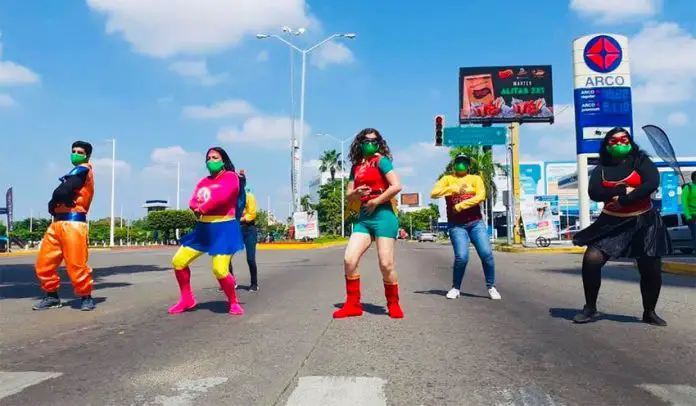
'Superhero' SusanaDistancia (Your Healthy Distance) and companions reinforce safe distance protocols in Culiacán, Sinaloa.

The northern cities of Saltillo and Monterrey currently have the largest active outbreaks of coronavirus among Mexico’s more than 2,400 municipalities, according to Health Ministry data.

The state capitals of Coahuila and Nuevo León, respectively, both currently have 699 active cases.

Mérida, Yucatán, ranks third for active cases with 688 followed by the cities of Puebla and San Luis Potosí, where there are 640 and 627 people, respectively, who currently have coronavirus symptoms.

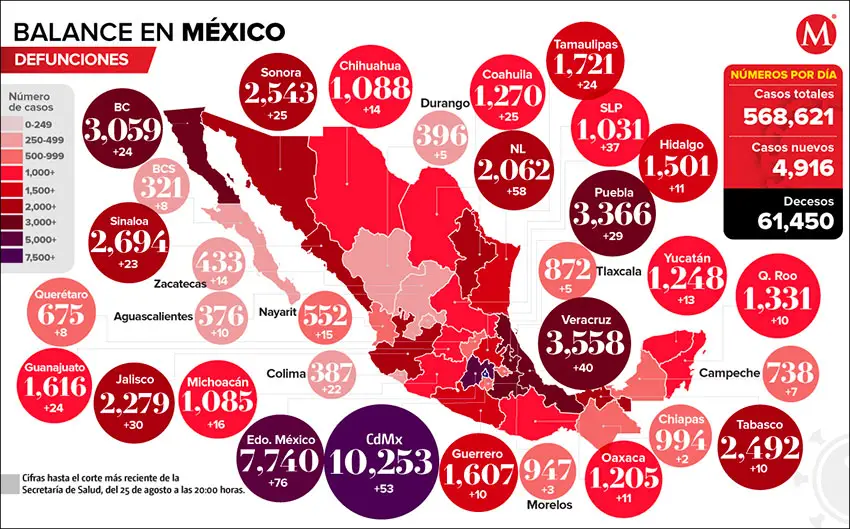
At the state level, Mexico City has the highest number of active cases with 5,899, according to Health Ministry estimates. México state ranks second with 3,488 estimated active cases.

Guanajuato, Nuevo León and Coahuila rank third to fifth, respectively, with more than 2,000 estimated active cases in each state.

Covid-19 deaths as of Tuesday.
Covid-19 deaths as of Tuesday. milenio

Chiapas has the fewest number of estimated active cases, with just 120.

Across Mexico, the Health Ministry estimates that there are 37,965 active cases.

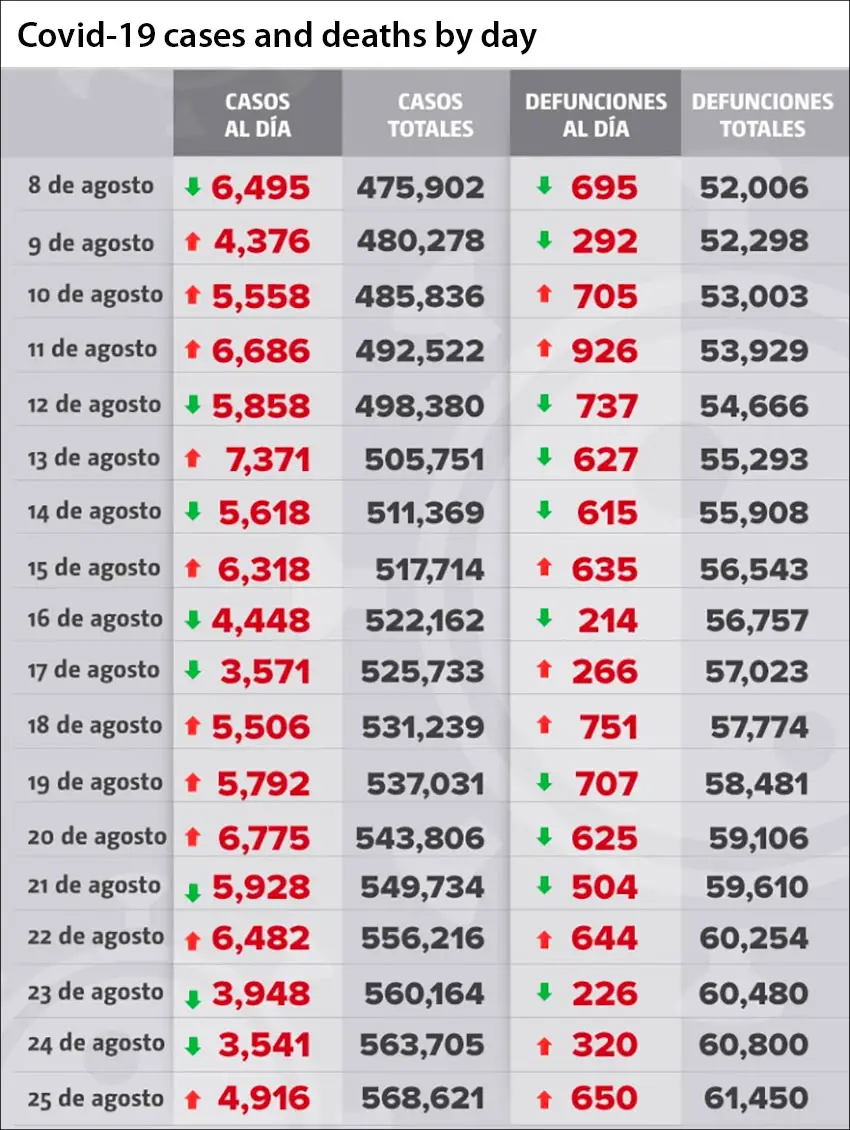
It reported Tuesday that Mexico’s accumulated confirmed case tally had increased to 568,621 with 4,916 new cases registered.

Director of Epidemiology José Luis Alomía told the nightly coronavirus press briefing that 97,632 health workers – a figure that represents 17% of total confirmed cases – have tested positive for the virus.

Mexico City, México state and Tabasco have recorded the highest number of infections among medical personnel.

The Health Ministry also reported that the country’s Covid-19 death toll had increased to 61,450 with 650 additional fatalities.

Mexico City has the highest death toll among the states with 10,253 confirmed fatalities as of Tuesday. México state ranks second for Covid-19 deaths with 7,740 followed by Veracruz, Puebla and Baja California, each of which has recorded more than 3,000 fatalities.

Among municipalities, Puebla city has the highest Covid-19 death toll, with 1,776 confirmed fatalities. The Mexico City borough of Iztapalapa ranks second with 1,644 deaths followed by Mexicali, Baja California, where 1,443 people have lost their lives to the disease.

Based on confirmed cases and deaths, Mexico’s fatality rate is currently 10.8 per 100 cases, the highest rate among the 20 countries currently most affected by Covid-19, according to Johns Hopkins University.

While authorities are widely believed to be undercounting both coronavirus cases and deaths due to a low testing rate, official data for the latter is undoubtedly closer to the real figure than data for the former. Therefore, Mexico’s real case fatality is certainly much lower than 10.8.

The Covid-19 testing rate has declined recently, leading some experts to claim that it is a factor in the recent reduction in case numbers.

But Deputy Health Minister Hugo López-Gatell reiterated Tuesday that fewer tests have been performed recently because fewer people have presented with symptoms of the disease.

Coronavirus cases and deaths reported by day.
Coronavirus cases and deaths reported by day. milenio

Testing in Mexico has mainly been targeted at people with serious coronavirus-like symptoms, meaning that the vast majority of mild and asymptomatic cases don’t show up in official data.

Also on Tuesday, Foreign Affairs Minister Marcelo Ebrard announced that a public-private partnership will provide funding for 19 Mexican projects that are aiming to develop vaccines and treatments for Covid-19.

He said the Mexican Agency for International Cooperation Development, private foundations and foreign entities will provide resources to projects being carried out at universities including the National Autonomous University and the National Polytechnic Institute.

Ebrard also announced that Mexico will participate in the clinical trials of vaccines developed in Russia and Italy.

He said that 2,000 Mexican volunteers will participate in phase three trials of Russia’s Sputnik V vaccine while two vaccines developed by Italy’s Lazzaro Spallanzani National Institute for Infectious Diseases will also be tested here.

Source: Milenio (sp), El Universal (sp)