International flights easily outnumbered domestic ones.
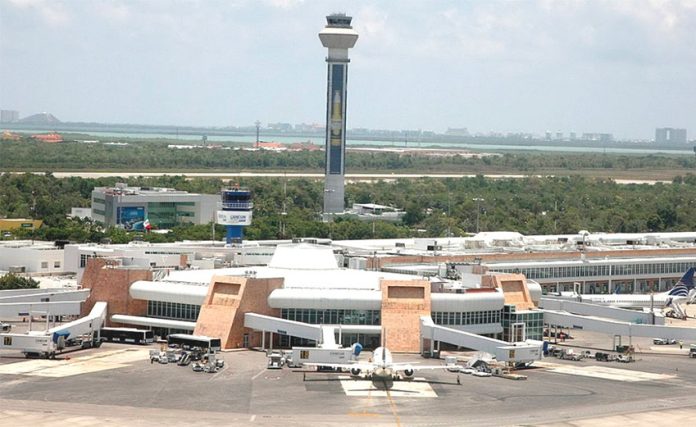
Citing the fact that Quintana Roo has been allocated an orange coronavirus risk rating and is allowed to open 172 kinds of public activities, Cancún International Airport authorities have announced the reopening of Terminal 2 on Tuesday.
“With the reactivation of hotels at 30% occupancy, in accordance with [Mexico’s Covid-19] stoplight rating of orange for Quintana Roo, and after a deep analysis of the probability of airlines renewing flights …we’ve decided to reopen operations in Terminal 2 at midnight on July 14 for domestic flights by Viva Aerobus and Volaris …” said airport spokesman Eduardo Rivadeneyra.
Since April, when airline activity at the airport dropped by more than 80%, the airport has been operating with only Terminal 4 open, a newer international terminal.
In the past six months, the number of international travelers has decreased more than 50% compared to the first six months of 2019, when 8.9 million international travelers used the airport, compared to 4.2 million during the same period in 2020, according to Aeropuertos del Sureste, which manages nine airports in Mexico, including Cancún’s. Overall, Mexico experienced a 90.4-percent decrease in total domestic and international air travel in June, in comparison to figures for June 2019, according to the organization.
The airport will require both incoming and outgoing travelers to submit to the Mexican Health Ministry’s required screening traveler questionnaire for Covid-19 risk factors, and to body temperature checks, Rivadeneyra said. The airport will also provide access to medical personnel who can assess persons displaying risk factors and direct them to clinics for further investigation and treatment.
According to Viva Aerobus’s website, it is currently offering 15 flights in and out of Cancún between Mexican cities only. Volaris Airlines is offering flights in and out of Cancún, but only between Mexican destinations.
U.S.-based airlines such as Spirit and Delta have been increasing the number of flights in and out of Cancún since June and are currently flying between Cancún and U.S. destinations. Delta Airlines added seven weekly flights at the beginning of July. Spirit is offering daily flights to and from Cancún from some U.S. cities.
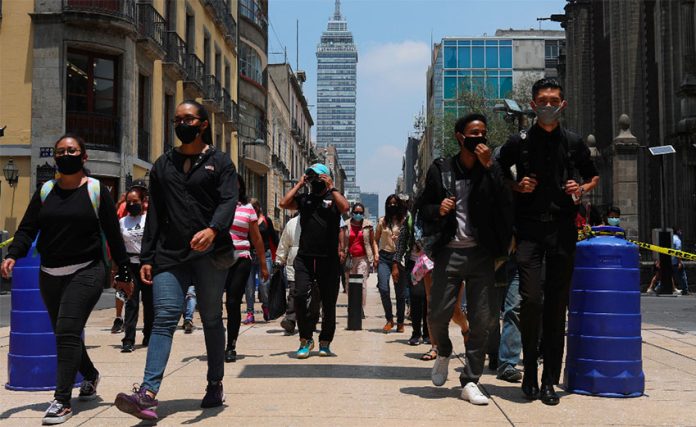
The Mexico City government announced on Sunday that 34 neighborhoods and towns in the capital will be given special attention in order to reduce their high number of active coronavirus cases.
The Covid-19 hotspots are located across 13 of Mexico City’s 16 boroughs. They are:
The colonias (neighborhoods) of Olivar del Conde Section 1, Olivar del Conde Section 2 and San Bartolo Ameyalco in the western borough of Álvaro Obregón.
Aldana in the northern borough of Azcapotzalco.
Ajusco, Pedregal de Santo Domingo, Pedregal de Santa Úrsula and Adolfo Ruiz Cortines in the southern borough of Coyoacán.
Doctores and Guerrero in the central borough of Cuauhtémoc.
Nuevo Atzacoalco in the northern borough of Gustavo A. Madero.
Lomas de San Lorenzo in the eastern borough of Iztapalapa.
Cuauhtémoc, San Bernabé Ocotepec, Barros Sierra, La Malinche, El Tanque and Las Cruces in the southwestern borough of Magdalena Contreras.
Anáhuac and Tlaxpana in the northwestern borough of Miguel Hidalgo.
The pueblos (towns) of San Salvador Cuauhtenco, San Pablo Oztotepec and San Antonio Tecómitl in the largely rural southeastern borough of Milpa Alta.
San Francisco Tlaltenco in the southeastern borough of Tláhuac.
San Miguel Topilejo, El Capulín and San Pedro Martir in the southern borough of Tlalpan.
The neighborhood of 20 de Noviembre in the eastern borough of Venustiano Carranza.
The pueblos of San José Zacatepec, San Gregorio Atlapulco, Santa María Nativitas, Santa Cruz Acalpixca, Santiago Tepalcatlalpan and San Lucas Xochimanca in the southern borough of Xochimilco.
The three boroughs with no identified hotspots are Benito Juárez, Cuajimpalpa and Iztacalco.
The Mexico City government said there will be an “intervention” in the 34 “red light” areas aimed at reducing economic and everyday activities, providing support that allows people to stay at home and ensuring that citizens have access to health care.
City officials will go house to house in the identified colonias and pueblos to provide medical advice, carry out health checks and perform Covid-19 tests, while health “kiosks” will be set up in the maximum risk areas for the same purposes.
The government will also carry out information campaigns, including by loudspeaker, that seek to educate residents about coronavirus prevention measures and encourage them to stay at home.
Families with a member who has tested positive for Covid-19 will be provided with food, medical and financial aid and doctors will offer medical advice to patients in home quarantine.
Street markets will be prohibited in the “red light” areas, with stallholders to be offered financial assistance, and authorities will carry out a deep clean of public spaces.
The identified hot spots will keep their designation for at least 15 days, and new entries and omissions to the “red light” list will be announced on Sundays.
Mexico City has recorded 57,674 confirmed coronavirus cases since the start of the pandemic, according to official data, of which 4,477 cases are considered active.
The capital has also recorded 7,657 confirmed Covid-19 deaths although the real number of fatalities is widely believed to be much higher.
Tuckman was highly respected among foreign and Mexican journalists.
When British journalist Jo Tuckman was diagnosed with cancer last year, friends told her to leave Mexico and go back to England for medical care, but the longtime Guardian writer refused, saying Mexico was her home, according to friend Marion Lloyd.
“She absolutely loved Mexico,” Lloyd told TheGuardian after Tuckman’s death last Thursday.
Tuckman, 53, who had been undergoing cancer treatments since her diagnosis, died in the Mexico City home where she conducted one of her last interviews for TheGuardian — that of exiled Bolivian president Evo Morales.
The newspaper’s international editor, Martin Hodgson, said in an obituary published on Friday that Tuckman had a deep understanding of her adoptive country “but never lost her capacity to be surprised, outraged, and enchanted by it.”
Well respected not only by her foreign correspondent colleagues but also by Mexican journalists, Tuckman covered some of Mexico’s most iconic news stories for TheGuardian and also served as Latin American bureau chief for Vice News. Born in 1967 in London, she studied social anthropology at the University of Edinburgh and first worked in Guatemala and Spain, for the Associated Press, before coming to Mexico in 2000, just as Mexico was holding its first truly democratic elections in 70 years.
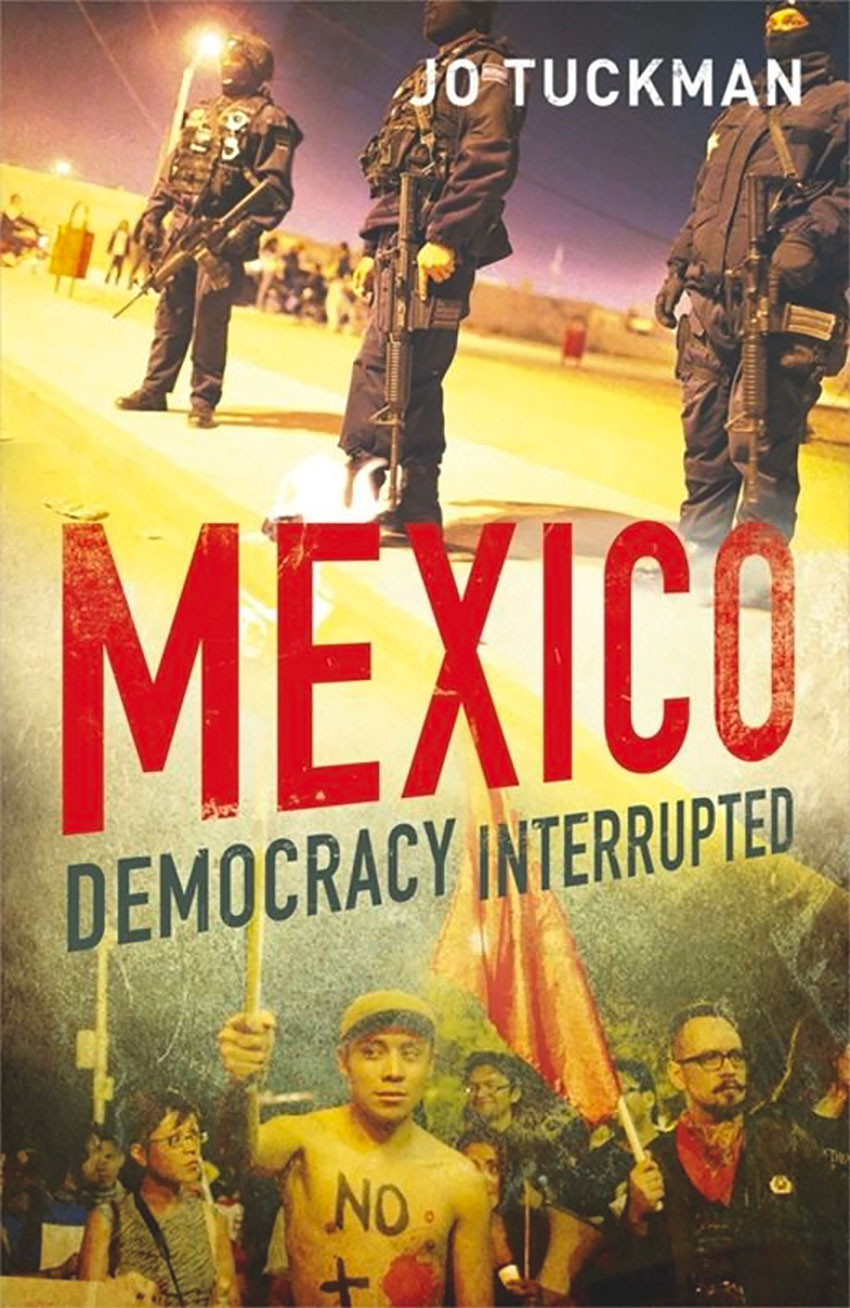
Democracy Interrupted, Jo Tuckman’s book about Mexico’s transition from one-party rule.
Among the many topics she covered in her 30-year career were the Zapatista rebels, Mexico’s drug wars, deadly attacks on journalists, and stories of Central American and African migrants trying to migrate to the U.S. In 2012, she wrote a piece that appeared to confirm longstanding accusations of biased media coverage of the country’s politicians.
Her book, Democracy Interrupted, which chronicled the country’s shift from decades of one-party rule to true democracy, is considered a must-read by many foreign correspondents in Mexico.
Mexican journalist Jenaro Villamil, a journalist who has worked for El Financiero, Proceso, and La Jornada, called her book “one of the best sociological texts about Mexico’s failed democratic transitions.”
On Twitter Thursday, Mexico City-based New York Times journalist Ioan Grillo said of Tuckman, “When I started here in 2001, she was a guiding light, and her body of work for TheGuardian is a document of Mexico in these turbulent decades.”
Though best known for her political coverage of Mexico and Latin America, Tuckman also wrote passionate, in-depth stories about social issues and the daily life of average people here, according to a tribute to Tuckman published online Friday by the Coalition for Women in Journalism.
Some of her most memorable nonpolitical stories were about patients crossing the Atlantic looking for cancer treatments in Tijuana to stories and about LGBTI persons in Central and South America, it said.
“Jo was a wonderful colleague and was a great support to fellow journalists,” coalition founder Kiran Nazish said. “When I arrived in Mexico in 2016, she shared a great deal of knowledge with me. To share one’s expertise of a region one had spent their life understanding is very generous for a reporter. Jo was a sharp and realistic journalist, and it’s a heartbreak to know she had to go so soon.”
Tuckman is survived by her father, sister, and two children.
Guerrero is on the verge of regressing to the “red light” maximum risk level on the federal government’s coronavirus “stoplight” map, Governor Héctor Astudillo said Sunday.
“We’re on the limit between the orange light and the red. … If infections keep increasing, the possibility that we’ll go from orange to red is very high,” he said.
The governor’s remarks came just six days after Guerrero transitioned to an “orange light” on the Health Ministry’s “stoplight” map, used to indicate the risk of coronavirus infection in each of Mexico’s 32 states and to determine which restrictions can be eased.
Coronavirus case numbers spiked as restrictions were lifted in the southern state last week, although most new infections likely stemmed from exposure while “red light” rules remained in force.
Health Minister Carlos de la Peña said that 1,389 new cases were added to Guerrero’s tally last week, a 63% increase compared to the 854 registered the previous week. More than 200 new cases were reported on four separate days last week, something that hadn’t occurred since the beginning of the pandemic.
De la Peña noted that case numbers in the Pacific coast resort cities of Acapulco and Zihuatanejo spiked considerably between July 1 and 10 – the tourism sector was allowed to reopen on July 2 – compared to the first 10 days of June.
In the former city, Guerrero’s coronavirus epicenter, 1,112 new cases were reported in the first 10 days of July, a 94% increase compared to the same period of June when 572 cases were registered.
The spike was even more alarming in Zihuatanejo, a municipality that includes the city of the same name as well as the nearby tourist destination of Ixtapa.
Just eight cases were reported in Zihuatanejo between June 1 and 10 whereas in the same period this month, 97 new infections – an increase in excess of 1,100% – were registered.
The coronavirus wards of the IMSS and the Bernardo Sepúlveda hospitals in the Pacific coast city have been full since Thursday, the newspaper El Universal reported, a situation that caused the Zihuatanejo Red Cross to suspend the transfer of patients suspected to have Covid-19.
“This pandemic exceeded hospital capacity. We apologize for not being able to provide you with [the ambulance transfer] service. … For now the situation is not in our hands,” said local Red Cross chief Gerarda González Montalva.
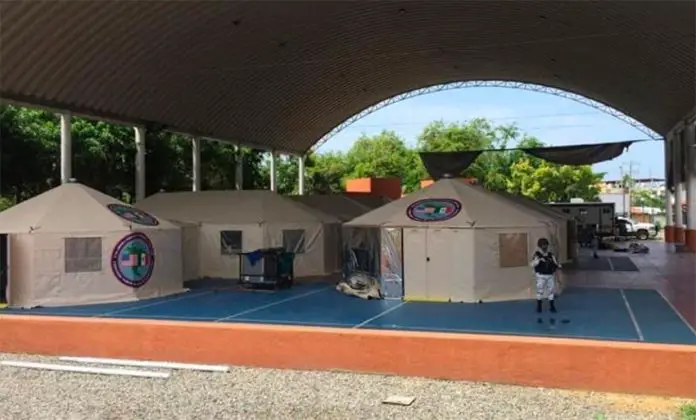
Some of the pressure may be relieved with the opening Saturday of a temporary, 25-bed Covid-19 hospital donated by the United States government through Ambassador Christopher Landau. The hospital arrived in containers June 26 but its opening was delayed five days by a shortage of supplies, reported the news agency Quadratín.
Elsewhere in Guerrero the situation as a whole is markedly better, according to federal data presented at the Health Ministry’s coronavirus press briefing on Sunday night.
Only 36% of general care hospital beds set aside for coronavirus patients are currently occupied while 44% of those with ventilators are in use.
Guerrero has recorded 7,471 confirmed coronavirus cases since the start of the pandemic, the 14th highest tally among Mexico’s 32 states, and 1,069 Covid-19 fatalities, the nation’s ninth highest death toll.
If Guerrero moves back into the “red light” maximum risk category, it will not be the first state to be relegated since the “stoplight” system took effect at the start of June.
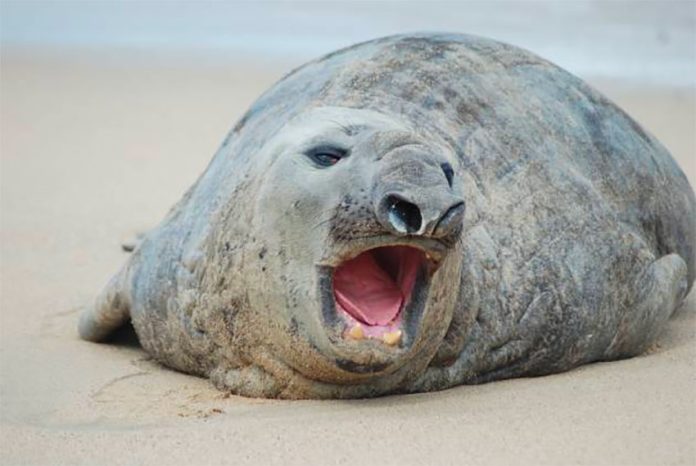
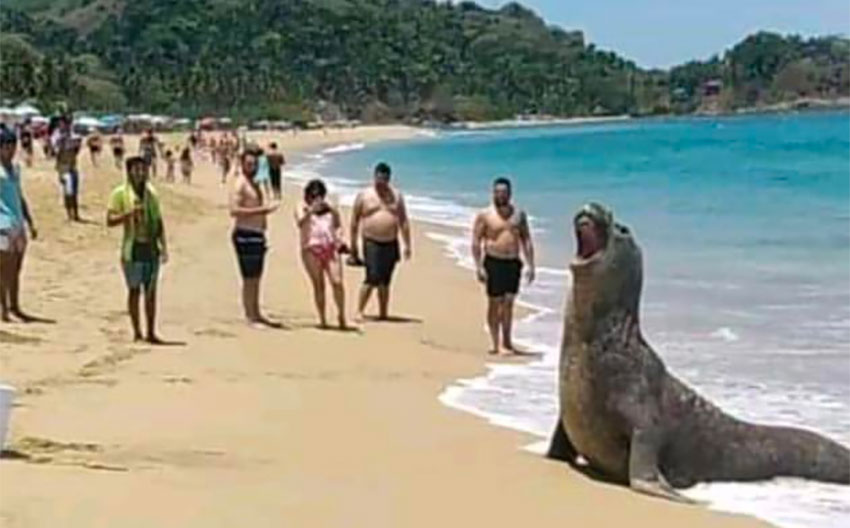
Meet Panchito, an elephant seal that has spent the last week on a Nayarit beach.
An elephant seal peacefully stranded on a beach in Nayarit for the past week has been enchanting visitors and locals and raising questions by environmental officials about its extraordinary appearance so far from home.
It is not yet certain what subspecies of elephant seal it is that suddenly appeared on the shores of San Pancho Beach on July 5. No one has got close enough to the animal — named “Panchito” by delighted locals — to take a blood sample and risk being bitten, nor have experts been willing to risk its health by moving it.
However, whichever subspecies Panchito is, sea elephants are cold water animals, and its closest natural habitat to Nayarit would be the northern part of the Baja peninsula.
Authorities have cordoned off Panchito’s location to protect the animal, and marine experts continue to observe without further interference for now. They estimate it weighs between 200 and 300 kilos.
The seal has been seen entering the ocean multiple times and then returning to the beach, and environmental officials say that, at the moment, Panchito appears to be in good health and merely resting.
“It could be that he returns to the sea and leaves [for good], or his state of health could take a turn for the worse, and that’s when we would intervene,” said Roberto Moncada, a marine biologist at the Bahía de Banderas Technological Institute.
Despite the hands-off approach, Panchito has been a popular attraction since arriving, making a splash on social media.
Elephant seals, are carnivorous mammals and there are two types — northern and southern. Northern elephant seals, scientifically known as Mirounga angustirostris, normally live in an area stretching from the Gulf of Alaska to the northern Baja peninsula.
However, southern elephant seals, or Miroungaleonina, come from much farther away in the southern Atlantic, off the coast of Argentina. Some colonies of southern elephant seals exist as far south as Tasmania and New Zealand.
While elephant seals are known to take long journeys in search of food, if Panchito turns out to be a southern elephant seal, a journey this far from home would be extremely unusual.
“If it is indeed [a southern one], this animal is far, far away from its habitat,” said Moncada. “Its arriving here would be a record.”
The elephant seal Panchito on the beach in San Francisco, Nayarit.
Number of employees registered with the health service since December 2017. el financiero
More than 1.1 million formal sector workers lost their jobs between March and June due to the coronavirus pandemic and associated restrictions.
Mexico shed a total of 1,113,677 formal sector jobs during the four-month period, according to the Mexican Social Security Institute (IMSS).
Considering the growth in employment recorded in January and February, net job losses in the first half of the year totaled 921,583.
IMSS reported on Sunday that 83,311 formal sector workers lost their jobs in June, the first month of the so-called “new normal” in which coronavirus restrictions applied on a state by state rather than national basis.
While it doesn’t make for happy reading, the result is an improvement compared to March, April and May during which formal sector job losses totaled 1,030,366.
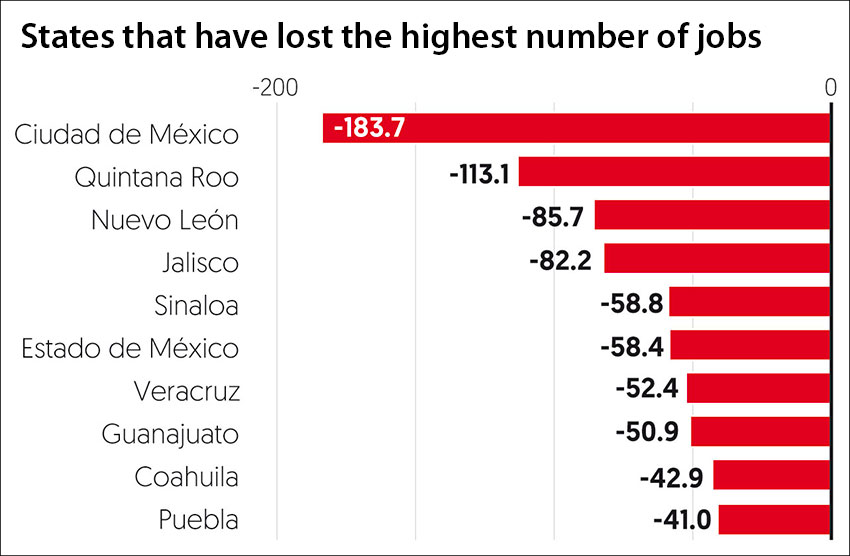
Since Covid-19 was first detected in Mexico at the end of February, almost 184,000 formal sector workers in Mexico City lost their jobs, a figure that accounts for about one-sixth of all job losses in the country over the past four months.
Quintana Roo, whose economy is heavily dependent on tourism, shed just over 113,000 jobs in the same period, while more than 80,000 people lost their jobs in both Nuevo León and Jalisco, home to the large cities of Monterrey and Guadalajara.
As a result of the heavy job losses, the number of people employed in the formal sector is 4.3% lower than a year ago. The annual decline is the largest since IMSS began keeping comparable records in 1997.
Compared to the end of June 2019, the number of people employed in the construction, business service and mining sectors has declined by 11.6%, 8.1% and 6.5%, respectively.
Quintana Roo suffered the worst year-over-year decline in employment numbers as expressed in percentage terms. The number of people working in the formal sector in the Caribbean coast state at the end of June was 22.9% below the level at the end of the same month last year.
With an 11.7% drop in formal sector employment, Baja California Sur, which also depends on tourism for a significant percentage of its GDP, recorded the second largest decline over the past 12 months, while Guerrero saw a 7.2% fall to rank third.
Accumulated job losses by state from March until June, in thousands of positions. el financiero
However, IMSS data shows that more people were employed in some sectors and states at the end of June than a year earlier.
Jobs in the agricultural, social services and electricity sectors increased by 3.5%, 2.3% and 0.1% respectively, while formal sector employment was up by 1.4% at the end of June in Tabasco and 0.1% in each of Michoacán and Baja California.
The total number of formal sector jobs lost over the past four months is more or less in line with a forecast by President López Obrador, who said July 1 that he expected the coronavirus crisis to cost Mexico 1 million positions.
The president claimed that job losses had “bottomed out” and predicted that an employment recovery would commence in July.
However, experts who spoke with the newspaper El Financiero warned that more jobs could be lost and that an employment recovery, when it comes, will be slow.
“It’s still too soon to know if we’ve already bottomed out,” said Carlos López Jones, chief economist at economic forecasting company Tendencias Económicas y Financieras.
“Recovering the level of formal employment we had before the pandemic could take the rest of [López Obrador’s] six-year term,” López Jones said.
Jesuswaldo Martínez, a researcher at the Senate’s Belisario Domínguez Institute, said that while it’s “desirable” to think that job losses have “bottomed out,” the reality remains that the coronavirus pandemic is not under control, and that situation will hinder economic recovery.
“What [the lack of control] generates is a higher degree of uncertainty,” Marínez said, adding that while the virus continues to spread unabated, “it’s likely that economic activity won’t recover and there won’t be investment or jobs.”
Carlos Ramírez of the consultancy firm Integralia also said that he feared it will take years to recover the more than 1 million jobs that have been lost.
Mexico’s economy is forecast to suffer a deep recession in 2020 as a result of the coronavirus pandemic and the measures put in place to slow its spread.
The International Monetary Fund predicted in late June that Mexico’s GDP will shrink 10.5% this year, a bigger contraction than that forecast for every other country in Latin America.
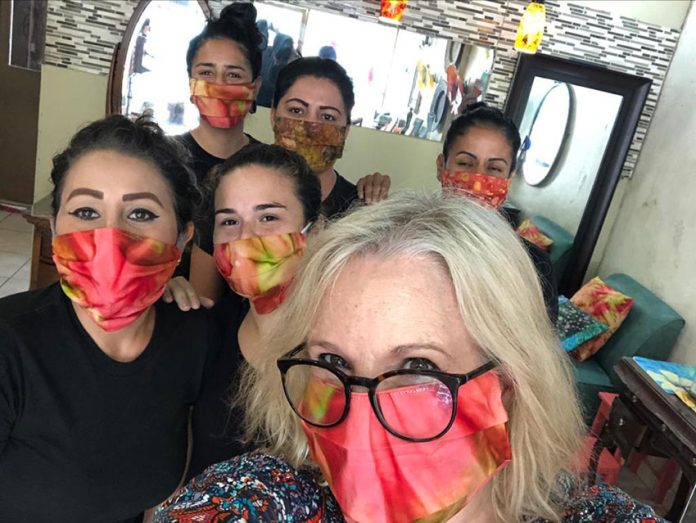
Staff at Tippy Toes in Mazatlán, where a consultant was hired to ensure it complied with 30 pages of new regulations.
In Mexico City, Bridget Rutherford watched with alarm as the coronavirus spread from China to Europe and beyond.
A native Australian, she and her Mexican-born husband opened the first of 14 hair removal salons in 2011; now Wax Revolution has 130 employees and thousands of customers spread throughout Mexico City, Querétaro and Puebla.
“I knew this was going to come to Mexico,” she said. “I started preparing in January.”
In mid-March Mexico City closed down. The couple negotiated discounted rents and continued to pay staff to “sit at home,” although some kept working, setting up pre-paid future appointments. “Everyone was hurting,” said Rutherford.
Official estimates say half a million formal businesses in Mexico could close in the next six months, with unknown numbers of casual workers and small family-run businesses affected. Without any kind of unemployment benefits — neither the federal nor local governments in Mexico provide this — what will these people do?
“There’s no safety net for them,” said Deborah Rodriguez, who started a GoFundMe campaign to pay her staff at Tippy Toes Salon in Mazatlán during what she calls “an unimaginable worst-case scenario.” Regular customers bought gift certificates or donated, as well as “random people from around the world,” she said.
But taking care of employees was just one piece of the unfolding crisis for business owners. Even as the Mexican president downplayed the pandemic and claimed the country was “morally protected,” they tried to prepare for an eventual re-opening. And now, after almost four months of no income, for many that time has come — albeit with a tangled web of new regulations and protocols that vary by city, state and type of business.
Rutherford found Australia’s protocols online, adjusted them for her business and then translated them into “10 Mandamientos de Higiene” (“10 health commandments”), which are part of the new training all her employees received. Rodriguez made changes in her salon, using recommendations from the U.S. Professional Beauty Industry, including reupholstering seating with wipeable vinyl and installing plexiglass barriers. She also had her employees certified in Covid-19 training by salons provider Barbicide.
“Your health, my health and my staff’s health is the most important thing right now, and I want people to feel they can come to Tippy Toes with confidence,” said Rodriguez in Mazatlán. “If it can’t be washed, dipped or sprayed with Barbicide, or be disinfected with extreme heat, then we consider it a single-use item and will throw it away. That’s our guarantee of cleanliness.”
Rodriguez even hired a consultant to make sure she was in compliance with the 30 pages of regulations that arrived by email before the city reopened on July 1. Precautions begin with a sanitation mat at the door filled with disinfectant to clean shoes; temperatures are checked, everyone must wear a face mask; hand sanitizer is mandatory. Rodriguez uses a disinfectant mister to clean rooms between clients; Rutherford, whose staff is 99% registered nurses, said they’d already been using many of these standards before the pandemic hit.
“A lot of Covid precautions are medical standards we’re taught — wiping everything down with medical grade disinfectant, always using clean sheets, thorough hand-washing — so all that, I was already doing,” said Mexico City acupuncturist Megan Maclaggan. Now she wears a mask and a shield, takes patients’ temperatures, and changes not just her mask but her clothes between each patient.
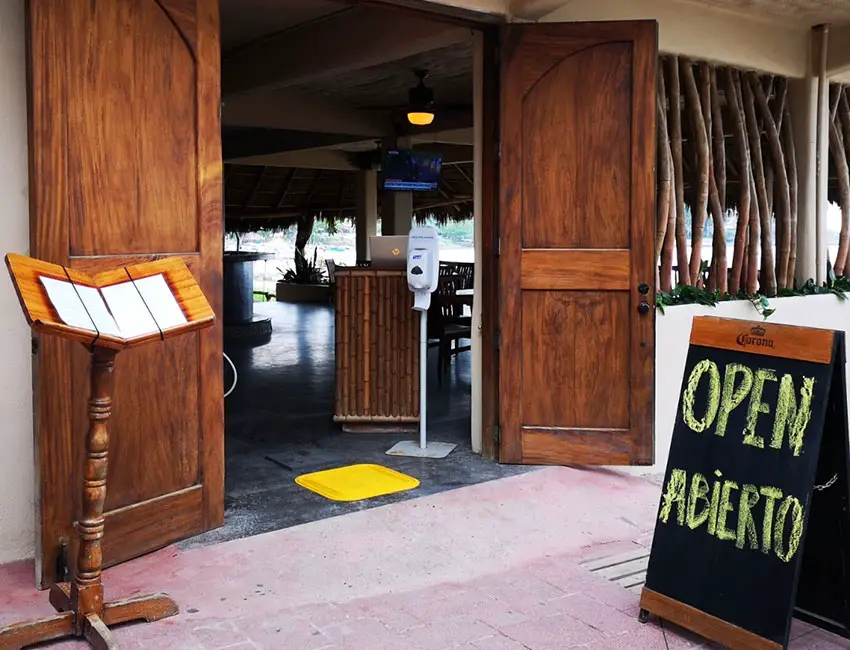
Don Pedro’s Restaurant in Sayulita is operating at 50% capacity, but it’s in the minority.
“The only way we can get back to normal is if there is no spread of the disease,” said Rutherford. All staff received extensive training during the shutdown, not just about the salon’s new protocols, but about what also had to be done in their personal lives. For example, if anyone has contact with a Covid-positive person, they’re given two weeks off with pay.
“I want that Covid disappears from our planet! The only way to do it is to limit contagion,” Rutherford explained. “If everyone does all these things, it is possible to limit the transmission. Then we can all go back to life as we know it. It’s not about the individual, it’s about all of us.”
Despite government reports claiming the situation is improving, Mexico has the fourth highest death toll of any country, with more than 40,000 new cases last week, and nearly 300,000 confirmed cases as of Sunday. Government health officials repeatedly warn that the numbers may actually be higher, and some states are considering shutting down again. Yet Mexico has opened for tourism and is promoting heavily.
In Sayulita, where tour buses arrive daily and disgorge hundreds of passengers for “a day at the beach,” restaurant owner Damian Porter said he’s trying to “hold the line” in terms of health protocols, using the state’s mandates as well as his own guidelines.
Unlike Puerto Vallarta in neighboring Jalisco, beaches in Nayarit are still officially closed – although there’s little or no enforcement and vendors and tourists crowd the sand. Businesses are supposed to allow only certain percentages of capacity, yet again nothing is being enforced and most bars, shops and restaurants are packed.
“It’s hard to enforce — I get it,” said Porter, whose Don Pedro’s Restaurant & Bar is one of Sayulita’s oldest and most popular restaurants. After furloughing 60 employees with pay for three months and starting a take-out/delivery service, reopening is a mixed bag. He’s had to close the restaurant’s beach entrance and take away tables on the sand, even while others continue to operate fully.
“Unfortunately, everyone’s chasing the dollar. Hopefully people understand our position, and that we’re doing the best we can for our staff.”
Don Pedro’s has put in place all the familiar measures: social distancing for tables, masks for all, automated disinfectant dispensers, sanitizer mats. They’re operating at 50% capacity, and tables are disinfected between customers. Staff and customers get their temperatures taken and any employee with signs of sickness is not allowed to work.
Yet all these precautions are for naught if people don’t comply by wearing masks and following social distancing guidelines. Tourists, visiting somewhere for a long weekend, are often unwilling to “spoil” their vacation by following basic protocols. And in Mexico and around the world, younger people especially don’t seem worried about catching — or spreading — the coronavirus.
“My obligation is to take care of my staff,” said Porter. “A lot of them live in multi-generational households. I try to explain to them that this is what happened in Italy and Spain.”
In Mexico City, Rutherford said they’ve had the occasional client who’s a “Covid-denier,” but they’re not allowed in the salon if they don’t wear a mask.
“They prefer to have the service than not,” she said. “And if they post on social media, that’s just fine. It won’t hurt us — quite the contrary! Our clients are happy about our measures, and they feel safe about coming back.”
Despite all these concerns, businesses all over Mexico are opening and people are eager to return to shopping, eating out or getting their hair cut.
“There’s a moment of ‘normal’ for people when they come in to the salon,” said Rodriguez. “They get a pedicure or a haircut, and they feel good. For just a moment they’re not in the Covid world.”
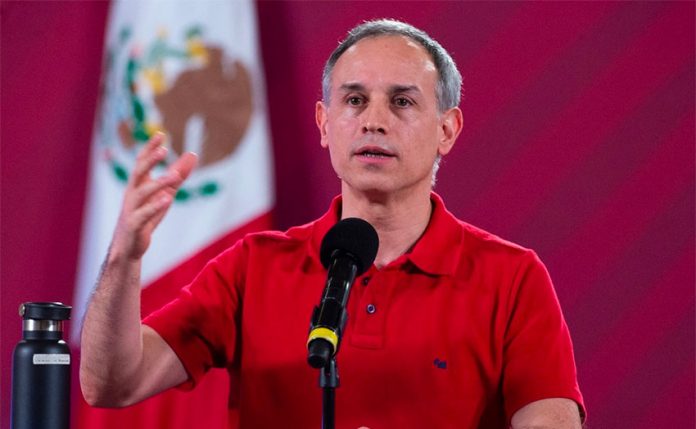
López-Gatell takes a more conciliatory approach on Sunday.
Deputy Health Minister Hugo López-Gatell called for unity in the fight against coronavirus as Mexico’s Covid-19 case tally neared 300,000 on Sunday and the official death toll exceeded 35,000.
López-Gatell adopted a more conciliatory tone on Sunday, saying that his intention was to draw attention to everybody’s need to help stop the spread of the coronavirus.
“The risk is not for me, the president or the government. The risk is … for everyone and the solution depends on … joint responsibility,” he said.
The attempt at damage control could be too little too late as some state governors remain angered by the accusation that they are not providing reliable data to the federal government and that they are to blame for a spike in coronavirus case numbers.
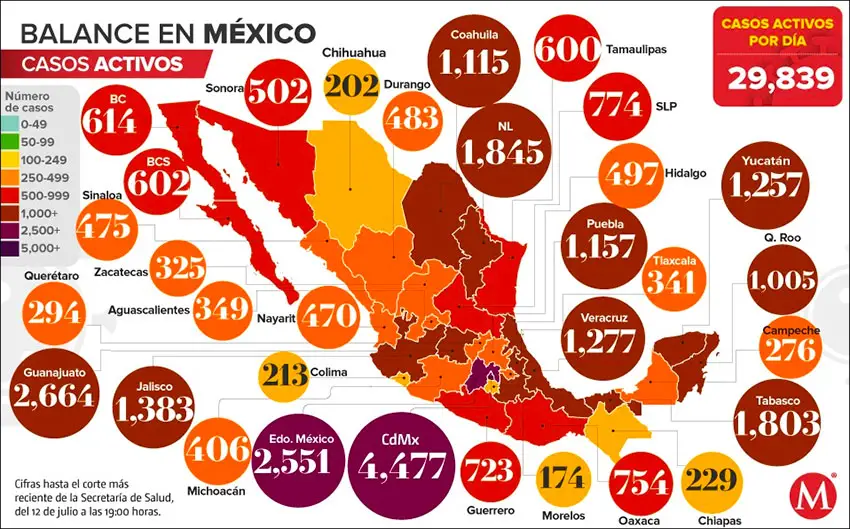
Active case numbers as of Sunday. milenio
Members of the Association of National Action Party Governors, who collectively govern nine states, said Saturday that they would ask for an urgent meeting with federal Health Minister Jorge Alcocer to seek clarification about López-Gatell’s remarks.
Officials with the Institutional Revolutionary Party and Tabasco Governor Adán Augusto López Hernández, who governs for Morena, Mexico’s ruling party, also took umbrage at the deputy minister’s comments on Friday.
San Luis Potosí Health Minister Mónica Liliana Rangel said that authorities in that state have always provided the coronavirus data sought by the federal Health Ministry in a timely manner, while Coahuila Interior Minister José María Fraustro accused López-Gatell of not understanding how the pandemic is playing out on the ground.
“The reality of which Hugo López-Gatell speaks is theoretical because he doesn’t even know the impact of the coronavirus pandemic,” Fraustro said.
“If he wants to see what is really happening, he should come and meet with the governors and [state] health ministers. … It’s urgent for him to know the reality, that it’s not the same as what is depicted to him through infection and death statistics.”
For his part, López Hernández said that his administration is providing data to the federal government about the coronavirus outbreak in Tabasco as many as three times a day.
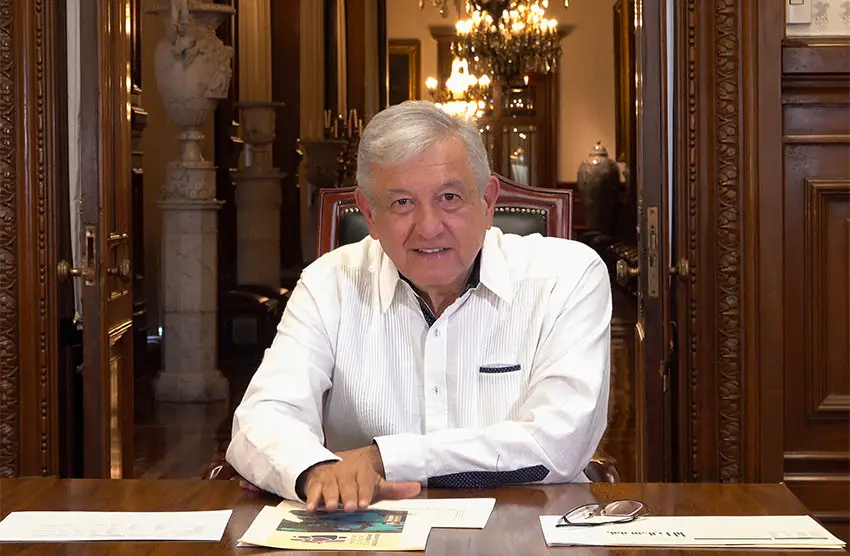
López Obrador says pandemic is on the wane.
He charged that the federal Health Ministry has presented inconsistent data – not the other way around – explaining that he had spoken to López-Gatell because statistics on the availability of hospital beds in Tabasco made public at Friday night’s coronavirus press conference didn’t match state records.
López Hernández also said that his administration has followed all of the advice of the federal government with regard to reopening even though the latter has made it clear that the states can tweak as they see fit the recommended restrictions at each risk level according to the four-tier “stoplight” system.
López-Gatell reiterated on Sunday that state governments have the authority to take “informed decisions” based on the “stoplight” map, which has not yet been updated for this week as a result of the alleged data inconsistencies.
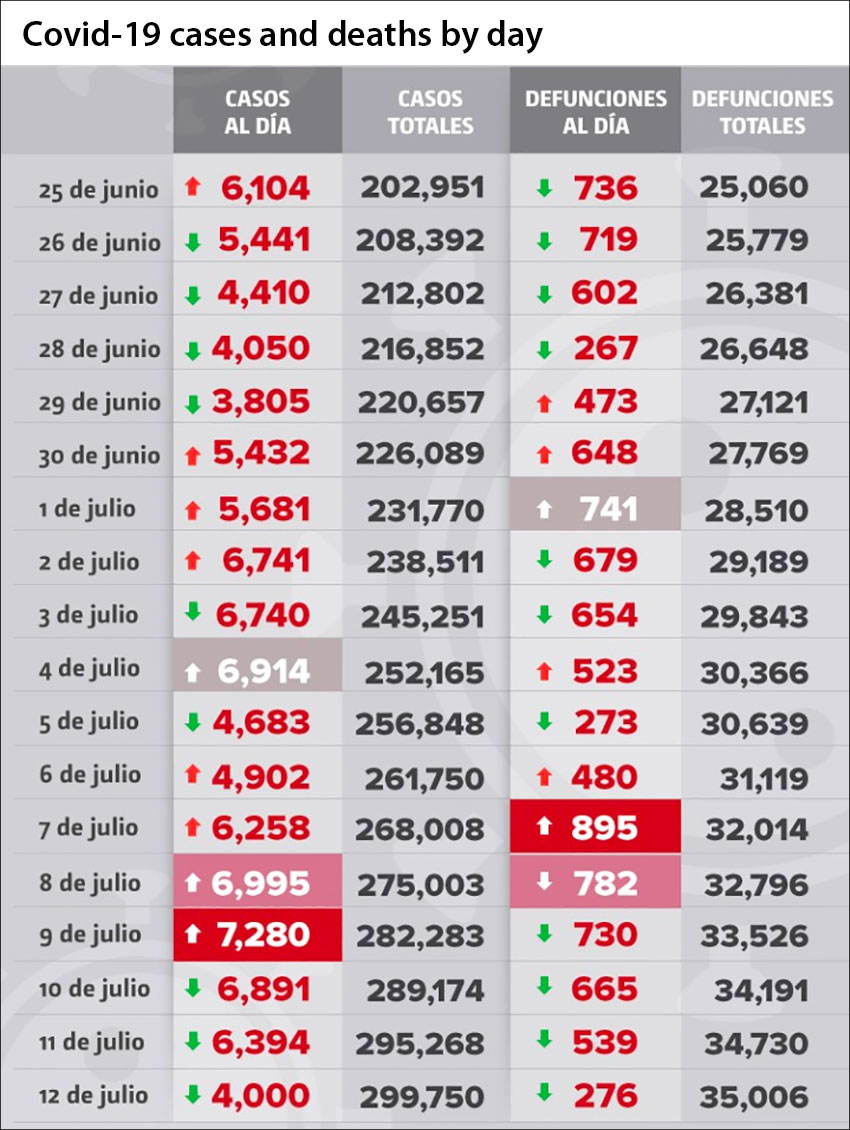
Amid the disagreement between the federal government and the states, Mexico’s accumulated Covid-19 case tally increased to 299,750 on Sunday with 4,482 additional cases registered. About 10% of the total – 29,839 – are currently active, according to federal data.
An additional 276 Covid-19 fatalities were added to the official death toll, which now stands at 35,006. Mexico now ranks fourth for Covid-19 fatalities, having passed Italy’s death toll on Sunday, according to data compiled by Johns Hopkins University.
Only the United States, Brazil and the United Kingdom have recorded more Covid-19 deaths than Mexico.
The daily tally of coronavirus cases and deaths. Deaths are numbers reported and not necessarily those that occurred each day. milenio
But in a video message posted online on Sunday, President López Obrador pointed out that Mexico’s per-capita fatality rate is lower than other countries with high death tolls such as the U.S., the U.K and Spain.
“This means that [the pandemic in Mexico] is not as the conservative newspapers show,” he said.
The president charged that the “conservative press” is being alarmist by comparing the situation in Mexico to that in other countries.
Citing a Health Ministry report, López Obrador asserted that Mexico’s pandemic is in fact on the wane because case numbers are only increasing in nine of 32 states. He defended his government’s management of the coronavirus crisis amid the growing criticism.
“I want to provide tranquility, security that we’re moving forward, improving; we’re facing up to this pandemic well and professionally,” López Obrador said.
“There is space [in the hospitals], there are beds, there is equipment, there is specialized personnel to look after the sick,” he said.
López Obrador defended the work of López-Gatell, Mexico’s coronavirus point man, asserting that he’s the victim of a smear campaign.
“They attack him constantly, they’re desperate because what they expected didn’t happen,” he said, without explaining what was expected.
The president, who has faced criticism himself for downplaying the seriousness of the pandemic, praised citizens for acting responsibly during the pandemic and thus helping to suppress the virus.
“The people of Mexico have acted in an exemplary way. If we’ve been able to confront this pandemic, it has been due to the responsible and sensible attitude of our people,” he said.
The president called on citizens only to leave their homes if it is really necessary and urged them to continue to observe social distancing recommendations, good hygiene practices and to avoid crowds.
Study says more cash needed to alleviate extreme poverty.
At least 16 million more Mexicans are estimated to have fallen into extreme poverty between February and May of this year, a new study shows.
The research paper produced by Curtis Huffman and Héctor Nájera of Mexico’s National Autonomous University (UNAM) looked at the effects of the coronavirus on the economy and is the “worst-case scenario” identified so far for Mexico’s poor.
The study estimates that the number of Mexicans in extreme poverty has risen from 22 million to 38 million, and builds on estimates by the social development agency Coneval.
On May 11, Coneval published a study in which it presented a first approximation of the impact of Covid-19, which showed that up to 10.7 million Mexicans could fall into poverty by the end of 2020 due to the health crisis and its economic consequences.
The UNAM study concludes that government financial assistance is necessary, highlighting “the urgency of making additional income transfers to this population in the coming weeks.”
The researchers found that providing at least 450 pesos per person per month, about US $20, to those in extreme poverty would prevent them from going hungry. Extreme poverty as defined by Coneval is the inability of those living in urban areas to purchase a minimum of 1,632 pesos (US $73) per month of basic food items.
The cost of implementing such a program is estimated to be 19 billion pesos per month, around US $847 million, which represents 0.9% of Mexico’s gross domestic product, the study said.
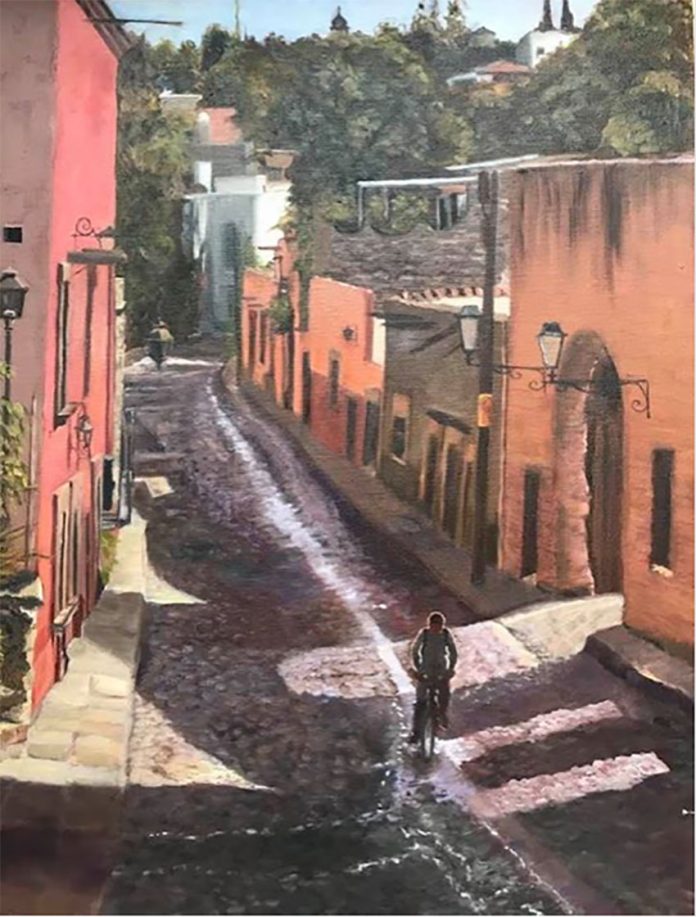
Calle Aldama & Cardo by Karen Lee Dunn of San Miguel de Allende.
Mexico has always attracted adventurous foreigners looking for something different, but the expat enclave phenomenon we know now in San Miguel de Allende began in the 20th century.
San Miguel is not the first, nor the last, but it is the best known, especially north of the border. The first was Taxco, just three hours from Mexico City.
In the 1920s, it attracted foreigners and artists, some famous, for its scenery and “authentic” Mexican atmosphere. But by the late 1930s, there were “too many” foreigners, leading some to look for an alternative.
Around that same time, a Peruvian artist discovered the dying town of San Miguel de Allende. The loss of the commercial silver routes and the Mexican Revolution had decimated the local economy. However, Felipe Cossío de Pomar “fell in love with the light” there and envisioned the town as the “new Bauhaus” to give artists a sanctuary to work in.
He convinced the Mexican government to let him use an old convent (today the main cultural center) to establish an art school. Cossío had many contacts with prominent artists and intellectuals in Mexico and abroad and succeeded in promoting San Miguel as the new “authentic Mexican” experience.
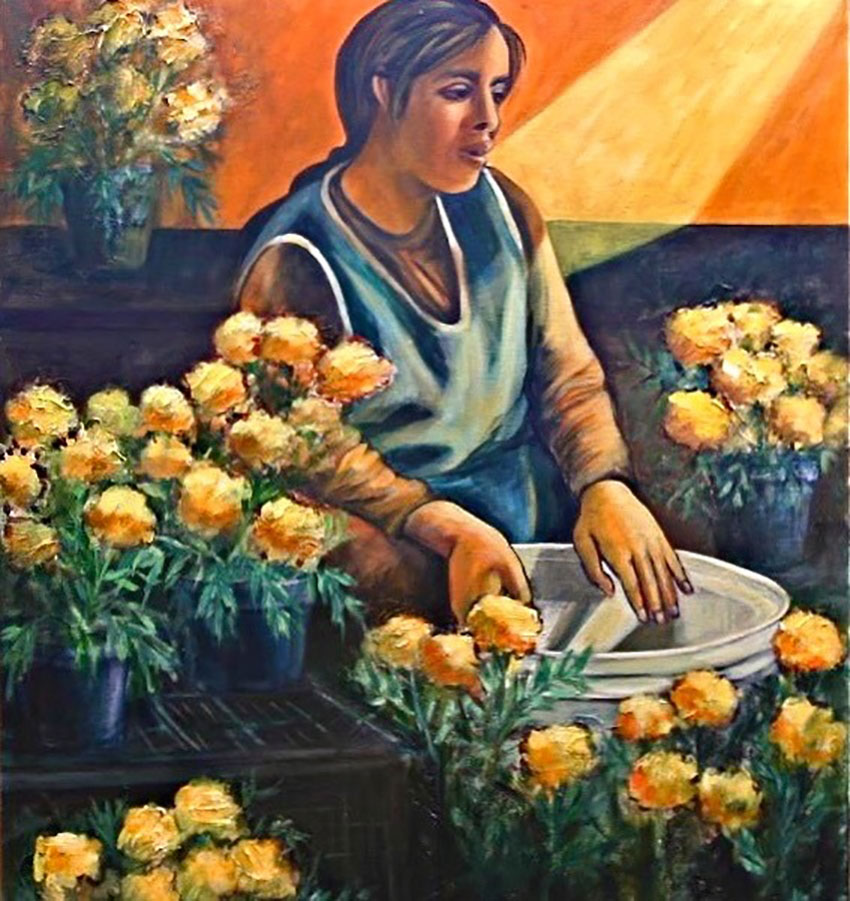
La Vendedora de Flor by San Miguel’s Susan Santiago.
Cossío got the school started, but it was the work of American Stirling Dickinson that gave the school and San Miguel its standing among North Americans. He continued to promote the town as an “undiscovered gem,” but the real success came when he got the school accredited with the U.S. government to receive World War II G.I. Bill money.
However, the school’s success also brought some major headaches. The main issue was an already existing conflict between the bohemian artists of the school and the rather conservative Catholic locals. This was exacerbated by hundreds of American GIs.
In addition, students expected more from their tuition money, and even staged a strike that divided the entire population. To satisfy the students, the school hired David Alfaro Siqueiros to paint a mural, but his radical politics proved completely unacceptable to the townspeople. His unfinished mural can still be seen today in the Centro Cultural Ignacio Ramírez El Nigromante.
The situation caused an international scandal, so the Mexican government stepped in. It took over, changing the school’s name to the current Instituto Allende. It was moved to the De la Cana Hacienda on the outskirts of town, a larger space, but G.I. Bill accreditation was lost.
The school is not the main reason why San Miguel attracts so many artists and retirees today. In fact, it is peripheral to life in San Miguel at best.
Although the school’s turbulent heyday lasted only a few years, the GIs who studied there remembered San Miguel fondly. When they began reaching retirement age, more than a few decided to return. They bought the old, dilapidated colonial structures and fixed them up to create the historic center as it exists today.
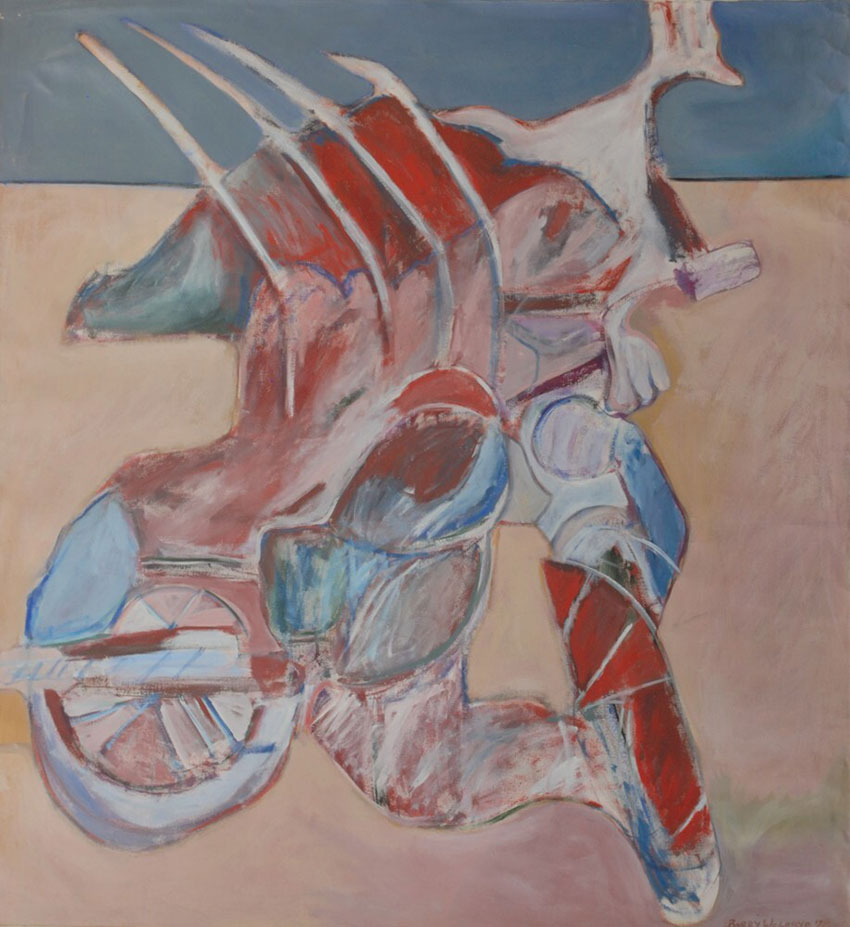
Self Portrait Motorcycle by Barry Wolfryd of Mexico City, who was a student at the San Miguel school in the 1970s. He did this self-portrait while a student.
As their numbers grew, businesses sprang up and infrastructure was improved, starting a snowball effect that continues to this day. San Miguel is now a tourist destination and a World Heritage Site. Condé Nast Traveler named it the best city in the world to live. The town now attracts tourists, as well as moneyed Mexicans who buy weekend homes here.
Despite the near irrelevance of the Instituto Allende and the influx of non-artist retirees, art remains an important element of life in San Miguel. The returning GIs never lost their interest, whether they had pursued a career in art or not, they certainly were involved with it (again).
To this day the town attracts Mexican and foreign artists of retirement age and younger. The concentration of residents with the economic means to buy art means that San Miguel is Mexico’s second most important domestic art market after Mexico City.
But the picture isn’t entirely rosy. Aside from the urban sprawl and traffic that just seems to be getting worse, the center has been derided as a “Disneyland” version of Mexico — too perfect. Most locals cannot afford to live there and have moved to the less scenic periphery. These negatives have prompted another search for the “authentic Mexican experience” in places such as Coatepec, Veracruz, and San Cristóbal, Chiapas, whose residents worry that too many “gringos” will lead their town to San Miguel’s fate.
There is also the idea that artists in San Miguel are “wannabes,” retirees that never picked up a brush before and envision themselves as great artists after a few classes. Certainly, there are some that fit the description, but most selling artists in San Miguel have been trained outside the city and in the case of foreigners, in their home countries. Some have had full-time careers as artists, simply changing location. Many who did not dedicate themselves to artistic production full-time had worked in related careers such as advertising and design.
The art school remains important historically. It is a classic “if you build it, they will come” story, but it also serves to show the allure this country has for those with creative inclinations.
Leigh Thelmadatter arrived in Mexico 17 years ago and fell in love with the land and the culture. She publishes a blog called Creative Hands of Mexicoand her first book, Mexican Cartonería: Paper, Paste and Fiesta, was published last year. Her culture blog appears weekly on Mexico News Daily.