AMLO's assistance has done little to stop job losses. The impact on affected households could be devastating.
Bookseller Martha Nava has so far managed to continue to pay the wages of her four staff as the coronavirus crisis wreaks havoc on the Mexican economy, thanks in part to a government loan — but millions of other workers across the country have not been so lucky.
Nava, who lives in Mexico City, sells books to schools and at literary fairs, all of which are shut because of Covid-19. With no pension and no other income, she was struggling to keep her business alive when the Mexican government offered her a 25,000-peso (US $1,150) loan.
“I said yes, obviously … it’s not enough, but it’s an incentive at least,” she said. “It won’t allow me to relax in a hammock but it’ll save me for a while.”
Like Nava, Yael Levy, who runs English schools in the central state of Guanajuato, said a government loan directed at microbusinesses was really too small for her needs. “Even 25,000 pesos is a help right now,” she said. “But if this drags on, we won’t be able to sustain the company.”
While other nations have passed big stimulus packages or offered tax breaks to help companies stay afloat and preserve jobs, President López Obrador’s main response has been to offer loans to microbusiness owners such as Nava and Levy. Larger companies have been ignored.
Government loans too small for businesses in formal economy, says Canacintra’s Castellanos.
The government is offering 4 million credits of varying types, to both formally employed Mexicans who pay taxes, and those in the informal economy. But none are bigger than 25,000 pesos and the government acknowledges that many small business owners have not applied because the loans are too small. In all, about 1.5 million credits have so far been granted.
The government assistance has done little to stem the tide of job losses: 12 million people dropped out of the labour force in April and now have no income, according to state statistics institute Inegi, while those still working on average suffered severe falls in wages.
Formal sector jobs fell by nearly 350,000 in May, according to data published on Friday, bringing to some 900,000 the number lost in the past two months.
The impact on affected households is likely to be devastating; Mexico has very little in the way of a welfare safety net. About 40% of people are poor, roughly half the population works in the informal sector with no benefits such as health insurance, and there is no unemployment pay even for those who lose formal jobs.
López Obrador maintains he will create 2 million jobs this year, which he says will replace jobs being lost, but the business community is sceptical.
Enoch Castellanos, head of Canacintra, which represents mostly small and midsized companies, said the loans could make a difference for informal workers “because they don’t pay taxes or social security contributions” but for companies in the formal economy “it’s not enough even to pay two workers for a month.” He said 94% of his members had not applied for them and he would have preferred to see 100,000 loans of 250,000 pesos instead.
Rogelio Gómez: government has taken a scattergun approach.
As a result, Latin America’s second-biggest economy risks being among the worst-affected countries in the region in terms of the impact the crisis has on poverty levels, according to the UN; Mexico could see 17 million people living in extreme poverty, up from 11 million last year, and 49 million overall classed as poor, up from 42 million.
Coneval, the state agency measuring poverty, warned last month that 11 million people could be pushed into extreme poverty — defined as being unable to buy a monthly basket of food worth 1,632 pesos in urban areas. The Center for Educational and Social Studies, a think tank, said 11.5 million Mexicans were at risk of dropping out of the middle class.
Mexico has taken a “scattergun approach instead of a precision shot,” said Rogelio Gómez, co-ordinator of Citizens Action against Poverty, an advocacy group. “‘It’s better than nothing’ isn’t a public policy,” he said. “The state doesn’t do charity.”
He wants the government to launch a handout of 3,746 pesos a month for three months to those who lose their jobs — a measure that he and supporters say could help 35 million households.
Santiago Levy, a former deputy finance minister and social security institute (IMSS) chief, who was the main architect of a successful cash transfer scheme that López Obrador has replaced with his own social programs, said wage subsidies and credit guarantees would have “allow[ed] firms to get through the next months in reasonable shape without going bankrupt.”
Mexico has a $61-billion flexible credit line from the IMF, for which it pays $163 million a year even if it does not tap it. Some analysts said this could be used to pay for a larger economic stimulus package. “They should use the IMF loan to save jobs,” said Levy. “All they have to do is send an email.”
Santiago Levy: IMF funds are readily available for a stimulus package. ‘All they have to do is send an email.’
But López Obrador, who prides himself on never having had a credit card, prefers people to take on debt individually, rather than — as he sees it — mortgaging state finances for future generations to pay.
Mexico’s economy is widely forecast to shrink by about 8% this year, pushing up the country’s budget deficit. If it contracts by a worst-case scenario of 12%, Mexico’s public sector borrowing requirement would jump 15 points, from 44.7% of GDP last year, according to analysts at Spanish bank BBVA.
López Obrador claims that taking on debt is “the easy option” typical of the neoliberal policies of the past that he says were a failure. “We want to keep finances healthy, not to take on debt,” he said last month.
Levy said: “The human cost will be very, very large, with the permanent scars from this crisis much deeper than they could have been.”
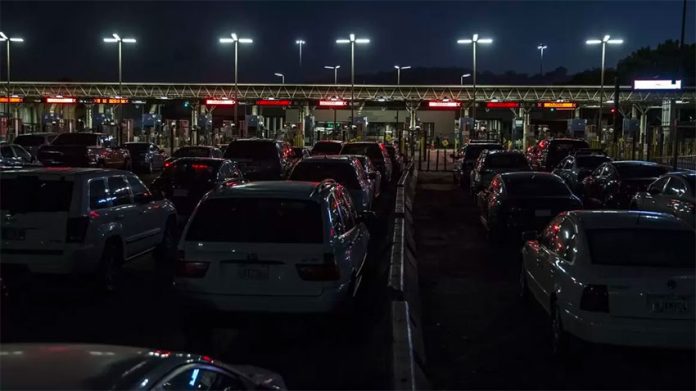
Only essential travel is allowed to cross Mexico-US border.
Mexico and the United States agreed to extend the closure of their land border to nonessential travel until July 21 after reviewing the development of the spread of the coronavirus in both countries.
The Mexican Ministry of Foreign Affairs announced on Twitter that the restrictions on land traffic will remain in place into July as Mexico and the United States coordinate health measures in the border region.
The borders were originally closed to nonessential travel, which includes trips for tourism or recreation, on March 21, with travel restrictions extended in both April and May.
Cross-border travel related to essential work, education, trade, military operations or medical reasons may continue.
U.S. citizens and permanent residents will continue to be allowed to enter the United States from Mexico, and the land border closing does not affect air travel between the United States and Mexico, as several tourist destinations across the country begin to reopen for visitors.
In Mexico, several ports of entry have set up health checkpoints where travelers’ temperatures are taken, and they are questioned about respiratory and other symptoms.
“Based on the success of the existing restrictions and the emergence of additional global Covid-19 hotspots, the department will continue to limit nonessential travel at our land ports of entry with Canada and Mexico,” said U.S. acting Department of Homeland Security (DHS) Secretary Chad Wolf.
The closing of the border has come at a significant cost to communities on either side who rely on the daily flow of traffic for their economies to remain solvent.
Last week the San Ysidro (California) Chamber of Commerce sent a letter to the DHS pleading for the federal agency to consider reopening the border.
“Our community alone is losing close to US $1.8 million every day since travel restrictions were imposed,” wrote the city’s chamber of commerce director, Jason Wells.
In San Ysidro, which lies across the border from Tijuana, 95% of the city’s commerce relies on customers from Mexico, Wells said. “Restricting travelers between our countries, who invest in our binational trade through the merchandise and services they acquire, is leaving our border communities economically paralyzed.”
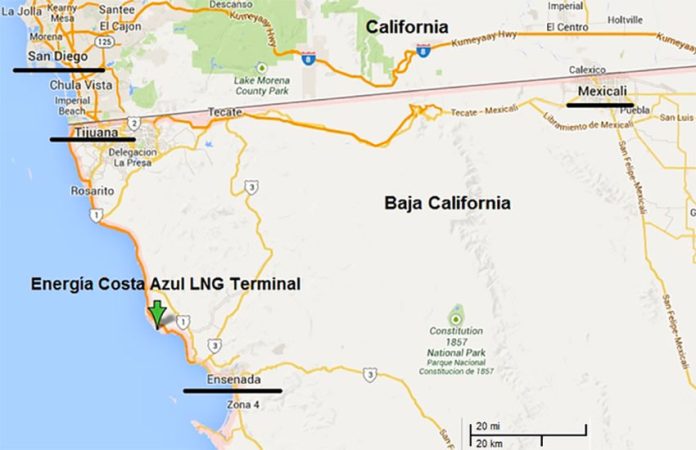
Energía Costa Azul is an LNG terminal in Baja California that has been held up by delays in Mexico.
United States companies that operate in Mexico’s fuel market are not being treated fairly, says the American Petroleum Institute (API).
In a June 11 letter sent to senior United States officials, API president and CEO Michael Sommers asked the U.S. government to urge Mexico to cease discriminatory practices against U.S. oil companies.
Sommers said the companies are subject to new regulatory actions that undermine the framework that should allow unimpeded energy trade and investment between the United States, Mexico and Canada, countries which are party to the new North American trade pact that will take effect on July 1.
He said that U.S. companies have faced difficulties obtaining approval for new or rebranded gas stations and that some of their existing stations have been shut down for minor or nonexistent infractions. The API chief also said that companies have been subject to new storage capacity requirements and have faced delays or rejections for gasoline and diesel import permits.
In addition, the Energy Regulatory Commission has removed regulations applicable to the state oil company, Pemex, which allows it “to unfairly and opaquely undercut the pricing of foreign competitors, giving the company a significant advantage in downstream pricing,” Sommers wrote.
He charged that Mexico’s actions likely violate its commitments as set out in the investment chapters of the North American Free Trade Agreement, or NAFTA, and its imminent successor, the United States-Mexico-Canada Agreement, or USMCA.
Sommers also said that the actions likely breach Mexico’s commitment to non-discriminatory treatment as set out in the state-owned enterprises and designated monopolies chapter of the USCMA.
In the letter to Secretary of State Mike Pompeo, Commerce Secretary Wilbur Ross, Energy Secretary Dan Brouillette and U.S. Trade Representative Robert Lighthizer, the API president urged the United States “to use diplomatic channels to engage with the president of Mexico” in order to solve the issues.
Financial Information company S&P Global noted that “the complaints by API members are in line with those by companies in other segments of the energy sector, like electricity generators and developers of pipeline infrastructure, which have voiced similar complaints regarding permits and regulations.”
Mexico’s government has also rankled renewable energy companies by suspending national grid trials they have to complete in order to sell power to the Federal Electricity Commission and publishing a new policy that could prevent the sector’s expansion here.
Renewable energy firms and environmental groups are fighting the decisions in court.
The Cinemex drive-in at Plaza Patria in Guadalajara.
Acapulco, Guerrero, will soon be home to the biggest drive-in movie theater in Mexico.
During a press conference Monday, hotel chain Mundo Imperial announced the opening of Autocinema Acapulco on July 1 when the popular resort destination is expected to welcome tourists as coronavirus restrictions are eased.
The outdoor theater will be the largest in Mexico, with a capacity of up to 300 cars and a 24-by-14-meter mega-screen. Theater-goers will be able to see films, festivals and major events “all without leaving your car,” Mundo Imperial general director Seyed Rezvani said. The new theater will add 50 direct and 30 indirect jobs to the city’s economy, he added.
In the era of social distancing due to the coronavirus, drive-in theaters are making a comeback internationally as well as in Mexico.
The theaters first began operating in the United States in 1933 in Camden, New Jersey, and had spread to Mexico by the 1950s. By the 1990s, the drive-in format had fallen out of vogue and most theaters closed, but due to coronavirus concerns drive-ins are seeing a resurgence in popularity, this time due more to health concerns than nostalgia.
Drive-ins are popping up in places like Cannes, France, where a screen was installed in the city’s Palm Beach parking lot last month after the Cannes Film Festival was canceled for the first time in 72 years. Bordeaux and Marseilles have also opened drive-in theaters.
And in Germany, some 30 new theaters have opened since the pandemic began; some are also used for concerts and church services.
In Mexico, the theater chain Cinemex opened a drive-in theater this month in the parking lot of Guadalajara’s Plaza Patria, complete with snack counters and a giant inflatable screen.
The Coyote drive-in theater, which first opened in 2011, reopened in Mexico City on June 3 with new health protocols such as face masks and the frequent use of antibacterial gel by all employees. Capacity is limited to 30%, and all tickets must be purchased online. Snacks must be purchased directly from your car.
The Guanajuato International Film Festival, normally held in July, has postponed the festival until September, and will also be adding drive-in theater showings as part of its programming.
According to the federal government, indoor movie theaters in Mexico should not open until the state they are located in has reached a “yellow” level of medium risk on the government’s “stoplight” coronavirus map.
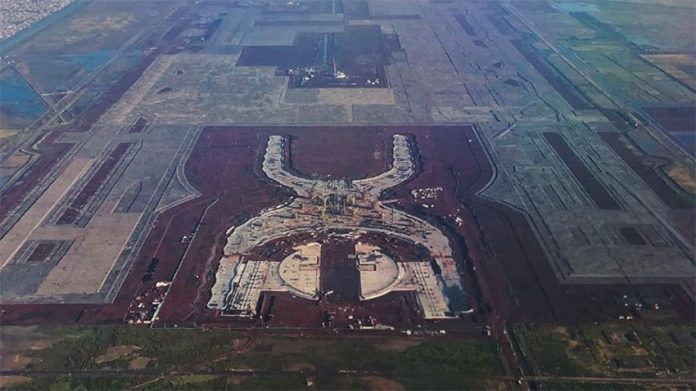
Cancellation of the Mexico City airport was one of the factors that knocked Mexico off the list of favored economies for investors.
For only the second time in more than 20 years, Mexico is not among the 25 most attractive countries in the world for foreign investors, according to an index developed by the global consulting firm Kearney.
Mexico ranked 25th on the 2019 Foreign Direct Investment Confidence Index but fell off this year’s list.
Kearney said that the cancellation of the previous government’s Mexico City airport project and the prioritization of projects that will have limited social and economic impact, such as the new refinery on the Tabasco coast, the Santa Lucía airport and the Maya Train, were factors that contributed to Mexico’s disappearance from the 2020 index.
It said that changes to rules in the energy sector and the government’s cancelation of private projects that had been approved, such as Constellation Brands’ US $1.4-billion brewery in Mexicali, Baja California, were also factors.
Amid the coronavirus crisis, investors are showing a preference for “large, more stable markets with more predictable political and regulatory structures,” said Ricardo Haneine, a director at Kearney México. “That increases the interest in developed economies.”
For the eighth year in a row, the United States ranked first on the index followed by Canada, Germany, Japan and France. The only Latin American country among the 25 is Brazil, which ranked 22nd.
Based on a survey of global business executives who rank markets that are likely to attract the most investment in the next three years, the Foreign Direct Investment Confidence Index has been published by Kearney on an annual basis since 1998.
The only other year that Mexico didn’t appear on the index was 2011.
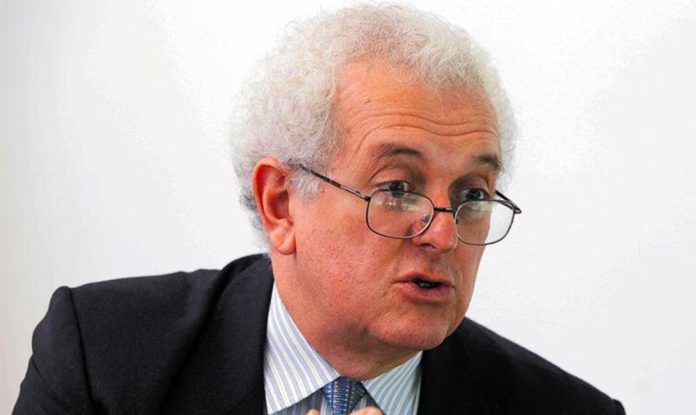
ICRICT chairman Ocampo: economic crisis has been poorly managed in Mexico.
An international think tank has added its voice to the criticism of Mexico’s response to the coronavirus-induced economic crisis.
According to the Independent Commission for the Reform of International Corporate Taxation (ICRICT), now is not the time for economic austerity, a policy that President López Obrador has refused to put on the back burner despite the economy taking a sizable hit due to the pandemic and the restrictions put in place to limit the spread of the coronavirus.
According to the International Monetary Fund, the Mexican government’s fiscal support for the economy amounts to just 0.7% of GDP whereas the United States and Canada have provided stimulus to the tune of 12% and 9.8% of GDP, respectively.
José Antonio Ocampo, chairman of the ICRICT, believes that López Obrador’s refusal to take on more public debt to support the economy is the wrong approach.
“Every country in the world will have very high levels of debt after the crisis. So there is no argument for austerity under these circumstances,” he said.
Ocampo, also an economics professor at Columbia University, charged that Mexico is “one of the worst cases in Latin America” in terms of the government’s management of the economic crisis.
ICRICT commissioner Jayati Ghosh also said that now is not the time for austerity, asserting that it will have a detrimental impact on the economic recovery and job creation both now and in the future.
“It’s impossible to think of a more disastrous macroeconomic policy at this time,” she said.
Ghosh said that some Latin American countries have followed policies of economic austerity out of fear of increasing public debt but added that low tax collection levels have also limited their response to the coronavirus-induced crisis.
Mexico’s Finance Ministry has acknowledged that tax collection is a problem, and amid the coronavirus crisis the government has made recouping unpaid tax, especially that owed by large companies, a central objective.
It has already had some success in recovering unpaid tax from companies such as América Móvil, a telecommunications corporation owned by billionaire businessman Carlos Slim, Walmart, IBM and Femsa, the world’s largest Coca-Cola bottler.
However, López Obrador appears unlikely to support any plan to use greater tax revenue to provide meaningful support for the business sector even as the country is forecast to suffer a deep recession in 2020.
The federal government has only offered loans of 25,000 pesos (US $1,125) to small businesses, placing more emphasis on supporting the nation’s most vulnerable through welfare spending and social programs while forging ahead with its large infrastructure projects, which López Obrador says will help to create 2 million jobs by the end of the year.
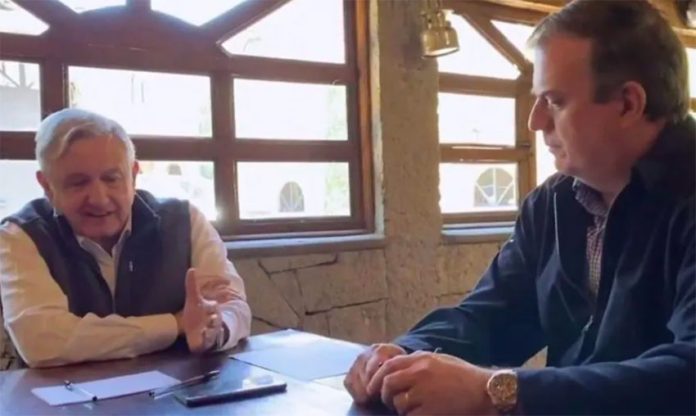
The minister's watch appears briefly in the video filmed Monday.
A video of Foreign Affairs Minister Marcelo Ebrard wearing a Rolex watch valued at over US$ 14,000 is making the rounds on social media, garnering more than 1.3 million views on Twitter.
In the video clip showing Ebrard in discussion with President López Obrador yesterday, Ebrard can be seen eyeing the watch when it appears he realized it was visible to the camera.
He adjusted the sleeve of his jacket to hide it.
The watch is a Rolex Submariner Date with yellow gold accents and is valued at US $14,450. Ebrard’s director of communication, Robert Velasco, said last year it was a wedding gift from his third wife, Honduran diplomat Rosalinda Bueso.
The iconic watch was created by Rolex in 1954 for divers, and is the first watch that was fully waterproof to depths of up to 100 meters.
The president and Ebrard in the viral Rolex video.
While it is unknown if Ebrard is a diving enthusiast, the watch has evolved to become a status symbol among millionaire A-list celebrities, such as Mark Wahlberg, David Beckham, Orlando Bloom, Sylvester Stallone, Ellen Degeneres and Brad Pitt. The Submariner was also famously worn by James Bond in 007 films, including a tricked-out version sported by Roger Moore in Live and Let Die and The Man with the Golden Gun. It concealed a circular saw and a bullet-deflecting magnet.
Ebrard was meeting with López Obrador in Veracruz to discuss the president’s conversation with Justin Trudeau, Prime Minister of Canada, about the death of two Mexican farmworkers in that country.
López Obrador has condemned luxurious living by public servants and campaigned on a platform of austerity.
On Sunday he gave a sermon of guidelines by which to live in the new reality of the coronavirus pandemic. Lesson No. 4 was not to succumb to materialism.
“Let’s move away from consumerism. Happiness doesn’t reside in the accumulation of material goods nor is it obtained from luxuries, extravagances or frivolities. We can only be happy by being good.”
Thousands of businesses across Mexico reopened on Monday as the country takes further steps to get back to normal amid the ongoing coronavirus pandemic.
Most of the businesses that reopened are located in the 16 states that were allocated an “orange light” on the federal government’s updated stoplight map that was published last Friday and remains in effect until the end of this week.
The “orange light” designation, which denotes a high risk of coronavirus infection, paved the way for the reopening of businesses that have been shuttered for more than two months as part of efforts to contain the spread of the virus.
In Guadalajara, Jalisco, practically all businesses reopened on Monday allowing 80% of commercial sector employees to return to their jobs, according to state authorities. The newspaper El Universal reported that the only businesses that were closed in the Santa Teresita shopping district were those that were unable to survive the enforced shutdown.
Despite the ongoing risk of infection – the risk level in Jalisco was downgraded from “red light” maximum level to “orange light” high level even though the state has one of the largest active outbreaks in the country – business owners had no choice but to get back to work, said one man identified only as Adrián.
“Either we die of the virus or of hunger,” the Santa Teresita business owner told El Universal.
Before yesterday’s economic reactivation in Jalisco, Governor Enrique Alfaro said bluntly: “We’ll have to learn to live with risk.”
To mitigate that risk, businesses in Jalisco are required to implement a range of preventative measures, among which are only allowing one person per family into shopping centers and limiting capacity in stores to one person per seven square meters.
Another state where a large number of businesses reopened on Monday was Baja California Sur, which was also allocated an “orange light” on this week’s map.
The streets of state capital La Paz bustled with people yesterday, El Universal reported, noting that businesses selling essential products were particularly busy. Wait staff at restaurants on the city’s seafront malecón were kitted out with face masks and protective shields and tables were spaced out to ensure that diners could practice social distancing.
Farther north, dozens of restaurants in the northern border city of Tijuana reopened over the weekend even though Baja California is still a “red light” state. Some other nonessential Tijuana businesses, including a number of bars, cantinas, casinos and strip clubs, also welcomed patrons over the weekend.
In Yucatán, about 50% of businesses reopened on Monday and some 60,000 employees returned to work, El Universal said.
Michel Salum Francis, president of the Mérida branch of the National Chamber of Commerce, Services and Tourism, said that keeping businesses closed any longer would be catastrophic for the economy and employment in Yucatán, while the state branch of the national restaurant association Canirac said that 20,000 jobs have been lost in that sector.
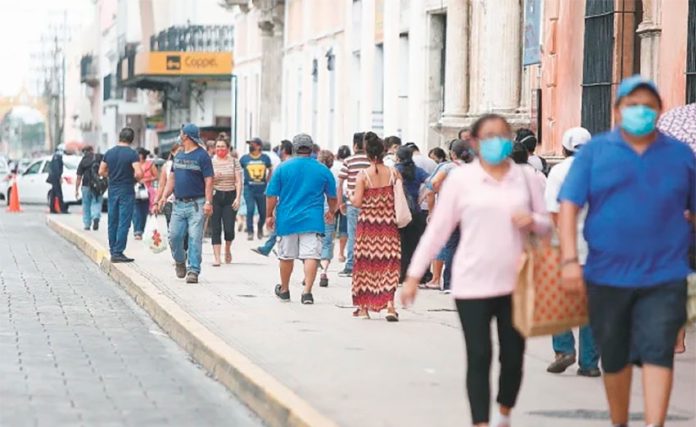
El Universal reported that vehicle and foot traffic was up in Mérida on Monday, but most people observed social distancing recommendations and wore face masks. However, the observance of coronavirus mitigation measures was less strict in the city’s busy markets.
Yucatán has recorded 2,581 Covid-19 cases since the start of the pandemic, of which 415 are currently active.
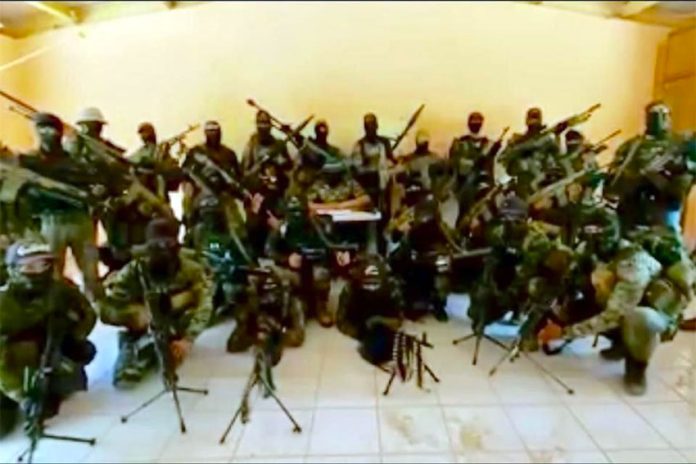
CJNG members in a video that surfaced in August 2019.
Headlines and United States indictments have confidently proclaimed the Jalisco New Generation Cartel (CJNG) to be Mexico’s dominant criminal group. But while it is certainly one of the country’s principal national security threats, the reality on the ground is far more complex as the group is embroiled in a patchwork of rivalries nationwide.
The rise of the CJNG after its split from the Sinaloa Cartel in 2010 was rapid. As other groups splintered across Mexico, it maintained a hierarchical, disciplined structure that allowed it to gain territory and members. In January 2019, InSight Crime named the CJNG one of its “Criminal Winners” for 2018, based on its territorial presence, its income from cocaine and synthetic drug trafficking, its control of port infrastructure and its ability to launder money.
But presence does not equal dominance. There cannot be one single dominant criminal actor in a country as politically, economically and criminally diverse as Mexico. Like other large cartels, the CJNG has found it increasingly difficult to control strategic territories the more it has expanded.
Here, InSight Crime zeroes in on the main regions in which CJNG operates and the resistance they face:
Areas with major disputes
Northern Mexico
In the Golden Triangle — a crucial drug-producing region composed of the states of Sinaloa and Durango, as well as large parts of Chihuahua — the Sinaloa Cartel continues to be the major criminal player. The fall of Joaquín Guzmán Loera, alias “El Chapo,” has led to a potential rift between his successor, Ismael Zambada García, alias “El Mayo,” and Guzmán Loera’s sons, but the CJNG has not been able to turn the acrimony to its advantage.
Despite attempted shows of strength on the fringes of the Golden Triangle, this remains the part of Mexico where the CJNG lacks any real influence.
But along the border with the United States, the group has been involved in a series of violent clashes for control of border crossings.
In the city of Tijuana, the CJNG and Sinaloa Cartel are the main providers of synthetic drugs, especially fentanyl. In order to wrest control of the city from the Sinaloa Cartel, the CJNG allied itself with the weakened Tijuana Cartel, which rebranded itself as the Tijuana New Generation Cartel.
So far, this has not been entirely successful as the alliance has not weakened the Sinaloa Cartel’s considerable membership and intelligence network in the city, which is built on a tight relationship with local officials and institutions.
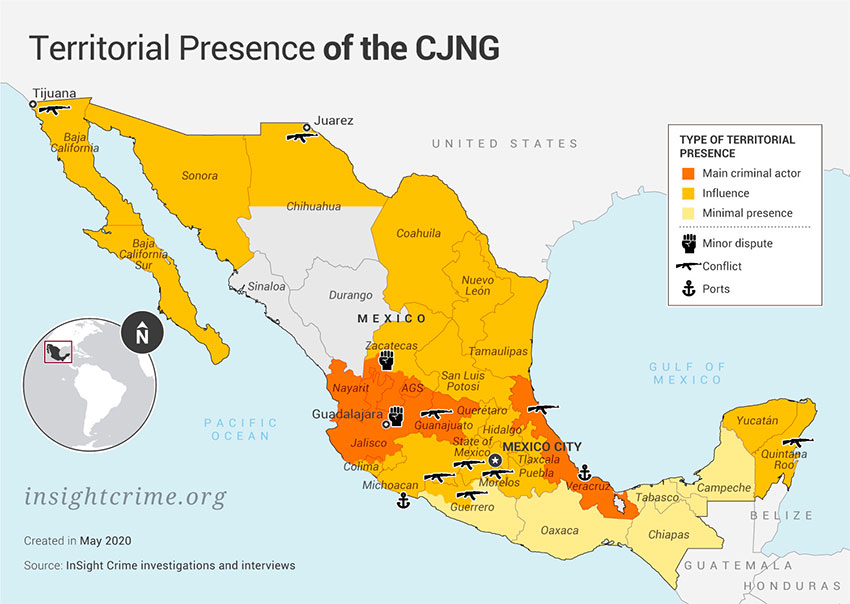
The Jalisco cartel’s presence in Mexico. insight crime
Another key crossing is Ciudad Juárez in Chihuahua, infamous for once being the most violent city in the world.
The CJNG has a presence in Ciudad Juárez, supposedly bolstered by an alliance with the New Juárez Cartel. But to date, it still appears to have less influence there than rivals such as Los Salazar, a powerful cell of the Sinaloa Cartel, and La Línea, an increasingly powerful faction of the Juárez Cartel. Furthermore, the city has numerous smaller street gangs, which control much of the micro-trafficking.
To the east, the border state of Tamaulipas has long been a prized criminal enclave. But again, the CJNG does not have much influence there. According to Óscar Balderas, a Mexican journalist and expert in organized crime, Tamaulipas is divided between the Northeast Cartel and the New Blood Zetas, as well as the remnants of the Gulf Cartel. In June 2020, reports emerged that the CJNG might be making further incursions into Tamaulipas through an alliance with Los Metros, a rising faction of the Gulf Cartel.
And while the CJNG appears to have made bolder attempts to take over northern cities such as Torreón and Monterrey, it has not established itself as the dominant criminal player in northern Mexico.
Tierra Caliente
The region of Tierra Caliente, covering parts of the states of Michoacán, Guerrero and the state of México, is home to arguably Mexico’s most complex criminal panorama. A report by the International Crisis Group found at least 20 distinct criminal groups there, vying for control of synthetic drug production, drug trafficking routes coming in via the Pacific and for the increasingly lucrative extortion of the avocado industry.
And while the CJNG is certainly the largest and the most well-funded group in Tierra Caliente, this has not been enough to overcome entrenched local groups with popular support.
Among the CJNG’s most consistent enemies in the area have been the Cartel del Abuelo and Los Viagras.
The Cartel del Abuelo operates from the municipality of Tepalcatepec, in western Michoacán. Its leader, Juan José Farías Álvarez, alias “El Abuelo,” began by leading a vigilante group, or “autodefensa,” against the Knights Templar.
According to some reports, Farías Álvarez even once allied himself with the CJNG as the large cartel moved into Michoacán. But in 2019, the CJNG began a series of bloody assaults against the Cartel del Abuelo, with CJNG boss Nemesio Oseguera Cervantes, alias “El Mencho,” even reportedly issuing a personal statement threatening Farías Álvarez.
These attacks have not been successful yet. In early May 2020, Farías Álvarez called on vigilante groups in four municipalities to unite and resist the “invasion” by the CJNG.
Los Viagras are a splinter group from both La Familia Michoana and the Knights Templar, devoted mainly to drug trafficking and extortion. This has brought the group into regular conflict with the CJNG since 2017 but with no side gaining a distinct advantage.
Juan José Farías Álvarez, ‘The Abuelo.’
Both Los Viagras and the Cartel del Abuelo have profound strategic advantages over the CJNG, which include a deep knowledge of the land and loyalty among the local population.
“They are entrenched among local society,” Falko Ernst, senior analyst with International Crisis Group, told InSight Crime.
This means that crucial information needed to dominate a region — such as knowledge of escape routes, safe houses and warnings of operations by authorities — are not being shared with the CJNG.
“The communities are not interested in accepting the CJNG,” Ernst added.
And in Guerrero, the heartland of poppy growing for heroin production, splinter groups from larger crime organizations have become a nightmare for the CJNG. It is one of at least 40 groups vying for criminal economies there.
Mexico City and its surroundings
The center of Mexico City is largely controlled by La Unión Tepito, a gang native to the capital, though smaller groups such as the Cartel de Tláhuac enjoy plentiful incomes from extortion and micro-trafficking.
According to Balderas, the CJNG is present in the capital, especially in certain poorer neighborhoods to the north of the city, but it has not succeeded in becoming a main criminal actor as of yet.
Seeking a dominant position in Mexico City — where authorities are quicker to react than in many other parts of the country — may simply not be a priority for the CJNG.
“If the CJNG does happen to act with authority in Mexico City, authorities immediately crack down,” Balderas said.
And in states surrounding the capital, the CJNG is running into the results of criminal fragmentation.
Morelos and the state of México offer plenty of criminal economies, including human trafficking, kidnapping, micro-trafficking and drug trafficking, especially heroin. But these criminal economies are already bitterly contested by Los Rojos, dissidents from the Beltrán Leyva Organization, splinter groups from La Familia Michoacana and criminal gangs from Mexico City.
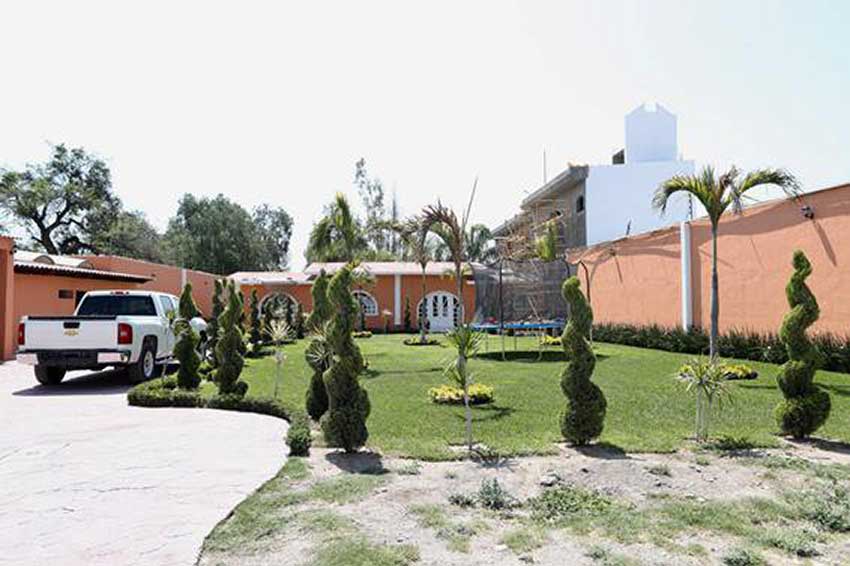
A mansion allegedly owned by the leader of the Santa Rosa de Lima Cartel, which may have lost its territorial battle with the CJNG.
The Riviera Maya
In southeastern Mexico, the resorts of Cancún and Playa del Carmen are hotspots for human trafficking, money laundering, extortion and drug dealing. The port of Chetumal is a gateway for chemical precursors used in the production of synthetic drugs. And the Yucatán Peninsula is an increasingly popular zone for drug shipments moving in by land, sea and air.
The CJNG has made direct attempts to dominate this area but continues to face the Sinaloa Cartel, remnants of Los Zetas and Los Pelones, another group to emerge from the fragmentation of the Gulf Cartel.
These battles for territorial control have caused violence to flare up. Los Pelones, for example, are dedicated to extorting tourist businesses. In recent years, several shootings have occurred in bars or clubs, where rivals, including the CJNG, are trying to wrest control of this extortion racket.
Areas of control
There is no region where the CJNG can be said to enjoy total dominance but there are zones where it has consolidated its position as the most powerful criminal actor.
Jalisco
The CJNG dominates the western state of Jalisco, which gave the group its name.
Many of the group’s members live in and around the state capital, Guadalajara, and the city is also one of the CJNG’s main centers for money laundering. The U.S. Treasury Department has included on its blacklists various businesses connected to the cartel in the city.
The city of Puerto Vallarta, on the Pacific coast, has also been used by the CJNG for money laundering, human trafficking and drug trafficking. It was in this city that the CJNG kidnapped and briefly held two of El Chapo’s sons in August 2016.
“Puerto Vallarta is completely theirs,” Balderas said.
The power of the CJNG in Jalisco also extends to certain municipalities in neighboring states like Zacatecas and Aguascalientes, as well as the coasts of Nayarit, Colima and Michoacán. In Nayarit, the CJNG has also managed to create connections to senior officials, including a former state attorney general and governor.
However, its control has not gone uncontested. Since at least 2017, a CJNG splinter group, calling itself the Nueva Plaza Cartel, has engaged in regular battles with the larger cartel.
Guanajuato, Querétaro and Hidalgo
The Santa Rosa de Lima Cartel (CSRL) has arguably been the CJNG’s most notable rival in the last two years, despite being confined to a limited area in central Mexico. This group reportedly arose in 2017 when several gangs dedicated to oil theft banded together to stop the CJNG’s incursions into Guanajuato, Querétaro and Hidalgo.
According to Víctor Sánchez, a national security expert at the University of Coahuila, the CSRL was initially able to stave off CJNG advances due to its strong backing from local communities that profit from oil theft.
But the CSRL has been severely weakened by repeated government assaults, and the CJNG has managed to seize control of criminal economies in these three states, although not without spilling blood. According to Balderas, pockets of resistance to the CJNG still remain in certain municipalities of Guanajuato, such as Villagrán, but these are not believed to be highly strategic for organized crime groups.
“The most recent outbreaks of violence have been the execution of the last soldiers [of the CSRL],” Balderas said.
This is a war the CJNG looks to have won.
Veracruz
Mexico’s Atlantic coast was traditionally contested between the Gulf Cartel and the Zetas. When these groups weakened and fractured, it took years for another criminal organization to assert control over this strategic zone.
Today, the CJNG appears to have done so but at a terrible cost. Its battles against a Zetas splinter group, known as the Old School Zetas, have ended in massacres. The most notorious example came in April 2019 when 14 people were murdered during a party in the town of Minatitlán.
“Veracruz was always going to be the jewel in the crown for the CJNG,” Balderas said. The state is important for its ports and access to trans-Atlantic drug routes, as well as being a corridor for human trafficking. Now, the Old School Zetas have a presence in only certain municipalities such as Coatzacoalcos and Minatitlán, but Veracruz’s strategic points are held by the CJNG.
“A large part of Veracruz is now controlled by the CJNG,” Balderas said. “The Zetas have been decimated.”
Reprinted from InSight Crime. The author is an investigator with InSight Crime, a foundation dedicated to the study of organized crime.
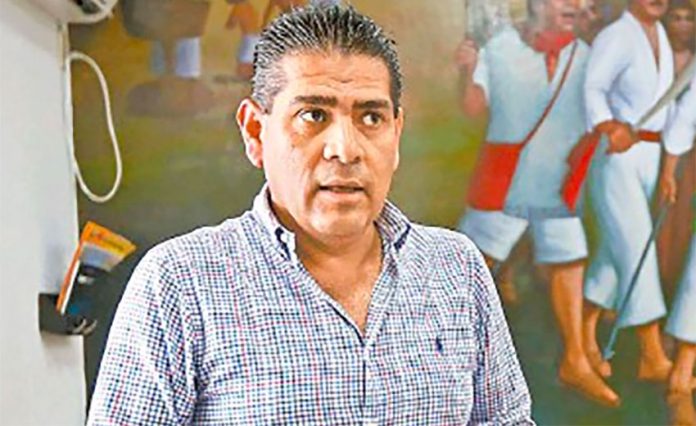
Mayor Cervantes: his bank balance doesn't reflect his income.
Federal financial investigators have frozen bank accounts belonging to three mayors in Jalisco and Oaxaca for their alleged collaboration with organized crime, according to information obtained by the newspaper Milenio.
The investigations are in relation to operation “Blue Agave,” a joint effort carried out in cooperation with the United States Drug Enforcement Administration to cripple the Jalisco New Generation Cartel financially. Some 1,939 bank accounts containing US $1.1 billion have been frozen since the beginning of June.
The Financial Intelligence Unit (UIF), a federal agency, is investigating bank accounts belonging to the municipality of Ixtlahuacán de los Membrillos in Jalisco, as well the personal accounts of its mayor, Eduardo Cervantes Aguilar.
Cervantes, who is embroiled in controversy over the May 5 death of Giovanni López, allegedly at the hands of municipal police officers, has been suspected since 2015 of having links with the Jalisco New Generation Cartel and was investigated in 2017 for his alleged participation in the sale of weapons to civilians posing as municipal police.
The UIF is also investigating Mónica Marín Buenrostro, mayor of El Grullo, Jalisco, and has frozen her personal accounts and those of the municipality she governs, as well as bank accounts belonging to Antonio Morales Toledo, mayor of San Blas Atempa, Oaxaca, whom they suspect also has cartel ties.
UIF director Santiago Nieto met Monday with Jalisco Attorney General Gerardo Solís to discuss financial anomalies relating to all three mayors, such as bank balances that do not reflect their income.
At least five mayors across Mexico are being investigated for money laundering and their connections to the cartel and organized crime, the UIF announced.