Home Blog Page 1525

Banning alcohol a futile exercise that was not well thought out

0
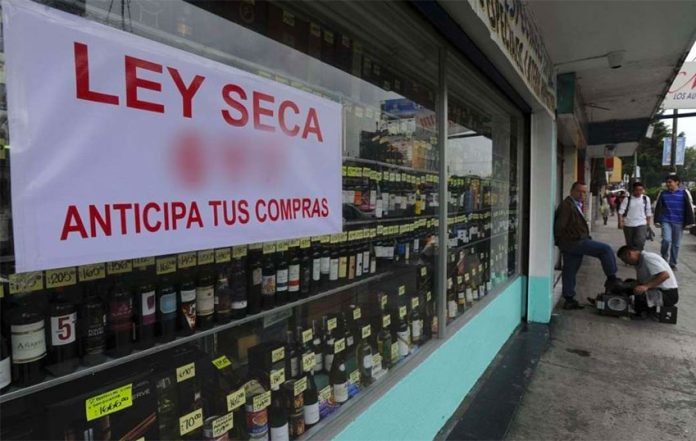
Dry laws have been a half-hearted effort at reducing violence.

I don’t know about y’all, but I could really use a beer.

Enough people have felt like this lately to warrant the seeking out of things much stronger than beer in the face of varying degrees of “dry laws” around the country, as evidenced by the number of deaths and hospitalizations from tainted, “bootleg” spirits around Mexico.

Plenty of people decided pretty much immediately that they would circumvent the law, and plenty of out-of-work and possibly bored amateur producers were more than happy to meet the new demand. The efforts to prevent alcohol consumption would be laughable if they weren’t so blatantly sad.

In my own city of Xalapa, Veracruz, the sale of alcohol has been restricted to between the hours of 12:00 p.m. and 5:00 p.m., Monday through Thursday. If you’re at the store at 5:30 p.m., as I have found myself for the past couple of weeks hoping to score a bottle of cabernet, you’re out of luck (related side note: Mexico produces some excellent wine. Like, really good).

It would, of course, be hard to argue that the consumption of alcohol helps things very much. The evidence is overwhelming that alcohol is involved in all manner of social sins, from domestic violence and full-on homicide to smaller annoyances like nonsensical slurred speech or holding your drunk friend’s hair back while she cries and vomits all over the place. If we’re looking for an innocent scapegoat, we’re not going to find it in mezcal.

But kind of sort of restricting the sale of it sometimes in some places is sure a half-hearted effort at reducing violence if I ever saw one. Even China, with its iron grip on things as personal and minuscule as the day-to-day behavior of its citizens, would have to organize and mobilize its gigantic social control machine for days before implementing something like that.

And if there’s one thing I’d bet a million dollars on, it’s that Mexico is no China.

My main question here is this: did anyone really think this through in a deep, serious way? It feels like something that’s just for show, possibly a way to get skeptical people to understand the gravity of the situation we’re in, a way for the government to say, “See? We’re doing something!” at an unprecedented time of uncertainty.

The arguments I imagine (which we all must do as very little in the way of explanation was given) are the following:

  1. Perhaps the restrictions of times and days will prevent last-minute impulse buys of alcohol that could be consumed at ill-advised impromptu parties. A full ban, as some places instituted, would ensure the prevention of these get-togethers even more. This is a quarantine, people!
  2. Continuing to permit a behavior that lowers people’s inhibitions during a time we need to exert more self-control than ever just seems like a recipe for disaster.
  3. Maybe people having less access to alcohol in general will reduce the incidence of domestic violence in the home, where many are cloistered and stressed together.
  4. Something-something-keeping-immune-systems-strongish-something-something?

As always, I’ve got some “buts:”

  1. If there’s one thing we’re good at in this country, it’s planning parties in advance. Even in the face of a complete ban, we will definitely figure something out. Not to mention it presents just the perfect opportunity for daring and fun macho posturing: “Oh, you say we can’t get alcohol? Challenge accepted.”
  2. Control is an illusion, especially here. I mean, we can’t even keep people from murdering or stealing from each other. With over 95% of criminals totally getting away with whatever crime they commit, it’s hard to imagine anything but a collective eye roll in response to a paternalistic “really, now, behave yourselves!”
  3. This, to me, is the most reasonable explanation and justification for a ban, because it’s true: alcohol often is involved in domestic violence cases. Suddenly — at least for those actually obeying quarantine rules — families are together much of the time and stressed much of that time, many as they watch their bills pile up and income dwindle in the face of much-less-than-impressive “stimulus” loans. I’m sad to say, however, that domestic violence would continue to be a problem without any alcohol or drugs, as it’s a cultural problem … not just one that pops up when people are under the influence of some kind of substance that alters behavior.
  4. I think experience has proven that people will do whatever they want with their own health, and to a large extent, that of their families.

Banning alcohol, I think history has proven, is not typically an effective strategy. Rather than a futile, half-hearted exercise, why not focus our efforts on trying to reduce violence and stress in society in general? I don’t know, say, a daily (or maybe hourly at this rate) meditation and relaxation program on public radio paired with things that actually help people reduce their stress levels, like direct cash handouts so people can stay afloat while we’re in economic free-fall but still expected to pay for everything like we did before.

All I know is that a beer or a glass of wine (or a shot of tequila or mezcal — pick your poison) can really help take the edge off. Plus, there are so many things we can’t do suddenly. At least let us have a beer in our living room. Geez.

Sarah DeVries writes from her home in Xalapa, Veracruz.

Brewing beer is OK but exercise isn’t? Gyms challenge virus closure

0
gymnasium
Accelerated breathing from exercise poses a risk.

Sports clubs and gyms across Mexico have taken an economic punch to the gut since they were forced to close due to coronavirus restrictions, and owners and managers are asking the government to reclassify them as essential businesses and allow them to reopen.

If the same concession was awarded to the beer industry, why not allow exercise to resume as well, argues Alfredo Jiménez de Sandi, president of the Sports Club Managers and Administrators Association, which represents 72 gyms and sports clubs across Mexico.

Many began closing their doors three months ago on March 17, and under the current “stoplight” system they will be one of the last businesses allowed to reopen, along with bars and nightclubs, when states reach a green light or low risk level on the federal government’s chart, something that is unlikely to happen before September.

Jiménez de Sandi is hopeful that the government will reconsider and allow gyms to reopen at a reduced capacity of around 25 to 30%. 

In the meantime, many gyms are optimistically preparing for the day they can once again open their doors to customers and are training employees in hygiene measures and rearranging equipment, entrances and exits to avoid crowding, as well as investing in thermal imaging cameras in order to monitor the temperatures of staff and clients.  

Gyms are also readying discounts and other financial incentives to get people back in their establishments and working out again. 

The economic outlook for this sector of the economy is decidedly bleak. According to Rodrigo Chávez, president of the Mexican Association of Gyms and Clubs the coronavirus has caused losses of up to 6 billion pesos (US $269 million) and put nearly 100,000 jobs at risk.

Mexico’s coronavirus czar, Hugo López-Gatell, is so far not budging on reclassifying and/or reopening exercise clubs any time soon.

“Although relatively small, the risk lies in physical contact, proximity, contact through inert surfaces and, in addition, a physiological condition which is accelerated breathing, which would lead to a greater probability of contagion between people,” the deputy health minister said.

Source: El Financiero (sp), Infobae (sp) 

Chicago sues Interjet for US $2.5 million for unpaid airport fees

0

The city of Chicago is suing the Mexican airline Interjet for US $2.56 million for failing to pay taxes and fees owed to O’Hare International Airport.

The newspaper Reforma reported that a lawsuit was filed against the low-cost carrier in the United States District Court for the Northern District of Illinois on June 9.

The city of Chicago alleges that Interjet has breached the terms of a 15-year contract it signed in May 2018.

The city claims that the airline failed to pay $360,000 in airport taxes between July 2019 and January 2020. It also says that Interjet hasn’t paid $1.7 million in fees for services and storage space and $334,000 in administrative fees.

According to the lawsuit, the city notified Interjet of its debts on February 18 but the airline has still not settled them. The two parties have been summoned to participate in a telephone hearing on August 10.

Reforma reported that if Interjet fails to reach a settlement with the city, it runs the risk of having its United States-based assets and/or bank accounts seized.

The airline has been plagued by financial problems for years, and was issued an order by the Mexico’s Federal Tax Administration (SAT) in August 2019 to pay off some US $27 million in back taxes. Interjet negotiated a settlement in court requiring that it pay 10% of net profits each month in order to chip away at the debt.

In April this year, the SAT placed an embargo on a property in the upscale Mexico City neighborhood of Polanco that serves as the headquarters of the Fundación Miguel Alemán, a charitable foundation set up by the family of Interjet president Miguel Alemán Magnani.

The airline responded to that move by issuing a statement that said that it had assets exceeding US $2.25 billion, more than enough to cover its current tax debt of $28.16 million. It also highlighted that it already has an agreement with the SAT to gradually pay back its tax debt.

While Interjet denies that it is in a precarious financial situation, its revenue, like that of all other airlines, has plummeted as a result of the coronavirus pandemic.

Interjet passenger numbers were down 97% in April as the airline only operated on five domestic routes, having canceled all its international flights in late March. As of Tuesday, Internet is operating 14 domestic routes, a number well below the 87 routes – including 45 international ones – it was flying in January.

Source: Reforma (sp) 

Judge who handled narco cases murdered in Colima

0
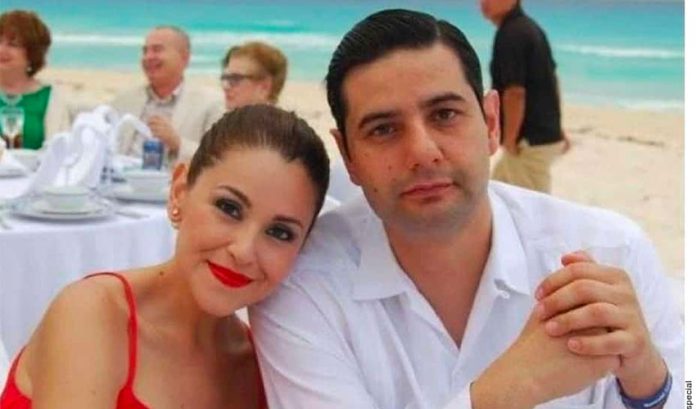
Villegas and Barajas were murdered Tuesday in Colima.

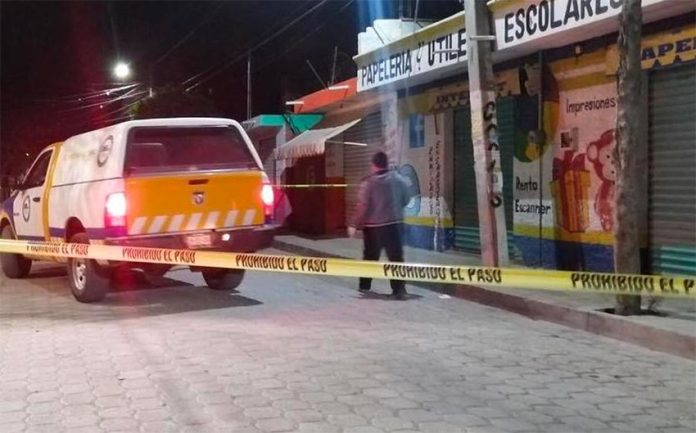
A federal judge and his wife were murdered in their Colima city home on Tuesday morning, federal authorities said.

Uriel Villegas Ortiz, who handled drug trafficking and other organized crime cases, and Verónica Barajas were shot and killed in front of their two daughters, aged 3 and 7, and a domestic worker.

The gunmen fled the murder scene and remain at large. Upon arrival at the judge’s rented home, the murderers feigned interest in a pickup truck he was selling him before opening fire, the newspaper Reforma reported

Before moving to Colima in February, Villegas presided over cases involving the sons of two of Mexico’s most notorious drug lords. In 2018, he heard a case against Rubén Oseguera González, son of Jalisco New Generation Cartel Leader Nemesio “El Mencho” Oseguera.

“El Menchito,” as Oseguera González is known, was not convicted of any crimes in Mexico but was extradited in February to the United States, where he faces drug trafficking charges.

In a separate case, Villegas denied an application filed by Ismael Zambada Imperial – son of Sinaloa Cartel leader Ismael “El Mayo” Zambada – for a definitive suspension order against his extradition to the United States. The slain judge also heard cases related to fuel theft and money laundering.

Supreme Court Chief Justice Arturo Zaldívar called on authorities to carry out a thorough investigation into the death of Villegas and his wife and urged them “to guarantee the safety of federal judges and their families.”

“It’s the duty of the state to guarantee the safety of all citizens but especially those who bravely … risk their lives to protect the rights of everyone,” he said during a virtual court hearing.

At his regular news conference on Wednesday morning, President López Obrador condemned the attack and pledged that the murders won’t go unpunished.

“We [the government] have the mission and mandate to guarantee peace and tranquility in the country, and we’re not going to give in to any threat or [act of] intimidation. Nothing will stop us from cleaning the country of corruption and guaranteeing justice and peace,” he said.

“[The murder investigation] is progressing [and] I can say there will be no impunity. … We’re going to continue combating crime,” López Obrador said, adding that the Attorney General’s Office and the executive and judicial powers are collaborating to in doing so.

“The relationships between the [executive and judicial] powers and the Attorney General’s Office are good. We’re closing ranks so that these types of crimes are not repeated.”

The murder of the judge and his wife came two weeks after the body of Colima lawmaker Francis Anel Bueno Sánchez was found in a hidden grave.

Colima, a small Pacific coast state, had the highest per-capita murder rate in Mexico last year. In recent years, rival drug gangs have waged a bloody turf war for control of the state, home to Mexico’s largest port at Manzanillo, through which large quantities of drugs, including shipments of fentanyl from Asia, enter the country.

Source: Reforma (sp), El Financiero (sp) 

Gradual reopening under way in Mazatlán depite high risk level

0
Mazatlán begins reopening process.

Although Sinaloa is still painted red by the federal government’s “stoplight” coronavirus map, meaning the state is still at maximum risk for contagion, the government of Mazatlán announced a gradual reopening of the economy that went into effect on Tuesday. 

Officials announced that a variety of businesses could officially resume operations, including office supply stores, car washes, paint shops, auto parts stores and beauty salons, although in the case of the latter by appointment only.

The decision was reached Monday after government officials convened to review recommendations by the federal government as well as concerns from business leaders who had requested the gradual reopening.

More businesses will be allowed to reopen on June 23, including clothing, shoe and jewelry stores, pawnshops, opticians and appliance stores. Shopping malls will remain closed. Businesses’ hours of operation will be restricted to Monday through Friday from 10 a.m. to 4 p.m.

Markets and supermarkets must continue to operate at 50% customer capacity, allow only one person per family to enter the store and apply safe distancing measures.

Parks and public squares can be used for exercise on an individual basis and must be kept to a maximum occupancy of 25%.

The date for the reopening of hotels and beaches has yet to be determined. Businesses will be monitored and inspected to make sure they comply with safe practices and those that don’t will be penalized. 

As of Tuesday, the state of Sinaloa had registered 5,945 confirmed cases of the coronavirus and seen 933 deaths.

Source: La Jornada (sp), Noroeste (sp) 

Only 16 states rank on competitiveness index

0
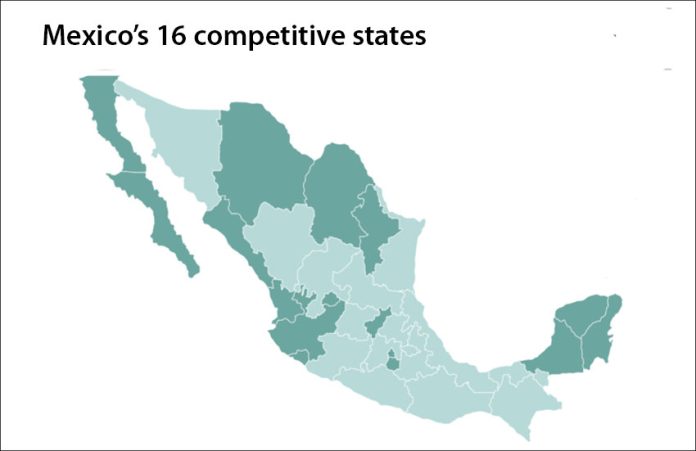
Medal-winning states are shown in dark green.
Only 16 states rank in a national competitiveness index that assesses their ability to develop, attract and retain talent and investment.

The 2020 index, developed by the Mexican Institute for Competitiveness, or IMCO, evaluates 10 factors in determining a state’s competitiveness, such as the trustworthiness and objectivity of its legal system, environmental policies, economic stability, the efficiency of the state’s workforce and whether policies have fostered an inclusive, educated and healthy community. 

This year, states were awarded gold, silver and bronze medals based on their rankings. 

A total of 10 gold medals were awarded to Mexico City, Querétaro, Chihuahua, Colima and Yucatán.

Among the gold medallists, Mexico City, which led the way with five medals in total, was recognized for having the largest number of clean energy companies in the country, and also placed first in education, health and inclusivity of women in the workforce.

Querétaro followed with three medals, all gold.

Yucatán stood out for public safety with the lowest homicide rate and the highest percentage of the population that feel safe in their homes.

However, half the states in Mexico did not place at all. The 16 states that earned zero medals were Chiapas, Durango, Guanajuato, Guerrero, Hidalgo, state of México, Michoacán, Oaxaca, Puebla, San Luis Potosí, Sonora, Tabasco, Tamaulipas, Tlaxcala, Veracruz and Zacatecas.

Meanwhile, Mexico fell three places in terms of international competitiveness this year, dropping to No. 53 on the Switzerland-based Institute for Management Development’s World Competitiveness Rankings. The drop was attributed mainly to fiscal policy and inadequate infrastructure.

Singapore remained in the No. 1 position for the second consecutive year, followed by Denmark and Switzerland.

Source: Reforma (sp)

Broken net blamed after thousands of sardines appear on Baja beach

0
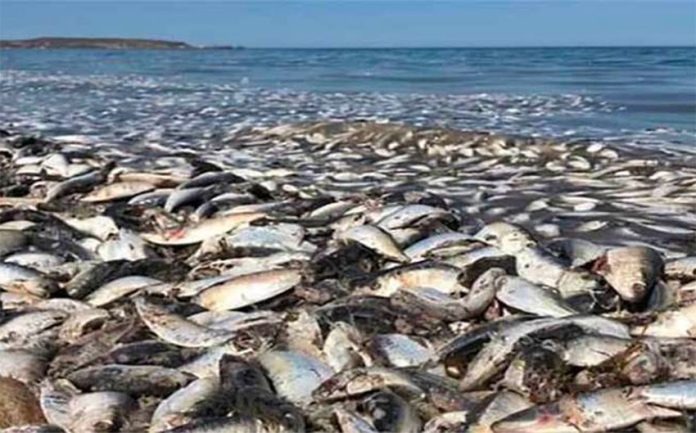
Dead sardines in Baja California Sur.

Thousands of dead sardines have washed up on the shores of Punta Chivato, a town on Bahía de Santa Inés in Baja California Sur, and locals are blaming commercial fishermen. 

On Saturday morning a local fisherman first noticed sardines on the beach, and photos and footage of the deluge of dead fish rotting in the sand and littering the sea with silver bodies have since made the rounds on social media, where the reaction has been indignation.

The bay, located on the Sea of Cortés about 40 kilometers south of Santa Rosalía in the municipality of Mulegé, was overrun by at least 10 commercial fishing vessels from Sonora on Thursday and Friday of last week, locals say. 

Residents suspect that the dead sardines are what was left behind after the sardine boats had filled their holds to overflowing before departing for processing plants in Sonora. There, they grind up sardines to make fish meal which is used in aquaculture as food for farmed fish.

Local residents and fishermen, who had been prohibited from fishing due to coronavirus restrictions, were outraged by the mess and annoyed by the pervasive smell of decomposing fish whose odor was carried over a distance of some 500 meters.

Yesterday, the National Fisheries Commission announced that the dead fish were not, in fact, a result of wanton waste, but rather the consequence of a net accidentally breaking on one of the fishing boats, causing the fish to spill into the water.

The owner of the vessel, which has not been identified, will be responsible for paying for the cost of cleaning up the beach, officials said.

Source: Milenio (sp), BCS Noticias (sp), Red 93.3 (sp), El Sudcaliforniano (sp)

Half of Ixtlahuacán police officers have not passed evaluation tests

0

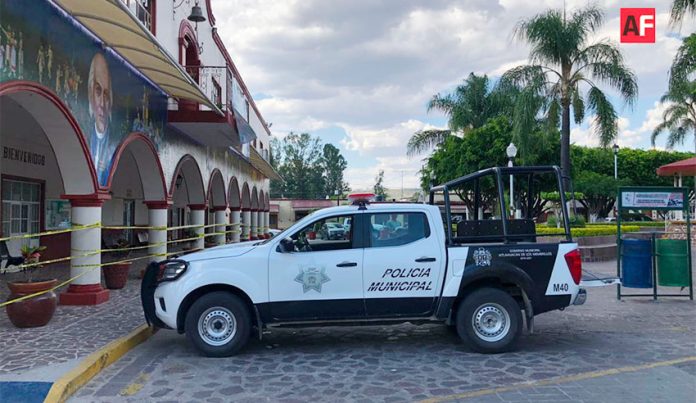
Jalisco’s Ministry of Security has revealed that nearly half the police force in Ixtlahuacán de los Membrillos, where Giovanni López died while in police custody on May 5, have not passed a mandatory test designed to evaluate their aptitude for police work. 

The ministry announced that 22 of the city’s 49 officers had either failed or never been given the three-part exam which includes a drug test, background check, psychological and medical evaluation and a lie detector test, among other components. 

The exams, which are required by federal law, are designed to allow authorities to assess the abilities, skills, attitudes, general and specific knowledge of a police officer in carrying out the functions of their position, as well as identifying the risk factors that could interfere with their work.

They also serve to confirm that the police have no criminal record, they do not use drugs and they have no links to organized crime.

According to statistics from the federal Ministry of Public Security, two out of every 10 police officers who take the test in Jalisco fail.

In addition, the state reports that 21 Ixtlahuacán police officers were not officially registered as such, although they were on active duty. Two officers have also tested positive in a preliminary test for drug use and are awaiting a second test to confirm the results. 

Due to scrutiny after the death of López, who was allegedly beaten to death by police, the town’s police officers have been sent back to the police academy for training with an emphasis on human rights, and Jalisco’s state police have taken over public safety duties in Ixtlahuacán.

Three of the municipality’s officers have been arrested in connection with the death of López.

In February, federal authorities revealed that 26,700 out of Mexico’s  331,776 police officers had not passed the aptitude test and were therefore not legally certified, but only 392 of those who did not pass were dismissed.

Source: La Jornada (sp), Infobae (sp), Informador (sp), El Diario NTR (sp) 

With 18,000 fatalities, Covid-19 far more lethal than organized crime

0
crime scene
Homicide deaths have been well outnumbered by coronavirus.

Covid-19 has been far more lethal than organized crime over the past three months, statistics show.

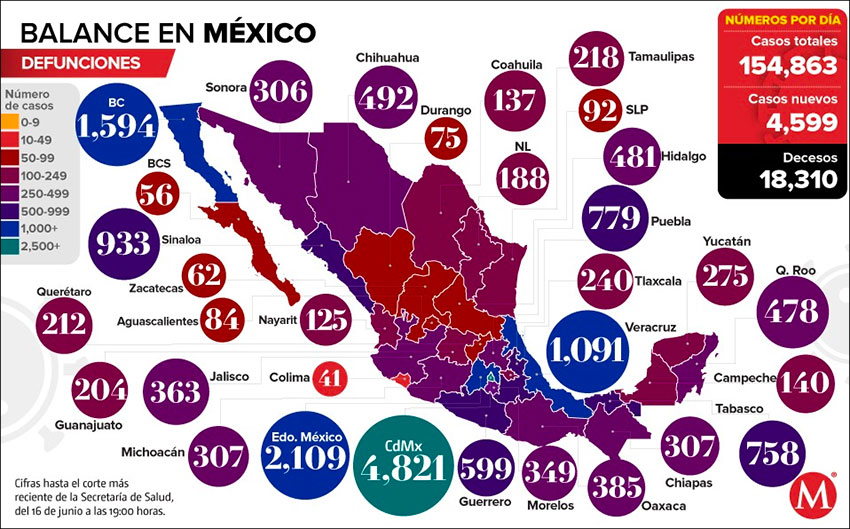
Federal Health Ministry data shows that 18,310 people lost their lives to Covid-19 between March 18 – the date the first coronavirus fatality was reported – and June 16.

In the same period, 7,313 people were murdered, according to Security Ministry statistics. The number of people killed by Covid-19 is 150%, or 2 1/2 times, higher than the number of people murdered.

According to the newspaper Milenio, the number of Covid-19 victims exceeded that of homicide victims on May 3. By that date, 3,949 people had lost their lives to the virus, while 3,937 people were murdered between March 18 and May 3.

Since May 3, 14,361 Covid-19 deaths have occurred and 3,376 people have been murdered. In other words, for every homicide victim in Mexico between the beginning of May and the middle of June, there were more than four Covid-19 fatalities.

Active coronavirus cases as of Tuesday.
Active coronavirus cases as of Tuesday. milenio

In Mexico City and México state, the federal entities most affected by the coronavirus pandemic, there were more than five Covid-19 fatalities for every murder in the three-month period between the middle of March and the middle of June.

In contrast, homicides in Mexico’s most violent state, Guanajuato, occurred at a rate of about six for every one Covid-19 fatality in the period.

Mexico’s official Covid-19 death toll has almost doubled since the end of the national social distancing initiative at the end of May, although not all of the 8,380 fatalities reported so far this month actually occurred in June. Delays in confirming and reporting Covid-19 fatalities mean that some are not included in the official death toll for days, weeks or even months after they occurred.

Still, the growth in the death toll and case numbers this month has caused alarm and led some people to conclude that Mexico is taking steps to reopen its economy too soon. Deputy Health Minister Hugo López-Gatell warned this week that the pandemic won’t “won’t end soon,” while he said last week that the peak contagion period might not occur until July.

The Health Ministry reported 730 additional Covid-19 deaths on Tuesday, breaking a streak of three days on which fewer than 500 fatalities were registered.

In addition to the 18,310 confirmed Covid-19 deaths since the start of the pandemic, 1,779 fatalities are suspected to have been caused by the disease.

Latest Covid-19 death figures as reported on Tuesday.
Latest Covid-19 death figures as reported on Tuesday. milenio

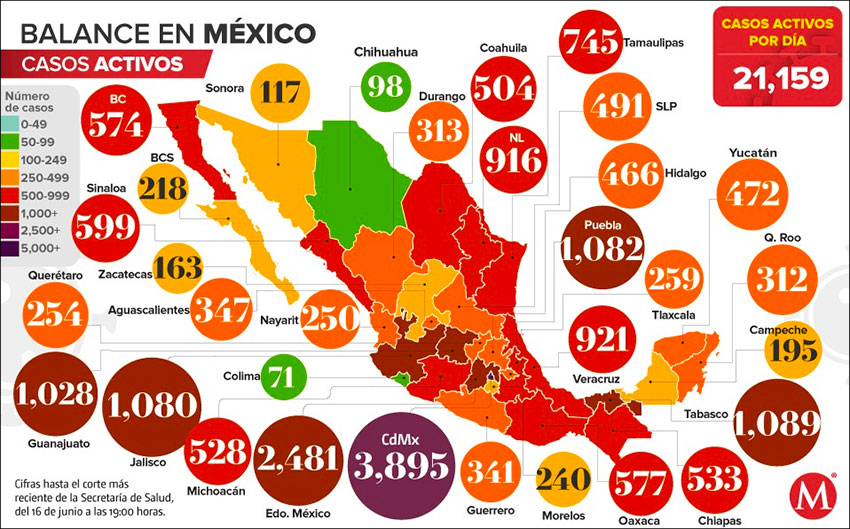
The Health Ministry also reported 4,599 new confirmed Covid-19 cases, increasing Mexico’s cumulative tally to 154,863. Director of Epidemiology José Luis Alomía said that 21,159 cases are considered active, meaning that number of people tested positive after developing coronavirus symptoms in the past 14 days.

Alomía said that the results of 56,843 tests are not yet known and that a total of 428,563 people have now been tested.

Just over half of Mexico’s active Covid-19 cases are concentrated in just six states, each of which has more than 1,000 cases. They are Mexico City, which has 3,895 active cases; México state, with 2,481; Tabasco, with 1,089; Puebla, with 1,082; Jalisco, with 1,080; and Guanajuato, with 1,028.

Health Ministry data shows that just over half of Mexico’s Covid-19 deaths have occurred in just four states, each of which has recorded more than 1,000 fatalities. They are Mexico City, where 4,821 people are confirmed to have lost their lives; México state, which has recorded 2,109 fatalities; Baja California, with 1,594 deaths; and Veracruz, with 1,091.

Based on confirmed Covid-19 cases and deaths, Mexico’s fatality rate is 11.8, much higher than the global rate of 5.4.

Around the world, more than 444,000 people had lost their lives to Covid-19 as of Wednesday morning, according to data compiled by the Johns Hopkins University, and just over 8.2 million people have tested positive. Mexico currently ranks seventh for fatalities and 14th for case numbers.

Source: Milenio (sp) 

Mexican trade negotiator a candidate to lead World Trade Organization

0
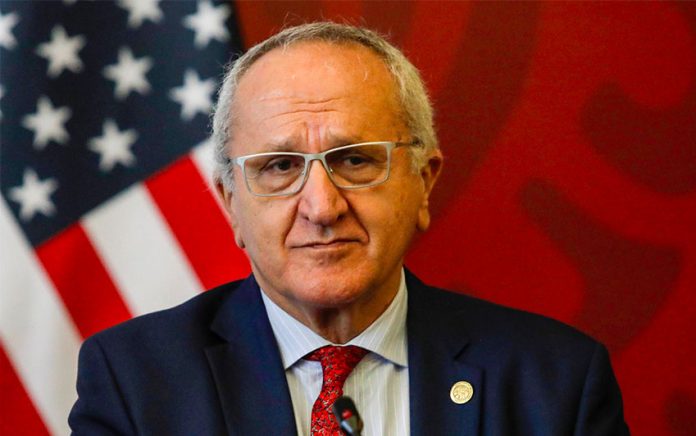
Jesús Seade is one of the nominees to head the World Trade Organization.
Deputy Foreign Affairs Minister Jesús Seade.

Deputy Foreign Affairs Minister Jesús Seade is seeking to become the next director-general of the World Trade Organization (WTO).

Seade, Mexico’s chief negotiator at the tail end of the trilateral talks that led to the signing of the United States-Mexico-Canada agreement, is one of four candidates who have been nominated so far to be the successor to Brazilian Roberto Azevêdo, who announced he would leave his post a year early on August 31 due to personal reasons.

The other current candidates are Ngozi Okonjo-Iweala of Nigeria, Abdel-Hamid Mamdouh of Egypt and Tudor Ulianovschi of Moldova. More candidates, including at least one European, are expected to be nominated before the closing date of July 8.

Seade was nominated for the WTO role by President López Obrador, who described the nominee as “straightforward” and “honest” in a video posted to social media.

“He’s a supporter of understanding between countries for facilitating trade relations,” López Obrador said.

The Foreign Ministry (SRE) said in a statement that Seade “has an extensive understanding of the economies and trade dynamics in Africa, Latin America, Asia, Europe, the Middle East and North America, and well-established relationships with the leading actors in world trade.

It added that “his long experience in the most important international economic organizations —including the General Agreement on Tariffs and Trade (GATT), the International Monetary Fund (IMF), the World Bank (WB) and the World Trade Organization itself — is a proven track record of his abilities within these key multilateral trade institutions.”

“The nomination of Deputy Secretary Seade to the post of WTO director-general by the government of Mexico comes in recognition of his experience and abilities but, above all, is a sign of the country’s commitment to the multilateral order,” the SRE said.

“Mexico is nominating a strong candidate with the experience and ability to represent the best global interests in free trade at a key moment for protecting and promoting multilateralism and international cooperation.”

However, Seade’s chances of being appointed are hindered by two factors, the news agency EFE reported.

One is that he is from Latin America, the same region as the incumbent director-general, and the WTO prefers to rotate its leadership between continents.

The second factor that could harm Seade’s chances is that, like Azevêdo, he is from a developing country. A WTO leader from a developing country is usually succeeded by one from a developed country.

If a new director-general hasn’t been chosen to head up the intergovernmental organization by the end of August, one of the four deputy directors-general will step into the role on a temporary basis.

WTO chiefs are elected to four-year terms but can serve a second term of the same length.

Source: EFE (sp), Bloomberg (en)