Home Blog Page 1534

Cabbage is good for more than just cole slaw or salad

0
Grilled cabbage with bacon is simple but delicious.

One word of advice this week regarding mangos, the topic of the May 25th column. Enjoy them while they’re here because the season will soon be over. The wise ones among us will also be freezing chunks and purée to have in the fall and winter months when mangos are few and far between and not locally grown.

Now we can move on to something else that’s plentiful right now but not quite as popular: cabbage. I’ve been one of those people who use cabbage for cole slaw, salads and sometimes add it to soups, but rarely have I done much more with it.

But why not sauté it with a spicy sausage or chorizo for a breakfast scramble, venture into fermentation with a Salvadorean relish or bake it slowly with rich cheeses till it’s a decadent caramelized goo?

Cabbage, in all its forms, has been cultivated and eaten for thousands of years all over the world, and also valued for its medicinal qualities. High in vitamin C, sauerkraut was eaten by Scandinavian and German sailors to prevent scurvy on long voyages; European folk medicine touts cabbage as treatment for rheumatism, poisoning by mushrooms and as a laxative.

And here’s a tip for modern times from ancient Egypt: eating cooked cabbage at the start of a meal reduces the intoxicating effects of wine.

Choose a cabbage that’s firm, smells sweet and is fairly heavy. Raw cabbage is 92% water, so if it’s cut it should be crisp and somewhat juicy in a cabbage-way. Don’t worry if the outer green leaves have some holes in them; unless there’s moth damage to the head itself, those are leaves you won’t be eating anyway.

I love that in the mercado you can ask for half or even a quarter of a cabbage, and they’ll cut it for you on the spot. So if you want to make a basic cole slaw with half green and half purple cabbage, there’s no problem buying exactly how much you need. Cabbage is often unfairly criticized as having an unpleasant taste and odor when cooked, but in reality this only happens when it’s overcooked. That’s when it develops hydrogen sulfide gas, the cause of those disagreeable aspects.

The biggest cabbage ever grown? According to Guinness World Records one Scott A. Robb – already a record-holder for nine other gigantic vegetables – grew a 138.25 lb. green cabbage that he presented at the Alaska State Fair in 2012. To date, no one has broken that record.

Nancy’s Cole Slaw Especial

  • ½ medium cabbage (about 1½ lbs.)
  • 2 carrots, peeled and chopped or grated
  • Chopped onion to taste
  • 1/3 cup chopped cilantro
  • ½ cup dried cranberries

Dressing:

  • ¾-1 cup mayonnaise
  • 2 Tbsp. apple cider vinegar
  • 2 Tbsp. Dijon mustard
  • 1 tsp. celery seeds (if available)
  • Salt and pepper to taste

Core cabbage, remove outer leaves and chop or shred. Mix first 5 ingredients together, male dressing and mix. Refrigerate for at least an hour to blend flavors.

Cheesy Cabbage Gratin

This rich, flavorful dish will change your opinion of cabbage!

  • 1 medium head of green cabbage (about 3½ lb. total), cut through core into 8 wedges
  • 2 Tbsp. olive oil
  • 2 shallots or 1 small yellow onion
  • 4-6 garlic cloves
  • 2 cups heavy cream
  • Thyme or chives, fresh or dried
  • 1 Tbsp. unsalted butter
  • 3 oz. Gruyère, grated (about 1½ cups)
  • ½ oz. Parmesan, finely grated (about ½ cup)
  • Salt & freshly ground black pepper
  • 1½ tsp. salt, plus more

Preheat oven to 350 F. Place cabbage on a baking sheet, drizzle with oil, salt and pepper. Roast until tender and edges are golden, 40-45 minutes. In a small saucepan, bring shallots, garlic, cream, 1 Tbsp. thyme, 1½ tsp. salt and 1 tsp. pepper to a simmer over low heat. Cook, stirring occasionally, until shallots and garlic are soft, 15–20 minutes. Let cool. Blend until smooth with food processor or blender.

This cheesy cabbage gratin will change your opinion of the vegetable.

Grease a 3-qt. shallow baking dish with butter. Arrange cabbage in dish so wedges are lying on a cut side; pour cream mixture over. Bake, uncovered, until cream thickens, 30–40 minutes. Let cool 30 minutes. Heat broiler. Sprinkle with Gruyère and Parmesan. Broil until cheese is bubbling and gratin is deeply browned, about 4 minutes. Sprinkle with thyme or chives. – bonapetit.com

Grilled Cabbage with Bacon

Simple but delicious.

  • ½ small shallot or onion, minced
  • 1 Tbsp. red wine vinegar
  • 2 tsp. Dijon mustard
  • 1 tsp. honey
  • 6 slices bacon, cooked, 1 Tbsp. fat reserved
  • ¼ cup olive oil, plus more
  • Salt and pepper
  • 1 head green cabbage, cut into quarters
  • Croutons (for serving)

Whisk together shallot, vinegar, mustard and honey; gradually whisk in bacon fat and ¼ cup oil. Crumble in bacon; season with salt and pepper, set aside. Drizzle cabbage with oil; season with salt and pepper. Grill over medium heat or broil, turning occasionally, until tender and lightly charred, 15–18 minutes. Serve topped with vinaigrette and croutons.

Curtido (Salvadoran Cabbage Relish)

Consider this like a spicy, Latin American sauerkraut. Each day it ferments the flavors develop more and the better it tastes. Serve with chicken, on any kind of tacos or as a dip.

  • ½ large head of red cabbage, thinly sliced
  • 3 medium carrots, shredded
  • ½ large white onion, thinly sliced
  • 2 serrano chiles, seeds removed, thinly sliced
  • 1 garlic clove, minced
  • 2 tsp. dried oregano
  • 5 tsp. (or more) kosher salt
  • ¼ cup olive oil
  • ¼ cup (or more) apple cider vinegar
Curtido, a Salvadoran cabbage relish.

Toss cabbage, carrots, onion, chiles, garlic, oregano and salt in large bowl. Let sit 30 minutes to wilt cabbage. Transfer to an airtight container and press down firmly to release juices; liquid should be at or above level of vegetables. Seal and let sit at room temperature at least 24 hours.

If serving after 24 hours, toss with oil and vinegar and season with salt, if needed. If serving after 48 hours, curtido will be tangy and may not need vinegar; toss with oil, then taste and season with salt and vinegar, if needed.

Janet Blaser of Mazatlán, Sinaloa, has been a writer, editor and storyteller her entire life and feels fortunate to write about great food, amazing places, fascinating people and unique events. Her work has appeared in numerous travel and expat publications as well as newspapers and magazines. Her first book, Why We Left: An Anthology of American Women Expats, is available on Amazon. Contact Janet or read her blog at whyweleftamerica.com.
Tax authority recovers 28 billion pesos from corporate tax evaders

0
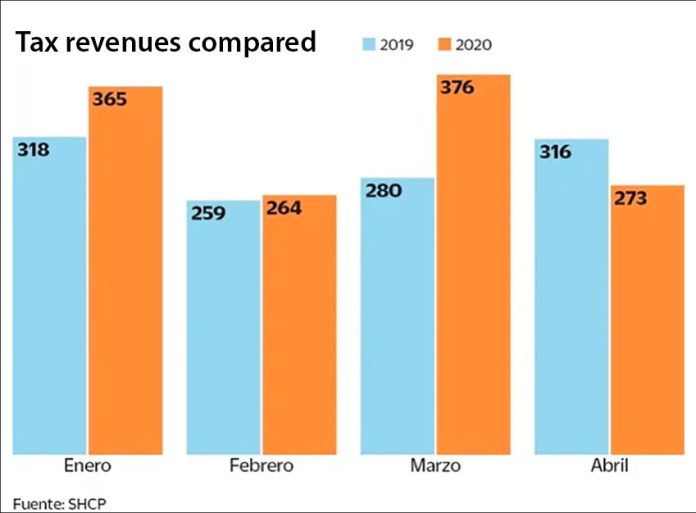
Tax revenues (in billions of pesos) in first four months.
Tax revenues (in billions of pesos) in first four months. el universal

Federal tax authorities have recovered 27.83 billion pesos (US $1.3 billion) from corporate tax evaders this year.

Among the companies that have paid debts to the Federal Tax Administration (SAT) are América Móvil, a telecommunications corporation owned by billionaire businessman Carlos Slim, Walmart, IBM and Femsa, the world’s largest Coca-Cola bottler and the operator of the OXXO convenience store chain.

América Movil paid 8.29 billion pesos in tax debt racked up between 2016 and 2019, while Walmart coughed up 8.08 billion pesos it owed in relation to the sale of restaurant chain Vips.

Femsa settled a tax bill for 8.79 billion pesos while IBM reached an agreement with the SAT to pay back 669 million pesos.

Another 2 billion flowed into government coffers from smaller, lesser known companies that are not listed on the Mexican Stock Exchange. As part of the agreements they reached with federal authorities, the companies were required to announce publicly that they were guilty of tax evasion, the newspaper El Universal reported.

Simec Inernational, a steelmaker, admitted its guilt in a notice published at the start of the year in a national newspaper. It also urged other companies to comply with their tax obligations and to approach authorities to clear up any doubts they might have.

Among the other companies that did the same are the steelmakers Orege and Siderúrgicos Noroeste and the manufacturing firm Sigosa.

President López Obrador last week claimed credit for recouping tax debts owed by large companies.

“The [economic] model we’re applying is yielding results and is for the benefit of all people,” he said.

Data from the Finance Ministry shows that the government’s tax income was above 2019 levels in January, February and March.

However, it dipped below 2019 takings in April, the first full month of federally mandated social distancing to limit the spread of the coronavirus.

Source: El Universal (sp) 

López Obrador vows self-sufficiency in gasoline by 2023

0
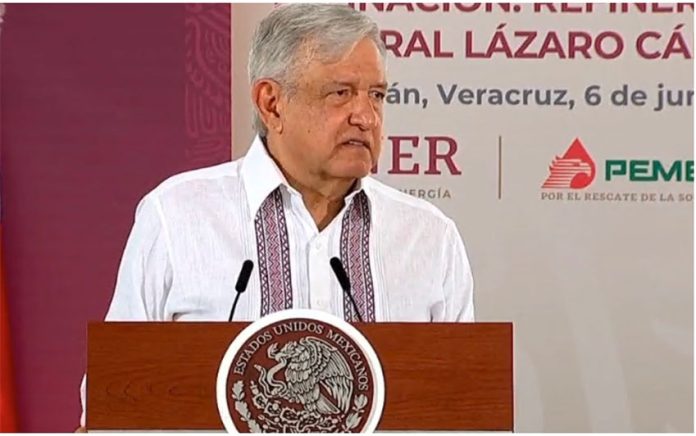
The president speaks Saturday in Minatitlán, Veracruz.

President López Obrador has pledged that Mexico will be self-sufficient in gasoline by 2023 through the rehabilitation of Mexico’s six existing refineries and the construction of a new one on the Tabasco coast.

“We will be self-sufficient in the production of gasoline and we won’t sell crude oil anymore,” he said Saturday while speaking at the Pemex refinery in Minatitlán, Veracruz. “All the raw materials will be processed in our country; that’s why [we have] this plan to rehabilitate the six existing refineries.”

López Obrador said that a total of 25 billion pesos (US $1.2 billion) will have been invested by the end of the year to boost the capacity of the refineries at Minatitlán, Veracruz; Salina Cruz, Oaxaca; Tula, Hidalgo; Ciudad Madero, Tamaulipas;  Cadereyta, Nuevo León; and Salamanca, Guanajuato. The new refinery on the Gulf of México coast is expected to cost around US $8 billion.

“The plan is to process an average of 1.2 million barrels per day in the six refineries … and 340,000 additional barrels per day in the new Dos Bocas refinery. All this, I repeat, by 2023,” López Obrador said.

An Energy Ministry document reveals an even more ambitious goal: processing 1.2 million barrels of crude per day not by 2023 but by December this year. To achieve that, gasoline production in December will have to be double the average in 2019 when 592,000 barrels of crude were refined per day at the six Pemex refineries.

In the longer term, the government is also planning to build new refining infrastructure at La Cangrejera – a petrochemical plant in Coatzacoalcos, Veracruz – to help achieve López Obrador’s goal of gasoline self-sufficiency. Energy Minister Rocío Nahle said Saturday that high-octane gasoline will be produced at the plant.

The idea of building new infrastructure at La Cangrejera to increase refining capacity has been around for more than a decade but the state oil company concluded that the project would be too complex and costly, and that there wouldn’t be enough crude to supply it.

However, López Obrador appears intent on achieving gasoline self-sufficiency whatever the cost. The president has repeatedly pledged to “rescue” Pemex and the Federal Electricity Commission from the years of abuse he says that suffered during past governments.

Energy sector analysts have criticized the government’s plan to pour money into rehabilitating the existing refineries and building a new one, arguing that it will divert funds from Pemex’s more profitable exploration business.

But López Obrador on Saturday once again rejected the claim that Mexico is better off sending crude abroad when it has to purchase gasoline, mainly from the United States, to meet domestic demand.

“There are still fools that say that it’s better to sell crude oil even though we have to buy gasoline. They forget that if we process our own raw materials jobs are created here,” he said.

López Obrador also said that people who are in favor of selling crude abroad rather than refining it in Mexico fail to take into account the transportation costs of getting the oil to foreign refineries.

Source: El Norte (sp), Expansión (sp), Forbes México (sp) 

10 killed in attack on Guanajuato rehab center

0
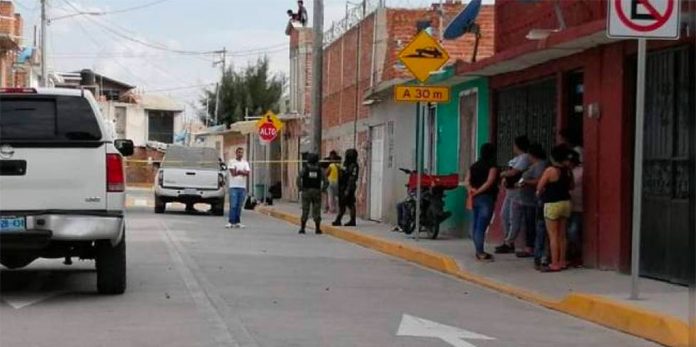
Scene of Saturday's attack on a rehab center.
Scene of Saturday's attack.

Gunmen opened fire on a drug and alcohol rehabilitation center in Irapuato, Guanajuato, Saturday leaving 10 people dead, the state’s Ministry of Public Safety reported. 

Witnesses say at least eight masked men wearing tactical gear and carrying high caliber rifles opened fire on residents at the “Empezando una Nueva Vida de Esperanza” (“Starting a New Life of Hope”). It was the fourth attack on a rehab center in that city in six months and the second against Empezando una Nueva Vida. 

In the wee hours of December 4, 2019, a heavily-armed group of men arrived in a convoy at a rehab center and kidnapped 23 residents. The next day 13 were found alive, and a week later 10 bodies thought to be the remaining kidnapping victims were discovered in a mass grave.

On February 8, a band of gunmen kidnapped five people from Empezando una Nueva Vida before burning the building down. Four of those abducted were later found.

On March 26, armed men shot a 38-year-old man at a rehab center, gravely injuring him. 

No one has been charged in any of the attacks. 

According to a study by the Mexican non-profit  Citizen’s Council for Public Security and Criminal Justice, Irapuato was the fourth most violent city in the world in 2019 with a homicide rate of 80.74 per 100,000 inhabitants. Tijuana, Baja California Sur, Ciudad Juárez, Chihuahua, and Uruapan, Michoacán, respectively, topped that same list.  

The violence in Irapuato marked a particularly bloody milestone for Mexico as June 7 was the day with the highest number of murders so far this year, according to data published by the federal government on Monday.

On Sunday 117 people were murdered across the country, including 11 in Chihuahua, 11 in the state of México, 10 in Guanajuato, nine in Baja California and nine in Tabasco. The worst day of violence Mexico has ever seen was on December 1, 2019, when 127 people were killed in a single day.

Last year Mexico saw a total of 34,582 murders, the highest rate since 1997 which was the first year for which there is an official record.

Source: Animal Político (sp), El Financiero (sp), AM (sp), Publimetro (sp)

Jalisco governor believes police intended to kill Guadalajara protesters

0
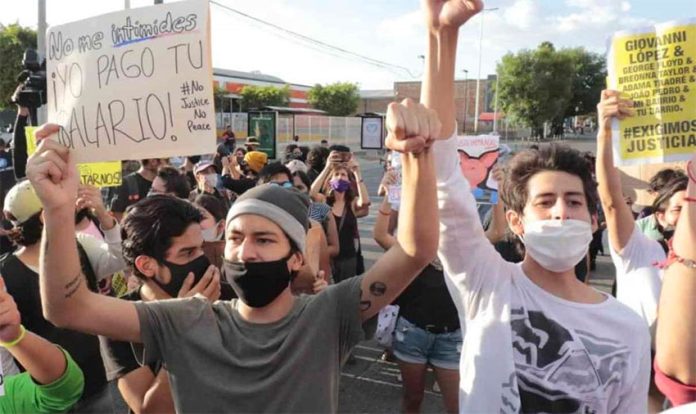
Protesters in Guadalajara on Friday.

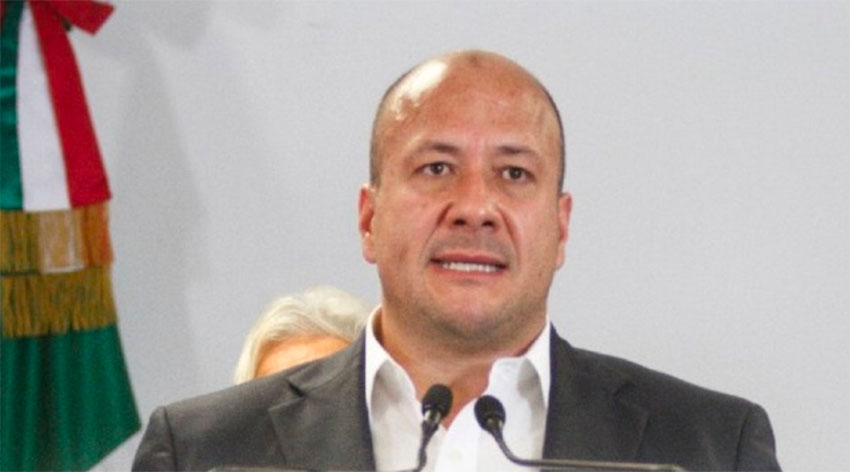
Quick response by the Jalisco attorney general saved the lives of a group of people who were abducted by police in Guadalajara on Friday, claims Governor Enrique Alfaro.

The governor said in an interview that the state police officers involved had intended to kill a group of people they forced into unmarked vehicles near the state Attorney General’s Office. Those abducted were protesting the arbitrary arrests of people protesting against the alleged murder by police of Giovanni López Ramírez.

At least 29 people went missing after they were arrested at protests on Thursday and Friday. Alfaro announced on Twitter Saturday night that they had been released from police custody and that charges against them had been dropped.

He said in an interview that the quick actions of Attorney General Gerardo Octavio Solís on Friday had averted another Ayotzinapa. Alfaro’s claim refers to the 2014 case in which 43 students from the Ayotzinapa Rural Teachers College were detained by municipal police in Iguala, Guerrero, and allegedly handed over to a crime gang who killed them.

The governor said that Solís intervened to ensure that there was no repeat of a similar tragedy.

An unknown number of people were forced into unmarked vehicles by police on Friday afternoon. One of the people abducted was an 18-year-old undergraduate student identified only as Fer by the newspaper El Universal.

Fer said that he and his friends were approaching the state Attorney General’s Office when they were warned that police officers in civilian clothes were forcing protesters into unmarked vehicles. He said that when they saw vehicles carrying hooded people wearing bulletproof vests they attempted to run away.

He was about to board a public bus when he was grabbed from behind and violently forced into a vehicle. He said that there were about 30 people in the back of the vehicle and that officers told them that more protesters had been forced into another paddy wagon.

Fer said that police took their cell phones and some other possessions from them and told them that they had been detained for being “troublemakers.”

While the vehicle remained stationary for approximately 20 minutes, the police interrogated the protesters about the identity of the man who set an officer on fire at the Thursday protest against López’s alleged murder, he said.

Fer said that the detained protesters were then ordered out of the vehicle and forced into one line for men and another for women. The men were ordered to walk toward an armored police bus with their heads down, while the women were told to proceed in the same manner toward another police vehicle, he said.

Governor Alfaro said Saturday night those who had been detained had been released.

Anyone who straightened up was struck by police, Fer said. He told El Universal that the male protesters traveled in the police bus for at least three hours before they were dumped “one by one in different places.”

He said that he was the last to be thrown out of the vehicle. With no idea where he was, the young man ran for his life. He ran into four other young men who had been in the bus with him and they discovered that they had been dumped on the highway between Guadalajara and Chapala.

The group subsequently caught a bus back to the state capital and Fer returned to his home. El Universal said that his version of events was consistent with those of other protesters who recounted what happened to them on social media.

Two police officers have been arrested in connection with the abduction of the young people protesting the arbitrary arrests and police brutality.

Alfaro apologized for the conduct of the police and said that the officers involved might have links to organized crime.

However, a lawyer for the two arrested officers said that they acted in the way they did because they received orders to do so from above. Oscar Aturo Díaz also said that Salvador Perea and Raúl Gómez are being pressured to admit that they were acting of their own accord when they and other officers abducted the protesters.

Perea’s wife, Cinthia Hernández, claimed that her husband was following orders given by either Attorney General Solís or Governor Alfaro, while Gómez’s wife and children made a similar accusation.

Alfaro rejected any suggestion that he or his attorney general had given such an order.

“I believe that it was an attack against Jalisco; I believe that whoever was behind this … was really looking for lives to be lost,” he said.

“There was not a single … disappearance but that had a lot to do with reacting on time.”

Source: El Universal (sp), El Norte (sp), Aristegui Noticias (sp) 

Cops jailed for attacking girl, 16, in march against police brutality

0
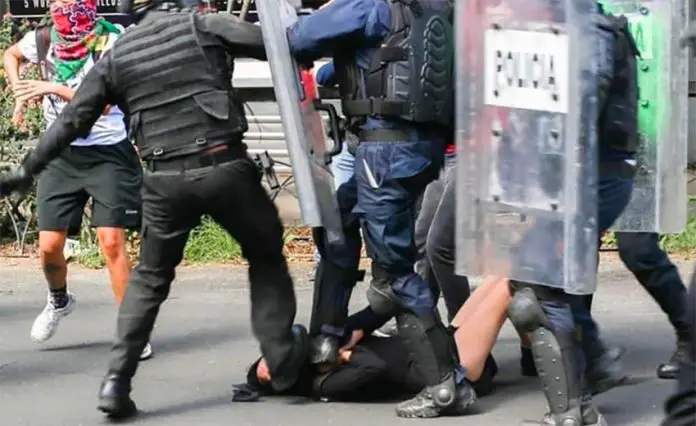
Police put their boots to a 16-year-girl in Mexico City.

Two Mexico City police officers accused of kicking a teenage girl in the head during a march against police brutality on Friday were jailed yesterday on charges of abuse of power.

A video of the attack, which occurred while the victim was lying on the ground, went viral, after which Mexico City Mayor Claudia Sheinbaum denounced the act. “I gave a clear and precise instruction to avoid provocation,” she stated on social media and specified that her orders were not fully obeyed.

“For my government, this is unacceptable. For this reason, I am requesting the Attorney General’s Office and the Mexico City Human Rights Commission to open an investigation, identify and punish those responsible, as well as their chain of command, regardless of rank,” she said shortly after the protest concluded.

The clash between police and protesters on Friday came as a group of about 100 people, some armed with Molotov cocktails, sticks and other projectiles, left a protest in front of the U.S. Embassy and made their way through the streets of the capital to Casa Jalisco, the Mexico City office of that state’s government. 

The crowd was protesting the case of Giovanni López, who died after being arrested by police in Jalisco on May 4, apparently for not wearing a face mask.

The protesters shattered windows and vandalized homes along the route. Some carried anarchist flags and a large banner emblazoned with “Antifa,” for anti-fascist.

The girl who was assaulted by police, identified only as Melanie, said she attended the protest because she was angered by reports of police brutality and admitted she threw rocks at police officers. She denied using any other weapon against the officers who she said were larger than she is and carried shields and wore helmets. 

Over the weekend, the call “Justice for Melanie” was put out over Facebook and a march was planned in Mexico City Monday to protest the attack against her. 

Source: Milenio (sp), Infobae (sp)

Emergency in 40 municipalities in 4 states after Tropical Storm Cristóbal

0
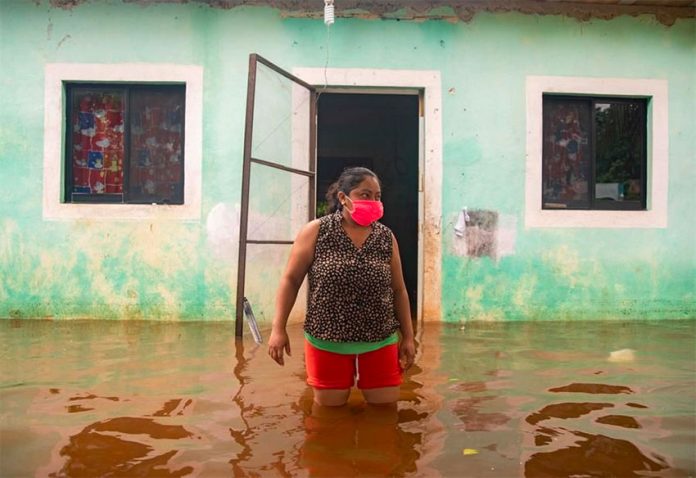
A woman surveys floodwaters in southeastern Mexico on the weekend.

After taking a beating from Tropical Storm Cristóbal, a state of emergency has been declared in four states due to the effects of wind and severe rains that hammered southeastern Mexico for days.

Across the southeast, communities reported flooding, landslides and washed out roads due to the intensity and duration of the storm. 

Mexico’s National Meteorological Service reported that Cristóbal dumped a total of more than 50 centimeters of rain in some areas of Chiapas and Yucatán.

On Sunday, Mexico’s Civil Protection agency declared a state of emergency in 26 municipalities in Yucatán, nine in Chiapas, four in Quintana Roo and one in Tabasco. The declarations allow the affected states to receive federal relief funds as they struggle to meet the basic needs of thousands displaced by the storm. 

The government has dispatched an additional 790 members of the army to join the thousands of soldiers and National Guard members and soldiers it sent last week to assist in the clean-up efforts in Campeche, Chiapas, Quintana Roo, Tabasco, Veracruz and Yucatán. The army, which will also be providing security patrols, has set up two community kitchens complete with tortilla machines to provide food for affected residents. 

Flooding in Balancán, Tabasco.


Yesterday, 275 evacuations and 11 airlifts were carried out by soldiers. 

Through the course of the storm, more than 800 people in Campeche took refuge in shelters, as did more than 2,000 people in Yucatán. 

One person was killed by a falling tree in Chiapas, where the communities of Chicoasén, Bochil, Copainalá, Tecpatán, Ixtapa and Unión Juárez saw landslides and wash-outs.

In southern Quintana Roo, the Mexican military used two helicopters to airlift an estimated 450 people out of danger zones. And in Cozumel, a “pirate ship” popular with tourists sank due to high waves and extreme rains. 

The storm formed on June 2 from the remnants of Pacific Tropical Storm Amanda, which battered Central America leaving at least 22 dead in El Salvador and Guatemala, and was the earliest named storm in the Atlantic ever recorded. The previous record was set in 2016 when Tropical Storm Colin formed on June 5.

The storm had moved north into the United States as of Monday, when it was downgraded to a tropical depression.

Source: El Diario (sp), Milenio (sp), Quintana Roo Hoy (sp)

The Cozumel 'pirate ship' that was popular for its dinner cruises.
The Cozumel ‘pirate ship’ that was popular for its dinner cruises.

Former Tijuana police official arrested for torture; ex-chief sought

0
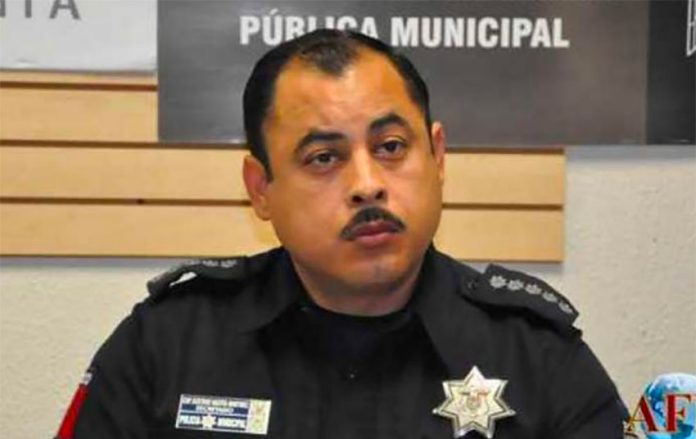
Former police official Huerta, arrested for torture.
Former police official Huerta.

A former Tijuana police official is under arrest and an arrest warrant has been issued for the city’s notorious ex-chief of police in a decade-old case of alleged torture against their own officers.

Former Minister of Public Security Gustavo Huerta Martínez was taken into custody Friday for allegedly torturing four police officers in 2010.

The accusations filed by officer José Luis Hernández Gálvez and three others and relate to an incident in which Korean athletes attending a Tae Kwon Do tournament in Tijuana say they were robbed by police during a traffic stop.

Huerta and then police chief Julián Leyzaola Pérez, whose whereabouts are currently unknown, are accused of torturing the officers involved until they confessed. 

Officer Hernández claims he was brutally beaten, suffering 18 separate wounds on his body which included a broken pelvis. 

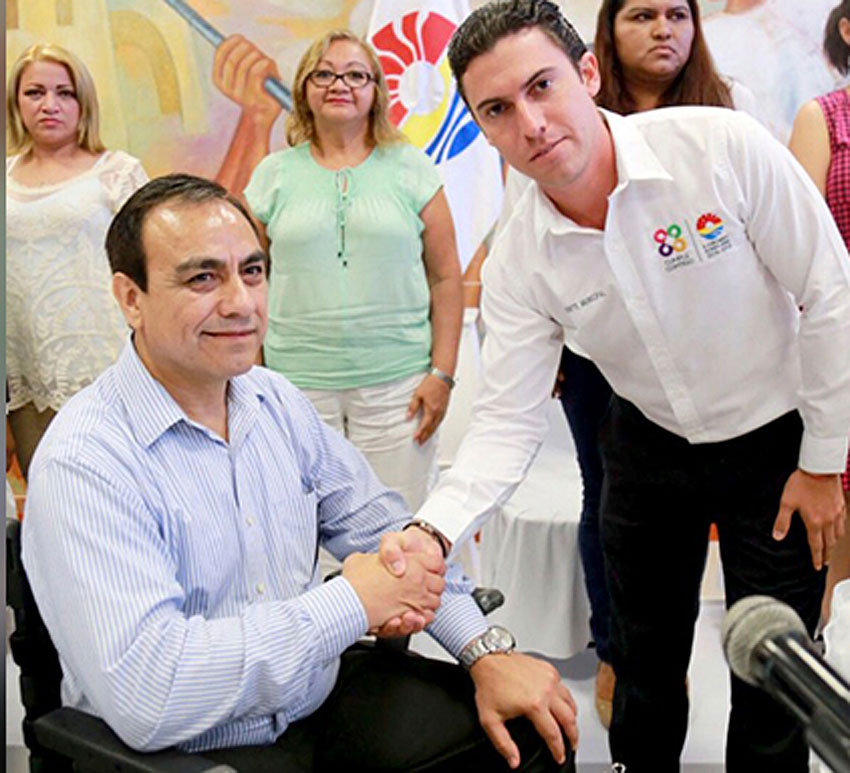
Leyzaola, is welcomed by the mayor of Cancún in 2017 after he was hired to clean up crime.
Ex-Tijuana police chief Leyzaola is welcomed by the mayor of Cancún in 2017 after he was hired to clean up crime.

“They started punching me in the stomach, hard, Leyzaola on my right side, Huerta on my left,” Hernández told The New Yorker in 2010. “They started using rebar and an AR-15 rifle against my back, while still punching from the front.” The beatings lasted for four months, Hernández said. 

Leyzaola was at one time viewed as a “supercop.” During his tenure as police chief in both Tijuana and Ciudad Juárez, Chihuahua, murders, extortions and kidnappings dropped dramatically. 

He received accolades from the United States for his leadership and crackdown on crime in the two border cities. 

Seven attempts were made on Leyzaola’s life, and one incident in May 2015 left him paralyzed from the waist down and confined to a wheelchair. 

Leyzaola ran twice for mayor of Tijuana, and in 2017 was named as a security advisor to police in Cancún as that city struggled with a wave of drug-related violence. 

But accusations of torture and other crimes, not limited to the one for which he currently stands accused, have dogged him as well.

The Baja California Human Rights Office, Mexico’s Human Rights Commission, Amnesty International, Human Rights Watch, the Washington Office on Latin America and the Observatory for the Protection of Human Rights have all denounced Leyzaola for abuses, including torture, committed in 2009 and 2010 in Tijuana. 

Human rights organizations also denounced Huerta last month after the mayor appointed him official spokesman for Tijuana police.

Source: Norte Digital (sp), The New Yorker (en), El Imparcial (sp), AFN Tijuana (sp)

Coahuila cabernet sauvignon named best in the world

0
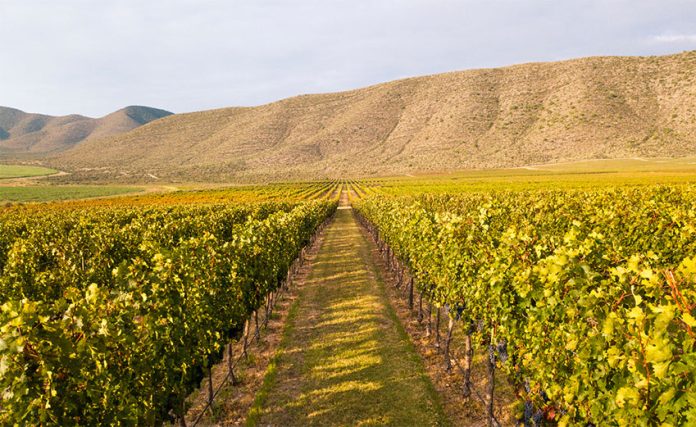
Don Leo's vineyards in Parras, Coahuila.

Looking for the world’s best cabernet sauvignon? You’ll find it in Coahuila, Mexico, at Vinos Don Leo in Parras de La Fuente.

This year the winery’s 2013 Cabernet Sauvignon Gran Reserva took first place at France’s International Cabernet Competition, in which French sommeliers blind-tasted wines from 25 countries.

Don Leo’s 2016 Cabernet Sauvignon/Shiraz also took home the gold this year.

“Quality is the goal and vision of our company, and right now it is being reflected with this distinction,” said Don Leo owner David Mendel.

Tasting notes by Eduardo Dingler of the Napa Valley Register, who visited Don Leo earlier this year, describe the award-winning wine as “generous, wise and intelligent showing its age in the glass but displaying a unique eloquence in the nose with layers of cigar, dried potpourri and leather with a slight touch of aged balsamic.”


View this post on Instagram


A post shared by Vinos Don Leo (@vinosdonleo) on

He called the experience the oeneological equivalent of “playing 18 holes of golf with Sean Connery.”

The mid-sized winery was founded 20 years ago by the Mendel family, who named the vineyard after their forefather, a German Jew who together with his wife emigrated to Mexico in 1936 to escape the war. 

The winery opened in 2000 with just one hectare, and has grown to 60 hectares of vineyards planted with 12 varieties of grapes, including shiraz, merlot and malbec. 

Located at an elevation of 2,100 meters, making it the 11th-highest vineyard in the world, Don Leo enjoys a micro-climate offering hot days and cool nights which is ideal for growing quality grapes. 

Coahuila Tourism Minister Azucena Ramos said the award further solidifies the region — where grapes were first planted in the 1500s — as the cradle of wine in Latin America and worldwide. 

Currently, sales of the wine are almost entirely limited to Mexico, but that may change in the future as Don Leo continues to garner international accolades. The trophy-winning vintage goes for 983 pesos or around US $45.

Source: El Universal (sp), Napa Valley Register (en)

Mexicali customs officials suspects in moving arms, used vehicles

0
Efforts continue to eradicate corruption at Mexican customs.

The Financial Intelligence Unit (UIF) is investigating a network of Mexicali, Baja California, customs officials who are alleged to allow weapons and used vehicles to cross the country’s northern border, the newspaper Milenio reports. 

At the center of their investigation is customs agent Roberto Ruiz Armas, who the UIF says granted hundreds, if not thousands, of irregular permits in exchange for money.

Complaints have been filed and agents suspected of corruption have had their bank accounts frozen due to suspicion of links to organized crime, said the head of UIF, Santiago Nieto.

Attempts to clean up corruption elsewhere have led to customs agents being fired for misconduct at the ports of Progreso, Tuxpan and Lázaro Cárdenas. Four other customs offices are also under scrutiny, Nieto said, although he declined to name them.

Last July the Federal Tax Administration agreed to the Ministry of Defense’s (Sedena) proposal to send 22 retired military personnel to manage half of the country’s customs offices, in the hopes that they would root out corruption. “The corruption problem at customs offices fosters organized crime activities such as the smuggling of arms, drugs, chemical precursors, cash and goods in general,” the proposal read.

Last year, Foreign Minister Marcelo Ebrard stated that 70% of crimes committed in Mexico are carried out with weapons brought into the country illegally from the United States.

And while illegal guns can lead to loss of life, illegally imported vehicles can lead to an important loss of revenue to both the Mexican government through taxes and importation fees, and the country’s auto industry, which claims that in the first trimester of 2019 alone 350,000 U.S. vehicles entered Mexico without the proper permits.

Often, in exchange for a bribe, corrupt customs agents will sign off on paperwork that severely undervalues a vehicle in order to lower the import tax.

Mexico’s customs chief resigned in April, less than a year after being appointed by President López Obrador to clean up corruption. Ricardo Ahued said he was leaving the post for personal reasons.

Source: Milenio (sp), Reforma (sp)